2025-04-08 11:38
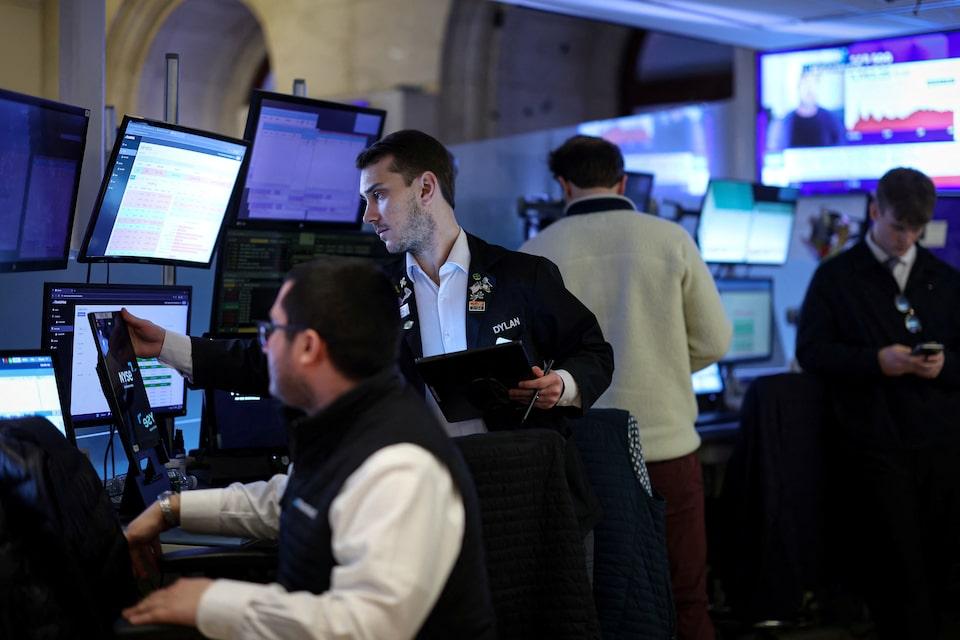
US power demand rising from artificial intelligence Coal's share of power generation less than 20%, versus 50% in 2000 Orders to direct coal leasing plans on US lands WASHINGTON, April 8 (Reuters) - U.S. President Donald Trump signed executive orders on Tuesday that aim to boost coal production in his latest action that runs counter to global efforts to curb carbon emissions. Coal-burning plants generate less than 20% of U.S. electricity, a drop from 50% in 2000, according to the Energy Information Administration, as fracking and other drilling techniques have hiked production of natural gas. Growth in solar and wind power has also cut coal use. Sign up here. "We're bringing back an industry that was abandoned," Trump said at the White House, standing in front of about three dozen mostly male coal miners wearing hard hats. "We're going to put the miners back to work," Trump said about a workforce that has sunk to about 40,000 from 70,000 ten years ago. Trump, a Republican, campaigned on a promise to increase U.S. energy output and has sought to roll back energy and environmental regulations since taking office on January 20. U.S. electricity demand is rising for the first time in two decades on growth in power-hungry data centers for artificial intelligence, electric vehicles, and cryptocurrencies. The orders include efforts to save coal plants that were likely to be retired, including by unlocking authorities in the 1950 Defense Production Act to boost coal production. They also direct Energy Secretary Chris Wright to determine whether coal used in steel production is a "critical mineral." Allowing that classification, typically reserved for minerals needed for high-tech defense systems, for metallurgical coal could set the table for use of emergency powers to raise production. Another order , opens new tab asked the U.S. Attorney General to identify state climate laws that are an obstacle to developing energy resources like coal, and try to stop them from being enforced. After Trump signed the orders, Wright's department made $200 billion in financing available for its loan programs office including for new coal technologies. Under previous presidents, the loans have only rarely been used for carbon capture at coal plants. The orders direct Interior Secretary Doug Burgum to acknowledge the end of a moratorium that paused new coal leasing, which allows private companies to buy the right to extract coal, on federal lands, and to prioritize the leasing. Shares in U.S. coal producers Peabody (BTU.N) , opens new tab and Core Natural Resources (CNR.N) , opens new tab each shot up about 9% after the news. Still, it is uncertain what demand there is for any greater U.S. coal output, with hundreds of domestic coal-burning plants having closed this decade on cheaper fuels and concerns about future regulations even if Trump's administration dismantles current ones. When burned, coal releases more of the main greenhouse gas carbon dioxide than any other fossil fuel. It also emits pollutants linked to lung and heart diseases. Much of its use has declined due to regulations from Democrats, including former President Joe Biden. 'STUCK IN THE PAST' Existing U.S. coal plants only provide power to the grid about 40% of the time. Backers say that number can be boosted through deregulation and other measures. In his first administration, Trump tried to prop up coal by having his then energy secretary direct federal energy regulators to subsidize coal plants for their contribution in making power grids more reliable and resilient. The regulators rejected the plan in 2018. Coal backers were hopeful about the new approach. Trump's orders will "clearly prioritize how to responsibly keep the lights on, recognize the enormous strategic value of American mined coal and embrace the economic opportunity that comes from American energy abundance," said Rich Nolan, president and CEO of the National Mining Association. Environmental groups slammed Trump's coal plan. "Coal plants are old and dirty, uncompetitive and unreliable," said Kit Kennedy, managing director for Power at the Natural Resources Defense Council. "The Trump administration is stuck in the past, trying to make utility customers pay more for yesterday’s energy. Instead, it should be doing all it can to build the electricity grid of the future." https://www.reuters.com/business/energy/trump-sign-executive-orders-boost-coal-industry-sources-say-2025-04-08/
2025-04-08 11:34
April 8 (Reuters) - Power equipment maker Generac Holdings (GNRC.N) , opens new tab said on Tuesday that it was launching new generators with its biggest capacity offering till date in North America, designed for data centers as the company sees rising demand from the segment. The expected build-out of the centers has raised concerns around how well an aging U.S. electrical grid can hold up to that demand, with electricity consumption likely to hit record highs. Sign up here. Additionally, older generators that run on fossil fuels are being retired and new generation and power lines are often stuck in large queues to be connected to the gird, which tightens the supply-demand balance. Generac's new generators for the North American market, which range from 2.25 megawatts (MW) to 3.25 MW, are a step up from its current maximum capacity of 2 MW, said Ricardo Navarro, senior vice president and general manager of the company's global telecom and data center infrastructure section. The company, which currently serves smaller data center demand, has already received commitments for the new generators for this year and the next, Navarro said in an interview with Reuters. In Generac's fourth quarter earnings for 2024, the company reported a better-than-expected profit due to higher power outages and severe weather impacts from hurricanes Helene and Milton. Big storms typically create a burst of new business for the Waukesha, Wisconsin-based company, whose generators are designed to be permanently fixed and switched on automatically whenever there's a power outage. Due to the overall high demand for backup power options, most companies are constrained in that they are not able to supply as much as is needed and as quickly, Navarro highlighted. "With more than half of our factories being in the U.S., we have shorter lead times," he said, adding that the company's flexible supply chain would be able to navigate through the challenges the new tariffs pose. https://www.reuters.com/business/energy/generacs-new-line-generators-targets-growing-data-center-demand-2025-04-08/

2025-04-08 11:22
India's rapeseed meal exports ease local price pressure China imposed 100% tariff on Canadian rapeseed imports India could increase exports to 2.5 million tons, says SEA's Mehta MUMBAI, April 8 (Reuters) - China has bought 52,000 tons of Indian rapeseed meal in the past three weeks - four times the amount Beijing imported from India in the whole of 2024 - after Chinese authorities imposed a 100% retaliatory tariff on Canadian imports, industry sources said. India's rapeseed meal exports will help China, the world's top consumer, replace imports from Canada while easing pressure on local rapeseed prices in India, which is sitting on large stockpiles of the widely used animal feed. Sign up here. "Chinese buyers started showing interest in Indian rapeseed meal in the last few weeks due to tariffs on Canadian supplies," said an official with a leading rapeseed meal exporter. China imposed a 100% retaliatory tariff on rapeseed meal and oil imports from Canada starting on March 20. China bought Indian rapeseed meal for prompt shipments at $220 to $235 per metric ton, on a cost and freight basis, said the sources, who declined to be named because they were not authorised to speak to media. India, the world's third-largest rapeseed producer, has struggled to export significant amounts of rapeseed meal to China because of higher prices. In 2024, China imported 2.02 million metric tons of rapeseed meal from Canada, 504,000 tons from the United Arab Emirates, and 135,000 tons from Russia, according to customs data. It bought only 13,100 tons from India. India exported more than 2 million tons of rapeseed meal, but China accounted for less than 1%. "Chinese demand is huge. If its current buying momentum continues in the next few months, it could emerge as one of the biggest buyers of Indian rapeseed meal," said one of the sources. South Korea, Bangladesh, Thailand, and Vietnam traditionally account for the bulk of India's rapeseed meal exports. "India can raise shipments from around 2 million tons to 2.5 million tons this year, given the surplus in India and shortage in the world market," said B.V. Mehta, executive director of the Solvent Extractors' Association (SEA). India's rapeseed meal stocks are expected to rise as new season supplies begin to pick up. Weak local demand has pushed Indian rapeseed meal prices to around $200 per ton on a free-on-board (FOB) basis, down from $248 in February and $278 a year ago, according to SEA data. https://www.reuters.com/markets/commodities/china-boosts-indian-rapeseed-meal-purchases-after-tariff-canadian-imports-2025-04-08/

2025-04-08 11:17
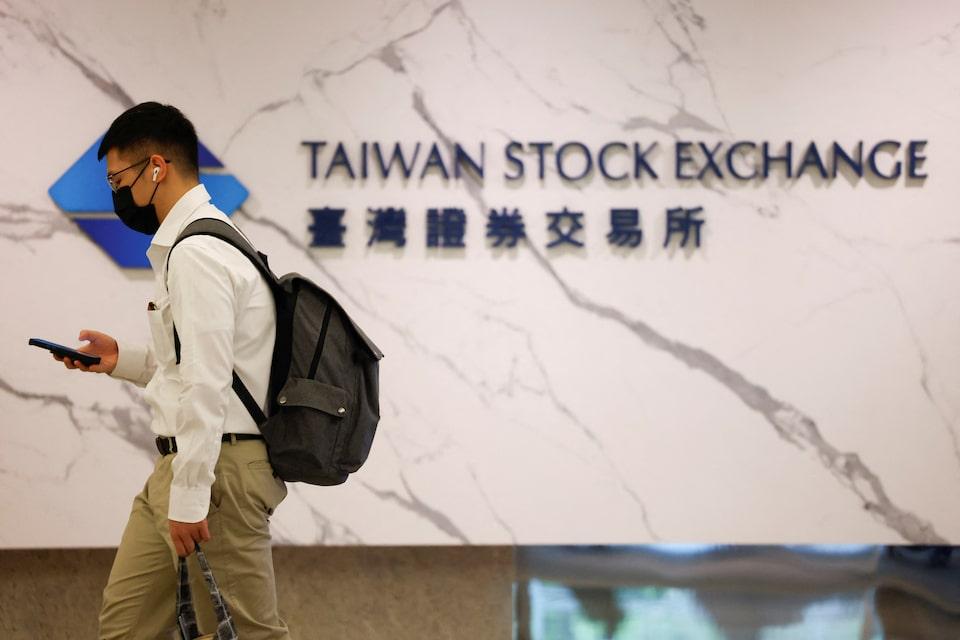
Taiwan to intervene to prop up stock market Taiwan's stock market plummets after Trump tariffs Stabilisation fund has more than $15 bln in assets TAIPEI, April 8 (Reuters) - Taiwan authorised the activation of its $15 billion stock stabilisation fund on Tuesday to prop up the market after two days of sharp falls in reaction to U.S. President Donald Trump's new import tariffs. Trump last week announced that Taiwan, which runs a large trade surplus with the United States, will get a 32% tariff, sending the markets into a tailspin on Monday after they re-opened following a Thursday and Friday holiday. Sign up here. Taiwan's finance ministry said in a statement that the government-run National Stabilisation Fund, which has some T$500 billion ($15.15 billion) in assets that can bolster Taiwan stocks in times of crisis, had been given the go ahead to intervene in the stock market. The fund has been authorised to use its assets "to carry out market stabilisation tasks as appropriate to maintain the stability of Taiwan's stock trading market", it said. On Monday, the benchmark index(.TWII) , opens new tab dropped by close to 10% and it fell another 4% on Tuesday, hitting its lowest level in 14 months. Noting that the "international panic atmosphere was strong", foreign investors have continued to sell their holdings since the start of the year, it said. "This is not conducive to the stability of the Taiwan Stock Exchange," the ministry added. Taiwan has previously activated the fund to prop up the stock market at other times of turmoil, such as at the start of the COVID pandemic. ($1 = 33.0030 Taiwan dollars) https://www.reuters.com/markets/asia/taiwan-activates-15-billion-stock-stabilisation-fund-after-precipitous-falls-2025-04-08/
2025-04-08 11:13
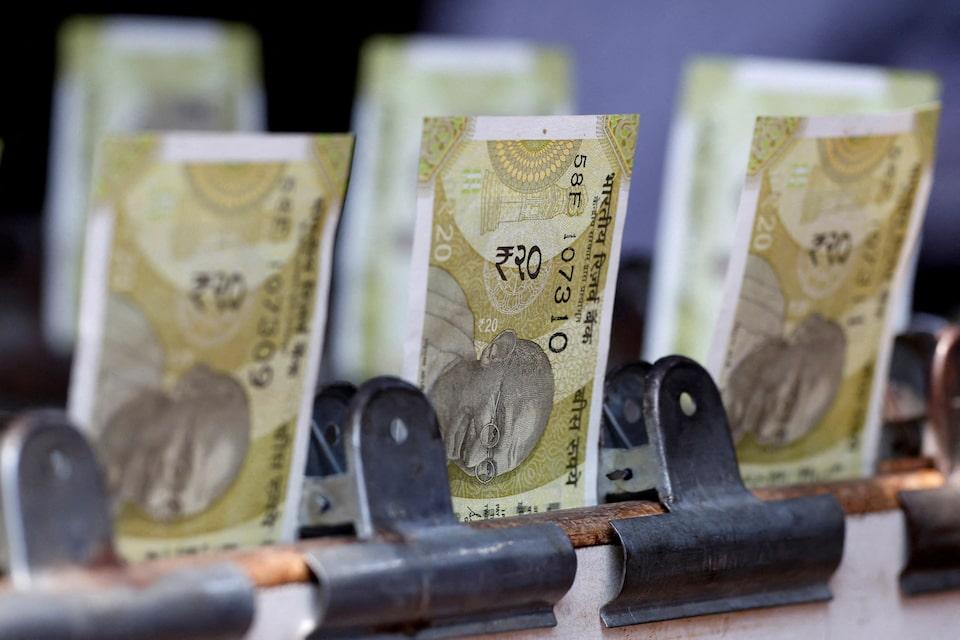
MUMBAI, April 8 (Reuters) - Indian importers locked in foreign exchange hedges with banks at a record pace last month, capitalizing on a rally in the rupee. A few of these banks are now facing margin calls due to notional losses on those positions, four bankers said. Sign up here. Importers purchased dollar/rupee foreign exchange forward contracts worth $66.5 billion in March, marking a year-on-year increase of 75% and clocking the highest monthly volume since clearing house Clearing Corporation of India Ltd (CCIL) began publishing data in July 2016. In contrast, forward contract activity by exporters declined year-on-year, underscoring the divergence. The record hedging was driven by a more than 2% rally in the rupee in March, marking a rebound from record low levels. The recovery followed a period of sharp falls in the rupee, which plumbed to an all-time low of 87.95 in mid-February and declined 3.5% in the three months before March. In March, the currency was aided by a fall in the U.S. dollar and foreign inflows, which prompted investors to unwind bearish bets. It was last quoted at 86.07 on Tuesday. With the rupee's outlook fairly uncertain, importers, wary about a return of a weakening bias, were quick to lock in rates through forward contracts, bankers said. The pace of the rupee’s decline toward the 88 level was “unexpected” and most importers were “not nimble enough” to respond, leaving them under-hedged relative to the pickup in volatility, an FX salesperson at a bank said, requesting anonymity as they are not authorized to speak to media. "They all jumped in when the opportunity came in March." BANKS FACE ADDITIONAL MARGIN CALLS The dollars that companies buy or sell in the forward market are hedged by banks by offsetting positions with other lenders. These interbank transactions are settled by the local clearing house. When a bank has a significantly higher share of importer clients relative to exporters, its outstanding FX forward contracts can face notional losses. Although the mark-to-market losses belong to the bank’s clients, the clearing house requires banks to post additional margin to cover the exposure. "We have had to post additional margin to CCIL, largely due to the activity of importers," a treasury head at a small-sized foreign bank said. "For big banks, posting the additional margins is a matter of routine." An FX salesperson at a large foreign bank said that their bank had received a "minor" margin call from CCIL. CCIL did not immediately respond to an email requesting comment. https://www.reuters.com/world/india/india-rupees-march-rally-spurs-hedging-rush-by-importers-leads-margin-bill-few-2025-04-08/
2025-04-08 11:09
LONDON, April 8 (Reuters) - What matters in U.S. and global markets today By Mike Dolan , opens new tab, Editor-At-Large, Financial Industry and Financial Markets Sign up here. After a wild Monday, equity trading appears to have calmed somewhat even as the U.S.-inspired trade war ratchets up. Speculation about a devaluation of China's yuan has moved center stage along with a snapback in U.S. Treasury yields. Today's Market Minute * China refused to bow to what it called "blackmail" from the United States as a global trade war ignited by President Donald Trump's sweeping tariffs showed little sign of abating on Tuesday. * The U.S. dollar fell on Tuesday while the euro rallied as stocks rebounded in Asia and Europe on hopes that U.S. will enter negotiations over his sweeping tariffs that have roiled markets for three days. * The European Commission said on Monday it had offered a "zero-for-zero" tariff deal to avert a trade war with the U.S. as EU ministers agreed to prioritize negotiations, while striking back with 25% tariffs on some U.S. imports. * Gold's latest gallop to all-time highs has drawn comparisons with the last time political and economic turmoil were the main drivers of record prices, back in 1980. But market players say the nature of this rally - and potentially its ability to endure - look different. * The United States is starting to resemble an emerging market more than a developed country, the head of pan-European stock exchange operator Euronext said on Tuesday. Stocks take a breath, but yuan, Treasuries convulse Highlighting just how fragile market sentiment currently is, Monday's 5-7% intraday swings in Wall Street's stock indexes were largely driven by a rogue news headline about a pause in tariffs that was quickly denied. This also reflected how much speculative short selling appears to have built up over the past week, exaggerating the withering downswing. In the end, the S&P 500 (.SPX) , opens new tab closed only marginally lower on the day, though it's still off more than 10% since last Wednesday's tariff announcement. Gasping for breath after a torrid week, stock futures and world bourses all staged a modest bounce on Tuesday, with Japan's Nikkei (.N225) , opens new tab emitting the biggest sigh of relief with a 6% rally. Tokyo outperformed after President Donald Trump said Japan was sending a trade negotiating team to America and U.S. Treasury Secretary Scott Bessent said he expects Japan to get "priority" treatment. Japan's Prime Minister Shigeru Ishiba said separately he told Trump to rethink tariff policies. Meanwhile, China refused to back down on its retaliatory tariffs, prompting Trump to threaten raising U.S. import levies on Chinese goods to more than 100%. On Tuesday, China's commerce ministry said it would not bow to U.S. "blackmailing" and that "China will fight to the end." As if to up the ante, China's yuan fell to its weakest level since 2023 on Tuesday after the central bank slightly loosened its grip on the currency in what appeared to be an attempt to counteract the tariff blow to exports. During Trump's first trade war with China, Beijing effectively devalued the yuan by about 10%, offsetting much of the tariff hit on Chinese exporters. If it were to replicate a similar move in the current standoff, it would undermine one of the stated aims of the Trump campaign: pushing down on what they see as an overvalued dollar. Japan's former top currency diplomat Naoyuki Shinohara said on Tuesday that any U.S. attempt to pull off a 1985 Plaza Accord-style coordinated depreciation of the dollar won't work as it would require the consent of China and Europe. The dollar (.DXY) , opens new tab is starting to creep higher across the board. And, with the help of official buying, Chinese stocks (.CSI300) , opens new tab, (.HSI) , opens new tab rallied too. This all raises the question of whether China's huge holdings of U.S. debt could become a weapon in the escalating game of chicken between Beijing and Washington. Turning to that market, Treasuries - facing a heavy week of new debt sales this week - recoiled violently on Monday, with 10-year yields retracing all their decline since Wednesday's tariff statement. Whether that was due to hawkish Federal Reserve soundings or China selling concerns is unclear. The big move also exacerbated long-standing anxieties about hedge fund exposure to the so-called 'basis trade' in Treasuries - essentially an arbitrage between cash and futures positions - that is worth hundreds of billions of dollars. The problem is that this trade relies on relatively low volatility and the past week certainly didn't have that, with the MOVE (.MOVE) , opens new tab index of Treasury volatility hitting its highest since October 2023. All this makes the war of words between Trump and Fed boss Jerome Powell all the more important, which I discuss in my column today. Chart of the day Investors are watching the U.S. credit market like a hawk, fearful that high volatility in 'junk' bond pricing could cause financing to tighten up broadly. High-yield corporate debt spreads (.MERH0A0) , opens new tab have risen to near two-year highs at 461 basis points. True, that is still shy of the alarm zone above 500 bps, but the asset class's volatility gauge (.VIXHY) , opens new tab has zoomed to its highest since 2022, when the Fed was rapidly hiking borrowing costs. So the big question now is whether this soaring volatility - which is nearing pandemic levels - could effectively shut down the entire market. Today's events to watch * U.S. March NFIB small business survey * San Francisco Federal Reserve President Mary Daly speaks; European Central Bank board member Piero Cipollone speaks; Bank of England Deputy Governor Clare Lombardelli speaks * U.S. corporate earnings: Walgreens Boots Alliance * US Treasury sells $58 billion of 3-year notes Opinions expressed are those of the author. They do not reflect the views of Reuters News, which, under the Trust Principles , opens new tab, is committed to integrity, independence, and freedom from bias. https://www.reuters.com/markets/us/global-markets-view-usa-2025-04-08/