2025-04-08 11:07
FTSE 100 up 1.4%, FTSE 250 rises 2.5% Aerospace and defence index gains over 5%, led by Babcock Energy index climbs 3% as oil prices rebound April 8 (Reuters) - Britain's main indexes recovered from their lowest levels in more than a year on Tuesday, as investors look for any indication of Washington softening its stance on the aggressive tariffs that have roiled global markets over the last few days. The blue-chip FTSE 100 (.FTSE) , opens new tab rose 1.4%, as of 1000 GMT, after falling for four consecutive sessions. Sign up here. The domestically focused midcap index (.FTMC) , opens new tab also gained 2.5%, after hitting its lowest point since November 2023 in the previous session. Markets had been unsettled by U.S. President Donald Trump's announcement of sweeping trade tariffs last week, stoking fears of a global recession. Trump said on Monday he would talk to China, Japan and other countries over the tariffs, but was not looking at a pause on the duties. Separately, data from funds network Calastone showed British investors had piled into U.S. stocks in the weeks before Trump's tariff announcement. During the day, 94 of the FTSE 100 stocks gained. UK's aerospace and defence index (.FTNMX502010) , opens new tab rose more than 5%, with Babcock International Group (BAB.L) , opens new tab leading the gains on the blue-chip index, followed by Rolls-Royce (RR.L) , opens new tab and BAE Systems (BAES.L) , opens new tab. The energy index (.FTNMX501010) , opens new tab climbed 3% as oil prices rebounded from a near four-year low in the previous session. Industrial metal miners (.FTNMX551020) , opens new tab gained 2%, with Glencore (GLEN.L) , opens new tab advancing 3% after indigenous groups in Peru stopped blocking access to the company's Antapaccay copper mine following an agreement with government officials. Company-wise, Howden Joinery (HWDN.L) , opens new tab rose 2% after the kitchen and joinery supplier said Jackie Callaway would succeed Paul Hayes as the chief financial officer. Investment firm 3i Group (III.L) , opens new tab has paused the sale process of pet food maker MPM to assess the impact of U.S. tariffs, Bloomberg News reported on Monday. Its shares rose 3%. https://www.reuters.com/markets/europe/uk-stocks-recover-after-sell-off-triggered-by-hefty-tariffs-2025-04-08/
2025-04-08 11:05
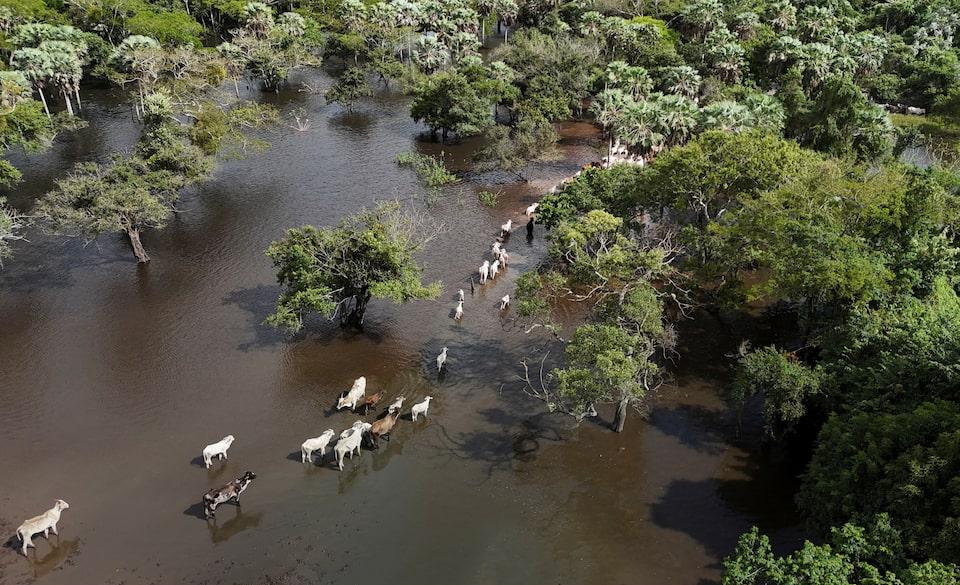
BENI, Bolivia, April 8 (Reuters) - In Bolivia's rural region of Beni near the border with Brazil, vast grasslands where cows once grazed have been submerged, forcing cattle and the cowboys that herd them to swim or wade to reach small patches of higher ground. The South American nation has been hit by some of the most intense rains in decades, which have left soy fields and ranches underwater, putting at risk exports to overseas markets and pushing up local food prices. Sign up here. "The flooding we are experiencing right now is very unusual, very severe for this time of year," cattle rancher Gunther Amatller told Reuters as he rescued his livestock from the flood waters. "The water just keeps rising. It's hard to predict how much higher it will rise." According to local estimates, some 200,000 head of cattle, or about 2% of the national herd, are at risk, struggling with flood water and fatigue. Beni supplies beef nationwide and exports to markets such as China. The floods have hit 590,000 families and killed at least 55 people. "My cattle are suffering and the animals are emaciated. Plus, there are a lot of snakes and jaguars in that flooded area," lamented Teresa Vargas, owner of the Cheperepije ranch. Climate change has altered weather patterns, according to experts, delaying rains and making them more intense. The Mamoré River, an Amazonian river that runs through Bolivia and Brazil, has burst its banks, flooding everything in its path. In towns such as Puerto Almacén and Puerto Ballivián, entire families have abandoned their homes, seeking refuge in makeshift shelters on the side of the road. "We are forced to leave our houses," Mayra Peralta said, her voice breaking. "Every day, the water rises." In Loma Calatayud, Jesús Martínez helplessly showed how his rice, plantain, and cassava crops have disappeared. His wife cooks precariously on a wooden platform, while water surrounds their home. "Everything is underwater," said Jesús. Indigenous women, such as Edilberta Huaginoe, cook in hastily constructed camps on higher ground, trying to feed their children with what little they can salvage from the water. "The rice is underwater, the plantains and cassava are underwater, and we can't get them out because they're too deep," said Edilberta. "This is where we'll come to sleep until the water recedes." https://www.reuters.com/sustainability/climate-energy/bolivia-floods-cows-swim-where-they-once-grazed-2025-04-08/
2025-04-08 11:04
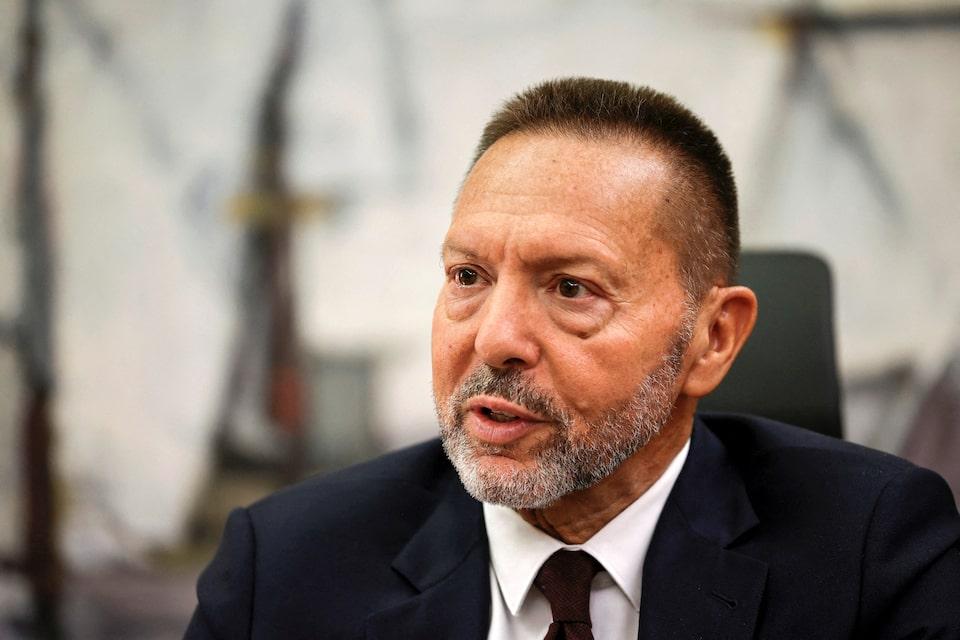
Stournaras warns U.S. tariffs may stoke inflation, delay ECB policy normalization Global trade war would hit supply chains Greece faces limited direct impact from U.S. tariffs ATHENS, April 8 - European Central Bank policymaker Yannis Stournaras said on Tuesday that likely higher inflation and a global trade war following U.S. President Donald Trump's imposition of tariffs could delay normalization of euro zone monetary policy. "Any further resurgence in inflation or inflation expectations could delay or even halt the process of monetary policy normalization, worsening financial conditions and growth momentum," Stournaras, who is governor of the Bank of Greece, said at the Greek central bank's annual shareholders' meeting. Sign up here. A rout in global financial markets triggered by the U.S. tariffs scheme has solidified the case for another ECB rate cut next week and supports arguments for even quicker policy easing from the world's second largest central bank, economists say. As well as the United States and Europe, other countries where the U.S. has not imposed duties would feel the pinch of slowing global trade, he said, as global economies were intertwined. "Tariffs imposed on one country's imports would affect other countries participating in the global (supply) chains, even if no countermeasures were imposed," he said. Greece's economy, which is expected to grow at a 2.3% this year and continue outpacing its euro zone peers, will see limited direct impact from the U.S. duties, Stournaras said. But the country, which exports olive oil, oil and its trademark feta cheese to the United States, might see demand for its products and services drop, while rising global uncertainty could dent the appetite for investment in the country as it recovers from a 2009-2018 debt crisis. "For Greece, the response to these challenges lies with keeping up its reliable fiscal policy, attracting investment and implementing reforms," he added. https://www.reuters.com/business/finance/ecbs-stournaras-says-higher-inflation-us-tariffs-could-delay-monetary-policy-2025-04-08/
2025-04-08 10:12
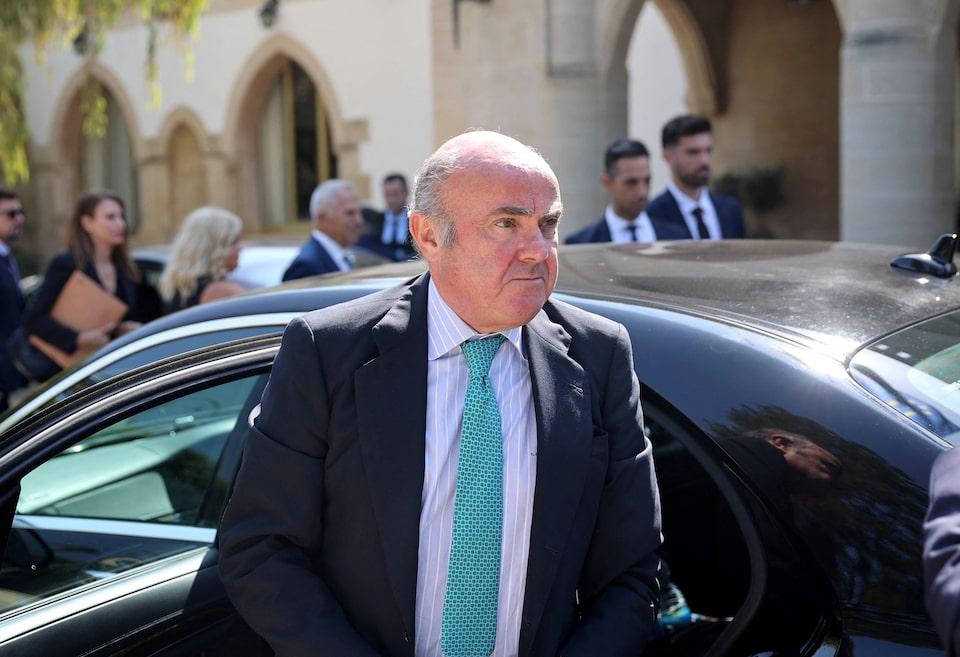
FRANKFURT, April 8 (Reuters) - European Central Bank Vice-President Luis de Guindos said on Tuesday he was "relatively optimistic" about Europe's chances of navigating trade tensions with the United States. "I'm relatively optimistic," he told an event in Spain. "From Europe's point of view, this has been a wake-up call. We've realised we have to be more autonomous (militarily and economically)". Sign up here. He added Europe needed to negotiate with the United States "with a cool head". https://www.reuters.com/markets/trade-fragmentation-curb-global-growth-raise-inflation-ecbs-schnabel-says-2025-04-02/
2025-04-08 10:10
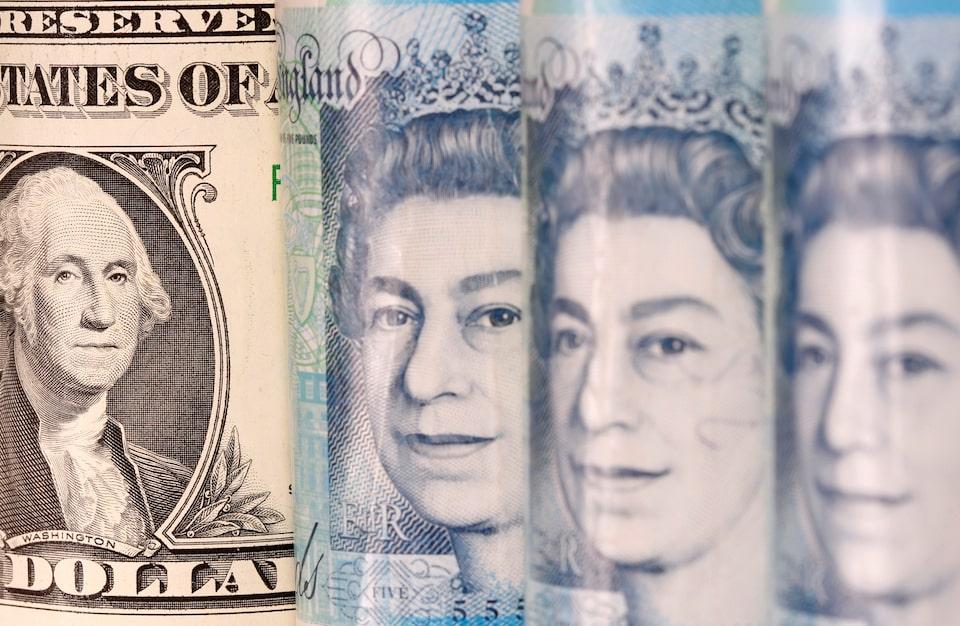
UK seeks economic partnership with US amid tariff tensions Sterling stabilises after volatile trading due to US tariffs Economists divided on UK's medium-term inflation and borrowing impact LONDON, April 8 (Reuters) - The pound was mostly steady on Tuesday, stabilising after several days of volatile trading from the market rout induced by U.S. President Donald Trump's wide-ranging import tariffs, which have raised the risk of a global recession. Prime Minister Keir Starmer on Monday said Britain would try to secure an economic partnership with the United States while also working to lower trade barriers with key partners around the world in the wake of Trump's tariffs. Sign up here. Sterling was last up 0.1% against the dollar at $1.2747, having slid around 1.4% from where it was before Trump unveiled his tariffs on April 2. UK exports to the United States will receive the baseline tariff of 10%, below the 20% that European Union exporters must pay, but this has not shielded the pound from the firestorm that has engulfed global markets in the last few days. Starmer also said on Monday that his government's first reaction to higher tariffs should not be to relax public borrowing rules. Almost all economists think Trump's tariffs will be negative for growth in the United States and Britain, but there is less consensus about the medium-term implications for UK inflation and government borrowing, which risk being negative for gilts. Indeed, 30-year UK gilt yields rose nearly 20 basis points on Monday, the most in a day since late 2022, when British markets were racked by then-prime minister Liz Truss's failed "mini-budget". FX broker Monex said the spike in gilt yields showed that the prospect of a loosening of the fiscal rules remained a "notable concern for markets". Higher bond yields usually support a currency, but when there is concern about the stability of a government's finances, this relationship can break down. Traders expect the Bank of England to cut rates when it meets in early May, in order to counter the effects of tariffs on an already slowing economy. What happens beyond that is far less certain. "Our long-term view remains that UK fundamentals are better than markets currently price, now helped by tariff differentials, while the government will ultimately choose not to scrap their fiscal rules with the memory of Liz Truss still fresh in the mind. For now, though, with sentiment still in the driving seat, sterling looks set to continue trading under pressure," Monex said. Also in the mix is the pound's status as a "high beta" currency: one that tends to rally and fall more than the broader market, much like the Australian and New Zealand dollars. As investors have ditched riskier, typically more volatile assets, the pound has come under pressure. Against the euro, which has benefited from the flight out of the dollar, , it has lost almost 3% in the last week. https://www.reuters.com/markets/currencies/sterling-steadies-tariff-firestorm-abates-2025-04-08/
2025-04-08 10:08
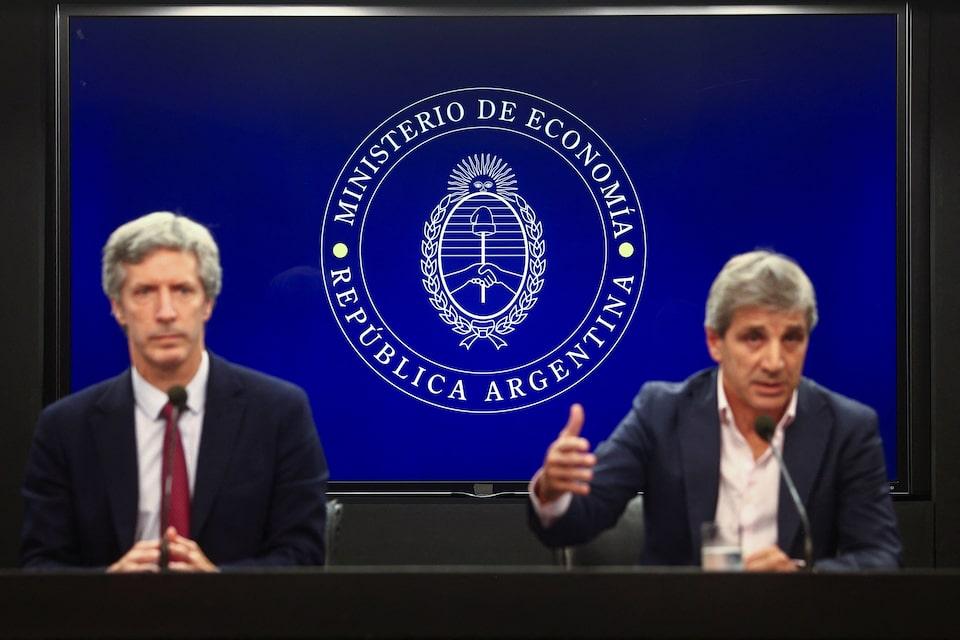
Argentina is in advanced talks over $20 billion IMF deal Country is IMF’s biggest debtor with 22 programs to date Government needs dollars to replenish FX reserves, undo capital controls Capital controls, in place since 2019, may take time to unravel BUENOS AIRES, April 8 (Reuters) - Argentina's pending $20 billion deal with the International Monetary Fund will bring libertarian President Javier Milei the tool he wants to unlock investment-blocking capital controls and a return to the global market: a "mountain of dollars". The South American country, a serial defaulter that has battled on-and-off economic crisis for decades, is in advanced talks with the IMF over what would be its 23rd program, aimed at bolstering the country's depleted foreign currency reserves. Sign up here. A deal would give the government leeway to start dismantling currency controls in place since 2019, while the IMF's backing could help cut the premium Argentina has to pay to take on new debt, potentially re-opening access to global capital markets. "What you'll have is a mountain of dollars," Milei said in March, referring to a target of doubling gross reserves to $50 billion with the IMF loan and others. He targeted year-end for undoing FX controls, or sooner if the IMF sped up payouts. "The currency controls will no longer exist on January 1. Maybe sooner," he said. Reuters spoke with former IMF and government officials, and economists, who generally agreed that the IMF deal - which still needs board approval - would help undo capital controls and access capital markets, though it wouldn't happen overnight. That's key for the grains-to-lithium producer to revive its embattled economy as it drags itself out of one of its worst ever crises under a tough austerity push by Milei, a bombastic economist allied with U.S. President Donald Trump. Annualized inflation neared 300% last year, net reserves plumbed to negative $11 billion and poverty hit above 50% as the country fell into recession. Those metrics are now improving, but the economy remains brittle. "A guarantee from the Fund gives the government a certificate of good conduct," said Claudio Loser, former IMF director for the Western Hemisphere, adding this would boost investor confidence and help keep a lid on inflation. "Country risk could decrease, and then the government could approach the financial markets." TAKING ON MORE DEBT? Milei took office in December 2023 pledging to take a "chainsaw" to state spending to overturn years of fiscal deficits. This has stabilized the economy and brought inflation down sharply. There are signs the economy is turning around, but pressure has risen on the currency and reserves have slid in recent weeks. Martin Guzman, a former economy minister with the Peronist bloc that opposes Milei, said that the risk of a new deal was that the funds would simply be used to firefight the slide in the peso, eventually leading to greater debt loads. "The positive aspect of a new agreement would be the refinancing of the IMF debt, which begins to mature in September 2026. The negative aspect is more debt," Guzman, who sealed a $44 billion IMF deal as economy minister in 2022 replacing a failed 2018 program, told Reuters. He added it was "highly unlikely" currency controls would be lifted soon because it would allow global firms to pull out an estimated $9 billion that had been stuck in the country, pressuring the exchange rate and inflation. Pablo Guidotti, former deputy minister of economy under Milei icon Carlos Menem in the 1990s, said, however, that a deal would give more clarity about the long-term FX regime, boost market access, ease debt loads over the next four years, and "pave the way for the elimination of exchange controls". "Ultimately it allows us to return to the capital market... which will have a very positive impact on the Argentine economy," he said. https://www.reuters.com/world/americas/imf-mountain-dollars-key-unlock-argentinas-fx-controls-2025-04-08/