2025-04-08 07:21
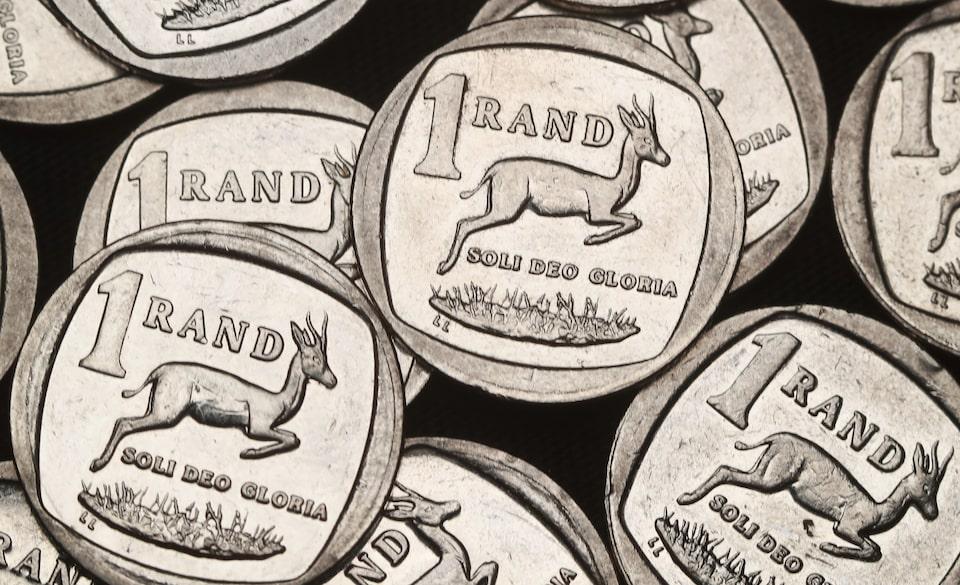
JOHANNESBURG, April 8 (Reuters) - South Africa's rand strengthened on Tuesday as the country's two biggest political parties said they were not walking away from the coalition government and were open to further talks to try to resolve a bitter dispute over the budget. At 1424 GMT, the rand traded at 19.52 against the dollar , 0.7% firmer on the day after falling about 2.7% on Monday. Sign up here. The African National Congress (ANC) and Democratic Alliance (DA) failed to agree on the budget despite weeks of negotiations, leading to the DA voting against it in parliament and challenging it in court. Rattled investors have worried that the pro-business DA could quit the Government of National Unity or be forced to exit by a faction in the ANC angered by the DA's stance. But the ANC said on Tuesday that it was committed to the multiparty government formed last year. The DA said it was not giving up on the coalition either and wanted to discuss power-sharing with the ANC. As well as the turbulent local political backdrop, the risk-sensitive rand has been caught up in the global market turmoil stemming from U.S. President Donald Trump's tariff plans. The domestic data calendar is relatively light this week. One of the few releases expected is manufacturing output (ZAMAN=ECI) , opens new tab, (ZAMFG=ECI) , opens new tab on Thursday. The Johannesburg Stock Exchange's Top-40 index (.JTOPI) , opens new tab was last up about 2.3%. The benchmark 2030 government bond gained, as the yield fell 19.5 basis points to 9.18%. https://www.reuters.com/markets/currencies/south-african-rand-recovers-some-ground-with-coalitions-future-focus-2025-04-08/
2025-04-08 07:00
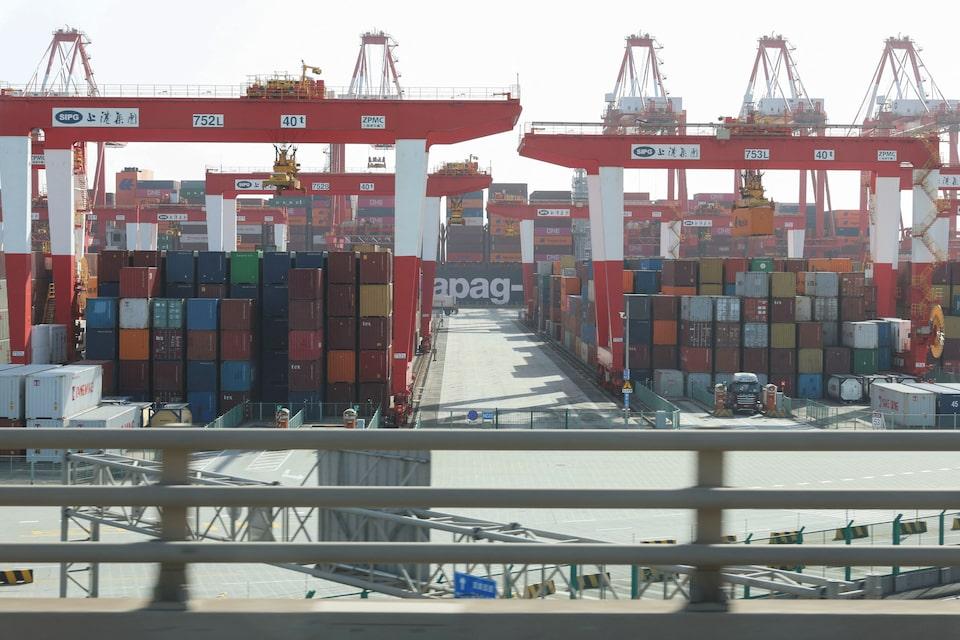
Trump threatens additional 50% tariff for China Beijing censures escalation as "blackmail" EU floats 25% counter-tariffs on US EU, China leaders speak by phone Markets regain ground after sell-off WASHINGTON/BEIJING, April 8 (Reuters) - The United States called China's retaliation against its tariffs a "big mistake" on Tuesday, as a global trade war ignited by President Donald Trump's sweeping levies showed few signs of abating, even as global markets steadied after days of carnage. China refused to bow to what it called "blackmail" after Trump threatened to ratchet up tariffs on U.S. imports from the world's No. 2 economy to more than 100% in response to China's decision to match "reciprocal" duties Trump announced last week. Sign up here. China's fast and hardline approach contrasted with more emollient moves by other Asian countries. The European Union is also still consulting with member states on how hard to punch back against Trump's tariffs without causing more harm to its consumers and exporters. U.S. Treasury Secretary Scott Bessent blasted Beijing in an interview with CNBC. He stressed that any U.S. negotiations with other countries on tariffs were the result of them knocking on Washington's door and not due to global market turmoil. "I think it was a big mistake, this Chinese escalation," he said. "Everything is on the table," Bessent said when asked whether the European Union needed to lower non-tariff barriers including value-added taxes. China on Tuesday vowed to "fight to the end". "The U.S. side's threat to escalate tariffs against China is a mistake on top of a mistake, once again exposing the American side's blackmailing nature," China's Commerce Ministry said. European Commission President Ursula von der Leyen in a phone call with China's Premier Li Qiang called on Beijing to ensure a negotiated solution and stressed the need to support a fair trading system founded on a level playing field. The two also discussed setting up a mechanism to track possible trade diversion caused by the tariffs, von der Leyen's office said, as the EU fears China will redirect cheap exports from the U.S. to Europe. Chinese manufacturers of goods from tableware to flooring are warning about profits, and scrambling to plan new overseas plants as they reel from the tariff news. Citing rising external risks, Citi cut its 2025 China GDP growth forecast to 4.2% from 4.7%. As the world's two biggest economies traded blows, China's Foreign Ministry criticised as "ignorant and impolite" comments made by Vice President JD Vance in a recent Fox News interview. While defending Trump's tariffs, Vance criticised the U.S. economic model as harming its own workers: "We borrow money from Chinese peasants to buy the things those Chinese peasants manufacture." 'UNRECOGNISABLE' US As financial market sentiment remained fragile, the head of the pan-European stock exchange operator Euronext (ENX.PA) , opens new tab said the United States was starting to resemble an emerging market. "Fear exists all over," Stephane Boujnah told France Inter radio, saying the U.S. had become "unrecognisable". "There is a certain form of mourning, because the United States that we had known for the most part as a dominant nation resembled the values and institutions of Europe and now resembles more an emerging market." Emerging markets often use targeted tariffs to protect certain industries from foreign competition. Stock markets found a firmer footing on Tuesday after a gut-wrenching few days for investors which prompted some business leaders, including those close to Trump, to urge the president to reverse course. European shares (.STOXX) , opens new tab bounced off 14-month lows after four straight sessions of heavy selling, while global oil prices steadied after falling to four-year lows. U.S. stock index futures edged higher after suffering trillions of dollars in losses since last week. Trump said the tariffs - a minimum of 10% for all U.S. imports, with targeted rates of up to 50% - would help the United States recapture an industrial base he says has withered over decades of trade liberalisation. EUROPE EYES COUNTER-MEASURES The European Commission, meanwhile, is mulling counter-tariffs of 25% on a range of U.S. goods including soybeans, nuts and sausages, though other potential items like bourbon whiskey were left off the list, a document seen by Reuters showed. Officials said they stood ready to negotiate a "zero for zero" deal with Trump's administration and said all instruments were on the table to avoid a tariff war. The 27-member bloc is struggling with tariffs on autos and metals already in place, and faces a 20% tariff on other products on Wednesday. Trump has also threatened to impose tariffs on EU alcoholic drinks. European pharma companies, also fearful of the tariff fallout, warned von der Leyen in a meeting that Trump's tariffs would expedite the industry's shift away from Europe and towards the United States. Facing some of the steepest U.S. duties, low-cost manufacturing hub Vietnam has requested a 45-day delay while Indonesia announced concessions for U.S. imports including reducing taxes on electronic goods and steel. https://www.reuters.com/world/china-criticises-trump-tariff-blackmail-market-turmoil-settles-2025-04-08/
2025-04-08 06:33
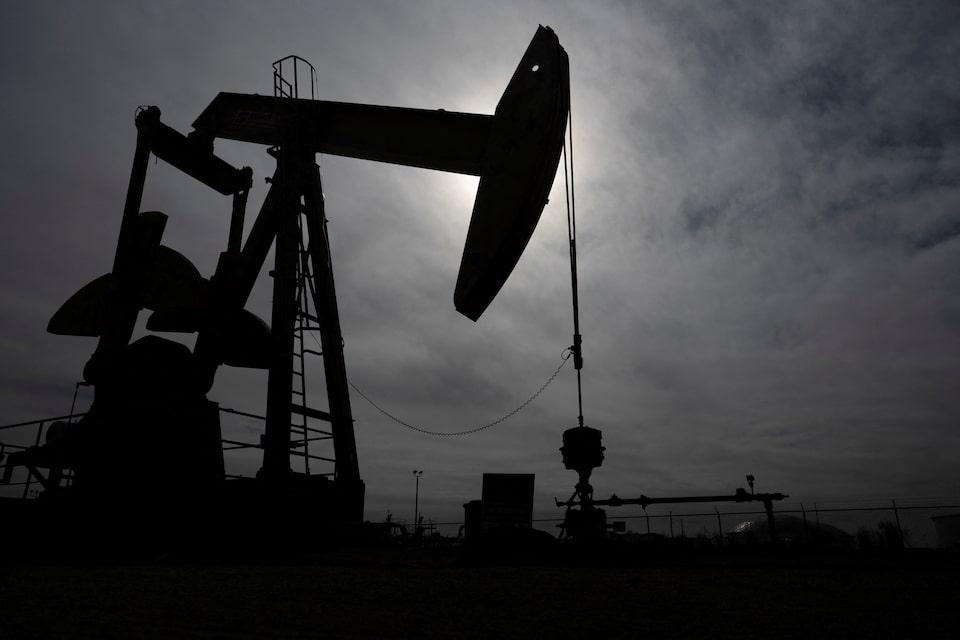
April 8 (Reuters) - Goldman Sachs forecast that Brent and WTI crude prices would be at $62 a barrel and $58 by December 2025 and at $55 and $51 by December 2026, respectively, under two assumptions. The bank, in a note dated April 7, said that the first assumption is the U.S. economy avoids a recession given a large reduction in tariffs, which are scheduled to take effect on April 9. Second, supply from eight OPEC+ countries rises moderately with two final increments of 130,000-140,000 barrels each in June-July Sign up here. However, the bank noted that in a typical U.S. recession and their OPEC baseline scenario, they estimate that Brent would decline to $58 by December 2025, and $50 by December 2026, respectively. Goldman Sachs said oil prices would likely exceed their forecast under a very sharp reversal in tariff policy. On Monday, Goldman Sachs revised down its annual average price forecasts again for Brent and WTI crude in 2026, citing increased recession risks and the possibility of higher-than-expected OPEC+ supply. U.S. President Donald Trumpramped up tariff threats against China on Monday, while the European Union outlined plans for retaliatory duties, deepening fears of a drawn-out trade war that could tip the global economy into recession. Goldman said in a global GDP slowdown scenario and keeping their OPEC baseline unchanged, Brent was estimated to decline to $54 by December 2025 and to $45 by December 2026. Goldman estimates that, in a more extreme and less likely scenario where both a global GDP slowdown and a full unwind of OPEC+ cuts occur, which would discipline non-OPEC supply, Brent prices would fall to just under $40 per barrel by late 2026. Brent crude was trading around $64.72 a barrel, as of 0603 GMT on Tuesday, while WTI was at $61.26. https://www.reuters.com/business/energy/goldman-sachs-forecasts-brent-wti-prices-under-different-scenarios-2025-04-08/
2025-04-08 06:21
STOCKHOLM, April 8 (Reuters) - The Swedish financial market is functioning well despite the recent global economic turbulence and the country is well placed to tackle turmoil, but the Riksbank is ready to act if necessary, central bank governors said on Tuesday. The tariffs announced by U.S. President Donald Trump have raised uncertainty about future inflation and the recovery of the Swedish economy, Riksbank Governor Erik Thedeen said. Sign up here. "It is clear that the range of outcomes for what might happen in the future has become much broader, both in terms of economic activity and inflation," he said. "Irrespectively, in Sweden we are in a good position to handle these developments." Thedeen said Sweden's low sovereign debt offered room for manoeuvring if necessary and that the Riksbank kept a close eye on developments. "Trade barriers are not good for economic developments, nor for inflation, and those who impose tariffs typically suffer the most themselves," he said. Separately, Deputy Governor Aino Bunge said that while U.S. trade tariffs have been raised more than expected, the impact on inflation remains uncertain, and will depend on the response from other nations. "What we see now is that the range of possible inflation outcomes has risen," Bunge said. The Swedish inflation rate remains elevated despite easing in March, she added. Last month's headline consumer price growth stood at 2.3%, down from 2.6% in February. The Riksbank targets 2% inflation. The rebound in the Swedish economy that began last year has shown signs of weakness in 2025, in household demand and the labour market, and faces uncertainty over U.S. trade policies, she said. The bank was "following developments very closely" and stood "ready to act if necessary," Bunge said. "Mainly, there are now stock market declines and not a big concern about other stability issues." https://www.reuters.com/markets/europe/swedish-riksbanks-bunge-says-turbulence-affects-inflation-economic-recovery-2025-04-08/
2025-04-08 06:19
Gold hit record $3,167.57 per troy ounce last week Prices up 16% so far this year after 27% growth in 2024 Gold's 1980 peak of $850/oz equates to $3,486 today, analyst says LONDON, April 8 (Reuters) - Gold's latest gallop to all-time highs has drawn comparisons with the last time political and economic turmoil were the main drivers of record prices, back in 1980. But market players say the nature of this rally - and potentially its ability to endure - look different. With tensions running high between historic allies over U.S. tariffs, global trade, and wars in Ukraine and the Middle East, big powers look unlikely to pull together swiftly this time to resolve the issues driving interest in bullion as a haven from risk, analysts say. Sign up here. The metal's surge above $3,000 an ounce, driven most recently by U.S. President Donald Trump's new round of tariffs on trading partners, has been the first time in a long time that geopolitics and economic uncertainty have served as the top factors moving the gold market, HSBC analyst James Steel said. Spot gold hit a record $3,167.57 per troy ounce last week and is up 16% so far this year, on top of 27% growth in 2024. While the market's trajectory won't be linear, analysts say gold's entry into uncharted territory looks more sustainable than the one seen 45 years ago. As the precious metal has an inverse correlation with trade flows, analysts said Trump's stance on tariffs - including Wednesday's announcement of Washington's steepest trade barriers in more than 100 years - has driven new investors into gold, fuelled by fear of an all-out trade war. The dollar is also typically known to be a safe-haven asset, but there are some signs of the erosion of its status as uncertainty over tariffs intensifies. More broadly, since taking office 2-1/2 months ago, Trump has upended the world order, signalling the U.S. may no longer guarantee Europe's security as Washington has since World War Two, and radically shifting the U.S. approach to war in Ukraine. He also mooted a possible U.S. annexation of Greenland. The issues driving gold 45 years ago - most notably the Iranian Revolution and the oil crisis - were remedied relatively quickly, leading gold to decline, HSBC's Steel said. "But the breakdown in international cooperation in the last few years has led to gold staying permanently high," he said. "It leads one to think… there is a bigger geopolitical bid in the market." BREAKDOWN OF COOPERATION The trade tensions are only the latest in a string of factors driving gold higher. The 2020s have seen a two-year coronavirus pandemic followed swiftly by Russia's 2022 war with Ukraine, the Chinese property market crisis, and Israel's war in Gaza. The Ukraine war involved the precedent of Western sanctions freezing half of Russia's foreign currency reserves, with Moscow managing to keep effectively only gold. That attracted non-Western central banks towards bullion as they sought to diversify their reserves away from the dollar. Monetary easing and worries about budget deficits also drove further Western investment in bullion last year. Handling any of those issues may take global cooperation of a kind not yet seen in addressing the current turmoil surrounding tariffs. "Unlike other recent crises that triggered coordinated global responses, this time there's no real prospect of policy alignment," said George Griffiths, head of dealing at brokerage AMT Futures, referring to escalating trade tensions. While the market has this year conquered a series of milestones, one more remains. StoneX analyst Rhona O'Connell noted that gold peaked at $850 in January of 1980, which in dollar terms would equate to $3,486 today. "While we have most definitely hit new highs in nominal terms, you could argue that we might not have hit it in real terms," HSBC's Steel said, referring to the 1980s milestone. That could change. The current backdrop has widened expectations of an extended run higher where 2026, instead of this year, is being seen as the peak of gold's rally. On March 26, BofA commodity strategist Michael Widmer raised his gold price forecast to $3,063 and $3,350 in 2025 and 2026 respectively, from $2,750 and $2,625 prior, and reiterated it on Sunday. He now sees spot gold prices hitting $3,500 within two years. "Calling for $3,000 was easier than calling for $3,500 for gold. But what's the other risk here?" said Widmer. "The risk is that you go back to where you were two years ago... where you have a more collaborative environment globally, no risk of trade wars, U.S. Federal Reserve raising rates, economies stabilising and the sentiment stabilising. In that case, the gold trade would be effectively over." "But I think it's unlikely." https://www.reuters.com/markets/commodities/golds-current-rally-echoes-1980s-with-more-sustainable-core-2025-04-08/
2025-04-08 06:12
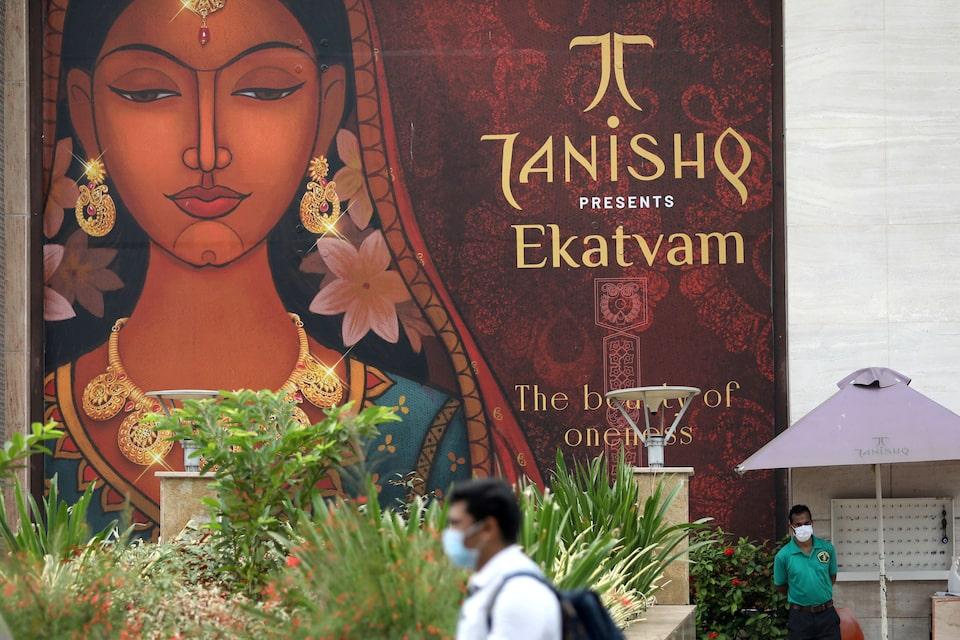
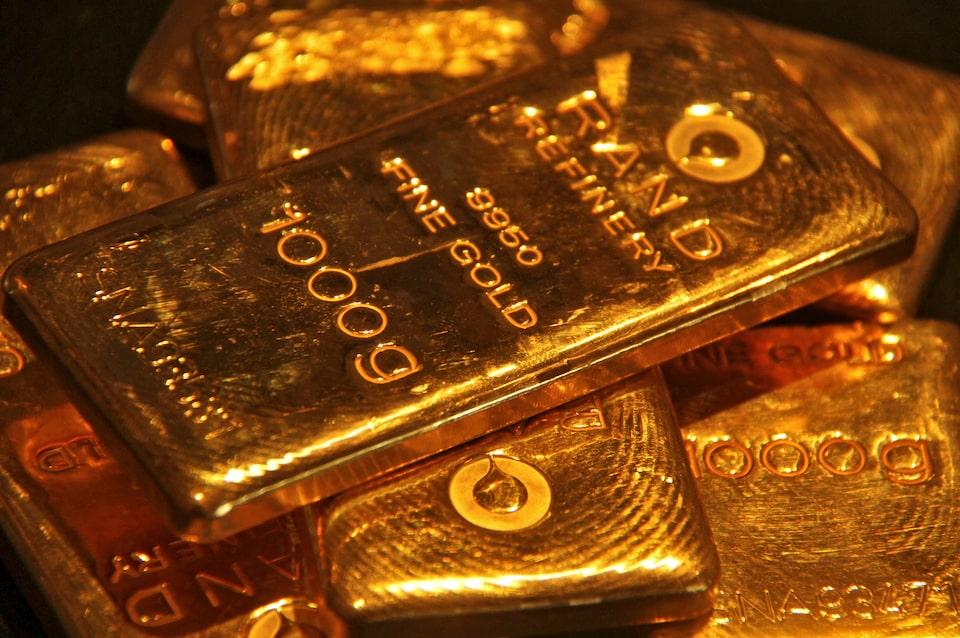
April 8 (Reuters) - Shares of Indian jeweller Titan Company (TITN.NS) , opens new tab rose as much as 5% on Tuesday to be the second-biggest gainer on the benchmark Nifty 50 index, as demand for costlier jewellery and gold coins boosted its quarterly revenue by one-fourth. Titan was last up 3.4% at 3,126 rupees in Mumbai as of 11:20 am IST while the Nifty 50 index (.NSEI) , opens new tab gained 1%. Sign up here. In the January-to-March period, Titan's stock underperformed compared with the broader market, which analysts attributed to concerns that a record rally in gold prices would affect demand in its mainstay jewellery business that includes plain and studded ornaments and gold coins. However, high prices did not deter affluent Indians from splurging on ornaments for weddings and accumulating gold as a form of investment. Titan's fourth-quarter standalone revenue growth is about one percentage point higher compared to growth in the third quarter and about eight percentage points higher than the growth a year earlier. The revenue rise was led by "high double-digit growth" in higher price bands in the jewellery segment, the company said. The jewellery business growth topped expectations of analysts at J.P. Morgan and Axis Capital, with the latter upgrading the stock to "add" from "reduce" on discounted valuations. Analysts have a "buy" rating on Titan on average, according to data compiled by LSEG, compared to a "strong buy" on peer Kalyan Jewellers India (KALN.NS) , opens new tab. Titan's margins have been under pressure in recent quarters due to higher sales of relatively lower-margin gold coins, implying stronger demand for gold as an investment. Axis Capital expects the company's margin and business mix in jewellery to normalise over the next few quarters, improving profit per share growth over fiscal years 2025 to 2027. https://www.reuters.com/markets/commodities/indias-titan-rises-record-gold-rally-boosts-jewellery-business-revenue-2025-04-08/