2025-04-08 06:04
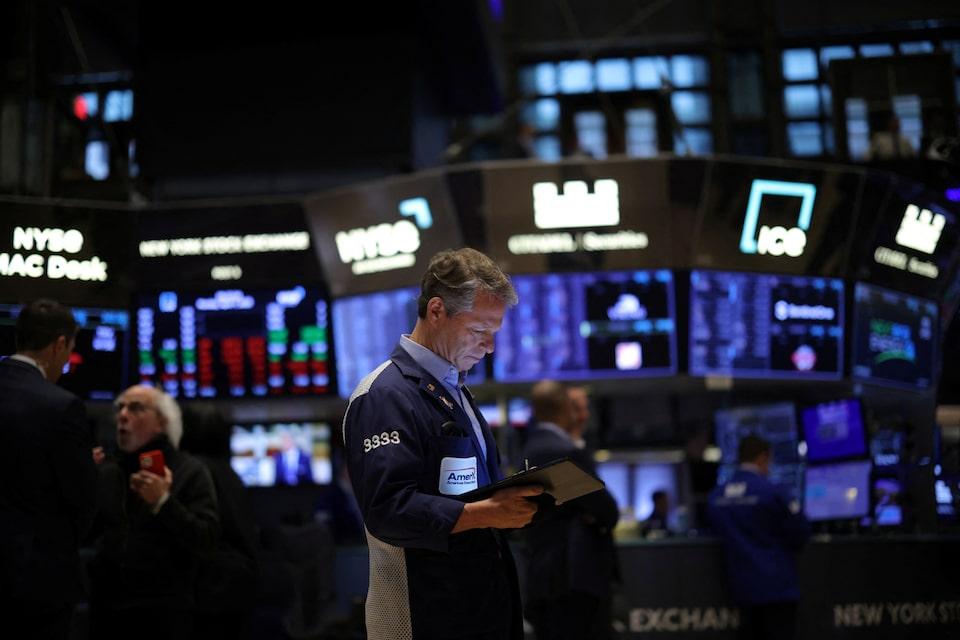
US major stock indexes end lower; US-China tariff war intensifies Euro rises on unverified reports of German coalition Oil settles lower on US-China trade war concerns NEW YORK, April 8 (Reuters) - Major stock indexes fell on Tuesday as the trade war between the United States and China intensified, while oil prices and the U.S. dollar also eased. The United States said 104% duties on imports from China will take effect shortly after midnight. The news drove up concerns about slowing growth and higher inflation that have pummelled stocks since last week. Sign up here. S&P 500 companies have lost $5.8 trillion in stock market value since U.S. President Donald Trump's tariff announcement late last Wednesday, the deepest four-day loss since the benchmark was created in the 1950s, according to LSEG data. The U.S. Treasury yield curve reached its steepest level since February 2022 on Tuesday as longer-dated yields jumped on supply concerns. On Wall Street, the S&P 500 closed below 5,000 for the first time in almost a year. Stocks had been sharply higher early in the day amid investor optimism that Washington might be willing to negotiate on some of its aggressive tariffs. "People wanted to be optimistic and eventually realized they didn't have a good reason," said Melissa Brown, managing director, investment decision research, at SimCorp. The Cboe Volatility index (.VIX) , opens new tab climbed for a fourth straight session and had its highest closing level since April 1, 2020. The Trump administration also is negotiating trade agreements with countries, including Japan, and Treasury Secretary Scott Bessent said the discussions are the result of multiple calls from other countries. The Dow Jones Industrial Average (.DJI) , opens new tab fell 320.01 points, or 0.84%, to 37,645.59, the S&P 500 (.SPX) , opens new tab fell 79.48 points, or 1.57%, to 4,982.77 and the Nasdaq Composite (.IXIC) , opens new tab fell 335.35 points, or 2.15%, to 15,267.91. MSCI's gauge of stocks across the globe (.MIWD00000PUS) , opens new tab fell 2.52 points, or 0.34%, to 742.96. The pan-European STOXX 600 (.STOXX) , opens new tab index rose 2.72%. Investors are looking ahead to the start of U.S. quarterly earnings reports this week. Adam Sarhan, chief executive of 50 Park Investments in New York, said upbeat results could potentially be a catalyst to support stocks. JPMorgan Chase (JPM.N) , opens new tab, Citigroup (C.N) , opens new tab and Wells Fargo (WFC.N) , opens new tab will kick off results on Friday. JPMorgan's CEO Jamie Dimon has warned that trade wars could have lasting negative consequences, including inflation and recession. In Treasuries, the curve between two- and 10-year note yields steepened sharply to 57 basis points, as the two maturities moved in opposite directions on a volatile day of trading. The benchmark 10-year yield rose to an 11-day high on worries about weak demand for longer-dated U.S. government debt before a sale of the notes on Wednesday. The 10-year note yield was last up 12.6 basis points on the day at 4.283%. It fell to 3.86% on Friday, the lowest since October 4. The interest-rate sensitive two-year yield reversed an earlier increase and fell 2.3 basis points to 3.715%. It had reached 3.435% on Monday, the lowest since September 2022. The euro gained following reports that German political parties had agreed to form a coalition, while the U.S. dollar weakened against major currencies and China's offshore yuan hit a record low. European equity index futures also rose after the reports. Germany's conservatives under chancellor-in-waiting Friedrich Merz on Tuesday reached a deal with the centre-left Social Democrats (SPD) to form a government, NTV reported. But two people with knowledge of the matter denied to Reuters that a deal has been reached. The dollar, which has taken a beating from the tariff turmoil, remained weak against other major currencies. The dollar index , which measures the greenback against a basket of currencies including the yen and the euro, fell 0.48% to 102.92. Oil prices ended lower amid the recession worries as the U.S.-China trade war escalated. Brent futures fell $1.39, or 2.16%, to settle at $62.82 a barrel. U.S. West Texas Intermediate crude futures settled down $1.12, or 1.85%, at $59.58. https://www.reuters.com/markets/global-markets-wrapup-1-2025-04-08/
2025-04-08 05:54
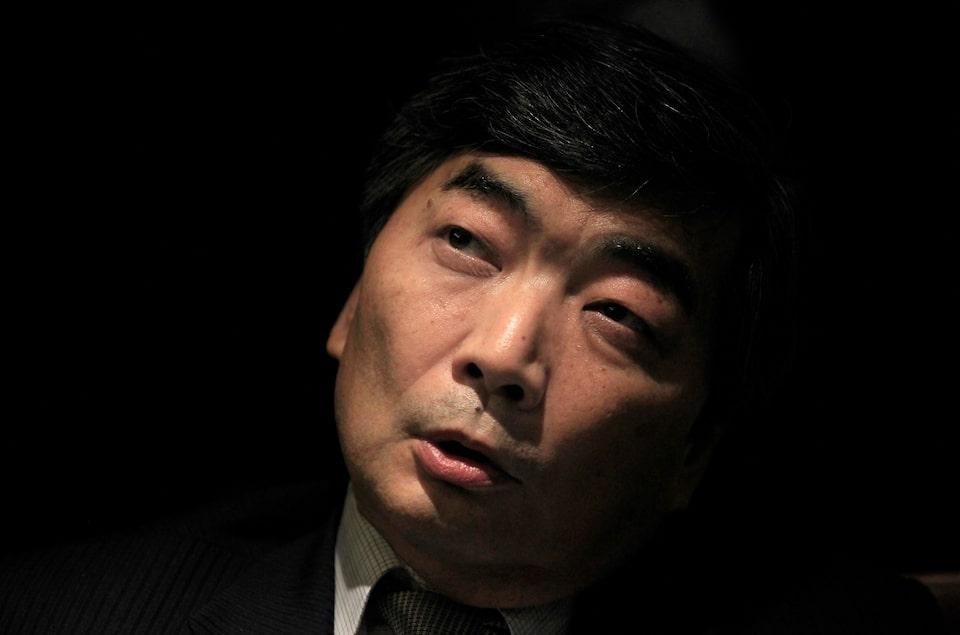
US needs China, Europe buy-in for 'Mar-a-Lago Accord' to work FX intervention, even if coordinated, less effective now Tariff damage to Japan's economy may be bigger than expected Sharp yen rise likely remains a risk for Japan policymakers BOJ should keep raising rates, but not now, Shinohara says TOKYO, April 8 (Reuters) - Any U.S. attempt to pull off a 1985 Plaza Accord-type coordinated depreciation of the dollar likely won't work as it would require the consent of China and Europe, Japan's former top currency diplomat Naoyuki Shinohara said on Tuesday. Some analysts believe the Trump administration may push through a "Mar-a-Lago Accord" - a grand bargain to weaken the overvalued dollar - to reduce the huge U.S. trade deficit. Sign up here. Unlike for the Plaza Accord when the United States could work just with close allies Japan and Germany, Washington would need to engage more countries - including the China and European Union - to weaken the dollar effectively in a globalised market, Shinohara said. Having antagonised China and Europe with his decision to impose what he describes as reciprocal tariffs, U.S. President Donald Trump will find it extremely difficult to get their consent, Shinohara added. "In times like now, you need China to be in the loop, as well as European nations. That would be quite hard under the current circumstances," Shinohara told Reuters in an interview. "Currency intervention, even if coordinated among nations, has become less effective because markets have become so big." As Japan's vice finance minister for international affairs from 2007 to 2009, Shinohara negotiated with his U.S. and European counterparts for their cooperation in curbing sharp yen rises that were hurting Japan's export-heavy economy. He was also deeply involved in world-wide efforts among policymakers to deal with the global financial crisis caused by the collapse of Lehman Brothers in 2008. "In most past shocks, one could identify the cause. For the current one driven by Trump, it's hard to tell when and how many times shocks could hit" due to the president's back-and-forth comments on tariffs, Shinohara said. "That's leaving investors unsure how to respond" and keeping markets volatile, he said. The damage from Trump's tariffs could turn out to be much bigger than expected for Japan's economy, due to its heavy reliance on U.S. exports - especially for cars, Shinohara said. "Japan's reliance on U.S. exports means once the U.S. economy falters, the damage would be extremely large," he said. "What's important is for Japan to diversify its industry away from the U.S. market." While the weak yen has been a headache for policymakers as it hurts consumption by boosting import costs, that could easily change if the currency spikes and hurts exports, Shinohara said. "Once yen rises accelerate, it will cause a huge outcry from Japan's manufacturing sector for a policy response." The United States is Japan's biggest export destination, with roughly 28% of the total comprised of automobile shipments. Trump's decision to slap a 25% levy on auto imports, and a reciprocal 24% tariff on other Japanese goods, is expected to deal a huge blow to Japan's economy with analysts predicting the higher duties could knock up to 0.8 percentage points off economic growth. On the Bank of Japan's monetary policy, Shinohara said the central bank should continue to gradually raise interest rates as inflation-adjusted, real borrowing costs remain very low. "But with market volatility so high, it's probably impossible and undesirable for the BOJ to raise rates now." https://www.reuters.com/markets/currencies/trump-wont-get-plaza-accord-type-dollar-deal-says-ex-japan-fx-diplomat-2025-04-08/
2025-04-08 05:53
China censures tariff escalation as "blackmail" Fed minutes due on Wednesday Platinum ticks up 1% April 8 (Reuters) - Gold prices drifted higher on Tuesday, aided by a global trade war between the U.S. and its main trading partners, and a softer dollar. Spot gold rose 1% to $3,013.34 an ounce by 1125 GMT, after hitting its lowest level since March 13 on Monday. U.S. gold futures gained 1.9% to $3,028.40. Sign up here. Spot gold remains nearly 15% higher for the year, hitting a record high of $3,167.57 on April 3, driven by geopolitical and economic uncertainties, strong central bank demand, and increased flows into gold-backed exchange traded funds. "Gold is rebounding supported by a weaker U.S. dollar and persistent uncertainty surrounding trade war developments," said Zain Vawda, an analyst at MarketPulse by OANDA. The U.S. dollar index (.DXY) , opens new tab edged down making greenback-priced bullion less expensive for overseas buyers. China refused to bow to what it called "blackmail" from the U.S. as a global trade war ignited by President Donald Trump's sweeping tariffs showed little sign of abating. The European Commission said it had offered a "zero-for-zero" tariff deal, while striking back with 25% tariffs on some U.S. imports. "If tariffs continue to create uncertainty for market participants alongside anticipation of further rate cuts, this combination could pave the way for a renewed rally in gold prices," Vawda added. The markets will be closely monitoring minutes from the U.S. Federal Reserve's latest policy meeting due on Wednesday. Traders are expecting a 97-basis-point rate cut by the Fed by the end of the year, with 40% anticipating it to begin as early as May. Zero-yield bullion tends to thrive in a low interest rate environment. "The $3,000 is a very important psychological level so that's an important support level right now... (and) if it goes through the resistance level of $3,050 then I can see it's reaching $3,100," said Ricardo Evangelista, senior analyst at brokerage firm ActivTrades. Spot silver rose 0.7% to $30.34 an ounce, platinum firmed 1.4% to $925.55 and palladium was steady at $919.03. https://www.reuters.com/markets/commodities/gold-rises-trade-war-jitters-revive-safe-haven-demand-2025-04-08/

2025-04-08 05:49
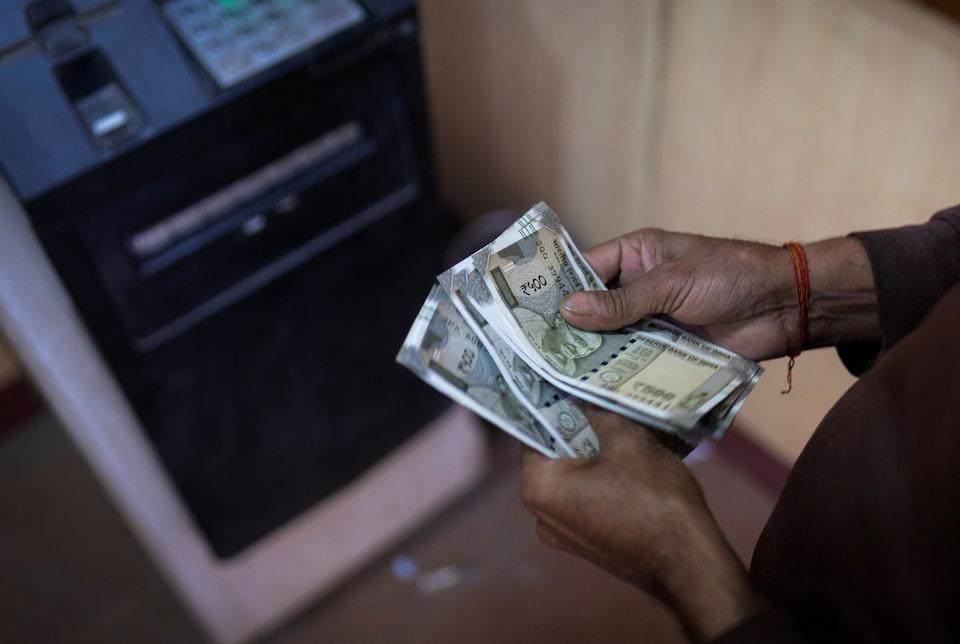
MUMBAI, April 8 (Reuters) - The market turmoil unleashed by the U.S. reciprocal tariffs has pushed up the Indian rupee's volatility expectations to a near two-year high as traders grapple with the economic and geopolitical implications of a trade war. While the rupee was only modestly weaker at 85.90 per U.S. dollar as of 11:00 a.m. IST on Monday, its one-month implied volatility , a gauge of future expectations was hovering around 4.5%, the highest since August 2023. Sign up here. This increase resembles the move in the rupee's Asian peers amid the flurry of trade tariff developments. For instance, the most recent salvos between China and the United States have contributed to pushing the offshore Chinese yuan's 1-month implied volatility to a multi-month peak of 7.1%. There has been some "panic hedging activity" from both exporters and importers, which has contributed to the heightened two-way movement on the rupee, a trader at a state-run bank said. A broadly weaker dollar had lifted the rupee to its year-to-date high last week and spurred a pickup in importer hedging. But the currency reversed course this week after China hit back with a threat of matching the 34% U.S. tariffs, which prompted President Donald Trump to threaten even higher levies. The rupee's U-turn also prompted some exporters to become active again, the trader added. "The broader trend of rupee for the next one month could be between 84.50 and 86.50," said Anil Bhansali, head of treasury at Finrex Treasury Advisors. "Exporters need to hedge near 86.00 levels to protect their costing, while importers may wait for further hedging till 85.25." Meanwhile, dollar-rupee far forward premiums retreated after touching a near three-month peak on Monday as near-tenor US bond yields rose. The one-year implied yield was down 5 basis points at 2.35%. https://www.reuters.com/markets/currencies/trade-war-woes-boost-rupee-volatility-expectations-two-year-peak-2025-04-08/
2025-04-08 05:46
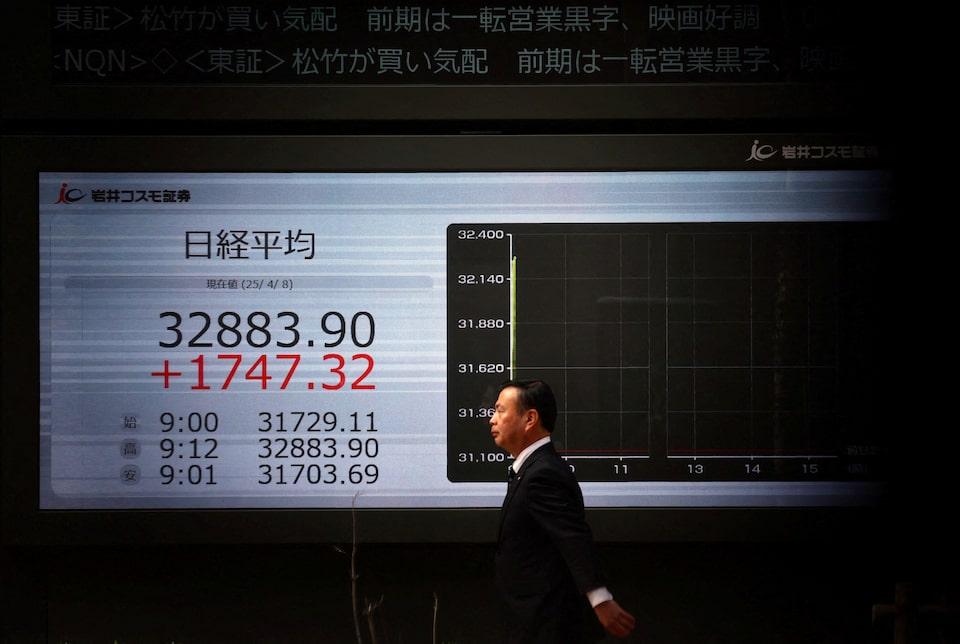
Euro gains after reports German parties reach coalition agreement Chinese currency weakens Investor sentiment recovers slightly with stocks higher Safe-haven yen and Swiss franc also higher NEW YORK/LONDON, April 8 (Reuters) - The Euro gained on Tuesday following reports that German political parties had agreed to form a coalition, while the U.S. dollar weakened against major currencies and China's offshore yuan hit a record low. Germany's conservatives under chancellor-in-waiting Friedrich Merz on Tuesday reached a deal with the centre-left Social Democrats (SPD) to form a government, NTV reported. But two people with knowledge of the matter denied to Reuters that a deal has been reached. Sign up here. Investors have been focused on the trade disputes sparked by President Donald Trump's sweeping tariffs that have roiled markets for three days. The euro was last up 0.52% at $1.0958 after falling for the two previous days. The Japanese yen and Swiss franc continued to benefit from appetite for safe havens, however, as investors remain concerned about the potential for a global recession. Markets are bracing for a war of attrition between the U.S. and China. Beijing has refused to bow to what it called "blackmail" and vowed to "fight to the end" after Trump threatened to ratchet up tariffs to 104% in response to China's decision to match "reciprocal" duties Trump announced last week. Trump said on Tuesday that he is waiting to hear from China before duties take effect. U.S. Trade Representative Jamieson Greer told U.S. senators on Tuesday that the Trump's administration will not back down from its trade strategy in the near term. China's offshore yuan hit its lowest level since it started trading in 2010, at 7.3815 per dollar. It was last down 1.05% against the greenback to 7.423 per dollar. The dollar weakened 1% to 146.30 yen against the Japanese yen and was down 1.48% to 0.84780 franc against the Swiss franc . Marvin Loh, senior global market strategist at State Street in Boston, said the dollar's underperformance against its peers has been partly driven by recession worries in face of tariffs. Currencies that often fare well when stock markets are rising also recovered, with the pound up 0.44%. The Australian dollar was down 0.36% after giving up gains early in the session. Both currencies dropped in the previous two sessions. Investors on Tuesday gleaned some positive signs from the Trump administration about tariff talks. Treasury Secretary Scott Bessent said on Monday he hoped negotiations would bring levies down. Trump said Japan was sending a team to start negotiations, helping Japanese equities rally sharply overnight. On Wall Street, all three main indexes finished lower on the session, clawing back gains in early trade, after falling sharply last week following Trump's tariff announcement. Japan's Nikkei (.N225) , opens new tab closed up 6.03% overnight in Asia. "When you kind of look at it over the course of the last week, the dollar and Treasury yields haven't really responded as aggressively as you would think given how the move on the equity side of things has been," Loh added. The dollar index , which measures the greenback against a basket of currencies including the yen and the euro, fell 0.48% to 102.92. The index has fallen around 0.7% since Trump announced the tariffs on April 2, as investors have weighed up the hit to the U.S. economy against the currency's typical role as a shield from market slumps. Juan Perez, director of trading at Monex USA, said the weakness in the dollar can be attributed in part to equity market recovery in parts of Asia and some of the opposition that Trump's tariffs are facing in Congress, including from Republicans. "There seems to be, at least within the market, that there is a potential from Trump to change his mind and because of that that's why you're seeing some of this movement across the board," Perez said. https://www.reuters.com/markets/currencies/dollar-fragile-traders-look-safe-havens-tariff-turmoil-2025-04-08/
2025-04-08 05:03
NEW YORK, April 8 (Reuters) - A dramatic U.S. stock slide is fanning fears of even more dire scenarios for the market, as investors weigh the potential for a prolonged global trade war and a much dimmer corporate profit outlook. Stocks swung wildly on Monday, with the benchmark S&P 500 (.SPX) , opens new tab down well over 4% at one point, as investors continued to grapple with President Donald Trump's sweeping tariffs that last week drove the biggest weekly drop for the stock market since the onset of the COVID-19 pandemic five years ago. Sign up here. With so much unclear about where the tariff battle will lead, Wall Street strategists contemplated how much more of a beating stocks could take, including that the S&P 500 could fall by nearly half from its February 19 all-time high. The index ended on Monday at 5,062.25, down more than 17% from that peak. Matthew Maley, chief market strategist at Miller Tabak, said a decline in the S&P 500 in coming months to 4,300 was "very possible," and a fall to 4,000 or lower was not out of the question. Trade tumult aside, Maley said, markets had been overly optimistic about the near-term profit potential from artificial intelligence and not properly factoring in weakening consumer behavior. "This is more than tariffs," he said. "This is the process of the market falling back in line with its underlying fundamentals." The worst-case scenarios from some analysts saw the S&P 500 dropping as much as roughly 50% from its all-time high, which would be akin to the aftermath of the bursting of the dot-com bubble in 2000. The recent drop has been one of the steepest concentrated selloffs for U.S. stocks, on par with the speed and intensity of drawdowns seen during the COVID-19 swoon in 2020 and the financial crisis slide in 2008, and has put the S&P 500 close to bear market territory. The S&P 500's combined 10.5% decline last Thursday and Friday was the index's fourth biggest two-day drop since 1950, according to Keith Lerner, co-chief investment officer with Truist Advisory Services. The biggest two-day falls occurred in March 2020, when COVID-19 was hitting; in November 2008, during the financial crisis; and in 1987, for the two-day period that included Wall Street's "Black Monday." Despite the wild swings on Monday, the S&P 500 ended down just 0.2%. Even so, the Cboe Volatility index (.VIX) , opens new tab, Wall Street's "fear gauge," registered its highest closing level in five years. JPMorgan equity strategists on Monday outlined a year-end S&P 500 target of about 4,000 as their "bear case," which included assumptions of no tariff relief and a 2026 earnings view that implied two years of no real profit growth. Evercore ISI offered a "bear" outcome of 4,500 for the S&P 500 and a "SuperBear" case of 3,100, which would be a drop of nearly 50% from the February high. The SuperBear scenario involves a recession that takes down annual corporate profits by about 15%, as well as disruption in credit markets and difficulty raising the debt ceiling, Evercore strategists said in a note on Sunday. Michael Purves, CEO of Tallbacken Capital Advisors, said a combination of "some (valuation) contraction, some earnings contraction" could push the index down to 4,000. "It's not an unrealistic scenario at all," Purves said. Like Purves, investors pointed to two potential reasons that create the potential for further weakness in stocks: valuations that are moderating from expensive levels and the possibility of more severe cuts to earnings estimates. The forward price-to-earnings ratio for the S&P 500 fell from 22.4 times expected 12-month earnings in February, to 18.4 as of Friday, which is in line with the index's average P/E ratio of the past 10 years, according to LSEG Datastream. But the longer-term 40-year average P/E ratio is 15.8 -- still 14% below Friday's level. The P/E ratio sank to as low as 15.3 as recently as 2022, when the Federal Reserve was raising interest rates to bring down spiking inflation. Current valuations also are based on earnings expectations that many investors say have yet to adequately reflect the likely economic damage from the tariffs. S&P 500 earnings are still expected to rise 10.4% in 2025, according to an LSEG IBES report on Friday. However, during recessions, earnings fall at an average annual rate of 24%, according to Ned Davis Research. "If it's a 50% probability of recession, you've got to look at another 20%-25% down in equities from here," Colin Graham, head of multi-asset strategies at Robeco in London, said during trading on Monday. To be sure, even investors who feared steep fallout for stocks did not think these were the most likely scenarios. Evercore strategists, for example, on Sunday set a year-end price target of 5,600 for the S&P 500, or a 10% gain from current levels, even as they described more negative potential outcomes. Markets also could be poised to rally on any news of possible trade relief. Stocks briefly rose on Monday on a report that said Trump was considering a 90-day pause on tariffs, before the White House denied the report, sending the market lower. "The only thing that's going to help both sentiment and the market's direction is going to be some easing of the entrenched tariff views," said Michael James, managing director of equity trading at Rosenblatt Securities. "We're going to need some form of moderation on those tariff levels to have any potential for meaningful improvement." https://www.reuters.com/markets/us/tariff-driven-wall-street-pain-sparks-investors-weigh-more-gloomy-scenarios-2025-04-08/