2025-04-08 04:53
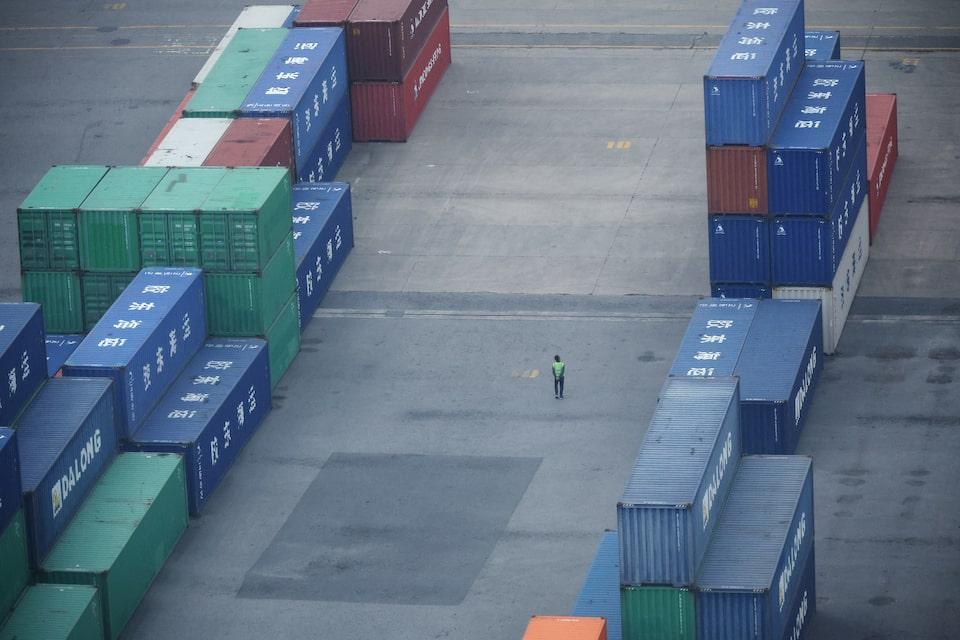
April 8 (Reuters) - Mexico has been speaking to private sector companies about increasing fracking to reduce its reliance on U.S. gas amid heightened trade tensions between the two countries, the Financial Times reported on Tuesday. Imports, which are almost entirely from the United States, meet 72% of the total demand for natural gas consumed in Mexico. Sign up here. Any policy change to effect the expansion in fracking could, however, take months to materialise with the discussions still being at a preliminary stage, the FT said, citing four executives with knowledge of the discussions, who added that companies are interested in investing. RBN Energy, a market advisory service, wrote in a recent note that U.S. imports, mostly from the Permian and the Eagle Ford Basins, have increased threefold over the past decade. Mexico's own production has declined rapidly, it noted, adding that much of its gas is considered unusable because of the high nitrogen content. Mexico has already been weighing measures to double its strategic natural gas storage capacity over fears that U.S. President Donald Trump could use the country's dependence on U.S. gas as some form of leverage. Natural gas is used mainly to generate electricity and for industrial activities. The vast majority of natural gas imports to Mexico are carried by pipeline. https://www.reuters.com/business/energy/mexico-weighs-increasing-fracking-reduce-reliance-us-gas-ft-reports-2025-04-08/

2025-04-08 04:42
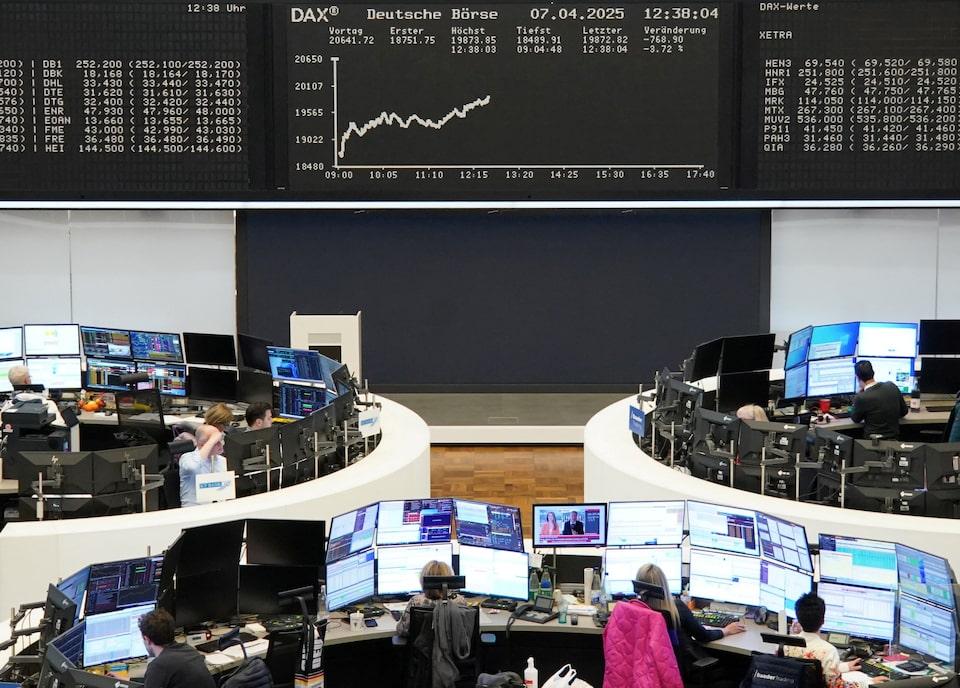
A look at the day ahead in European and global markets from Kevin Buckland European investors still staggering from a nearly 12% plunge over three days in their regional stock benchmark are waking up to a futures market pointing more than 3% higher. Sign up here. So what gives? President Donald Trump has hardly backed down in his assault on perceived trade disparities, even doubling down on China by threatening additional 50% levies that would take the combined total well above 100%. Wall Street didn't exactly have a stellar day - although an overall flat close would have come as a welcome respite after a 10% tumble over the previous two sessions. The most remarkable thing about Monday's trading was the volatility, with the VIX (.VIX) , opens new tab fear gauge popping above 60 for only the second time since the pandemic. All of this raises suspicions of whether the bounce in markets will last, and even a 3% rebound in the STOXX 600 (.STOXX) , opens new tab wouldn't make up much of the rout since Trump's "Liberation Day" tariff announcement last Wednesday. But a glance around Asian markets quickly reveals the standout winner: Japan. Among the first signs that Trump's tariffs may after all be just a starting point for negotiations, Treasury Secretary Scott Bessent is leading a team that will talk trade with Tokyo in the coming days. At the same time, there is a definite differentiation across geographies. Japan's 6% stock market rally (.TOPX) , opens new tab is in stark contrast to a 5% sell-off in Taiwan (.TWII) , opens new tab, which faces 32% levies and relies heavily on chip exports. Asian emerging markets have been punished with among the steepest of Trump's tariff rates, with no let-up in the stock rout. Thailand's benchmark (.SETI) , opens new tab dropped to a five-year trough, and Indonesia came back from a week-long break to a 9% plunge in its stock market and a record low for the rupiah. Key developments that could influence markets on Tuesday: - ECB policy maker Olli Rehn speaks in Helsinki - German Finance Minister Christian Lindner speaks in Berlin - ECB board member Luis de Guindos speaks at Spanish Banking Association gathering in Madrid - Bank of England Deputy Governor Clare Lombardelli speaks in London - Riksbank Governor Erik Thedéen speaks about the economy in Stockholm - Norges Bank Governor Ida Wolden Bache gives a speech in Oslo - San Francisco Fed President Mary Daly speaks in Provo, Utah Trying to keep up with the latest tariff news? Our new daily news digest offers a rundown of the top market-moving headlines impacting global trade. Sign up for Tariff Watch here. https://www.reuters.com/markets/europe/global-markets-view-europe-2025-04-08/
2025-04-08 04:34
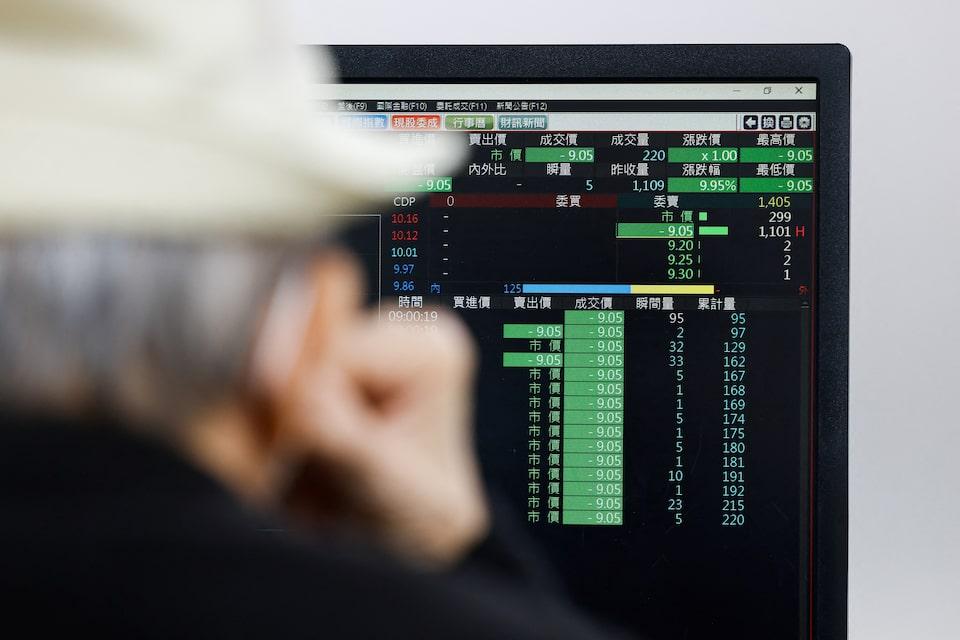
HONG KONG, April 8 (Reuters) - Policymakers across Asia are preparing measures to support financial markets as a rout deepened following sweeping tariffs announced by U.S. President Donald Trump that stoked widespread recession worries. Here are some of the announcements so far: Sign up here. CHINA China's sovereign fund Central Huijin Investment said it was increasing holdings in China stocks, and it has bought China-listed shares via exchange-traded funds and will continue to increase holdings to "safeguard the smooth operation of the capital market." Several Chinese state holding companies have followed suit and vowed on Tuesday to increase share investment, while a slew of listed companies announced share buy-backs to support prices. After a brutal market rout on Monday, the markets stabilized a bit on Tuesday, aided by Beijing's support. INDONESIA Indonesia's central bank has and will continue to aggressively intervene in the markets to support the rupiah after the currency slumped to a record low, a Bank Indonesia official told Reuters on Tuesday. Bank Indonesia will continue to monitor markets and will stabilise the rupiah to maintain investor confidence, the official said. The country's stock market operator unveiled a set of measures ahead of the market open to stem the expected slide in the bourse. It said a fall of 8% would trigger a 30-minute suspension in trading, while a fall of more than 20% in the main index would see trading suspended for the rest of the day. The index dropped 9% at the open. TAIWAN Taiwan's top financial regulator said it would impose temporary curbs this week on short-selling of shares to help deal with potential market turmoil from the tariffs. The Taiwan Stock Exchange chairman said the bourse would coordinate with the financial regulator to take further stabilisation steps if needed to handle any volatility. SOUTH KOREA South Korea's financial regulator asked firms and state institutions to be prepared to provide liquidity support for exporting companies and their contractors impacted by tariffs, and said it would prepare a market stabilising programme worth 100 trillion won ($68.08 billion). The Bank of Korea said it stood ready to deploy market stabilising measures. THAILAND Thailand's stock exchange said on Monday it would impose measures including lowering the ceiling and floor limit on stock trading to 15% from 30%, and a ban on short-selling during April 8-11 to mitigate potential volatility. The benchmark index (.SETI) , opens new tab slumped nearly 5% on Tuesday, hitting its lowest level since March 2020. https://www.reuters.com/markets/asia/what-measures-are-asian-policymakers-taking-market-rout-deepens-2025-04-07/
2025-04-08 04:21
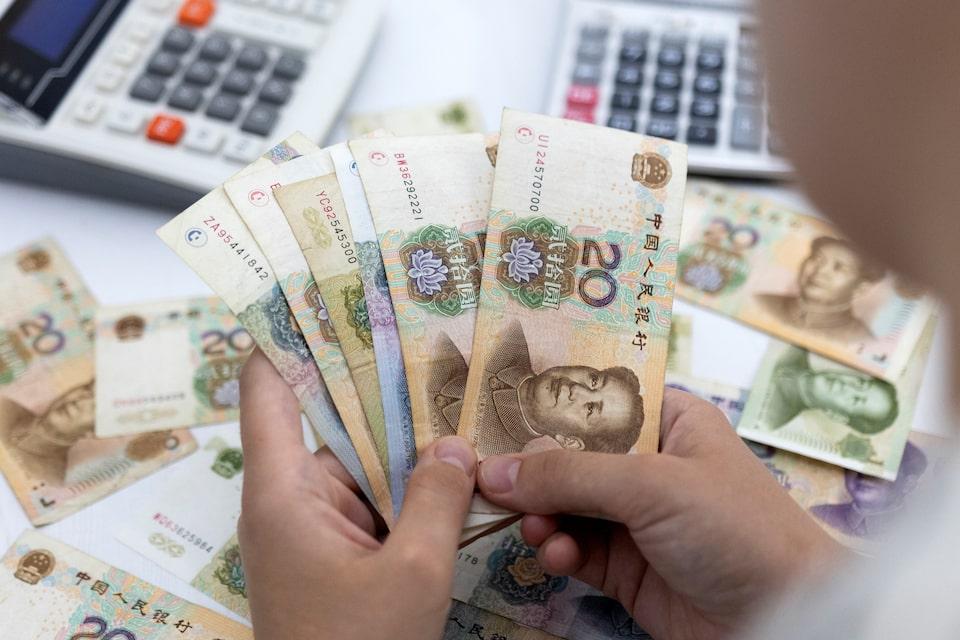
Yuan weakens amid escalating US-China trade war Yuan weakness seen counteracting export pressures PBOC unlikely to pursue sharp yuan depreciation, analysts say SHANGHAI, April 8 (Reuters) - China's yuan fell to its weakest level since 2023 on Tuesday after the central bank slightly loosened its grip on the currency in what analysts said was an attempt to counteract the blow to exports from an intensifying global trade war. The escalating tariff spat between the world's two largest economies showed few signs of abating. U.S. President Donald Trump threatened to increase duties further on China, following their tit-for-tat tariffs on each other's goods last week. Sign up here. "After the market saw China's firm retaliation on Friday, expectation for China to eventually devalue the currency has jumped and the pressure won't go away easily," said Ju Wang, head of Greater China FX & rates strategy at BNP Paribas. A weaker yuan would make exports cheaper and alleviate some pressure on China's trade and the broader economy, but a sharp decline could fuel unwanted capital outflow pressure and risk financial stability, some analysts and economists said. "Beijing's more strident stance on U.S. tariffs could align with some softening in the yuan to better absorb incoming shocks," Vishnu Varathan, head of macro research for Asia excluding Japan at Mizuho Bank. "But the People's Bank of China will not desire or pursue sharp depreciation as financial stability features." Prior to market opening, the PBOC set the midpoint rate , around which the yuan is allowed to trade in a 2% band, at 7.2038 per dollar, the weakest level since September 11, 2023 but firmer than a Reuters' estimate of 7.3321. Market participants have been waiting to see when the central bank will allow the official midpoint to fall past a key 7.2 per dollar, as that could open the way for a decline to 7.35, a level last seen in 2023 and the weakest yuan setting since the 2008 global financial crisis. Based on Tuesday's fixing, the spot rate is allowed to fall as far as 7.3479. Traders and analysts also pointed out the much-weakened official midpoint remained significantly stronger than market projections, suggesting authorities are still keen to preserve some currency stability and prefer the depreciation in an orderly manner. The widening gap between guidance fix and market estimates "still underscored the strong desire for control," Maybank analysts said in a note. "We see a possibility of a measured depreciation as China heads into a potential negotiation/escalation that could be negative for the yuan." The softer midpoint fixing dragged the onshore yuan down to a trough of 7.34 per dollar in early trade, the weakest level since September 11, 2023. It was last changing hands at 7.3290 as of 0340 GMT. Its offshore counterpart weakened to a two-month low of 7.3677 before giving back all intraday losses to trade 0.05% higher at 7.3430 as of 0340 GMT. Both onshore and offshore yuan have lost about 1% against the dollar so far this month, leaving them slightly weak for the year, pressured by fears of the economic impact of U.S. tariffs. "Faced with Trump tariffs, Beijing will retaliate with a mix of tariff and non-tariff measures, but a sharp yuan depreciation (>10%) is not very likely in our view," said Larry Hu, chief China economist at Macquarie. "Beyond its revealed preference for currency stability, Beijing may also want to be seen as a global stabilizing force in such turbulent times." In equity markets, China and Hong Kong stocks rose on Tuesday, steadying in the wake of stronger regional markets and government-led support. LEVELS AT 0340 GMT: https://www.reuters.com/markets/currencies/chinas-yuan-hits-2023-lows-signs-pboc-is-tolerant-some-weakness-2025-04-08/
2025-04-08 02:08
FX talks will remain in hands of Japan, U.S. finance chiefs PM Ishiba considering visiting U.S. again for talks with Trump Bessent pick may influence BOJ policy, some analysts say TOKYO, April 8 (Reuters) - Japan's Economy Minister Ryosei Akazawa has been appointed as trade negotiator with the United States, the government's top spokesperson said on Tuesday. Bilateral discussions on exchange-rate moves will continue to be managed by Japan's finance minister and the U.S. treasury secretary, Chief Cabinet Secretary Yoshimasa Hayashi told a news conference. Sign up here. Japanese Prime Minister Shigeru Ishiba is considering another visit to the United States for discussions with U.S. President Donald Trump "at the most appropriate timing", with progress in ministerial-level talks being a key consideration, Hayashi said. The appointment, made by Ishiba, came after the Japanese prime minister and Trump agreed to initiate bilateral discussions on tariffs in a telephone meeting on Monday. Trump has designated Treasury Secretary Scott Bessent and U.S. Trade Representative Jamieson Greer to oversee trade negotiations with Japan, Bessent said on social media. "The fact the treasury secretary was appointed (to lead trade talks with Japan) may suggest the U.S. administration has a strong interest in areas he oversees," Akazawa told a news conference on Tuesday. Bessent's appointment as the head of U.S. trade talks with Japan has heightened speculation among some investors that Washington may pressure Tokyo to help weaken the dollar against the yen, as part of a deal to reduce U.S. tariffs on Japan. A weaker dollar could enhance U.S. exports, while a firmer yen might help moderate rising import costs that have hurt Japanese consumers, some analysts say. "Pressure from Trump, coupled with the Japanese government's intention to prop up the yen against the dollar, could have an influence on the likelihood of further interest rate hikes by the Bank of Japan," Yasunari Ueno, chief market economist at Mizuho Securities, wrote in a research note. The BOJ raised interest rates to 0.5% in January and its officials have signaled their readiness to hike rates further if Japan makes progress toward durably achieving its 2% inflation target, or if the risk of excessively high inflation materialises. https://www.reuters.com/world/asia-pacific/japans-economy-minister-akazawa-head-trade-talks-with-us-fnn-reports-2025-04-08/
2025-04-08 00:45
South Korea's trade minister travels to US for talks South Korea, Japan are key US allies, but face tariffs White House prioritizing allies in tariff talks, adviser says Shipbuilding, energy deals potential areas of focus WASHINGTON/SEOUL, April 8 (Reuters) - U.S. President Donald Trump said he discussed tariffs, shipbuilding and potential energy deals in a "great call" with South Korea's acting President Han Duck-soo on Tuesday, a day before a 25% tariff on the Asian ally is scheduled to kick in. "We have the confines and probability of a great DEAL for both countries. Their top TEAM is on a plane heading to the U.S., and things are looking good," Trump said on social media. Sign up here. South Korea's trade minister is traveling to Washington to meet U.S. Trade Representative Jamieson Greer for tariff negotiations. Han said in the call with Trump that he hoped to strengthen and expand the U.S.-South Korea alliance and that he was willing to cooperate to achieve a balance in trade as well as on shipbuilding and liquefied natural gas, South Korea's Yonhap news agency reported. Details of the call came as White House economic adviser Kevin Hassett said U.S. negotiators are prioritizing allies as they move forward on trade, focusing on large trading partners that have long had big trade surpluses with the United States. "The president will decide when and if to talk with China, but right now, we've received the instruction to prioritize our allies and our trading partners like Japan and Korea and others," he told Fox News. South Korea and Japan are longstanding security allies of the United States, hosting large numbers of U.S. troops, and are key partners in U.S. efforts to push back against China's growing power in Asia and beyond. They also have large trade surpluses with Washington, but have not escaped Trump's global tariff program. Trump said on Monday that Japan is sending a team to negotiate on trade and that he spoke with Japanese Prime Minister Shigeru Ishiba, who separately said he told Trump to rethink tariff policies. Greer told Congress on Tuesday that exemptions to Trump's global tariffs are not expected in the near term. With nearly 70 countries approaching the administration for talks, discussions could stretch into June, U.S. Treasury Secretary Scott Bessent told Fox Business Network's Larry Kudlow on Monday. ALASKA ENERGY PROJECT Trump will be personally involved in the negotiations, Bessent told CNBC's Squawk Box on Tuesday, citing as an example a potential energy deal in Alaska. Trump wants Japan, South Korea, and Taiwan to join a $44-billion project that envisages transporting natural gas from Alaska's remote north to East Asia from 2030. Trump said last month Japan and South Korea wanted to join the project, although Japanese energy companies have said they remain unconvinced about its viability. "We will see ... what our trading partners offer," Bessent said. "There is talk of a big energy deal in Alaska where the Japanese and perhaps the Koreans, perhaps the Taiwanese ... would take a lot of the off-take and provide financing for the deal." "That could be an alternative for them to come forward with that, because not only would that provide a lot of American jobs, but it would narrow the trade deficit. Everything's on the table." White House Press Secretary Karoline Leavitt told a regular news briefing U.S. military presence and foreign aid could be part of trade talks, bringing to mind repeated calls by Trump for Japan and South Korea to pay more to cover the cost of stationing U.S. troops there. "The president ... is going to have a custom, tailor-made approach to each and every country, and if that means discussions of foreign aid, of our military presence in these countries, how those troops are paid for ... that could be part of the negotiation," she said. Han told CNN in an interview he would "clearly like to negotiate" over reducing tariffs and that Seoul would not band together with China, Japan or other countries to retaliate. Trade Minister Cheong In-kyo said before heading to Washington on Tuesday Seoul has been considering measures to increase imports from the United States and that it was good news Trumphad said the door was open for talks on tariffs. "It is difficult to reduce exports, so shouldn't we then increase (U.S.) imports? In that regard, we have been reviewing many different packages of measures to resolve the trade balance problem," Cheong said, noting internal discussions about increasing U.S. LNG imports. Cheong added he would dispute Washington's calculation of its 25% tariff on South Korea, which he called "problematic" given the two countries' free trade pact. https://www.reuters.com/world/asia-pacific/south-korea-trade-minister-says-considering-measures-boost-us-imports-2025-04-08/