2025-04-08 00:29
April 7 (Reuters) - Chicago Federal Reserve Bank President Austan Goolsbee on Monday said businesses are anxious about U.S. President Donald Trump's tariffs but that the central bank would need to look at "hard data" in its policy response. "The anxiety is if these tariffs are as big as what are threatened on the U.S. side, and if there's massive retaliation, and then if there's counter-retaliation again, it might send us back to the kind of conditions that we saw in '21 and '22 when inflation was raging out of control," Goolsbee said in an interview with CNN. Sign up here. However, he also acknowledged the uncertainty around the outcomes and the possibility that negotiations could lead to new trade agreements and avoid tariffs of more than 100%, referring to U.S. Treasury Secretary Scott Bessent's pledge of a "golden age of trade". Global stocks have plummeted since Trump announced a set of sweeping tariffs last week, triggering an escalating trade war. China and the European Union swiftly countered by proposing higher tariffs of their own, which Trump in turn threatened to fight with even higher duties. Goolsbee said the current anxiety could change consumer and business spending, which in turn might require the Fed to respond. However, the precise nature of that response would depend on how prices and economic growth moved and the duration of those trends. "Our job is to look at the hard data," Goolsbee said. "And if we have something that's both deteriorating economic growth and driving up the prices - that is to say, something that is stagflationary - there is not a generic answer to what the Fed should do in response to that." https://www.reuters.com/markets/us/feds-goolsbee-says-theres-lot-anxiety-over-tariffs-2025-04-08/
2025-04-08 00:09
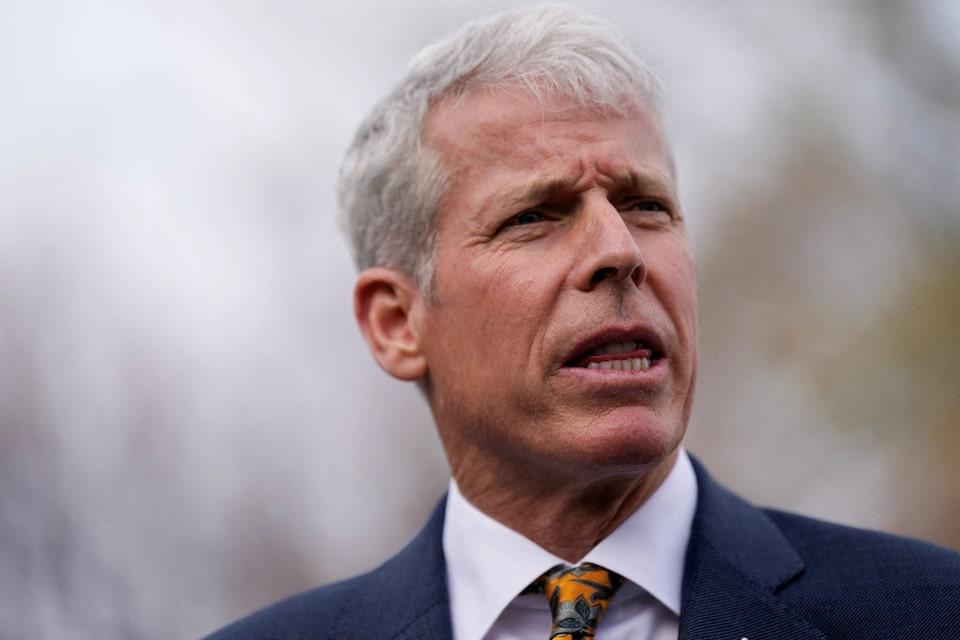
Wright heads to Saudi, UAE and Qatar Trip to focus on building relations, investments in U.S. Trip comes after Trump said U.S. and Iran having direct talks Wright, a former fracker, to visit oil, gas fields, nuclear plant WASHINGTON, April 7 (Reuters) - U.S. Energy Secretary Chris Wright on Wednesday will launch a nearly two-week tour of three Middle East countries, including Saudi Arabia, marking his first visit as a U.S. official to the de facto leader of the OPEC oil producer group, a source familiar with the matter told Reuters. The trip, which will also include visits to Qatar and the United Arab Emirates, is expected to help lay the groundwork for President Donald Trump's own visit to those countries likely in mid-May. It comes at a critical time, on the heels of Trump's surprise announcement on Monday that the U.S. and Iran are having direct talks on Tehran's nuclear program and as global oil prices hit a near four-year low. Sign up here. Oil prices have fallen on worries that Trump's latest tariffs could push economies around the world into recession at the same time OPEC+ oil producers speed up increases in production. Wright will start his trip in the United Arab Emirates, followed by Saudi Arabia over the weekend, and then Qatar, and he will also meet with the leaders of some of the countries, the Energy Department source said. Trump has said he wants to drive Iran's oil exports to zero to prevent Iran from getting a nuclear weapon. Increased oil output from other global producers could help prevent a politically damaging price spike if Washington's sanctions cut the exports. Low oil prices could also help the United States by pressuring Russia, another top oil exporter, to come to an agreement over its war in Ukraine by choking some of the revenue Moscow depends on to fund the fighting. The source said that Wright will likely have conversations about ensuring an abundant global supply of oil beyond countries where the United States has sanctions on oil exports including Iran, Venezuela and Russia. Discussions will also center on investments by the three countries in the United States after the UAE last month committed to a 10-year $1.4 trillion investment framework in AI infrastructure, semiconductors, energy and manufacturing. Trump in January asked Riyadh to increase a planned U.S. investment package to $1 trillion from an initial $600 billion. Wright, who led fracking company Liberty Energy (LBRT.N) , opens new tab before becoming secretary, speaks often about how U.S. oil companies can lower production costs as a way to deal with lower crude prices. The source said Wright will tour oil and gas production sites in the Middle East, looking at ways to cut costs. He will also visit the nuclear power plant in the UAE, the source said. Saudi Arabia also wants to develop commercial reactors, though unlike the UAE, Saudi Arabia has resisted strict proliferation agreements related to nuclear power. Crown Prince Mohammed bin Salman has said the kingdom would develop nuclear weapons if its rival Iran does, raising proliferation experts' concerns about a potential nuclear arms race in the Middle East. Wright's visit will come weeks after he met with Israeli Energy Minister Eli Cohen, who proposed to him an oil pipeline running from Saudi Arabia to Eilat, Israel, where oil could be shipped to Europe. https://www.reuters.com/business/energy/us-energy-chief-wright-heads-middle-east-nearly-two-weeks-source-says-2025-04-08/
2025-04-07 23:54
NAPERVILLE, Illinois, April 7 (Reuters) - U.S.-China Trade War 2.0 is heating up and soybeans, China’s top U.S. import, are in the crosshairs once again. But the soybean battle may be lackluster right now because of how little trade is done at this time of year and how few U.S. cargoes are left to ship to China this season. Sign up here. It is well known that China in recent years has reduced reliance on U.S. beans while leaning more heavily into the Brazilian market. Last week’s U.S. tariff onslaught – and China’s retaliatory response – come nearly seven years to the day that Beijing first announced intended measures against U.S. soybeans, early in the first U.S.-China trade war. Back in 2018, this appeared a senseless, self-damaging move for China, as all analysis indicated no possible path for China to avoid importing U.S. soybeans. However, Beijing for a time was able to shun the American oilseed to a much larger degree than expected based on a one-off, catastrophic spread of disease throughout its hog herd, slashing feed demand. Today, data suggests that China should still need some degree of U.S. soybeans, albeit lower volumes than previously. But don’t expect those purchases to show up anytime soon. BY THE NUMBERS As of March 27, China had purchased 22.12 million metric tons of U.S. soybeans for shipment in 2024-25, which ends August 31. That is a 12-year low for the date aside from the first two trade-war years. Still, China accounts for 48% of total soybean sales so far, highlighting its importance in U.S. trade. Only about 600,000 tons of China’s 2024-25 U.S. bean commitments were unshipped as of March 27, representing above-average export progress. U.S. Department of Agriculture data on Monday showed another 341,000 tons of U.S. beans inspected for export to China in the week ended April 3. This means only a handful of cargoes are left to ship, reducing the risk that China cancels orders. But 2 million tons of unshipped beans booked to unknown destinations remained on the books as of March 27. While that is an average volume when compared with overall sales, it leaves room for potential Chinese cancellations. There is no risk of China terminating 2025-26 contracts since there are none in existence. Last year, China began buying 2024-25 U.S. soybeans in mid-July, its latest start since 2005, and a similarly delayed onset this year would not be surprising. BRAZIL’S ROLE “Black swan” events are unpredictable, in theory. No one knew that African swine fever could allow China to shut out U.S. beans in 2018. But under business-as-usual, China likely cannot eliminate the U.S. oilseed yet. Recently, both China and Brazil have respectively imported and exported roughly 100 million tons of soybeans per year. So theoretically, Brazil could almost fully cover China’s annual needs. But Brazil has other customers, and its soybean supplies are usually thin in the months leading up to harvest, which is when U.S. beans are plentiful and cheaper. China also prefers U.S. beans for its state reserves, as lower moisture levels allow for better storage. China has increased dependence on Brazil, but the reverse is not exactly true. China was the destination for 73% of Brazilian soybean shipments in 2024. That compares with 75% in 2013 and a 75% average ever since. This suggests it is highly unlikely that Brazil would suddenly shift all its bean business exclusively to China. However, if Brazil’s crop continues to expand faster than Chinese demand, China would be able to continue slowly phasing out U.S. soybeans. While China is likely to remain the top destination for U.S. soybeans for the time being, market participants have learned after the first trade war that when it comes to China, nothing is ever guaranteed. Karen Braun is a market analyst for Reuters. Views expressed above are her own. https://www.reuters.com/markets/commodities/soybeans-wait-wings-while-us-china-exchange-blows-braun-2025-04-07/

2025-04-07 23:26
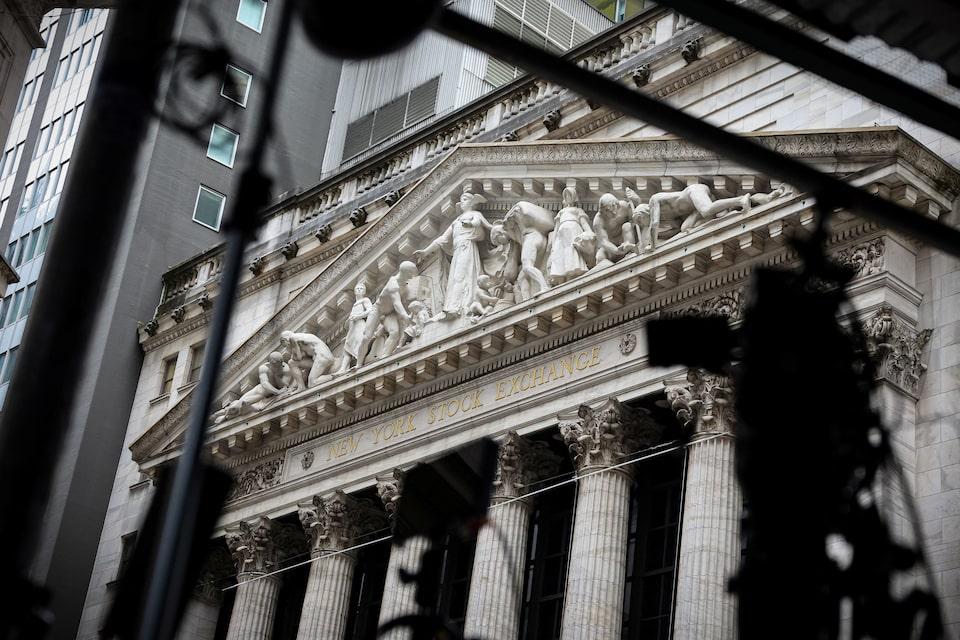
Presidential backstop for equities seen fading Slim hope that so-called "Trump put" still exists Some investors believe selloff could deepen before policy tweaks Fed support for markets also in question due to inflation NEW YORK, April 7 (Reuters) - Investors are trying to game out how much tolerance U.S. President Donald Trump has for stock market losses after his latest tariff policies ignited a more than 10% wipeout on Wall Street, with some still holding out hope of eventual relief. A so-called "Trump put" - the option market equivalent of a presidential backstop for equities - underpinned Trump's first term, as he frequently cited stock market strength as proof his policies were working. Over the course of his first presidency the S&P 500 (.SPX) , opens new tab benchmark rose 68% and scaled record highs, while Trump cheered its progress, tweeting more than 150 times about the stock market. Sign up here. This time around, hope that such a Trump Put still exists is evaporating, or at the least, investors are coming around to the view that Trump is much more inclined to ride out sharp falls. The S&P (.SPX) , opens new tab and Nasdaq (.IXIC) , opens new tab are down over 15% and 20% since his inauguration in January respectively. "The whole notion of tariffs and trade policy has been such an integral part of Donald Trump’s psyche, I don’t see it abandoned," said Michael Rosen, chief investment officer at Angeles Investments, who said any pain level likely to cause Trump to change course remained a long way away. Previous assumptions that Trump's pro-business agenda would buoy risk assets similarly had already been fading as his trade policies rattled investors over the past few weeks. But the more-aggressive-than-anticipated tariffs unveiled on April 2 deepened the market selloff, leaving investors questioning whether the Trump put was gone, or might eventually reappear through tariff rollbacks after any trade deals. For Bob Elliott, chief executive officer and chief investment officer of Unlimited Funds, the selloff still had a long way to go before any policy turnaround. "It takes 20-30% declines in stocks to get there. So the decline so far is not big enough," he said. Some were more hopeful the market fall could eventually induce a change of course. "I don't think (Trump) is going to be highly tolerant of massive stock market declines - he'll see his popularity tank, and it will endanger his whole agenda,” said Kevin Philip, partner at Bel Air Investment Advisors. "I don’t see any way out of this if he doesn’t come up with deals or reasons to change course.” The huge market falls - not seen since the beginning of the COVID-19 pandemic in 2020 - even caused speculation online that Trump was intentionally "crashing" the market to force the U.S. Federal Reserve to lower interest rates while making stocks more affordable to middle-class investors. Trump on Friday retweeted a social media post bearing the caption "Trump is Purposely CRASHING The Market" and featuring images of the president pointing at a large downward red arrow and of him signing executive orders at the White House. Speaking to reporters aboard Air Force One on Sunday, Trump said he was not intentionally engineering a market selloff and the rout was the result of a "medicine" needed to fix the U.S. trade deficit. Trump and his team have said their policies may cause short-term pain but will eventually revive manufacturing and spur growth. On Friday he told investors pouring money into the United States that his policies would never change. White House spokesman Kush Desai said in a statement to Reuters: "Just as it did during President Trump’s first term, the administration’s America First economic agenda of tariffs, deregulation, tax cuts, and the unleashing of American energy will restore American Greatness from Main Street to Wall Street.” PAIN LEVEL Some investors fear that weakening consumer confidence, an escalating trade war, and rising price pressures could deal a harsh and lasting blow to the economy, regardless of any potential economic upside down the line. For Brian Bethune, an economist at Boston College, the disruption caused by the tariffs was too abrupt to allow U.S. businesses to soften the blow, despite their resilience. "You’re putting so many sandbags on the balloon, it’s going to come back down to earth with a thud," Bethune said. In the two sessions after the tariff decision was unveiled on Wednesday, the S&P 500 has tumbled 10.5%, erasing nearly $5 trillion in market value, marking its most significant two-day loss since March 2020. On Monday, the S&P was down 0.12%. NO CAVALRY Hopes that the market could be propped up by actions by the U.S. Federal Reserve have also taken a knock. Trump on Friday called on Federal Reserve Chairman Jerome Powell to cut interest rates, saying it was the "perfect time" to do so. But stock losses deepened past 5% after Powell on Friday warned that the new tariffs would likely push inflation higher while slowing economic growth, suggesting the Fed was unlikely to rush in to cut rates. "The market is still digesting the great deal of uncertainty and I think it's also digesting the fact that both Trump and Powell have made it clear that the cavalry is not coming to immediately cause things to bounce back up," said David Seif, chief economist for developed markets at Nomura in New York. Rising prices could reduce the Fed's ability to take supportive actions as it has in previous market downturns or if economic conditions deteriorated significantly, analysts said. This could take off the table a so-called "Fed put," or a perceived tendency of the central bank to run to the aid of financial markets. “Who blinks first? The Fed or President Trump? The Fed has made it clear that with inflation where it is and unemployment where it is, (they’re) comfortable without doing anything right now,” said Ryan Detrick, chief market strategist at Carson Group in Omaha. “We think Washington likely has to blink first to present some type of positive news." https://www.reuters.com/markets/us/global-markets-tariffs-trump-analysis-pix-2025-04-07/
2025-04-07 23:16
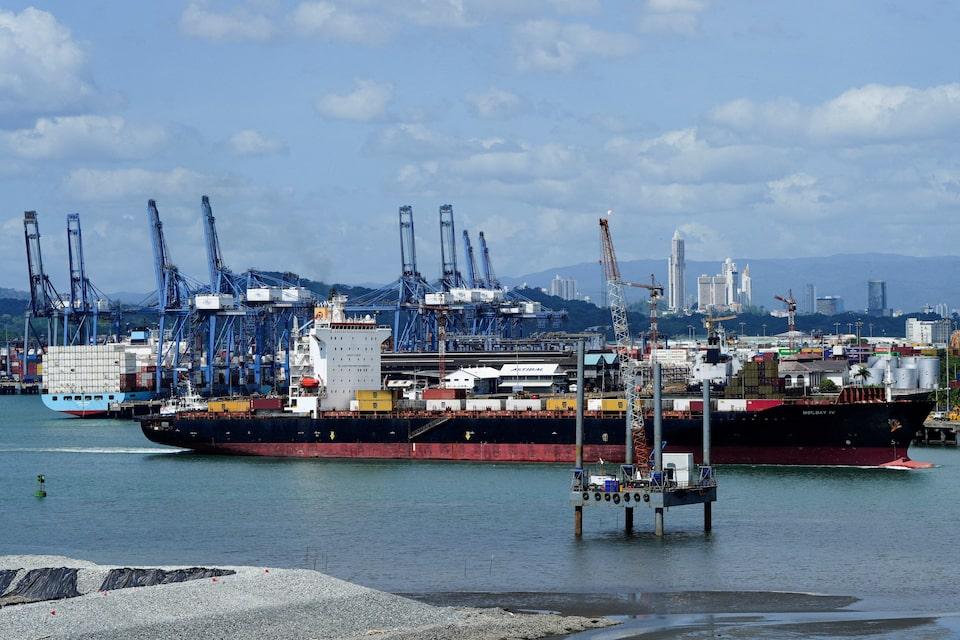
Comptroller says Panama "left $1.3 billion on the table" for CK Hutchison Panama's audit seen as possible roadblock in CK Hutchison's port deal with BlackRock CK Hutchison shares down 2.6% BlackRock CEO says regulatory review for the deal could take nine months PANAMA CITY, April 7 (Reuters) - Panama's Comptroller General office will file a lawsuit against the officials who authorized the renewal of a 25-year port concession to a company led by CK Hutchison (0001.HK) , opens new tab, the comptroller general said on Monday, as a key audit of the contract is expected to be completed soon. The contract to Panama Ports Company for the Balboa and Cristobal ports near the Panama Canal, in which Hong Kong-based CK Hutchison has a 90% stake, was renewed in 2021. Sign up here. The Panamanian government started the audit in January and in March a group led by U.S. investment firm BlackRock (BLK.N) , opens new tab announced a deal to buy CK Hutchison's majority stake in a $22.8 billion global ports unit including the two ports in Panama, which is not yet final. The audit has so far determined that Panama "left $1.3 billion on the table," Comptroller General Anel Flores told reporters in a press conference, referring to tax incentives and benefits granted by the government in the contract. In February, Panama's Attorney General released a binding opinion finding that the port contract was unconstitutional. The Supreme Court will have the last word on that. Once finished, the audit results will be submitted to Panama's Maritime Authority, which oversees the ports, Flores said. The audit is seen as a possible roadblock in BlackRock's offer for CK Hutchison's port business, which has been criticized by China. If Panama's Comptroller General confirms irregularities in the concession renewal or the Supreme Court declares the contract to be unconstitutional, the concession could be revoked, lawyers and experts have said. Shares of CK Hutchison in Hong Kong dropped 2.6% on Tuesday, underperforming a 1.5% gain in the main Hang Seng Index (.HSI) , opens new tab. The telecoms-to-retail conglomerate owned by Hong Kong tycoon Li Ka-shing has been caught in China's crosshairs in the highly politicized deal, and the firm did not sign a contract last week as scheduled to sell its two Panama port operations as part of the broader deal as a result. China's market regulator has said it will carry out an antitrust review on the Panama port deal, and Hong Kong leader John Lee on Tuesday reiterated comments about the deal having to comply with local laws and regulations. When asked if a deal without the Panama Ports would be a solution, BlackRock CEO Larry Fink told the Economic Club of New York on Monday the ports in question represent around 4% of the aggregated value of the whole transaction that will give the U.S. firm access to 43 ports in 23 countries, and "it's going to be reviewed as one transaction". Fink said regulatory review for anti-competition could take nine more months, and he was optimistic the transaction would be approved. However, he admitted China could stop the deal being one of the major users of the ports and one of the 50 jurisdictions that will review the transaction. U.S. President Donald Trump, who has threatened to take control of the Panama Canal due to the presence of Chinese and Hong Kong firms in the Central American country's maritime business, has hailed BlackRock's port deal. Fink stressed the purchase was driven by commercial interest rather than geopolitical considerations, adding he discussed the transaction with U.S. policymakers after the talk with CK Hutchison became exclusive. "Everything was done in the right order, it was not done politically, despite all the narratives it was done," he said. https://www.reuters.com/world/americas/panamas-comptroller-office-sue-over-renewal-ck-hutchison-contract-2025-04-07/
2025-04-07 23:04
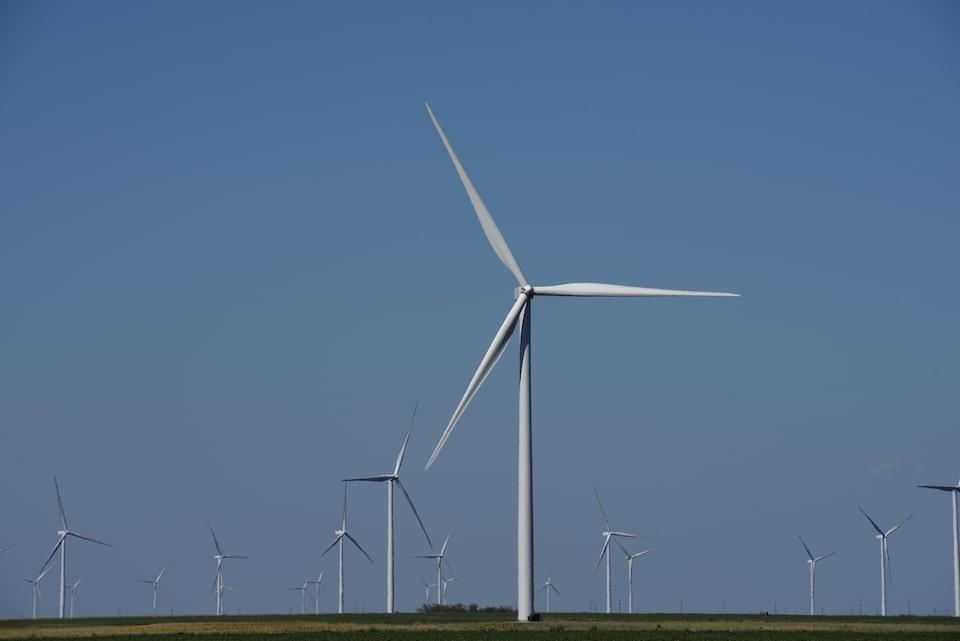
Global electricity demand grew by 4% last year, Ember says Heatwaves, data centres, EVs drove demand Share provided by gas, coal dips LONDON, April 8 (Reuters) - Renewable power generation provided a record 32% of global electricity last year, a report by energy think tank Ember said on Tuesday, as overall electricity demand grew 4% driven by heatwaves and data centres. Energy security fears, exacerbated by a trade war prompted by U.S. President Donald Trump's sweeping tariffs, could further boost demand for renewable power this year, Ember electricity and data analyst Euan Graham told Reuters. Sign up here. The tariffs have sent markets from energy and equities plummeting and stoked concerns about a global recession. Graham said though it was too early to tell whether the tariff fallout would impact electricity demand this year, renewable power could benefit. "Countries are thinking about their security and energy security more than ever before and I think that means homegrown renewable power like wind and solar becomes more and more attractive," he said. The growth of renewable power generation - including wind, hydro and solar - in the global electricity mix in 2024 beat the previous year's 30% record, Ember’s Global Electricity Review showed. "Despite geopolitical and economic headwinds, the renewables industry delivered an additional 858 TWh of generation to the system last year — more than the combined annual electricity consumption of the UK and France," Bruce Douglas, CEO of the Global Renewables Alliance said in a statement accompanying the report. The rise in electricity consumption for artificial intelligence, data centres, electric vehicles and heat pumps contributed 0.7% of the global demand growth last year, the report showed. Heatwaves in 2024 increased electricity demand for cooling which added a further 0.7% or 208 terrawatt hours (TWh) to the global total, it said. Gas power plants contributed 22% of global electricity production, little changed from 2023. Coal remained the largest source of generation, providing 34% of the global share, down from 36%. Nuclear power contributed 9%, down slightly from 9.1% in 2023. https://www.reuters.com/sustainability/climate-energy/renewables-provided-record-32-global-electricity-2024-ember-says-2025-04-07/