2025-04-07 21:06
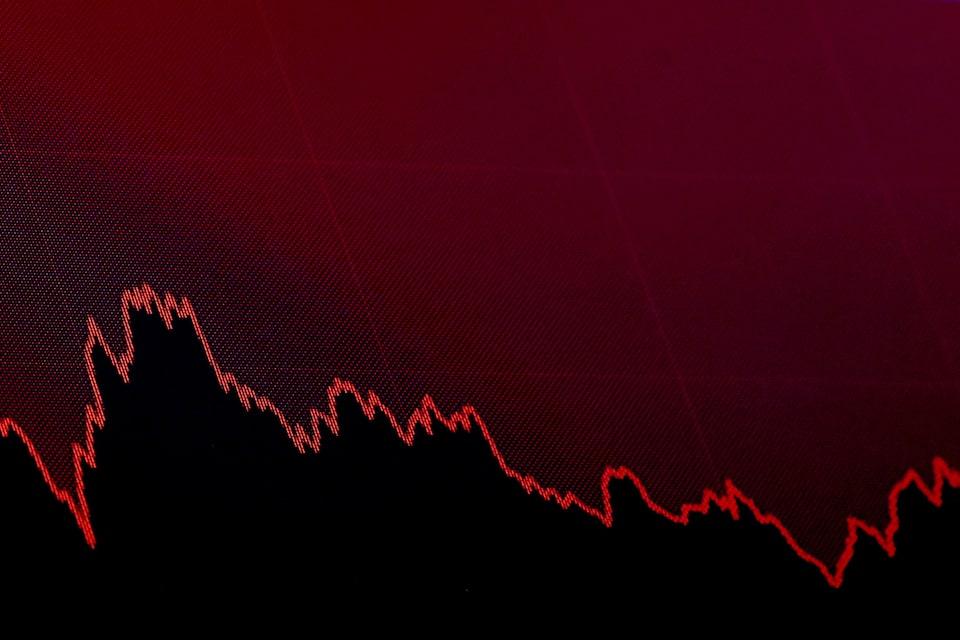
ORLANDO, Florida, April 7 (Reuters) - TRADING DAY Making sense of the forces driving global markets Sign up here. By Jamie McGeever, Markets Columnist Trade tensions, recession fears rise U.S. President Donald Trump's tariff 'wrecking ball' swung through financial markets again on Monday, sending investors scuttling for cover and wiping hundreds of billions of dollars more off the value of global stocks. With Trump doubling down on his protectionist agenda and threatening further levies on China, the likelihood of U.S. and global recession is increasing by the day. Despite the scale of the market rout, however, recession still isn't 'in the price'. More on that below, but first a round-up of another extraordinary and volatile day on world markets. I'd love to hear from you, so please reach out to me with comments at [email protected]. You can also follow me at @ReutersJamie , opens new tab and @reutersjamie.bsky.social , opens new tab. Today's Key Market Moves Trump's tariff wrecking ball still swinging When does a market slide become a slump, and when does that morph into a meltdown? And when does that crater into a crash? There may not be any definitive demarcation lines, but if they do exist they have rarely been more blurred, as the stock market rout deepens on fears over the global economic damage being inflicted by Trump's tariffs. Hong Kong's Hang Seng index plunged 13% for its worst day since 1997 and Japan's Nikkei and the Nasdaq extended their bear market declines. Trading in several markets and stocks across Asia was suspended as losses triggered circuit breakers. Wall Street held up better than most on Monday, but few observers would be confident it marks a turning point. The fog of tariff uncertainty is too thick to give investors, businesses and households any visibility much beyond the end of their noses. That fog isn't helped by the blizzard of headlines - from Trump himself, policymakers, officials and business leaders around the world - which is intensifying. Not only that, it is increasingly filled with confusion and contradiction. Trump on Monday said tariffs are here to stay and he could increase them on China if Beijing doesn't withdraw its retaliatory levies on U.S. imports. Tariffs could be permanent, and there could also be talks, he added. Europe, meanwhile, proposed counter-tariffs of 25% on a range of U.S. goods including soybeans, nuts and sausages, though other potential items like bourbon whiskey were left off the list, according to a document seen by Reuters. There could well be a number of bilateral negotiations opening up soon between Washington and major trading partners which could see deals eventually be reached. But volatility and uncertainty are unlikely to ease up much in the interim. Among the myriad policymakers' voices fighting to be heard right now, the most important one remains Trump's. Fed Chair Jerome Powell spoke on Friday but was non-committal, and unless markets or the economic data take a severe turn for the worse, he may prefer to maintain a "wait and see" approach. U.S. rates traders are now almost fully pricing in four rate cuts this year as growth forecasts get slashed and the oil price slump helps soften the inflationary push from tariffs. Brent crude is at its lowest in nearly four years and is down almost 30% from a year ago. Wall Street isn't even close to pricing in recession If a proper bear market is unfolding on Wall Street, then it still has a long way to go, especially if the U.S. economy tips into recession. While the S&P 500 on Monday narrowly avoided what would have been the worst three-day selloff since the Great Depression, that doesn't mean we have reached a turning point. Stock valuations and earnings forecasts have fallen, but they still appear far too high when considering both previous market downturns and the immense economic turmoil being unleashed by U.S. President Donald Trump's protectionist trade agenda. A U.S. recession this year isn't yet the consensus view – with only two big banks, JPMorgan and Barclays, officially calling one – but it almost certainly will be if Trump's tariffs stay in place and the rest of the world retaliates. The consensus U.S. earnings outlook certainly hasn't adjusted for what JPMorgan equity analysts say would be the "waterfall event" of a U.S. recession. They have lowered their 2025 earnings per share forecast to $250 from $270, adding that the risks are still skewed to the downside. That essentially implies zero earnings growth this year compared to the consensus view of around 10%. The latter is optimistic, to say the least, in a world where the U.S. is hurtling towards stagnation or contraction, China is struggling to head off deflation, and Europe and other major economies are likely already tipping into recession. Meanwhile, the 2026 consensus earnings growth forecast for the S&P 500 is 14%. It's difficult to see double-digit earnings growth this year and next when companies barely have any visibility about what will happen in the next few months. THE $9 TRILLION SLUMP The same applies to valuations. With the broader index flirting with bear market territory, it's worth considering how today's valuations stack up against those seen in recent decades when the market fell by 20% or more. According to David Marlin of Marlin Capital, the S&P 500's median decline over 10 major downturns going back to the early 1980s is 22.7%, and the median trough in the forward price-to-earnings ratio is 13.0. The lowest of those P/E ratios was 8.0 during the stagflation period in 1982 and the highest was 16.0 in 1998. The equivalent ratio today, with the index down around 17% from its peak, is still over 20.0. Not only is that above the historical median highlighted by Marlin, but also the general average over the past 30 years of around 17.0. It's worth remembering just how much prices, valuations and earnings forecasts exploded in the last two years on the back of the 'Magnificent 7'-led boom. Logically, the higher you rise, the more downside there is when the turn comes, right? Big Tech certainly is correcting. Nvidia's forward 12-month PE ratio is down to a six-year low of 20.0, and the broad S&P 500 tech sector's 12-month forward PE ratio has declined to 25.0, its lowest since November 2023. They were around 35.0 and 30.0, respectively, earlier this year. But are these corrections enough to reflect the rising likelihood of recession? The answer is clearly "no", especially when considering that more than half of this year's total earnings growth is expected to come from tariff-sensitive sectors like tech and communications, as JPMorgan analysts point out. Market panic wiped $5 trillion off the value of U.S. stocks in just two days last week and some $9 trillion since the market peak in February, much of that in Big Tech. So it is sobering to think that – if recession hits – there is likely far more damage to come. What could move markets tomorrow? If you have more time to read today, here are a few articles I recommend to help you make sense of what happened in markets today. Opinions expressed are those of the author. They do not reflect the views of Reuters News, which, under the Trust Principles , opens new tab, is committed to integrity, independence, and freedom from bias. Trading Day is also sent by email every weekday morning. Think your friend or colleague should know about us? Forward this newsletter to them. They can also sign up here. https://www.reuters.com/markets/global-markets-trading-day-2025-04-07/
2025-04-07 21:02
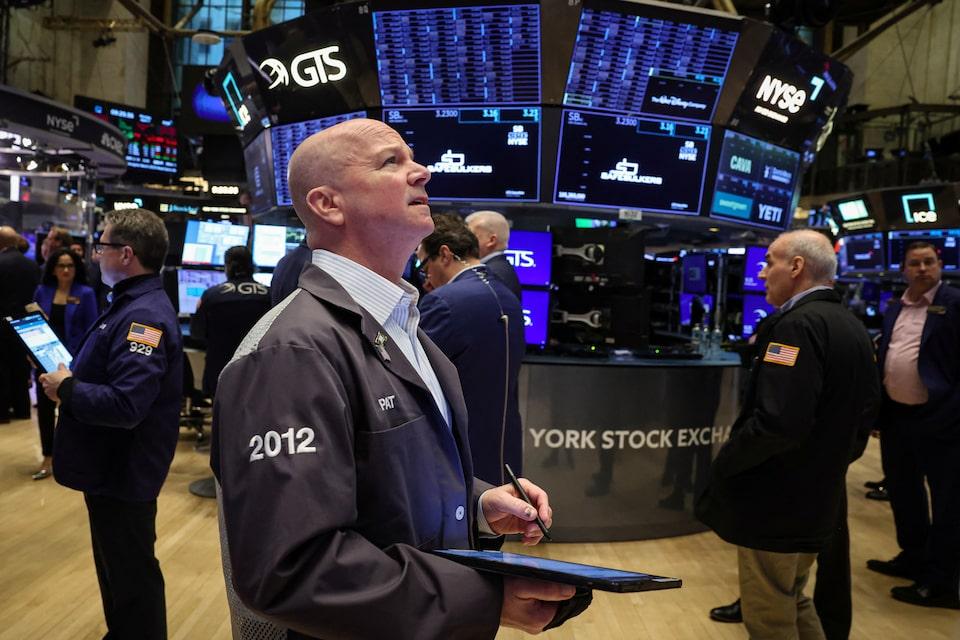
Indexes: S&P 500 falls 0.23%, Nasdaq rises 0.10%, Dow off 0.91% S&P 500 still flirting with bear market Trump threatens additional tariffs on China April 7 (Reuters) - The S&P 500 and the Dow closed lower on Monday after a roller coaster session, with investors worried about an economic slowdown and rising inflation as U.S. President Donald Trump dug in his heels on tariffs, warning he could further increase levies on China. Wall Street equities have been hammered since Trump's sweeping tariffs, announced late Wednesday, on all imports into the U.S. and much higher levies on some major trading partners. Sign up here. Trading volume on Monday broke U.S. records for the second session in a row. In early trade, all three major U.S. indexes touched their lowest levels in more than a year. In the morning they briefly rallied sharply on a report about tariffs, only to fall again after the report was knocked down. Also during the session, the CBOE Volatility Index (.VIX) , opens new tab, Wall Street's fear gauge, breached 60 points, hitting its highest level since August 2024. After paring gains it still ended the day at 46.98, its highest close in five years. "The underlying problem of the market is that the administration's approach to trade imbalances is to try a cure that's worse than the disease," said Rick Meckler, partner, Cherry Lane Investments, a family investment office in New Vernon, New Jersey. "It's clear that investors favor either a pause or a different look at how to do this. It's very telling that of the many Trump supporters in the investment and business community, it doesn't look like there's anybody stepping up and endorsing the administration's approach to tariffs." The Dow Jones Industrial Average (.DJI) , opens new tab fell 349.26 points, or 0.91%, to 37,965.60, the S&P 500 (.SPX) , opens new tab lost 11.83 points, or 0.23%, to 5,062.25 and the Nasdaq Composite (.IXIC) , opens new tab gained 15.48 points, or 0.10%, to 15,603.26. In the first two days following Trump's tariff announcements last week, the benchmark S&P 500 index had dived 10.5% and lost about $5 trillion in market value for its biggest two-day loss since March 2020. On Friday, the blue-chip Dow confirmed it was in a correction, or more than 10% below its December record close while the Nasdaq confirmed it was in a bear market, defined as a decline of 20% or more below its record close. In Monday morning trading, the S&P 500 had fallen 20% below its record closing high. The index briefly rallied more than 3%, after a news report said Trump was considering a 90-day pause on tariffs. White House officials quickly denied the report, sending the market back into the red. Meckler said the market's wild swings on Monday left investors "a little bit concerned that if facts start to change, you could see a very rapid rise to this market." "It's leading to this back-and-forth movement of rallies that are effectively being sold and drops in the market where people are covering shorts or trying to find a place to buy." Real estate (.SPLRCR) , opens new tab lost 2.4%, the biggest percentage decliner among the S&P's 11 major industry indexes on Monday. Communications services (.SPLRCL) , opens new tab, was the biggest gainer, finishing up 1%. Technology (.SPLRCT) , opens new tab, adding 0.3%, was the only other sector to advance. In individual stocks, the S&P's biggest drags were Apple Inc (AAPL.O) , opens new tab, down 3.7%, and Tesla Inc (TSLA.O) , opens new tab, which fell 2.6%. Its biggest boosts came from Nvidia (NVDA.O) , opens new tab, up more than 3%, and Amazon.com (AMZN.O) , opens new tab, which added 2.5%. Several speeches by Federal Reserve officials and a series of economic indicators, including consumer price data, are expected this week, with investors keenly watching out for any signs of a recession. Declining issues outnumbered advancers by a 4.45-to-1 ratio on the NYSE where there were 42 new highs and 2036 new lows. On the Nasdaq, 1,447 stocks rose and 3,070 fell as declining issues outnumbered advancers by a 2.12-to-1 ratio. The S&P 500 posted no new 52-week highs and 168 new lows while the Nasdaq Composite recorded 10 new highs and 999 new lows. On U.S. exchanges, 29.13 billion shares changed hands, far exceeding the 17.13 billion average for the last 20 sessions. Friday's volume, of around 26.79 billion shares, beat the previous high of 24.48 billion shares traded on January 27, 2021. https://www.reuters.com/markets/us/futures-plunge-sp-500-eyes-bear-territory-market-rout-worsens-2025-04-07/
2025-04-07 20:50
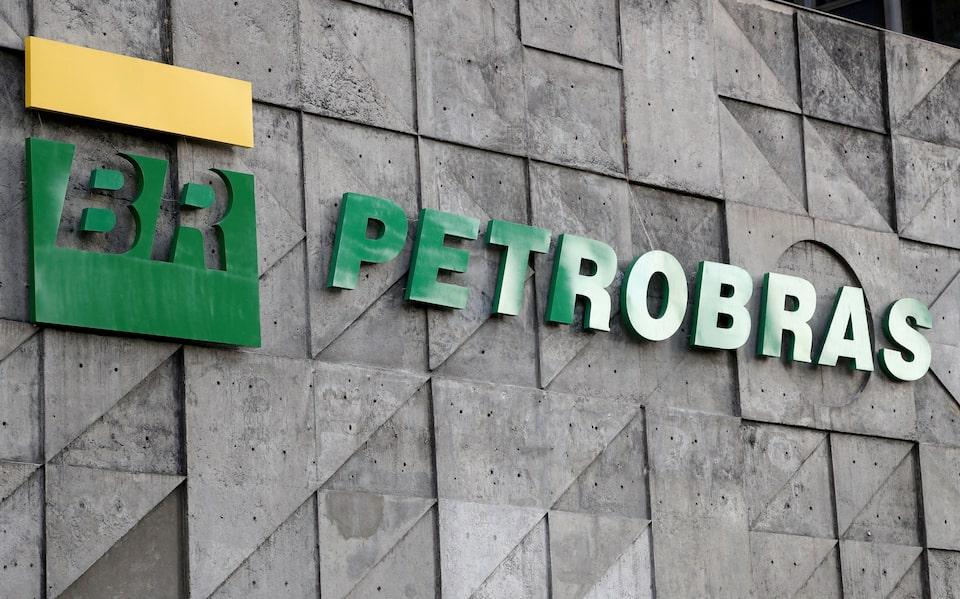
RIO DE JANEIRO, April 7 (Reuters) - Brazil's state-run oil firm Petrobras (PETR4.SA) , opens new tab is unlikely to lower diesel prices while the economic scenario abroad remains uncertain, Chief Executive Magda Chambriard told Reuters after a request from the government to do so became public on Monday. Petrobras will not bring jitters from abroad to the Brazilian market, said Chambriard, after reports that Brazil's Mines and Energy Minister Alexandre Silveira asked her to consider a new cut in the average price of diesel sold to distributors in Brazil. Sign up here. "We should not do anything now, while the geopolitical scenario is in such anxiety and turbulence," Chambriard told Reuters over the phone. In a talk with Chambriard last week, Silveira cited the recent drop in oil prices and the stability of the dollar as conditions that would allow for the price cut, a source told Reuters on Monday. Silveira's request was reported earlier in the day by CNN Brasil. Voting shares in Petrobras fell 5.6% in Sao Paulo on Monday, helping to drag Brazil's benchmark equities index Bovespa (.BVSP) , opens new tab down by some 1.3%. The request came as oil prices slide due to U.S. President Donald Trump's tariffs that could lead economies around the world into recession, reducing demand for energy. Trump's April 2 announcement of global tariffs came just one day after Petrobras cut the price of diesel at refineries by 4.6% or 0.17 reais per liter, the first reduction for the fossil fuel since 2023. In the past, Brazilian presidents looking to ease the cost of living have pressured state-run Petrobras to reduce fuel prices. Petrobras' recent diesel prices have stood above import parity and were 5% above it on Friday, according to Abicom, a fuel imports association. https://www.reuters.com/markets/commodities/brazils-energy-minister-asks-petrobras-ceo-consider-diesel-price-cut-2025-04-07/
2025-04-07 20:28
April 7 (Reuters) - Occidental Petroleum's (OXY.N) , opens new tab unit 1PointFive said on Monday the U.S. Environmental Protection Agency had approved its application to sequester carbon dioxide captured from its direct air capture (DAC) facility in Texas. Stratos, the DAC facility, is a joint venture between the U.S. shale firm's carbon capture and sequestration unit and asset manager BlackRock (BLK.N) , opens new tab. Expected to commence commercial operations later this year, Stratos is among the world's largest DAC facilities. Sign up here. Carbon capture, a process that involves storing CO2 from industrial activities underground, is being adopted by oil companies such as Chevron (CVX.N) , opens new tab, Exxon Mobil (XOM.N) , opens new tab and TotalEnergies (TTEF.PA) , opens new tab as a strategy to decrease emissions and tackle climate change. The permits were issued by the agency under the Safe Drinking Water Act's Underground Injection Control program, the company said. "This is a significant milestone for the company as we are continuing to develop vital infrastructure that will help the United States achieve energy security," said Occidental CEO Vicki Hollub. Located in Ector County, Texas, Stratos is designed to capture up to 500,000 metric tons of carbon dioxide annually when fully operational. Last year 1PointFive entered agreements to sell carbon credits, provided by Stratos, to companies such as AT&T (T.N) , opens new tab and Microsoft (MSFT.O) , opens new tab. https://www.reuters.com/sustainability/climate-energy/occidentals-1pointfive-receives-permits-sequester-co2-texas-facility-2025-04-07/

2025-04-07 20:24
BRUSSELS, April 7 (Reuters) - The European Commission proposed counter-tariffs of 25% on a range of U.S. goods on Monday in response to President Donald Trump's tariffs on steel and aluminium, a document seen by Reuters showed. The tariffs on some goods will take effect May 16 and others later in the year, on December 1, the document said. Sign up here. The goods are wide-ranging and include diamonds, eggs, dental floss, sausages and poultry. The counter-tariffs on almonds and soybeans will take effect on December 1. EU trade chief Maros Sefcovic said earlier on Monday the counter-tariffs would have less impact than the previously announced 26 billion euros ($28.45 billion). Bourbon, wine and dairy have been removed from the original list the Commission was weighing in March. The Commission had earmarked a 50% tariff on bourbon, which had prompted Trump to threaten a 200% counter-tariff on EU alcoholic drinks if the bloc went ahead. Trump's threat worried France and Italy in particular owing to their significant wine industries. In addition to these counter-tariffs, the EU already tightened existing safeguards on steel on April 1 to reduce imports by 15%. The Commission is also looking at import quotas for aluminium. EU member states are due to vote on this proposal on April 9. ($1 = 0.9139 euros) https://www.reuters.com/markets/europe/eu-commission-proposes-25-counter-tariffs-some-us-imports-document-shows-2025-04-07/
2025-04-07 20:21
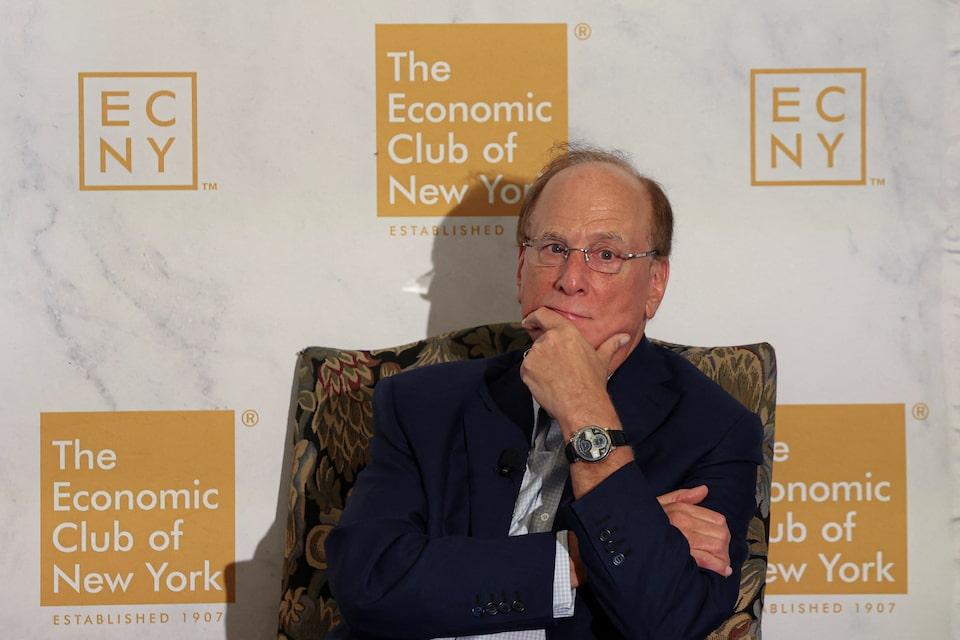
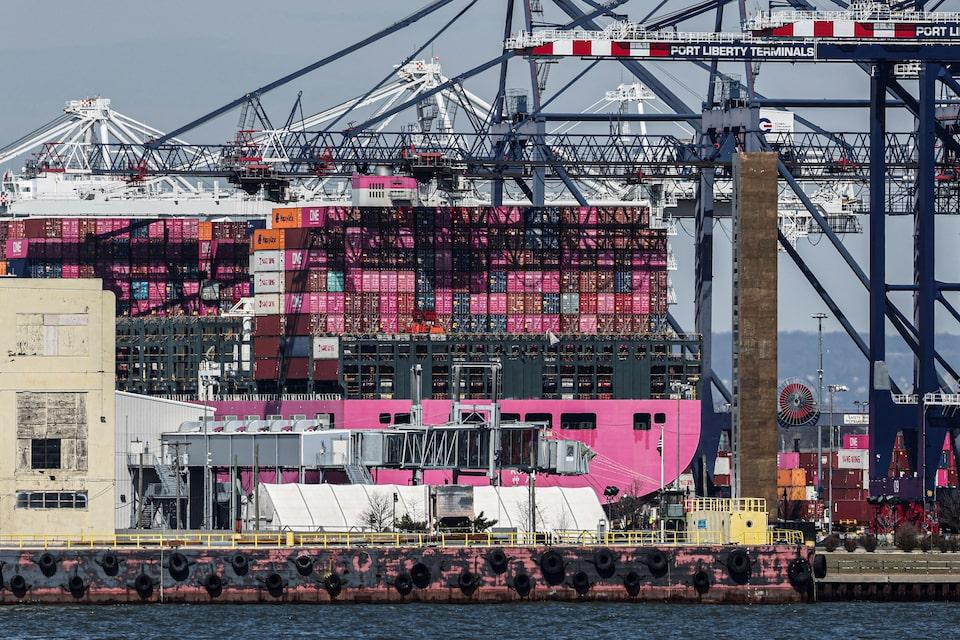
Tariffs will reduce consumption, Fink says CEO sees no chance of five US interest rate cuts this year Panama deal may face nine more months of review April 7 (Reuters) - BlackRock (BLK.N) , opens new tab CEO Larry Fink said stock markets could fall 20% farther as steep U.S. tariffs lead some investors to believe the U.S. economy may already be contracting. "Most CEOs I talk to would say we are probably in a recession right now," Fink told the Economic Club of New York on Monday. The tariffs will lead to higher prices, adding to inflationary pressure. Sign up here. Still, the leader of the world's largest asset manager said stock market weakness since the tariff announcement on Wednesday was "more of a buying opportunity than a selling opportunity," in the long run and did not pose systemic risks. "That doesn't mean we can't fall another 20% from here too," he said. Fink was among the first Wall Street executives to weigh in publicly on the market meltdown after U.S. President Donald Trump announced steep new tariffs last week. On Monday, Trump threatened another 50% tariff on Chinese imports, pushing the S&P 500 toward a 20% drop from its February high. Fink said stock market declines are hurting average people and will affect their spending. "The reality is 62% of Americans now invest in equities -- the market impact is impacting Main Street," he said. The turmoil "is going to freeze more and more consumption, I think we're going to start seeing that really quickly." The Trump administration could offset slowing consumption by focusing on deregulation and pro-growth policies, Fink said, citing the potential for mergers among large banks. Fink said he sees no chance the Federal Reserve will cut interest rates four or five times this year given the inflation outlook. He expressed concern the U.S. could lose its place as the leading capital market. Regulatory review of BlackRock's deal with Hong Kong-based CK Hutchison for control of important ports near the Panama Canal could take nine more months, Fink said. Saying the deal was driven by commercial interest rather than geopolitical considerations, Fink added he discussed the transaction with U.S. policymakers and was optimistic it would be approved. Asked about succession at BlackRock, Fink said he is ready to step down and retain his chairman role for short period when the next generation of leaders is ready. "They think they are not ready yet," he said. https://www.reuters.com/markets/us/blackrock-ceo-says-stocks-could-extend-fall-by-20-economy-probably-recession-2025-04-07/