2025-04-07 14:33
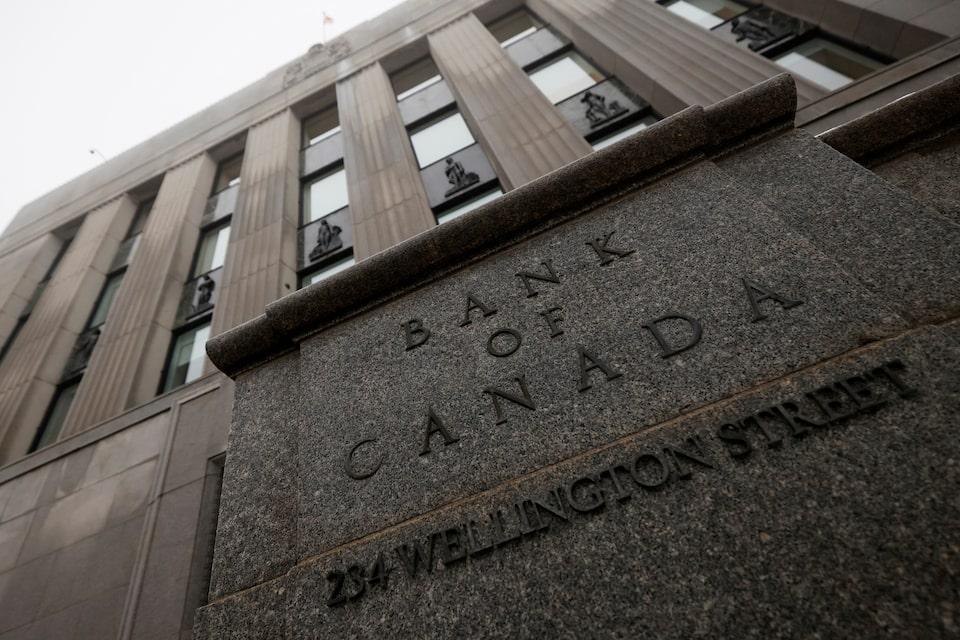
By Promit Mukherjee and David Ljunggren OTTAWA, April 7 (Reuters) - Canadian firms and consumers see a sharply higher chance of recession over the coming year as U.S. President Donald Trump's tariffs and possible retaliation fuel widespread uncertainty, the Bank of Canada said on Monday. Sign up here. About 32% of companies surveyed by the BoC for a quarterly analysis of business conditions expect a recession over the next 12 months, up from 15% in the previous two quarters. A similar survey of consumers showed 66.5% of them see a recession, a jump of 20 percentage points from the previous quarter. The surveys were conducted in February, before Trump's April 2 announcement of tariffs on almost all trading partners. Economists and analysts say the tariffs and subsequent retaliation from various countries will destabilize global supply chains and could push many countries into recession. "Business sentiment has deteriorated, and uncertainty is widespread due to the trade conflict with the United States. Firms are developing plans to mitigate the effects of tariffs on their operations but see many challenges ahead," the BoC said in the survey. The business outlook indicator - a metric of what business prospects look like under current economic conditions - reversed its upward trend and fell to below average. Around 40% of firms expect lower sales growth if tariffs are implemented and exporters in the manufacturing sector have cut their sales expectations for 2025. The survey shows many firms have put their investment and hiring plans on hold, with employment intentions at a level lower than they were at any point during the pandemic. Companies also do not expect the increases in input prices to slow any more, a stark change from recent history, the BoC said, indicating inflationary pressures are likely to build up. Inflation in Canada jumped to an eight-month high of 2.6% in February. The survey showed 65% of businesses believe their costs would climb if widespread tariffs are implemented. As a result, 40% of all firms would increase their selling prices. The bank is vowing to support businesses and consumers and control inflation through monetary policy, but says it will not be able to completely offset the impact of tariffs. Currency swap markets see a 66% chance of yet another rate cut next week. If it happens, this would be the bank's eighth consecutive reduction, bringing down the policy rate to 2.5%. The consumer survey showed Canadians were increasingly concerned about their job security and financial health, which was hitting their spending plans. (Reuters Ottawa editorial) Keywords: CANADA CENBANK/ https://www.reuters.com/markets/more-canadian-firms-see-chance-recession-next-year-central-bank-survey-2025-04-07/
2025-04-07 13:11
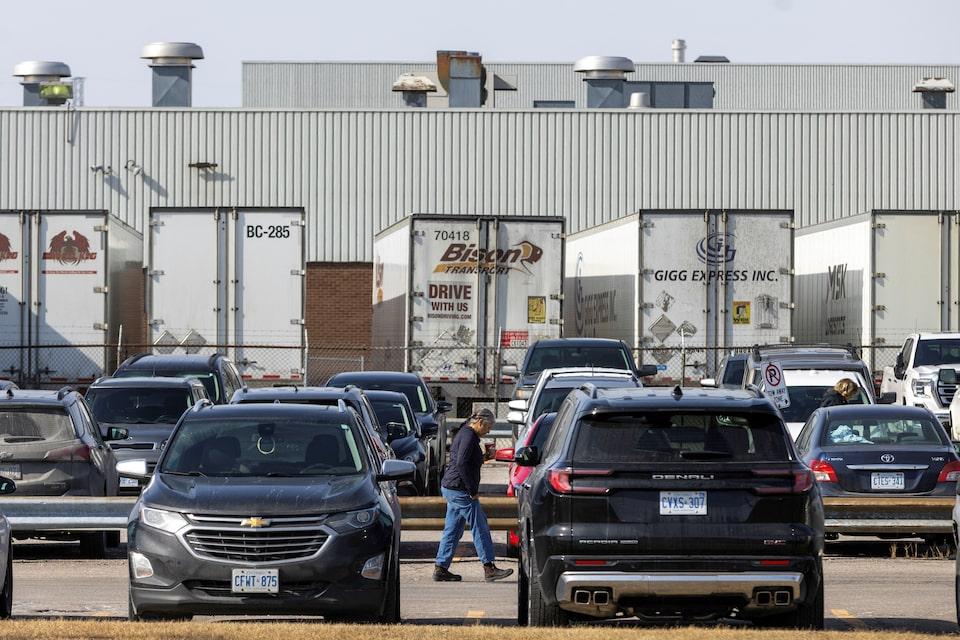
BERLIN, April 7 (Reuters) - Canada has requested WTO dispute consultations with the United States over President Donald Trump's decision to impose a 25% duty on cars and car parts from Canada, the World Trade Organization said on Monday. Canada claims the measures are inconsistent with U.S. obligations under various provisions under the General Agreement on Tariffs and Trade (GATT) 1994, added the WTO. Sign up here. https://www.reuters.com/business/autos-transportation/canada-initiates-wto-dispute-over-us-duties-cars-2025-04-07/
2025-04-07 12:45
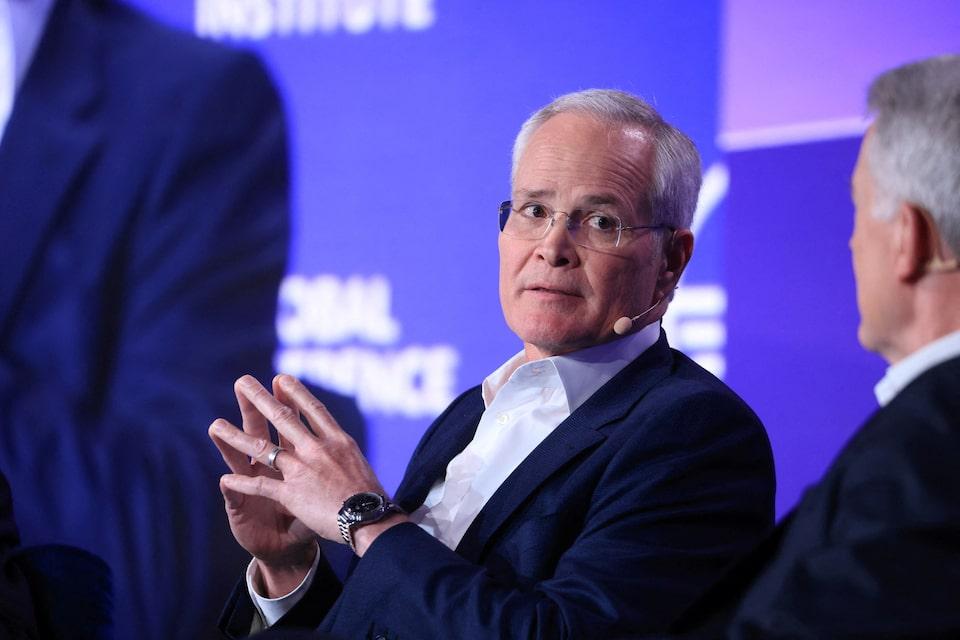
April 7 (Reuters) - Exxon Mobil (XOM.N) , opens new tab CEO Darren Woods' pay package for 2024 rose 19.3% to $44.1 million, a regulatory filing by the U.S. oil major on Monday showed. Woods' base salary was about $1.96 million, with the majority of his pay package based on variable factors, including a $4.5 million bonus and $26.8 million in stock-based awards. Sign up here. According to a regulatory filing, Woods' pay package is about 231 times the average compensation of $190,266 received by the oil major's workers. The median annual compensation for Exxon employees increased by 2.6%, compared to 2023. Meanwhile, Chevron's CEO Michael Wirth saw total compensation increase by 23.4% to $32.7 million in 2024. https://www.reuters.com/business/energy/exxon-ceo-woods-received-441-million-pay-package-2024-2025-04-07/
2025-04-07 12:43
EU to approve retaliation against steel and aluminium tariffs EU ministers debate response to broader US tariffs France says EU must consider tools that could hit US services Trump tariffs live page LUXEMBOURG, April 7 (Reuters) - The European Commission said on Monday it had offered a "zero-for-zero" tariff deal to avert a trade war with U.S. President Donald Trump as EU ministers agreed to prioritise negotiations, while striking back with 25% tariffs on some U.S. imports. The 27-nation bloc faces 25% import tariffs on steel and aluminium and cars and broader tariffs of 20% from Wednesday for almost all other goods under Trump's policy to hit countries he says impose high barriers to U.S. imports. Sign up here. On Monday evening, the Commission proposed its first retaliatory tariffs at 25% on a range of U.S. imports in response to Trump's steel and aluminium tariffs rather than the broader levies. However, the list was shortened after the EU executive bowed to pressure from member states and removed bourbon, wine and dairy after Trump threatened a 200% counter-tariff on EU alcoholic drinks. France and Italy, major exporters of wine and spirits, were particularly concerned. EU trade chief Maros Sefcovic said earlier on Monday the retaliation would impact less than the previously announced 26 billion euros ($28.4 billion). The tariffs for most of the goods will go into effect May 16 and some from December 1. Ministers overseeing trade met in Luxembourg on Monday to debate the EU's response and discuss relations with China. Many said the priority was to launch negotiations to remove Trump's tariffs, rather than fight them. Michal Baranowski, deputy economy minister of Poland, told a press conference after the meeting that his EU counterparts did not want to be "trigger-happy". Sefcovic said discussions with Washington were at an early stage and that he had offered "zero-for-zero" tariffs for cars and other industrial products, expressing hope that discussions could begin. However, Trump's top trade adviser on Monday dismissed tech-billionaire Elon Musk's push for "zero tariffs" between the U.S. and Europe, calling the Tesla CEO a "car assembler" reliant on parts from other countries. "While the EU remains open to – and strongly prefers – negotiation, we will not wait endlessly," Sefcovic said, adding the bloc would push ahead with countermeasures and steps to avoid floods of diverted imports. The EU is set to approve the first retaliatory measures this week. The bloc will start collecting the tariffs on April 15, with a second tranche starting a month later. The removal of bourbon from the list of items subject to the EU's retaliatory tariffs on U.S. imports "would be great news, and we are hopeful this is the case," said Chris Swonger, chief executive of the Distilled Spirits Council of the United States. "It would be the first step toward getting the U.S.-EU spirits sectors back to zero-for-zero tariffs and untangling distilled spirits products from these wider trade disputes.” EU KEEPS ALL RETALIATION OPTIONS OPEN The bloc is expected to produce a larger package of countermeasures by the end of April, as a response to U.S. car and broader tariffs. Sefcovic said the EU was ready to consider all retaliatory options. One is the EU's Anti-Coercion Instrument, which allows it to target U.S. services or to limit U.S. companies' access to EU public procurement tenders. "We are prepared to use every tool to protect (the) single market," he said, echoing the views of French Trade Minister Laurent Saint-Martin. In a war of tariffs on goods, Brussels has less to target than Washington, given EU goods imports from the U.S. totalled 334 billion euros ($366.2 billion) in 2024, against 532 billion euros of EU exports to the U.S. Some EU countries, particularly those exposed to trade with the United States, urged caution. Irish Foreign Minister Simon Harris described the Anti-Coercion Instrument as "very much the nuclear option." Baranowski of Poland said EU members were willing to keep options open, with a stress on proportionality. "There were various ideas put on the table. Some countries mentioned services. Others didn't. Some countries mentioned digital services, others didn't," he said. Outgoing German Economy Minister Robert Habeck said the EU should realise it was in a strong position - if it was united. "The stock markets are already collapsing and the damage could become even greater ... America is in a position of weakness," he said in Luxembourg. ($1 = 0.9121 euros) https://www.reuters.com/world/europe/eu-prioritises-talks-with-us-get-trumps-tariffs-removed-2025-04-07/
2025-04-07 12:23
Investors fear global trade war will hurt raw materials demand Oil prices hit lowest since 2021 amid recession fears Gold prices fall as investors sell off assets LONDON, April 7 (Reuters) - Oil slid around 3% on Monday to its weakest since 2021, while most commodity markets including metals and coffee declined as the intensifying trade war between the United States and China triggered worries over demand for raw materials. Gold, which hit a record peak last week, also fell amid a wider market selloff. Sign up here. Major stock indexes plunged as U.S. President Donald Trump showed no sign of backing away from his sweeping tariff plans, and Wall Street banks sounded the alarm on high recession probabilities. "Commodities are on the receiving end of these tariff-related worries about growth and demand. As volatility continues to rise, we are going through a major deleveraging phase," said Ole Hansen, head of commodity strategy at Saxo Bank. "Positions in commodities are being reduced across the board." Responding to Trump's tariffs, China on Friday said it would impose additional levies of 34% on U.S. goods, confirming investor fears that a full-blown trade war is under way and that the global economy may be at risk of a recession. Brent futures and U.S. West Texas Intermediate crude futures on Monday hit their lowest since April 2021. Over the past week, both benchmarks have lost more than 10%. "Oil prices have fallen more sharply than equities since Trump unveiled tariff details in the middle of last week, with the decline exacerbated by OPEC+ plans of increased output," said Satoru Yoshida, a commodity analyst at Rakuten Securities. Goldman Sachs, Citi and Morgan Stanley revised their forecasts for oil prices down on Monday. Natural gas prices also declined on recession fears, with the benchmark Dutch front-month contract down 1.45 euros to 35 euros per megawatt hour or $11.26 per million British thermal units, LSEG data showed. The contract earlier hit 33.65 euros/MWh in intra-day trading, its lowest level since September 2024. COPPER, GOLD Growth-dependent metals on the London Metal Exchange also fell. Copper, used in power and construction, was last down 0.4% at $8,745 after dropping 6.3% on Friday, its biggest daily slide since the 2020 COVID pandemic. The early hours of Monday trading were volatile as financial markets in China, the top metals consumer, reopened after a public holiday on Friday. In this volatility, copper touched $8,105, a 17-month low, before trimming losses. Among the precious metals, spot gold was last down 0.4% to $3,025 as some investors sold bullion to cover losses in other trades. Expectations of continuing central bank demand and bets on an early U.S. Federal Reserve interest rate cut limited the decline. "The new U.S. trade barriers sent stock markets falling sharply in the second half of the week. Some market observers said this had triggered margin calls on equity market positions, forcing traders to liquidate gold positions to cover them," said Frank Watson, market analyst at Kinesis Money. Silver gained 2.2% to $30.2 an ounce after a sharp fall of the previous two sessions. "Traders will start to look for relative value in things that have sold off too much, there is some bottom fishing already in silver," Saxo Bank's Hansen said. CORN, COFFEE Chicago Board of Trade's most-active corn was down 0.4% to $4.58-1/4 a bushel at 1036 GMT. “Corn is being pulled down by the general market meltdown as the tariff tit-for-tat continues,” one European trader said. “Any economic slowdown would be painful for demand, while the Chinese tariffs are expected to stop U.S. sales to China.” Cocoa and coffee markets also came under pressure, as top cocoa producer Ivory Coast faces a 21% tariff on U.S. exports while No. 2 coffee producer Vietnam faces a 46% levy. Coffee was the hardest hit, with robusta down 3% at $4,972 per metric ton, having hit a 2-1/2 month low of $4,907, while arabica fell 0.6% to $3.6335 per lb, having hit a two-month trough of $3.5550. London cocoa futures were down 3.1% at 6,171 pounds per metric ton, having hit a two-week low of 6,104, while raw sugar < SBc1> was down 1.1% at 18.63 cents per lb, having hit a one month low of 18.62. https://www.reuters.com/markets/commodities/commodities-oil-drops-four-year-low-metals-fall-recession-fears-2025-04-07/

2025-04-07 12:10
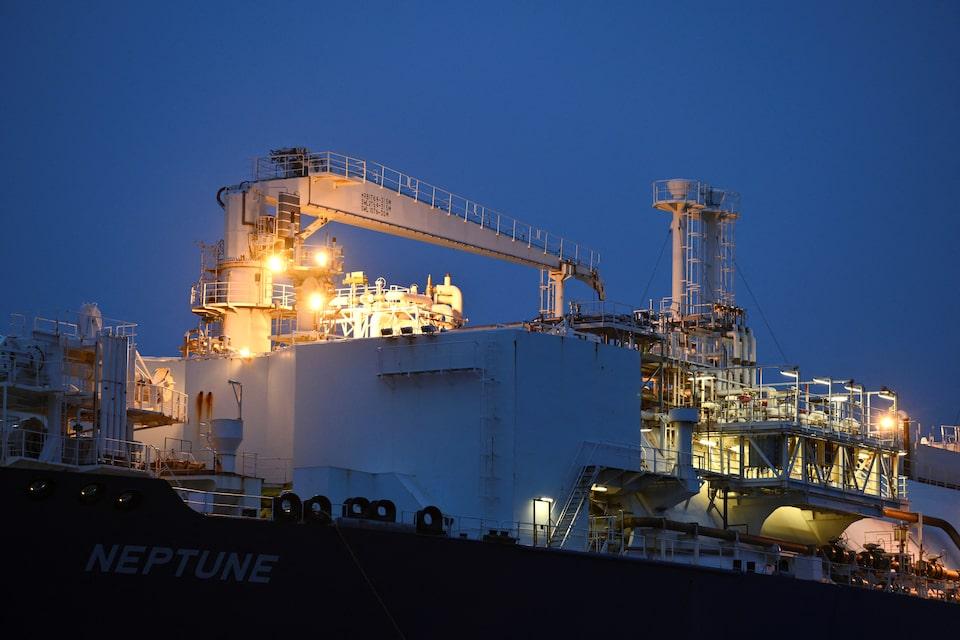
BERLIN, April 7 (Reuters) - Germany's liquefied natural gas (LNG) terminal in the Baltic Sea port of Mukran operated at 5% capacity in the first quarter of 2025, an analysis showed on Monday, amid local opposition and criticism over its environmental impact and excess capacity. Germany has expanded its natural gas import options to replace Russian pipeline supply and deployed floating storage and regasification units (FSRUs), raising overcapacity concerns. Sign up here. Utilisation of the Mukran LNG terminal dropped to 5% in the first quarter from 14% a year earlier, when it was still operating in Lubmin, a port town near the border with Poland, according to German Environmental Aid (DUH) analysis of data by Gas Infrastructure Europe. This compares with 49% and 83% utilisation rates at North Sea LNG terminals Wilhelmshaven and Brunsbuettel, operated by state-owned Deutsche Energy Terminal GmbH (DET). Marking its approval anniversary on April 9, DUH said the terminal fed only 1.3 billion cubic meters (bcm) of gas into the grid last year, about 1.5% of Germany's total gas consumption. "The Ruegen LNG terminal is not just a fossil dead end that seriously threatens the climate and our future, it is a bad investment that was foreseeable," Sascha Mueller-Kraenner, DUH managing director, said in a statement. The project has triggered local opposition from the resort town of Binz, saying it was hurting tourism in one of top tourist attractions for Germans and harming marine life, but legal challenges have been thrown out. Deutsche Regas, which operates the Mukran terminal, said the terminal was feeding 120–150 gigawatt hours per day into the German grid, adding it expects the volume to remain stable. "The relevance of critical energy infrastructure is not determined by short-term utilization, but rather by available capacity, utilization during periods of high demand or crises, and at most by long-term utilization," the company said. It said it offers regasification services through "take-or-pay" slot contracts, ensuring terminal fees regardless of usage. In February, Deutsche Regas announced the termination of the charter contract for Energos Power FSRU, citing competitive disadvantages to terminals operated by DET. On Friday, Deutsche Regas launched a bidding round for long-term regasification capacity in Mukran, offering an additional 5 bcm per year from 2027 to 2043. It also said it plans to restart a second FSRU, aiming to restore the terminal's full exit capacity of 13.5 bcm annually by 2027. Mukran's capacity was not adjusted by Deutsche Regas even after the withdrawal of Energos Power, DUH said. https://www.reuters.com/business/energy/germanys-mukran-lng-terminal-5-utilisation-q1-says-duh-2025-04-07/