2025-04-07 12:09
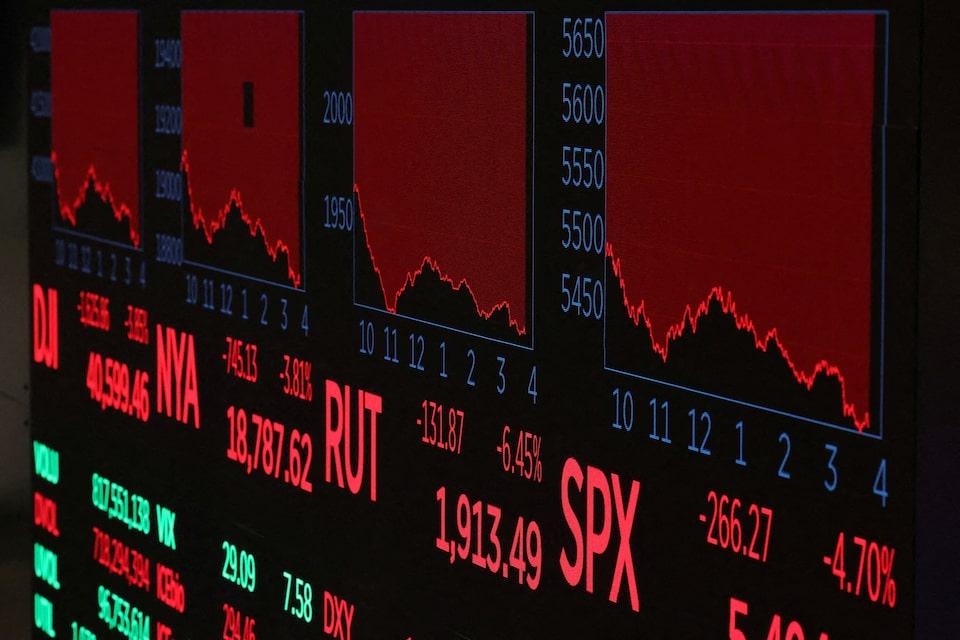
LONDON, April 7 (Reuters) - (This April 7 story has been corrected to show that the order of magnitude is in basis points, not percentage points, in paragraph 7) As a rout in global equity markets deepened on Monday amid tariff turmoil, the signs of stress across financial markets have started to flash brightly. Sign up here. "It's quite clear that the market is in a panic," said Van Luu, global head of FX and fixed income strategy, Russell Investments. The asset manager's gauge of investor risk aversion, which incorporates pricing trends and sentiment indicators, was approaching levels last seen in September-October 2022, when global central banks started an unprecedented run of interest rate hikes. Here's a look at just some of the indicators on investors' watchlist. VIX JUMPS Wall Street's closely watched fear gauge, the VIX volatility index (.VIX) , opens new tab, jumped to 60 on Monday - its highest level since a global market selloff in August. It closed above 45 on Friday for the first time since the 2020 COVID-19 crisis, and jumped the most on a single day since then. In Europe, a similar indicator -- the Euro STOXX Volatility Index (.V2TX) , opens new tab -- was set for its biggest one-day surge in absolute terms since October 2008, the depths of the global financial crisis. DOLLAR DEMAND Demand from non-U.S. investors for dollars has surged, a typical sign that market participants need cash. The rate on three-month cross-currency basis swaps for the euro , a derivative that reflects this demand, traded around -7 basis points (bps) from above 12.5 bps a week ago, its most negative since late 2023. A more negative number indicates higher demand for dollars. JUNK IT Junk bond spreads, which reflect the premium investors get for owning riskier corporate debt, compared to government bonds, have blown out to multi-month highs. On Monday, the iTRAXX Crossover Index an index of five-year European junk bonds, leapt above 420 basis points in its largest one-day rise since March 2023 and to its highest since November that year and nearly 80 basis points higher than it was a week ago. In the United States, the ICE BofA U.S. High Yield Index (.MERH0A0) , opens new tab ended last week at its lowest since September, having posted its largest weekly drop since September 2022. BANKS SLIDE Global banks, key to the functioning of the global economy and a barometer for growth, continue to suffer steep share price falls. European and Japanese bank stocks have shed roughly 20% of their value each in the last three trading sessions alone (.SX7P) , opens new tab. Japanese banks closed 10% lower on Monday (.IBNKS.T) , opens new tab, while U.S. banks slid some 15% last week in their biggest weekly drop since 2020 (.SPXBK) , opens new tab. SWAP SPREADS The pressure building in the U.S. bond market, the world's biggest with some $28 trillion in outstanding government debt, is starting to become apparent and one sign of strain is in swap spreads. They capture the premium on the fixed side of an interest-rate swap, which investors use to hedge against rates risk relative to bond yields. U.S. two-year swap spreads - the difference between two-year swap rates and the two-year Treasury yield - briefly dropped to almost -46 basis points on Monday before pulling back to around -24 bps -- near its tightest levels since November. https://www.reuters.com/markets/global-markets-stress-2025-04-07/
2025-04-07 11:43
MUMBAI, April 7 (Reuters) - India's overnight indexed swap (OIS) rates have fallen in the last three sessions, signaling that besides just a quarter-point rate cut this week, the central bank could also change its stance or opt for a bigger reduction. OIS rates, the closest gauge of interest rate expectations, have dropped by 11-12 basis points (bps) in three trading sessions since the U.S. slapped duties on India last Wednesday as part of an expansive tariff plan. Sign up here. The one-year OIS rate stands around 5.88%, its lowest level since May 2022, while the five-year rate is around 5.71%, its lowest since February 2022. While a 25-bp rate cut is already priced in at the Reserve Bank of India's (RBI) monetary policy decision on Wednesday, traders are seeking some additional policy support after the tariff announcement stoked fears of a growth slowdown. "A 25-basis point rate cut with a change in policy stance to "accommodative" (from "neutral") has now become a higher possibility, while a rate easing of 25 bps with no change in stance is now a low possibility event," said Alok Sharma, head of treasury at foreign bank ICBC. DBS also expects a change in stance to "accommodative", along with a 25-bp reduction. The RBI started its rate cut cycle for the first time in nearly five years in February. Indian officials expect their growth projection of 6.3-6.8% to hold, but economists see a 20-50-bp hit to growth in the ongoing financial year that started on April 1. Citigroup, which expects a 50-bp hit to growth, said it assigns "a very small probability of a 50-bps cut in the April meeting." The immediate focus should be on creating the right preconditions for better transmission of monetary easing, Citi's India chief economist, Samiran Chakraborty, said in a note. The RBI could also signal a dovish tilt by giving greater assurance to the market regarding comfortable liquidity conditions, according to traders and economists. Ahead of the policy review, bankers have sought comfort on the availability of overnight liquidity up to a certain percentage of deposits. Meanwhile, surplus banking liquidity conditions over the last few days have already pushed overnight interbank call money rates towards the lower end of the monetary policy corridor, delivering a stealth rate cut. The weighted average call rate has moved closer towards the Standing Deposit Facility rate, which is at 6.00%, after remaining above the repo rate in March, while money market rates have plunged. https://www.reuters.com/markets/rates-bonds/india-swap-markets-signal-rbi-could-do-more-than-just-25-bp-rate-cut-this-week-2025-04-07/
2025-04-07 11:39
MOSCOW, April 7 (Reuters) - Russian Urals oil prices fell to the lowest levels since 2023 as international benchmark Brent prices collapsed amid escalating trade tensions between the U.S. and China following the tariffs policy announced last week, Reuters calculations based on traders' data showed. Weaker Urals prices will weigh on Russia's oil revenues - a core basis for Moscow's budget. A fall in oil and gas revenues comes at a time of tough negotiations between Russia and the United States about the ceasefire in Ukraine. Sign up here. Brent futures lost $2.43, or 3.7%, to $63.15 a barrel by 1009 GMT as they continue to fall from the last week and are at the lowest since 2021. Russian Urals oil prices for cargoes loading from Primorsk, Ust-Luga and Novorossiisk ports fell to around $53 per barrel last Friday, according to Reuters data. That means that on Monday the prices for the Russian grade might dip to around $50 if the decline of Brent prices continues until the markets close. If so it will be the lowest price level for Russian Urals oil since March 2023, according to Reuters data and calculations. At the same time lower prices for Russian oil will help its oil sellers to fix tankers as more western shipowners can enter the market as the prices are below the western price cap, two traders said. Urals prices are likely to fall $10 per barrel below the western price cap on Monday, Reuters calculations showed. In late 2022 the Group of Seven countries - the United States, Canada, Britain, Italy, France, Germany and Japan - together with the European Union and Australia imposed a cap of $60 per barrel on the sale of Russian oil on a free-on-board basis, seeking to reduce Russia's revenue from seaborne oil exports as part of sanctions. The cost of shipping Urals oil from the Baltic ports of Primorsk and Ust-Luga to India fell to $7 million per one-way shipment on average after rising to a 12-month high early in March. https://www.reuters.com/markets/commodities/russian-urals-oil-prices-fell-lowest-level-since-2023-brent-price-collapsed-2025-04-07/
2025-04-07 11:36
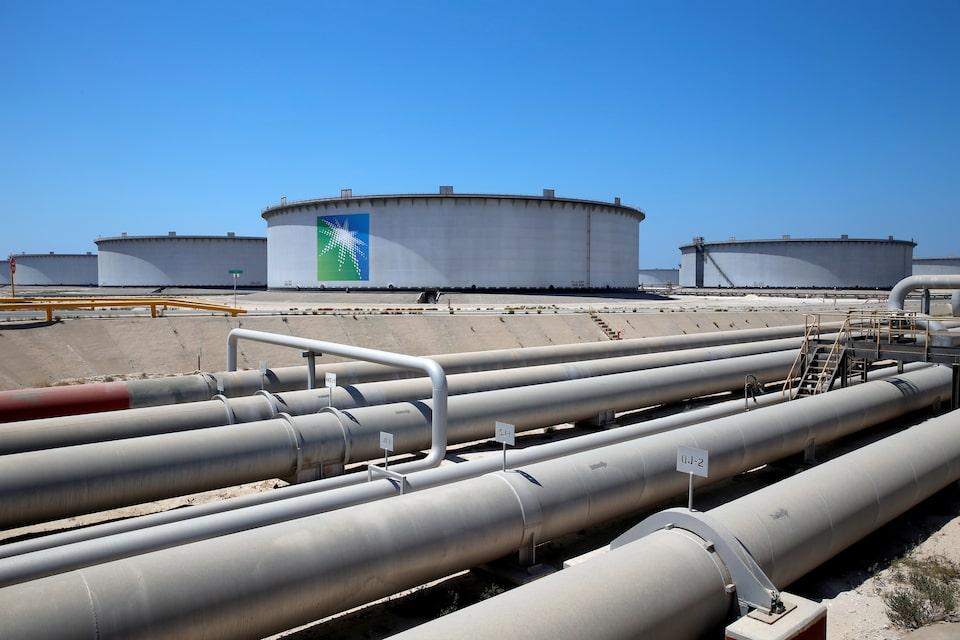
May Arab Light to Asia falls by $2.30 per barrel, biggest drop in over two years Other grades fall by $2.30 per barrel May prices to U.S. and Europe down by 20 and 50 cents per barrel OPEC+ to increase output by 411,000 barrels per day in May SINGAPORE, April 6 (Reuters) - Saudi Arabia, the world's top oil exporter, on Sunday slashed its prices for Asian buyers to close to their lowest level in four years, adding to speculation it is seeking to regain market share as part of OPEC+'s strategy to speed up oil output hikes. State oil company Saudi Aramco cut the May official selling price (OSP) for flagship Arab Light crude by $2.30 to $1.20 a barrel above the average of Oman and Dubai prices, a pricing document from the producer showed. Sign up here. The drop marks the biggest decline in more than two years and is the second consecutive month Aramco has lowered its prices, Reuters' record of Saudi OSPs showed. January's price of plus 90 cents was the lowest since early 2021 during the peak of the COVID-19 pandemic. Eight OPEC+ countries in a surprise decision agreed on Thursday to advance their plan to phase out oil output cuts by increasing output by 411,000 barrels per day in May, triple the expected increase, representing around 0.4% of global supply. Aramco's price cut, coming just days later, recalled past market share battles when OPEC producers competed to sell extra barrels, pushing prices lower. "This could raise fears of the Kingdom reverting to the market share strategy of 2015 and 2016 when OPEC was unable to respond effectively to rising U.S. supply," said Callum Macpherson, head of commodities at Investec. "However, it does not look that serious yet. This could also be in response to producers like Iraq and Kazakhstan who consistently produce above their quota," he said. Saudi Arabia has been an aggressive supporter of production control to balance the market in the last five years since its budget requires oil prices of around $90 per barrel. Thursday's OPEC+ decision represents a major departure from those policies. Aramco also lowered May prices for other grades it sells to Asia by $2.30 per barrel. News of the OPEC+ production boost, together with an escalating global trade war, sent oil prices plunging nearly 11% in the week ending April 4, hitting more than three-year lows. Prior to the latest OPEC+ decision, analysts surveyed by Reuters had expected Arab Light for Asia to be cut by $1.80 to $2.00, tracking the steep declines in benchmark prices in March. The spot premium of Dubai averaged $1.38 per barrel in March, down from $3.33 per barrel, the average in February. The drops were also due to more Russian supply returning to Asia, following disruptions in January and February caused by U.S. sanctions on Russian energy trade. The tables below show the full free-on-board (FOB) prices for May in U.S. dollars. https://www.reuters.com/business/energy/saudi-arabia-cuts-oil-prices-asia-four-month-low-2025-04-06/
2025-04-07 11:31
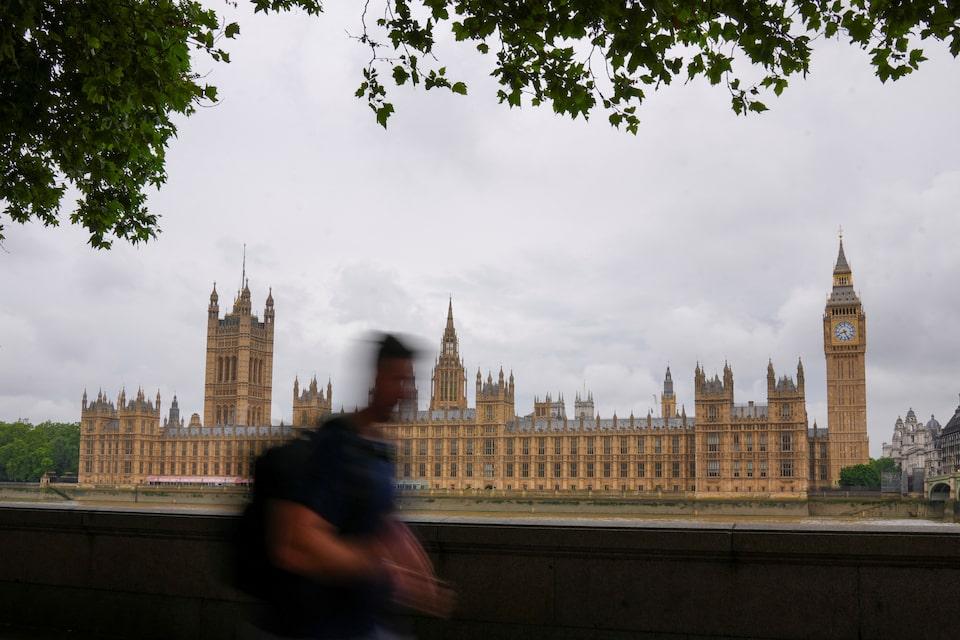
LONDON, April 7 (Reuters) - Britain's Office for National Statistics must take urgent steps within the next four weeks to reverse a fall in the quality of key economic statistics including those for unemployment, a regulator said on Monday. The ONS has faced criticism from the Bank of England and many economists for its failure to reverse a post-pandemic slump in the number of participants in its flagship survey of Britain's labour market as well as other issues. Sign up here. The public agency that monitors the quality of Britain's official data, the Office for Statistics Regulation, launched a review in July 2024 into problems at the ONS and last week the government announced a separate probe. "It is critical that ONS takes decisive action to restore confidence," the OSR said. Statistics agencies in other countries did not have the same amount of problems, suggesting the ONS had an "urgent need to modernise its (data) collection approach and working practices". The regulator told the ONS to publish a fully resourced plan to improve its surveys within four weeks and that within three months it should spell out how it would prioritise funding for economic statistics and check their quality more regularly. "Insufficient investment" in collecting data had been a key issue, the regulator added. In response, the ONS said its latest business plan included a renewed focus on core economic and population data. "We recognise and share concerns about data quality and are addressing these as a matter of urgency," a spokesperson said. Last year the ONS said it did not expect to complete improvements to the labour force data until 2027. The OSR said discussions with ONS staff and users of its data suggested some concerns about how its executives allocated resources and engaged with outsiders. "ONS staff told us that, despite some encouragement from senior managers, early warning of emerging problems has not always been welcomed," the regulator added. https://www.reuters.com/world/uk/uk-regulator-says-it-is-critical-ons-reverses-data-quality-slump-2025-04-07/
2025-04-07 11:25
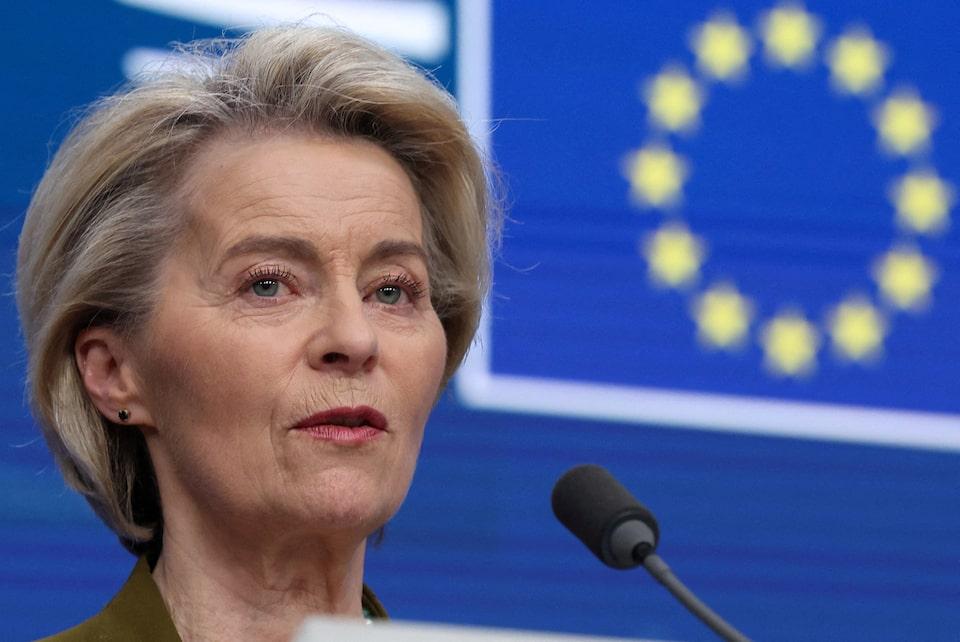
EU already plans response to U.S. steel tariffs, industry wants more Auto isector seeks negotiated solution, lower tariffs on US car imports Pharma industry dodged latest round of tariffs, but faces future duties BRUSSELS/LONDON, April 7 (Reuters) - European Commission President Ursula von der Leyen held a call with metals industry representatives on Monday and was speaking to the automobile sector later to discuss how to respond to U.S. tariffs. The calls aimed to collect data for further counter-measures beyond Brussels' upcoming response to Washington's steel duties, which will be voted on later this week. A call with the European pharmaceuticals industry is planned for Tuesday. Sign up here. European and Asian shares and oil prices plummeted on Monday on fears that U.S. President Donald Trump's duties could push up prices, weaken demand and even trigger a global recession. Von der Leyen's invitation said the EU would this year propose "a trade measure replacing the steel safeguards as of 1 July 2026" to protect against "negative trade-related effects caused by global overcapacities". A source who attended the metals call said the group asked for measures to deal with "indirect impacts" from the tariffs, and urgent action to keep aluminium and steel scrap in the EU. The Commission said last month it would consider export duties on EU scrap sales. It also tightened existing safeguards on steel to cut imports by 15% on April 1. "Constructive meeting ... Sense of urgency, clarity of purpose is much increased compared to a few months ago," the source said. The call with the auto industry was scheduled for 3:30 p.m. (1330 GMT), according to ACEA, the industry group in Brussels. The group have requested a negotiated solution, a spokesperson added. Carmakers have been pushing the EU to lower its tariffs on U.S. car imports. BMW in January urged a cut to 2.5% from 10%. The call was set to include lobby groups as well as CEOs and chairs from BMW, Volkswagen, Stellantis, Scania, Daimler Truck and Bosch. The Commission initially invited the chief executives of EU-headquartered pharma companies for a meeting, three industry sources said. A fourth source said the Commission may have later invited Swiss-based firms such as Novartis and Roche. Reuters was not immediately able to confirm this. A Roche spokesperson said the company was an active member of EFPIA but declined to comment further. The European big pharma trade lobby EFPIA and the European biotech group Europabio both said their directors general were attending. An invitation letter said the meeting was scheduled for 10:30 a.m. (0830 GMT) on Tuesday. Pharmaceuticals were exempt from the duties Trump announced last week, but he says they will face separate tariffs. The industry will push the Commission to spell out how it plans to enable pharma and biotech firms to manufacture more in Europe, a source attending Tuesday's meeting said. They said that could include streamlining regulatory processes that have recently discouraged some companies from conducting clinical trials in Europe. https://www.reuters.com/world/eu-commission-head-discusses-us-tariff-response-with-auto-steel-pharma-2025-04-07/