2025-04-07 11:23
BEIJING, April 7 (Reuters) - China has announced a 10-year plan to build an agricultural powerhouse, aiming for stable grain production and a more secure food supply by 2035. The plan, reported by state media Xinhua, outlines several key strategies to enhance food security, modernize agriculture, drive technological innovation, and promote rural revitalisation. Sign up here. By 2027, China aims to achieve a grain output capacity of around 700 million metric tons, strengthen self-sufficiency in key crops, make breakthroughs in agricultural technologies like seeds and machinery, and boost global competitiveness, according to the plan. This initiative comes amid escalating tensions with the United States, an economic slowdown, and challenges posed by climate change. Heavily reliant on food imports from Brazil and the U.S., China is working to diversify import sources and increase domestic production. In 2024, China set a record for grain production, surpassing 700 million metric tons, reflecting the success of these efforts. The plan includes improving the production of key agricultural products and accelerating the construction of national food security industrial belts. It aims to stabilise rice and wheat production, develop root vegetables and mixed grains suited to local conditions, and tap into the production potential of oilseeds like rapeseed and peanuts, while expanding oil sources from oil tea and animal fats. It also focuses on biotech projects, such as cultivating high-oil and high-yield soybeans, salt-alkali-tolerant crops, and other varieties. To accelerate agricultural innovation, China will strengthen national agricultural science and technology capabilities, support fundamental research, and foster leading agricultural technology enterprises. To further enhance food security, China will focus on the high-quality development of its hog industry, improve the competitiveness of the dairy sector, and implement measures to raise the quality of beef and mutton. China's meat market is currently grappling with oversupply and weak demand amid a slowing economy. The government has been intensifying efforts to stabilise the sector and improve market conditions. https://www.reuters.com/world/china/chinas-10-year-initiative-aims-more-secure-food-supply-by-2035-2025-04-07/

2025-04-07 11:20
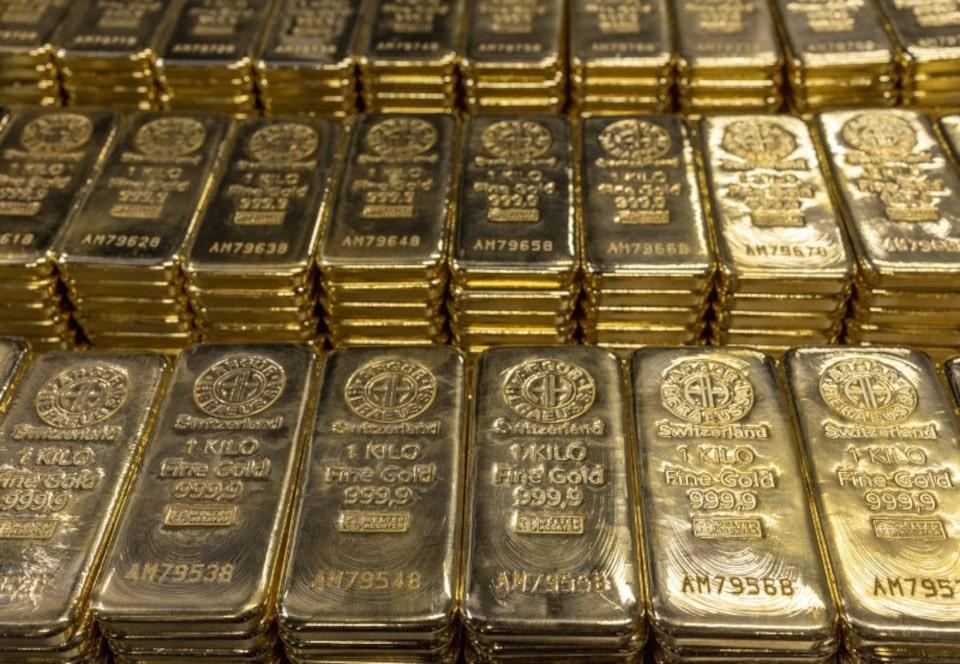
April 14 (Reuters) - Goldman Sachs has increased its year-end gold forecast to $3,700 per troy ounce (toz), citing stronger-than-expected central bank demand and heightened recession risks impacting ETF inflows. The investment bank, whose previous year-end forecast was $3,300, said it expected central bank demand to average 80 tonnes per month, up from its previous assumption of 70 tonnes and well above the pre-2022 baseline of 17 tonnes per month. Sign up here. The bank also noted a surge in gold ETF inflows, driven by fears of a recession, with its economists assigning a 45% probability to a U.S. recession in the next 12 months. Spot gold has continued its rally from the last year, hitting multiple record highs and gaining more than 23% so far this year. Bullion breached $3,200 an ounce for the first time on Friday. The bank's analysis also said that in the medium-term, the risks to their upgraded forecast remain skewed to the upside. If central bank buying averages 100 tonnes/month, Goldman estimates that gold could reach $3,810/toz by end-2025. On the ETF side, if a recession occurs, ETF inflows could revert back to pandemic levels, supporting prices towards $3,880/toz by year-end. However, if economic growth outperforms expectations due to reduced policy uncertainty, ETF flows would likely revert back to their rates-based prediction, with year-end prices closer to $3,550/toz, Goldman said. The following is a list of the latest forecasts for 2025 and 2026 gold prices (in $ per ounce): *end-of-period forecasts https://www.reuters.com/markets/commodities/hsbc-raises-gold-price-forecasts-amid-geopolitical-tensions-2025-04-03/
2025-04-07 11:16
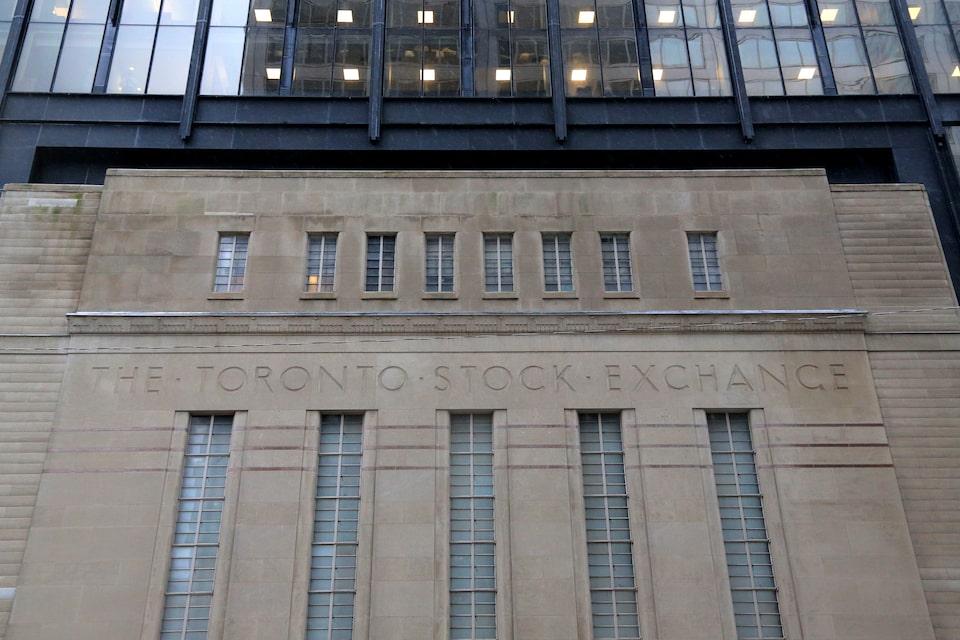
TSX ends down 1.4% at 22,859.46 Posts lowest closing level since September 6 Energy falls 2%; oil settles 2.1% lower Financials decline 2% April 7 (Reuters) - Canada's main stock index fell on Monday to a seven-month low, including declines for energy and financial shares, as a widening trade war threatened to derail the global economy and despite the prospect of negotiations that could lead to deals. Toronto Stock Exchange's S&P/TSX composite index (.GSPTSE) , opens new tab ended down 334.01 points, or 1.4%, at 22,859.46, adding to steep declines on Thursday and Friday and posting its lowest closing level since September 6. Sign up here. The index has fallen 11.4% since posting a record closing high on January 30. That's a magnitude that puts it in correction territory but a smaller pullback than for some other major indexes, such as the S&P 500. U.S. President Donald Trump said he was not looking at a pause on tariffs to allow for negotiations with trading partners but said he would talk to China, Japan and other countries about the duties. "It looks like deals are going to be made, which is a positive, yet the market is not sure," said Allan Small, senior investment advisor of the Allan Small Financial Group with iA Private Wealth. Energy (.SPTTEN) , opens new tab was down 2% as the price of oil extended its recent declines, settling 2.1% lower at $60.70 a barrel, on worries that tariffs could push economies around the world into recession. Heavily weighted financials also lost 2%, with Great-West Lifeco Inc (GWO.TO) , opens new tab down 5.1%. Consumer staples ended 2.8% lower. Shares of Loblaw Companies Ltd (L.TO) , opens new tab declined 3.2%, extending their pullback from a record high on Thursday. The probability of a U.S. recession has risen significantly thanks to Trump's tariffs and that will have a major negative effect on the Canadian economy, Prime Minister Mark Carney said. Canadian firms and consumers see a sharply higher chance of recession over the coming year as U.S. tariffs and possible retaliation fuel widespread uncertainty, the Bank of Canada said. https://www.reuters.com/markets/tsx-futures-hit-eight-month-low-trump-stands-firm-tariffs-2025-04-07/
2025-04-07 11:08
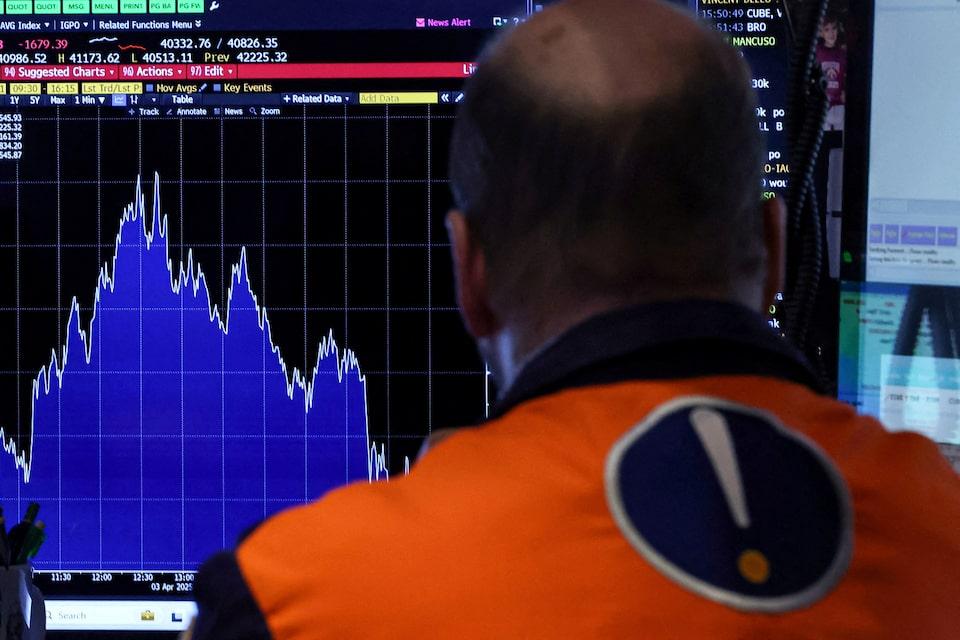
LONDON, April 7 (Reuters) - Forget about those puts. The White House does not seem concerned enough about crashing global stock prices to reverse its massive trade tariffs, and the Federal Reserve appears in no hurry to deliver rapid interest rate cuts. So the market sell off deepens and threatens to turn into a crash. I'll discuss all the market mayhem and then explore some competing history lessons on trade and explain why they may be bad news for U.S. Big Tech mega stocks. Sign up here. Today's Market Minute * On Sunday, Trump indicated he was not concerned about losses that have already wiped out trillions of dollars in value from share markets around the world. "I don't want anything to go down. But sometimes you have to take medicine to fix something," he said. * Taiwan stocks plummeted almost 10% on Monday, the biggest one-day percentage fall on record. Taiwan's president has taken to X to pledge a "golden age" of shared prosperity with the U.S. * Some hedge funds say they are offloading all or most of their holdings of stocks as U.S. President Donald Trump's trade war wipes out trillions of dollars of market value and forces them to curtail trading using borrowed cash. * EU countries will seek to present a united front in the coming days against U.S. tariffs, likely approving a first set of targeted countermeasures on up to $28 billion of U.S. imports from dental floss to diamonds. * Fake cosmetics, massage pillows and sex toys. These are some clues pointing to a suspected Russian-run sabotage plot behind parcel explosions in the UK, Germany and Poland last summer, a person with knowledge of the Polish investigation told Reuters. Stocks Crater Again, No 'ifs' or 'puts' Any investor hesitation in offloading expensive U.S. stocks earlier this year was partly due to suspicion that President Donald Trump would pull back or soften his tariff plan in the face of sharp equity market losses. But after the worst week on Wall Street since the pandemic hit in 2020, Trump effectively doubled down on Wednesday's tariff sideswipe against the rest of the world. "Sometimes you have to take medicine to fix something," he said as he returned from a weekend of golf in Florida. S&P 500 futures plunged another 4% at one point on Monday, putting the market on course to enter full-blown bear market territory as losses from recent peaks top 20%. With the VIX (.VIX) , opens new tab 'fear index' of volatility soaring as high as 60 for the first time since August, the whole financial complex is on edge. Global stocks in Asia and Europe tanked again today, with Hong Kong's Hang Seng (.HSI) , opens new tab clocking a 13% loss in its biggest one-day drop since the traumatic emerging markets crisis of 1997. It's now in the red for the year. Treasury yields , however, backed up, as did the dollar (.DXY) , opens new tab, especially against China's yuan . Oil prices fell to their lowest in four years, and both gold and Bitcoin fell too, the latter to its lowest since the election in November. If there is a 'Trump put' in the stock market, the strike price would appear to be much lower than Friday's close. And investors appear set to dump equities until they reach it. The current Washington tariff plan and the unfolding retaliation, such as China's 34% tariffs on all U.S. exports, look likely to sow recession at home and abroad, an outcome that was unthinkable to many people at the start of the year. Goldman Sachs now sees a 45% chance of a U.S. recession this year, effectively a coin toss. JPMorgan last week said there was a 60% chance of a wider global downturn. Time for a Fed rescue then? Much like the imagined Trump put, the 'Fed put' seems out of sight right now. On Friday, Fed Chair Jerome Powell outlined concerns about the trade uncertainty and business anxiety, but he put as much emphasis on the potential inflation spur from tariffs as the possible damage to growth. And he said he saw little in the labor market to warrant early rate cuts. Absent a shift of tone from Trump or Powell or some rowback on promises of trade retaliation, then the most important news for markets in the coming days will come with the corporate earnings season that kicks off in earnest this week. With such seismic uncertainty, investors are likely to see a sweep of downgraded outlooks and profit warnings, which will only add more fuel to the fire. And now I'll explain why U.S. tech firms and banks may find themselves squarely in the crosshairs of this escalating trade war. Tough Tariff History Lesson for US Tech The problem with U.S. President Donald Trump using historical grievances to justify a trade war is that others will do likewise, leaving richly-valued U.S. tech firms and banks in the crosshairs of retaliation. One of the big puzzles about last week's dramatic stock market plunge following the announcement of the sweeping U.S. tariff hikes was that so few investors seemed prepared for it when it was hiding in plain sight. Trump's tariff plans, while at the high end of expectations, were flagged endlessly for months before and after his November 5 election victory. Resulting retaliation from China, Europe, Canada and others was publicly and repeatedly promised too. That it took up to last Thursday for markets to begin to factor in a wider recession is bizarre at best, negligent at worst. Even stranger was that being long U.S. megacap tech stocks was still considered the most crowded trade on the planet as recently as March. And yet by Friday, the once "Magnificent Seven" leaders of the sector were nursing a bear market 25%-plus decline from their post-election peaks in December. It may simply be a case of the most crowded trades emptying out the quickest. But there are other reasons for Big Tech to turn tail. The Rest is History Trump is justifying his decision to impose the highest average U.S. import tariffs in more than a century with a history lesson on how overseas trading partners have "looted, pillaged and raped" America and how often "the friend is worse than the foe." Others have similarly dusted off the spreadsheets and history books, but they find a different narrative. Trump's widely-criticized tariff formula focused solely on trade in goods, not services. But experts point out that this quid pro quo was precisely how the U.S. chose to design the globalized trading system that it's now choosing to unravel. The global dominance of U.S. Big Tech companies, whose stock valuations have skyrocketed for more than a decade, was one of the big prizes Washington secured. Under Pressure In a recent article, trade economist Ricardo Hausmann , opens new tab questioned the administration's sole focus on goods trade, adding that tariff retaliation may be beside the point. "America's economic ties to the rest of the world go far beyond goods. Services and investments are equally – if not more – important. And if that's where its advantages and potential vulnerabilities lie, there is little reason for other countries to retaliate with tariffs." Counter-tariffs certainly might come - China already announced measures on Friday - but this is not where the pain would be felt most. The outsized slide in U.S. tech and bank stocks, as a result, reflects more than just recession fears. Hausmann details how last year's $1.2 trillion U.S. goods trade deficit is only half the story, as there was nearly a $1 trillion U.S. surplus in services like digital, telecommunications and finance, if the repatriated profits of overseas subsidiaries are added back. In effect, America's overall trade is nearly in balance. But given that the value of U.S. investments abroad is estimated to be $16.4 trillion compared to the $374 billion that foreign companies earned in America last year, the former is a much more valuable target for any tit-for-tat reactions than U.S. goods, he said. What's more, U.S. dominance in tech and intellectual property was not an accident. Indeed, it is rooted in the Uruguay Round of trade talks in 1994, when developing countries agreed to enforce rich countries' IP protections in exchange for goods market access. If the U.S. is reneging on the latter, the former may be considered fair game. "While the debate in the U.S. and abroad is focused on tariffs and their impact on prices and exports, other countries will soon begin to wonder whether protecting America's most valuable economic assets - its IP and the global mechanisms that allow it to be monetized - still serves their interests," Hausmann wrote. Emerging economies aside, European leaders - with their multiple grievances against U.S. Big Tech and demands for fairer digital taxation - see this vulnerability too. France, for one, said its companies should pause investments in the U.S. while the situation is clarified. French Finance Minister Eric Lombard also said Paris was working on "a package of responses that can go well beyond tariffs". The European Union's recently adopted "Anti-Coercion Instrument" allows it to limit offending countries' access to public procurement tenders, restrict protection of IP rights or limit financial service firms' access to EU markets. Too hefty to invoke? "Donald Trump buckles under pressure, corrects his announcements under pressure, but the logical consequence is that he must also feel the pressure - and this pressure must now be exerted from Germany, from Europe," German Economy Minister Robert Habeck said on Thursday. The gloves are off. Chart of the day Hong Kong's benchmark Hang Seng stock index (.HSI) , opens new tab was one of the star performers of the year prior to Trump's trade sideswipe last week. But it plunged 13% on Monday, falling into the red for the year to date and recording it biggest one-day drop since the traumatic emerging markets crisis of 1997. Back then, the regional crisis became so severe that the Hong Kong Monetary Authority was eventually forced to intervene to buy equities as part of its defence of the HK dollar peg. Monday's drop unfolded despite the fact that a unit of China's sovereign fund, Central Huijin Investment, bought China-listed stocks to defend market stability. Meanwhile, the Hang Seng Tech Index (.HSTECH) , opens new tab plummeted 17%, marking its worst single-day performance since records began, bringing the index close to where it began the year before the DeepSeek-inspired rally. Today's events to watch * U.S. February consumer credit * Federal Reserve Board Governor Adriana Kugler speaks Opinions expressed are those of the author. They do not reflect the views of Reuters News, which, under the Trust Principles , opens new tab, is committed to integrity, independence, and freedom from bias. https://www.reuters.com/markets/us/global-markets-view-usa-2025-04-07/
2025-04-07 11:04
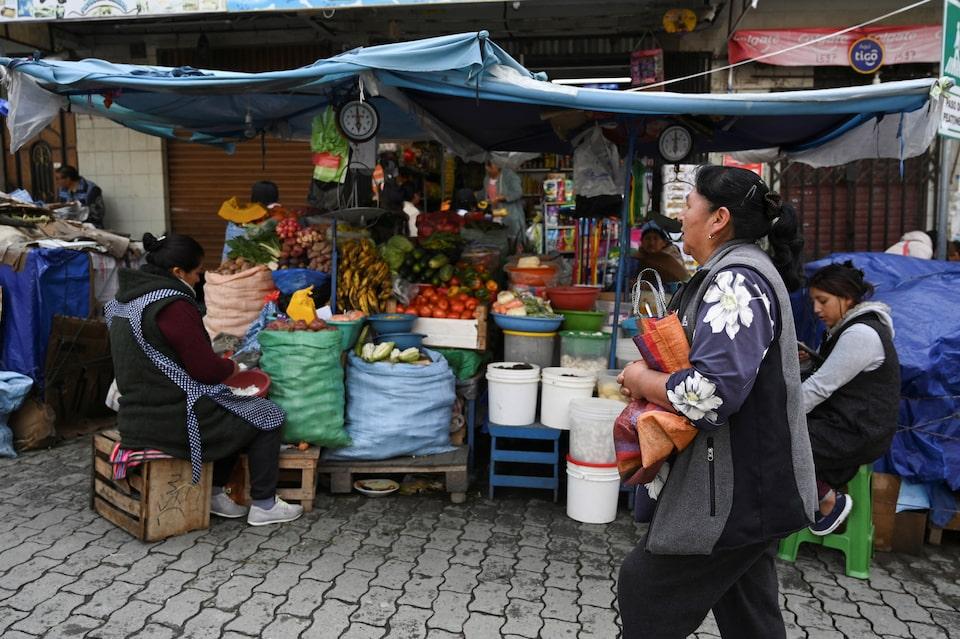
Bolivia faces economic crisis with steep inflation and fuel shortages Foreign currency reserves decline due to stalled energy production and exports Families struggle with food inflation, cutting meals to cope with costs LA PAZ, April 7 (Reuters) - In Bolivia's highland city La Paz, homemaker Angelica Zapata is coming to terms with a new inflation reality as prices rise at the fastest speed in almost two decades, propelled by shortages of fuel and dollars in the Andean country. The landlocked natural gas and grain producer is facing its most acute economic plight since the global financial crisis, with foreign currency reserves sliding on stalled energy production and exports, which have stoked political unrest and protests. Sign up here. The dollar shortage has stymied imports, pushing up farmers' costs and leading to long lines for gasoline and diesel at the pump. It has also strained a state subsidy system that for years helped keep fuel prices low. "Everything is so expensive, there's no money left," said Zapata at a food market in political capital La Paz, a rocky city ringed by Andean peaks. "I used to go to the market with 100 bolivianos ($14.58) and buy everything. It was enough for more than a week. I have several daughters, and what I buy isn't enough anymore. At most, these vegetables will last me one or two days." She added the cost of meats such as beef, chicken and pork had risen even more and prices were now "sky-high." Bolivia, one of South America's poorest nations, grows much of its own produce and historically had a surplus of natural gas, keeping energy costs down. Producers have not found new gas fields to replace those that have been tapped out, however, reducing exports and an important source of foreign income. The socialist party that has dominated politics since 2006 has subsidized certain goods but is now struggling to keep the economy afloat, denting President Luis Arce's popularity ahead of general elections in August. Bolivia's inflation rate, one of the lowest in Latin America over the last decade, has shot past regional peers such as Brazil, Mexico and Peru. It now lags only Argentina and Venezuela, and even those countries are seeing inflation cool. Dwindling gas production has forced the country to import more costly oil and gas, a key input for farmers and businesses, which in turn has pushed up other prices. "Food inflation is 17%, but there are foods that have risen even more significantly in recent months and the last year," said La Paz-based economist Jose Luis Evia, adding that rice prices rose 58% in the last 12 months, meat prices climbed 30% and fish prices spiked over 40%. 'ONE MEAL A DAY' In the Zapata household, inflation has forced the family to tighten their belts. "We've been forced to cut down on food. I have to give my daughters only one meal a day, just lunch, but no longer dinner," Zapata said. "Many families with lots of children are also going through this. The money we get is no longer enough." The crisis has generated long fuel lines, with some people calling for the government to remove controls and increase subsidies to encourage more production, even if that means prices rise further. "I would like them to lift the fuel subsidy so there will be more gas and we can stop waiting in lines and fill up normally," said taxi driver Samuel Castillo as he lined up to buy gas. Bolivia's government did not respond to a request for comment on what it was doing to bring down inflation. It has taken steps to import more fuel, including allowing firms to pay for imports with cryptocurrency. Castillo has taken on extra jobs to make ends meet. "I have to work as a driver, as a wood and aluminum carpenter, as a painter. I have to work doing a bit of everything to earn more money," he said. ($1 = 6.86 bolivianos) https://www.reuters.com/world/americas/everything-is-so-expensive-bolivians-tighten-belts-new-inflation-reality-bites-2025-04-07/
2025-04-07 10:50
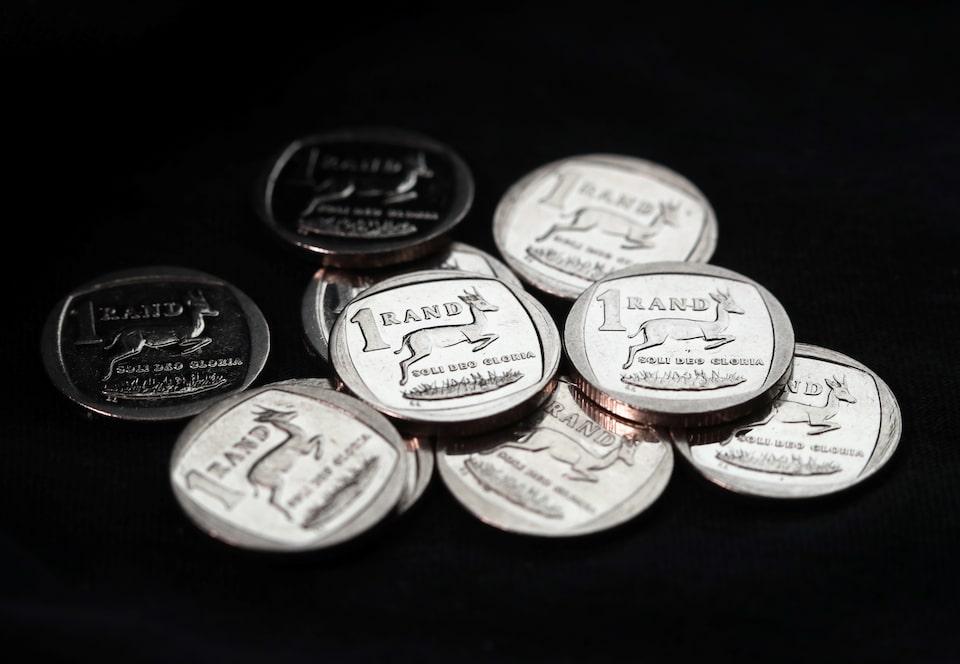
Rand hits weakest vs US dollar since October 2023 Top-40 stocks index hits 9-1/2 month low, then bounces Benchmark 2030 government bond rises JOHANNESBURG, April 7 (Reuters) - South Africa's rand slumped to its weakest in 18 months on Monday, while local stocks plunged before staging a recovery as U.S. President Donald Trump's sweeping tariffs and global recession fears rocked financial markets. At 1456 GMT, the rand traded at 19.5825 against the dollar , down about 2.4% from Friday's close, its weakest since October 2023. Sign up here. Trump showed no sign of backing away from his tariff plans on Sunday, and investors worldwide poured into safe-haven currencies like the yen and Swiss franc on Monday. An emerging market stock index was heading for its biggest one-day selloff since the 2008 global financial crisis. The rand extended its losses after the White House dismissed as "fake news" a media report that said Trump was considering a 90-day pause in tariffs for all countries except China. Local politics also weighed on the risk-sensitive rand, which lost more than 3% against the dollar last week. The two biggest parties in South Africa's government have clashed over the national budget, and investors are worried the pro-business Democratic Alliance could quit or be forced out of the coalition with the bigger African National Congress. "Any removal of the DA from the (coalition) would have a significantly negative effect on South Africa's outlook. It is the partnership between the ANC and DA that created a sense of stability and progress," said Casey Sprake, economist at Anchor Capital. On the Johannesburg Stock Exchange, the Top-40 index (.JTOPI) , opens new tab slumped 5% in early trade to strike a nine-and-a-half-month low, before paring losses to trade down 0.2%. Beermaker Anheuser-Busch was down 2.1%, Old Mutual (OMUJ.J) , opens new tab down 3.3% and technology investor Naspers (NPNJn.J) , opens new tab down 3.2%, among the decliners. "The market is concerned that tariffs may cause an economic contraction and that they may be disruptive to the global supply chain," said Roy Topol, portfolio manager at Cratos Asset Management. Naspers' fall was partly linked to weaknesses in China, where its European subsidiary Prosus (PRX.AS) , opens new tab holds a 24.1% stake in Tencent (0700.HK) , opens new tab, analysts said. South Africa's benchmark 2030 government bond rose, as the yield fell 3.5 basis points to 9.375%. https://www.reuters.com/markets/currencies/south-african-rand-hits-lowest-over-year-stocks-slide-2025-04-07/