2025-04-07 07:14
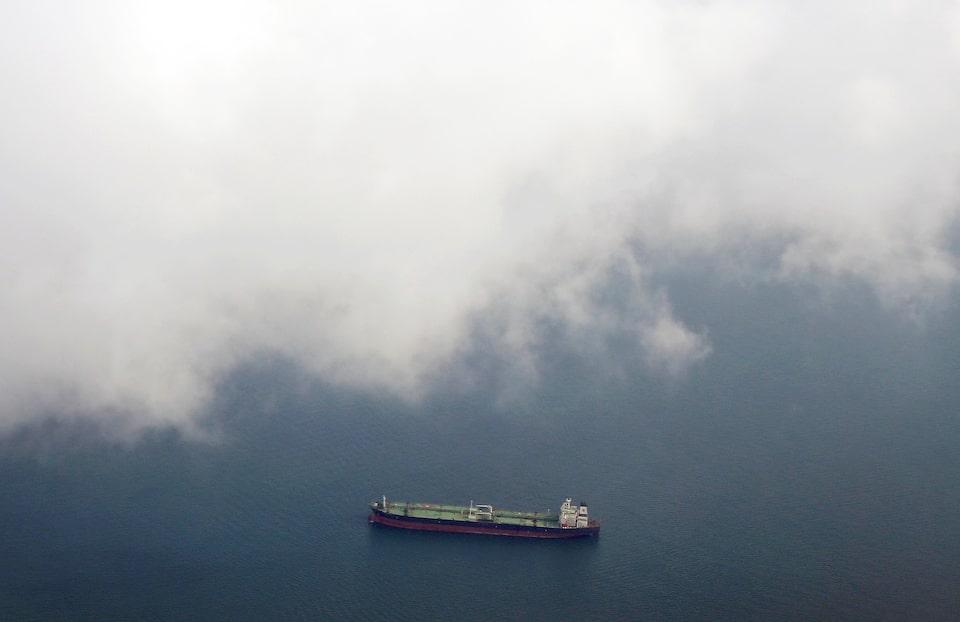
Trump threatens to further hike China tariffs EU floats 25% counter-tariffs Asian and European stocks plunge, US Dow and S&P indexes end lower Countries seek to negotiate ahead of Wednesday deadline China calls Trump's threat "economic bullying" WASHINGTON/BRUSSELS, April 7 (Reuters) - A global trade war touched off by U.S. President Donald Trump's sweeping tariffs escalated further on Monday, as Trump threatened to increase duties on China and the European Union proposed counter-tariffs of its own. Financial markets across the globe posted a third day of losses as investors worried that steep trade barriers around the world's largest consumer market could lead to a recession. The S&P 500 closed lower after a rollercoaster session in which it touched its lowest level in more than a year. Sign up here. Trump said the tariffs - a minimum of 10% for all U.S. imports, with targeted rates of up to 50% - would help the United States recapture an industrial base that he says has withered over decades of trade liberalization. "It's the only chance our country will have to reset the table. Because no other president would be willing to do what I'm doing, or to even go through it," he told reporters at the White House. "Now, I don't mind going through it because I see a beautiful picture at the end." Trump spoke hours after he ratcheted up a confrontation with China, the world's No. 2 economy. Trump said he would impose an additional 50% duty on U.S. imports from China on Wednesday if it did not withdraw the 34% tariffs it had imposed on U.S. products last week. Those Chinese tariffs had come in response to 34% "reciprocal" duties announced by Trump. Beijing responded with defiance. Trump's threat was a "typical move of unilateralism, protectionism and economic bullying," Chinese embassy spokesperson Liu Pengyu said. "We have stressed more than once that pressuring or threatening China is not a right way to engage with us," he added. "China will firmly safeguard its legitimate rights and interests." The European Commission, meanwhile, proposed counter-tariffs of 25% on a range of U.S. goods, including soybeans, nuts and sausages, though other potential items like bourbon whiskey were left off the list, according to a document seen by Reuters. Officials said they stood ready to negotiate a "zero for zero" deal with Trump's administration. "Sooner or later, we will sit at the negotiation table with the U.S. and find a mutually acceptable compromise," EU Trade Commissioner Maros Sefcovic said at a news conference. The 27-member bloc is struggling with tariffs on autos and metals already in place, and faces a 20% tariff on other products on Wednesday. Trump has also threatened to slap tariffs on EU alcoholic drinks. U.S. Treasury Secretary Scott Bessent met with Trump in Florida on Sunday, Politico reported, to urge him to emphasize striking trade deals with partners in order to reassure the markets that there is an endgame to the U.S. strategy. Trump said his administration would open trade talks with Japan, one of Washington's closest allies in Asia, and administration officials say dozens of other countries have reached out as well with the hope of heading off the tariffs as high as 50% due to take effect on Wednesday. The back-and-forth injected further turbulence into global financial markets, which have fallen steadily since Trump's announcement. Trump administration officials say the president is following through on a promise to reverse decades of trade liberalization that he believes has undercut the U.S. economy. "He's doubling down on something that he knows works, and he's going to continue to do that," White House economist Kevin Hassett said on Fox News. "But he is also going to listen to our trading partners, and if they come to us with really great deals that advantage American manufacturing and American farmers, I'm sure he'll listen." China's retaliatory levies are the firmest response yet to Trump's announcement, which has been met with bewildered condemnation from other leaders. After stocks in mainland China and Hong Kong cratered on Monday, China's sovereign fund stepped in to try to stabilise the market. Shares in Taiwan plummeted almost 10% - the biggest one-day percentage fall on record. Wall Street leaders issued warnings on U.S. tariffs, with JPMorgan Chase (JPM.N) , opens new tab CEO Jamie Dimon saying they could have lasting negative consequences, while fund manager Bill Ackman said they could lead to an "economic nuclear winter." Ackman is one of a handful of Trump supporters who questioned the strategy. Billionaire Elon Musk, who is leading Trump's effort to slash government spending, called for zero tariffs between the U.S. and Europe over the weekend. On Monday, Trump trade adviser Peter Navarro dismissed the Tesla CEO as a "car assembler." NEW REALITY OR NEGOTIATING PLOY? Investors and political leaders have struggled to determine whether Trump's tariffs are permanent or a pressure tactic to win concessions from other countries. Some in the EU worry that a forceful response risks even more blowback on European exporters of everything from French cognac and Italian wine to German cars. Volkswagen's Audi is holding back cars that arrived in U.S. ports after April 2 because of the newly imposed 25% auto tariff. Aircraft parts supplier Howmet Aerospace (HWM.N) , opens new tab may halt some shipments if they are impacted by tariffs, according to a letter seen by Reuters. Some governments in Asia have signalled a willingness to engage. Taiwanese President Lai Ching-te on Sunday offered zero tariffs as the basis for talks, while an Indian government official said Delhi does not plan to retaliate. Investors are now betting that the growing risk of recession could prompt the U.S. Federal Reserve to cut rates as early as next month. Trump repeated his call for the central bank to lower rates on Monday, but Fed chief Jerome Powell has so far indicated he is in no rush. https://www.reuters.com/world/trumps-tariff-medicine-injects-turmoil-into-global-markets-2025-04-07/
2025-04-07 07:07
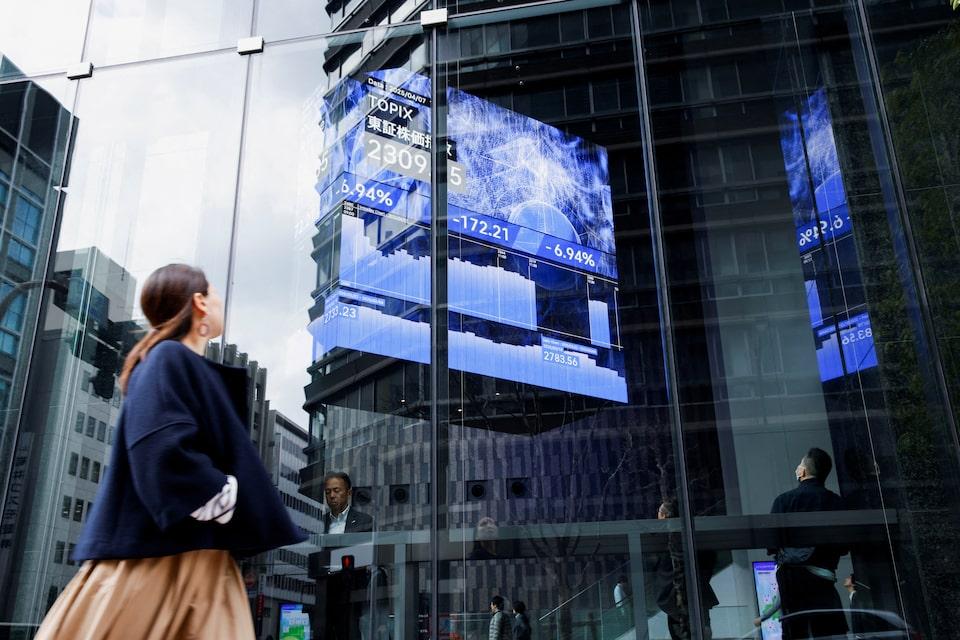
Some hedge funds offload all stocks as selloff widens Prime brokers say leverage falling, more selling coming Sales triggered by margin calls rise in South Korea HONG KONG/SHANGHAI/NEW YORK, April 7 (Reuters) - Some hedge funds say they are offloading all or most of their holdings of stocks as U.S. President Donald Trump's trade war wipes out trillions of dollars of market value and forces them to curtail trading using borrowed cash. In the three trading days following Trump's announcement of broad reciprocal tariffs on almost all countries, stock markets across the world have plummeted, and bonds have become both a haven and a bet on rate cuts by the Federal Reserve, turning on their head market assumptions before Trump took office. Sign up here. The selloff on Wall Street has been vicious as investors that bet on U.S. exceptionalism and economic might stampede out of its markets. The benchmark S&P 500 index (.SPX) , opens new tab fell 10.5% over two days and lost about $5 trillion in market value. China's CSI300 (.CSI300) , opens new tab blue-chip index fell more than 5% on Monday, while the pan-European STOXX index (.STOXX) , opens new tab is down over 14% from its March 3 all-time closing high and in correction territory. William Xin, chairman of hedge fund Spring Mountain Pu Jiang Investment Management based in Shanghai, said he had liquidated all of his stock positions as the current geopolitical landscape is messy, and the risk of a global recession is rising. "The macro picture is getting very chaotic, and I cannot see the future clearly at all," said Xin, who sold his China and Hong Kong-listed shares last Thursday, ahead of a public holiday on Friday. As repositioning away of U.S. assets is likely to continue in the short run, Tara Hariharan, managing director at global macro hedge fund NWI Management, said trade ideas currently do not include stocks at the moment. New York-based NWI favors long Japan's yen versus the dollar and long the front-end of U.S. treasuries. Hedge funds that pursue a long-short equity strategy have been particularly hard-hit as market volatility metrics (.VIX) , opens new tab surged, brokers said. Hedge funds have been minting short positions at a breakneck pace. JPMorgan estimated net leverage, which refers to hedge funds' long minus short positions, was down and could be around the lowest since late 2023. Commodity trading advisor funds, which trade future contracts, are bearish stocks at a record level, according to JPMorgan. The positioning, the bank's equity strategy team, leaves them more susceptible to a squeeze if "there are any positive headlines." A short squeeze occurs when a stock price goes up and forces market participants to close their bets against the stock. In an indication of prolonged pain, the bank said on Friday that volatility targeting portfolios had between $25 billion and $30 billion in equities to sell in the coming days, while levered exchange-traded funds (ETFs) had an additional $23 billion to sell. MARGIN CALLS Hedge funds typically use margin accounts in which they borrow cash from prime brokers to trade markets. When the value of holdings in an investor's margin account falls below the broker's required deposit, brokers can call on an investor to top up the account with cash or to sell those stocks or bonds. That rush for cash has seen even gold , typically a safe asset during crises, fall sharply since Trump's "Liberation Day" tariffs were unveiled on April 2. "In market selloffs like this, panic and forced selling via margin calls can dominate for a while," said David Seif, chief economist for developed markets at Nomura in New York. "That’s not to say that it isn’t based on a very real negative event, which is these tariffs. But I think the ensuing selloff can take on a life of its own." As an additional sign of capitulation, Morgan Stanley equity strategist Michael Wilson said in a note there are some indications of forced selling or liquidation in the market as even defensive stocks, which tend to outperform in economic downturns, were being sold. FALLING KNIVES Bob Zhang, managing partner of Pine Street Capital, a Beijing-based hedge fund, said he has cut net exposure to Chinese stocks to 25% now from 100% in January. He has also added some hedges on the stock index to protect against downside risk. "The volatility in China might just be starting, as positions are very crowded, and some people are trying to catch a falling knife." Chinese investors are somewhat less likely to be affected by margin calls as the market had risen a lot earlier this year, yet the country is also the target of the biggest Trump tariffs. The Hong Kong tech sub-index (.HSTECH) , opens new tab is down more than 27% in a month and back to levels at the start of the year. China faces fresh U.S. tariffs of more than 50%, and it responded in kind on Friday by slapping extra levies on U.S. imports. "Too many uncertainties around, and everyone is de-grossing given the elevated market volatility" said a portfolio manager at a large U.S. multi-strategy fund, based in Hong Kong. "I think we are just in the middle of this selloff. This position unwinding usually will be sequentially affected from one hedge fund to another." Outstanding margin finance in China remains high, at 1.9 trillion yuan ($260 billion) as of April 3. In South Korea, where a ban on short-selling of shares was lifted just this month, data from the Korea Financial Investment Association (KOFIA) shows there were a total of 28 billion won ($19.15 million) worth of stock sales between April 1 and April 3 triggered by margin calls, compared with 11.5 billion for the whole of March, which was the biggest since September 2023. ($1 = 1,462.3100 won) ($1 = 7.3077 Chinese yuan renminbi) https://www.reuters.com/markets/wealth/global-markets-tariffs-margincalls-pix-2025-04-07/
2025-04-07 06:48
LONDON, April 7 (Reuters) - Shell (SHEL.L) , opens new tab lowered its first-quarter liquefied natural gas (LNG) production outlook in a trading update on Monday, citing the impact of bad weather in Australia, before it publishes results on May 2. The British company guided for LNG output to reach between 6.4 million and 6.8 million metric tons, down from a previous forecast of 6.6 million to 7.2 million tons. It produced 7.1 million tons of LNG in the fourth quarter of last year. Sign up here. The downward revision was because of cyclones and unplanned maintenance in Australia, the company said, adding that its gas division trading results are expected to be in line with the previous quarter. Shell said in February that it had to postpone some loading from its Prelude floating LNG facility in Western Australia because of challenging weather conditions. Shell also said it expects to book a $100 million exploration write-off in the quarter. A spokesperson declined to give more detail. In its marketing business, Shell expects results in the quarter to be dented by a lower contribution from its speciality products and services business, which includes low-carbon energy solutions for the aviation and marine industries among others. The company also narrowed its overall oil and gas output forecast to between 1.79 million and 1.89 million barrels of oil equivalent per day (boed) in the first quarter, down from a previous projection of 1.75 million to 1.95 million boed. https://www.reuters.com/business/energy/shell-lowers-first-quarter-lng-production-outlook-2025-04-07/
2025-04-07 06:28
Co faces liquidity issues due to halted VAT refunds Production limited to one pellet line, output at 1.35 mln tonnes Total quarterly output highest since war in Ukraine began April 7 (Reuters) - Ukraine-focused miner Ferrexpo (FXPO.L) , opens new tab reported a 26% drop in first-quarter iron ore pellet production on Monday, as a suspension of its VAT refunds in the country cut liquidity and forced it to scale back operations. Shares in the London-listed company fell 8.3% to 43.9 pence in early trading, amid a global market rout in the wake of drastic U.S. tariffs. Sign up here. "The environment in which we are operating has become increasingly challenging," Interim Executive Chair Lucio Genovese said, citing lower funds and "significant" cost-cutting measures across the business. Last month, the miner said Ukrainian tax authorities suspended its VAT refund worth 512.9 million hryvnias ($12.5 million) due to sanctions on its largest shareholder who was accused of alleged embezzlement. Ferrexpo had said the sanctions were not imposed directly on it or its units. "We continue to make representations to the Ukrainian government and other stakeholders to restore the refund of VAT," Genovese added. Ferrexpo said it could only operate one pellet line during the quarter, leading production to fall to 1.35 million metric tons from 1.81 million tons in the three months to March 31. Total commercial production, which also includes iron ore, grew 20% quarter-on-quarter to 2.13 million tonnes, its highest quarterly output since the beginning of the war in Ukraine. However, this did not translate into improved earnings due to high input costs, particularly imported electricity, and deteriorating iron ore prices, the company said. ($1 = 41.1000 hryvnias) https://www.reuters.com/markets/commodities/ferrexpos-pellet-production-drops-26-ukraine-halts-vat-refund-2025-04-07/

2025-04-07 06:18
Govt officials see tariff hikes not to hit 2025/26 growth target Private economists cut growth forecasts by 20-40 basis points Govt considering aid for affected export sectors, say sources NEW DELHI, April 7 (Reuters) - India may still meet its 6.3%-6.8% growth projection for the 2025/26 fiscal year that started on April 1 despite global disruptions from new U.S. tariffs, if oil prices stay below $70 per barrel, government officials said, even as many private economists lowered their forecasts. Economists, including at Goldman Sachs, have lowered India's growth estimates by 20-40 basis points to 6.1% for the current 2025/26 financial year, citing the impact of the global tariffs imposed by U.S. President Donald Trump. Sign up here. A 26% tariff on Indian imports, with even higher levies on other countries like China, has escalated global trade tensions, with major stock indices plunging in Asia on Monday. India's diamond industry, which ships more than a third of its exports to the U.S., is expected to be among the worst hit sectors, putting thousands of jobs at risk. Discussions are underway with ministries and exporters' associations to assess the fallout, the officials said. The finance ministry has already received four to five proposals from the commerce ministry to support export industries, including an extension of interest subsidy scheme, aid for diversification, and increased bank credit, a second official said. "We are still studying the impact of tariff hikes on the export sectors and the decision could be taken at the appropriate time," the official said. A third finance ministry official, however, said the tariffs would not weigh heavily on India's key fiscal parameters for the 2025/26 year. "We have already made provisions in the budget for duty remission schemes to help exporters and are open to doing more," the official said. The officials spoke on condition of anonymity as they were not authorised to speak to the media. India's finance ministry did not immediately respond to an e-mailed request for comment. India does not plan to retaliate against Trump's tariffs as officials try to negotiate a resolution, Reuters has reported. Officials said the impact of the U.S. tariffs on labour intensive sectors such as textiles, footwear and agriculture was the government's biggest worry. The government could increase support to exporters under its export promotion scheme announced in the budget, within fiscal constraints, the second official said. https://www.reuters.com/world/india/indias-maintains-202526-growth-projection-despite-us-tariffs-official-says-2025-04-07/

2025-04-07 06:08
LAUNCESTON, Australia, April 7 (Reuters) - Crude oil prices are tumbling in the wake of U.S. President Donald Trump's upending of global trade. But the shock of Trump's tariffs also mask some underlying weakness in the demand that was already in place, namely soft imports in the first quarter in Asia, the world's biggest crude purchasing region. Sign up here. Asia imported 26.44 million barrels per day (bpd) of crude in the first quarter, down 640,000 bpd from the 27.08 million bpd for the same period in 2024, according to data compiled by LSEG Oil Research. The decline in imports contrasts with forecasts made by groups such as the Organization of the Petroleum Exporting Countries (OPEC) and the International Energy Agency that Asia will lead global oil demand growth in 2025. If there is a slight silver lining in Asia's weak first quarter imports, it's that they did show signs of recovery in March. The region imported 27.39 million bpd in March, up from 25.44 million bpd in February and roughly in line with the 27.33 million bpd from March last year, according to LSEG. The March recovery was led by China, the world's biggest crude importer, which saw seaborne arrivals of 10.14 million bpd, the highest in three months. Adding pipeline imports takes China's total crude arrivals in March to 11.04 million bpd, above the 10.42 million bpd for the first two months of the year, but still below the 11.6 million bpd recorded for March 2024. It's worth asking why China, and indeed the rest of Asia, imported more crude in March than in the first two months of 2025. There are several factors, such as refiners re-stocking inventories after planned maintenance and ahead of the seasonal rise in demand as the Northern Hemisphere winter ends. PRICE IS KEY But the most important factor was likely price, with most of March-arriving cargoes being arranged at a time when global crude prices were trending lower. Global benchmark Brent futures hit a six-month high of $82.63 a barrel on January 15, before starting a slide to a low of $68.33 by March 5. This trend of lower prices would have encouraged refiners to lift purchases, especially since it would appear Chinese refiners had been drawing some stockpiles in the first two months of the year. China's refiners processed about 30,000 barrels per day (bpd) more in the January-February period than the total of crude available, according to calculations based on official data. China does not disclose the volumes of crude flowing into or out of strategic and commercial stockpiles, but an estimate can be made by deducting the amount of oil processed from the total of crude available from imports and domestic output. But the dynamic of drawing on inventories likely reversed in March as cheaper crude encouraged more buying. The question for oil markets is whether the stronger imports in Asia seen in March are likely to persist, especially given that crude prices rallied from their early March low to until April 2, the day Trump launched his global tariff war. Brent hit $75.47 a barrel on April 2, but even if Asian buyers had been easing back on purchases, this will only show up in imports in May and June. Will the rout in oil price since last week result in higher imports by Asia from June onwards? Brent traded down to $63.01 a barrel in early trade in Asia on Monday, the lowest in just over four years and it has lost 16.5% since the high before Trump's announcement of blanket tariffs on virtually every country, although not Russia. The decision by the OPEC+ group of exporters to increase output by a higher-than-expected 411,000 bpd in May also contributed to the sharp drop in oil prices. But the main problem is viewed as the likely hit to global economic growth, and therefore fuel consumption, from the tariffs. This means that even sharply lower prices may not be enough to stimulate higher Asian demand for crude in coming months. The views expressed here are those of the author, a columnist for Reuters. https://www.reuters.com/business/energy/crude-oils-demand-woes-shown-by-softer-q1-asia-imports-russell-2025-04-07/