2025-04-07 06:05
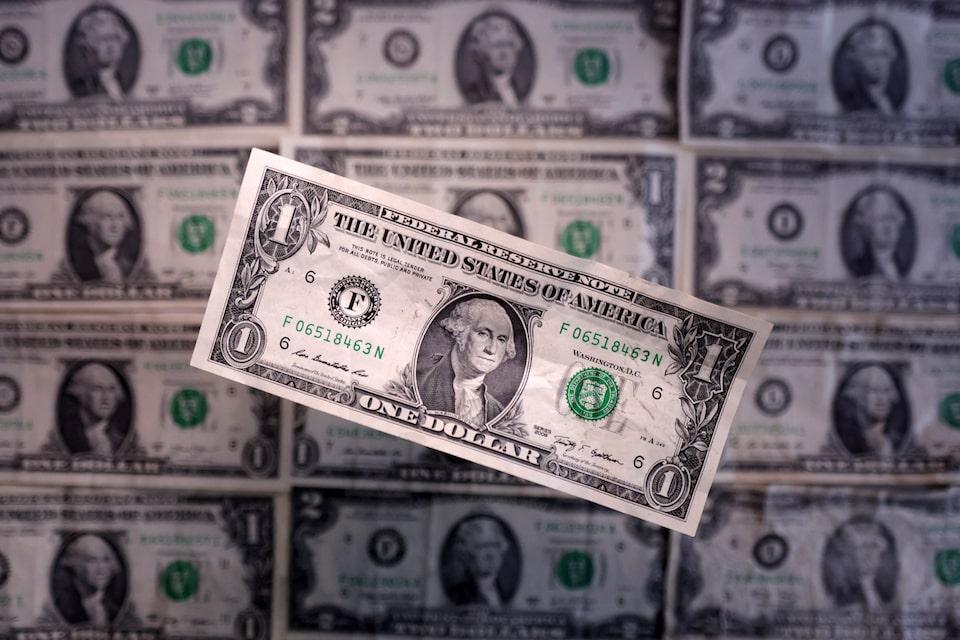
Dollar on Thursday posted biggest daily fall since November 2022 Deutsche Bank warns of crisis of confidence in dollar Dollar's role as No.1 reserve currency called into doubt LONDON, April 4 (Reuters) - In times of market panic investors tend to rush to the safety of the dollar, but when stocks swooned in response to U.S. tariffs this week, they ran away from it. Investors say it's a sign that the greenback’s global standing may be eroding. The dollar, for decades a safe haven, on Thursday fell about 1.7% in its biggest daily drop since November 2022 (.DXY) , opens new tab, after President Donald Trump imposed tariffs on imports at levels not seen since the early 1900s. Stock markets also tanked, as tariffs ignited recession worries. Sign up here. In interviews and published markets commentaries, many investors and analysts pointed to the Trump administration for the anomaly. Its protectionist policies, upending of the global economic order in place since World War II, and a growing U.S. debt pile have been chipping away at the dollar's appeal, they say. Left unchecked, a crisis of confidence in the dollar could also undermine its position as the world's reserve currency, they added. "What we're seeing today is a further indication that the structure and nature of the U.S. dollar’s relationship to global markets has changed," said Thierry Wizman, global foreign exchange and rates strategist at Macquarie in New York. "There's an underlying basis for this, which is the changing role of the U.S. in the world." Any erosion of the dollar's standing as a safe-haven is bad news for investors and policymakers - at least in the near term. For investors, who have piled trillions of dollars into buoyant U.S. markets in recent decades, a sharp dollar fall could result in higher interest rates for longer. That's because price pressures at home could make it harder for the Federal Reserve to cut rates. At the same time, a rapid strengthening of currencies against the dollar is a headache for other central banks navigating a weaker economic outlook, as it makes their exports more expensive and potentially harder for them to revive growth. The euro, for example, just had its best day against the greenback in more than two years. The recent depreciation in the dollar showed that concerns about the currency's status had "left footprints in financial markets already," Sweden's central bank deputy governor Per Jansson said at an event in London on Tuesday. "If (the dollar's status) would change, that would be a big change for the world economy ... and would basically create a mess," he told Reuters afterwards. "I really do not hope the U.S. goes there." The White House press office did not immediately respond to a request for comment. Despite such growing worries, the dollar is still firmly positioned as the world's top reserve currency. Trump has said he wants it to maintain that status and warned against attempts to undermine it, while signalling a weaker dollar would be good for exports. The currency also has an inherent competitive advantage: It's backed by the world's largest economy, the deepest capital markets and an established rule of law. There is no real alternative in the near term. In addition, its fall so far this year – the dollar has slumped about 6% against other major currencies – could ease if Trump is able to turn around sentiment on the economy through pro-growth policies such as tax cuts and deregulation. Brad Setser, a senior fellow at the Council on Foreign Relations, said that although the U.S.'s appeal as an investment destination has been reduced, the dollar's course will largely be determined by how the U.S. economy responds to the Trump tariff shock. What's more, higher returns on U.S. bonds than on other government bonds still matters for investors, he said. FOLLOW THE MONEY Even so, the reversal in its fortunes is remarkable. Going into the year, investors had expected Trump tariffs to boost the dollar, as they believed his policies would spur growth. So while investors expected tariffs to be inflationary, the consensus was it would hurt economies abroad more while leading to higher rates at home, strengthening the currency. That's turned out to be wrong. His tariffs are so sweeping that investors now fear the U.S. will be hurt the most by them as prices rise at home and growth slows. Several investment banks have raised the probabilities they give of a U.S. recession. The negative sentiment is reversing money flows into the U.S., thereby reducing demand for dollars. Foreign holdings of U.S. assets had surged to $62 trillion in 2024, from $13 trillion a decade earlier as international investors flocked to outperforming American stocks, bonds and real estate, official U.S. data shows. But in a sign money is moving out of U.S. assets to markets overseas, U.S. stocks have slumped 8% so far this year, while German and Hong Kong shares have rallied roughly 12% each (.SPX) , opens new tab, (.GDAXI) , opens new tab, (.HSI) , opens new tab. And the hit to the U.S. as an investment destination could deepen. President Emmanuel Macron on Thursday called on European companies to suspend planned investment in the United States in response to the tariffs imposed on the bloc. "The three pillars of support that helped the dollar (were) U.S. exceptionalism, high interest rates, and strong portfolio flows. All three have been severely weakened and potentially reversed as a result of the deluge of tariff announcements," said Paresh Upadhyaya, director of fixed income and currency strategy at Amundi, the biggest European asset manager. Earlier this week, Deutsche Bank warned of the risk of a crisis of confidence in the U.S. currency, while bond giant PIMCO said it had turned more cautious on the dollar. Satori Insights founder Matt King said outflows from the U.S. would likely continue. "It has the potential to run significantly further, partly because of the magnitude of the long only (U.S. equity and dollar) positions that have been built up over an extended period," he said, and the likelihood of this driving a sustained cycle of self-reinforcing losses. As a result, the future of a currency often referred to as "King Dollar" for its strength and dominance in global forex markets suddenly looks uncertain. James Malcolm, head of FX strategy at UBS, said he saw similarities between the current situation and the mid-1980s ahead of the Plaza Accord, when the economically outperforming U.S. pressured major partners to support it in weakening the dollar and ease widening U.S. deficits. "While we will get a different set of events, the effect - the dollar going down a lot more - should be the same". The idea the Trump administration may push through a "Mar-a-Lago Accord" - a grand bargain to weaken the overvalued dollar - has gained traction even if it's unlikely. More broadly, the weaponisation of finance, including the dollar, is a growing concern among some in Europe. "This erratic behaviour is too risky. This is such an inflexion point for the role of the U.S.," said Antonio Fatas, macroeconomist at INSEAD business school in France. "The problem is that we don’t have an alternative to the dollar – and that is why this is going to be painful. I don’t think anyone wins in the short term." https://www.reuters.com/markets/wealth/next-up-markets-crisis-confidence-dollar-2025-04-04/
2025-04-07 06:05
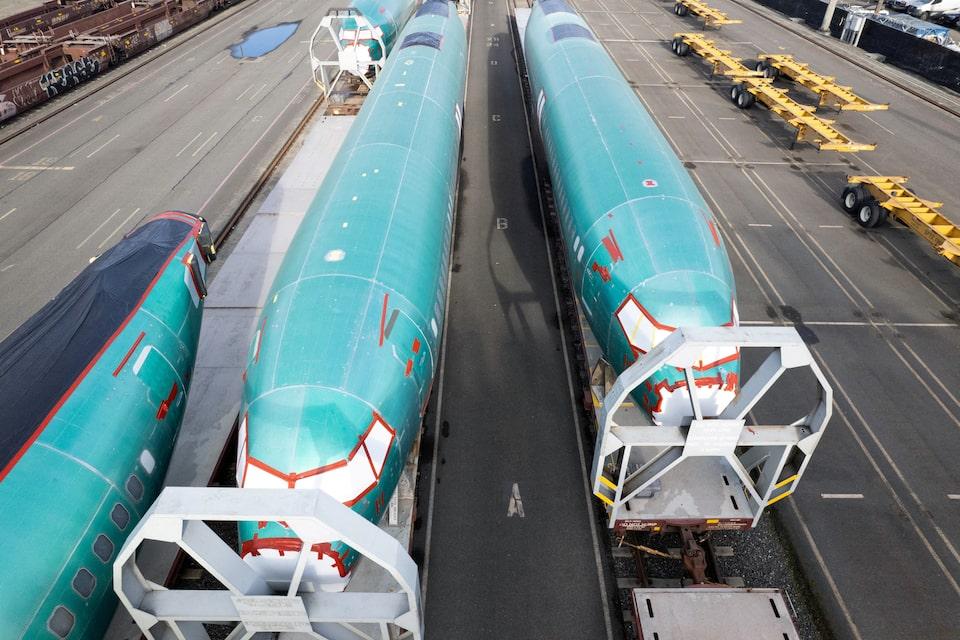
SHANGHAI/BEIJING, April 7 (Reuters) - China's move to impose 34% tariffs on all U.S. goods in a tit-for-tat blow against U.S. President Donald Trump is set to roil industries from aviation to agriculture. Here are some of the U.S. sectors and companies that are set to take the biggest hit: Sign up here. PLANES China's retaliatory tariffs are set to hit Boeing (BA.N) , opens new tab hard, making its planes far more expensive than those of rivals Airbus (AIR.PA) , opens new tab and Commercial Aircraft Corporation of China (COMAC). While Beijing did not impose tariffs on Boeing during Trump's first trade war with China, its sales and deliveries to China plummeted after 2019 following two fatal crashes of MAX 8 jets and amid intensifying tensions between Washington and Beijing over issues ranging from technology to national security. The import freeze ended in January 2024 but the imports only resumed in full force six months later. The country's top three airlines -- Air China (601111.SS) , opens new tab, China Eastern Airlines (600115.SS) , opens new tab and China Southern Airlines (600029.SS) , opens new tab -- have plans to take delivery of 45, 53 and 81 Boeing planes, respectively, between 2025-2027, which could now be impacted by the higher prices. SEMICONDUCTORS China imports $10 billion worth of chips from the United States annually. About $8 billion of these are central processing units (CPUs) assembled by Intel (INTC.O) , opens new tab in the U.S., according to Bernstein analysts. Such Intel CPUs are widely used in laptops and servers. China was Intel's largest market in 2024, accounting for 29% of its revenue, up from 27% in 2023. U.S. memory chipmaker Micron (MU.O) , opens new tab could also face some impact as some Micron chips sold in China are imported from the United States, though the company has production facilities in China and other countries. While Chinese companies are big buyers of Nvidia's (NVDA.O) , opens new tab artificial intelligence chips, these imports are not affected by China's tariffs as they are produced and assembled in Taiwan by contract chip manufacturer TSMC (2330.TW) , opens new tab. FARM EQUIPMENT For the U.S. farm equipment sector, China's 34% retaliatory tariffs add to an earlier 10% tariff Beijing placed on the industry in March, impacting companies such as Caterpillar (CAT.N) , opens new tab, Deere & Co (DE.N) , opens new tab and AGCO (AGCO.N) , opens new tab. AGRICULTURE U.S. agricultural sector is set to be among the industries that are the worst hit by China's retaliatory tariffs as China is the largest market for U.S. agricultural products. In addition, China on Friday suspended import qualifications for sorghum from Chinese-owned C&D (USA) Inc. citing food safety problems and poultry meat and bone meal from American Proteins, Mountaire Farms of Delaware and Darling Ingredients. It also suspended imports of poultry products from Mountaire Farms of Delaware and Coastal Processing. https://www.reuters.com/business/us-companies-most-vulnerable-chinas-retaliatory-import-tariffs-2025-04-07/
2025-04-07 05:59
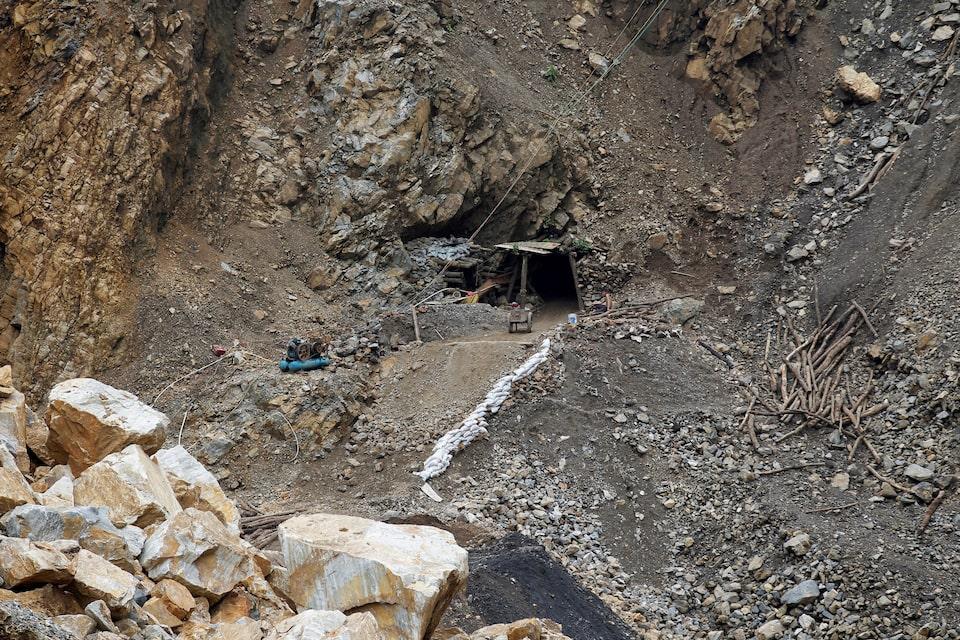
LONDON, April 4 (Reuters) - U.S. President Donald Trump's tariff blitz has shocked financial markets, but the LME base metals complex got an early preview of the likely mayhem. The imposition of 25% tariffs on U.S. imports of aluminium has dislocated the light metal's global supply chain, while the threat of similar levies on copper has generated an unprecedented disconnect in transatlantic pricing. Sign up here. Micro tariff turbulence is now overlaid with macro tariff turmoil as markets take fright at the risk of a full-blown trade war. The London Metal Exchange's index of base metals (.LMEX) , opens new tab has slumped 6% this week as reciprocal tariffs moved from threat to reality. Only one metal has escaped the tariff tsunami. Tin continues to out-perform the rest of the LME pack buoyed by its own supply chain chaos. SUPPLY SHOCKS ROCK TIN LME three-month tin gained 25% over the first quarter of 2025, eclipsing even gold's stellar run. A series of supply shocks has generated a roller-coaster ride for tin traders. The market sold off on news the giant Man Maw tin mine in Myanmar would restart after an 18-month absence before rebounding when Alphamin Resources (AFM.V) , opens new tab announced it was closing its Bisie mine in the Congo due to the escalating insurgency in the east of the country. The devastating earthquake in Myanmar, throwing fresh doubt on Man Maw's return, has propelled tin even higher. Investors have rushed to join the action. Fund long positioning has hit record levels. LME stocks are sliding and time-spreads tightening, adding to the volatility mix. Bulls, however, should note that there is no shortage of tin in China. Shanghai Futures Exchange stocks have risen by 47% so far this year and at 9,872 metric tons are the highest since September. MINDING THE COPPER GAP Copper trading has been defined by the threat of U.S. tariffs since February, when Trump ordered a national security investigation into copper imports. The trade has played out in the arbitrage between the CME U.S. customs-cleared price and the LME global price . It has been a volatile trade as the market tries to second-guess when copper tariffs will come and at what rate. The record CME premium over LME copper has triggered a mass movement of physical metal to the United States. How much makes it through U.S. customs before tariffs are announced remains to be seen. Record high CME prices and physical market dislocation initially rekindled bull spirits but LME copper has just slumped below the $9,000-per ton level as concern grows over the negative implications of U.S. reciprocal tariffs for global manufacturing activity. ALUMINIUM PREMIUM ACTION The CME aluminium contract mirrors the LME's international product, meaning the tariff trade has played out in regional premiums. The U.S. Midwest premium widened to more than $900 per ton over the LME basis price last month as the market priced in the lift in U.S. import tariffs from 10% to 25%. European premiums, by contrast, have fallen sharply, suggesting physical metal is already being diverted from the U.S. market. Analysts had high expectations for aluminium at the start of the year but the market has generated mixed signals and, like copper, is selling off in reciprocal tariff reaction NICKEL AWAITS INDONESIA Nickel has spent the first three months of 2025 trapped in a broad $15,000-17,000-per ton range. The price has been weighed down by ever-rising LME stocks as over-production in Indonesia swamps the refined nickel supply chain. The amount of Chinese nickel in the LME warehouse network has grown to more than 50% from 11% at the start of 2024. This is metal that has been processed in China from Indonesian raw materials. Indonesia has started producing its own refined metal, which is also turning up in LME sheds. The nickel price is so low that even Indonesian operators are feeling the margin pinch, but until the country limits its production growth, nickel will remain over-supplied. The only question is whether the Indonesian flood continues to wash into the refined metal segment of the nickel market or revert to the lower-grade Class II segment. It all depends on Indonesian processing margins. HEAVY STOCKS WEIGH ON HEAVY METAL And talking of high stocks. Someone cancelled 120,000 tons of LME lead stocks last month but there was little or no reaction from either outright price or time-spreads. No-one thinks the physical market is short by that much metal. Rather, lead is seeing the sort of LME warehouse arbitrage that comes with over-supply and elevated exchange stocks, which have grown to 331,000 tons from 21,500 tons at the start of 2023. The lead price has held up well given the inventory overhang but that may be because it is still in better shape than sister metal zinc. ZINC MINE REBOUND Zinc has consistently underperformed the rest of the LME pack since the start of the year, even though exchange stocks have fallen steadily. But the market appears to be trading zinc's bearish raw materials narrative rather than its more nuanced refined metal dynamics. Mined zinc production fell by 2.8% year-on-year in 2024, tightening the raw materials supply chain to the point that smelter fees turned negative in the second half of the year. Restarts and new mines are expected to generate a significant rebound in 2025. There are signs that this new wave of mine supply is starting to build momentum. Smelter treatment charges, which turned negative due to a shortage of mined concentrates in 2024, have bounced back to $35 per ton on a spot basis. Zinc demand flat-lined last year and with little prospect of a recovery in global construction, a major end-use sector for zinc, higher mined output is expected to generate over-supply in the refined metal market. The opinions expressed here are those of the author, a columnist for Reuters. https://www.reuters.com/markets/commodities/trump-tariffs-tin-lme-metals-seven-charts-andy-home-2025-04-04/
2025-04-07 05:57
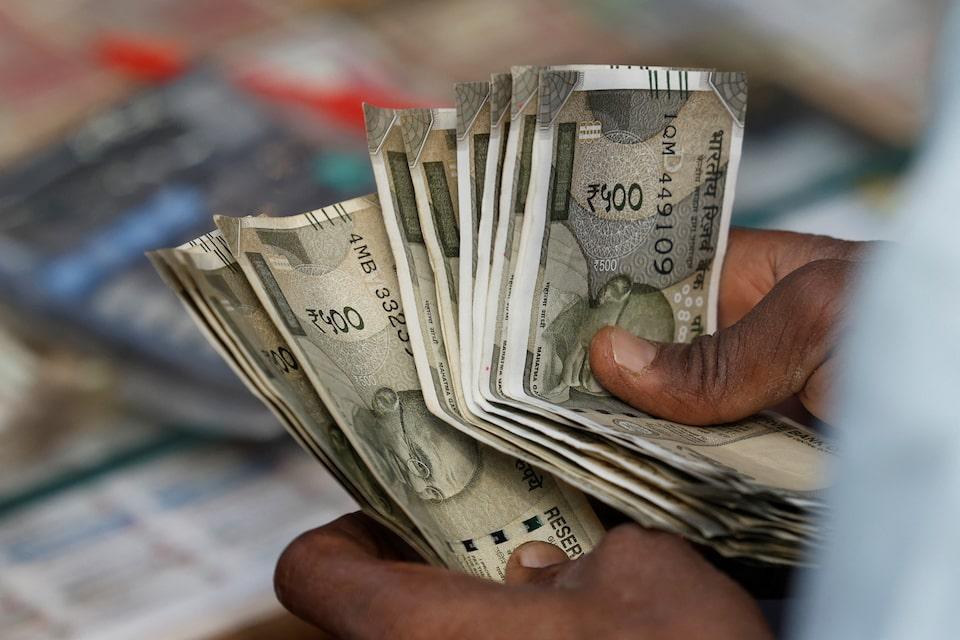
MUMBAI, April 7 (Reuters) - The Indian rupee is set to slump at open on Monday, pegged back by the selloff in Asian equities on mounting fears that U.S. tariffs would hurl the world economy into a slowdown. The 1-month non-deliverable forward indicated that the rupee will open at 85.75-85.80 to the U.S. dollar compared with 85.2350 in the previous session. Sign up here. The rupee "so far had managed to avoid all the mayhem prompted by the tariffs - not any more", a currency trader at a Mumbai-based bank said. The extent of risk aversion will make sure the up-move on dollar/rupee at open will sustain and will likely build, he said. Futures on the S&P 500 Index were down 2.5%, indicating a continuation of the two-day 10% selloff prompted by U.S. President's reciprocal tariffs. Shares in Hong Kong plummeted 9%, while equities in Australia, South Korea, Japan, and China fell between 4% and 7%. Safe-haven flows pushed U.S. Treasury yields lower and prompted a rally in the Japanese yen. Investors are exiting risk assets and flocking to safe havens amid mounting concerns that the U.S. tariffs announced last week will stoke inflation and usher in a period of subdued global growth. White House officials showed no sign of backing away from last week's broad tariff plans, leading to investors dumping risk assets and running to safe havens. Trump told reporters on Sunday that investors would have to take their medicine and that he would not do a deal with China until the U.S. trade deficit was sorted out. "The biggest threat to the global goods trading system since World War II is forcing a rapid de-leveraging in risk assets and escalation in recession risks," ANZ Bank said in a note. It is difficult to see where this "self-reinforcing downward spiral" will halt unless space is created for negotiation in the coming days, it said. KEY INDICATORS: ** One-month non-deliverable rupee forward at 86.; onshore one-month forward premium at 20.75 paise ** Dollar index up at 103.15 ** Brent crude futures down 2.9% at $63.7 per barrel ** Ten-year U.S. note yield falls to 3.93% ** As per NSDL data, foreign investors sold a net $345.4mln worth of Indian shares on Apr. 3 ** NSDL data shows foreign investors sold a net $136.9mln worth of Indian bonds on Apr. 3 https://www.reuters.com/markets/currencies/rupee-tank-us-tariffs-fuelled-meltdown-asia-equities-2025-04-07/
2025-04-07 05:57
MUMBAI, April 7 (Reuters) - The Indian rupee fell against the dollar on Monday as concerns over the economic spillovers of U.S. tariffs intensified, hurting Asian currencies and leaving rupee bears regretting their recent exits from short positions on the currency. Investors had sharply reduced short bets on the rupee ahead of the announcement of reciprocal U.S. tariffs on April 2, per a Reuters poll, as it rallied over the last month amid seasonal and portfolio dollar inflows. Sign up here. A sharply weaker dollar had also helped lift the rupee to its year-to-date high of 84.9575 last week. The currency was under pressure on Monday after China's retaliation to U.S. tariffs and little indication that the White House will back down, hurt risk assets globally. The rupee was quoted at 85.6525 against the U.S. dollar at 11:15 a.m. IST, down 0.5% on the day. The offshore Chinese yuan, a closely tracked peer, was down 0.3% at 7.31. Shorts exited at a bad time given how the U.S. tariff situation is evolving, an analyst at a Singapore-based hedge fund said, as Asian currencies are likely to struggle for a while. Meanwhile, a key volatility gauge indicated that the cost of dollar-rupee call options relative to put options has increased, signalling a bearish bias on the local unit. Investment bank JPMorgan last week downgraded its recommendation for emerging currencies to "underweight" after U.S. tariffs exceeded its worst-case scenario. With the "USD catching a safe-haven bid again and all of Asia under pressure, the rupee is likely to hover between 85.25 and 86 in the near-term," a trader at a foreign bank said. India's benchmark Nifty 50 (.NSEI) , opens new tab was down about 4% on the day but fared better than Hong Kong's Hang Seng index (.HSI) , opens new tab, which was down nearly 11%. https://www.reuters.com/markets/currencies/rupee-shorts-rue-ill-timed-exits-us-tariffs-pummel-risk-assets-asia-fx-2025-04-07/

2025-04-07 05:51
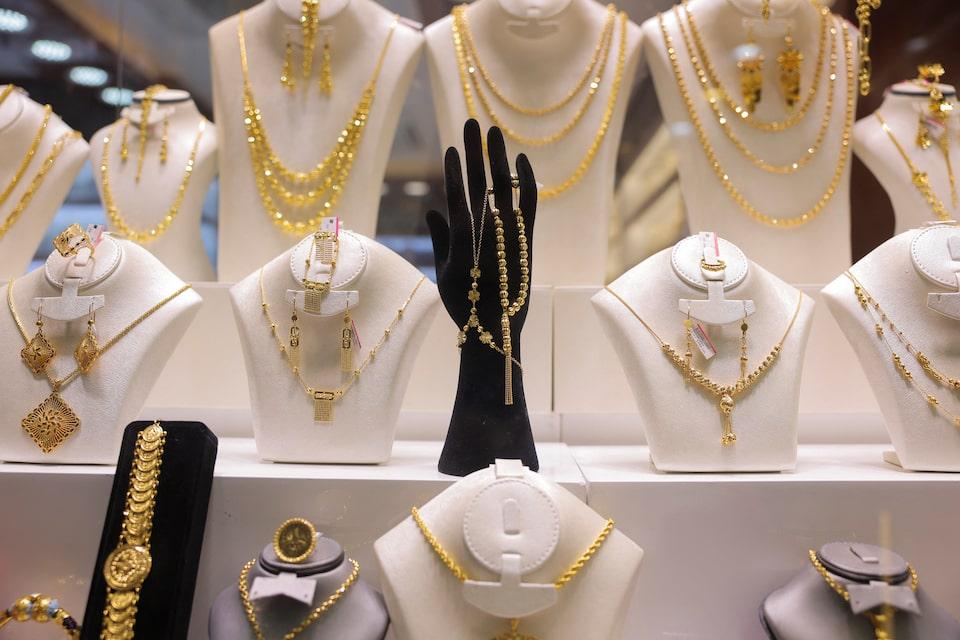
China's central bank added gold to its reserves in March Deutsche Bank upgrades gold year-end forecast to $3,350/oz Silver up over 2% April 7 (Reuters) - Gold prices held steady on Monday, bolstered by strong central bank demand and the potential for an early interest rate cut by the U.S. Federal Reserve. Spot gold was up 0.1% $3,040.57 an ounce as of 1139 GMT, after hitting a session-low of $2,971.09 earlier in the session as some investors sold bullion to cover losses in other trades. Sign up here. U.S. gold futures rose 0.8% to $3,059.20. Major stock indexes across the world plunged as U.S. President Donald Trump showed no sign of backing away from his sweeping tariff plans. China struck back with a slew of counter-measures on Friday, including extra levies of 34% on all U.S. goods and export curbs on some rare earth metals. "Once the dust settles, the rising recession risks, a weaker dollar, lower real yields and bigger rate cut expectations will all play their part in supporting a rebound," said Ole Hansen, head of commodity strategy at Saxo Bank "Gold's correction remains a relatively shallow one with key support levels holding, most notably the trendline from the January low at $2,975 ahead of the February highs around $2,955." Gold hit a record high of $3,167.57 on Thursday, aided by its status as a safe haven amidst economic and geopolitical uncertainties and strong central bank demand. China's central bank added gold to its reserves in March for the fifth straight month. "We conclude that the bull case for gold remains strong despite this week's correction and further upgrade our year-end forecast to $3,350/oz," Deutsche Bank said. Investors are speculating that the increasing risk of a recession might prompt the Fed to cut interest rates as early as May. Lower rates increases the appeal of bullion as it yields no interest. Spot silver gained 2.6% to $30.32 an ounce recovering from a near seven-month low hit earlier in the day. Spot platinum was steady at $916.14, while palladium added 0.5% to $915.69. https://www.reuters.com/markets/commodities/gold-drops-3-12-week-low-market-sell-off-hits-bullion-2025-04-07/