2025-04-07 05:08
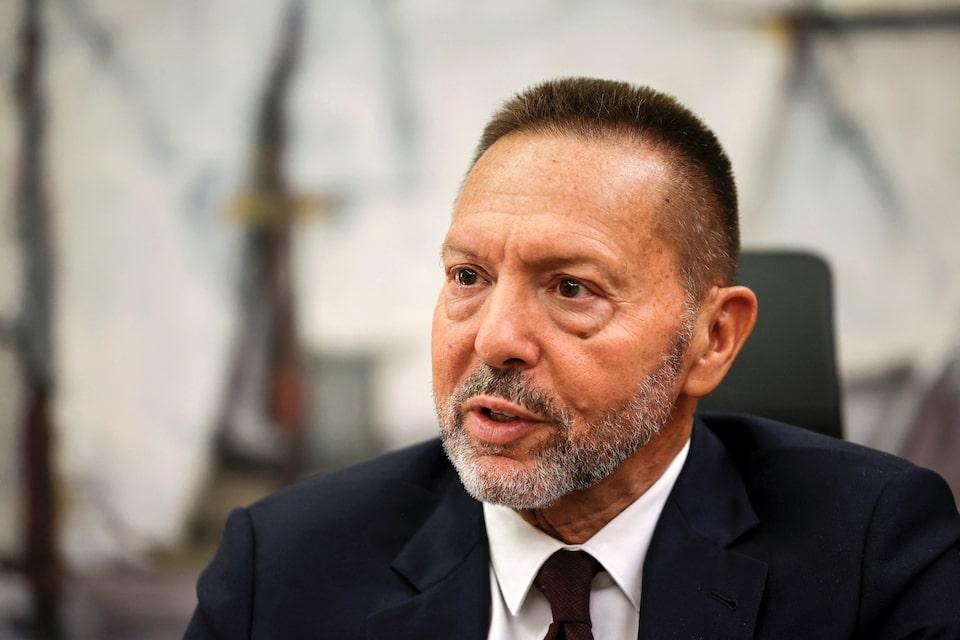
April 7 (Reuters) - U.S. President Donald Trump's tariff measures could slow euro area economic growth by anywhere between 0.5 and 1 percentage points, Greek central bank governor Yannis Stournaras told the Financial Times in an interview published on Monday. Stournaras' comments come against the backdrop of European Union countries weighing approval of a first set of targeted countermeasures on up to $28 billion of U.S. imports from dental floss to diamonds in the coming days. Sign up here. The 27-nation bloc faces 25% import tariffs on steel and aluminium and cars and "reciprocal" tariffs of 20% from Wednesday for almost all other goods. In an interview with the newspaper, Stournaras warned that the looming global trade war risk sparking a large "negative demand shock" in the Eurozone that could weigh heavily on Europe's economic growth. "A notable adverse impact on growth could lead to activity being much weaker than expected, dragging inflation below our targets," he told the FT. The European Central Bank has estimated that a blanket U.S. tariff of 25% on European imports would lower euro zone growth by 0.3 percentage points in the first year. EU counter-tariffs on the U.S. would raise this to half a percentage point. Stournaras said that tariffs were a deflationary measure and some of the U.S. steps were "worse than expected" creating an “unprecedented” degree of “global policy uncertainty”, the FT reported. The next ECB rate decision is due on April 17. Euro zone inflation eased to 2.2% in March from 2.3% in February, bolstering the case for another European Central Bank interest rate cut later this month. U.S. goods imports into the EU totalled 334 billion euros ($365.6 billion) in 2024, against 532 billion euros of EU exports to the United States. On April 2, Trump unveiled a 10% baseline tariff on all imports to the U.S. along with higher duties on dozens of other countries. The tariffs appeared to target about 60 countries. https://www.reuters.com/markets/europe/trump-tariffs-could-slow-euro-growth-by-05-1-percentage-points-ft-reports-2025-04-07/
2025-04-07 04:55
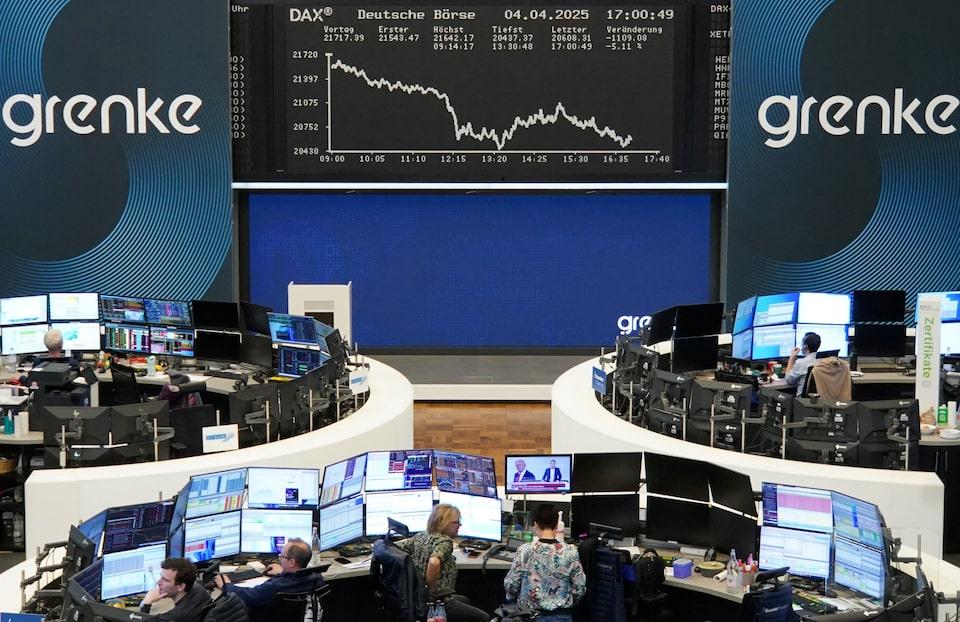
April 7 (Reuters) - A look at the day ahead in European and global markets from Wayne Cole Another day, another rout in Asian markets as President Trump shows no sign of backing away from his tariff plans despite the bonfire of wealth engulfing equity markets. Sign up here. Investors had thought the spectre of trillions of dollars lost would make Trump reconsider, or at least shake his aides, but he seems to feel this harsh medicine will help in the long run. Billionaire fund manager Bill Ackman, who endorsed Trump's run for President, seemed to think otherwise, saying the tariffs were an "economic nuclear winter" for the world. The chill was certainly felt in Asia where the Nikkei shed another 6% and Chinese blue chips almost 7%, despite talk that Beijing would come to the rescue with stimulus steps. Poor Taiwan returned from a break with losses of almost 10% as Trump's sky-high levies threaten the supply chains that so much of the world's business has come to rely on. Taiwan's policymakers acted to curb short selling and circuit breakers were tripped in a host of markets. Dealers were increasingly concerned the markets' losses would force investors to dump profitable assets just to cover their margin calls, leading to a self-fuelling fire sale. JPMorgan now sees a 60% chance of a U.S. recession and Fed rate cuts from June to next January, leaving the funds rate around 3%. Futures markets were also moving that way, with the December Fed funds contract up an astonishing 30 basis points at one stage this morning, before paring that back to 16 ticks. Markets even imply a 50-50 chance the Fed could ease as early as May, despite Chair Powell's reiteration last week that the central bank was in no hurry to move. His reticence is understandable given how tariffs are set to lift the price of everything from cars to food. It's likely too early for the U.S. March consumer price report this week to show the impact, but that won't last for long. Trump has said many countries were looking to do deals to ease the tariff pain. Problem is, the "reciprocal" U.S. rates chosen were much, much higher than the levies actually imposed by most other nations, making it hard for them to offer deals "beautiful" enough to satisfy Trump. China seems ready for the fight, in part because it sees a chance to become the trade partner you can trust, replacing the U.S. There could also be more hints of EU reprisals when the region's trade ministers meet later on Monday. All of this is happening just as the U.S. earnings season is due to start with major banks on Friday, and it will be a brave CEO who expresses anything but caution about the outlook for profits and sales. Key developments that could influence markets on Monday: - EU retail sales, Sentix investor confidence, German industrial output - Appearances by ECB board member Piero Cipollone and Fed Governor Kugler https://www.reuters.com/markets/europe/global-markets-view-europe-2025-04-07/
2025-04-07 04:54
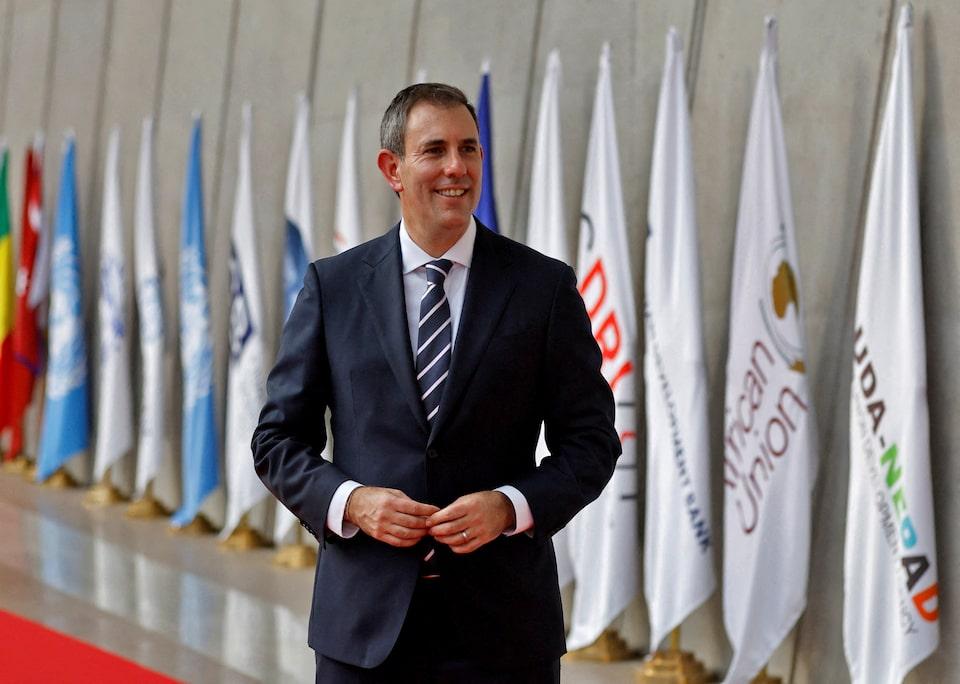
SYDNEY, April 7 (Reuters) - Australia will be able to manage the direct impact of U.S. President Donald Trump's tariffs but economic growth will take a hit as the global economy slows, Treasurer Jim Chalmers said on Monday. "We expect more manageable impacts on the Australian economy, but we still do expect Australian GDP to take a hit and we expect there to be an impact on prices here as well," he said in a press conference. Sign up here. A Treasury analysis showed on Monday the impact from U.S. tariffs and countermeasures from China - Australia's biggest trading partner - would take the level of real gross domestic product this year 0.1% lower compared with the current expectations. It would also add 0.2 percentage points to inflation. Chalmers said the government expected U.S. and Chinese growth to take "big hits" as a result of the trade war triggered by Trump's tariff regime. It estimated Chinese GDP will be 0.6% lower this year compared with the current expectations, reflecting the tariff changes. "Our Treasury is not expecting the Australian economy to go backwards. In fact, what we are forecasting... is for growth to continue to gather pace," said Chalmers. Australia is banking on an expected pickup in consumer spending thanks to slowing inflation and government tax cuts. Concerns about the Chinese economy had already sent the Australian dollar below 60 cents for the first time since the COVID-19 pandemic, he added. The Aussie steadied at $0.6020 on Monday. Australian shares fell 4% on Monday to the lowest in over a year, although that is shallower than falls seen elsewhere. Australian miners of heavy rare earths even rallied. Chalmers said he has spoken with Michele Bullock, governor at the Reserve Bank of Australia, to compare notes on their expectations. The RBA held interest rates steady last week but the meeting was dominated by discussions of global risks. It is still waiting on data to see if inflation will return sustainably to the target band of 2-3%, wary that the surprising strength in the labour market would stoke inflationary pressures. The market rout, however, had traders betting there is a 20% probability that the RBA could cut by an outsized 50 basis points in May. A total of four quarter-point rate cuts have been priced in for all of this year. https://www.reuters.com/world/asia-pacific/trump-tariffs-slow-australias-economy-treasurer-says-2025-04-07/
2025-04-07 03:57
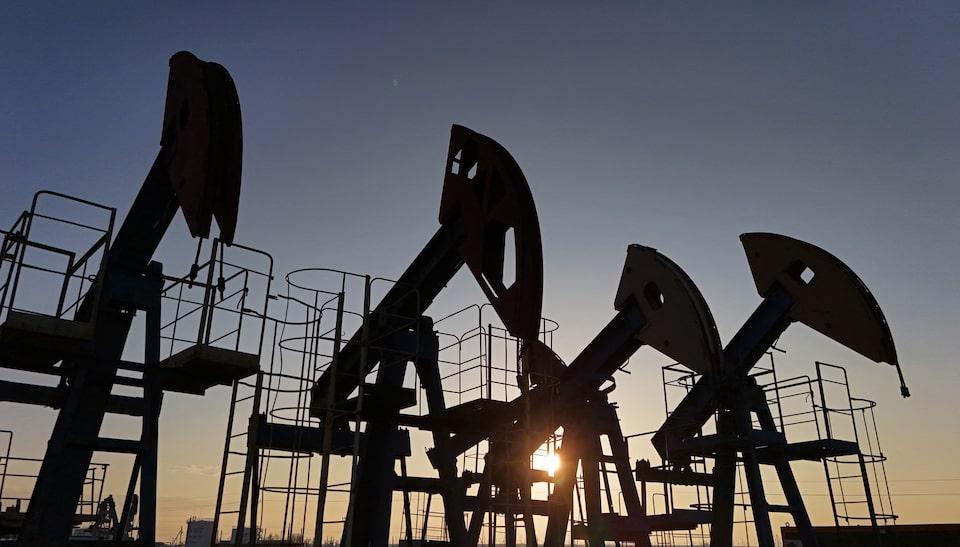
April 7 (Reuters) - Goldman Sachs revised down its annual average price forecasts again for Brent and WTI crude in 2026, citing increased recession risks and the possibility of higher-than-expected OPEC+ supply. In a note dated April 6, the bank cut its 2026 average price forecast by $4 for Brent to $58 a barrel and WTI to $55. Sign up here. The Wall Street brokerage initially trimmed on Friday its 2026 average price forecast for Brent to $62 and for WTI to $59, and warned that the new estimates could be further reduced. Goldman Sachs now expects oil demand to grow by 300,000 barrels per day (bpd) in 2025, down from its previous forecast of 600,000 bpd, and to increase by 400,000 bpd in 2026. The bank attributes the reduction in demand growth to the negative influence of a weaker GDP, which outweighs support from a weaker dollar and lower oil prices. "Oil prices would likely exceed our forecast if the Administration were to reverse tariffs sharply and deliver a reassuring message to markets, consumers, and businesses," Goldman said. Oil prices slid on Monday, deepening last week's losses, as escalating trade tensions between the United States and China stoked fears of a recession that would reduce demand for crude. China on Friday struck back at the U.S tariffs imposed by President Donald Trump with a slew of counter-measures including extra levies of 34% on all U.S. goods and export curbs on some rare-earths. Brent crude was trading around $63.87 a barrel, as of 0321 GMT on Friday, while WTI was at $60.38. "While the uncertainty around compliance and OPEC8+ production is very large, we still assume that the four months of OPEC8+ crude increases will total around 0.7-0.8 mb/d," the bank added. https://www.reuters.com/business/energy/goldman-sachs-lowers-2026-oil-price-forecasts-again-2025-04-07/
2025-04-07 02:39
Goldman Sachs expects China to accelerate fiscal easing measures Trump's tariffs could lower Chinese GDP growth by 0.7 percentage point China hints at monetary policy actions, including reserve requirement ratio cuts BEIJING, April 7 (Reuters) - Goldman Sachs said it expects Chinese policymakers to accelerate fiscal easing measures significantly to offset the drag on growth from higher tariffs announced by the United States last week that were higher than expected. Goldman said in a report on Sunday that the new tariff rates announced by U.S. President Donald Trump would lower Chinese GDP growth by at least 0.7 percentage point this year. Sign up here. "Prior to the tariffs, growth was tracking above our forecasts, and we were contemplating an upward revision to our 2025 GDP expectations," the report said. Goldman pointed to a commentary in China's state-run People's Daily on Sunday that hinted at monetary policy actions and listed measures China could take. "Based on the evolving situation, there is ample room for adjustment in monetary policy tools such as reserve requirement ratio cuts and interest rate reductions, which can be introduced at any time," the newspaper said. The People's Daily also pointed to a possible further expansion of fiscal deficits, special bonds, and special treasury bonds. China will take "extraordinary measures" to boost domestic consumption, accelerate implementation of established policies, and introduce a batch of reserve policies, it said. Goldman said in a separate report, also released on Sunday, that it kept its 2025 GDP growth forecast for China at 4.5% due to better-than-expected first-quarter data and increased policy easing expectations, but trimmed its earnings growth forecast for the year to 7% from 9%. Trump introduced an additional 34% tariff on Chinese goods as part of steep levies imposed on most U.S. trade partners, bringing the total duties on China this year to 54%. China retaliated with a series of countermeasures. The investment bank also downgraded Taiwan to underweight in its Asian market allocations, citing high exposure to U.S. exports and market sensitivity. https://www.reuters.com/markets/asia/goldman-sachs-expects-further-fiscal-easing-china-offset-higher-tariffs-2025-04-07/
2025-04-07 00:50
Benchmark Taiwan stock market index drops almost 10% as trading returns Taiwan president takes to X to promise shared prosperity with US Market had been closed on Thursday and Friday for holiday Circuit breakers triggered for TSMC, Foxconn Taiwan imposes short selling curbs to last all week TAIPEI, April 7 (Reuters) - Taiwan stocks plummeted almost 10% on Monday, the biggest one-day percentage fall on record, in the first trading since U.S. tariffs were announced last week, with Taiwan's president taking to X to pledge a "golden age" of shared prosperity with the U.S. Taiwan, hit with a 32% duty, was singled out by U.S. President Donald Trump as among the U.S. trading partners with one of the highest trade surpluses with the country. Sign up here. After resuming trade on Monday following market holidays on Thursday and Friday, Taiwan's benchmark stock index (.TWII) , opens new tab plunged to its lowest level in more than a year. Taiwan's government-run National Stabilisation Fund, which has some T$500 billion in assets that can bolster Taiwan stocks at times of crisis, said in a statement it could "not rule out" response measures to restore confidence and calm, adding that at present short-term market fluctuations were inevitable. Taiwan on Friday announced a T$88 billion ($2.65 billion) support package for companies hit by the tariffs, while President Lai Ching-te said on Sunday the island would buy more from and invest more in the United States, with the aim of a zero-tariff regime between the two. Writing in English on his X account on Monday, Lai reiterated he did not seek retaliatory tariffs and that "we'll start talking from bilateral 'zero tariffs'." "To ensure Taiwan's competitiveness, we'll increase US imports & adopt other measures. Working together, we'll usher in a golden age of shared prosperity," he added. Taiwan has long sought a free trade deal with the United States. While semiconductors, Taiwan's main manufacturing strength, are not included in Trump's tariffs, Taiwan has a trade-dependent economy highly reliant on its part in the global electronics supply chain for everything from smartphones to cars. Shares in chipmaker TSMC (2330.TW) , opens new tab and electronics maker Foxconn (2317.TW) , opens new tab both fell near 10%, triggering the 10% circuit breaker in the Taiwan market. "The panic selling pressure is very high," said Venson Tsai, an analyst at Cathay Futures in Taipei. "This is a problem of market confidence." Taiwan's top financial regulator on Sunday announced it would impose temporary curbs lasting all this week on short-selling of shares to help deal with potential market turmoil from the tariffs. Speaking to reporters shortly after the market opened, Taiwan Stock Exchange Chairman Sherman Lin said it would coordinate with the financial regulator to take further stabilisation steps if needed. The stock exchange will maintain flexibility in stabilisation measures this week to handle volatility stemming from new U.S. import tariffs, Lin added. He said it would be hard for Taiwan to escape the market impact of the tariffs, but called on investors to have confidence in Taiwanese companies and the government. Allen Huang, a vice president of Mega Financial's securities investment unit, said in a worst-case scenario, the chance of a recession could be higher than 50%. "We're not expecting Trump to change his policy in the near term," he said. Goldman Sachs downgraded Taiwan to "underweight" in its Asian market allocations on Sunday, citing high exposure to U.S. exports and market sensitivity. ($1 = 33.2020 Taiwan dollars) https://www.reuters.com/markets/asia/taiwan-stock-exchange-unveil-more-market-stabilisation-steps-if-needed-2025-04-07/