2025-04-07 00:13
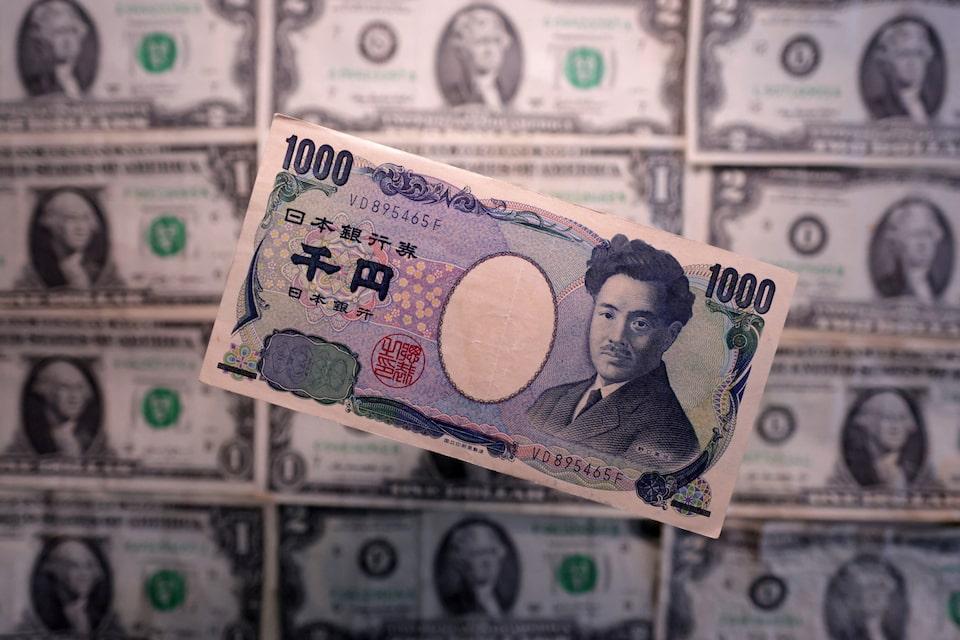
Will dollar lose credibility as reserve currency? Aussie steadies after hitting five-year low Markets leaning toward Fed cut in May NEW YORK, April 7 (Reuters) - The U.S. dollar weakened against the safe-haven Swiss franc in mixed trading on Monday as concerns about a global recession heightened following U.S. President Donald Trump's sweeping tariffs on trading partners. Global stock markets were hit again on Monday, although the benchmark S&P 500 (.SPX) , opens new tab was well off its lows in volatile trade, and investors wagered the mounting risk of a deep economic downturn could lead to a cut in U.S. interest rates as early as May that would erode the dollar's yield advantage. Sign up here. The dollar hit its lowest in six months against the Swiss franc and was last down 0.44% at 0.85720 franc in choppy trading. . The dollar reversed early losses against other safe-haven currencies, standing 0.53% firmer against the yen in afternoon trade at 147.660, after tumbling more than 1.4% earlier. "Because tariffs are thought to be hurting world growth, those currencies that seem to be more like risk-on currencies - the dollar bloc and the Scandies - they are underperforming," said Marc Chandler, chief market strategist at Bannockburn Global Forex in New York. "On the other hand, the currencies that are typically safe-haven currencies - like the Swiss franc and yen - are performing better." The European Commission proposed counter-tariffs of 25% on a range of U.S. goods on Monday in response to Trump's tariffs on steel and aluminium, a document seen by Reuters showed. The euro , which gained as much as 0.7% to $1.1050 earlier in the session, was down 0.35% at $1.092800. Sterling hit a one-month low at $1.27125 and was last down 1.3% against the greenback. The dollar index turned 0.6% higher after weakening in early trade. While the dollar is typically known as a safe-haven asset, that status seems to be eroding as uncertainty over tariffs and concern over their impact on U.S. growth intensify. "Although we're getting erratic weakness in foreign currencies like the euro, sterling and even Canadian dollar, the underlying trend here is the potential for loss of faith in the U.S. dollar as a reserve currency," said Thierry Albert Wizman, global FX and rates strategist at Macquarie in New York. "If one has to consider the view one year out as opposed to one week out, it still seems like it's tilted towards a weak U.S. dollar." The risk-sensitive Australian and New Zealand dollars, as well as the Swedish and Norwegian crowns, all dropped against the dollar. The Aussie currency, often used as a proxy for risk appetite, tumbled to a five-year low earlier in the session, but was last down 1.025% to $0.59835.7 The New Zealand dollar eased 1.08% to $0.55355, having slid more than 1% earlier in the session. Trump's tariff announcements wiped out nearly $6 trillion in value from U.S. stocks last week. TRADERS HOPE FOR RAPID U.S. RATE CUTS More than 50 nations have approached the White House to begin trade talks. China, which has struck back with countermeasures including extra levies of 34% on all U.S. goods, said on Saturday, "The market has spoken." Traders have ramped up bets of more Federal Reserve rate cuts this year on the view policymakers would have to ease more aggressively to shore up growth in the world's largest economy. Markets swung to imply an approximately 65% chance o77f a Fed cut in May, and futures now point to about 100 basis points worth of rate cuts by December this year . Fed Chair Jerome Powell cautioned on Friday it was still too soon to know what the right response from the central bank ought to be. https://www.reuters.com/world/africa/safe-havens-yen-swiss-franc-surge-trumps-tariffs-hit-dollar-2025-04-07/
2025-04-07 00:09
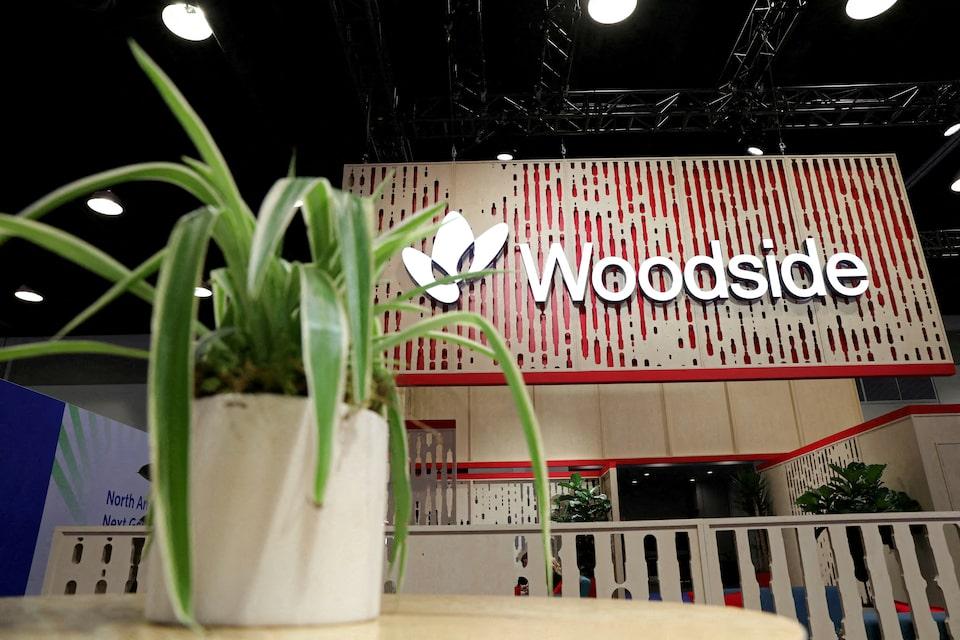
Stonepeak to acquire 40% interest in Louisiana LNG export terminal Woodside expects deal to ease balance sheet pressures and advance final go-ahead Selldown has partly addressed investor concerns, analyst says SYDNEY, April 7 (Reuters) - Woodside Energy (WDS.AX) , opens new tab, Australia’s top gas producer, said on Monday it agreed to sell a 40% stake in its Louisiana liquefied natural gas plant to U.S. infrastructure investor Stonepeak for $5.7 billion. The deal reduces Woodside's capital spending needs and marks a “material step” towards a final investment decision on the Louisiana LNG plant, the company said, adding it was in talks with other potential partners to further sell down its holding. Sign up here. “The addition of an infrastructure partner unlocks value and paves the way for other strategic equity partners,” CEO Meg O’Neill said in a statement. Woodside bought Tellurian for $1.2 billion last year to develop the 27.6 million metric tons a year Louisiana LNG project, formerly called Driftwood, in four phases to meet growing demand for gas. The first phase is expected to cost about $16 billion. Since then, investor concerns over the capital intensity of its U.S. expansion strategy have weighed on its shares, which have sharply underperformed peers. Stonepeak’s investment is set to fund 75% of capital expenditure in 2025 and 2026, which Woodside said enhanced the project’s economics and its cash flow. “The market had put basically a discount on Woodside because of the balance sheet pressure that would happen without a selldown, and now this selldown has addressed that,” said MST Marquee senior energy analyst Saul Kavonic. The deal also allows Woodside to make a final investment decision without locking in equity and offtake partners. “This project's now as good as FID," Kavonic said. Stonepeak senior managing director James Wyper said Louisiana LNG offered a good opportunity to invest in an LNG export plant nearing a final go-ahead. “With the need to bring significant additional capacity online over the coming years, we have strong conviction in the critical role Louisiana LNG will play in the U.S. LNG export market,” he said in a statement. Kavonic estimates Woodside will need to sell a further 20%-30% of its holding company stake, which includes a gas supply and LNG offtake business, to achieve its 50% selldown target. “The market's still going to be looking for further selldowns of the overall project to validate that this is a good project," he said. Woodside has held talks with potential buyers including Tokyo Gas (9531.T) , opens new tab, Japan's JERA and Saudi Aramco-backed MidOcean Energy. Amid a global market rout on trade war fears, Woodside's shares fell 5.8% on Monday, holding up slightly better than the Australian market's energy index (.AXEJ) , opens new tab. ($1 = 1.6642 Australian dollars) https://www.reuters.com/business/energy/australias-woodside-energy-sell-40-stake-louisiana-lng-project-stonepeak-2025-04-07/
2025-04-06 23:48
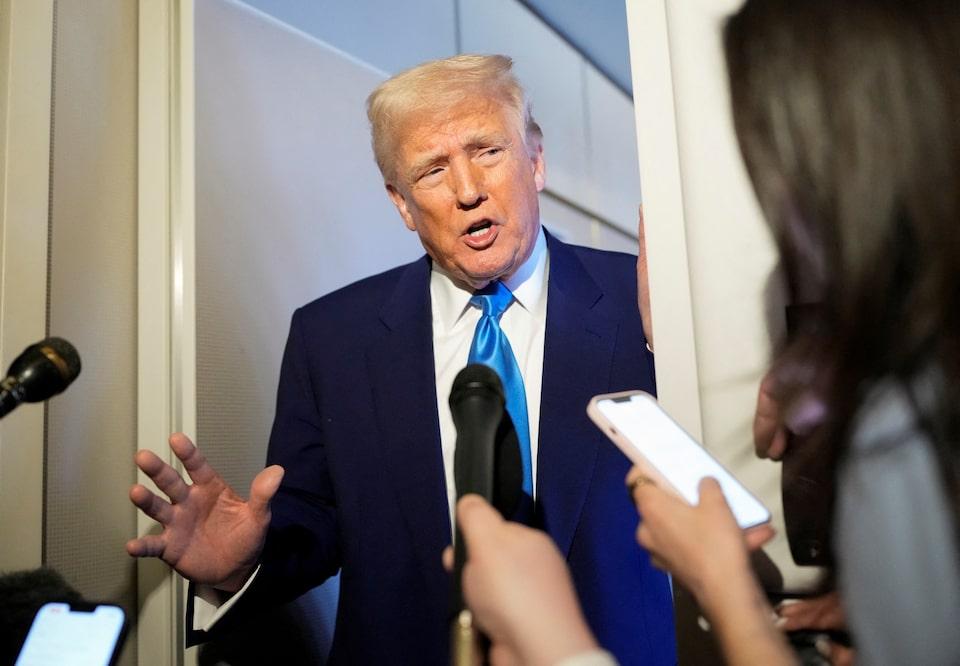
ABOARD AIR FORCE ONE, April 6 (Reuters) - U.S. President Donald Trump on Sunday said that sometimes you have to take medicine when asked about falling markets, adding that he was not intentionally engineering a market selloff. "I don't want anything to go down, but sometimes you have to take medicine to fix something," Trump told reporters about Air Force One regarding the economic fallout from his sweeping tariffs. Sign up here. "We have been treated so badly by other countries because we had stupid leadership that allowed this to happen," he added. Asian markets were in for a rough start on Monday as Wall Street futures plunged and markets wagered the mounting risk of a U.S. recession could see U.S. rate cuts as early as May. Trump showed no sign of backing away from his tariff plans. “What’s going to happen to the markets I can’t tell you. But our country is much stronger," Trump said. Trump said he would not make a deal with Beijing unless the trade deficit with China is solved. "Unless we solve that problem, I’m not going to make a deal," Trump said. He added that he has spoken to European and Asian leaders on the tariffs rolled out by his administration, adding "they’re dying to make a deal." U.S. customs agents began collecting Trump's unilateral 10% tariff on all imports from many countries on Saturday. Higher "reciprocal" tariff rates of 11% to 50% on individual countries are due to take effect on Wednesday at 12:01 a.m. EDT (4:01 a.m. GMT). https://www.reuters.com/world/us/trump-asked-about-markets-says-sometimes-you-have-take-medicine-2025-04-06/
2025-04-06 23:31
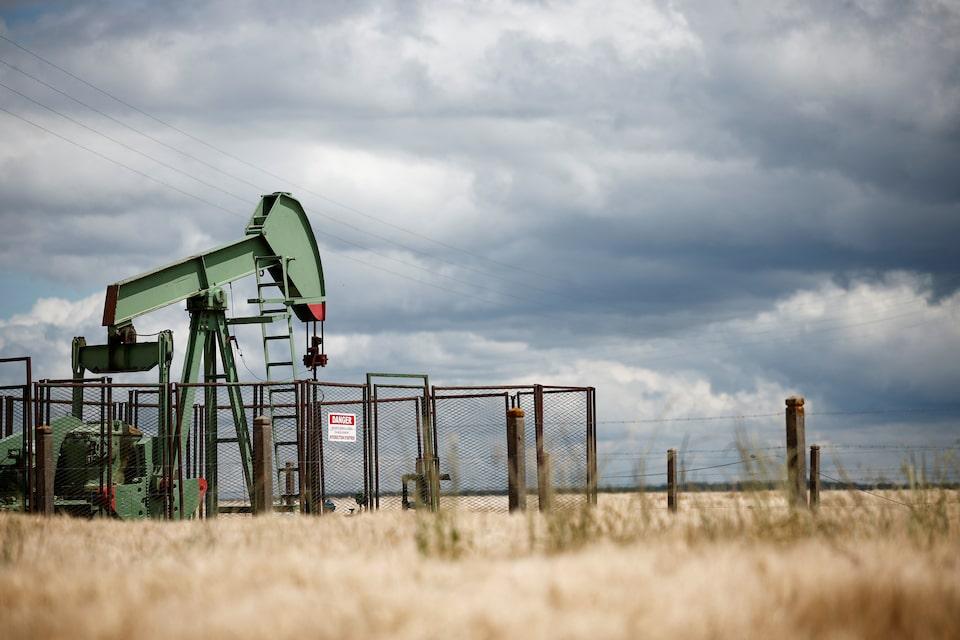
Trump threatens to increase tariffs on China European Commission propose counter-tariffs of 25% some US goods Goldman Sachs, Citi and Morgan Stanley cut oil price forecasts Saudi crude prices for Asian buyers reduced to four-month low NEW YORK, April 7 (Reuters) - Oil prices slid 2% to a near four-year low on Monday on worries U.S. President Donald Trump's latest trade tariffs could push economies around the world into recession and reduce global demand for energy. Brent futures fell $1.37, or 2.1%, to settle at $64.21 per barrel, while U.S. West Texas Intermediate crude futures fell $1.29, or 2.1%, to settle at $60.70. Sign up here. That pushed both crude benchmarks, which fell about 11% last week, to their lowest closes since April 2021. The session was marked by extreme volatility with intraday prices down more than $3 a barrel overnight and up over $1 Monday morning after a news report said Trump was considering a 90-day pause on tariffs. White House officials quickly denied the report, sending crude prices back into the red. Confirming investor fears that a full-blown global trade war has begun, China, the world's second-biggest economy behind the U.S., said on Friday it would impose additional levies of 34% on American goods in retaliation for Trump's latest tariffs. Trump responded that the U.S. would impose an additional 50% tariff on China if Beijing does not withdraw its retaliatory tariffs on the U.S., and said "all talks with China concerning their requested meetings with us will be terminated." The European Commission, meanwhile, proposed counter-tariffs of 25% on a range of U.S. goods on Monday in response to President Donald Trump's tariffs on steel and aluminum, a document seen by Reuters showed. Goldman Sachs forecast a 45% chance of recession in the U.S. over the next 12 months, and made downward revisions to its oil price projections. Citi and Morgan Stanley also cut their Brent outlooks. JPMorgan said it sees a 60% probability of recession in the U.S. and globally. In addition to growing recession worries, there are growing concerns that the Trump administration's policies will cause the price of goods to increase. U.S. Federal Reserve Governor Adriana Kugler said some of the recent rise in goods and market-services inflation may be "anticipatory" of the effect of the Trump administration's policies, adding that it is a priority for the Fed to keep inflation in check. The Fed and other central banks use higher interest rates to combat inflation. Higher interest rates, however, boost consumer borrowing costs and could cause economic growth and oil demand to decrease. SUPPLIER REACTION Saudi Arabia on Sunday announced sharp cuts to crude oil prices for Asian buyers, dropping the price in May to the lowest level in four months. "It's a demonstration of the belief that tariffs will hurt oil demand," said PVM analyst Tamas Varga. "It goes to show the Saudis, just like every man and his dog, expect the supply and demand balance to be affected and they are forced to cut their official selling prices." Adding to the downward momentum, the OPEC+ group comprising the Organization of the Petroleum Exporting Countries and its allies decided to advance plans for output increases. The group now aims to return 411,000 barrels per day to the market in May, up from the previously planned 135,000 bpd. During the weekend, OPEC+ ministers emphasised the need for full compliance with oil output targets and called for over-producers to submit plans by April 15 to compensate for pumping too much. https://www.reuters.com/business/energy/oil-prices-extend-losses-fears-global-trade-war-could-slow-economy-2025-04-06/
2025-04-06 23:28
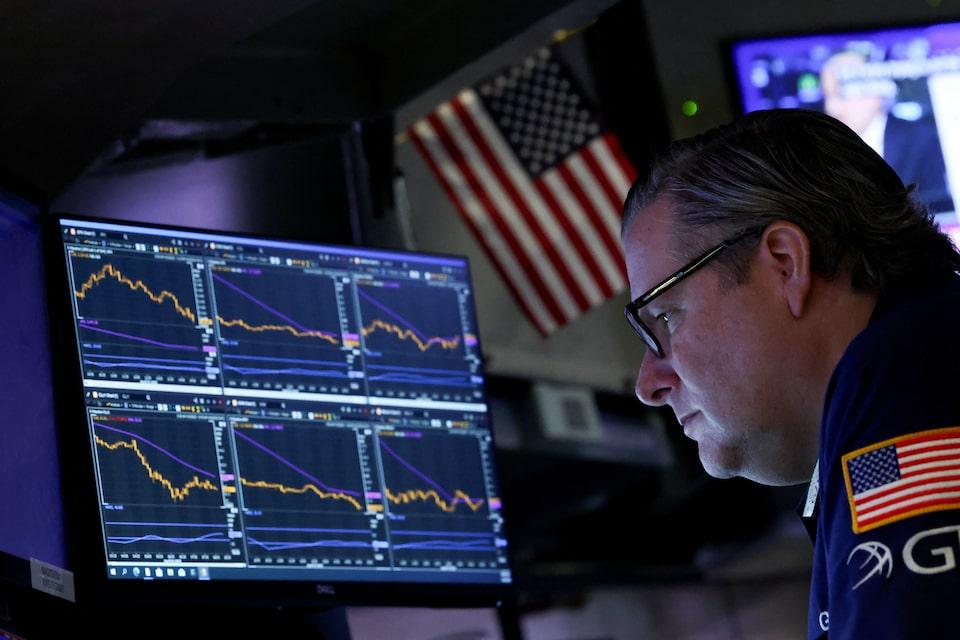
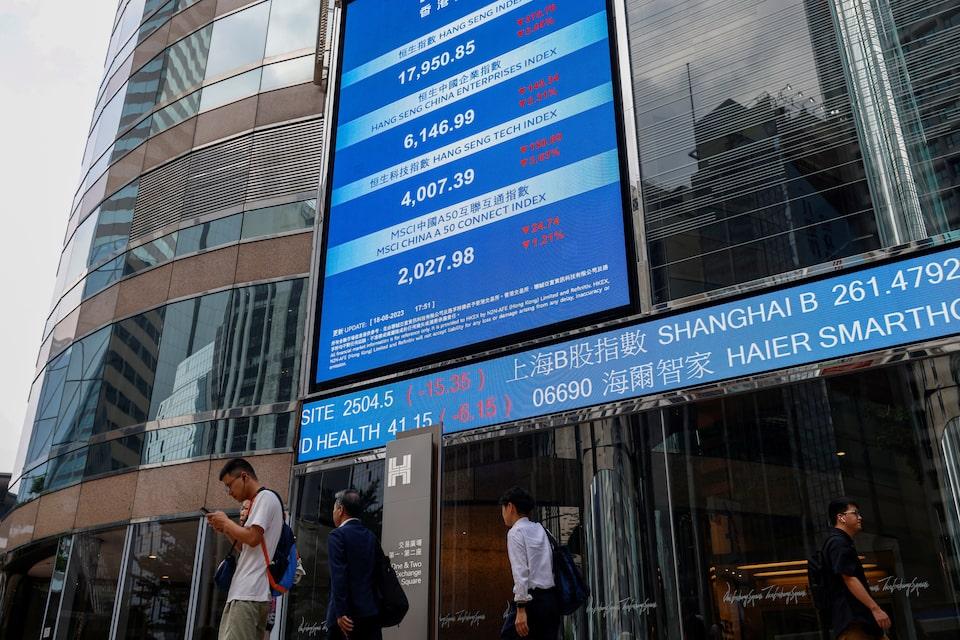
Trump digs in on tariffs Trump threatens additional 50% tariff on China Futures price in extra Fed easing this year Oil falls as trade conflict fuels recession fears Investors pile into safe-haven currencies amid tariff worries NEW YORK, April 7 (Reuters) - Most major stock indexes ended a turbulent Monday lower as U.S. President Donald Trump showed no sign of easing up on his global trade war, while U.S. Treasury yields rebounded. The European Union proposed counter-tariffs on Monday, while Trump threatened to add another 50% duty on U.S. imports from China on Wednesday if it did not withdraw its 34% retaliatory tariffs from last week. Sign up here. U.S. stocks swung between heavy losses and gains throughout the session as investors digested changing headlines related to tariffs. Stocks have fallen sharply since Trump unveiled sweeping tariffs late on Wednesday that investors worried could drive up inflation and push the global economy into recession. The Cboe Volatility index (.VIX) , opens new tab rose to 46.98, its highest close since April 2020. "You can tell shorts are on a hair trigger today, watching around every corner for a possible (Federal Reserve) intervention, tariff pause, or trade deal," said Jamie Cox, managing partner at Harris Financial Group in Richmond, Virginia. "It goes to show you just how short-lived this market rout is likely to be." Traders bet the increasing risk of recession could prompt the Fedto cut interest rates as early as May. Futures markets are pricing in almost five quarter-point cuts in U.S. rates this year. Rising costs will also put pressure on company profit margins, as the U.S. earnings reporting season begins later this week. The White House denied a report that Trump is considering a 90-day pause in tariffs for all countries except China. The report, which the White House called "fake news," briefly turned U.S. stocks positive early in the session. The Dow Jones Industrial Average (.DJI) , opens new tab fell 349.26 points, or 0.91%, to 37,965.60, the S&P 500 (.SPX) , opens new tab dropped 11.83 points, or 0.23%, to 5,062.25 and the Nasdaq Composite (.IXIC) , opens new tab rose 15.48 points, or 0.10%, to 15,603.26. During the session, the S&P 500 went from a low of 4,835.04 to a high of 5,246.57. MSCI's gauge of stocks across the globe (.MIWD00000PUS) , opens new tab fell 18.81 points, or 2.46%, to 745.48. European shares also slumped, with the STOXX 600 closing at its lowest since January 2024. The pan-European STOXX 600 (.STOXX) , opens new tab dropped 4.5%, down for the fourth straight session. Treasury yields rose on optimism that some countries may negotiate deals with Trump to avoid tariffs. Trump's advisers said he would be willing to negotiate with countries that are scrambling to head off tariffs as high as 50% due to take effect on Wednesday. White House economic adviser Stephen Miran encouraged countries hoping to escape high reciprocal U.S. tariff rates to make offers to Trump. But Trump ruled out discussions with Beijing as he ratcheted up a confrontation with China. The European Union is still willing to negotiate with the U.S. administration, European Commission President Ursula von der Leyen affirmed on Monday, adding that Brussels was also ready to take counter measures. Benchmark 10-year note yields were last up 15.8 basis points on the day at 4.149% and are on track for the largest daily increase since April 10, 2024. They fell to 3.86% on Friday, the lowest since October 4. Interest-rate sensitive two-year yields rose 6.2 basis points to 3.732% and are heading for their largest daily increase since March 24. They earlier reached 3.435%, the lowest since September 2022. The dollar weakened against the safe-haven Swiss franc, while a gloomier growth outlook kept oil prices down. The dollar hit its lowest in six months against the Swiss franc . It was last down 0.1% at 0.86. Oil prices slid to a near four-year low. Brent futures fell $1.37, or 2.1%, to settle at $64.21 per barrel, while U.S. West Texas Intermediate crude futures fell $1.29, or 2.1%, to settle at $60.70. Gold prices fell as well. Spot gold was down 2.4% to $2,963.19 an ounce. JPMorgan Chase (JPM.N) , opens new tab CEO Jamie Dimon warned the tariffs could cause lasting damage, while fund manager Bill Ackman said they could lead to an "economic nuclear winter." "Last week's theme is continuing but there were some meaningful developments over the weekend, in particular with Wall Street titans and business leaders effectively coming out very strongly against President Trump's policies and tariffs," said Oliver Pursche, senior vice president, advisor for Wealthspire Advisors in Westport, Connecticut. "That pressure is going to continue to mount." https://www.reuters.com/markets/global-markets-wrapup-1-2025-04-06/
2025-04-06 23:19
April 7 (Reuters) - A global equities meltdown lost some of its intensity on Monday as U.S. President Donald Trump stuck to his sweeping tariff plans though his advisers said he would be willing to negotiate with countries scrambling to head off tariffs. At the close of trade in New York, the S&P 500 was down 0.23% on the day, following a session characterized by wild swings on tariff headlines. Its recovery from its lows helped the market avoid confirmation of a bear market, which would have occurred if it had closed 20% down from February's record high. Sign up here. Trillions of dollars have been vaporized from equity values around the world after the Trump administration announced sharp increases in tariffs on almost all trading partners. Japan's blue-chip Nikkei slid almost 8% (.N225) , opens new tab and European shares fell more than 4% (.STOXX) , opens new tab. But U.S. Treasury yields rebounded from an earlier fall and the VIX stocks volatility gauge tempered its rise after jumping to its highest since August (.VIX) , opens new tab. QUOTES: BENJAMIN FORD, G10 FX STRATEGIST, MACRO HIVE, LONDON "Where I think we are now is that Trump's waiting for the other sides to come up with a plan, it speaks to what (Scott) Bessent said on Liberation Day, a deal could be done down the road, but we're going to wait. (One) route is that we see Trump focus on those (countries) that are retaliating first, so then before we get anything good, we get something worse. That still leaves us in this scenario where you need to be short dollars and probably need to be fading weakness in the euro." "Last (term), there was a strong care from (Trump) about the equity markets. But this time it seems he cares a lot about rates and the dollar. He's almost turned into a macro trader rather than an equity trader. In his mind, he's having great success at the moment. He wanted yields lower, he wanted the dollar lower and he wanted oil prices lower. He's getting all three of those at the moment. The chance of him changing tactic at the moment with approval ratings still relatively steady is probably quite slim." "We may see some positivity for the dollar as some of the stagflation trade gets priced out, as U.S. yields remain supported ... equities may see some stabilization in the near term." "We're not hearing any sort of issues in terms of the liquidity front. I don't think that's an issue right now ... for (central banks) to step in, you would have to have some sort of mini crisis, something like in the UK when we had the budget crisis where there was a particular implication for a portion of the financial sector." DOUG RAMSEY, CHIEF INVESTMENT OFFICER, LEUTHOLD GROUP, MINNEAPOLIS “The way in which the tariff plan was unveiled could not have been more ill-timed, given the vulnerabilities of the economy. The fact was that it had slowed down significantly even before the tariffs.” COLIN GRAHAM, HEAD OF MULTI-ASSET STRATEGIES, ROBECO, LONDON "If it's a 50% probability of recession, you've got to look at another 20%-25% down in equities from here. So there is still quite a way to go." "There isn't a put in place from Trump or the Fed. The put is on the bond market, as Trump's been saying he's aiming for lower bond yields. So if we're looking for some sort of support from the White House, it's the bond market we have to watch, not equities." IRENE TUNKEL, CHIEF STRATEGIST, BCA, NEW YORK “The first stage of equity selloff, driven by policy uncertainty, is now mostly complete… With the tariffs announced, the markets have reached the peak “bad news,” and the first stage of the selloff is now complete. Now, the second, even more damaging stage has begun." “The second stage of the selloff is a reaction to the imminent effect of tariffs on economic and earnings growth. The selloff that started the morning after the 'Liberation Day' is brutal, and as of Monday morning, the S&P 500 and the NASDAQ are down another 13.7% and 14.4%, respectively, with $5.1 T in market value wiped. “This stage of the selloff is pricing in the economic damage that new tariffs will ensue. Q1 earnings season begins in about a week, and companies will report on the potential effect of tariffs on their profit margins and their plans to reshape supply chains. Aggressive and ubiquitous earnings growth downgrades will accompany negative corporate guidance. Over time, as the damage the tariffs will inflict on the economy becomes a reality – a spell of economic downgrades will follow. “A pullback in the cyclical sectors and industries, such as Banks, and Transportation, signals that the markets are starting to price in the pain of an increasingly likely recession.” BHANU BAWEJA, CHIEF STRATEGIST WITH UBS IN LONDON (during a call with journalists) “The market sleep-walked into this because they felt that Trump would care about the stock market, because they felt this was only a bargaining tool. The market is now having to rethink those priors.” “There could be a material, serious hit to EPS growth.” “It doesn’t stretch the imagination at all to say we could get zero earnings growth, or negative earnings growth.” “We don’t think we are at a stage where the worst is priced by the market.” “Even the positioning of the market … most investors have been buying the dip … People until very recently have been buying into this dip.” “We are nowhere close to the absolute worst case. So far we haven’t seen anything in liquidity markets break, we haven’t seen anything in credit markets break.” “This is a man-made problem. Concentrated really around one man, as opposed to any institution discussion with the USTR. If that one person changes their mind, suddenly the whole algebra changes,” he said, adding that it was “hard to see what the circuit-breaker is” for Trump to change course. “Many countries, China included, are going to escalate instead of de-escalate. Things could get worse before they get better.” MICHAEL JAMES, MANAGING DIRECTOR OF EQUITY TRADING, ROSENBLATT SECURITIES, LOS ANGELES "Things did not get any better over the weekend in terms of commentary from the White House and that's why we saw futures extending losses from Friday into the morning. There was a headline, an unconfirmed story, there would be a 90-day moratorium on recently initiated tariffs. That didn't come to fruition and was denied and markets immediately reversed back into red on the day." "On a constructive note, we're still off of the early morning lows and we're clearly significantly over-sold on just about every technical metric in the short term. But without any improvement in the tariff situation, which is the dominant focus of everyone's attention, it's going to be hard to expect that there will be much meaningful upside, outside of a potential over-sold bounce." "There really is not a significant and notable price level in the S&P 500 or the Nasdaq that you could ascribe to be a potential bounce. Look at how over-sold we are from a short term. The VIX was north of 60 in the pre-open this morning. That's obviously moderated some. Still 50 is still pretty elevated, although off of the early levels." "The only thing that's going to help both sentiment and the markets direction is going to be some easing of the entrenched tariff views that were espoused last Wednesday night. We're going to need some form of moderation on those tariff levels to have any potential for meaningful improvement." Trump's threat of another 50% tariff on China "merely highlights how entrenched the White House is regarding the tariff situation currently. As we've seen in the past, that's subject to change any day. Maybe it does. Maybe it doesn't." RYAN DETRICK, CHIEF MARKET STRATEGIST, CARSON GROUP, OMAHA “The word of the day, the word of the week, the word of the month, the word of the year is clearly ‘uncertainty.’ And the reality is even though we now know more about what's going on with the tariffs, the potential fallout from these policies have continued to lead to a sell first, ask questions later mentality.” “If there's any good news, we are extremely oversold and any potential slimmer or glimmer of positive news could lead to a substantial bounce. But the reality is investors are scarred, investors are worried and this volatility is likely with us for a good deal longer.” “We just lost 10% in two days - Thursday and Friday last week. That is extremely rare. Historically, when you see moves like that, it's closer to a low, you're in washout territory.” “At the same time, let's not forget, bonds have done fairly well, gold has done fairly well, even international markets, although they're down the last few days have hung in there and are most are positive on the year.” “So as bad as this feels, a diversified portfolio, all things considered, is hanging in there. You know, relative to, say, large-cap technology and specifically ‘Magnificent Seven’ names, which have just been in essence, decimated.” “Powell had a chance on Friday to strike a more dovish tone but the reality is the Fed continues to hang tough.” “Who blinks first? The Fed or President Trump? The Fed has made it clear that with inflation where it is and unemployment where it is, the (they’re) comfortable without doing anything right now.” “We think Washington likely has to blink first to present some type of positive news, and honestly the U.S. and China are working hard behind the scenes to find some type of a resolution, some type of common ground to help both countries because China's economy is not in great shape.” “Ours is, but there's worry about where we're going. (That) would go a long way, some type of positive development with U.S. and China. We think that that's likely something we could see hopefully over the next week or two.” MAXWELL GRINACOFF, HEAD OF U.S. EQUITY DERIVATIVES, UBS "The VIX is pricing a recession. This is not going to fade anytime soon." "Wednesday was supposed to take uncertainty out of the market and it added more uncertainty for the dollar, for rates, for credit, for oil. This isn't just one asset class driving the volatility." "But even as things are blowing out, it's actually for now relatively contained." "On August 5 you had five times the normal reactivity in VIX relative to the spot move. Today you're much more in line with history. What that tells me is that this is very orderly, its a fundamental move, its warranted." "This volatility reaction is extremely healthy for what we have just witnessed." LUCA PAOLINI, CHIEF STRATEGIST, PICTET ASSET MANAGEMENT "This situation can get a little bit worse before it gets better." "You don't want to sell massively because the risk is you get a massive bounce. So you don't do anything." "There's still selling pressure but a lot of that is algo. A lot of investors are so confused and in a situation that is so difficult to predict, the best thing to do is to wait. The market has fallen so much so quickly you may be on exactly the wrong side of the trade." "We have a target of 4,500 (for the S&P) in the case of a U.S. recession, which is becoming relatively more likely. " “The risk now is that Europe puts tariffs on and that by the end of this week the average tariff rate everyone is putting on everyone else is higher than now.” "There is a risk also of financial stability. And what makes this actually pretty dangerous is that is that if there is a situation where you have a global meltdown, who is going to be bailing out the system?" “It could be the case that the Fed brings us 50 basis point emergency cut but I don’t think they will do it. The point is this is a typical case where you need a policy response but that is going to be more difficult this time around.” “We see this as a stagflationary shock with higher inflation and lower growth, but the market only sees the recession.” ALTAF KASSAM, EUROPE HEAD OF INVESTMENT STRATEGY AND RESEARCH, STATE STREET GLOBAL ADVISORS "High Yield spreads have continued to widen." "This is all rational, as weaker credits should suffer disproportionately in this scenario as they rely more on external financing which tends to become scarcer in such moments of uncertainty." "I think central banks, especially the Fed, will maintain their data dependent mantra, which means the put remains there but in the case of the Fed (it) requires unemployment to spike while inflation remains under control to be activated." https://www.reuters.com/markets/us/view-us-stock-futures-tumble-indicating-another-plummet-wall-street-2025-04-06/