2025-04-06 23:04
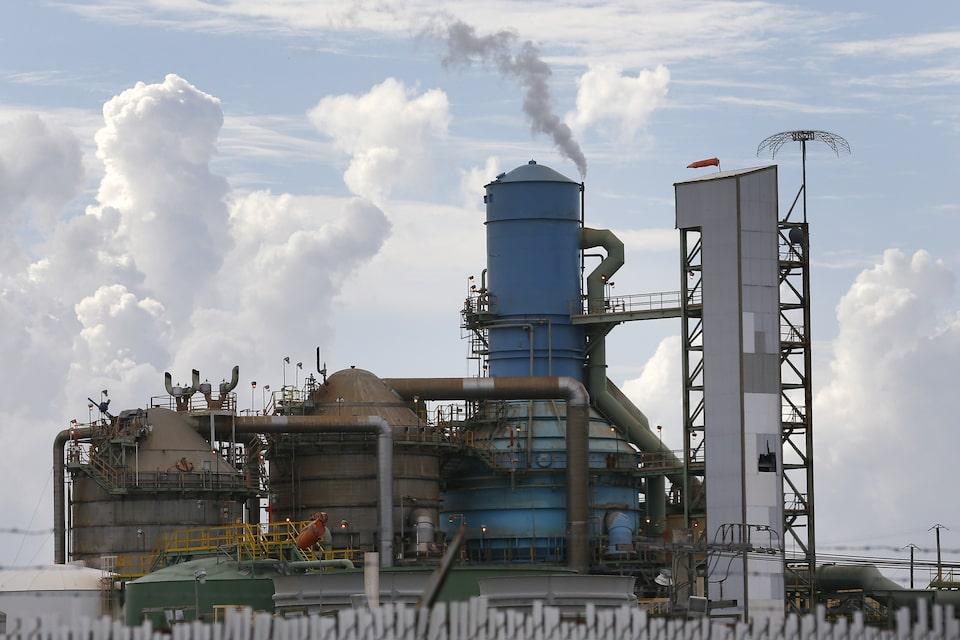
U.S. accounted for 62% of China LPG, ethane imports in 2024 While China accounted for a third of U.S. LPG, ethane exports Trade war likely to lead to sharp drop in shipments LONDON, April 7 - The often overlooked yet rapidly expanding petrochemical feedstock trade between the United States and China could become one of the biggest casualties in the two giants' escalating economic clash. President Donald Trump on April 2 imposed sweeping tariffs on its major trading partners. This included a 34% tax on Chinese imports, marking a new low in trade ties between the world's largest economies following years of tit-for-tat tariffs and restrictions since Trump's first term. Sign up here. China, whose goods now face an aggregate 54% import tariff from Washington, retaliated two days later with a reciprocal 34% tariff on all U.S. goods, which comes on top of other tariffs imposed in the past. The trade imbalance between the two countries has been one of Trump's biggest bugbears for years. The United States imported $439 billion from China last year, compared with exports of $143.5 billion , opens new tab, according to U.S. government data. Oil and gas made up just over 10% of total U.S. exports to China, constituting a small proportion of total U.S. energy exports and Chinese imports. But within that trade, Chinese purchases of U.S. liquefied petroleum gas (LPG) and ethane, oil and gas byproducts used to manufacture plastics, have blossomed, rising more than tenfold over the past decade. This has made China's petrochemicals sector and American producers highly dependent on one another – and thus a potential vulnerability both sides could try to exploit. EXPANDING RELATIONSHIP U.S. production of ethane and LPG, which includes propane and butane, soared in recent years, tracking stellar growth in oil and gas production from onshore shale basins such as the Permian in Texas and New Mexico and the Appalachian basin in Pennsylvania and West Virginia. The U.S. Energy Information Administration expects LPG production to climb from 4.1 million bpd to 4.4 million bpd by 2026, while ethane output is forecast to rise from 2.8 million bpd last year to 3 million in 2026. China has become the most important region for petrochemical growth and thus the biggest buyer of U.S. LPG and ethane. Chinese and international companies, including Saudi Aramco and ExxonMobil have invested tens of billions of dollars in new Chinese petrochemical plants, betting on decades of continued demand for plastics, even as gasoline consumption slows due to the rapid penetration of electric vehicles. The new facilities, which are often integrated with oil refineries, can produce chemicals from naphtha, LPG and ethane. But ethane produces far more ethylene, the most important building block for plastics, than naphtha when processed, making ethane a higher value feedstock. In 2024, the United States accounted for 62% of a total of 1.4 million bpd of LPG and ethane China imported, according to analytics firm Kpler. And when it comes to ethane alone, the picture is even starker. The United States represented practically all of China's imports of the feedstock over the past seven years. Imports rose steadily from zero in 2018 to 265,000 bpd last year, according to Kpler. The other side of the trade is just as striking. In 2024, China accounted for 57% of U.S. ethane exports. China was also the largest buyer of U.S. LPG last year, taking in 27% of total exports of 2.2 million bpd. ADVANTAGE CHINA While this concentrated trade creates a vulnerability on both sides, China may be better positioned than the U.S. to use this interdependence as a weapon in the escalating trade war, given the relatively small share LPG and ethane make in China’s overall petrochemical sector. China's total ethylene capacity stood at 53 million tons per annum in 2023, of which 70% used naphtha as a feedstock, while ethane and LPG accounted for only 8% of feedstock, according to Sinopec's Economics and Development Research Institute 2024 annual report. LPG and ethane makes up a relatively small percentage of U.S. energy exports, but China's dominance in the global petrochemical market would limit the pool of potential buyers for U.S. producers. Beijing did not include those feedstocks when it imposed a round of tariffs on U.S. certain products in February, including a 15% tariff on LNG imports, in response to Trump slapping a 10% tariff on Chinese goods. They will not be spared in the latest round of tariffs, however. The exchange of trade blows between China and the United States has deeply shaken global markets, and it is safe to say that these are just early salvos in what could be a very long conflict. The petrochemical feedstock trade was a glowing example of the mutual benefits of closely intertwined commerce. It now looks likely to wither. ** The opinions expressed here are those of the author, a columnist for Reuters ** Want to receive my column in your inbox every Thursday, along with additional energy insights and trending stories? Sign up for my Power Up newsletter here. https://www.reuters.com/business/energy/china-us-blossoming-petchem-ties-could-be-trade-war-casualty-bousso-2025-04-06/
2025-04-06 22:01
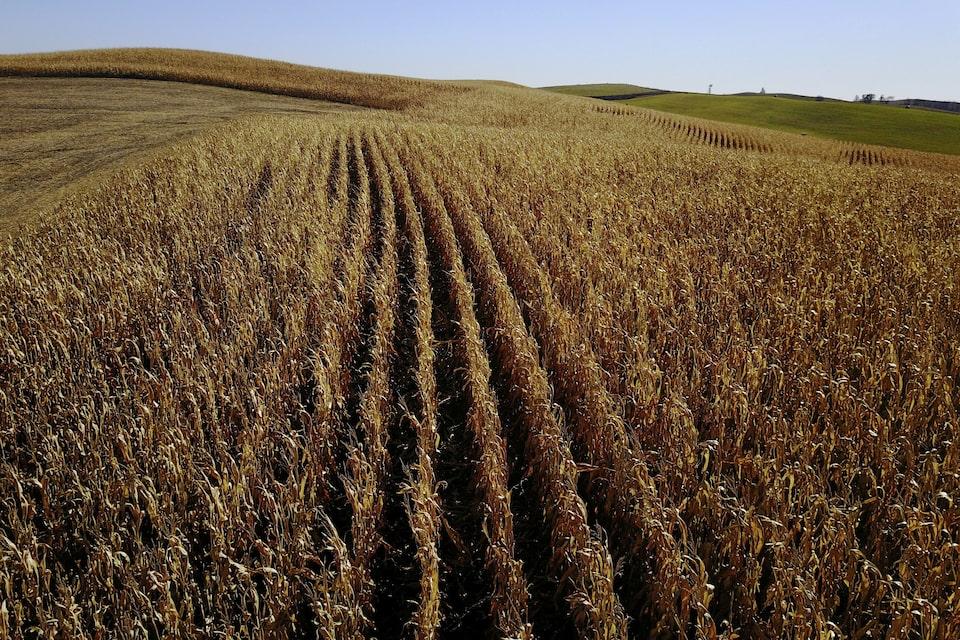
NAPERVILLE, Illinois, April 6 (Reuters) - Speculators held on to their bullish Chicago corn bets in the days leading up to last Wednesday's U.S. tariff reveal. However, they still notched their sixth consecutive week as net sellers of the yellow grain as geopolitical uncertainties outweigh friendly fundamentals. Sign up here. In the week ended April 1, money managers reduced their net long position in CBOT corn futures and options to 56,757 contracts, a 21-week low. That compared with 74,607 a week earlier, the move stemming entirely from exiting longs. Most-active CBOT corn futures drifted 1% higher that week, probably because traders were removing risks ahead of Wednesday, what U.S. President Donald Trump called "Liberation Day." Money managers were also net sellers of CBOT wheat and soybean meal during the week ended April 1, with fresh short bets as the driver. This resulted in a record net short in CBOT soybean meal futures and options of 100,733 contracts, up from the previous week's 84,050. Funds pushed their net short in CBOT wheat futures and options to a 16-month high of 112,040 contracts versus 92,587 in the prior week. Both meal and wheat futures had eased less than 1% during the week. Potential movement on the U.S. biofuel policy sent CBOT soybean oil futures surging more than 12% in the week ended April 1. Soybeans were pulled along for the ride, adding 3.2%. Money managers nearly erased their heavy net short in CBOT soybean oil futures and options with one of their largest-ever weeks of net buying, driven heavily by short covering. The net short fell to 5,762 contracts from 44,618 a week earlier. Short covering also caused a reduction in funds' net short in CBOT soybeans, which fell to 29,847 futures and options contracts from 42,959 in the previous week. One year ago, funds' bean net short was close to 140,000 contracts. TARIFFS HIT On Wednesday, Washington imposed sweeping tariffs on all trade partners, weighing heavily on financial and commodity markets. Over the last three sessions, CBOT soybeans fell 5.5%. On Friday they hit their lowest price since December after China raised tariffs on U.S. goods, including the oilseed. Soymeal and soyoil fell more than 3% and wheat eased 2%. Corn futures featured the smallest movement, slipping just 0.3% between Wednesday and Friday. Wednesday's tariffs were more severe than anticipated. Since then, S&P 500 companies (.SPX) , opens new tab wiped out $5 trillion in value and the Nasdaq has confirmed a bear market. Framed as "reciprocal" tariffs, Trump's levies were calculated as the rates necessary to balance bilateral trade deficits between the U.S. and its trade partners, essentially leading to much steeper-than-expected rates against most countries. The top U.S. agricultural trade partners, Canada and Mexico, were excluded from the latest round of tariffs, and many goods remain exempt for now under the latest North American trade pact. But concerns have heightened for key U.S. agricultural export destinations like Europe and Asian countries apart from China, such as Taiwan and Vietnam. Japan and South Korea were the No. 4 and No. 5 destinations for U.S. farm goods last year. The U.S. tariffs will continue to steal the market’s attention for the foreseeable future. However, the U.S. Department of Agriculture on Thursday will release its monthly supply and demand forecasts, which could offer traders and analysts a small reprieve from the trade drama. Karen Braun is a market analyst for Reuters. Views expressed above are her own. https://www.reuters.com/markets/commodities/funds-cling-bullish-corn-bets-ahead-us-tariff-chaos-braun-2025-04-06/
2025-04-06 19:13
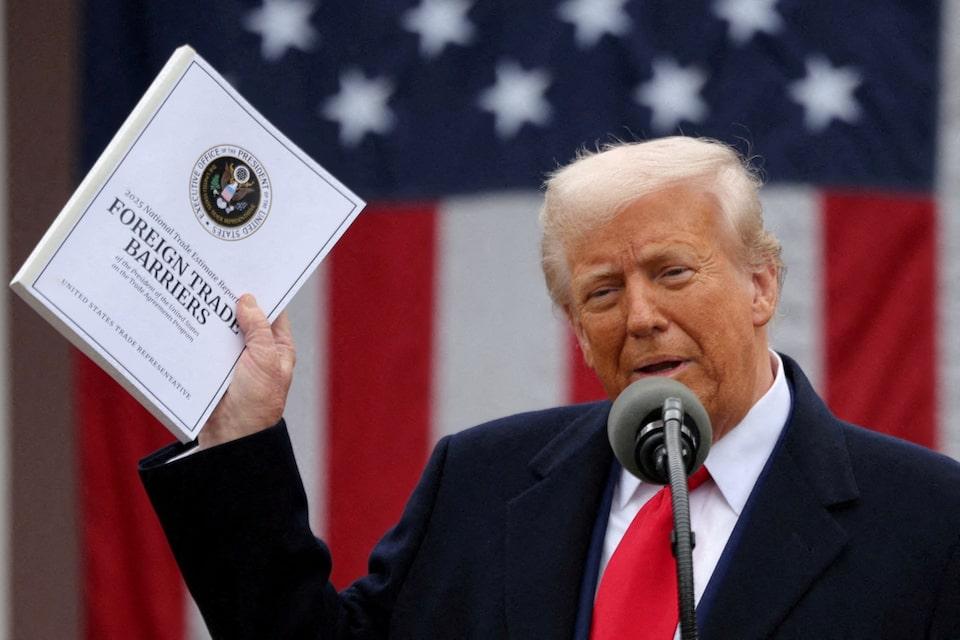
Taiwan, Israel and India seek deals Trump says countries will have to 'pay a lot of money' Ackman warns of 'nuclear winter' unless tariffs paused ABOARD AIR FORCE ONE, April 6 (Reuters) - U.S. President Donald Trump said on Sunday foreign governments would have to pay "a lot of money" to lift sweeping tariffs that he characterized as "medicine," prompting further carnage in global financial markets. Asian stocks posted steep losses in early trading on Monday and U.S. stock market futures opened sharply lower as investors registered concerns that Trump's tariffs could lead to higher prices, weaker demand, lower confidence and potentially a global recession. Sign up here. Speaking to reporters aboard Air Force One, Trump indicated he was not concerned about losses that have already wiped out trillions of dollars in value from share markets around the world. "I don't want anything to go down. But sometimes you have to take medicine to fix something," he said as he returned from a weekend of golf in Florida. Trump said he had spoken to leaders from Europe and Asia over the weekend, who hope to convince him to lower tariffs as high as 50% due to take effect this week. “They are coming to the table. They want to talk but there’s no talk unless they pay us a lot of money on a yearly basis," Trump said. Trump's tariff announcement last week jolted economies around the world, triggering retaliatory levies from China and sparking fears of a global trade war and recession. Investors and political leaders have struggled to determine whether Trump's tariffs are here to stay, or part of a permanent new regime or a negotiating tactic to win concessions from other countries. On Sunday morning talk shows, Trump's top economic advisers sought to portray the tariffs as a savvy repositioning of the U.S. in the global trade order. Treasury Secretary Scott Bessent said more than 50 nations had started negotiations with the U.S. since last Wednesday's announcement. "He's created maximum leverage for himself," Bessent said on NBC News' 'Meet the Press'. Commerce Secretary Howard Lutnick said on CBS News' 'Face the Nation' the tariffs would remain in place "for days and weeks." White House economic adviser Kevin Hassett sought to tamp down concerns that the tariffs were part of a strategy to pressure the U.S. Federal Reserve to lower interest rates, saying there would be no "political coercion" of the central bank. JPMorgan economists now estimate the tariffs will result in full-year U.S. gross domestic product declining by 0.3%, down from an earlier estimate of 1.3% growth, and that the unemployment rate will climb to 5.3% from 4.2% now. Billionaire fund manager Bill Ackman, who endorsed Trump's run for president, said Trump was losing the confidence of business leaders and warned of an "economic nuclear winter" unless he called a time out. TARIFF DEALMAKING U.S. customs agents began collecting Trump's unilateral 10% tariff on all imports from many countries on Saturday. Higher "reciprocal" tariff rates of 11% to 50% on individual countries are due to take effect on Wednesday at 12:01 a.m. EDT (4:01 a.m. GMT). Some governments have already signaled a willingness to engage with the U.S. to avoid the duties. Taiwan's President Lai Ching-te on Sunday offered zero tariffs as the basis for talks with the U.S., pledging to remove trade barriers and saying Taiwanese companies will raise their U.S. investments. Israeli Prime Minister Benjamin Netanyahu said he would seek a reprieve from a 17% tariff on the country's goods during a planned meeting with Trump on Monday. An Indian government official told Reuters the country does not plan to retaliate against a 26% tariff and said talks were under way with the U.S. over a possible deal. In Italy, Prime Minister Giorgia Meloni - a Trump ally - pledged on Sunday to shield businesses that suffered damage from a planned 20% tariff on goods from the European Union. Italian wine producers and U.S. importers at a wine fair in Verona on Sunday said business had already slowed and feared more lasting damage. https://www.reuters.com/world/more-than-50-countries-have-contacted-white-house-start-trade-talks-trump-2025-04-06/
2025-04-06 19:10
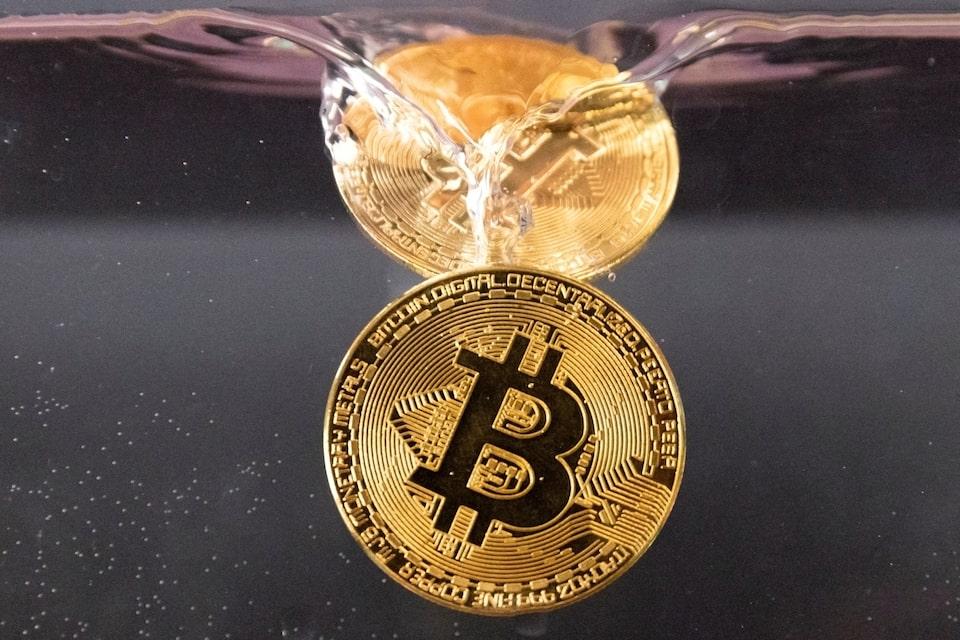
April 6 (Reuters) - Bitcoin, the world's largest cryptocurrency by market value, was down by around 5% at $78,892.92 at 1855 GMT on Sunday. Ether, the second largest cryptocurrency, was down by around 9.62% at $1617.65 at 1859 GMT on Sunday. Sign up here. https://www.reuters.com/technology/bitcoin-last-down-5-7889292-2025-04-06/
2025-04-06 18:49
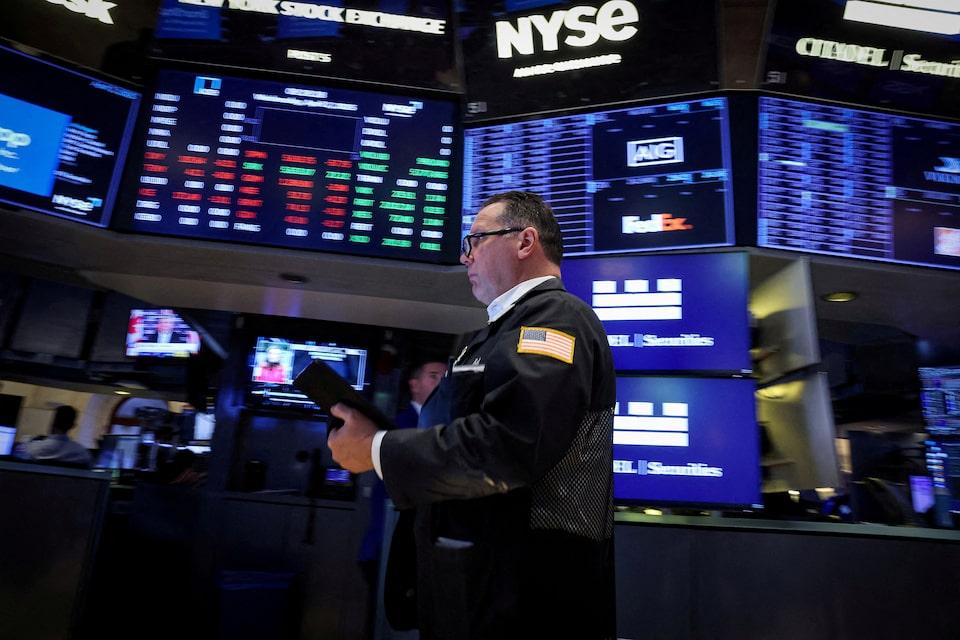
April 6 (Reuters) - U.S. stock futures opened sharply lower late on Sunday, suggesting a continuation of the two-day selloff that wiped trillions from equity values after the Trump administration's tariffs announcement last week. Investors had been anticipating another week of turbulence as global trading partners react to the harsher-than-expected tariffs. U.S. S&P 500 E-minis stock futures were last down 4%. Dow E-minis were down 3.8%, while Nasdaq 100 E-minis were down 4.6% at the open on Sunday. Sign up here. In the two days following Trump's Wednesday tariff announcement, the benchmark S&P 500 index fell 10.5% and lost about $5 trillion in market value. It was the biggest two-day loss since March 2020. Thursday and Friday's steep slide , opens new tab put the S&P 500 down more than 17% from its February 19 all-time closing high, and brought it closer to bear market territory, which is typically defined as a 20% decline. “The bull market is dead,” Mark Malek, chief investment officer at Siebert Financial, said ahead of futures opening. “We might see some gains in the next few days, but for now they’re not going to be sustainable.” The timing of the tariffs news, which coincided with the beginning of the first-quarter earnings season, is contributing to the gloomy outlook, Malek said. On Sunday morning talk shows, Trump's top economic advisers sought to portray the tariffs as a savvy repositioning. Treasury Secretary Scott Bessent said on NBC News' "Meet the Press" that there was "no reason" to anticipate a recession. Some traders believe the stock market will at least attempt to stage a comeback of sorts. “Sometime this week it’s probably inevitable that we will have an up day,” said Steve Sosnick, chief investment strategist at Interactive Brokers, ahead of futures opening. The question remains about the sustainability of any rally. “We may see a day this week where screens are green, but any lasting rally may not arrive for three or four weeks,” said Alex Morris, chief investment officer at F/m Investments. “At that point, people will start saying we’ve taken enough air out of the balloon.” https://www.reuters.com/markets/us/us-investors-braced-more-volatility-bumps-ahead-monday-trading-open-2025-04-06/
2025-04-06 17:08
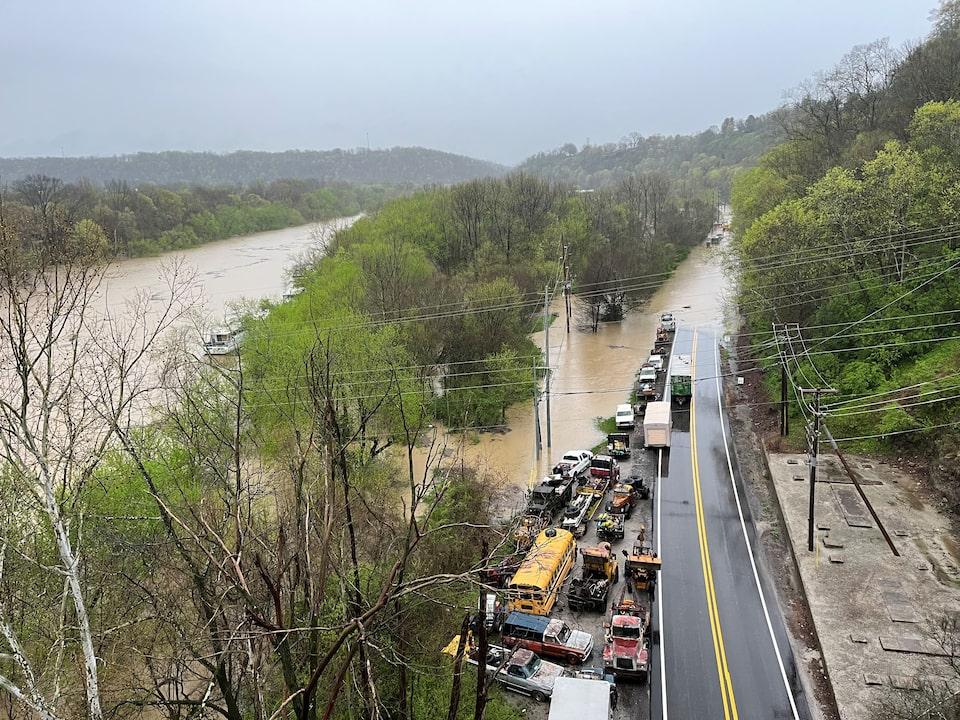
WASHINGTON, April 6 (Reuters) - Kentucky Governor Andy Beshear said on Sunday that two people died and over 500 roads were closed in the state due to deadly storms and floods, which have also killed over a dozen people in the past week in other states of the U.S. South and Midwest. "Kentucky, there is record flooding across our state, with over 500 road closures. Rivers have not yet crested, so we still have a day — if not more — of rising waters. We've already lost two of our people," Beshear said on social media platform X. Sign up here. One of the dead in Kentucky was a 9-year-old boy walking to his school bus stop on Friday morning when he was overtaken by flooding, police in the city of Frankfort said. Beshear added on Sunday that many homes were evacuated and water supply was limited in the state capital Frankfort, where he said state offices will be closed on Monday. A deadly spring storm spawned tornadoes and drenching thunderstorms in a swath of the U.S. stretching from Texas to Ohio in the past week. Tennessee had 10 deaths in this period, according to the local health department. In addition to the two deaths announced by the Kentucky governor, there were also two deaths in Missouri and one each in Arkansas, Indiana and Mississippi, according to local media. Climate change is bringing heavier rainfall and related flood risks in most parts of the U.S., with the upper Midwest and Ohio River Valley among the regions most affected, according to Climate Central, an independent nonprofit that researches weather patterns. https://www.reuters.com/world/us/kentucky-says-2-dead-after-floods-over-dozen-killed-recently-other-us-parts-2025-04-06/