2026-01-14 07:46
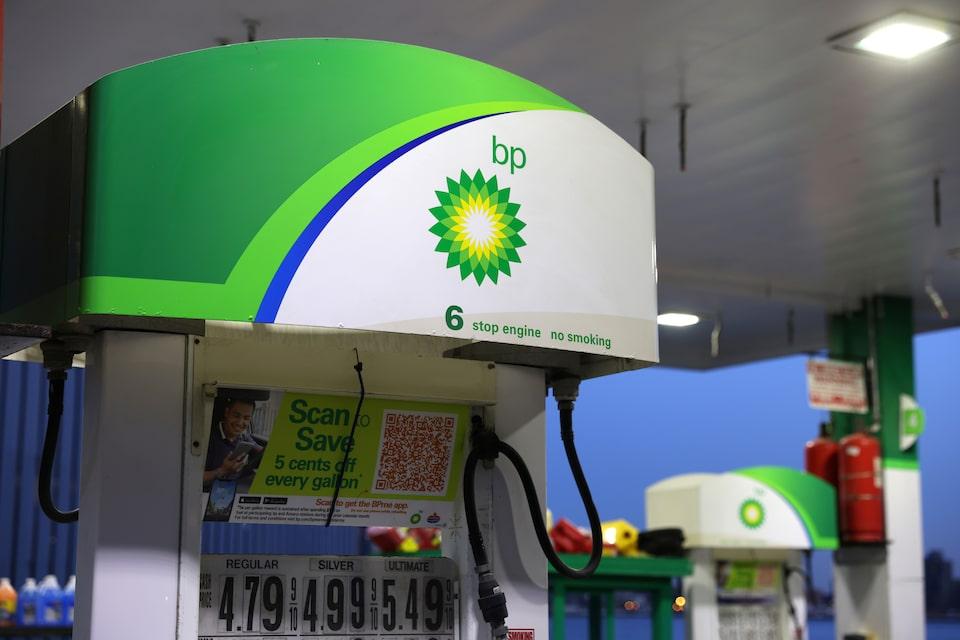
BP warns weaker oil trading, falling prices will weigh on Q4 earnings Does not name businesses related to impairments Net debt seen at $22 billion to $23 billion at end of fourth quarter Citi, RBC analysts expect cut to share buyback programme LONDON, Jan 14 (Reuters) - Oil major BP (BP.L) , opens new tab expects to book $4 billion to $5 billion in fourth-quarter impairments, mainly tied to its low-carbon energy businesses, as it redirects spending to oil and gas to boost returns under new leadership including Chair Albert Manifold. The British company said in a trading statement on Wednesday ahead of results on February 10 that the impairments are excluded from underlying replacement cost profit, its version of net income. A spokesperson declined to say which projects were affected. Sign up here. BP's low-carbon portfolio also includes U.S. biogas producer Archaea which BP bought in 2022 for $4.1 billion. Citi analysts said they suspected impairments might be linked to this unit. After taking a $24 billion hit from exiting Russia in 2022, BP - with a current market capitalisation of around $91 billion - recorded impairments of $5.7 billion in 2023, $5.1 billion in 2024 and has flagged around $6.9 billion for last year, according to its releases and Reuters calculations. 'CLEARING THE DECKS' The company slashed its annual spending on energy transition businesses about a year ago from $7 billion to a maximum of $2 billion as it embarked on a major strategy shift back to oil and gas. It has also had leadership changes with Meg O'Neill set to replace interim CEO Carol Howle in April after Murray Auchincloss's abrupt exit last month. "We see this as a first step in new management 'clearing the decks', with the next logical step being to cut the buyback to zero and allow for further de-leveraging in a weaker macro environment," said RBC analyst Biraj Borkhataria. BP is buying back around $750 million worth of shares every quarter. BP CUTS BACK ON ENERGY TRANSITION It wants to sell its stake in solar power group Lightsource bp, has spun off its offshore wind business into joint venture JERA Nex BP and has abandoned plans to build a biofuels plant in Amsterdam and hydrogen plants in Australia and Britain. Jera Nex BP was not among winners at a British offshore wind power contract auction on Wednesday after having committed hundreds of millions of dollars in 2021 with German regional utility EnBW (EBKG.DE) , opens new tab to UK seabed rights. Jera Nex BP declined to comment. BP warned in its outlook on Wednesday that weaker oil trading and falling prices will weigh on fourth-quarter earnings. It expects lower oil prices to reduce quarterly earnings by $200 million to $400 million while weaker gas prices could trim another $100 million to $300 million. European benchmark gas prices fell 9% in the period, and Brent crude < averaged $63.73 a barrel, down from $69.13 in the third quarter, as oversupply fears hit markets. BP shares were down 0.7% by 1112 GMT versus a 0.2% dip in a broader index of European energy companies (.SXEP) , opens new tab. NET DEBT FALLING DUE TO DIVESTMENTS BP expects net debt to have dropped to $22 billion–$23 billion by the end of 2025 from $26.1 billion in the third quarter, helped by divestments of about $5.3 billion, above earlier guidance. The figure excludes $6 billion from selling a majority stake in its Castrol lubricants unit. BP aims to cut debt to $14 billion–$18 billion by 2027. Refining margins slipped to $15.20 a barrel from $15.80 in the previous quarter. BP’s 440,000-barrel-per-day Whiting refinery in the U.S. suffered outages after an October fire, adding to earlier disruptions from flooding and a major 2024 outage. https://www.reuters.com/business/energy/bp-flags-4-billion-5-billion-energy-transition-impairments-weak-oil-trading-2026-01-14/
2026-01-14 07:43
NEW DELHI, Jan 14 (Reuters) - Indian Oil Corp (IOC.NS) , opens new tab bought its first Ecuadorean Oriente crude cargo for end-March delivery via a tender, two trade sources said, as the country's top refiner expands its oil sourcing to partly replace some Russian oil. U.S. and European Union sanctions on Russian producers and vessels are disrupting Russian oil imports, prompting Indian refiners to scout for alternative supplies. Sign up here. A reduction in Russian oil imports will also help New Delhi's negotiations of a trade deal with Washington. IOC bought 2 million barrels of medium-heavy sour Oriente oil, the sources said, without elaborating on the pricing and seller. IOC did not immediately respond to a Reuters request for comment. The refiner covers most of its oil needs with imports from Russia and the Middle East and rarely buys South American grades despite having optional purchase contracts with Mexico, Brazil, and Colombia. Last month, IOC bought 2 million barrels of Colombian Castilla crude. https://www.reuters.com/business/energy/indian-oil-buys-its-first-ecuadorean-oil-via-tender-sources-say-2026-01-14/
2026-01-14 07:19
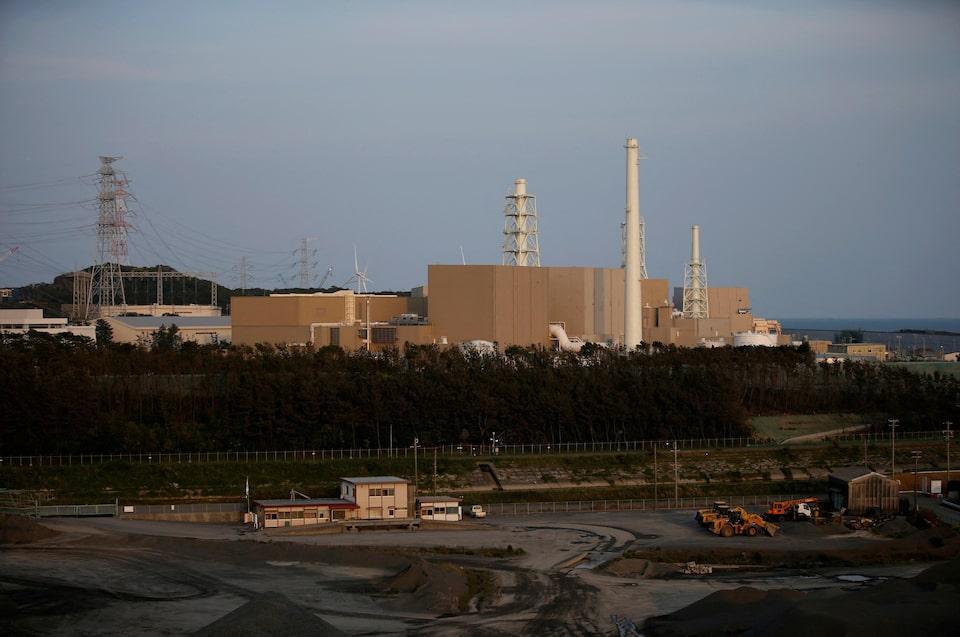
NRA seeks Chubu Electric report on falsified seismic data Pauses Hamaoka plant review over concerns about documents Watchdog warns of possible denial of application to restart TOKYO, Jan 14 (Reuters) - Japan’s nuclear watchdog said on Wednesday it would order Chubu Electric Power (9502.T) , opens new tab to submit a detailed report on falsified seismic data and pause its review of the utility's application to restart its only atomic plant. The steps follow a tough warning by the Nuclear Regulation Authority (NRA) after revelations that Chubu Electric tampered with data regarding the No. 3 and No. 4 reactors at its Hamaoka plant, in the Pacific coast region of Shizuoka. Sign up here. "Our view remains unchanged: that the incident caused by Chubu Electric is both serious and grave," Chairman Shinsuke Yamanaka told a press conference. "The severity and importance of this case are such that very serious measures must be considered," he said, adding that rejection of the application to operate the reactors was a possibility. The remarks followed a regular meeting at which the NRA decided to issue a formal reporting order and make on-site inspections to clarify the facts. It set a March 31 deadline for the utility to provide findings on the cause of misconduct, and said it would pause the review process, citing the compromised credibility of the supporting documents provided so far. Yamanaka said it was impossible to say how long the process would take, but he expected "at least several months", based on a broad inspection of Chubu Electric, including aspects of its safety culture and governance. In a statement, the utility apologised again for the misconduct, adding, "We will continue to respond sincerely, and to the fullest extent possible, to the instructions and guidance of the NRA." Chubu Electric's applications to review the two units began more than a decade ago, and some experts had expected a possible resumption by 2030. The company's latest business plan predicted a restart in the near future, which it estimated would shave about 260 billion yen ($1.64 billion) a year in power procurement costs. The utility plans to decommission the No.1 and No.2 units at Hamakao and has yet to apply for a restart of the site's fifth reactor. The NRA's decision comes as Tokyo Electric Power (9501.T) , opens new tab prepares to turn on this month its first nuclear power plant since a 2011 tsunami destroyed its Fukushima Daiichi station. That was the worst nuclear disaster since the Chornobyl crisis in 1986 and shook public confidence in atomic power. Japan shut down all its 54 reactors after the Fukushima meltdown but has since restarted 14 of the 33 that remain operable. Prime Minister Sanae Takaichi has backed nuclear restarts to strengthen energy security and counter the cost of imported fossil fuels that power 60% to 70% of electricity generation. ($1=158.7000 yen) https://www.reuters.com/business/energy/japan-regulator-pause-chubu-electric-nuclear-power-plant-review-pending-report-2026-01-14/
2026-01-14 07:05
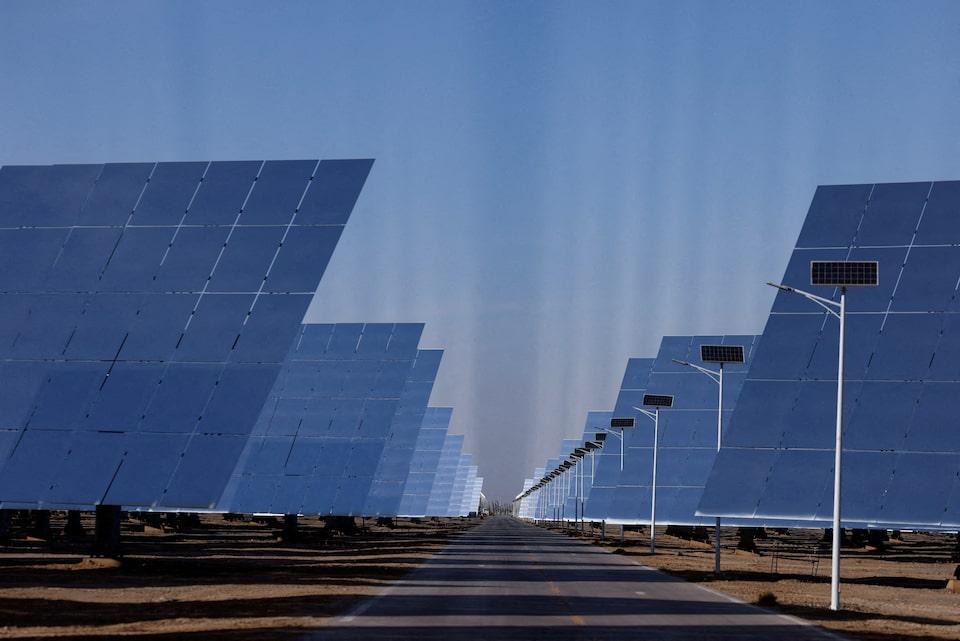
LONDON, Jan 14 (Reuters) - President Donald Trump’s bid to ignite American industry with cheap oil and gas is a high‑stakes gamble that, win or lose, will leave China the world’s leading low‑carbon technology powerhouse. These opposing energy strategies reflect deep geopolitical divides that will shape the contest between the world’s two largest economies for industrial supremacy in the coming decades. Sign up here. Trump has made no secret of his fondness for fossil fuels – and distaste for renewables. He’s slashed government support for electric vehicles and low‑carbon technologies, expanded oil drilling access, and loosened environmental rules. Washington’s recent ouster of Venezuela’s President Nicolas Maduro and subsequent push for U.S. firms to tap the country’s vast proven oil reserves – the largest in the world at 303 billion barrels, according to OPEC – offer the clearest signal yet of the administration’s intention to lock the U.S. economy into a fossil‑fuel‑driven future. This ambition was spelled out in the White House national security strategy released late last year. It argued that abundant U.S. oil, gas, coal and nuclear resources will “fuel reindustrialization” and preserve America’s edge in technologies such as artificial intelligence. The U.S., the world’s biggest economy and largest oil consumer, accounted for around one‑fifth of global demand in 2025, or some 20.6 million barrels per day. After a decade‑long shale boom, it is now also the top oil and gas producer. The U.S. is also now the largest liquefied natural gas (LNG) exporter, shipping over 110 million metric tons last year, or roughly a quarter of global trade. Given this access to massive, affordable energy supplies, it is understandable that the U.S. would double down on fossil fuels. But this strategy may be short-sighted, and not just because of the climate implications. The White House appears to be ceding the energy future to America’s biggest economic rival. CHINESE INDEPENDENCE America’s recommitment to a 20th‑century industrial model diverges sharply from Beijing’s effort to break its dependence on fossil fuels, which were the foundation of its economic ascent this century. Beijing’s latest five‑year plan underscores its drive for self‑reliance in energy, critical minerals, and advanced technologies such as semiconductors and artificial intelligence. To complete this ambitious shift, China has launched an economy‑wide electrification push and built entire industries to support an “electrostate,” becoming the unrivalled global leader in solar, batteries, and electric vehicles. EVs made up more than half of Chinese domestic passenger car sales last year, while Chinese manufacturers produced over 70% of the world’s EVs. Electric truck sales are also rising in China, steadily displacing diesel demand. The country is deploying renewable energy at breakneck speed. It installed more than 500 gigawatts (GW) of new solar and wind capacity last year, the largest single‑year buildout in history, according to government data. The International Energy Agency expects China to account for more than two‑thirds of global solar and wind additions in 2025. However, despite this massive renewables push, China is still highly reliant on foreign energy supplies. The country imported around 10.4 million bpd of oil in 2025, up from 6 million bpd a decade earlier, Kpler data shows. Oil imports continue to cover more than 60% of China’s consumption. Imports are expected to decline gradually as EV adoption rises, but China’s heavy reliance on overseas oil remains an Achilles’ heel, highlighting the urgency of Beijing’s strategic energy shift. Perhaps ironically, Washington’s Venezuelan gambit and its threatened military action against Iran may actually speed up this drive. The two countries collectively supply over 7% of China’s oil needs. Washington’s apparent willingness to disrupt these supplies will likely cement Beijing’s strategy. WHO WINS? Future U.S. administrations may reverse Trump’s policies, but even if they do, policy whiplash will hamper America’s ability to catch up with China in the race for new energy dominance. A fossil‑fuel‑centric strategy carries other risks as well, such as the simple fact that these resources are finite. Oil and gas fields get depleted, requiring constant reinvestment, raising the risk of price volatility. Renewables require heavy upfront investment and still require backup systems – often powered by gas or coal – to cover periods of low sun and wind. This can also trigger bouts of volatility. But renewables have far more potential upside and greater ability to benefit from technological breakthroughs. Perhaps most importantly, the administration’s direct intervention in favour of one particular energy source – and opposition to new technologies – marks a sharp break from the long‑standing U.S. credo of letting markets determine winners and losers. This approach has historically delivered lower costs and faster innovation, enabling the U.S. to become the reigning global superpower. If Trump’s gamble doesn’t pay off, that could change. Want to receive my column in your inbox every Monday and Thursday, along with additional energy insights and links to trending stories? Sign up for my Power Up newsletter here. Enjoying this column? Check out Reuters Open Interest (ROI), , opens new tabyour essential new source for global financial commentary. ROI delivers thought-provoking, data-driven analysis. Markets are moving faster than ever. ROI , opens new tab can help you keep up. Follow ROI on LinkedIn , opens new tab and X. , opens new tab https://www.reuters.com/business/energy/win-or-lose-trumps-fossil-fuel-gamble-crowns-china-clean-energy-king-2026-01-14/
2026-01-14 06:59
BEIJING, Jan 14 (Reuters) - China's trade with Russia in 2025 pulled back from a record level in 2024 and dropped for the first time in five years, Chinese data showed on Wednesday. The trade totalled 1.63 trillion yuan ($234 billion) and the decline followed a slide in demand in Russia for Chinese cars and a drop in the value of China's imports of Russian crude oil. Sign up here. China has thrown a major economic lifeline to Russia since it was hit by sanctions following its invasion of Ukraine in February 2022, buying Russian oil, coal and gas and selling goods from cars to electronics to its northern neighbour. Data from China's General Administration of Customs showed that two-way trade in yuan terms in 2025 fell 6.5% from a record 1.74 billion yuan in 2024. The downturn ended four consecutive years of growth. The last decline was in 2020 when COVID-19 related disruptions affected trade. Chinese exports to Russia last year dropped 9.9%, while imports from Russia slipped 3.4%. In dollar terms, the value of bilateral trade reached $228.1 billion, down 6.9% year-on-year. In December alone, China's exports to Russia grew by 2.2%, snapping an eight-month decline, while imports growth picked up sharply to 17.1%. RUSSIA EARNS LESS FROM CRUDE SUPPLIES AS PRICES FALL The latest data provided only headline figures in two-way trade. A more detailed breakdown will be released at a later date. But data for the first 11 months of 2025 showed that the value of China's crude oil imports from Russia fell 19.6% to 328.5 billion yuan, compared with the same period in 2024, amid falling oil prices, according to Reuters calculations. Meanwhile, China's vehicle exports to Russia in volume terms fell 46% year-on-year in January-November, according to the China Passenger Car Association, as Moscow raised the levy on Chinese cars that had flooded its market. Russia has sought to reverse the slowdown in bilateral trade. The two countries signed over 20 co-operation agreements covering energy, aerospace, artificial intelligence and agriculture in September when Russian President Vladimir Putin visited Beijing. The two strategic partners also gave their blessing to the Power of Siberia 2 pipeline, which could one day deliver an additional 50 billion cubic metres per year of Russian gas through Mongolia from the Arctic gas fields of Yamal. ($1 = 6.9751 Chinese yuan renminbi) https://www.reuters.com/world/china/chinas-2025-trade-with-russia-posts-first-decline-5-years-2026-01-14/
2026-01-14 06:51
Pakistan signs deal with World Liberty affiliate SC Financial Technologies Deal will explore 'emerging digital payment architecture' World Liberty CEO Zach Witkoff in Pakistan for talks Central bank plans digital currency pilot, virtual asset regulation ISLAMABAD, Jan 14 (Reuters) - Pakistan said on Wednesday it had signed an agreement with a firm connected to World Liberty Financial, the main crypto business of U.S. President Donald Trump's family, to explore using World Liberty’s USD1 stablecoin for cross-border payments. The Pakistan Virtual Asset Regulatory Authority said in a statement that a memorandum of understanding with SC Financial Technologies, a little-known company it described as an "affiliated entity" of World Liberty, would enable "dialogue and technical understanding around emerging digital payment architectures." Sign up here. The announcement represents one of the first publicly announced tie-ups linking World Liberty, a crypto-based finance platform launched in September 2024, and a sovereign state. It also comes amid a warming of ties between Pakistan and the United States. Reuters was the first to report that the deal had been signed ahead of the regulator's announcement. Under the agreement, SC Financial Technologies will work with Pakistan's central bank to integrate its USD1 stablecoin into a regulated digital payments structure, allowing the token to operate alongside Pakistan's own digital currency infrastructure, a source involved in the deal said. WORLD LIBERTY CEO VISITS PAKISTAN The memorandum was announced during a visit to Pakistan by World Liberty co-founder and chief executive Zach Witkoff, who is the son of U.S. special envoy Steve Witkoff. A government photograph showed Finance Minister Muhammad Aurangzeb and Witkoff signing the agreement, with Prime Minister Shehbaz Sharif and army chief General Asim Munir standing behind them. Other images from the meeting showed a wider Pakistani government delegation, including intelligence chief Lieutenant General Muhammad Asim Malik and crypto regulatory official Bilal bin Saqib, along with World Liberty co-founders Zak Folkman and Chase Herro. Witkoff is also the CEO of SC Financial Technologies. The company, registered in Delaware, co-owns with World Liberty the USD1 stablecoin brand, according to documentation on the stablecoin’s reserves from July 2025. David Wachsman, spokesman for World Liberty Financial, said in a statement to Reuters: “The agreement reached between the Government of Pakistan and SC Financial Technologies, a sister company of World Liberty Financial, could help ensure that the U.S. dollar will remain the world’s reserve currency. Pakistan will be exploring how a trusted, compliant U.S. dollar-denominated stablecoin would be used for digital payments and international remittances." Wachsman said that World Liberty Financial is not receiving financial compensation from the agreement. Aurangzeb, the finance minister, said: "Our focus is to stay ahead of the curve by engaging with credible global players, understanding new financial models, and ensuring that innovation, where explored, is aligned with regulation, stability, and national interest." Stablecoins - digital tokens typically pegged to the dollar - have ballooned in value in recent years. Under Trump, the United States has introduced federal rules widely seen as beneficial to the sector, and countries across the world are beginning to examine the potential role of stablecoins in payments and financial systems. World Liberty has fuelled a sharp increase in income for the Trump family business, known as the Trump Organization, including from foreign entities, in the first half of last year, Reuters reported in October. Last May, MGX, a state-controlled Abu Dhabi investment company, used the World Liberty stablecoin to buy a $2 billion equity stake in Binance, the world’s largest crypto exchange. The growth of the Trump family’s crypto initiatives as Trump oversees U.S. crypto policy constitutes a conflict of interest, government ethics experts have said. The White House has denied that any such conflicts exist. Trump and Steve Witkoff are both listed with the title "Co-Founder Emeritus" on World Liberty's website, with the footnote that they were "removed upon taking office." Witkoff's most recent financial disclosure, which he signed on August 13, 2025, lists both World Liberty Financial and SC Financial Technologies as assets, with no monetary value assigned. David Warrington, White House counsel, said in an emailed statement that Witkoff is "taking steps to divest from World Liberty Financial, notwithstanding his ability and willingness to recuse." "Mr. Witkoff, like all Administration officials, takes seriously his compliance with the government ethics rules," he said. "As Special Envoy for Peace Missions, he has not and does not participate in any official matters that could impact his financial interests." Pakistan has been exploring digital currency projects as it seeks to reduce cash usage and improve cross-border payments such as remittances, a key source of foreign exchange. It sees over $36 billion in annual remittance inflows, with an estimated 40 million crypto users and up to $300 billion in annual crypto trading volumes, the regulator's statement said. Pakistan's central bank governor said in July it was preparing to launch a pilot for a digital currency and is finalising legislation to regulate virtual assets. https://www.reuters.com/business/finance/pakistan-partner-with-world-liberty-financial-dollar-linked-stablecoin-source-2026-01-14/