2025-04-04 20:31
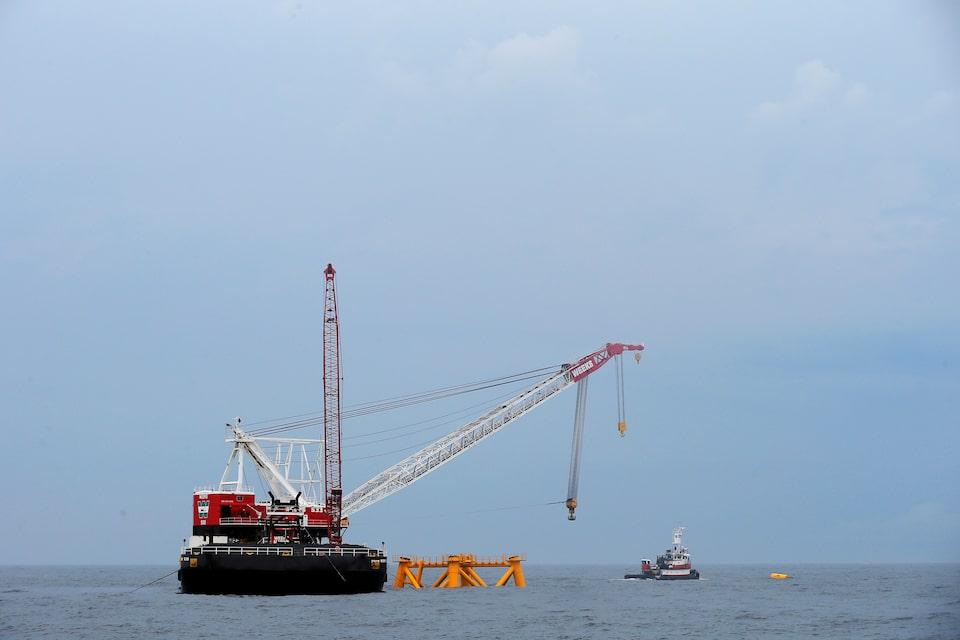
April 4 (Reuters) - Energy firms have slowed construction of offshore wind farms in the U.S. for various reasons in recent years, including, most recently, opposition from U.S. President Donald Trump's administration. Offshore wind was a key pillar of former President Joe Biden's promise that fighting climate change will create jobs and invigorate the economy. In 2023 and 2024, however, several offshore wind companies took billions in write-offs, impairments and other cancellation fees after determining they could no longer complete projects profitably due to rocketing construction costs, higher interest rates and supply chain snags. Sign up here. After Trump suspended new offshore wind leasing on his first day back in the Oval Office in January, several energy analysts said they did not expect any new offshore wind projects other than those already under construction to move forward over the next few years. There are four offshore wind farms in service and producing power in the U.S., and another four projects under construction that are expected to enter service from 2025-2027. There are also several projects in advanced development. Recently, some analysts have warned that projects already under construction may not be safe from attacks by the Trump administration. "With no new projects expected to be completed beyond those under construction (even those are at risk), the nascent industry is precariously positioned," analysts at U.S. investment bank Jefferies said in a note this week. Jefferies pointed to a planned lease review for projects under construction by the U.S. Secretary of the Interior, and to the Trump administration's planned update on ongoing litigation on April 23 relating to Virginia-based energy firm Dominion Energy's (D.N) , opens new tab offshore wind Biological Opinion (BO), a key environmental analysis. Dominion is building the 2,587-megawatt Coastal Virginia Offshore Wind project off Virginia and expects the roughly $10.7 billion project to produce first power in late 2025. In the Dominion lawsuit, some stakeholders have argued that the U.S. Bureau of Ocean Energy Management (BOEM) did not consider the cumulative impact on a species of whale from several offshore wind projects and that the risk of turbine failures was also not adequately considered. "We are confident that this project is not going to have adverse impacts on marine life, including North Atlantic right whales. We look forward to filing our response with the court in early May," a spokesperson at Dominion told Reuters in an email. In New York, a spokesperson for Community Offshore Wind said the company was waiting for a response from the New York State Energy Research and Development Authority (NYSERDA) on the state's fifth offshore wind solicitation in 2024. Community Offshore, which is a joint venture between units of German energy company RWE (RWEG.DE) , opens new tab and British energy company National Grid (NG.L) , opens new tab, said the construction timeline for the project was contingent on getting an Offshore Wind Renewable Energy Certificates (OREC) award from New York. Officials at NYSERDA, which said on its website that it expected to execute contracts from the fifth solicitation during the first quarter of 2025, were not immediately available for comment. In Massachusetts and Rhode Island, utilities negotiating contracts to buy power from offshore wind developers from a 2023 solicitation told state agencies this week that the date to execute those contracts was delayed from March 31 to June 30. That was just the latest of several contract delays for the 2023 solicitations, according to filings from Rhode Island power company Rhode Island Energy. Rhode Island Energy is a unit of Pennsylvania energy company PPL (PPL.N) , opens new tab. SouthCoast Wind, which is seeking power purchase agreements with utilities in Rhode Island and Massachusetts, said "SouthCoast Wind continues to support the deadline extension for contract execution." "The multi-state negotiations have been complex and ambitious; now they must also tackle uncertainty presented by federal policy," SouthCoast spokesperson Rebecca Ullman told Reuters in an email. SouthCoast is being developed by the Ocean Winds joint venture between units of Portuguese energy firm EDP's (EDP.LS) , opens new tab EDP Renewables (EDPR.LS) , opens new tab and French energy firm ENGIE (ENGIE.PA) , opens new tab. The following lists the projects that are in service, under construction and in advanced development: https://www.reuters.com/sustainability/climate-energy/us-offshore-wind-farm-projects-slow-trump-opposition-adds-hurdles-2025-04-04/
2025-04-04 20:27
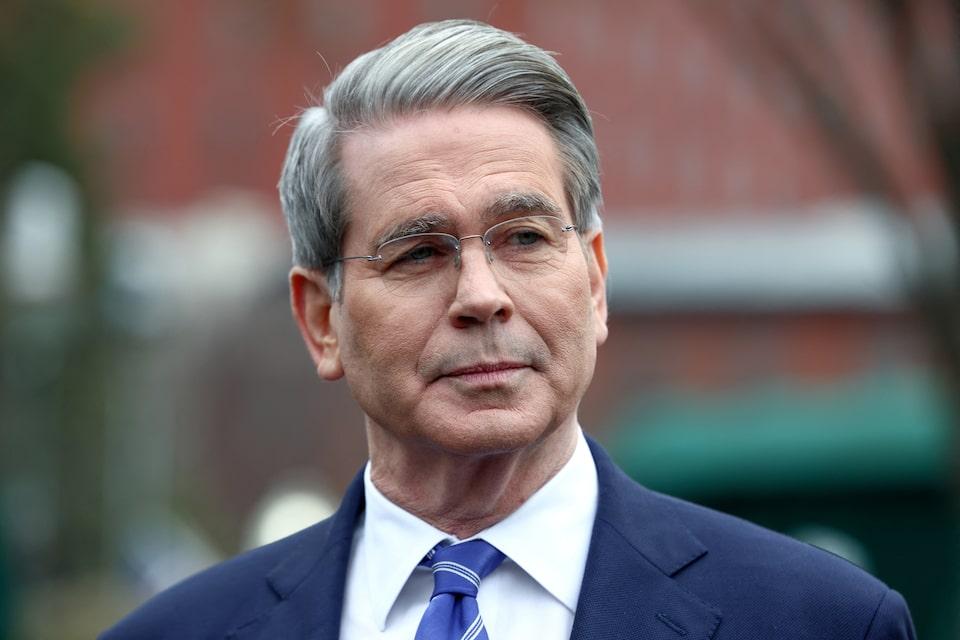
Bessent interview released as market selloff intensifies Stocks have lost 10% in two days Bessent pins selloff to emergence of China's DeepSeek AI tool Treasury secretary says Trump administration retains strong-dollar policy April 4 (Reuters) - The stock market plunge has more to do with the emergence this year of China's DeepSeek artificial intelligence tool than with President Donald Trump's policies, U.S. Treasury Secretary Scott Bessent said in an interview released on Friday that signaled little concern about the ongoing nosedive. "For everyone who thinks these market declines are all based on the President's economic policies, I can tell you that this market decline started with the Chinese AI announcement of DeepSeek," Bessent told conservative commentator Tucker Carlson. Sign up here. "If I were to analyze in my old hat, and this is the only time I'm going to talk about it ... what's happening with the market I'd say it's more a Mag 7 problem, not a MAGA problem," Bessent, who ran a hedge fund until being tapped as Treasury secretary by Trump, said. "Mag 7" refers to the shares of the so-called Magnificent 7 - a group of seven high-performing tech stocks that had helped drive the market higher before its recent selloff. MAGA refers to Trump's "Make America Great Again" political slogan. U.S. stocks have tumbled by around 10% in the two days since Trump announced a new global tariff regime that was more aggressive than analysts and investors had been anticipating. It is a drop that market analysts and large investors themselves have laid at the feet of Trump's aggressive push on tariffs, which most economists and the head of the Federal Reserve believe risk stoking inflation and damaging economic growth. Stocks did take a hit in late January when Chinese startup DeepSeek launched a free AI assistant that it says uses less data at a fraction of the cost of incumbent services. It resulted in a record one-day loss of nearly $600 billion in value from the shares of AI chipmaker Nvidia (NVDA.O) , opens new tab, one of the Magnificent 7. But the market soon found its footing again and by mid-February, the benchmark S&P 500 Index (.SPX) , opens new tab had regained a record-high level. Then stocks turned south again starting in late February after a widely followed survey of consumers showed households growing broadly pessimistic about the economy's prospects and fearful that Trump's push for tariffs would drive up inflation. A raft of other surveys of businesses and consumers since then have flagged similar concerns, and other data has shown the pace of activity has slowed over the course of the first quarter of 2025. The S&P has lost nearly 14% since February 19, and nearly $10 trillion of U.S. stock market value has been erased. Bessent is only the latest Trump administration official to shrug off the plunge in markets, which has intensified following Trump's announcement on Wednesday of a global baseline import tax of 10% and much higher rates for goods from dozens of countries. Commerce Secretary Howard Lutnick has been dismissive of the drop as well. Trump himself on Friday retweeted a social media post bearing the caption "Trump is Purposely CRASHING The Market" and featuring images of the president pointing at a large downward red arrow and of him signing executive orders at the White House. Meanwhile, Bessent also told Carlson the administration retains a "strong dollar" policy and dismissed assertions by some analysts that the tariff drive was a deliberate effort to weaken the dollar to make U.S. goods more competitive on global markets. "No one should listen to anyone in the markets talk about the U.S. dollar other than President Trump or myself," Bessent said. "We are the only ones that speak for this administration, the United States government on dollar policy." "We have a strong-dollar policy and we are putting in all of the necessary ingredients to make sure the dollar is strong over the long run," he said. The dollar has shed nearly 6% of its value against major trading partners' currencies since Trump's inauguration on January 20. https://www.reuters.com/markets/treasurys-bessent-market-drop-mag-7-problem-not-maga-one-tucker-carlson-2025-04-04/
2025-04-04 19:52
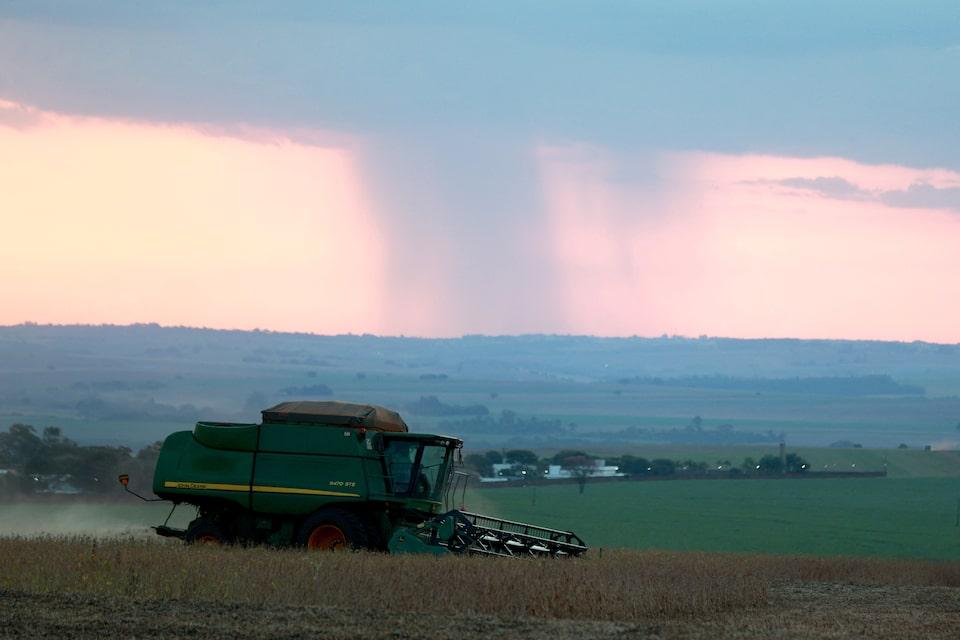
China imposes sweeping 34% tariffs on all US imports Blocks US agricultural exports, with soybean trade hardest hit Brazil emerges as clear winner US soybean futures plunge 4% BEIJING/SINGAPORE, April 4 (Reuters) - China's retaliation on Friday against new U.S. tariffs is poised to accelerate Beijing's move towards alternative suppliers for agricultural goods including Brazil, a shift that began during the trade war of U.S. President Donald Trump's first term. Beijing unveiled a slew of countermeasures, including additional duties of 34% on all U.S. goods, which are on top of the 10-15% tariffs placed on roughly $21 billion worth of agricultural trade in early March. Sign up here. "This is going to cost the U.S. a lot of export business," Jack Scoville, vice president of the Chicago-based Price Futures Group, said. "We're pissing off everybody. That's the problem. Where are we going to turn if we've slapped everybody with tariffs?" The most-active soybean contract on the Chicago Board of Trade (CBOT) settled down 34-1/2 cents to $9.77 a bushel, a 3.4% decline from Thursday and its lowest price on a continuous chart for 2025. "It is like shutting down all U.S. agricultural imports. We are not sure if any imports will be viable with 34% duty," said a Singapore-based trader at an international trading company which sells grains and oilseeds to China. A European grains trader said the European Union, which has also vowed to retaliate, was also likely to put tariffs on U.S. soybeans. "It's all about soybeans. A major concern is if there is no agreement before the new crop for U.S. soy," the trader said. "As a big picture conclusion, all this trade war is bearish U.S. ags and bullish other origin ags," the trader said. The March levies have accelerated a pivot away from U.S. soybean imports and shifted demand to Brazil, where a bumper harvest puts it on track to deliver a record-breaking second-quarter import surge for China. "Brazil will be by far the main beneficiary, the biggest supplier that can replace U.S. soybeans to China. But others could benefit too, including Argentina and Paraguay. On wheat, Australia and Argentina should benefit," said Carlos Mera, head of Agricultural Market Research at Rabobank. Sol Arcidiacono, head of Latam grains sales at HedgePoint Global Markets, said local prices for soybeans in South America will strengthen over the full year, despite seasonality and record crops as the trade war escalates. She added that current geopolitics will likely drive farmers to produce more soybeans, mainly in Brazil, where expansion had been slowing lately. On Thursday, a day after Trump's tariffs announcement, Brazil port premiums reached a dollar per bushel over Chicago benchmark prices. Trump unveiled a 10% baseline tariff on all imports from April 5 and higher duties on certain other countries including 34% on China, pushing the global trade war into overdrive. China remains the largest market for U.S. agricultural products, but imports of U.S. farm goods dropped for the second consecutive year, falling to $29.25 billion in 2024 from $42.8 billion in 2022. Also on Friday, China cancelled some documentation needed to import sorghum from C&D (USA) Inc., which is Chinese-owned, citing food safety problems. It also cancelled import documents of poultry meat and bone meal from American Proteins, Mountaire Farms of Delaware and Darling Ingredients. Additionally, it suspended imports of poultry products from Mountaire Farms of Delaware and Coastal Processing. https://www.reuters.com/markets/commodities/china-retaliation-us-farm-goods-hits-soybeans-bolstering-brazil-2025-04-04/
2025-04-04 19:44
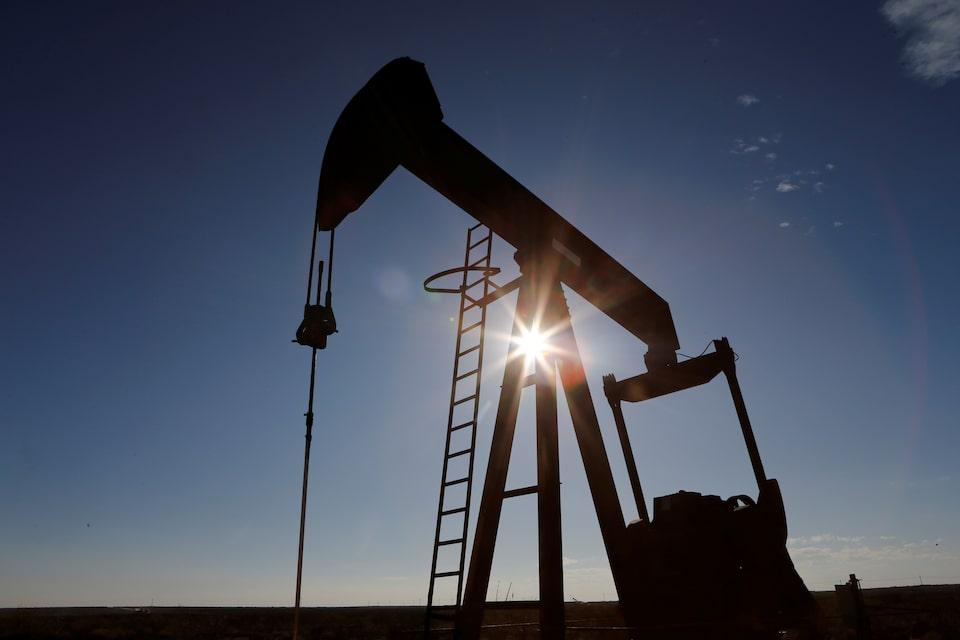
LONDON/CHICAGO April 4 (Reuters) - Oil prices plunged nearly 8% on Friday to the lowest level since 2021, while copper, soybeans and other commodities also fell as China retaliated against U.S. President Donald Trump's aggressive tariffs. Safe-haven gold was down for a second day, swept up in a broader market selloff as major equities indexes plunged and recession fears swelled. Sign up here. Beijing put forward a 34% additional levy on all U.S. goods, hitting back after Trump announced a 10% minimum tariff on most U.S. imports, with significantly higher duties for dozens of countries including China. "This is the first very explicit escalation from China, they are not backing down, they are upping the game," said Bjarne Schieldrop, chief commodities analyst at SEB. Schieldrop expected further retaliation from Trump, who said on Friday that China "played it wrong" and vowed not to change his policies. The accelerating tensions further drove fears that the tariffs could lead to a global trade war, weighing on economic growth and curbing demand for key commodities. The levies by the U.S. excluded energy, but the retaliatory move by China encompasses all U.S. goods, as well as export curbs on some rare earths. The U.S. is a major energy exporter and sells oil and LNG to China, according to data from analytics firm Kpler and the U.S. Energy Information Administration. Wall Street benchmarks sold off heavily, with the Dow Jones set to reach a correction while the Nasdaq was on track to enter a bear market. Brent futures dived $4.53, or 6.46%, to $65.63 a barrel by 2:41 p.m. ET (1841 GMT). U.S. West Texas Intermediate crude futures were down $4.93, or 7.36%, to $62.02. The oil benchmarks were set for the lowest close since the middle of the COVID-19 pandemic in April 2021. SOYBEANS, GRAINS Soybean futures on the Chicago Board of Trade fell more than 3% on Friday as China's tariffs on U.S. goods were expected to bring trade in the oilseed between the countries to a halt. China, the largest soybean buyer, was seen accelerating purchases from rival supplier Brazil. CBOT soybeans ended down 3.4% at $9.77 a bushel, the lowest since late December. CBOT wheat fell 1.3% to $5.29 a bushel while corn bucked the broader weakness to close up 0.6% at $4.60-1/4 a bushel as top importer Mexico was excluded from Trump's sweeping tariffs this week. Demand for U.S. agricultural products already came under pressure from a trade war during Trump's first term in 2018. Beijing raised duties last month on $21 billion worth of U.S. products in response to Washington's earlier round of tariffs on Chinese goods. Base metals sold off, with London Metal Exchange three-month copper down 3%, its biggest daily slide since the early days of the pandemic in 2020. Aluminum , already subject to a 25% U.S. import tariff, was down 3% at its lowest since September. Spot gold was down 3% as traders liquidated their bullion positions following wider market selloffs. https://www.reuters.com/markets/commodities/oil-plunges-lowest-since-pandemic-natural-gas-soy-slump-china-retaliates-2025-04-04/
2025-04-04 19:37
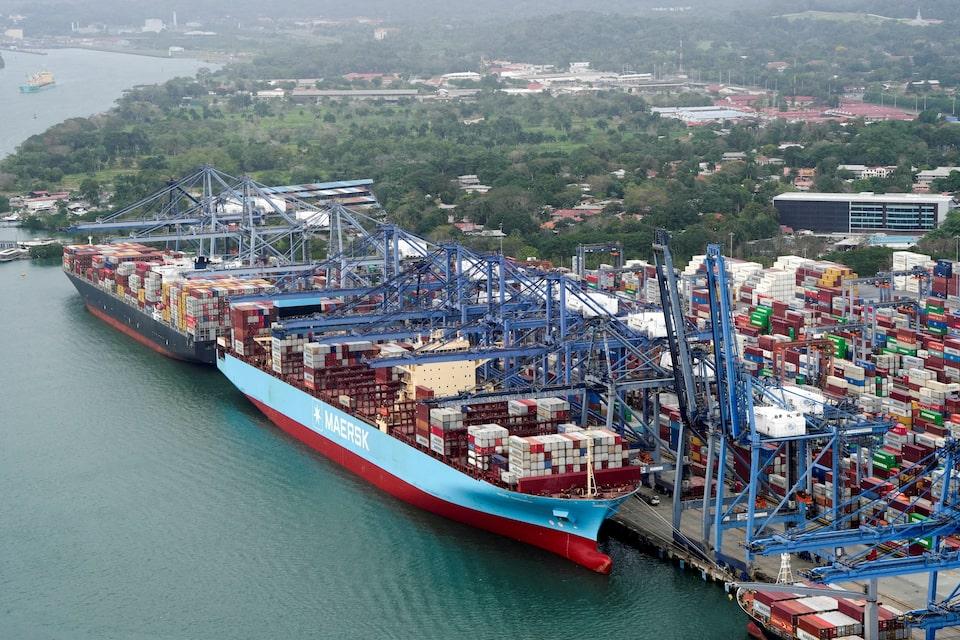
April 4 (Reuters) - The Panama Canal has authorized the opening of a bidding process for a new pipeline that will transport liquefied petroleum gas (LPG) across the interoceanic waterway, its authority said on Friday. Since Panama's Supreme Court last year ruled the return of areas near the canal to its administration, the planning of projects to expand its trans-shipment and storage capacity has accelerated. Sign up here. The pipeline is set to allow LPG vessels to discharge at one end of the canal, while other tankers can pick up the cargo at the other end, reducing traffic of vessels through the waterway. Japan's purchases of U.S. LPG will be helped by the project, the canal's head Ricaurte Vasquez said last month. The canal will seek the participation of companies technically and commercially qualified to execute the pipeline's development, and eventually to operate it, it said in a release. "This complementary activity will be incorporated into the sustainable development of the Panama Canal's West Bank route, which includes activities and alternatives to transporting products by sea," it added in the release. Following approval by the board of directors, bids will begin to be received in the coming months, the canal's authority told Reuters. https://www.reuters.com/business/energy/panama-canal-open-bidding-lpg-pipeline-authority-says-2025-04-04/
2025-04-04 18:48
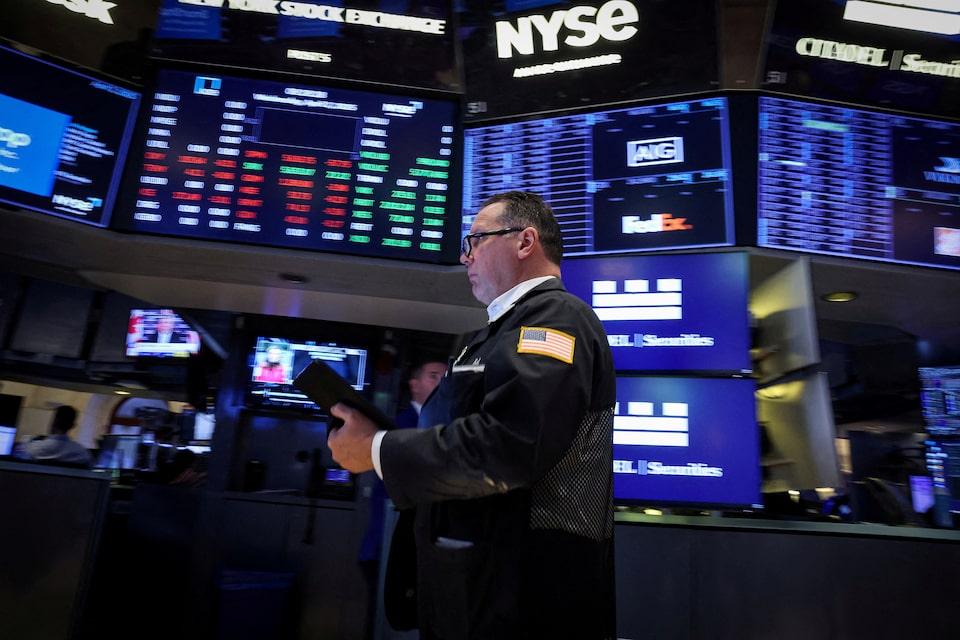
Wall Street 'fear gauge' closes at 5-year high Nasdaq enters bear market as stocks slump over 10% in two days Euro volatility spikes, dollar swings amid tariff news FX and bond market volatility jump US sovereign credit default swaps on the rise NEW YORK, April 4 (Reuters) - Alarm about the fallout from President Donald Trump's sweeping tariffs gripped global financial markets, with Wall Street's fear level at a five-year high while financial executives expressed shock and worry about economic growth. Trillions were wiped off stock market values as investors said they were fearful about the risk of recession ahead. U.S. stock markets slumped more than 10 percent in two days, with the Nasdaq Composite now in a bear market, as China imposed fresh tariffs on all U.S. goods, sparking worries of an extended global trade war. Sign up here. The tariffs prompted "shellshock" among business leaders weighing the potential economic damage, a senior financial executive said. Another executive described a typical industry response to the announcements: "Oh my God, terrible!" Both executives declined to be identified discussing the policies. The Cboe Volatility Index (.VIX) , opens new tab, an options-based gauge of stock investors' anxiety about the market's near-term outlook, jumped 15.29 points to end at 45.31, its highest close since April 2020. "A VIX at 40 is a sign of fear for sure," said Joe Tigay, portfolio manager for Rational Equity Armor Fund. "Usually you see a 40 when there's something more than the usual selloff ... some sort of credit risk, margin risk, something that could cause a contagion that could spill over and across to other asset classes," Tigay said. Investors, who have been battered by a sharp selloff this year - the S&P 500 is down nearly 14% for the year - have been keeping an eye on the volatility gauge as an indicator of market stress. "Tariff uncertainty is likely to rattle markets for the foreseeable future," said Jeff O'Connor, head of market structure at Liquidnet. Friday's 6% S&P 500 drop brought the index close to the 7% circuit breaker threshold that would have triggered a 15-minute trading halt, intended to pause panic selling to avoid a downward stock-market spiral. Trump's team has characterized the market turbulence as an adjustment that would prove beneficial in the long run, with Treasury Secretary Scott Bessent linking the selloff to the emergence of China's DeepSeek artificial intelligence tool earlier this year. The selloff was broad with everything from large-cap to small-cap stocks hemorrhaging. An index of expected stock market correlation closed at a 2-year high on Friday, underlining investors' view that stocks will continue to gyrate in sync. (.COR1M) , opens new tab FEAR IS EVERYWHERE On Friday, the jump in anxiety was broad with no market spared. In currency markets, euro one-month implied volatility shot up to a two-year high of 10.45 as the common currency fell about 1% against the dollar. The greenback, which slumped to a six month low against a basket of currencies on Thursday, has been smacked around by rapidly flowing news on Trump's tariffs and countermeasures from other countries. "FX pricing has swung wildly and the dollar's movement has been the opposite of smooth," said Helen Given, director of trading at Monex USA in Washington. Meanwhile, U.S. Treasury yields fell, with the yield on the benchmark U.S. 10-year Treasury note falling to a six-month low of 3.86%, slipping below the widely watched 4% mark. Safe-haven buying of Treasuries has sent yields, which move inversely to prices, down sharply in recent weeks, driven by concerns about recession and shifting expectations about potential Federal Reserve policy. Trump's new tariffs are "larger than expected" and the economic fallout, including higher inflation and slower growth likely will be as well, Federal Reserve Chair Jerome Powell said on Friday. Trump on Friday called on Powell to cut interest rates, saying it was the "perfect time" to do so. Investors do not expect volatility to subside quickly. "Until there's actually a change in the policy or evidence of real negotiations going on, the market's going to be under pressure," said Kathy Jones, chief fixed income strategist at the Schwab Center for Financial Research in New York. U.S. high yield corporate bond spreads, an important indicator of financial conditions, surged to 401 basis points as of late on Thursday, their highest since November 2023, as global markets swooned. The short-term cost of insuring exposure to U.S. government debt has climbed, with spreads on U.S. six-month credit default swaps (CDS) - market-based gauges of the risk of a default - widening to 47.48 basis points as of Thursday, the highest since mid-November 2023, according to LSEG data. Other indicators of market stress reflect the nervousness that high volatility brings, but no signs yet of full-on panic. U.S. two-year swap spreads - the difference between two-year swap rates and the two-year Treasury yield - were set for their biggest one-day contraction on Friday since the March 2023 regional banking crisis. Still, equities remained at the center of the market turmoil. Global hedge funds and levered exchange-traded funds (ETFs) dumped more than $40 billion of stocks at a breakneck pace, growing increasingly bearish, according to bank notes to clients on Friday. JP Morgan said in a note that volatility targeting portfolios had between $25 billion and $30 billion in equities to sell in the coming days, as they unwind positions to reduce risk. Meanwhile, retail investors, following a "buy the dip" strategy, bought $4.7 billion in stocks on Thursday, the highest level over the past decade, JP Morgan said in a note. "Given the 'elephant in the room' of tariffs which haven't led to any negotiation thus far, it's nearly impossible to call a bottom without evidence of proof," Mark Newton, head of technical strategy at Fundstrat Global Advisors, said in an note. https://www.reuters.com/markets/wall-street-fear-gauge-jumps-8-month-high-stocks-sell-off-2025-04-04/