2025-04-04 18:15
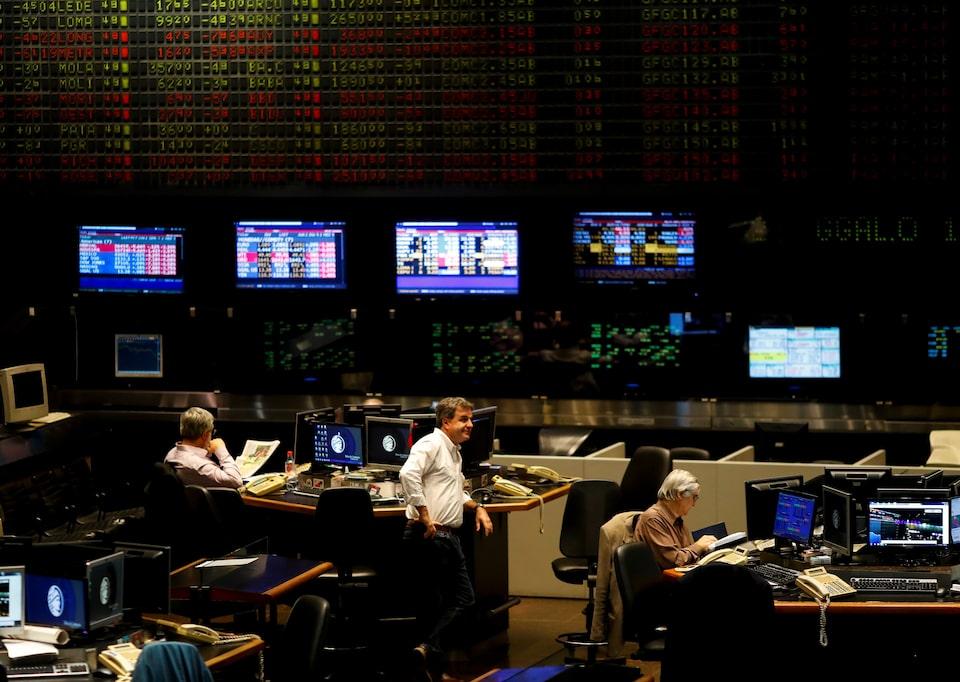
Latin America mostly spared from Trump's tariffs, boosting investor interest Brazil and Mexico see stock and currency gains amid trade shifts Emerging markets outperform due to improving fundamentals and attractive valuations NEW YORK, April 4 (Reuters) - Latin American stocks and bonds could be unlikely winners as the Trump administration's trade war so far mostly spared the region, while it triggered a market rout on Wall Street that has sent investors on a hunt for non-U.S. assets. The Nasdaq stock index (.IXIC) , opens new tab opened Friday more than 20% below its December record high and Wall Street's "fear gauge" hit an eight-month high. The dollar (.DXY) , opens new tab touched a six-month low this week. Sign up here. Meanwhile, the outperformance of some corners of emerging-market equities and currencies, and the resilience of bonds, have not gone unnoticed. Latin America was mostly spared the imposition of additional tariffs in U.S. president Donald Trump's announcement this week that upended decades of trade policy, partly because most of the region has a trade deficit with the world's largest economy. Despite a massive Friday selloff, the MSCI Latam stocks gauge (.MILA00000PUS) , opens new tab is beating the S&P 500 (.SPX) , opens new tab by more than 20 percentage points so far in 2025. The recent returns and a rethinking of global trade could bring new types of investors to Latin American assets, according to Kathryn Exum, co-head of sovereign research at Gramercy. "Stepping back, we're obviously in a new paradigm for trade and a reorganization of global trade. Assuming that you end up with more regionalized blocks of trade, Latin America would be a winner in that regard," she said. "Perhaps it starts to increase flows," she added. "Whether it's FDI (foreign direct investment) flows or portfolio flows will depend on the country at hand, and whether we're talking about short-term or over the medium term." Evidence of a shift may be found in Brazil and Mexico, the region's largest economies by far. Stock markets in both countries have risen this year, and their currencies are up against the dollar. Economists said Brazil is better placed than most countries to deal with tariffs, while Mexico's preferred treatment from a U.S. trade standpoint is expected to continue. A shift toward Latam follows months of volatility on Wall Street as the prevailing market view of U.S. assets as the only destination was under review, and investors realigned growth expectations in the U.S. and globally. "Emerging Market assets in general are outperforming during this period of volatility, and we attribute this to a mixture of improving fundamentals, favorable technical factors, and attractive relative valuations," said Shamaila Khan, head of fixed income for emerging markets and Asia Pacific at UBS. "There's also a growing sentiment among investors questioning U.S. exceptionalism, which is likely to drive diversification flows towards EM assets." Yet Friday’s market selloff, triggered by counter tariffs from China, is a reminder that no one would be spared if the global economy goes into recession. The size of the Latin American stock market is a limitation, as the top 10 companies in the regional MSCI index combine for a market capitalization of near $230 billion, while the market cap of Apple (AAPL.O) , opens new tab alone sits near $3 trillion. In addition, Latin America's idiosyncrasies could also prove a barrier to more investment, said Samy Muaddi, head of EM fixed income at T. Rowe Price. "While Latin America was less directly impacted (by U.S. tariffs), any country running twin deficits in a period of tightening financial conditions could suffer from collateral damage." https://www.reuters.com/markets/latam-assets-may-receive-trade-war-boost-investors-say-2025-04-04/
2025-04-04 18:08
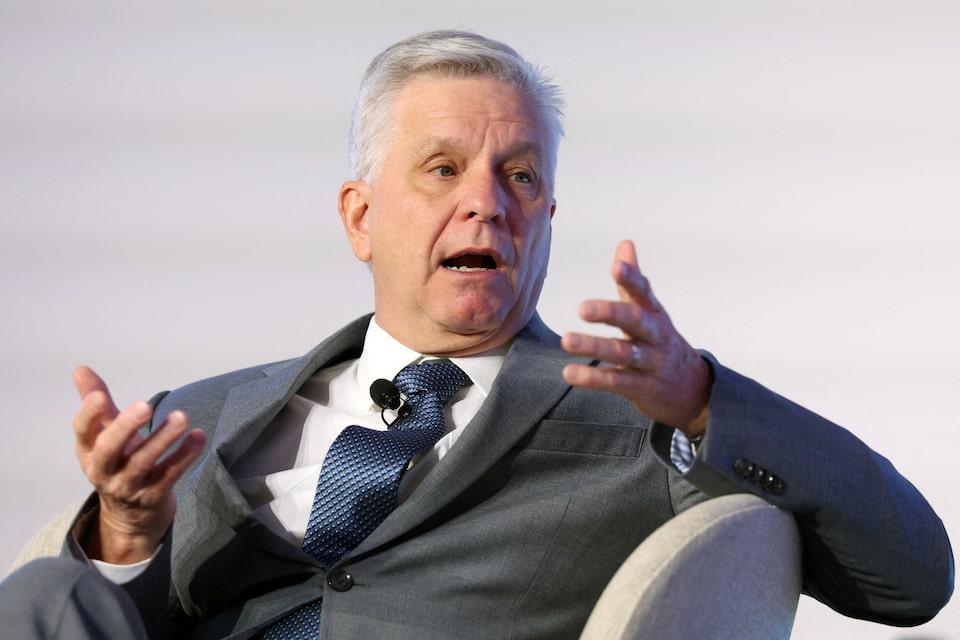
April 4 (Reuters) - Federal Reserve Governor Christopher Waller said on Friday that stablecoins are a good thing for the U.S. payments system, but he doubts the financial system can support a large number of these assets. "I'll say I'm a personal, big advocate of stablecoins," Waller said at a New York Fed event. "I have been saying this for over three-plus years now, about how this could bring competition, efficiency and speed into the payments system." Sign up here. "Do I think there's going to be 100 stablecoins circulating after legislation happens? I don't think so," he added. Waller is leading the work on payments system issues for the U.S. central bank, a job he acknowledges would have at one point been grim but is now "fascinating" given the level of innovation happening in the sector. He noted "if you had told the (Fed) governor 25 years ago they had to oversee the payments committee, they'd put a gun in their mouth." Waller again noted that he sees no need for the Fed to adopt its own fully digital dollar and said that it's best when the private sector leads payments system innovation. "I prefer to let the private sector solve these problems," Waller said. "It's not my job as an unelected bureaucrat to tell everybody how they should do things," he said, adding that the Fed's role is to "convene the industry together to think about what the problems are" and how they can be solved. Waller also reiterated that the challenge of speeding up the payments system is that everyone wants to get paid quickly but not everyone wants to send the cash as quickly. https://www.reuters.com/technology/feds-waller-stablecoins-bring-benefits-payment-system-2025-04-04/
2025-04-04 16:06
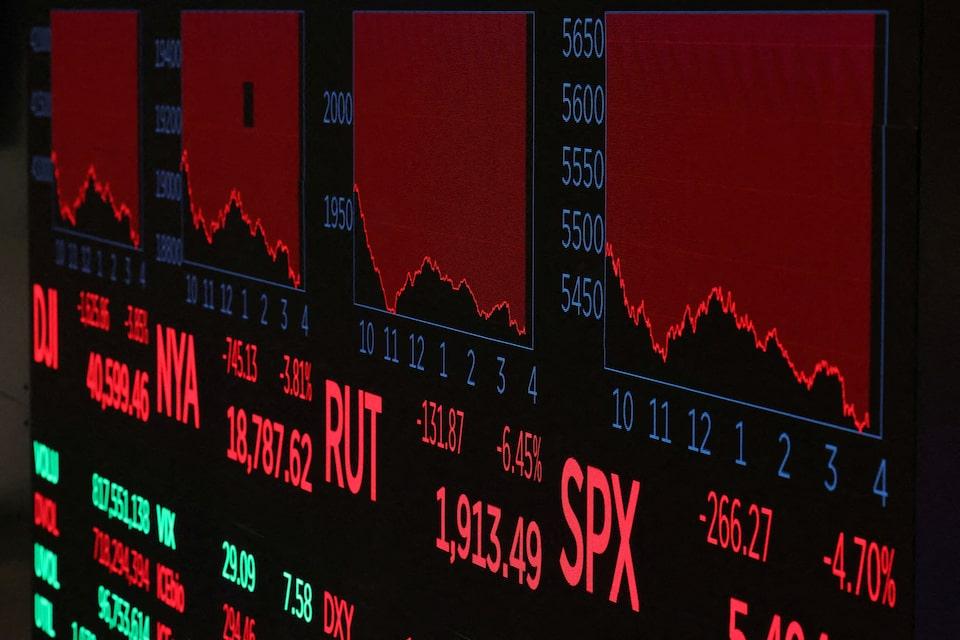
Trump tariffs spark rout across world markets Warning signals flashing but signs of distress so far contained Some $5 trillion wiped off S%P 500 companies' stock value LONDON, April 4 (Reuters) - Global markets have been sucked into a downdraft after U.S. President Donald Trump's sweeping tariffs, setting investors' go-to warning lights flickering but not yet flashing red. S&P 500 companies have shed $5 trillion in stock market value, an all-time two-day plunge for the benchmark, surpassing a two-day loss of $3.3 trillion in March 2020, when the pandemic ripped across global markets. Sign up here. So far, indicators of market stress reflect the nervousness that high volatility brings, but no signs yet of full-on panic. VIX ON THE MOVE Wall Street's closely-watched fear gauge, the VIX volatility index (.VIX) , opens new tab, closed at a five-year high on Friday, a sign of elevated anxiety. But even after this week's spike, the VIX - at around 40 points - remains well below levels seen during the COVID crisis and in 2008. The MOVE bond index (.MOVE) , opens new tab, the benchmark for rate volatility, advanced to 125.71 on Friday, the highest since the November presidential election. That level reflected expectations Treasury yields across most maturities will move an average of 8 basis points (bps) per day in either direction over the next 30 days. BONDS SHINE One classic indicator of market stress is investors piling into safe-haven government bonds and so Friday's fall in U.S. two-year Treasury yields, which at one point dropped 20 bps, and the 15 bps fall in German Bund yields are notable , . Over the last two days, two-year Treasury yields have fallen 26 bps, their biggest two-day move since August. Treasuries gave up some gains on Friday, pushing yields off their lowest levels. Still, analysts said the world's biggest government bond markets appeared to be functioning well. "There are no concerns right now on that front (trading conditions), it's all very orderly. There’s no stress in that sense," said PIMCO fund manager Konstantin Veit. BANKS WOBBLE Japanese megabanks ended the week with the biggest losses since 2008 in one of the markets' most unsettling signals so far about the consequences of Trump's trade war. European and U.S. banks slumped over 8% and 7% respectively on Friday (.SX7P) , opens new tab, (.SPXBK) , opens new tab and the cost of protecting against bank defaults has risen. "Sentiment is driving bank equities down, there’s profit taking, there's worries about global growth," said Altaf Kassam, Europe head of investment strategy and research, State Street Global Advisors. "But it doesn't feel like a genuine credit or liquidity crunch right now." CROSS-CURRENCY BASIS SWAPS These derivatives measure non-U.S. investor demand for the dollar, which is often the safe haven of choice in times of turmoil. This dynamic is not playing out at all right now, as investors shun the dollar and snap up the yen and the Swiss franc. Spreads for the euro have narrowed this week, to around 4.25%, from closer to 8% last week, but this is roughly where the spread was in mid-March. Spreads for the yen and the pound are often heavily influenced at this time of year by fiscal year-end currency flows and have shown similar stability. SWAP SPREADS One measure of strain in the bond market is swap spreads, which capture the premium on the fixed side of an interest-rate swap, which investors use to hedge against rates risk relative to bond yields. The pressure building in the U.S. bond market is starting to become apparent. U.S. two-year swap spreads - the difference between two-year swap rates and the two-year Treasury yield dropped to -22 basis points, that's the tightest since November . Tighter spreads meant the gap between Treasuries and swaps is more negative. Two-year notes dropped as much as 26 bps on Friday to 3.465%, the lowest since September 2022. In times of market panic, long-term investors tend to hedge their exposure in the swaps market to position for lower interest rates in a sign of concern over the sharp sell-off in stocks. European swaps were more muted. The two-year spread hit its widest since October 2024, at some 20 basis points, but held below the 75 bps seen in the March 2023 crisis. JUNK BOND SPREADS U.S. and European junk bond spreads, which reflect the premium investors get for betting on risky debt, rather than government bonds, have blown out to multi-month highs. These risky assets, which typically outperform other assets when confidence is running high, are often the first assets investors ditch when trouble appears. The iTRAXX Crossover Index an index of five-year European junk bonds hit 380 bps on Friday, the most since November 2023, its biggest two-day jump since March that year. For comparison, it hit 500 in 2020 and topped 1,000 at one point in 2008. The ICE BofA U.S. High Yield Index (.MERH0A0) , opens new tab is heading for its largest weekly rise since January 2024 for an effective yield of 8.1%, again, well below 2008's 22%. https://www.reuters.com/markets/global-markets-stress-graphic-pix-2025-04-04/
2025-04-04 15:34
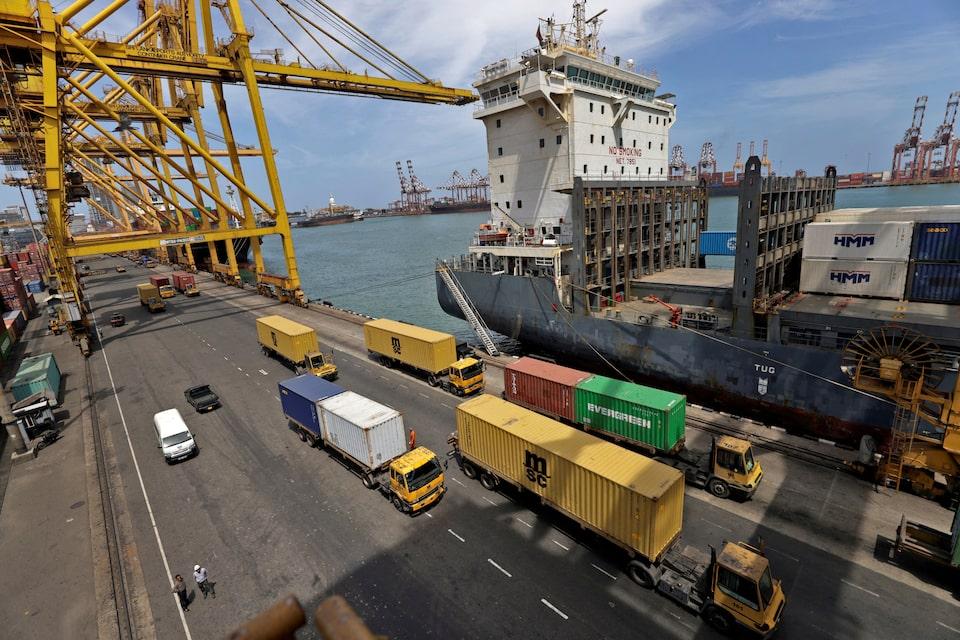
NEW DELHI, April 4 (Reuters) - Sri Lanka is ready to engage with the United States in strengthening trade relations, the island nation said on Friday, committing to substantially reduce tariff and non-tariff barriers that hinder trade and investment. U.S. President Donald Trump's government imposed a 44% tariff, which will affect about $3 billion of exports, Sri Lanka's finance ministry said in a statement. Sign up here. Sri Lanka is concerned the tariffs will hurt its economy, which is recovering from a severe financial crisis triggered by a shortfall of dollars three years ago. "Considering our export exposure and potential slowdown in global demand, we are concerned that our recovery path could be constrained," the statement added. Supported by a $2.9 billion bailout from the International Monetary Fund (IMF) the island nation posted growth of 5% last year. https://www.reuters.com/markets/asia/sri-lanka-says-it-is-committed-substantially-reduce-tariff-non-tariff-barriers-2025-04-04/
2025-04-04 15:18
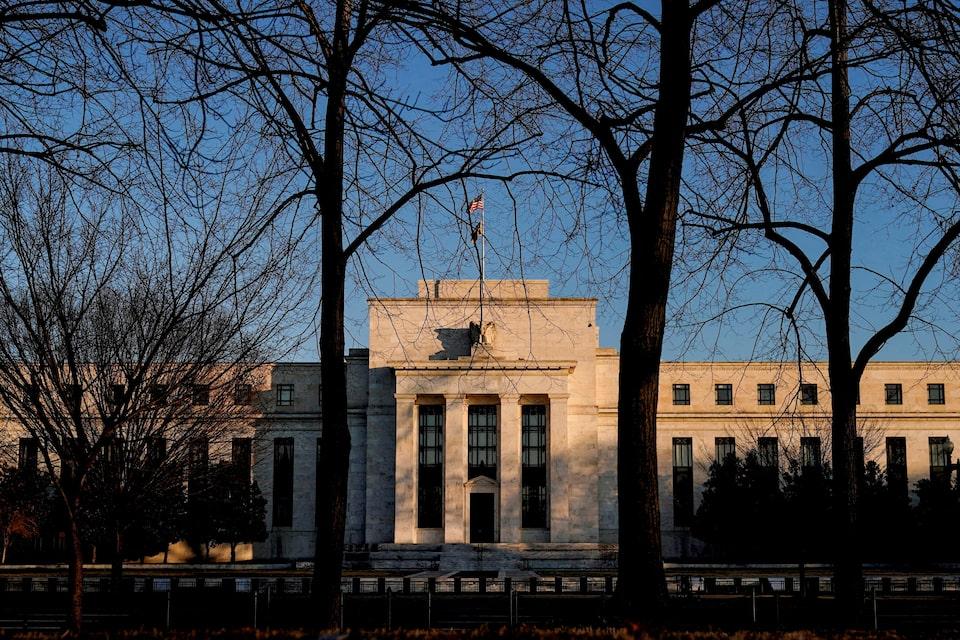
WASHINGTON, April 4 (Reuters) - U.S. President Donald Trump on Friday called on Federal Reserve Chairman Jerome Powell to cut interest rates, saying it was the "perfect time" to do so. "CUT INTEREST RATES, JEROME, AND STOP PLAYING POLITICS!," Trump said on Truth Social. Sign up here. https://www.reuters.com/world/us/trump-says-perfect-time-fed-cut-interest-rates-2025-04-04/
2025-04-04 15:14
April 3 (Reuters) - The Nasdaq looked set to confirm a bear market on Friday, down more than 20% from its record high, as China and the U.S. entered a tit-for-tat tariff war that raised recession fears and clouded the outlook for tech companies spearheading the AI revolution. The tech-heavy index, home to six trillion-dollar market cap companies, hit a record closing high of 20,173.89 on December 16, but has struggled since the start of the year. Fears of a potential slowdown in AI spending had pushed it into correction territory earlier last month. Sign up here. The index (.IXIC) , opens new tab was last down 3.6% on Friday, after China announced additional tariffs of 34% on U.S. goods in response to U.S. President Donald Trump's heavy levies on Wednesday. If the U.S. tariffs went into place at current form, "overall tech earnings would come down 15% at least, the supply chain will be a Rubik's Cube rivaling Covid days, and the economy would go into a recession/stagflation," said Wedbush analyst Dan Ives. The other indexes too have been hammered. The blue-chip Dow (.DJI) , opens new tab was on track to confirm a correction on Friday, a 10% drop from its record closing high, while the benchmark S&P 500 Index (.SPX) , opens new tab is down 15.3% from its all-time closing high. An ETF tracking the Magnificent Seven stocks, the heavyweight tech adjacent names that have powered Wall Street's rise to record levels in recent years, has slumped 27.6% from its December record high. Apple (AAPL.O) , opens new tab, the world's most valuable listed company, is down 12% since the new U.S. levies were announced, as its major manufacturing production base, China, faces an aggregate 54% tariff rate. The other big tech stocks have also tumbled. Including Thursday's losses, Google-parent Alphabet (GOOGL.O) , opens new tab is down 4.5% and Microsoft (MSFT.O) , opens new tab 2.6%. Meta Platforms (META.O) , opens new tab has slumped 12.4% and Amazon (AMZN.O) , opens new tab has shed 10.6% in the same period. "Companies like Apple, Microsoft, Alphabet, Amazon, and Nvidia — already navigating regulatory scrutiny and supply chain recalibrations — now face an additional layer of complexity because China is not only a vital consumer market but also a critical node in production," said Michael Ashley Schulman, chief investment officer at Running Point Capital. "A 34% tariff will force firms (big tech and small tech) to rethink pricing, margins, and even geographic focus, as shifting final assembly or diversifying markets becomes more urgent," he said. Tesla (TSLA.O) , opens new tab has plunged 13.1% since Wednesday's close as the electric-vehicle pioneer grapples with slowing sales and relentless protests against CEO Elon Musk's involvement in the Trump administration and right-wing politics in Europe. Chipmaker Nvidia has shed 13.6%, as the biggest winner of the AI boom grapples with worries over slowing spending on data centers. "The concept of taking the U.S. back to the 1980s 'manufacturing days' with these tariffs is a bad science experiment that in the process will cause an economic Armageddon in our view and crush the tech trade, AI Revolution theme, and overall industry in the process," Ives said. Shares of PC makers and server makers have tumbled as electronics, the second biggest U.S. imports, primarily come from countries with some of the steepest tariff rates. PC makers Dell Technologies (DELL.N) , opens new tab and HP (HPQ.N) , opens new tab are down 22.3% and 19.1%, respectively, this week. Server maker Hewlett Packard Enterprise (HPE.N) , opens new tab has lost 21.8% and Super Micro Computer about 14.4% week to date. https://www.reuters.com/markets/us/nasdaq-set-confirm-bear-market-trump-tariffs-trigger-recession-fears-2025-04-04/