2025-04-04 15:05
JPM raises recession odds from its previous estimate of 40% S&P Global, Goldman also hike US recession probability Barclays, BofA, Deutsche Bank warn of higher recession risks RBC, UBS cut S&P 500's year-end targets Brokerages expect more Fed rate cuts if tariffs remain April 4 (Reuters) - J.P.Morgan ratcheted up its odds for a U.S. and global recession to 60%, as brokerages scrambled to revise their forecast models with tariff distress threatening to sap business confidence and slow down global growth. The Trump administration imposed tariffs on dozens of countries earlier this week. China retaliated on Friday with its own levies on U.S. goods, adding to worries about an escalating trade war and wreaking havoc on global financial markets. Sign up here. J.P.Morgan said it now sees a 60% chance of the global economy entering recession by year end, up from 40% previously. "Disruptive U.S. policies have been recognized as the biggest risk to the global outlook all year," the brokerage said in a note on Thursday, adding that the country's trade policy has turned less business friendly than anticipated. "The effect ... is likely to be magnified through (tariff) retaliation, a slide in U.S. business sentiment and supply-chain disruptions." S&P Global also raised its "subjective" probability of a U.S. recession to between 30% and 35%, from 25% in March. Last week, before the April 2 tariff announcement, Goldman Sachs also raised the probability of a U.S. recession to 35% from 20%, noting economic fundamentals were not as strong as in the previous years. HSBC said on Thursday that the recession narrative will gain traction, but added some of this is already "priced in". "Our equity market implied recession probability indicator suggests equities are already pricing in (about) 40% chance of a recession by the end of the year," HSBC analysts added. Other research firms including Barclays, BofA Global Research, Deutsche Bank, RBC Capital Markets and UBS Global Wealth Management also warned the U.S. economy faces a higher risk of slipping into a recession this year if Trump's new levies remain in place. Barclays and UBS warned the U.S. economy could enter into contraction territory, while other analysts forecast economic growth broadly between 0.1% and 1%. U.S. equity markets rallied in November after Trump won a second term in the White House on expectations of business-friendly policies. Following Trump's tariffs announcement in January, it has been a forgettable three months for Wall Street's main indexes, with the benchmark S&P 500 (.SPX) , opens new tab down over 8% so far this year. Brokerages including Barclays, Goldman, RBC and Capital Economics slashed their year-end targets on U.S. stocks, with UBS downgrading its recommendation to "neutral" from "attractive". Capital Economics cut its index target for the S&P 500 to 5,500, the lowest among major brokerages, closely followed by RBC's 5,550. RATE-CUT HOPES While tariffs could stifle economic growth, some analysts expect this could give more room for the U.S. Federal Reserve to cut interest rates further in order to boost economic activity. J.P.Morgan said it expects the tariff shock to be "modestly dampened" by the prospect of further rate cuts. Goldman estimates three interest rate cuts by the end of the year, compared with expectations of two cuts before Trump's tariffs announcement earlier this week. This year, Nomura and RBC expect one and three rate cuts, respectively, compared with expectations of none earlier. UBS sees the Fed cutting interest rates between 75 and 100 basis points over the remainder of 2025. Citigroup, reiterated its forecast of 125 basis points worth of cuts starting in May, while J.P.Morgan maintained its expectation of two 25-basis point rate reductions. Investors expect 100 bps of rate cuts in 2025, according to data compiled by LSEG. https://www.reuters.com/markets/jpmorgan-lifts-global-recession-odds-60-us-tariffs-stoke-fears-2025-04-04/
2025-04-04 13:43
April 4 (Reuters) - The Dow fell 10% from its record closing high in December, putting it on track to confirm a correction on Friday, after China retaliated with fresh tariffs a day after the Trump administration announced sweeping levies on trade partners. A rout in global stocks continued as Beijing said it would slap additional tariffs of 34% on all U.S. goods, exacerbating worries that a trade war could stoke inflation, dent demand and tip the global economy into a recession. Sign up here. President Donald Trump imposed a 10% tariff on most goods imported into the U.S. earlier in the week and much higher levies on dozens of rivals, especially China. The Dow Jones Industrial Average (.DJI) , opens new tab has dropped more than 10% to 39,548.12 points from its record closing high of 45,014.04 on December 4. If the blue-chip index closes 10% or more below this level, it would be the final one among Wall Street's main indexes to confirm a technical correction based on a widely used definition. The benchmark S&P 500 (.SPX) , opens new tab and the tech-heavy Nasdaq (.IXIC) , opens new tab confirmed they were in correction territory in March. At 09:30 a.m. ET the Dow Jones Industrial Average (.DJI) , opens new tab fell 971.56 points, or 2.40%, to 39,574.37, the S&P 500 (.SPX) , opens new tab lost 130.30 points, or 2.44%, to 5,266.22 and the Nasdaq Composite (.IXIC) , opens new tab lost 488.85 points, or 2.95%, to 16,061.76. https://www.reuters.com/markets/us/dow-correction-path-china-strikes-back-against-us-tariffs-2025-04-04/
2025-04-04 13:28
April 4 (Reuters) - The Federal Reserve is seen waiting until June to start cutting interest rates after a government report showed stronger than expected jobs growth last month that eased concern about the state of the labor market as President Donald Trump moves to put sweeping tariffs on imports from around the globe. Still, contracts continue to price a full percentage point of Fed rate cuts by year end, and some chance of a fifth cut, as investors worry an escalating trade war will sharply slow economic growth. Bets in short-term U.S. interest-rate futures on more aggressive Fed policy easing had surged overnight, after China announced its own tariffs to counter new U.S. import levies. Sign up here. U.S. employers added 228,000 jobs last month, the Labor Department's monthly jobs report showed, far more than even the most optimistic economist polled by Reuters had anticipated. The unemployment rate ticked up to 4.2%, still low by historical standards. "Fed officials have been saying that they are in a position where they can afford to be patient," wrote Jefferies economist Thomas Simons. "This data suggests to us that they will continue to preach patience." Fed Chair Jerome Powell speaks later on Friday. https://www.reuters.com/markets/rates-bonds/fed-go-big-with-june-start-interest-rate-cuts-traders-bet-2025-04-04/
2025-04-04 13:04
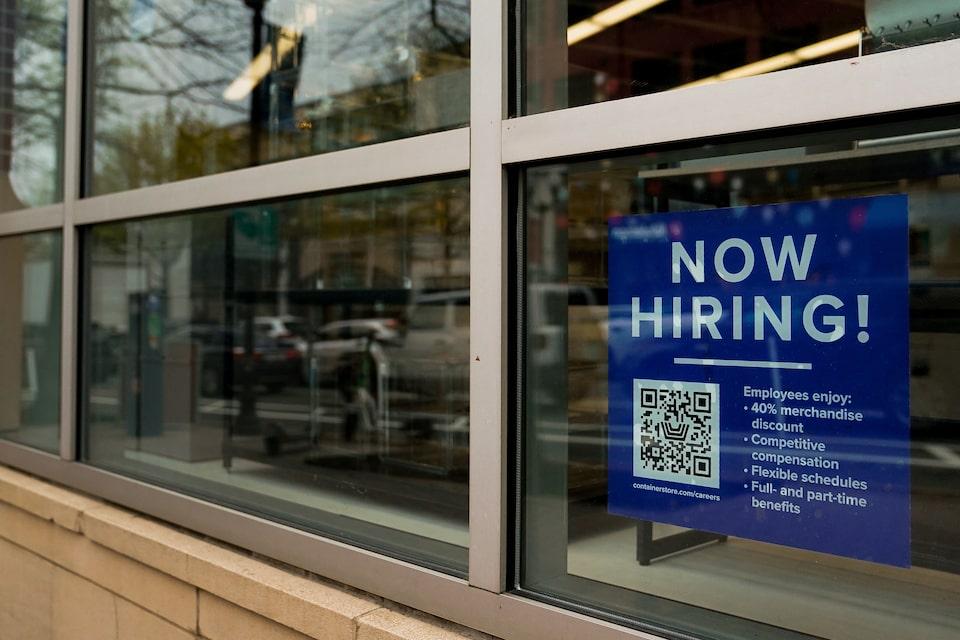
April 4 (Reuters) - The U.S. economy added far more jobs than expected in March, but President Donald Trump's sweeping import tariffs could test the labor market's resilience in the months ahead amid sagging business confidence and a stock market selloff. Nonfarm payrolls increased by 228,000 jobs last month after a downwardly revised 117,000 rise in February, the Labor Department said on Friday. Economists polled by Reuters had forecast payrolls advancing by 135,000 jobs after a previously reported 151,000 rise in February. The unemployment rate rose to 4.2% from 4.1% in February. Sign up here. The report came amid a global stock rout and rally in safe-haven government bonds after U.S. President Donald Trump's sweeping tariff plans sowed fears about a global recession, with the sell-off deepening after China said it would impose additional levies of 34% on American goods. MARKET REACTION: STOCKS: S&P 500 E-minis pared a loss to -2.5%, still pointing to another big drop at the open on Wall Street BONDS: The yield on benchmark U.S. 10-year notes rose to 3.9214%, the two-year note yield rose to 3.545% FOREX: The dollar index turned 0.19% higher and the euro turned 0.26% lower COMMENTS: TIM GHRISKEY, SENIOR PORTFOLIO STRATEGIST, INGALLS & SNYDER, NEW YORK CITY "The market isn't paying a lot of attention to the jobs report. It's in a panic mode, selling at any price." "There's concern about a recession, very justified, about the tariff issue being escalated and bringing the global economy to a halt." "But the jobs report was extremely strong for what that's worth. The non-farm private payrolls number was well above expectations. This seemed to make up for the downward revision to the Feb numbers and more." "It will be pointed out probably by the administration in D.C. that the underlying economic fundamentals remain good but with the rout in the stock market indicating significant concern about the future, historic data carries less weight." "The White House will point to this as a very positive sign. Futures have pared premarket loss. It's not that its irrelevant but you remain in a market that's more emotional than factual. The prevailing emotion remains to reduce equity exposure." SEEMA SHAH, CHIEF GLOBAL STRATEGIST, PRINCIPAL ASSET MANAGEMENT, LONDON (emailed comment) "The market needed today’s number. Everyone knows that economic weakness is coming, but at least we can be reassured that the labor market was robust coming into this policy-driven shock and therefore, the slowdown should not be overly steep. Next month is when hard data is likely to start showing signs of what soft data has already been signalling. From the Fed’s perspective, today’s payrolls number will not prevent them from future policy rate cuts – they know that this is just a moment of calm before the storm hits. "The Fed will likely provide some stimulus over coming months. But this is a government-driven shock not a central bank-driven shock – the Fed can only sooth the pain around the edges." BRIAN JACOBSEN, CHIEF ECONOMIST, ANNEX WEALTH MANAGEMENT, MENOMONEE FALLS, WISCONSIN "There’s not a lot to dislike about the employment report. Haters will hate, but aggregate hours worked and aggregate weekly earnings both increased. Federal employment cuts are in the data, but not completely as those won’t show up for a few more months. The diffusion index for manufacturing is abysmal and the sector as a whole only added 1,000 jobs. This suggests that manufacturing’s glimmer of hope has faded for now. The Fed doesn’t meet for another month, but when it does it can comfortably cut if tariffs are still in place at that time, but it won’t likely feel a sense of urgency to." LINDSAY ROSNER, HEAD OF MULTI SECTOR FIXED INCOME INVESTING, GOLDMAN SACHS ASSET MANAGEMENT (emailed comments) “Today’s better than expected jobs report will help ease fears of an immediate softening in the US labor market. However, this number has become a side dish with the market just focusing on the entrée: tariffs.” https://www.reuters.com/markets/us/view-strong-jobs-report-creates-fed-easing-quandary-amid-tariff-distress-2025-04-04/
2025-04-04 12:30
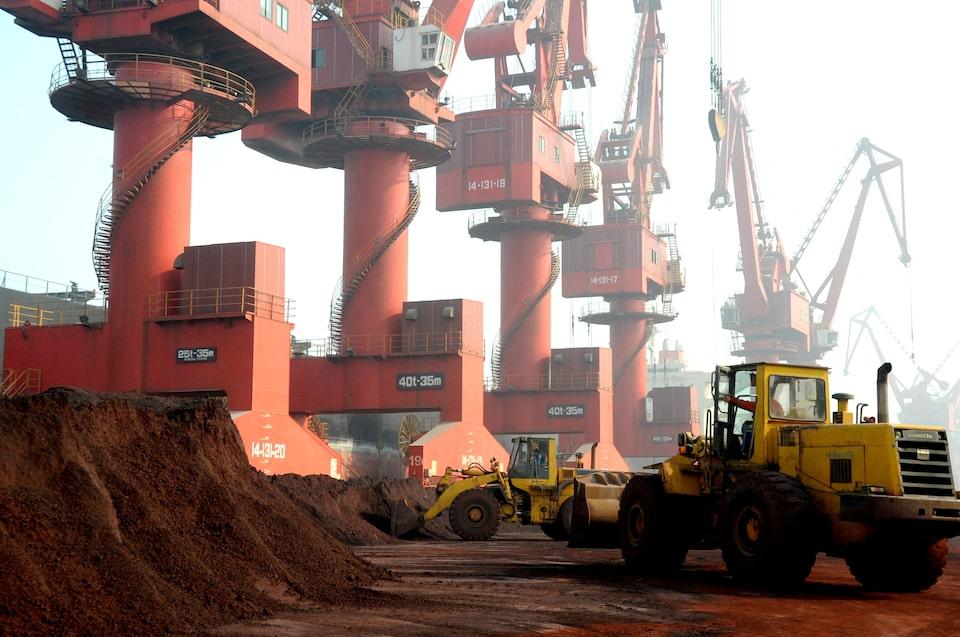
Rare earth magnets to be covered by export controls Export controls cover all countries, not just US Manufacturers scrambling for access outside China China's move seen as opening salvo in U.S. trade spat BEIJING/LONDON, April 4 (Reuters) - China placed export restrictions on rare earth elements on Friday as part of its sweeping response to U.S. President Donald Trump's tariffs, squeezing supply to the West of minerals used to make weapons, electronics and a range of consumer goods. The move, which Beijing had long hinted was possible, further ratchets up trade tensions between the world's two largest economies and leaves American manufacturers scrambling for fresh supplies of the critical minerals they have relied upon for decades. Sign up here. China produces around 90% of the world's rare earths, a group of 17 elements used across the defense, electric vehicle, energy and electronics industries. The United States has only one rare earths mine and most of its supply comes from China. Beijing announced the controls late on Friday as part of a broader package of tariffs and company restrictions in retaliation for Trump's decision to hike tariffs against most Chinese products to 54%. The export curbs include not only mined minerals but permanent magnets and other finished products that will be difficult to replace, analysts said. The move, which affects exports to all countries, not just the U.S., is the latest demonstration of China's ability to weaponize its dominance over the mining and processing of the critical minerals. Seven categories of medium and heavy rare earths, including samarium, gadolinium, terbium, dysprosium, lutetium, scandium and yttrium-related items, will be placed on an export control list as of April 4, according to a Ministry of Commerce release. Lockheed Martin (LMT.N) , opens new tab, Tesla (TSLA.O) , opens new tab and Apple (AAPL.O) , opens new tab are among the U.S. companies that use Chinese rare earths in their supply chains. "China made that list strategically," said Mel Sanderson, a director at American Rare Earths (ARR.AX) , opens new tab, which is building a Wyoming rare earths mine it hopes to open by 2029, and co-chair of the Critical Minerals Institute trade group. "They picked the things that are crucial for the U.S. economy." While the export controls stop short of an outright ban, Beijing can throttle shipments by restricting the number of export licenses it issues. China's move will create "a scramble for access to the limited sources of alternative supply – namely in Japan and South Korea," said Ryan Castilloux, founder of consultancy Adamas Intelligence. 'WILLING TO ESCALATE' Two industry sources said Chinese export restrictions on some rare earths are a concern for some U.S. aerospace manufacturers because they are sole-sourced from China for use in avionics. RTX (RTX.N) , opens new tab and Honeywell (HON.O) , opens new tab declined to comment. Boeing (BA.N) , opens new tab and GE (GE.N) , opens new tab did not respond to requests for comment. The U.S. government has stockpiles of some rare earths, but not enough to supply its defense contractors in perpetuity. Beijing has already imposed outright bans on the export of three metals to the U.S. and slapped export controls on many others. The moves to restrict heavy rare earths are especially important because China has even tighter control over these elements, said David Merriman at consultancy Project Blue. "There is currently only one HREE (heavy rare earth element) focused operation outside of China, Myanmar and Laos," he said, adding that China has close involvement in supply chains from Myanmar and Laos. That mine, Serra Verde in Brazil, ships minerals to China for processing, Merriman added. "China is willing to escalate," said Nathan Picarsic, co-founder of the geopolitical consulting firm Horizon Advisory. "This is likely an opening salvo in an iterative game of negotiation with the U.S." GALVANIZE WEST China dominates the complex and dirty refining process for rare earths and controls output via a quota system that it has tightened. Friday's move is likely to galvanize efforts in the West to build alternative supply chains, according to Mercator Institute for China Studies analyst Jacob Gunter. Progress toward that goal has been slow. "It's going to take time," said Mark Smith, CEO of NioCorp Developments (NB.O) , opens new tab, which has permits for a $1.2 billion rare earths mine in Nebraska but needs financing. Shares of NioCorp fell 8.1% on Friday, while shares of USA Rare Earth (USAR.O) , opens new tab, which is building a rare earth magnet facility in Oklahoma, jumped 20%. Shares of MP Materials (MP.N) , opens new tab - which owns the only U.S. rare earths mine and relies in part on China for processing - fell 10.1%. Las Vegas-based MP said in a statement that China's move "reinforces what has long been clear: America must secure an end-to-end rare earth supply chain to protect its industrial and national security." Massachusetts-based rare earths processing startup Phoenix Tailings, which recycles the metals from electronic waste and other sources, aims to boost its annual production from 40 metric tons today to 4,000 metric tons by 2027. "China's moves just further encourages us to double down on our expansion plans," said Phoenix CEO Nick Myers. For companies that buy equipment from rare earths industry suppliers, the worry is compounded that they may lose access to important machinery that is made in China. "The real concern for us is whether this trade conflict grows further," said Wade Senti, president of Florida-based Advanced Magnet Lab. https://www.reuters.com/world/china-hits-back-us-tariffs-with-rare-earth-export-controls-2025-04-04/
2025-04-04 12:28
FTSE 100 down 3.8%, FTSE 250 falls 4% BP shares drop as Chair Helge Lund decides to step down UK banks and mining stocks hit by tariff concerns Utilities gain as bond proxy amid market turmoil April 4 (Reuters) - UK shares fell sharply on Friday and are poised to end the week with substantial losses, as recession fears intensified after China retaliated against U.S. President Donald Trump's announcement of sweeping tariffs. As of 1110 GMT, the blue-chip FTSE 100 (.FTSE) , opens new tab index dropped 3.8% to its lowest level since December last year, on track for its steepest weekly decline since February 2022. Sign up here. The domestically focused midcap index (.FTMC) , opens new tab slid 4% and is set for its worst weekly drop since March 2020. China, which is now facing a total of 54% tariffs on exports to the U.S., will impose additional 34% tariffs on all U.S. imports from April 10, its finance ministry said on Friday. Britain faced the lowest import duty rate of 10% in Trump's Wednesday's tariff announcement, although officials acknowledged the country's vulnerability to global economic headwinds. Bank stocks fell for a second consecutive day as tariff concerns fuelled worries about growth in the world's largest economy. Barclays (BARC.L) , opens new tab led the sector's losses on the blue-chip index with its 10% drop, followed by HSBC Holdings (HSBA.L) , opens new tab, Lloyds Banking Group (LLOY.L) , opens new tab and Standard Chartered (STAN.L) , opens new tab. The UK's banking sector index (.FTNMX301010) , opens new tab tumbled 8% to a three-month low. The index of mining companies (.FTNMX551030) , opens new tab dropped 6.3% as London copper posted its biggest weekly loss in nearly five months amid tariff concerns. Bucking the trend, utilities (.FTUB6510) , opens new tab — often traded as a bond proxy — gained more than 1%, reaching a six-month high. Short-dated British government bond yields plunged in the aftermath of Trump's tariffs, as traders increased bets on further Bank of England interest rate cuts. BP (BP.L) , opens new tab Chair Helge Lund intends to step down "likely during 2026", it said on Friday, amid a campaign by activist hedge fund Elliott for more change at the oil major. Its shares fell 4.9%. Building materials supplier Travis Perkins (TPK.L) , opens new tab rose 3% after brokerage Stifel upgraded the stock to "buy" from "hold". Separately, Britain's construction industry shrank sharply last month, with civil engineering declining at the fastest rate since 2020 due to weak orders and a lack of new infrastructure work, according to a survey published on Friday that showed optimism plunged. https://www.reuters.com/world/uk/uks-ftse-100-hits-three-month-low-tariff-concerns-cap-difficult-week-2025-04-04/