2025-04-04 12:21
Yu Bo began his cooking show on RedNote in January The commercial video director saw an opportunity amid TikTok uncertainty Trump has set Saturday deadline for TikTok decision BEIJING, April 4 (Reuters) - From his kitchen in Beijing, Yu Bo is running a campaign to connect China with America – one slapstick cooking video at a time. At a time when tensions between Washington and Beijing are high, it might seem like the odds are against him. Sign up here. Yu, 37, is keeping his day job directing commercial videos. But since January he has spun up an alter-ego as an ambassador for speedy Chinese cooking in short English-language videos posted to RedNote, a social media app and go-to search engine. He now has 136,000 followers, including thousands in the United States, many of whom send him daily messages and questions about Chinese food and life in China that keep him up late at night. “All kinds of English messages, so every night I’m improving my English just to be able to communicate better with them,” he said. When more than half a million Americans downloaded RedNote earlier this year, days before a proposed U.S. ban on the popular Chinese social media app TikTok, Yu saw an opportunity to turn his small kitchen into a studio. Now, with a Saturday deadline set by the Trump administration for TikTok to find a buyer, Yu’s side hustle could be set for more change. His online persona mixes the dramatic flourishes of Turkish restaurateur Salt Bae with self-deprecating humour, a wide-eyed look into the camera and an evolving series of heavily accented catchphrases. “So easy!” is a favourite. Another, as he fires up his gas cooker: “Open the fire!” A fan of rapper Eminem, whose off-camera bookshelf includes Ayn Rand and David Foster Wallace, Yu was worried at first about how his limited spoken English would travel. “I was a little scared because I thought, will everyone think I’m bad? Will everyone treat me like a joker? But later I found they love me.” When Yu used five eggs in one dish, an American follower asked if he was rich. “How expensive are eggs in America?” When another asked how to grow rice, he advised against trying. One single mother told him her daughter with ADHD found his videos soothing. He sent her a private message in which he baked a cake for the girl. “I was just so touched,” he said. RedNote is sometimes described as China’s answer to Instagram. Its Chinese name Xiaohongshu translates to "Little Red Book" in English, a phrase that traditionally refers to a collection of sayings by Mao Zedong. Privately owned RedNote, valued at $17 billion in its latest funding round, has probably benefited from the surge of attention whatever happens next for TikTok, said Yaling Jiang, founder of consultancy ApertureChina. “Global investors, global users know them. They know the potential and how it is different from other Chinese apps,” she said. Washington officials have said TikTok's ownership by ByteDance makes it beholden to the Chinese government. For now, Yu continues to cook and post. He started a stir-fry lesson this week by throwing a green pepper at the viewer. Off camera, his sphynx cat and a kitten were watching. The kitten was born when Yu's channel took off. He named it Xiaohongshu. https://www.reuters.com/world/china/one-beijing-mans-quest-keep-cooking-connecting-with-americans-camera-2025-04-04/

2025-04-04 12:04
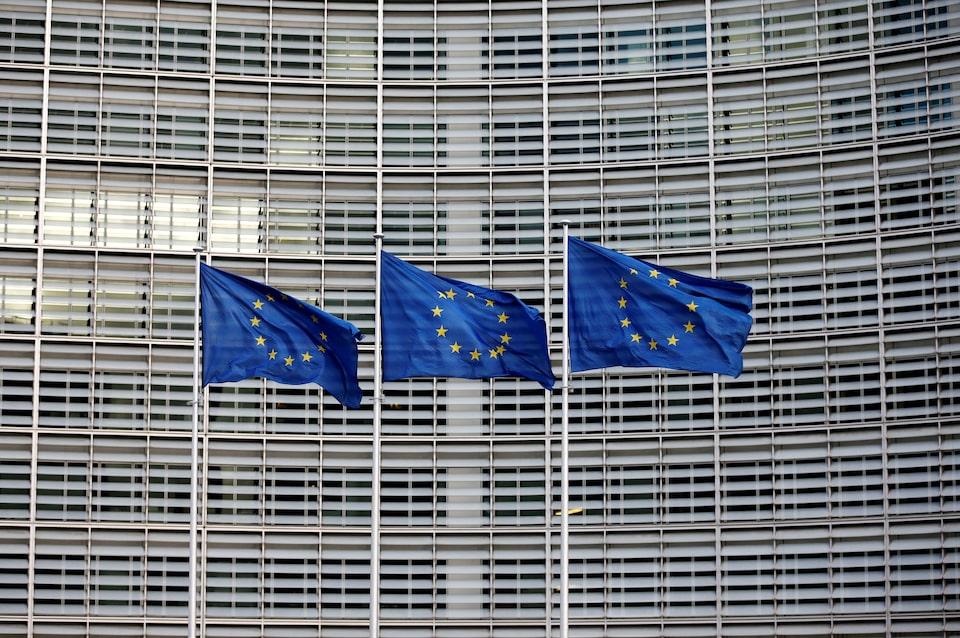
BRUSSELS, April 4 (Reuters) - Striking a trade deal with Latin America's Mercosur bloc would be a "massive opportunity" for the European Union given uncertainties triggered by U.S. President Donald Trump's decision to introduce a new round of tariffs, an EU spokesperson said on Friday. "We will be investing a lot of time and energy with member states to finalize the deal," he added. Sign up here. Despite previous reservations, France held a meeting with 10 EU countries to discuss a possible trade deal with Latin America's Mercosur bloc on Thursday, signalling a will to diversify trade partnerships. https://www.reuters.com/world/eu-says-trade-deal-with-mercosur-is-massive-opportunity-given-us-tariffs-2025-04-04/
2025-04-04 11:53
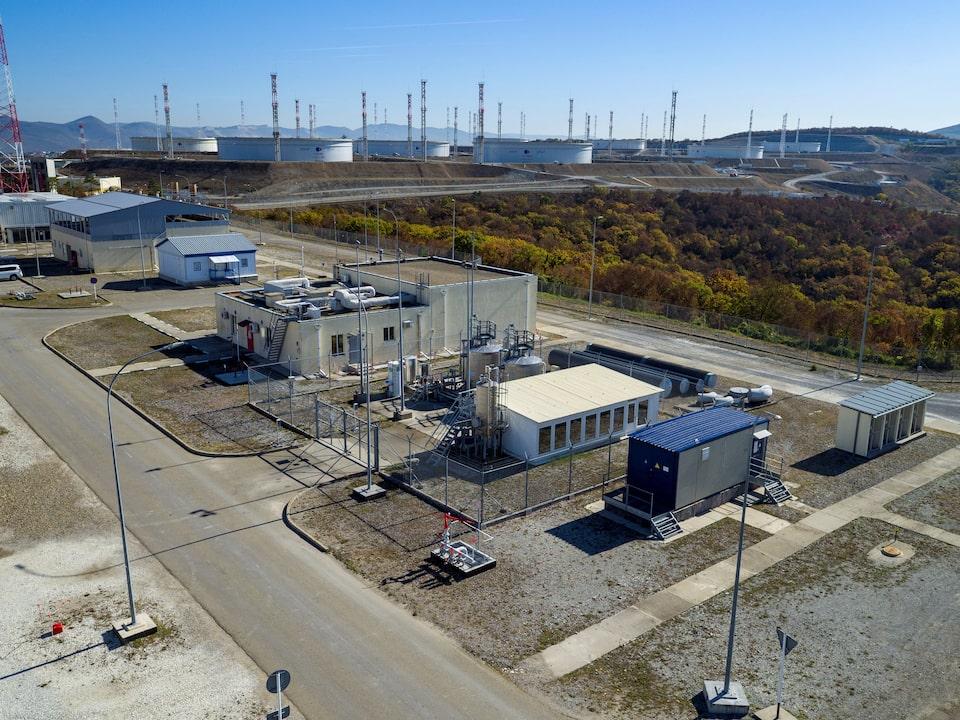
Russian watchdog had restricted CPC exports terminals Kazakh oil output could have significantly decreased Not clear when CPC resumes exports terminal operations in full Transneft also suspended a berth at the port of Novorossiisk MOSCOW, April 4 (Reuters) - The Caspian Pipeline Consortium (CPC) said on Friday that a Russian court ruled that its Black Sea export terminal facilities should not be suspended, in a major victory for the Western-backed consortium. The decision looks set to avert a potential fall in Kazakhstan's oil production and supplies via the CPC, which accounts for around 80% of the country's oil exports. Sign up here. Industry sources told Reuters about a flurry of diplomatic activity over the pipeline's operations between Russia and Kazakhstan before the court ruling. Russia's oil pipeline monopoly Transneft said on Thursday that its head, Nikolai Tokarev, met the CEO of Kazakh state energy company KazMunayGaz, Askhat Khassenov, in Moscow. Both companies are large CPC stakeholders. Transneft did not mention CPC directly in its statement about the meeting. Russia's transport regulator this month ordered CPC, whose shareholders include Chevron (CVX.N) , opens new tab and Exxon Mobil (XOM.N) , opens new tab, to suspend operations at two of the three moorings at its Black Sea export terminal after snap inspections following a massive oil products spill in December. The court, having considered the inspection, ruled to hold the Russian part of the CPC consortium liable and imposed an administrative fine of 200,000 roubles ($2,357) without suspension of the exporting facilities, CPC said on Friday. It was not immediately clear when the CPC export terminal would resume normal operations. CPC declined to comment on the timing. CPC has been in the spotlight since Russia's war in Ukraine. The consortium closed all but one of its mooring points several times in 2022 due to damage severely cutting exports via the route. Transneft said on Wednesday it had suspended a mooring at the Black Sea port of Novorossiisk for 90 days following a snap inspection by the transportation watchdog. A court is also due to rule on the suspension later on Friday. Oil exports via the CPC pipeline were set for April at 1.7 million barrels per day, or approximately 6.5 million metric tons. The CPC pipeline is a major oil export route for Kazakhstan, which - due mainly to rising production from the giant Chevron-led Tengiz oilfield - has been breaching export quotas within the OPEC+ producer group, which includes OPEC and Russia. Other OPEC+ members, including Saudi Arabia, have also been pressing Kazakhstan to cut production to meet its quotas. On Thursday, OPEC+ decided to raise output ahead of schedule, signalling the group was confident non-compliant members would reduce output in the coming weeks. ($1 = 84.4000 roubles) https://www.reuters.com/business/energy/russian-court-rules-not-stop-caspian-pipelines-oil-exports-terminal-cpc-says-2025-04-04/
2025-04-04 11:48
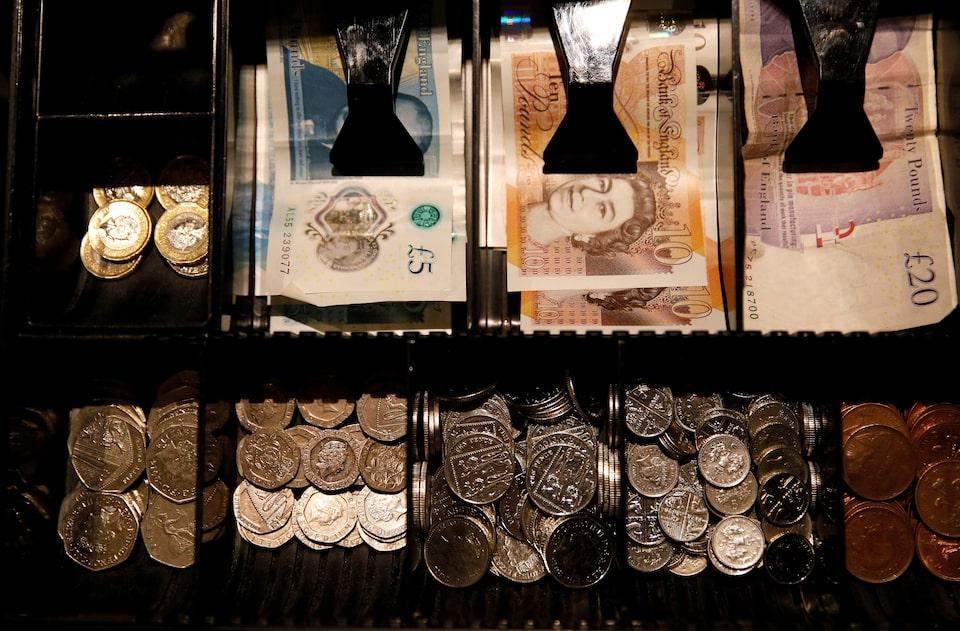
April 4 (Reuters) - Sterling fell against the dollar and the yen, while hitting a seven-month low versus the euro on Friday as China's additional tariffs against the U.S. deepened a selloff in risky assets. Global stocks have tumbled for a second day after U.S. President Donald Trump's sweeping tariff plans, with the selloff deepening after China said it would impose additional tariffs of 34% on all U.S. goods. Sign up here. Among major developed market currencies (G10), sterling tends to be more volatile and sensitive to risk sentiment than traditional safe havens such as the Japanese yen, the Swiss franc, or the U.S. dollar. However, Trump's moves have raised questions about the safe-haven status of the greenback. The pound fell 0.6% to $1.3014 . It dropped 1.6% against the yen to a fresh five-week low at 187.92. Market participants are looking to the possibility of a trade deal between Britain and the United States. British Prime Minister Keir Starmer said earlier this week that talks with the U.S. on such a deal that would help Britain avoid being hit by Trump's import tariffs were "well advanced". However, investors boosted their bets on future Bank of England rate cuts and are now fully pricing in three 25 basis points in easing moves by year-end, in line with similar market expectations for the European Central Bank. Sterling hit its lowest level since end-August against the euro at 84.84 pence, down 0.6%, although investors have recently sold the common currency on tariff-related headlines. Chris Turner, head of forex strategy at ING, mentioned two drivers of the euro's rise against sterling. "The first is that the euro has better liquidity than sterling and will benefit more as investors leave the dollar," he said. "The second is that the looming global trade war is proving the greater leveller for rate spreads," he said, referring to past expectations of a slower pace of rate cuts in Britain. https://www.reuters.com/markets/currencies/sterling-drops-sharply-selloff-risky-assets-deepens-2025-04-04/
2025-04-04 11:33
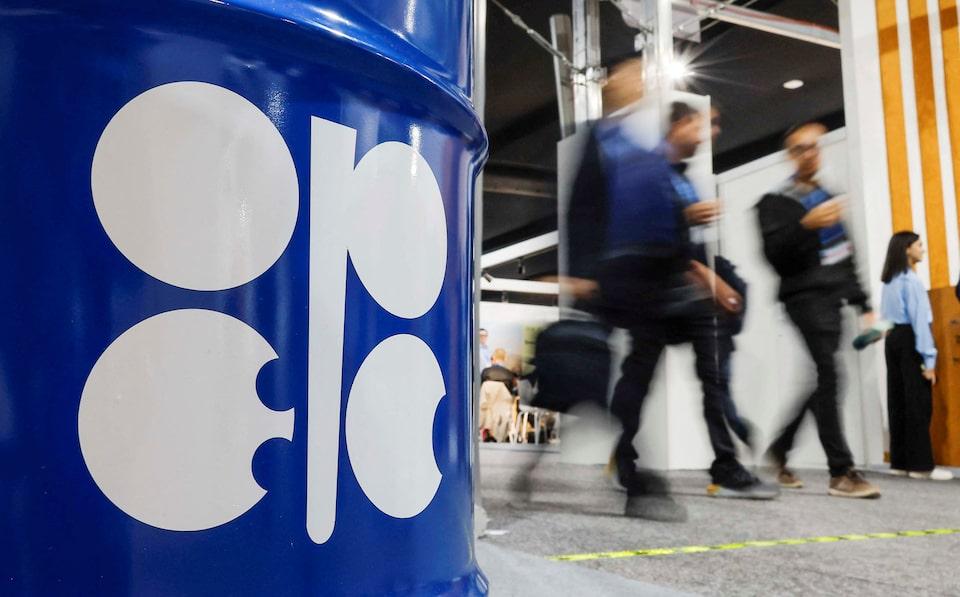
OPEC+ says output hike due to 'positive market outlook' Kazakhstan's oil output hit record high in March Oil prices post sharp losses on global trade war concerns LONDON, April 4 - OPEC+'s surprise decision to add more oil to a well-supplied market reeling from the prospect of a global economic trade war suggests the group is struggling to keep its own house in order. The Organization of the Petroleum Exporting Countries and its partners including Russia on Thursday held a video conference that was widely expected to be a benign event for markets. Instead, the eight key OPEC+ members caught the market off guard when announcing that the group would accelerate the planned unwinding of years-long output cuts. Sign up here. OPEC+ said in a statement , opens new tab that the decision to release 411,000 barrels per day in May, the equivalent of three months of hikes under the previous plans, reflected "continuing healthy market fundamentals and the positive market outlook". The reasoning and timing appear almost laughable, given that the announcement came as global markets and oil prices were plummeting after U.S. President Donald Trump's "Liberation Day" tariff announcement stoked concerns about a global economic slowdown. Moreover, the International Energy Agency had forecast that the oil market would be in a supply surplus this year even before these new increases. Brent crude oil prices lost 7% on Thursday, and the sharp slide continued on Friday after China announced retaliatory tariffs, bringing prices to $65.60 a barrel and well into lows last seen during the depths of the coronavirus pandemic. It is hard to gauge the exact impact of the OPEC+ announcement on oil prices given the broader context, but it certainly added to the bearish sentiment. OPEC+ is set to next meet on 5 May, where it will decide on June output. DOMESTIC DISORDER So what accounts for this bewildering OPEC+ decision and its timing? In two words, internal politics. More precisely, how to deal with members' persistent lack of compliance with production quotas. And even more specifically, Kazakhstan's lack of compliance. The OPEC+ group has been highly effective in managing global supplies and oil prices in recent years. But lack of adherence to the group's production quotas has become a growing issue as members including Kazakhstan, the United Arab Emirates and Iraq have ramped up production capacity in violation of these limits. The group's de-facto leader Saudi Arabia, which has implemented the deepest supply cuts, must have been particularly irritated to hear that Kazakhstan's oil and condensate output reached a record high of 2.17 million bpd in March following the start-up of the Chevron-operated giant Tengiz oilfield. Excluding condensate, Kazakhstan’s oil production increased last month to 1.88 million bpd from 1.83 million bpd in February, according to Reuters, far exceeding its OPEC+ output quota of 1.468 million bpd. Russia may also not be too pleased with the central Asian country. Russian authorities recently closed two of the three moorings at the Black Sea port of Novorossiisk, through which Kazakhstan exports the vast majority of its crude to global markets. It is not unthinkable that Kazakhstan's growing exports were a key driver behind this action. The output increases will be welcome in Washington, as the Trump administration has been calling for lower oil prices. And the availability of more oil could soften the blow from any potential new U.S. sanctions on Iran, including Trump's threat to impose secondary sanctions on buyers of Iranian oil. Iran exported around 1.5 million bpd in 2024, mostly to China. The sharp declines in oil prices will certainly act as a deterrent for some laggard members, like Iraq and Kazakhstan, which require higher prices to balance national budgets. Perhaps this is Saudi's way to get back at them, although the kingdom itself requires an oil price of nearly $100 a barrel to balance its budget. Ultimately, the decision to pump more crude oil into an over-supplied market facing massive downside risk was clearly not driven by rational economics. Instead, it likely stemmed from a desire to mask members' lack of discipline and to show the world that OPEC+ is still in control. But with Kazakhstan and other members blatantly ignoring their commitments, this episode only highlights how much the group of producers is struggling to maintain control of its narrative. ** The opinions expressed here are those of the author, a columnist for Reuters ** Want to receive my column in your inbox every Thursday, along with additional energy insights and trending stories? Sign up for my Power Up newsletter here. https://www.reuters.com/business/energy/opec-surprise-output-hikes-highlight-fading-discipline-bousso-2025-04-04/
2025-04-04 11:27
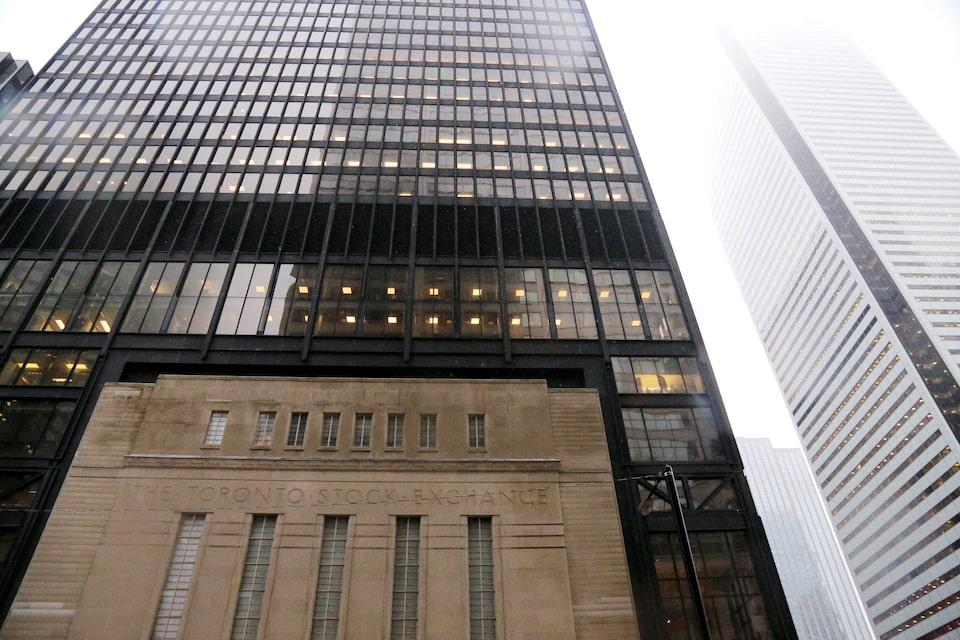
TSX ends down 4.7% at 23,193.47 Closes more than 10% below January 30 peak Canada's economy sheds 33,000 jobs in March Energy falls 8.7% as oil tumbles April 4 (Reuters) - Canada's commodity-linked main stock index ended more than 10% below its January 30 record closing high on Friday, confirming a correction, as China's move to retaliate against U.S. trade tariffs spooked investors globally. The Toronto Stock Exchange's S&P/TSX composite index (.GSPTSE) , opens new tab fell 1,142.30 points, or 4.7%, to 23,193.47, its lowest closing level since September 10 and its biggest decline since March 2020 at the start of the COVID-19 crisis. Sign up here. Since Wednesday, when the U.S. unveiled sweeping tariffs on other countries, the index has lost 8.4%, while it posted a weekly decline of 6.3%. "Markets are clearly in risk-off, defensive mode," said Angelo Kourkafas, senior investment strategist at Edward Jones. "Investors may be hesitant to be long or maybe cautious about potential new retaliatory announcements coming out in addition to what we heard today from China." China retaliated with additional tariffs of 34% on all U.S. goods from April 10, intensifying a trade war between the two leading global economies and amplifying fears of a recession. "Clearly the longer this drags on we're going to see negative earnings revisions," Kourkafas said. U.S. jobs data showed some resilience in March but Canada's economy shed 33,000 jobs, the first decrease in more than three years, as tariff uncertainty took a toll on hiring. All ten major sectors ended lower, led by an 8.7% drop for energy as the price of oil settled at its lowest level since April 2021. Gold and copper prices also tumbled. The materials group, which includes metal mining shares, lost 8%. Shares of copper producer First Quantum Minerals Ltd (FM.TO) , opens new tab were down 11.6%. Heavily weighted financials fell 4.1% and technology ended 3.7% lower. https://www.reuters.com/markets/tsx-futures-fall-china-puts-retaliatory-tariffs-us-2025-04-04/