2025-04-04 11:17
SAO PAULO, April 4 (Reuters) - Brazil's government has cancelled a June 27 auction to secure long-term power capacity, a publication in the official gazette showed on Friday. The mines and energy ministry did not immediately provide reasons for the cancellation. Sign up here. Interested parties had already launched court challenges to the auction rules and a federal judge this week ruled that a new public consultation had to be carried out before the auction could proceed. The June auction would have been the second of its kind held by Brazil and aimed to secure complementary power capacity, particularly during peak afternoon hours. Large players in the thermoelectric sector had shown interest, including state-run oil producer Petrobras (PETR4.SA) , opens new tab, Ambar Energia and Eneva (ENEV3.SA) , opens new tab, which is backed by lender BTG Pactual (BPAC3.SA) , opens new tab. The government in January loosened rules for the auction in a move that was seen as positive for Eneva. https://www.reuters.com/business/energy/brazil-calls-off-june-auction-secure-long-term-power-capacity-2025-04-04/
2025-04-04 11:12
SINES, Portugal, April 4 (Reuters) - U.S. investment fund Davidson Kempner and Britain's Pioneer Point Partners plan to invest 8.5 billion euros ($9.35 billion) by 2030 in a data centre hub in Portugal to serve a growing demand from major tech and artificial intelligence companies. They said on Friday their joint project, Start Campus, in the city of Sines, 150 km (93 miles) south of Lisbon, already has one of the planned six buildings in operation. Sign up here. Investments in data centres, which help provide computing power for AI, have surged since OpenAI launched ChatGPT in 2022, as companies across sectors increasingly shift their operations to the cloud and integrate AI into their offerings. Portugal's caretaker Economy Minister Pedro Reis said the project is a "structuring investment for the Portuguese economy, which helps to place Portugal in a strategic position in the data economy, taking advantage of Sines' privileged geographical location". ($1 = 0.9087 euros) https://www.reuters.com/technology/artificial-intelligence/start-campus-plans-invest-935-billion-portugal-data-hub-2025-04-04/
2025-04-04 11:08
Fed's recession indicator deteriorates rapidly, similar to 2008 JPMorgan raises U.S. recession risk to 60% due to tariffs Banking stocks fall globally amid recession fears and rate cut expectations LONDON, April 4 (Reuters) - One of the Federal Reserve's preferred recession indicators has this week deteriorated as fast as it did in 2008, the latest sign that bond investors are bracing for a sharp economic slowdown as a result of U.S. President Donald Trump's sweeping tariffs. There are many metrics economists and investors use to try to predict a downturn. The gap between two-year and 10-year Treasury yields for instance, is a bond market favourite. Sign up here. Fed Chair Jerome Powell is said to favour the difference between the yield on three-month Treasury bills and their expected yield in 18 months . The rationale is that this spread best reflects very near-term rate expectations in a way the gap between two-year and 10-year Treasuries does not. When recession is looming, the spread narrows and turns negative. However, the Fed's rate-hiking cycle that started in March 2022 flipped this spread into negative territory and kept it there as yields on T-bills were still high. On Friday, this spread was at minus 113 basis points, its most negative since last October, but crucially, set for its biggest one-day increase since late 2008, when the global financial crisis roiled markets. "It's usually 3-18 months after the last Fed hike until the start of the recession ... we are at 21 months and counting so far – no more soft landing folks?" Jordan Rochester head of fixed income, currencies and commodities strategy for EMEA at Mizuho, said in a note on Friday. Investment bank JPMorgan on Friday said the risk of a U.S. and global recession this year has risen to 60% from 40% based on Trump's reciprocal tariffs. Just last week, U.S. rate futures suggested traders were assuming the Fed would cut rates by another 65 basis points this year and then hit the pause button . They now price in 100 bps of cuts by December, and another 25 bps over the first quarter of 2026, which, if it materialised, would bring U.S. rates to a range of 2.75-3.35%, roughly where they were 2-1/2 years ago. Banking stocks, which tend to perform well when interest rates are rising, fell sharply around the world on Friday, as recession fears and expectations for deeper rate cuts took hold. Derivative markets for other central banks painted a similar picture, with the European Central Bank and the Bank of England expected to chop rates three more times this year, from around twice previously. Zurich Insurance Group chief market strategist Guy Miller said many investors had thought Trump would use tariffs as a negotiating tool and then scale back his threats, but that clearly was not the case. "These are fairly brutal and clunky weapons that are trying to change the shape of trade but are likely to backfire," he said. "It is going to lead to inflation and squeeze real incomes in the U.S. So it creates a vicious circle and a dangerous one." https://www.reuters.com/markets/us/one-feds-top-recession-alarms-sends-2008-style-signal-2025-04-04/
2025-04-04 11:03
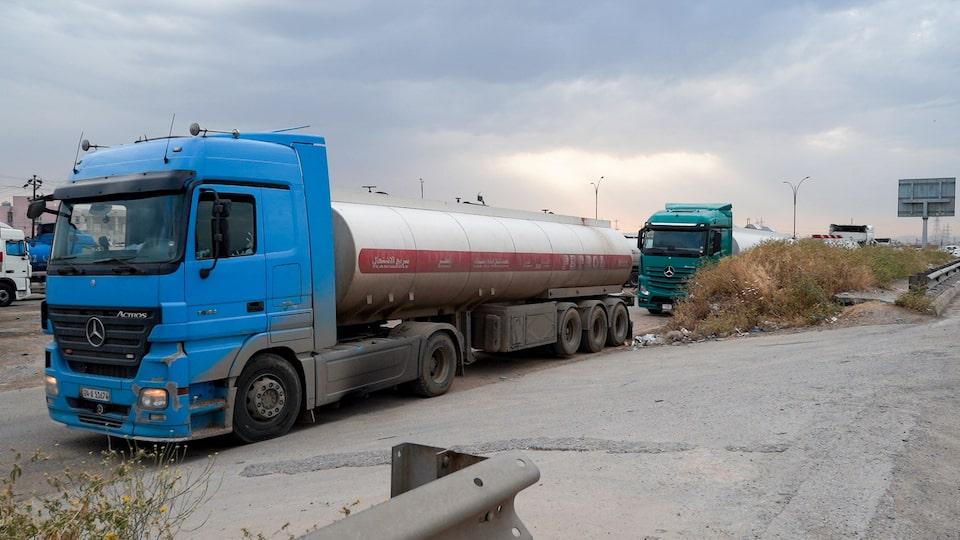
April 4 (Reuters) - Iraq's Oil Ministry called on Friday for an urgent meeting with relevant parties to resume negotiations on the export of Kurdistan regional oil, the state news agency reported. Iraq's oil ministry also said it took serious measures to show goodwill in negotiations to ensure the resumption of exports, adding that unrealistic demands that fall outside legal frameworks hinder reaching a final agreement. Sign up here. The ministry said it is working to ensure proper implementation of the amendment to the budget law approved on February 2, so that exports via the Iraq-Turkey pipeline can resume as soon as possible. It added that reaching an agreement on Kurdistan oil exports is crucial to halting illegal and improper crude sales. Washington has been pressuring Iraq to resume shipments, with Reuters reporting in February that U.S. President Donald Trump's administration had asked Iraq to allow the flows to restart or face sanctions. APIKUR, a grouping of eight oil firms operating in Iraqi Kurdistan, said in a statement shared with Reuters it would not resume exports until Baghdad gave a firm commitment to honour existing contracts and provide surety of payment for past and future exports. https://www.reuters.com/business/energy/iraq-calls-meeting-resume-negotiations-kurdistan-regional-oil-exports-2025-04-04/
2025-04-04 11:00
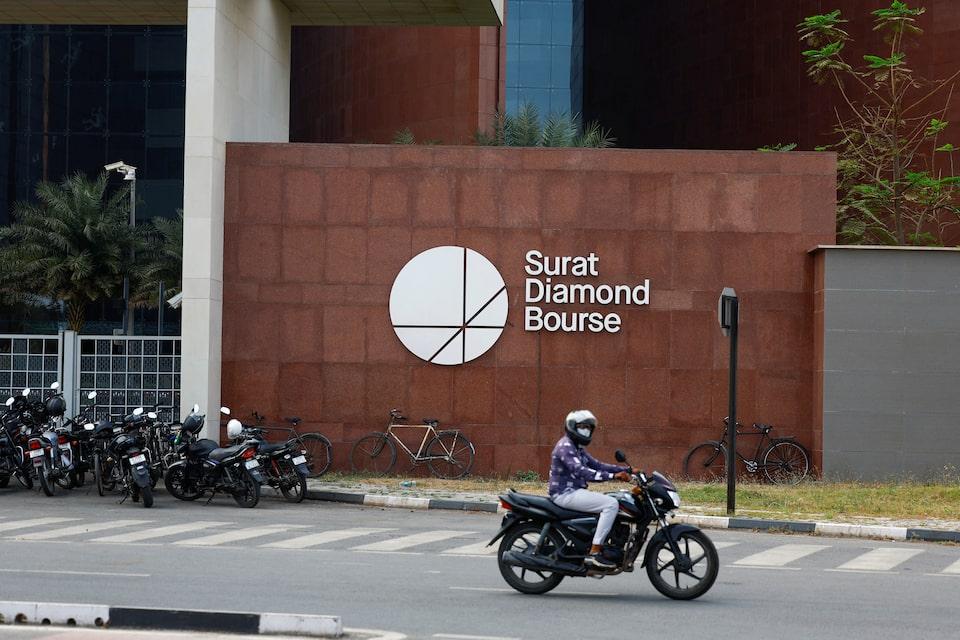
Business at standstill in diamond polishing hub of Surat U.S. takes more than 30% of India's jewellery exports Export slowdown could cut output, cost jobs SURAT, India, April 4 (Reuters) - A wave of anxiety has gripped India's diamond polishing hub of Surat, as hefty U.S. tariffs threaten to undermine the country's gem and jewellery exports, putting at risk the livelihoods of thousands of workers. The United States, which takes more than 30% of the South Asian nation's gem and jewellery exports, set a 27% reciprocal tariff on it on Thursday, at a time when demand is softening in other key markets such as China, the Middle East, and Europe. Sign up here. "Tariffs will hit hard the demand for diamonds in the United States and job losses look inevitable, at least in the short term," said Dinesh Navadiya, chairman of the Surat-based Indian Diamond Institute. Surat, the second-largest city in Gujarat, the western home state of Prime Minister Narendra Modi, processes and polishes more than 80% of the world's rough diamonds, and India accounts for nine in every 10 diamonds processed globally. Business has ground to a halt in its teeming diamond market, where more than 10,000 traders and brokers gather each day, as the industry tries to figure out how matters will evolve in the coming months. Conditions are worse than during the 2008 financial crisis, when the industry was plagued by fears of a prolonged recession, said Mansukh Mangukiya, a diamond trader for five decades. A slowdown in the industry will hit all manufacturers, but smaller players will suffer most, said Sevanti Shah, chairman of Venus Jewels, adding, "Many smaller manufacturers will have no choice but to shut down." The United States accounted for nearly $10 billion, or 30.4%, of India's annual gems and jewellery exports, totalling $32 billion in the fiscal year 2023/24. THIRD LARGEST EXPORT TO U.S. Gems and jewellery are India's third largest export to the United States, after engineering and electronic goods, and employ millions of workers, including artisans. Poorer business prospects also raise questions about the future of the Surat Diamond Bourse, inaugurated by Modi in 2023 to create thousands of new jobs and serve as a trade hub. Built over 6.6 million square feet, it was touted as the world's largest office building, surpassing the Pentagon. The industry will seek alternative markets to compensate for the loss of U.S. demand, but no other country will be able to replace the U.S. market, diamond dealers said. The sudden decline in U.S. demand would require short-term production adjustments within the industry and could lead to reduced rough diamond imports, said Shaunak Parikh, vice chairman of the Gem and Jewellery Export Promotion Council. Exporters are making last-minute efforts to ship as much as possible to the United States before its new tariffs take effect, Parikh said, while orders that cannot be delivered earlier may be cancelled or put on hold. The tariffs would also drive up U.S. prices, crimping demand, said Vipul Shah, managing director of Asian Star, a leading diamond exporter. An uncertain future lies ahead for Chetan Navadiya, a diamond manufacturer turned job-work contractor. "I lost my business due to the market slowdown," Navadiya said. "I took up job work to survive, but even those contracts may not come by now, because of U.S. tariffs." https://www.reuters.com/world/india/us-tariffs-set-cripple-indias-diamond-industry-hurting-jobs-exports-2025-04-04/
2025-04-04 10:34
What matters in U.S. and global markets today By Mike Dolan , opens new tab, Editor-At-Large, Financial Industry and Financial Markets Sign up here. It's Friday, so today I'll provide a quick overview of what's happening in global markets and then offer you some weekend reading suggestions away from the headlines. I’d love to hear from you, so please reach out to me at [email protected] , opens new tab. Today's Market Minute * Trump's tariffs have sown fears of trade wars, recession and a $2,300 iPhone. * How many people does it take to slap a tariff on a penguin? One. Donald Trump's formula for calculating his tariffs mean even remote, frozen islands inhabited solely by the little birds are getting hit by those levies. * Japanese banks are the latest casualty in the market turmoil that Trump's tariffs have unleashed, with a sector index in Tokyo staging its biggest one-day fall since last August. * French President Emmanuel Macron has called for European companies to suspend planned investment in the US after Trump's announcement of sweeping global tariffs on American imports. * Trump's tariffs are worrying some at home too. One US Senate Republican is pushing to require congressional approval for new tariffs. 'Magnificent' bear The still ongoing tariff-inspired rout on Wall Street and in stock markets around the world centres heavily on the once 'Magnificent Seven' megacap U.S. tech stocks, which are now likely in the front line of the global trade war. Thursday saw the biggest one-day losses for U.S. equity indexes (.SPX) , opens new tab, (.IXIC) , opens new tab, (.RUT) , opens new tab since the pandemic shocks of 2020, with drops of 4-7%. Popular funds tracking the 'Mag 7' tumbled in time, losing 7% on the day and clocking a 25% drop from December's record highs. The group is now in a technical bear market for the first time since it emerged two years ago. The 'Mag 7' epitomized the "U.S. exceptionalism" theme for investors around the world, so many suspect this rapid reversal may be emblematic of how the trade shock will unfold. Europe, for one, sees Big Tech as a legitimate target in likely tariff retaliation, as the U.S. runs a trade surplus in services and digital-related trade with the region. French President Emmanuel Macron called on European firms to suspend U.S. investments until negotiations get underway. With U.S. President Donald Trump claiming his trade plans are "going well", U.S. and global recession fears are mounting. In a note entitled "There will be Blood", JPMorgan on Thursday raised its chances of a worldwide economic recession this year to 60% from 40%. Trade-related downturn fears were further reinforced by slowing service sector readings from ISM's March survey on Thursday. U.S. stock futures show no sign of recovery early on Friday and look set to extend losses by another 1% before the week is out, as the VIX 'fear index' rises above 30 for the first time since last August's yen-related volatility explosion. Recession worries also pummeled bank stocks around the world, with Japanese banks hit by up to 10% on Friday. In turn, futures markets are now pricing in four Federal Reserve interest rate cuts this year. Ten-year Treasury yields fell below 4% for the first time in six months, with U.S. corporate 'junk' spreads rising above 400 basis points for the first time since 2023. Hit by global demand fears and OPEC production hikes, U.S. crude oil saw prices fall to their lowest since 2023. The dollar's (.DXY) , opens new tab plunge this week is perhaps the most startling of all the big moves as it normally gets a 'safe haven' boost in times of stress. The break with this pattern suggests foreign investors might be fleeing from U.S. assets at large. The greenback did perk up somewhat from the year's lows on Friday, however. All eyes will be on Fed Chair Jerome Powell when he speaks on Friday. Currently, Fed officials still appear to see no urgency to cut rates, as the jobs market remains firm and the inflation picture continues to be murky due to tariffs. Friday's March payrolls are being released today, but like so many upcoming economic releases, they will not be overly useful because they will not capture the implications of this week's tariff shock. Profit warnings and guidance cuts from the first-quarter corporate earnings season starting next week will probably be more significant. Weekend reading suggestions Here are some articles away from the day-to-day headlines that you may find interesting. * Family fortunes? As World Liberty Financial raised more than half a billion dollars, President Donald Trump’s family took control of the crypto venture and grabbed the lion's share of those funds, aided by governance terms that industry experts say favor insiders. Reuters correspondents Tom Wilson, Tom Bergin, Lawrence Delevingne and Michelle Conlin look into the issue surrounding World Liberty crypto tokens. * Not-so-free markets? This month's edition of the International Monetary Fund's Finance & Development magazine has a piece from Oren Cass, founder of the conservative think tank American Compass. He critiques interpretations of Adam Smith's famed 'invisible hand' reference from his seminal book "The Wealth of Nations". With an invisible nod to the week's events, he argues a post-World War Two obsession with unfettered global capitalism and free trade was misplaced and based on a misunderstanding of Smith. , opens new tab * Forgone conclusion? Writing for Project Syndicate, economists Paola Subacchi and Paul van den Noord examine the risk to U.S. Treasuries from foreign investor flight and reckon that the 'convenience yield' from holding U.S. government debt should prevent overseas holdings from dissipating rapidly. , opens new tab * Elon-gated? Tesla's quarterly sales plunged 13% to the weakest in nearly three years, hurt by a backlash against CEO Elon Musk's politics, rising global competition and people waiting for a refresh of its highest-selling electric vehicle Model Y. Reuters photographers capture just some of the visible protests against the Tesla boss seen at home and abroad in recent weeks. * Dude, where's my car? Soaring demand for Toyota's gasoline-electric hybrids has left suppliers struggling to keep pace, leading to shortages of parts and months-long waits for car buyers. Reuters correspondents Aditi Shah and Norihiko Shirouzu report how stocks of hybrids are low at Toyota dealers across major markets, including the U.S., Japan, China and Europe. Chart of the day Historically, the borrowing premium for risky U.S. corporate debt still seems well contained, but trade-related recession fears are starting to bite in a high-yield bond market that was recently priced for perfection. 'Junk' spreads topped 400 basis points on Thursday for the first time since 2023, with measures of high yield volatility (.VIXHY) , opens new tab hitting their highest in two years as stocks tumbled. While falling Treasury yield benchmarks are a factor, the expanding spreads also reflect worries that a recession and idiosyncratic trade and supply-chain stress could lead to rising default rates. Today's events to watch * U.S. March employment report; Canada March employment report * Federal Reserve Chair Jerome Powell and Fed Board Governors Christopher Waller and Michael Barr speak Opinions expressed are those of the author. They do not reflect the views of Reuters News, which, under the Trust Principles , opens new tab, is committed to integrity, independence, and freedom from bias. https://www.reuters.com/markets/us/global-markets-view-usa-2025-04-04/