2025-04-04 10:16
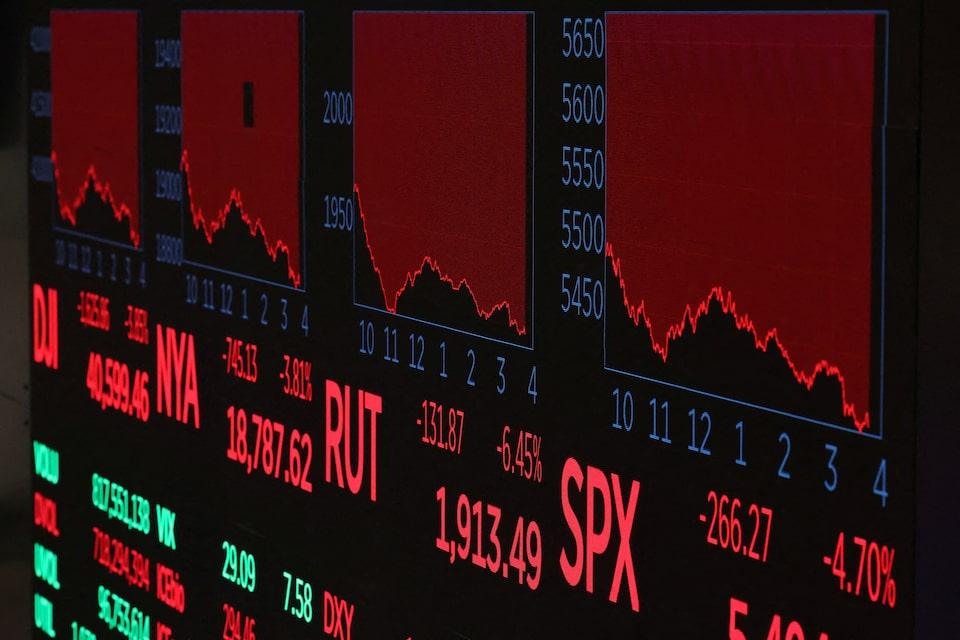
Indicators like the VIX, put-to-call ratios not at extremes Experts are not convinced the market has hit a bottom Ongoing trade tensions could spur more volatility NEW YORK, April 4 (Reuters) - Investors are looking for signs the selling in the U.S. stock market may have reached a crescendo, but say that the check marks are not yet all ticked and there is room for further pain. President Donald Trump's announcement of sweeping tariffs on Wednesday extended U.S. stocks' selloff this year with the S&P 500 down 12% from its February record high and the tech-heavy Nasdaq index (.IXIC) , opens new tab down 18% - close to being in a bear market. Still, few see a market bottom. Sign up here. "We're definitely not at 'get me out!' levels," Steve Sosnick, chief strategist at Interactive Brokers, said. While investors don't always agree on what indicators best signal a capitulation, most look at a handful of measures of investor sentiment and selling pressure. These include the options-based Cboe Volatility Index (.VIX) , opens new tab, options indicators such as put-to-call ratios and technical barometers, including indicators of market breadth. "Even today we aren't at the point where investors can check the box on all the indicators," said Brian Jacobsen, chief economist at Annex Wealth Management. For one, the VIX, dubbed the Wall Street "fear gauge" remains shy of the levels hit at market lows. In the last 10 instances when the S&P 500 experienced a correction - a fall of 10% or more from a recent high - the VIX on average touched a peak level of 37 before the selling was done. The index closed at 30.02 on Thursday, its first close above the 30 level in 8 months, showing increased investor anxiety but possibly not yet at capitulation point. Another options measure - put-to-call ratio - that compares the trading volume of put options, typically used for defensive positions to call options, usually bought for bullish bets, has spiked but remains off highs. The 1-month moving average of daily puts-to-calls traded stood near a 1-year high of 0.85 on Thursday, but well shy of the high of 1.05 touched in the last four years, according to a Reuters analysis of options data from Trade Alert data. Measures of market breadth, including the number of stocks down versus up, also remain below extremes. On Monday, about 81% of S&P 500 constituents finished in the red. "We're not seeing major 90% downside levels that show that just everything is being thrown out," Andrew Thrasher, portfolio manager for Financial Enhancement Group, said. Historically, one-day declines of 4% or more for the S&P, have not been sure-fire markers of market bottoms, Thrasher said. "The magnitude of a single decline isn't symptomatic to say that we've seen capitulation," he said. BUYERS BEWARE A key hindrance to buyers stepping in is the continuing uncertainty on how other countries will react to Trump's tariffs. "I don't think the story's completely been told," Mark Hackett, chief market strategist at Nationwide said, noting that investors remain unsure whether what follows now is a series of negotiations to calm tensions or a full-blown trade war. That is not to say investors will not be looking to selectively pick up stocks. "Today represents a chance to finally buy some really quality names at a much cheaper price point," Phil Blancato, chief market strategist at Osaic Wealth, said. "Volatility can be your friend if you're willing to accept that we're going to be in a volatile range here for at least until probably the summer, if not into the fall," Blancato said. But for the most part investors remain skeptical. "We are beginning to price in a recession in the market," Francis Gannon, Co-CIO at Royce Investment Partners, said. "I'm not 100% sure but I don't think this was a clearing event for the market today," he said, referring to a moment in markets when intense selling pressure eases. Much of the market's near-term outlook hinges on how the tariffs drama plays out, but investors are not counting on a swift resolution. "In the absence of a policy reversal, which seems unlikely, based on recent statements from the Trump administration, elevated volatility is likely to remain the base case in the near term," Adam Reinert, chief investment officer at Marshall Financial said. That leaves the market at the mercy of investors brave enough to catch the proverbial falling knife. "There are two parts to creating tactical lows," Jonathan Krinsky, chief market technician at BTIG, said in a note. "First you need the fear that creates the capitulation, then you need the positive reaction to that fear that confirms a low has been made. So far we are starting to see the first part, but need to see buyers react," he said. https://www.reuters.com/markets/us/wall-street-searches-elusive-signs-that-market-bottom-reached-2025-04-04/
2025-04-04 09:21
KAMPALA, April 4 (Reuters) - The Ugandan shilling was stable on Friday, but was expected to weaken, driven by demand for dollars from energy firms, traders said. At 0904 GMT, commercial banks quoted the shilling at 3,648/3,658, compared with Thursday's closing of 3,647 / 3,657. Sign up here. https://www.reuters.com/markets/currencies/ugandan-shilling-stable-weaken-due-energy-sector-dollar-demand-2025-04-04/

2025-04-04 09:01
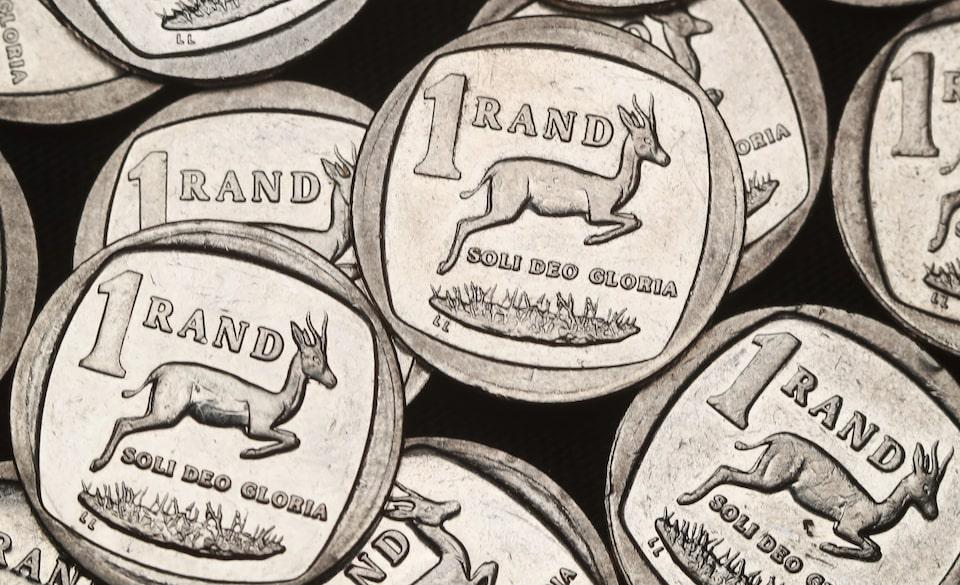
JOHANNESBURG, April 4 (Reuters) - South African assets fell further on Friday as investors worried about the impact of U.S. President Donald Trump's sweeping tariffs and the future of South Africa's coalition government. At 1511 GMT, the rand traded at 19.0175 against the dollar , down about 1.5% on Thursday's closing level. Sign up here. The South African currency has fallen more than 3% against the dollar this week, with bigger losses against currencies like the euro and pound. Trump's 10% baseline tariff on all imports to the United States and higher duties for dozens of countries like South Africa, has sent shockwaves through markets. Investors have dumped riskier currencies like the rand and sought safety in assets like bonds and gold, fearing that a full-blown trade dispute could trigger a sharp global economic slowdown and fuel inflation. The tariffs could hurt South Africa's economy by denting exports like vehicles and auto parts, metals and citrus fruit. Johann Els, chief economist at Old Mutual, said that more volatility was expected in the days and weeks ahead before the rand settled back in a stable territory. An added worry for South Africa-focused investors is that the pro-business Democratic Alliance (DA) party could leave the coalition government after a dispute over the budget. The DA voted against the budget's fiscal framework and revenue proposals in parliament this week after failing to reach an agreement with the biggest party in the coalition, the African National Congress (ANC). It is now considering its future in the coalition, with some in the ANC also pushing for it to exit government. Johannesburg-listed stocks and government bonds also fell on Friday. The local bourse's Top-40 index (.JTOPI) , opens new tab closed down about 5.4%, while the yield on the benchmark 2030 government bond rose 18.5 basis points to 9.41%. https://www.reuters.com/markets/currencies/south-african-rand-extends-drop-tariffs-local-politics-2025-04-04/
2025-04-04 07:34
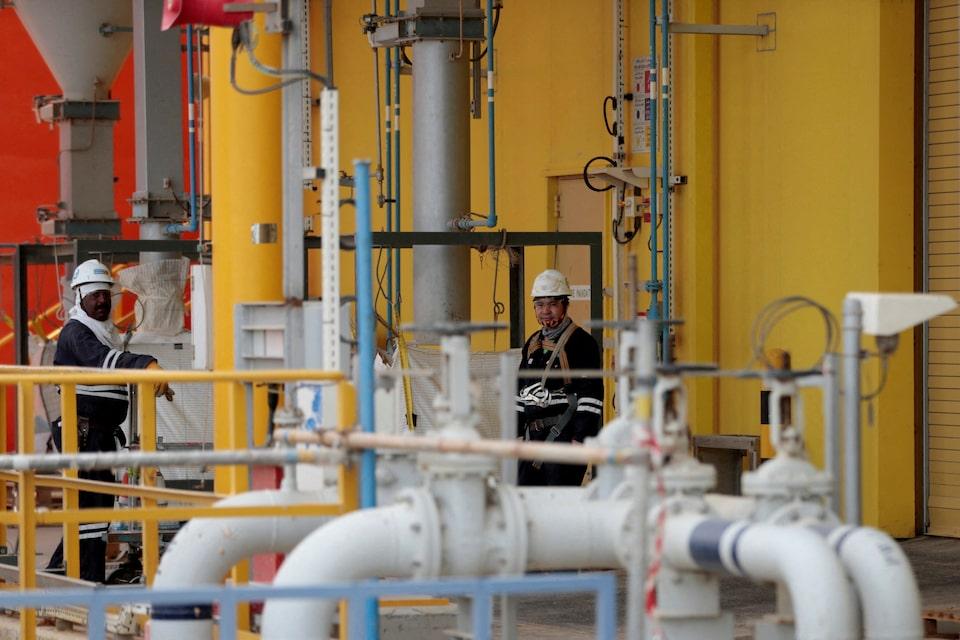
NEW DELHI, April 4 (Reuters) - Sweeping new U.S. import tariffs threaten to further erode demand for global petrochemical producers and accelerate capacity cuts in an industry plagued by weak margins, industry officials and analysts said. Tariffs announced by President Donald Trump on Wednesday are expected to drive up prices for goods such as electronics, appliances and packaging, denting consumption and curbing demand for the petrochemicals used to make plastics and industrial chemicals. Sign up here. While imports of oil, gas and refined products were exempt from Trump's tariffs, refining margins in Asia for key petrochemical feedstock naphtha plunged 13% to $73.07 per metric ton over Brent crude on Thursday, their lowest since January 17. "In the short-term, say two to three years, demand is going to be hit in export-based economies and if tariffs are imposed without further changes, the recovery in margins will be pushed out by six months to one year," said Pankaj Srivastava, senior vice president at Rystad Energy, said. "Those economies will be under pressure to lower utilisation rates at their plants and shut some of the existing loss-making assets," he added. Naphtha margins reached as high as $257 per ton in March 2022 amid fears of supply disruptions on the Black Sea route due to the Russia-Ukraine war. Since then, margins have collapsed as global petrochemical demand has softened while new capacity has come online, mostly in China. Several consultancies forecast a recovery only by 2027-28, when Chinese capacity additions slow. Major producers in Asia and Europe have been offloading assets and shutting aging plants, while U.S. operators have switched to cheaper feedstocks such as ethane over naphtha to weather the downturn. Industry insiders now expect further industry pain in the aftermath of Trump's tariffs, with some producers in Asian economies including export powerhouses Taiwan, South Korea and Japan likely facing added pressure to shut. Plants are already running at minimum rates due to the weak margins and tariffs might force them to make the tough decision to shut down, said an official at a global petrochemical trader, declining to be identified as he was not authorised to speak with media. Import levies could also force a costly reshuffling of trade flows and supply chains already upended by sanctions on Russian oil exports and Houthi attacks in the Red Sea. China and the European Union have vowed countermeasures. https://www.reuters.com/markets/commodities/trump-tariffs-poised-exacerbate-woes-ailing-petchems-sector-2025-04-04/
2025-04-04 07:05
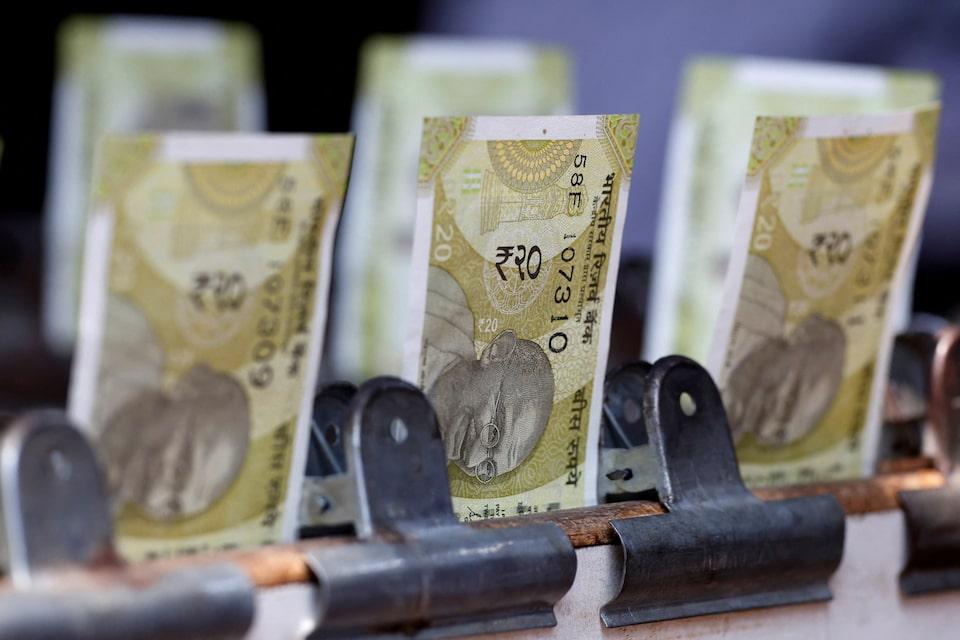
MUMBAI, April 4 (Reuters) - The Reserve Bank of India's inaction to the rupee's ongoing rally, which lifted it above 85, surprised market participants and sent traders scrambling to adjust positions after the central bank did not step in to absorb dollars as was expected. The rupee rose to a peak of 84.9675 in early trade on Friday before trimming gains and was last quoted at 85.2650, up 0.2% on the day. Sign up here. Recession worries stoked by sweeping U.S. tariffs dragged the dollar, helping the rupee rise above 85 for the first time this year and extending its rally into April after seasonal and portfolio dollar inflows boosted it last month. Traders have pointed out that while the RBI would routinely intervene to buy dollars during periods of rupee strength last year, the central bank appears to have held off this time even as the rupee climbed more than 2.5% in around three weeks. The RBI did not immediately respond to a request seeking comment. The currency's surprising rally has also prompted a sharp unwinding of short bets against the currency, per a Reuters poll. The rupee's recent gains are in line with its Asian peers and the RBI allowing that opens up room for a more expansionary monetary policy to support growth, said Dhiraj Nim, an economist and FX rates strategist at ANZ. The valuation gains accruing to FX reserves have also turned positive, reducing the urgency to buy dollars and preventing India’s FX policy from drawing attention while a trade deal with the U.S. is being negotiated, Nim said. Expectations of sharper policy easing by the RBI have increased amid concerns about India's growth outlook being hurt by U.S. tariffs. Citi and Goldman Sachs both raised their expected quantum of rate cuts by the RBI this year. However, that has done little to dent the rupee's stride in the face of a weaker dollar, even as traders and analysts caution that the global growth shock of U.S. tariffs is bound to lead the rupee lower alongside its regional peers. Barclays currently recommends taking a long position on the 3-month dollar-rupee non-deliverable forward with a target of 90. The 3-month NDF was last quoted at around 85.75. https://www.reuters.com/markets/currencies/india-rupee-climbs-past-85usd-central-bank-inaction-surprises-2025-04-04/
2025-04-04 07:00
April 7 (Reuters) - Global investors have yearned for clarity over U.S. President Donald Trump's tariffs, but now they have it, they don't much like what they see. As part of his "Liberation Day" on April 2, Trump slapped hefty tariffs on major trading partners, plunging markets into turmoil, just as investors parse through the first new quarterly earnings, along with Chinese inflation data, waiting for the rest of the world to respond. Sign up here. Here is a look at the week ahead from Rae Wee in Singapore, Lewis Krauskopf in New York, Dhara Ranasinghe, Libby George and Amanda Cooper in London. 1/ UPSIDE DOWN Trump's tariffs have panicked investors, who now believe a U.S. recession could happen, jettisoning U.S. stocks in one of the most aggressive sell-offs in the past 30 years and hunting for safe-haven gems. The dollar has typically been the shelter of choice. But the extent of the fear over what damage the tariffs might do to the U.S. economy and the U.S. administration's increasingly isolationist tendencies has left the dollar in the dust. Gold, the Japanese yen and the Swiss franc have all soared along with Treasury prices. Not content with turning the world order on its head, Trump and Co are turning markets on their head too and investors are having to find new ways to play it. 2/ NEXT, RETALIATION DAY Global markets have felt the impact of "Liberation Day," now they have to brace for what many are already calling "Retaliation Day" from trade partners in response to the highest U.S. tariffs in over a century. Signs of that may come next week and beyond. The next steps from the European Union and China are especially in focus. The EU is expected to pursue a phased approach that leaves space for negotiations to deescalate tensions. China retaliated on Friday, imposing a 34% duty on all U.S. goods from April 10 as a countermeasure. For market watchers, it's pretty straightforward -- the stronger the retaliation to U.S. tariffs, the higher the chances the world economy lurches into recession and keeps investors away from risk assets. 3/ TROUBLE AT THE FACTORY "Factory Asia" has taken a particularly large hit from Trump’s new tariffs. Six of the nine Southeast Asian countries on Trump's list face tariffs between 32% and 49%. Sri Lanka, which is clawing back from its worst economic crisis in a generation, took a painful 44% hike. The news sent Asian currencies plunging – and Sri Lanka's sovereign dollar bonds to their lowest since last year's debt restructuring. Investors expect Asia's central banks to counter the hit. Thailand's central bank has already said it's ready to manage tariff-induced volatility. For Sri Lanka, it's trickier; the U.S. typically takes around 40% of its apparel exports, which brought in a net $1.9 billion last year – its second-biggest source of foreign currency. Yohan Lawrence, Secretary General of Sri Lanka's Joint Apparel Association Forum said the situation "must be addressed as a matter of national urgency". 4/ EARNINGS ON DECK A crucial quarterly reporting season for U.S. companies kicks off in the coming week, led by results from several major banks. Investors will be hoping strong earnings can revive enthusiasm for stocks on the heels of the worst quarterly performance for the S&P 500 since 2022. JPMorgan (JPM.N) , opens new tab, Wells Fargo (WFC.N) , opens new tab and Morgan Stanley (MS.N) , opens new tab are among those reporting on April 11. Delta Air Lines (DAL.N) , opens new tab and Corona beer maker Constellation Brands (STZ.N) , opens new tab also post results. Overall, first-quarter earnings for the S&P 500 are expected to have climbed by 8% from the year-earlier period, according to LSEG IBES, with the fallout from tariffs likely to be a major topic for companies. Focus will also be on the consumer price index report for March due April 10, with investors looking to see if inflation is moderating enough to allow the Fed to continue cutting rates. 5/ SOME RELIEF? Chinese inflation data is due on Thursday, and investors will be hoping households in the world's second-largest economy showed more willingness to spend in March after February's dismal consumer price index reading. The figures come on the heels of China's State Council's "special action plan" reveal last month, featuring measures such as increasing residents' income and establishing a childcare subsidy scheme to boost domestic consumption. While recent economic data in the country has turned more favourable and Chinese stocks continue to find themselves more buyers, persistent deflationary pressures remain a huge drag. Trump's tariffs are also complicating matters for Beijing in its quest to mount a solid recovery. In other news, a rate decision from the Reserve Bank of New Zealand (RBNZ) is due on Wednesday, where expectations are for yet another rate cut as policymakers seek to revive a struggling economy. https://www.reuters.com/business/take-five/global-markets-themes-graphic-2025-04-04/