2025-04-04 06:04
U.S. wields power as epicentre of financial world Mar-a-Lago accord for dollar devaluation seen as unlikely More aggressive tactics may involve dollar funding, payments U.S. bankers fear European blowback FRANKFURT, April 4 (Reuters) - With the ink still fresh on U.S. President Donald Trump's latest batch of tariffs, some are already bracing for what may come next in his effort to strong-arm trading partners into doing his bidding. As the epicentre of the financial world and the issuer of the global reserve currency, the United States has a number of levers that Trump can pull to coerce other countries, from credit cards to the very provision of dollars to foreign banks. Sign up here. While deploying these unconventional weapons would come at a large cost for the U.S. itself and may even backfire altogether, observers say such doomsday scenarios should not be discarded. This would be particularly true if tariffs do not succeed in reducing the U.S. trade deficit with the rest of the world - an outcome many economists see as plausible given the fact that near-full employment in the U.S. has led to deep labour shortages. China retaliated on Friday, sending U.S. stocks tumbling further, deepening the crisis. "I could well imagine that Mr. Trump...grows frustrated and he does try to implement wacky ideas, even if the logic for them is not there," said Barry Eichengreen, professor of economics and political science at the University of California, Berkeley. MAR-A-LAGO ACCORD The U.S. administration's not-so-secret plan is to rebalance trade by weakening the dollar. A way to do that would be to enlist foreign central banks in a coordinated effort to revalue their own currencies. According to a paper , opens new tab by Trump's pick to chair his Council of Economic Advisers, Stephen Miran, this may happen as part of a Mar-a-Lago accord, a reference to the dollar-capping Plaza Accord of 1985 and to Trump's resort in Florida. The November paper suggested the United States would use the threat of tariffs and the lure of U.S. security support to persuade foreign countries to appreciate their currencies against the dollar, among other concessions. But economists are sceptical any such deal would gain traction in Europe or China because the economic and political situation is so different now from four decades ago. "I think that's a really unlikely scenario," Maurice Obstfeld, a senior fellow at the Peterson Institute for International Economics, said. Obstfeld argued tariffs had already been imposed, removing their use as a threat, and the United States' commitment to global security had been weakened by its ambiguity on Ukraine. He added central bankers in the euro zone, Japan and Britain were unlikely to yield to a deal that would see them forced to raise interest rates and risk a recession. And TS Lombard chief economist Freya Beamish argued that engineering a stronger yuan would also go against China's need to reflate its struggling economy. Even in Japan, where the government has repeatedly intervened in the currency market over the past few years to prop up the yen, memories of 25 years of deflation that only recently ended may temper any enthusiasm for strong yen appreciation. DOLLAR BACKSTOP If an accord can't be reached, Trump's administration might be tempted to use more aggressive tactics, such as harnessing the dollar's status as the currency in which the world trades, saves and invests. This may take the shape of threatening to turn off the Federal Reserve's taps for foreign central banks, which allows them to borrow dollars in return for collateral in their own currency, according to Obstfeld and some supervisors and central bankers. This is an essential source of funding at times of crisis, when money markets seize up and investors retrench to the safety of the dollar. Taking it away would upset a multi-trillion market for dollar credit outside of the United States and hit banks in Britain, the euro zone and Japan particularly hard. Of course, these so-called swap lines are firmly in the Fed's hands and Trump has never signalled it wanted to take control of powerful monetary institution. But his recent moves to replace key personnel, including at regulatory agencies, have unnerved observers. "It is no longer inconceivable that in a bigger negotiation this could serve as a nuclear threat," Spyros Andreopoulos, founder of the Thin Ice Macroeconomics consultancy, said. He thought such a move would over time erode the dollar's status as a reliable global currency. CREDIT CARDS The United States has another ace up its sleeve - its payment giants, including credit card companies Visa (V.N) , opens new tab and Mastercard (MA.N) , opens new tab. While Japan and China have to varying degrees developed their own electronic means of payment, the two U.S. firms process two-thirds of card payments made in 20-nation euro zone. Mobile phone app payments, dominated by U.S. firms such as Apple and Google make up almost one-tenth of retail payments. This shift has put Europeans on the back foot in a vast market, worth more than 113 trillion euros ($124.7 trillion dollars) in the first six months of last year. Were Visa and Mastercard to be pressured into pulling the plug on services, as they did in Russia shortly after it invaded Ukraine, Europeans would have to use cash or cumbersome bank transfers to shop instead. "That the U.S. has turned hostile is a huge setback," Maria Demertzis, chief economist for Europe at the Conference Board think tank, said. The European Central Bank has said this exposed Europe to the risk of "economic pressure and coercion" and a digital euro may be a solution. But the plans to roll out this digital currency have become bogged down in discussion and may take years to introduce. European officials are considering how they could respond to Trump's actions but are wary of triggering a further escalation. They could impose tariffs of their own or resort to more drastic measures, such as limiting U.S. banks' access to the European Union. Taking such radical steps could, however, be hard because of the international clout of Wall Street, as well as the risk of a backlash against European lenders doing business in the U.S. Still, some international bank executives told Reuters that they were concerned about the threat of blowback from Europe in the coming months. https://www.reuters.com/markets/after-tariff-shock-trump-may-weaponise-finance-against-allies-2025-04-04/
2025-04-04 05:47
MUMBAI, April 3 (Reuters) - India's $32 billion gems and jewellery industry is bracing for a sharp fall in exports as hefty U.S. tariffs will impede overseas sales to its biggest market, industry officials said. The United States slapped a 26% reciprocal tariff on India, dealing a blow to the South Asian country's hopes of relief under President Donald Trump's global trade policy. Sign up here. "The tariff is higher than expected," Colin Shah, managing director of Kama Jewelry, one of India's leading diamond jewellery manufacturers, told Reuters. "It is quite severe and will affect exports." India is the world's largest hub for diamond cutting and polishing, handling nine out of every 10 diamonds processed globally. The United States accounts for nearly $10 billion or 30.4% of India's annual gems and jewellery exports of $32 billion. Gems and jewellery are India's third-largest export to the United States, after engineering and electronic goods, and the industry employs millions in the South Asian country. The sector has already been hit in recent months by weak demand from China and exports dropped 14.5% to $32.3 billion in the 2023-24 fiscal year (April-March). A long-term bilateral trade deal with the United States could soften help the blow, Shah said. India and the United States are in talks to clinch an early trade deal. "We're are pretty hopeful that India could land a trade deal with the U.S. in the next few months. So, we just need to push through this tough phase for a little while longer," said Shaunak Parikh, vice chairman of the Gem and Jewellery Export Promotion Council (GJEPC). https://www.reuters.com/markets/commodities/with-us-tariffs-indias-jewellery-exports-set-sharp-decline-2025-04-03/

2025-04-04 05:38
U.S. non-farm payrolls report due at 1230 GMT China to impose tariffs of 34% on all US goods from April 10 Silver headed for its worst week since December 2023 April 4 (Reuters) - Gold gained on Friday after reaching a record high in the previous session, as investors turned to the safe-haven asset amid heightened global trade conflict following China's retaliation with new tariffs against U.S. President Trump's extensive levies. Spot gold firmed 0.5% at $3,128.76 an ounce as of 1116 GMT, after falling 1% earlier in the session, while U.S. gold futures were up 0.9% at $3,151.20. Sign up here. Spot prices hit a record $3,167.57 on Thursday as investors rushed for safe-haven assets after Trump announced tariffs against major trading partners. They remain on track for a weekly gain. Despite volatility, "gold is still a safe haven place for many investors ... I think the downside could be limited from here and I expect it to hold about $3,080 for now," Matt Simpson, a senior analyst at City Index said. China's finance ministry said it will impose additional tariffs of 34% on all U.S. goods from April 10. This comes a day after Trump said he would impose a 10% baseline tariff on all imports to the U.S. and higher duties on some of the country's biggest trading partners. Nitesh Shah, head of commodities and macroeconomic research for Europe at Wisdom Tree, said gold could get closer to $3,600 by the first quarter of 2026. U.S. non-farm payrolls data is due at 1230 GMT, while Fed Chair Jerome Powell is also due to speak later in the day. "Market analysts are increasingly speculating that Powell might strike a more dovish tone, which could provide support to the markets," Zain Vawda, a market analyst at MarketPulse by OANDA, said. Gold is known as a hedge against inflation, but higher rates could dampen its appeal as it yields no interest. On the physical front, demand for gold ticked up in China, although customers in India refrained from purchases, anticipating a price drop. Spot silver declined 1.5% to $31.40 an ounce and was headed for its worst week since December 2023. Platinum lost 1.1% to $941.90 and palladium slipped 0.6% to $922.75. https://www.reuters.com/markets/commodities/gold-falls-risk-appetite-dwindles-trumps-tariff-clarity-2025-04-04/

2025-04-04 05:23
April 4 (Reuters) - Australian energy stocks (.AXEJ) , opens new tab bore the brunt of fears of a further decline in oil prices after U.S. President Donald Trump's reciprocal tariffs rattled global markets. The energy sub-index lost 7.6% as of 0434 GMT, diving to its lowest since November 10, 2020, and was on track for what could be its worst day in over five years. Sign up here. The broader ASX200 benchmark index (.AXJO) , opens new tab shed 2.3% to its nearly eight-month low of 7,681.1 points. Following Trump's announcement, eight OPEC+ countries agreed to advance their plan for oil output hikes, a move that could pressure prices. Sector major Woodside Energy (WDS.AX) , opens new tab lost almost 9%, falling to its lowest since November 29, 2021. The stock was set for its worst day in over five years. Smaller peer and once a takeover target, Santos (STO.AX) , opens new tab shed 8.6%, its worst intraday percentage fall in over five years. Oil and gas explorers Karoon Energy (KAR.AX) , opens new tab and Beach Energy (BPT.AX) , opens new tab declined 11.4% and 10%, respectively. The stocks "are likely to suffer for as long as the markets are pricing in higher and higher probabilities of a U.S. recession", Kyle Rodda, a senior financial analyst with Capital.com, said, adding to the bearish sentiment. Global oil prices continued their decline in early Asian trade, after Thursday's more than 6% slump, the steepest in three years. The downturn was fueled by concerns that the fresh U.S. tariffs could further escalate the global trade war and potentially dampen oil demand. In Australia, which has been slapped with a 10% duty - equivalent to the U.S. baseline tariff on all imports, investors are scrambling to safer bets such as consumer staples, sparking a frantic sell-off that sent the stocks plummeting. https://www.reuters.com/business/energy/panic-selling-hits-australian-energy-stocks-woodside-santos-slump-2025-04-04/
2025-04-04 05:18
Powell pushes back on easing due to tariff-induced inflation Australian dollar hits five-year low against dollar US dollar hits a six-month low versus safe-haven Swiss Franc Investors weigh dollar's status as a safe haven currency NEW YORK, April 4 (Reuters) - The U.S. dollar rebounded against major currencies such as the euro and yen on Friday after Federal Reserve Chairman Jerome Powell acknowledged the repercussions of larger-than-expected U.S. tariffs and signaled a cautious tone on future easing. Powell said tariffs increased the risk of higher inflation and slower growth, highlighting the difficult path ahead for policymakers at the U.S. central bank. Sign up here. The Australian dollar, meanwhile, seen as a liquid proxy for the yuan, hit five-year lows against the greenback after China announced additional tariffs on U.S. goods on Friday. "This is a bit of a more hawkish reaction that he's focusing on the inflationary impact of tariffs. The U.S. economy has been dealing with higher inflation, and because the U.S. is the one doing the tariffs and it will apply to all imports, it's likely to have more impact on the U.S.," said Peter Vassallo, FX portfolio manager at BNP Paribas Asset Management. "The inflationary concerns are real, and this makes sense as we think about the fact that inflation, for five years now, has been running above target." Powell's comments followed data earlier in the day showing that nonfarm payrolls rose by 228,000 jobs last month after a downwardly revised 117,000 rise in February, well above the 135,000 forecast. The unemployment rate ticked up to 4.2% from 4.1%. Markets drew little comfort from the numbers because "they don't factor in any of this week's events or the fallout that will inevitably come with them over the next few weeks," said Helen Given, director of trading, Monex USA. China announced additional tariffs of 34% on all U.S. goods, starting April 10. The move added to recession concerns and intensified a global stock market rout. A closely-watched inflation indicator next week will show how much the prices of goods and services are changing for consumers. The euro was last down 0.95% to $1.10947. It had jumped 1.8% on Thursday - its biggest daily rise since November 2022 - reaching as high as $1.1147, a level not seen since September 30. The euro posted its largest weekly rise since March 3. Markets are predicting four quarter-point interest rate cuts from the Fed in the remainder of this year, and reduced the odds of further Bank of Japan tightening to 11 bps. They also fully priced in three 25 basis point European Central Bank rate cuts by December . The dollar index , a measure of the currency against a basket of six major peers, had plunged 1.9% on Thursday, its worst day since November 2022. It rose 0.98% to 103 in afternoon trading on Friday. The Swiss Franc rose 0.6% versus the euro and hit a six-month high versus the dollar . Meanwhile, sterling declined 1.61% to $1.2889, after pushing as high as $1.3207 a day earlier, the first time since October 3. It was the pound's largest weekly decline since February 24. Deutsche Bank warned on Thursday of the risk of a crisis of confidence in the U.S. dollar, saying major shifts in capital flow allocations could take over from currency fundamentals and spark disorderly currency moves. As Chinese markets observed a national holiday on Friday, the dollar edged up 0.2% at 7.2959 yuan in offshore trade . On Thursday, it had leapt as much as 0.7% to a two-month high at 7.3485. The Australian dollar , which fell to its lowest since early April 2020, was last down 4.42% at $0.60490. Similarly, the New Zealand dollar was down 3.42% to $0.55960. The Aussie dollar posted its largest weekly loss since March 2020. The Canadian dollar dropped 0.81% to 1.4208. Meanwhile, the greenback pared losses against the yen, trading up 0.58% to 146.92 yen . It had slumped 2.2% in the prior session, at one point dipping as low as 145.19 yen for the first time since October 2. On the week, the dollar is down the most since early February. China faces combined duties of some 64%, when also factoring in a tariff of 10% that Trump levied in his first presidential term. Both China and the EU vowed countermeasures, raising the risk of a broader trade war. https://www.reuters.com/markets/currencies/dollar-fragile-traders-take-stock-tariff-fallout-ahead-us-jobs-report-2025-04-04/
2025-04-04 05:08
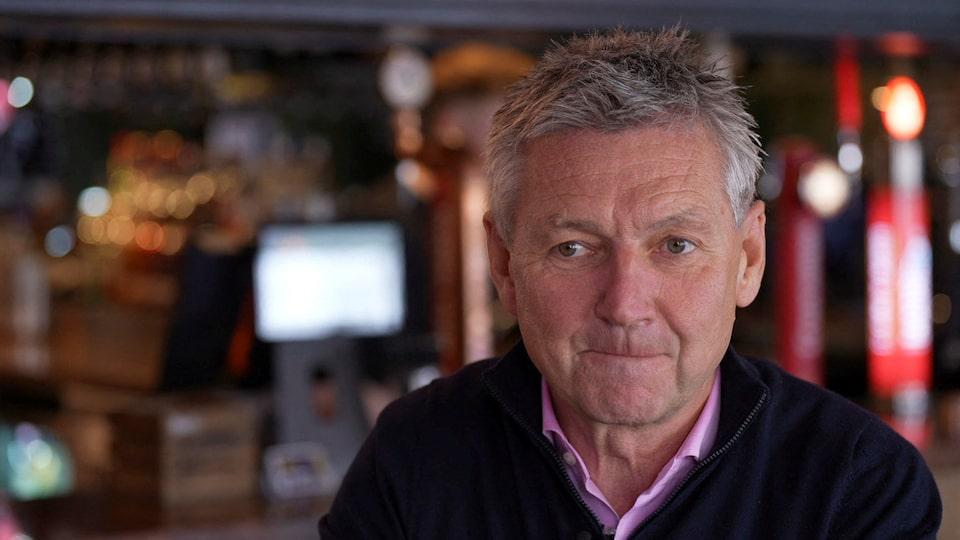
UK employers face bigger social security bill from Sunday Businesses say prices are likely to rise to cover the cost Bank of England is watching for impact on inflation Lower staffing, slower wage growth also likely responses BROADSTAIRS, England, April 4 (Reuters) - Pub owner Philip Thorley sees only one direction for his prices once a tax hike for British employers kicks in next week: up. That may be bad news for the Bank of England, which plans to lower interest rates to help the sluggish economy. Thorley, who owns 18 hospitality sites around the seaside town of Broadstairs, said he could not absorb all the extra cost, which follows a painful run of inflation in recent years. Sign up here. "We feel as though we've been fighting Mike Tyson with one hand tied behind our back," Thorley said as drinkers in his Cramptons sports bar watched cycling and cricket on screens. "We're not a sponge. At some point we've got to look at it and say enough's enough." Many business owners are bracing for the 25 billion-pound ($33 billion) hike in employers' social security contributions - announced in October by finance minister Rachel Reeves and which comes into force on Sunday. Reeves has described her first budget, which included the biggest package of tax increases in three decades, as a "once-in-a-generation" change to invest in public services and modernising the economy. On Wednesday, she told lawmakers that there were costs to her tax changes but being irresponsible with the public finances would be worse. The social security hike will be felt keenly in hospitality, where two-thirds of workers are part-time and have mostly earned too little for employers to pay the contributions. But from the start of the tax year on April 6 the threshold drops sharply, to 5,000 pounds a year from 9,100 pounds for workers aged over 21. The contributions rate will also rise. At Cramptons, only four of 30 staff outside the kitchen earn more than the existing threshold. From next week, almost all of them will. "It is going to be really difficult for us ... to swallow this," said Thorley, who employs about 400 people, many of them young workers. "However, we're not going to ... be making knee-jerk reactions. We're going to try to be pragmatic about it." Thorley recently increased his drinks prices by 5% following an annual price hike by beer suppliers. He expects a similar rise will be needed to cover most of the tax increase. The British Beer & Pub Association estimates the average price of a pint will go up by 21 pence - taking it above five pounds - due to the tax hike and other changes. On April 1, Britain's minimum wage went up by nearly 7%, with bigger increases for younger workers. Hospitality firms are also facing a cut to COVID-era relief from a commercial property-related tax. HIRING HIT TOO The difference between labour costs paid by employers and employees' take-home pay - the so-called tax wedge - is lower in Britain than among European peers, a result of decades of government policy to prioritise hiring. But a push to narrow that difference would not be pain-free. While some firms are planning to automate more - retailer Currys has said it will replace paper price labels with electronic labelling - most employers are considering less hiring and slower wage increases in response to Reeves' budget. Steve Hardeman, owner of Clevedon Fasteners which makes parts for construction and engineering firms, said the social security and minimum wage increases were the equivalent of adding two people to his staff of 28. Rory O'Keefe, commercial director at medical device maker Europlaz, said his firm hired two people on fixed-term rather than permanent contracts and would take three students on short-term placements instead of finding graduates. The Bank of England is waiting to see what impact the budget changes will have. Governor Andrew Bailey and colleagues say they expect to keep cutting interest rates after three careful reductions since August, fewer than in the euro zone and United States. Last month the BoE stressed the uncertainties hanging over the economy. They include the risk of a global trade war, which could cause a slowdown and weaker inflation. That risk grew as U.S. President Donald Trump announced a sharp increase in tariffs on imports from around the world on Wednesday . BoE surveys of British businesses, however, have shown the most common responses to Reeves' budget will be higher prices and to absorb the hit in profit margins. Rob Wood, a former BoE economist, said the central bank risked underestimating the price impact of the changes, which were likely to add half a percentage point to an inflation rate already under pressure from other one-off costs, and might even push it above 4% later this year from just under 3% now. That would be a lot lower than inflation of 11% in 2022 but more than double the BoE's 2% target. "The Bank of England would normally look through one-off inflation rises," Wood, now chief UK economist at Pantheon Macroeconomics, said. "But one-off or temporary inflation has become a bit of a dirty word since COVID, after central banks misjudged this pretty heavily through 2022 and 2023." Rising inflation expectations among households and businesses mean the BoE cannot count on pay deal restraint, especially if Reeves' tax increase fuels further price rises. "If you had to pick a time to make this change, I wouldn't have done it now," Wood said. ($1 = 0.7596 pounds) https://www.reuters.com/world/uk/tax-hit-looms-uk-employers-prepare-push-up-prices-2025-04-04/