2025-04-04 05:01
April 4 (Reuters) - Goldman Sachs lowered its forecast for Brent crude's average price this year by 5.5% to $69 a barrel and for WTI prices by 4.3% to $66, citing the risks of higher OPEC+ supply and the global trade war triggering a recession. The Wall Street brokerage also chopped its 2026 average price forecast for Brent by 9% to $62 and for WTI by 6.3% to $59, and warned that the new estimates could be lowered further. Sign up here. "The risks to our reduced oil price forecast are to the downside, especially for 2026, given growing risks of recession and to a lesser extent of higher OPEC+ supply," Goldman analysts said in a note. Brent crude was priced at $69.59 a barrel as of 0408 GMT on Friday, while WTI was at $66.39. Crude prices posted their biggest percentage drops since 2022 on Thursday after U.S. President Donald Trump slapped reciprocal tariffs on many countries and eight OPEC+ members unexpectedly advanced their plan to phase out production cuts by boosting output in May. The latter, said Goldman, showed OPEC's flexibility to rapidly implement large output hikes, which diminished the likelihood of a price boost in the short term from lower supply. The brokerage said it now expects oil demand to grow by only 600,000 barrels per day (bpd) this year, down from its previous forecast of 900,000 bpd, and to increase by 700,000 bpd in 2026. (This story has been corrected to show that the oil demand growth forecast for 2025 is 600,000 bpd, not 600,000-700,000 bpd, in paragraph 7) https://www.reuters.com/business/energy/goldman-cuts-oil-price-forecasts-amid-tariff-fears-higher-opec-supply-2025-04-04/
2025-04-04 04:33
A look at the day ahead in European and global markets from Wayne Cole It's been another day of pain in Asia with the Nikkei down 3% and a stomach-churning 9.6% for the week, the biggest drop since the pandemic hit in March 2020. Wall St futures started steady but have since slipped around 0.7% while European stock futures are off 0.3% to 0.6%. Sign up here. The dollar is sitting on a weekly loss of 2.7% versus the yen and 3.0% on the Swissy, with the euro up 2.4%. So much for tariffs being bullish for the USD. It should be no surprise that capricious twists in U.S. policy have investors fleeing in fear: If you launch an unprovoked trade war on allies and opponents alike with no clear goal except, seemingly, to extract money or favours, don't be surprised when you're not top of investors' Christmas card lists. As analysts have noted, for decades now global investors have allocated 70% of their equity cash to U.S. stocks, way above the economy's 26% share of global GDP. If that preferred status is lost, say by starting a global trade war, money could well flow the other way. The sums involved would dwarf any tariff boost to the dollar from the U.S. buying fewer imports, while squeezing foreign investors with unhedged positions on Wall Street - that's most of them. As for encouraging more capital investment in U.S. manufacturing, what firm would want to take the risk when the White House can change the rules on a dime? If the idea is that these punishing tariff rates are just a bargaining ploy that can be moderated if countries pay enough to satisfy Trump, that merely underscores the problem. Unpredictability might be OK in game theory but not when you're a company risking billions of dollars in a years-long investment decision. Take Apple. Its supply chains are deeply embedded in Asia, where tariffs now range from 24% to 54%. Even if it could move some of its manufacturing to the States, a big ask, the resulting iPhones would cost multiples of what they do now. Apple's fat profit margins mean it's better able than most to absorb some of the tariff hit in the near term, but it's those Kobe beef-type margins that justify the stock's stratospheric price rating. And spare a thought for the Fed, caught between an almost certain spike in consumer prices and the mounting risk of recession as consumers and businesses cut back. Fed fund futures are up another 9 basis points for December today, implying 99 basis points of cuts this year. That's a certain sign that markets think rising unemployment will trump (sorry) the pop in inflation and force the Fed to ease. Bet Fed Chair Powell is really looking forward to his speech on the economy later today. Key developments that could influence markets on Friday: - EU construction PMI, German industrial orders, UK PMI - Speeches by Fed Chair Powell, governors Waller and Barr - US payrolls report for March https://www.reuters.com/markets/europe/global-markets-view-europe-2025-04-04/
2025-04-04 04:07
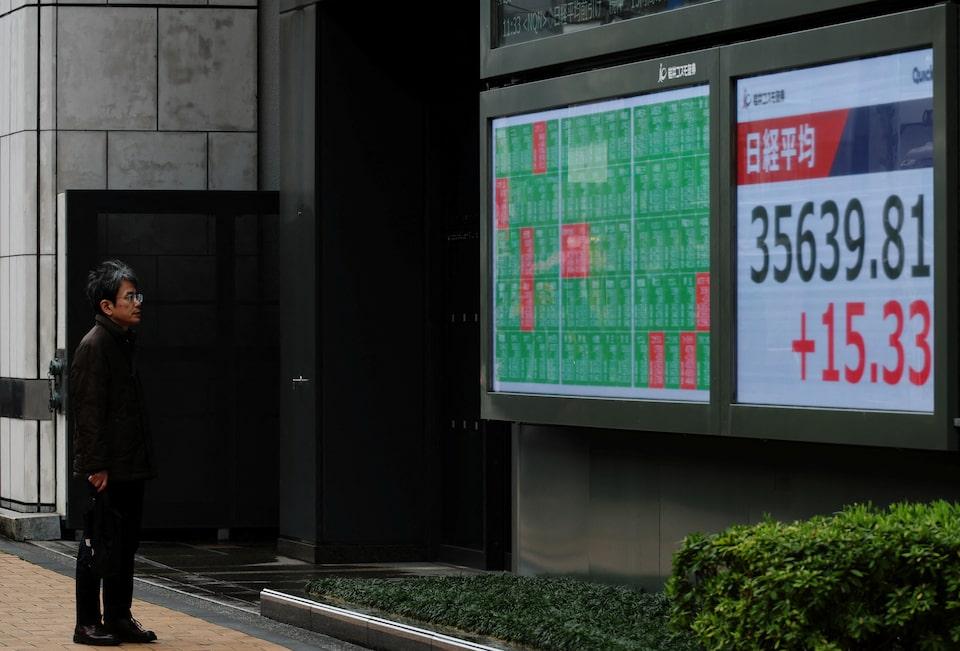
BOJ seen keeping rates steady at May 1 meeting Board seen cutting growth forecasts on Trump tariff hit Domestic price pressure already alarming hawks in board Bank shares plunge as investors rule out chance of more hikes BOJ may hike rates once more, then pause, says ex-BOJ Sakurai TOKYO, April 4 (Reuters) - New U.S. tariffs announced by President Donald Trump may delay, but likely won't derail, the Bank of Japan's plan to raise interest rates further as policymakers seek to avoid renewed yen falls that would worsen inflationary pressures. Trump's decision to slap a 25% levy on auto imports, and a reciprocal 24% tariff on other Japanese goods, will deal a huge blow to the export-heavy economy with analysts predicting the higher duties could knock up to 0.8% off economic growth. Sign up here. The stunning moves by Trump upend the BOJ's expectations that big exporters will use overseas profits to lift local pay, which would drive a cycle of wage and price increases, seen as a prerequisite for more interest rate hikes. With fears of a global recession looming, the BOJ is likely to cut its economic growth forecasts and hold off raising rates at its next meeting concluding on May 1, analysts say. But there is less certainty about just how long the BOJ will be able to keep rates where they are given mounting inflationary pressure at home that has drawn warnings from hawkish members of the board. "At the very least, a rate hike on May 1 is off the table given the expected hit to Japan's economy from U.S. tariffs," said former BOJ top economist Seisaku Kameda, who is now executive economist at Sompo Institute Plus. "But I won't rule out a rate hike in June or July, as the BOJ is caught in a dilemma of having to balance downside risks to the economy and domestic inflationary pressure," he said. While raising rates too aggressively could hurt growth, sounding too dovish on the rate outlook could prod investors to scale back bets of a near-term action, and trigger a renewed, unwanted and inflationary yen slide. BOJ Deputy Governor Shinichi Uchida told parliament on Friday the central bank would continue raising rates if the economy moves in line with forecasts, while keeping a close eye on risks to growth from tariffs. Whatever the BOJ's ambitions, markets are quickly ruling out the chance of further rate hikes. Shares of Japanese banks plunged on Friday on fears U.S. tariffs could choke Japan's fragile economic recovery and snuff out the BOJ's efforts to lift rates away from the low levels that have squeezed lenders' profits. Inflation has exceeded the BOJ's 2% target for nearly three years due in part to a weak yen that boosted import costs, a stark contrast to Japan's 25-year battle with deflation that kept rates near zero. Headline inflation hit 3.7% in February on stubbornly high food costs which, coupled with steady wage increases, have heightened wider calls to keep raising interest rates. QUARTERLY REPORT KEY While the BOJ has raised rates three times under Governor Kazuo Ueda, its policy rate is still at 0.5% - well below U.S. and European counterparts. Adjusted for inflation, Japan's borrowing costs remain deeply negative. In keeping rates steady in March, some board members warned the recent surge in food prices could persist, and that Trump-related uncertainty alone should not keep the BOJ from "acting decisively" against inflation. "Domestic economic and price developments are on track, so it would have been hard to come up with a reason not to raise rates on May 1," said veteran BOJ watcher Mari Iwashita. "Trump tariffs gave the BOJ an excuse to stand pat for now, though I'm sure it will proceed with policy normalisation and hike rates again when the opportunity pops up," she said. A Reuters poll in March showed many analysts expect the BOJ's next rate hike to come in the third quarter, most likely in July. After the April 30-May 1 meeting, the BOJ board holds a policy meeting in June and July. The BOJ's quarterly outlook report, set for release after the May 1 meeting, will be scrutinised for clues on how the board balances Trump tariff risks and domestic price pressure. Days before the rate review, Ueda is expected to debate the global economic outlook with G20 finance leaders gathering in Washington on the sidelines of the annual IMF meetings. Already on Friday, Ueda said Trump's tariffs would likely weigh on Japan's economy and that the heightened uncertainty warranted vigilance in setting policy. Former BOJ board member Makoto Sakurai, who retains close contact with incumbent policymakers, expects the BOJ to hike rates once more to 0.75% either in May or June, then pause. "The BOJ's preference is to keep raising interest rates steadily and reduce its massive balance sheet. But it faces a difficult trade-off as Trump's tariffs will almost certainly hit the economy hard," he told Reuters, adding a hike to 1% may take until well towards the end of Ueda's term in 2028. "In the end, the BOJ may feel it's done enough if it can take short-term rates to 1%." https://www.reuters.com/markets/rates-bonds/trump-tariffs-may-delay-wont-derail-japan-rate-hikes-2025-04-04/
2025-04-04 00:47
'Factory Asia' hardest hit by tariffs Vietnam stocks, Sri Lanka debt, Asian currencies tumble JPMorgan lowers EM FX, warns of enduring 'shock to sentiment' 'Gravitational shift' in global trade and investment SINGAPORE/LONDON, April 3 (Reuters) - Emerging economies worldwide are bracing for sliding currencies and a possible deterioration of their sovereign credit after U.S. President Donald Trump's tariffs brought levies on U.S. imports to their highest levels in 100 years. The worse-than-expected tariff blitz hits Asia -- and some of the world's poorest nations -- the hardest. It could mark a negative turning point for emerging market debt just as many nations had hoped to lure investments after years of risk aversion. Sign up here. "We are immediately concerned by the potential impact of the severe tariffs imposed on a range of emerging economies — an approach which risks further damaging the development prospects of countries already facing worsening terms of trade," said John Denton, Secretary-General of the International Chamber of Commerce. He added that the shifts could cause a cascade of sovereign rating downgrades. Trump unveiled the sweeping set of penalties as high as 50% on allies and antagonists alike, roiling financial markets and stoking fears of a global trade war. The tariffs, which add to existing levies, will hit everything from Madagascar's vanilla, at 47%, to Sri Lanka's textiles at 44%. "The shock to sentiment and capital flows is likely to endure and requires higher risk premia," investment bank JPMorgan said in a note, downgrading its stance on emerging market currencies to "underweight" and calling a possible turning point for emerging market debt. Emerging markets had only last year started to reverse a decade-long deterioration in credit ratings following a wave of defaults, which was accelerated by the fallout from COVID-19 and was a key driver of rising borrowing costs. U.S. investment bank Goldman Sachs said tariffs would add a 1 percentage point drag to GDP growth in China, the world's second-largest economy, which could have a knock-on effect on wider emerging markets. The International Chamber of Commerce's Denton likened the impact to the devastating 1970s energy crisis, which hit the global economy and roiled a swath of emerging market assets. Some investors said tariffs could fundamentally shift how they approach emerging market bets. "If the tariffs remain as it is, we definitely need to think about the structural, export-oriented growth story for EM," said Gary Tan, a portfolio manager at Allspring Global Investments. "If this model is broken, then definitely we have to reconsider how, basically, you invest in EM for growth." DEEP IMPACT AT 'FACTORY ASIA' Asian economies bore the brunt of the penalties; six of the nine Southeast Asian countries on Trump's list were hit by tariffs between 32% and 49%. Citi said the tariffs hit 'Factory Asia' particularly hard, estimating the weighted average U.S. tariffs increased by 21%, but Southeast Asia and China took 34%, compared with Europe's 20% and little in Latin America beyond 10%. Market moves mirrored those concerns. Vietnam stocks tumbled nearly 7%, their steepest daily decline in at least four years, its dong currency sank to a record low and the Thai baht slipped to a more than three months low. Sri Lanka's sovereign dollar bonds slid more than 3 cents, to their lowest levels since last year's debt restructuring. Fred Neumann, chief Asia economist at HSBC, said he expected central bank policy makers from China, Taiwan, Malaysia and elsewhere in Asia to step in with rate cuts. "This is likely to amount to a significant growth shock for the region including Southeast Asia," said Neumann. "That would mean that central banks will likely prioritize growth over inflation concerns." International Monetary Fund Managing Director Kristalina Georgieva had warned on Monday that many countries had exhausted their fiscal and monetary space during COVID, leaving them with high debt and limited ability to cushion future shocks. International investors have less exposure to some of the poorest countries, such as Cambodia and Bangladesh, but their 49% and 37% reciprocal tariffs, respectively, will sting the countries. Cambodia sent more than 40% of its exports to the United States in 2022, according to the World Bank. Latin America and many African nations emerged with comparatively lower tariffs; Kenya on Thursday said its 10% tariff would give it a "competitive advantage" in textile exports compared with the harder-hit competitors such as Vietnam, Sri Lanka and Pakistan. But investors cautioned that it was far from clear how lasting the measures would be - or the secondary effects of a shift in global trade that is unprecedented in the modern era. "We haven't seen these large gravitational shifts in 80 years," said Yvette Babb, portfolio manager at William Blair. "The question is, how structural is it? It's fairly unprecedented, what we're seeing, in terms of what the U.S. president is embarking on, but how much of it is going to stick?" https://www.reuters.com/markets/emerging-economies-brace-trump-tariff-turning-point-2025-04-03/
2025-04-04 00:42
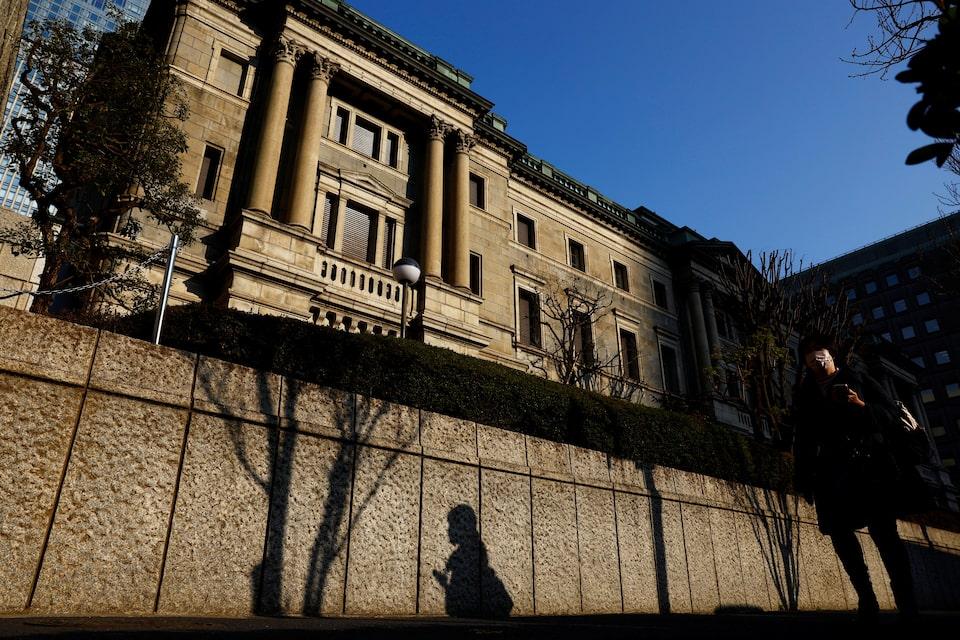
Trump tariffs to affect trade, business sentiment, Ueda says Impact on Japan prices hard to say, may work both ways Ueda says uncertainty on outlook has heightened BOJ tankan underscores central bank's forecast of moderate recovery BOJ to keep hiking rates if underlying inflation heads toward 2% TOKYO, April 4 (Reuters) - Bank of Japan Governor Kazuo Ueda said on Friday the central bank will scrutinise the impact of U.S. tariffs on the country's economy when setting monetary policy, warning the higher levies will likely weigh on global and domestic economic growth. Global stock prices tumbled on Thursday after U.S. President Donald Trump's announcement of sweeping tariffs ignited fears of an all-out trade war and a global economic recession. Sign up here. Aside from the direct impact on global trade, Trump's tariffs, set at 24% for Japanese goods, could affect corporate sentiment and market moves by heightening uncertainty over the economic outlook, Ueda said. "Through such channels, the tariffs are likely to exert downward pressure on global and Japanese economies," he told parliament, adding that uncertainty over the outlook has heightened due to the tariff announcement. The impact on Japan's inflation was harder to discern as the tariffs could push down prices by cooling growth, but may work to accelerate inflation by disrupting supply chains, he said. "We'd like to scrutinise the impact of the tariffs on economic and price developments at home and abroad, and make use of our findings in deciding monetary policy," Ueda said. Appearing at the same parliament session, BOJ Deputy Governor Shinichi Uchida said the central bank will keep raising interest rates if the chance of underlying inflation achieving its 2% target heightens. "We will examine at each policy meeting, without any preconception, whether our (economic and price) forecasts would be achieved" in deciding monetary policy, Uchida added. The BOJ next meets for a policy meeting on April 30-May 1, when the board will also issue fresh quarterly growth and inflation forecasts extending through fiscal 2027. MIXED DATA Recent data have shown a mixed picture of Japan's economy. Big manufacturers' business sentiment worsened to a one-year low in the three months to March, the BOJ's "tankan" survey showed on Tuesday, a sign escalating trade tensions were already taking a toll on the export-reliant economy. But non-manufacturers' mood improved to levels unseen since 1991 and firms expect to increase capital spending by 3.1% in the current fiscal year ending in March 2026, the survey showed. Ueda said corporate business sentiment remained positive and capital expenditure plans were stronger than in the same period of previous years. "The tankan is in line with our view that Japan's economy is recovering moderately," Ueda said. But he added the survey, which was compiled between February 26 and March 31, might not fully incorporate the impact of Trump's tariff announcements. Japan's Nikkei (.N225) , opens new tab stock average fell 1.85% on Friday, extending its 2.8% slide from Thursday after Trump's announcement of reciprocal tariffs. A previously announced 25% tariff on all car imports took effect on Thursday in the U.S., dealing a major blow to the Japanese auto industry which accounts for roughly 3% of GDP. While Trump's tariffs cloud the economic outlook, the BOJ also faces rising inflationary pressure from steady increases in food prices. Core consumer inflation hit 3.0% in February, exceeding the BOJ's 2% target for the 35th straight month. Ueda said food prices are affected by various factors, adding the year-on-year increase in the cost of rice is expected to gradually slow. "We're mindful of the need to scrutinise how prices of goods households buy frequently could affect consumer sentiment and inflation expectations," Ueda said. The BOJ ended a decade-long, massive stimulus last year and raised interest rates to 0.5% in January on the view Japan was on the cusp of durably hitting its inflation target. BOJ policymakers have signalled their readiness to keep raising interest rates if they become convinced that Japan will see inflation sustained around 2% backed by solid wage gains. A Reuters poll in March showed many analysts expect the BOJ's next rate hike to come in the third quarter, most likely in July. https://www.reuters.com/business/finance/boj-keep-raising-rates-if-inflation-heads-toward-2-deputy-governor-says-2025-04-04/
2025-04-04 00:40
Nasdaq confirms bear market Dow confirms correction China strikes back after Trump tariffs Live coverage of the latest developments on tariffs NEW YORK, April 4 (Reuters) - Global stock markets extended their recent rout on Friday, with S&P 500 companies wiping out $5 trillion in stock market value since U.S. President Donald Trump unveiled sweeping tariffs on Wednesday, while investors fled to the safety of government bonds. The Nasdaq confirmed it was in a bear market, ending more than 20% below its record high close, while oil prices and other commodities plunged. Sign up here. That $5-trillion loss marked a record two-day decline for the S&P 500 benchmark, exceeding a two-day loss of $3.3 trillion in March 2020 when the pandemic ripped across global markets, according to LSEG data compiled by Reuters. Responding to Trump's tariffs, China on Friday said it would impose additional levies of 34% on American goods, confirming investor fears that a full-blown global trade war is under way and that the global economy may be at risk of a recession. Trump slapped a 10% tariff on most U.S. imports and much higher levies on dozens of countries, erecting the steepest trade barriers in more than 100 years. "It's sort of the worst fears of where the tariff program was headed," said Rick Meckler, partner at Cherry Lane Investments, a family investment office in New Vernon, New Jersey. "For those investors who were sure it was just a negotiation - while that still may be true at some point - it's getting awfully deeper into the detail and more dangerous for companies." The tech-heavy Nasdaq has fallen 22.7% from its December 16 record close as investors fled riskier assets on the tariff worries. Meanwhile, the Dow Jones Industrial Average and pan-European STOXX 600 index each confirmed they were in a correction. All three of the major U.S. stock indexes suffered their biggest weekly percentage losses since March 2020, and the Cboe Volatility Index (.VIX) , opens new tab jumped to 45.31, its highest closing level since April 2020. Companies with exposure to China fell across the board, with Apple (AAPL.O) , opens new tab dropping 7.3%. The chipmakers index (.SOX) , opens new tab sank 7.6%. Bank and energy shares dropped amid the recession fears. The Dow Jones Industrial Average (.DJI) , opens new tab fell 2,231.07 points, or 5.50%, to 38,314.86. The index confirmed a correction, finishing more than 10% below its record closing high from December 4. The S&P 500 (.SPX) , opens new tab fell 322.44 points, or 5.97%, to 5,074.08 and the Nasdaq Composite (.IXIC) , opens new tab fell 962.82 points, or 5.82%, to 15,587.79. The pan-European STOXX index (.STOXX) , opens new tab closed 5.1% lower, its biggest daily loss since the COVID-19-fuelled selloff in 2020. The index fell nearly 12% from its March 3 all-time closing high, confirming it was in correction territory. MSCI's gauge of stocks across the globe (.MIWD00000PUS) , opens new tab fell 43.35 points, or 5.37%, to 764.29, and was set for its biggest weekly percentage drop since 2020. Oil prices plunged about 7% to settle at their lowest in over three years, after the tariff response from China, the world's top oil importer. Brent crude futures fell 6.5% to settle at $65.58. U.S. crude futures lost 7.4% to settle at $61.99. Data showing the U.S. economy added far more jobs than expected in March did little to brighten the mood. Federal Reserve Chair Jerome Powell said in remarks at a business journalists' conference in Arlington, Virginia, that Trump's new tariffs are "larger than expected" and the economic fallout, including higher inflation and slower growth, likely will be as well. He also said the U.S. central bank does not have a prediction of a downturn in its outlook but he recognized private-sector forecasters are shifting on that front. Earlier, investment bank JP Morgan said it was forecasting a 60% chance of the global economy entering a recession by year-end, up from 40% previously. "I think (Powell's) comments will be disappointing for those who believe that the Fed is going to step in anytime soon," said Peter Cardillo, chief market economist at Spartan Capital Securities in New York. The U.S. dollar recovered against the euro and yen, with Powell signalling a cautious tone on future easing. The dollar index was last up 0.7% on Friday after its biggest fall since November 2022 on Thursday. The euro was last down 0.69% at $1.10976, after jumping 1.8% - its biggest daily rise since November 2022 - on Thursday. Against the Japanese yen , the dollar strengthened 0.58% to 146.9. After years of huge flows into U.S. stocks and a booming American economy, investors are grappling with where to put their cash. That helped drive a powerful rush towards government bond markets. The yield on the benchmark U.S. 10-year Treasury note fell 12.2 basis points to 3.933% after falling to a six-month low of 3.86%. Yields move inversely to prices. The German 10-year bond yield , the benchmark for the euro zone bloc, fell as much as 17 bps during the day. Money market futures were pricing in cumulative rate cuts of 110 basis points from the Fed by the end of this year, compared with about 75 bps a week earlier. Traders increased their bets on Bank of England and European Central Bank reductions too. "A lot of investors I've talked to have just said in this kind of environment, let's go to cash and just wait it out," Meckler said. https://www.reuters.com/markets/global-markets-wrapup-1-2025-04-04/