2025-04-03 21:55
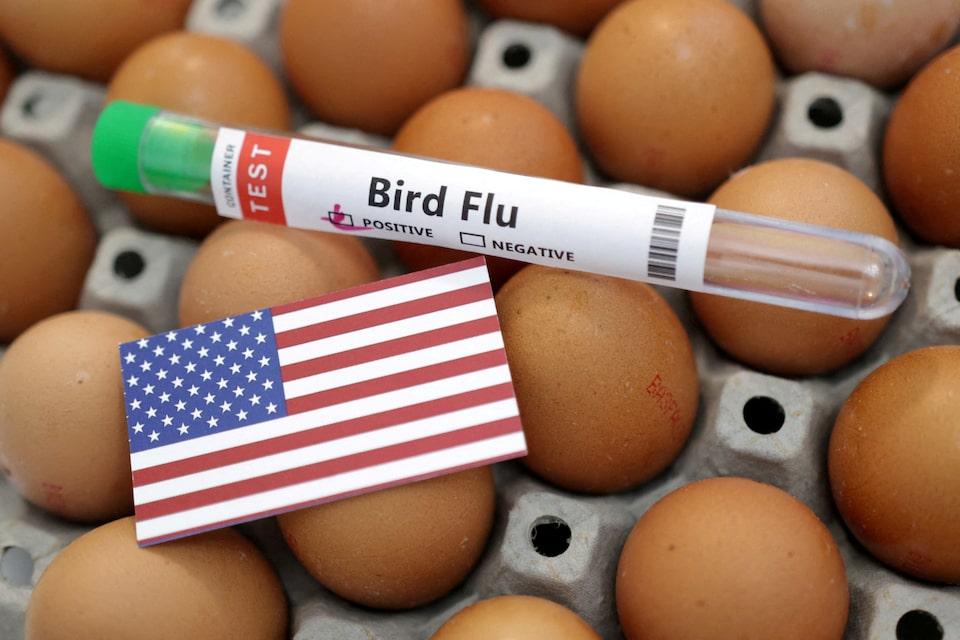
April 3 (Reuters) - The U.S. Food and Drug Administration is suspending efforts to improve its bird flu testing of milk, cheese and pet food due to massive staff cuts at the agency, according to an email seen by Reuters and a source familiar with the situation. The FDA's testing for bird flu in dairy products has found that pasteurization kills the virus, and has also provided clues to the scope of the virus's spread. At least two house cats have died after eating raw pet food that later tested positive for bird flu. Sign up here. The Department of Health and Human Services, which includes the FDA, on Tuesday began firing 10,000 employees to comply with President Donald Trump's push to shrink the federal workforce, an effort overseen by billionaire ally Elon Musk. The Interlaboratory Comparison Exercise for detecting Highly Pathogenic Avian Influenza was set to launch later this month but was suspended on Thursday because of cuts to staff at the FDA's Human Food Program that would have supported the scientific and testing needs of the program, the email said. The program would have included more than 40 laboratories across FDA's Veterinary Laboratory Investigation and Response Network (Vet-LIRN) and USDA's National Animal Health Laboratory Network, as well as FDA food labs and private industry, said the email, which was sent to network laboratories from the Vet-LIRN program office. "(The program) would have been critical to ensure confidence in the laboratory methods for food safety and animal health," the email said. HHS did not immediately respond to questions about the suspension of the program and what, if any, impact it would have on FDA's bird flu testing efforts. The FDA handles testing of consumer dairy products for bird flu, while the U.S. Department of Agriculture tests bulk milk before it is sent for processing. An ongoing bird flu outbreak in dairy cattle has infected nearly 1,000 herds, according to USDA data. The coordination effort would have served as a quality assurance program to ensure reliable results in the FDA's bird flu testing of dairy products and pet food, according to a source familiar with the situation. Similar coordination programs at the FDA ensure reliability in testing for salmonella and other pathogens, the source said. https://www.reuters.com/business/healthcare-pharmaceuticals/fda-suspends-program-improve-bird-flu-testing-due-staff-cuts-2025-04-03/
2025-04-03 21:45
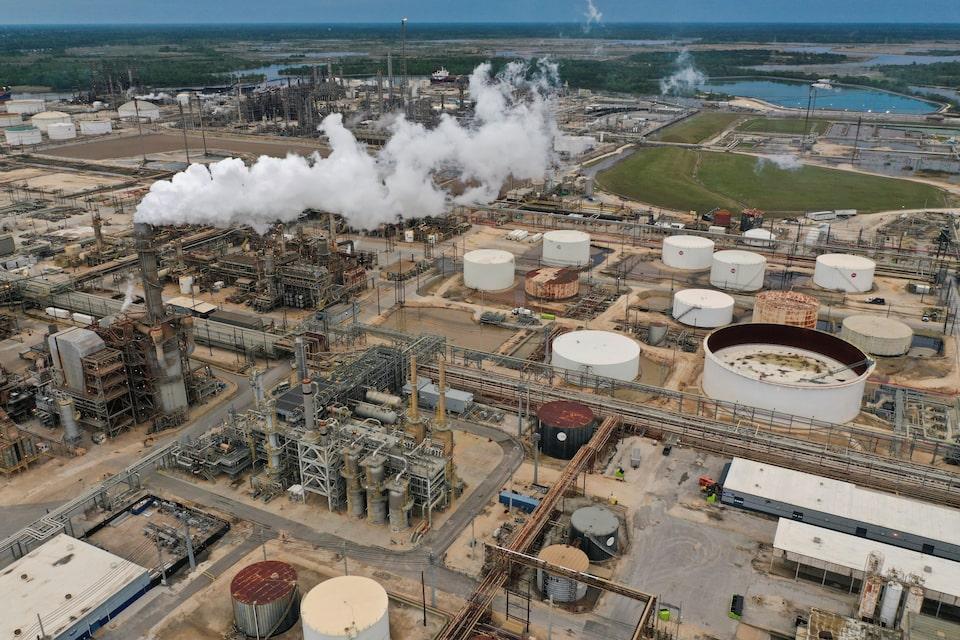
April 3 (Reuters) - Exxon Mobil (XOM.N) , opens new tab signaled on Thursday that higher crude oil and natural gas prices as well as stronger oil refining margins will help lift its first-quarter earnings by about $900 million compared to the previous quarter. The largest U.S. oil major gets the bulk of its operating profit from producing oil and gas, and its earnings snapshot is closely watched for clues on how the broader industry will fare when companies begin reporting quarterly results in a few weeks. Sign up here. Benchmark Brent crude prices averaged $74.98 a barrel during the first quarter, up 1.3% from the prior quarter but down 9% from a year ago. U.S. natural gas prices rose 30% compared to the fourth quarter due to higher demand from a cold winter in the U.S. The company indicated in an SEC filing that stronger oil refining margins will also help boost earnings by $300 million to $700 million compared to the fourth quarter. Analysts expect Exxon to post an adjusted profit of $1.70 per share in the first quarter, according to estimates compiled by LSEG, up from $1.67 per share in the fourth quarter. Exxon said it would release its first-quarter earnings results on May 2. The earnings snapshot covers a tumultuous first quarter in which U.S. President Donald Trump's administration announced and then walked back tariffs on energy imports from Canada and Mexico. The Organization of the Petroleum Exporting Countries also said in March it would begin increasing oil output for the first time since 2022. Exxon reported $7.39 billion in earnings in the fourth quarter and $8.22 billion in earnings during the first quarter of last year. Shares of Exxon rose marginally in extended trading, having closed 5.3% lower tracking sharp declines in crude prices after OPEC+ agreed to a surprise increase in output a day after Trump announced sweeping new import tariffs. https://www.reuters.com/business/energy/exxon-mobil-signals-rise-first-quarter-upstream-profit-2025-04-03/
2025-04-03 21:45
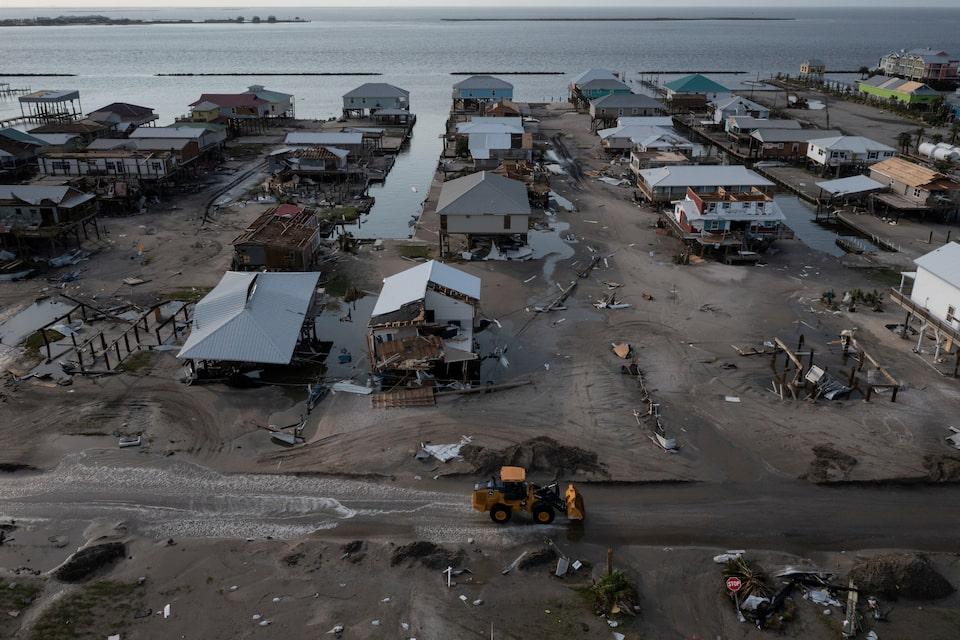
April 3 (Reuters) - Colorado State University forecasters said on Thursday the upcoming 2025 hurricane season across the Atlantic basin will be above average, with 17 named tropical storms, including nine hurricanes, of which four are predicted to be major. Warm sea surface temperatures will again fuel the storms in the tropical Atlantic and Caribbean, the researchers of the closely watched forecast said in a statement. During the season, which runs from June 1 to November 30, winds across the southern United States will be favorable to storm formation. Sign up here. The scientists predicted activity to be about 125% above the average for tropical storms between 1991 and 2020. The 2024 hurricane season saw tropical storm activity at 130% above the average for those years. There have been an average of 3.2 major hurricanes, with sustained winds over 111 miles per hour (179 kph), 7.2 hurricanes out of 14.4 named tropical storms between 1991 and 2020. AccuWeather issued its 2025 hurricane season forecast in late March. The private weather service calls for between three and five major hurricanes out of seven to 10 hurricanes from 13-18 named tropical storms. The U.S. National Oceanic and Atmospheric Administration issues its hurricane outlook in May. The 2024 hurricane season was one of the costliest on record. There were five major hurricanes, out of a total of 11 hurricanes from 18 named storms. The deaths of 427 people were attributed to 2024's storms and losses totaled $130 billion. https://www.reuters.com/business/environment/colorado-state-researchers-forecast-above-average-2025-hurricane-season-2025-04-03/
2025-04-03 21:39
Death toll rises to 3,085 from Myanmar earthquake Many survivors said to camp in open, afraid to return home Weather extremes fuel disease risks, aid officials say Could also complicate rescue, relief efforts Junta leader to attend regional summit in Bangkok BANGKOK, April 3 (Reuters) - Extreme heat and heavy rain in Myanmar could cause disease outbreaks among earthquake survivors camping in the open, global aid bodies warned on Thursday, complicating rescue efforts made difficult by a civil war, as the death toll surpassed 3,000. Last Friday's 7.7-magnitude quake, one of Myanmar's strongest in a century, jolted a region home to 28 million, toppling buildings such as hospitals, flattening communities and leaving many without food, water and shelter. Sign up here. Deaths rose to 3,085 on Thursday, with 4,715 injured and 341 missing, the ruling junta said. The World Health Organization flagged a rising risk of cholera and other diseases in the worst-affected areas, such as Mandalay, Sagaing and the capital of Naypyitaw, while it prepared $1 million of relief supplies, including body bags. "Cholera remains a particular concern for all of us," said Elena Vuolo, the deputy head of its Myanmar office, pointing to an outbreak last year in Mandalay. The risk was worsened by damage to about half of healthcare facilities in the quake-hit areas, including hospitals destroyed by the quake in Mandalay and Naypyitaw, she added. People were camping outdoors in temperatures of 38°C (100°F) because they were too scared to go home, and many hospitals were also setting up temporary facilities there, Vuolo told Reuters from Naypyitaw. Skin disease, malaria and dengue were among the diseases that could result from prolonged crises, such as in Myanmar, she said. But conditions could get even tougher for the huge relief effort, after weather officials warned that unseasonal rain from Sunday to April 11 could threaten the areas hardest-hit by the quake. "I've heard that in the next day or two there are rains (expected)," Titon Mitra, the Myanmar representative of the United Nations Development Programme told Reuters by telephone, during a visit to Sagaing. "If that hits, we've got people, lots of people now, in temporary shelters, makeshift camps out on the streets, and that's going to be a real problem," he said, also flagging the UN's concerns about an outbreak of waterborne disease. Despite the devastation, junta chief Min Aung Hlaing will leave his disaster-stricken country on Thursday for a rare trip to a regional summit in Bangkok, state television said. It is an uncommon foreign visit for a general regarded as a pariah by many countries and the subject of Western sanctions and an International Criminal Court investigation. CEASEFIRE The weather extremes will add to the challenges faced by aid and rescue groups, which have called for access to all affected areas despite the strife of civil war. The military has struggled to run Myanmar since its return to power in a 2021 coup that unseated the elected civilian government of Nobel laureate Aung San Suu Kyi. The generals have been internationally isolated since the takeover and Myanmar's economy and basic services, including healthcare, have been reduced to tatters amid the strife. On Wednesday state-run MRTV said a unilateral government ceasefire would take immediate effect for 20 days, to support relief efforts after the quake, but warned authorities would "respond accordingly" if rebels launched attacks. The move came after a major rebel alliance declared a ceasefire on Tuesday to assist the humanitarian effort. Nearly a week after the quake, searchers in neighbouring Thailand hunting for survivors combed a mountain of debris left after a skyscraper in the capital, Bangkok, collapsed while under construction. Rescuers are using mechanical diggers and bulldozers to break up 100 tons of concrete to locate any still alive after the disaster that killed 15 people, with 72 still missing. Thailand's nationwide toll stands at 22. https://www.reuters.com/business/environment/myanmar-earthquake-toll-crosses-3000-forecast-rains-pose-new-threat-rescuers-2025-04-03/

2025-04-03 21:20
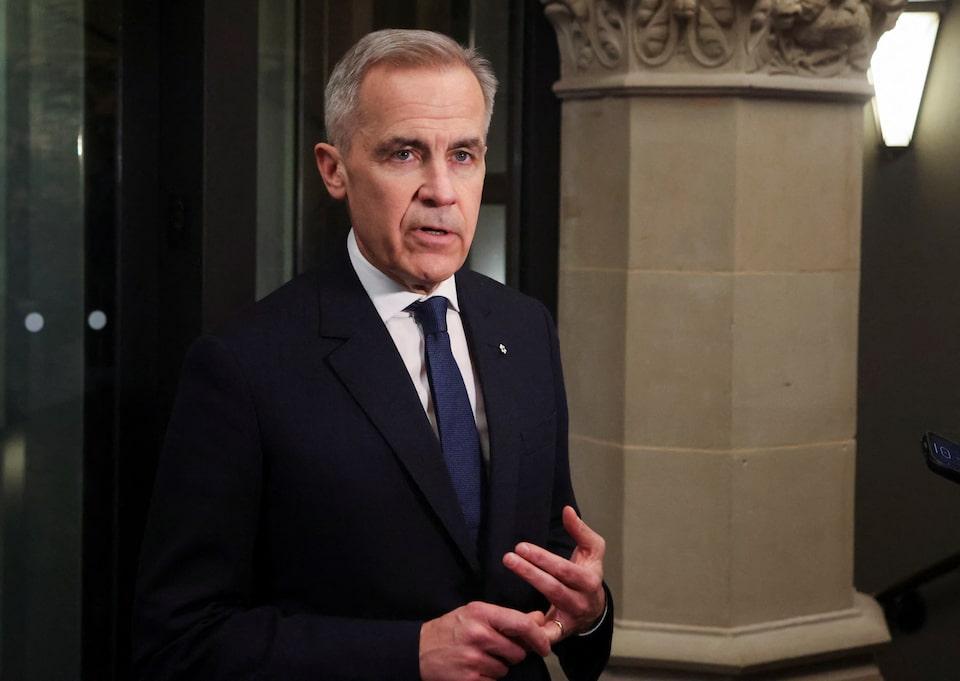
OTTAWA, April 3 (Reuters) - Canadian Prime Minister Mark Carney announced a limited set of counter measures against U.S. tariffs on Thursday while calling President Donald Trump's protectionist moves a tragedy for global trade. Carney said the Canadian government will copy the U.S. approach by imposing a 25% tariff on all vehicles imported from the United States that are not compliant with the U.S.-Mexico-Canada trade deal. Sign up here. The new measure will apply to C$35.6 billion ($25.3 billion) worth of imports, a government spokesperson said. Carney also told a press conference that the new tariffs would not apply to auto parts and would not affect vehicle content from Mexico. "Given the prospective damage to their own people, the American administration should eventually change course. But I don't want to give false hope," Carney said, adding that it could take a long time for the United States to shift approach. Carney said Canada's previously announced tariffs would stay in place. Trump's new tariffs sent shockwaves through markets on Thursday. His 10% baseline levy on all U.S. imports, with much higher duties on some countries, encouraged investors to flee risky assets as they worried Trump was upending global trade. "The 80-year period when the United States embraced the mantle of global economic leadership, when it forged alliances rooted in trust and mutual respect and championed the free and open exchange of goods and services, is over. This is a tragedy," Carney said. The new countermeasures are in addition to two rounds of tariffs Canada has already imposed on a total of C$59.8 billion worth of U.S. imports. ($1 = 1.4084 Canadian dollars) https://www.reuters.com/world/americas/canada-impose-25-tariffs-us-autos-that-are-non-compliant-with-usmca-says-carney-2025-04-03/
2025-04-03 21:02
ORLANDO, Florida, April 3 (Reuters) - Highest U.S. tariffs in over 100 years slam markets On March 7, U.S. Treasury Scott Bessent said the U.S. economy could be in for a "detox period" as it adjusted to President Donald Trump's transformative policy agenda. The gyrations on Wall Street and beyond on April 3 following Trump's sweeping global tariffs the day before suggest that may be a huge understatement. Sign up here. U.S. stocks, the dollar and oil cratered on Thursday, bond yields plunged and volatility soared, as Trump's tariffs at a stroke darkened the near-term outlook for spending, investment, corporate earnings, economic activity and growth. Trump's tariffs on China are among the highest. Will Beijing risk devaluing the yuan? See below for more, but first, a round up of today's remarkable moves on world markets. I'd love to hear from you, so please reach out to me with comments at [email protected] , opens new tab. You can also follow me at @ReutersJamie and @reutersjamie.bsky.social. Today's Key Market Moves Trump is on fire, global markets tariffied One should never read too much into a single day's trading in financial markets, but some days are so dramatic it's difficult not to. Thursday is one of them. Declines of more than 4% on Wall Street and near-2% swings in the dollar don't come around too often, and outside of major crises like the Global Financial Crisis or the pandemic, they are even rarer. So it is a measure of investors' shock at the severity of Trump's tariffs, trepidation over the damage they'll inflict - and, no little disbelief at how they were calculated - that markets gyrated as much as they did on Thursday. Economist David Beckworth posted on social media platform X that Trump's latest salvo in his global trade war may be "one of the biggest unforced economic policy errors in US history" - a bold claim, perhaps, but one which seems to be resonating. Analysts are ratcheting down their U.S. growth forecasts, and sub-1% expansion this year is now in view, while recession risks have risen sharply. Rates traders are now pricing in almost 100 basis points of Fed cuts this year and 150 bps by the middle of next year. As economist Rebecca Harding states, "nobody wins from the trade war." It's a simple but important point - the economic and market outlook everywhere is suddenly bleaker, especially in some of the Asian countries that have been hit with the heaviest duties. What's more, policymakers find themselves in an even tighter spot. Will the Bank of Japan be so keen to continue with its rate-hiking campaign? Will the European Central Bank or Bank of England be forced to cut rates more than planned if the euro and sterling continue rising? And how does powerhouse China respond? Part of the problem for everyone - investors, households, businesses and policymakers - is Trump's propensity to change course in the blink of an eye. Some tariffs may be lowered, exempted, or postponed within days, should countries come to the negotiating table and strike a deal with "Tariff Man". Of course if they are maintained, or countries retaliate, the economic and market outlook could darken even more, stoking volatility and uncertainty - good for gold, bonds and short sellers; not so good for stocks, credit and other risky assets. If investors are hoping a sense of calm might descend on markets on Friday, think again - the latest U.S. payrolls will be released at 8:30 ET, and a few hours later Fed Chair Jerome Powell delivers a speech on the economic outlook. Stock futures around the world are pointing to heavy losses at the open. Buckle up. What next in world trade war? Watch the yuan What's the most important exchange rate in the world right now? Probably dollar/yuan. How Beijing responds to the eye-popping tariffs the Trump administration slapped on Chinese exports to the U.S. will be critical not only for China, but also for its 'plus one' trading partners in Asia, and world markets more broadly. The total tariff rate on U.S. imported goods from China is now a whopping 54%. If maintained for a reasonable length of time, this will be a financial hit to Beijing that will likely hinder its efforts to address its lingering real estate crisis, boost consumption, build its military might, and fund its myriad investments. And, unlike in the first Trump trade war, China can't rely on funneling exports and investment through 'plus one' countries in Asia to mitigate the tariff shock because those nations have also been hit with punitive levies. In some cases, like Vietnam, the tariffs are even higher than China's. That leaves currency devaluation as perhaps the most powerful weapon China can wield as it looks to respond to Washington's latest salvo. But unfortunately for Beijing, that strategy is fraught with risk. LIMITED ROOM TO MANEUVER A rapid fall in the yuan's value could trigger huge capital flight as international and domestic investors pull money out of the country, slamming domestic asset prices and stoking financial market volatility. And beyond China's borders, a tumbling yuan could force other Asian countries to let their currencies fall in order to maintain competitiveness, potentially sparking a 'beggar-thy-neighbor' FX devaluation war, the last thing any of them need. Moreover, currency devaluation runs counter to the sweep of reforms and stimulus measures Beijing has announced since September, as it seeks to reflate the economy via domestic consumption rather than exports. And China's room for further policy stimulus is already fading. Further interest rate cuts and liquidity provisions will probably come, but a major fiscal boost will involve issuing more bonds, which will strain an already widening budget deficit. Indeed, Fitch downgraded China's credit rating on Thursday by one notch to 'A', citing a deterioration in the public finances as Beijing scrambles to shore up tariff-hit growth. "Everything now depends on China," says Robin Brooks, senior fellow at the Brookings Institution, warning that a meaningful devaluation of the yuan could begin a global 'risk-off' downward spiral that could slam emerging markets and, if it persists, tank the U.S. economy as well. ALL EYES ON CHINA Beijing has previously said it won't go down the FX depreciation road, preferring to keep the yuan relatively "stable". But that was before Trump's self-styled "Liberation Day". Beijing's first response might be to try and negotiate with Washington to get the tariffs lowered. But if that fails, FX devaluation becomes a real option to offset the shock. Analysts at Goldman Sachs are among those who believe China will continue to resist "significant" FX depreciation, but they note that the combined impact of all the U.S. tariffs on China announced since Trump's inauguration in January could take a 1.7 percentage point bite out of China's annual growth rate. That's huge. What do the FX markets think? You should never read too much into one day's moves. But it's worth noting that dollar/yuan on Thursday clocked its biggest spot market rise in five months, and the People's Bank of China allowed the yuan to depreciate the most in four months at the daily fixing. Moving forward, the big level to watch for spot dollar/yuan is 7.35, and 7.25 for the central bank's daily fixing. Breaking through those would leave the yuan at its weakest point against the U.S. dollar since the depths of the Global Financial Crisis in late 2008. The yuan isn't too far away from these levels right now. The world is watching. What could move markets tomorrow? If you have more time to read today, here are a few articles I recommend to help you make sense of what happened in markets today. Opinions expressed are those of the author. They do not reflect the views of Reuters News, which, under the Trust Principles , opens new tab, is committed to integrity, independence, and freedom from bias. Trading Day is also sent by email every weekday morning. Think your friend or colleague should know about us? Forward this newsletter to them. They can also sign up here. https://www.reuters.com/markets/global-markets-trading-day-2025-04-03/