2025-04-03 20:13
BENGALURU, April 4 (Reuters) - The Reserve Bank of New Zealand will cut interest rates by 25 basis points on April 9, according to economists polled by Reuters, who have held to their previous rate outlook as inflation is expected to remain under control. Following its most aggressive tightening cycle, the central bank has cut rates by a cumulative 175 basis points since August last year, supporting an economy that has finally emerged from recession, growing 0.7% in the last quarter of 2024. Sign up here. At the February meeting, the RBNZ suggested there would be 25-basis-point rate cuts in April and May. Its own estimates indicate inflation will remain within its 1%-3% target range this year. All 31 economists in the March 31-April 3 poll expected the central bank to cut its official cash rate (NZINTR=ECI) , opens new tab for a fifth consecutive meeting by 25 basis points to 3.50% on Wednesday. That included all of the country's largest banks: ANZ, ASB, BNZ, Kiwibank, and Westpac. "It would take quite a lot to cause the Reserve Bank to diverge from their stated plan, given they think the neutral rate is 3.00%. We're still above that level, and while the economy is strengthening, it's crawling out of a hole," said Sharon Zollner, chief economist at ANZ. "I would describe a cut next week as a near certainty, a follow-up cut in May as highly likely and a third cut in July as more of a coin toss." Nearly 90% of the economists, 24 of 27, expect another 25-basis-point cut in May. The median forecast indicated an additional 25-basis-point cut in the third quarter, which would bring the interest rate to 3.00% by end-September. Among those with a year-end forecast, 16 of 26 respondents expected the policy rate to be at 3.00% or lower. Ten predicted rates at 3.25%, two said 2.75% and two others 2.50%. A reduction to 3% would mean the RBNZ is set to cut rates by a total of 250 basis points, a comparatively dovish stance when measured against the Reserve Bank of Australia and the U.S. Federal Reserve. (Other stories from the April Reuters global economic poll) https://www.reuters.com/markets/rates-bonds/rbnz-set-cut-cash-rate-april-9-flags-further-easing-2025-04-03/

2025-04-03 20:11
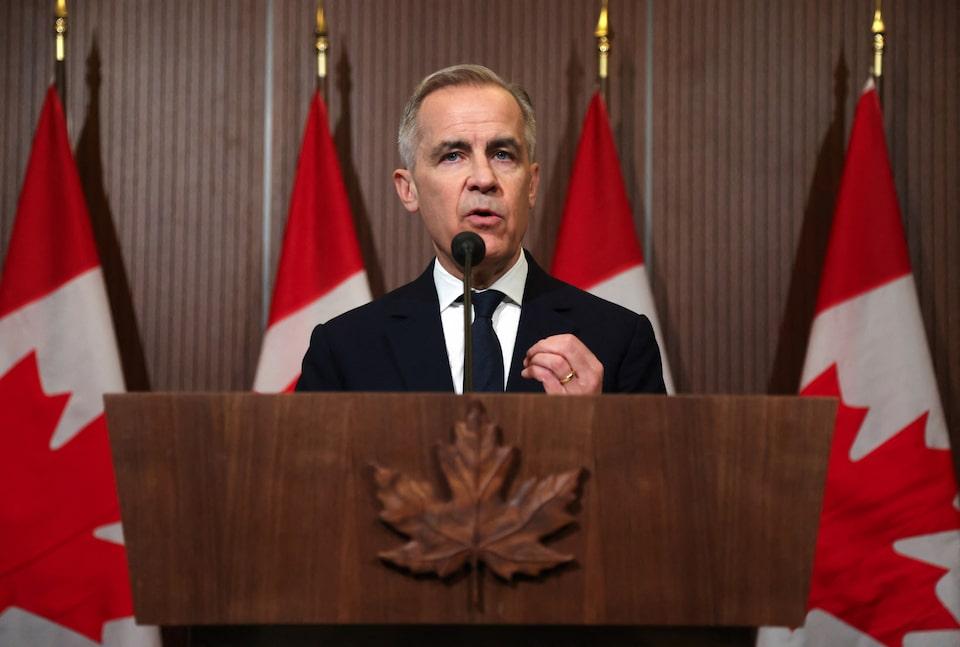
OTTAWA, April 3 (Reuters) - Canadian Prime Minister Mark Carney announced limited counter measures against U.S. auto tariffs on Thursday, imposing a 25% tariff on vehicles imported from the United States that are not compliant with the U.S.-Mexico-Canada trade deal. Carney, who replaced Justin Trudeau as prime minister last month, said the new tariffs would not apply to auto parts and would not affect vehicle content from Mexico. He said the tariffs collected from Canada's latest measure, estimated to be about C$8 billion before a so-called remission process for tariff relief, will go directly to auto workers and others affected. Sign up here. U.S. President Donald Trump imposed 25% tariffs on goods that did not comply with the USMCA trade agreement on March 6. He then imposed tariffs on steel and aluminum imports on March 12 and a 25% import tax on autos took effect on Thursday. But he spared Canada from broader global tariffs. Below are retaliatory measures Canada has already taken. FIRST TRANCHE Trudeau imposed 25% tariffs on C$30 billion ($20.92 billion) in goods imported annually from the U.S. on March 6 in response to Trump's initial duties. The C$30 billion was part of an overall retaliation plan to target C$155 billion worth of goods imports from the U.S., though the remaining C$125 billion has been delayed. The first tranche of retaliation includes a list of 1,256 products such as orange juice, peanut butter, wine, spirits, beer, coffee, appliances, apparel, footwear, motorcycles, cosmetics, and pulp and paper. In terms of value of imports associated with some of the major products, cosmetics and body care are worth C$3.5 billion, appliances and other household items are worth C$3.4 billion, pulp and paper products are worth C$3 billion and plastic products are worth C$1.8 billion. STEEL AND ALUMINUM Effective March 13, 2025, Canada imposed 25% tariffs on an additional C$29.8 billion worth of products imported from the U.S. They are expected to remain in place until the U.S. eliminates its steel and aluminum tariffs on Canada. The tariffs imposed in retaliation to steel and aluminum comprise a wide variety of items such as candles, glues, umbrellas, kitchenware, gold, platinum, jewellery and more. NON-TARIFF MEASURES Trudeau had said Canada is also considering non-tariff retaliatory measures potentially relating to critical minerals, energy procurement and other partnerships. Asked on March 25 if non-tariff measures such as export controls or export taxes are on the table, Carney said they are options. Canadian provinces have taken U.S. liquor off store shelves and Ontario Premier Doug Ford said all U.S.-based companies will be banned from taking part in government procurement. Ontario scrapped its C$100 million contract with Trump ally Elon Musk's Starlink. Canada has frozen all rebate payments for Musk's Tesla (TSLA.O) , opens new tab and banned the electric-vehicle maker from future EV rebate programs. Toronto stopped providing financial incentives for Tesla vehicles purchased as taxis or ride shares because of trade tensions with the U.S. ($1 = 1.4340 Canadian dollars) https://www.reuters.com/world/americas/canadas-plan-retaliatory-tariffs-us-2025-03-04/
2025-04-03 20:06
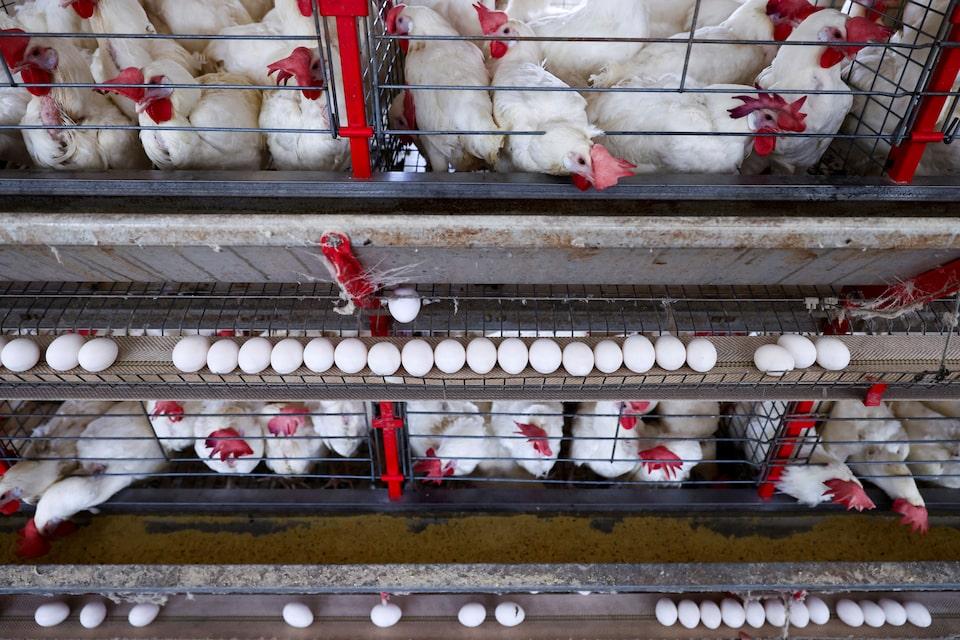
Trump tariffs could be applied to imported eggs Egg prices could rise after recent decline, analysts say Rollins says there will be short-term uncertainty from tariffs April 3 (Reuters) - U.S. President Donald Trump's new tariffs could apply to eggs being imported to ease a supply shortage, Agriculture Secretary Brooke Rollins said on Thursday, a move that industry experts said could boost prices just as they have started to decline from record highs. Rollins said in a Fox News interview that tariffs on egg imports were possible and negotiations with affected countries were ongoing. On Wednesday, Trump announced sweeping tariffs that have been mostly criticized by agricultural and food groups for their potential to shrink markets for farmers and raise consumer prices. Sign up here. The U.S. has increased imports of eggs from Turkey, Brazil and South Korea in an attempt to increase supplies amid an ongoing bird flu outbreak that has killed nearly 170 million chickens, turkeys and other birds since 2022. A new U.S. baseline tariff of 10% would affect imports from Turkey and Brazil, and South Korea is facing a 26% tariff, according to figures released by the White House. If levies are imposed on eggs, manufacturers that import them for processing into food products would either need to absorb the cost or pass it on to consumers, said Greg Tyler, CEO of the USA Poultry & Egg Export Council industry group. "You will see increases in processed egg prices here in the United States as a result," he said. The U.S. Department of Agriculture did not immediately respond to a request for comment. Egg prices have declined in recent weeks from all-time highs, though the wholesale price is still up 60% from this time last year at $3 per dozen, according to USDA data. Weaker demand and a lull in new cases of bird flu have helped cool prices, analysts said. The agriculture secretary, however, said tariffs would cause short-term uncertainty. "I'm not going to sit here and say, 'Oh, everything's going to be perfect and the prices are going to come down tomorrow,' because this is an uncertain time," Rollins told Fox News' Maria Bartiromo. The Brazilian government said it was evaluating its response to Trump's tariffs, while South Korea ordered emergency support measures for affected industries. Imported eggs are generally brought into the U.S. on ships, transported to processing facilities, and then unloaded by hand, said Brian Moscogiuri, global trade strategist for egg supplier Eggs Unlimited. "There's more costs associated with the imports already, and now you add tariffs on top it," he said. "It makes everything more costly and makes imports that much less likely to have a major impact." The U.S. imported more than 1.6 million dozen consumer-grade chicken eggs in January and February, mostly from Turkey, compared with none a year earlier, USDA data show. Turkey may not be as big of a supplier going forward because of tariffs and its own outbreak of bird flu, Moscogiuri said. https://www.reuters.com/world/us/us-egg-imports-meant-drive-prices-down-could-be-hit-by-tariffs-2025-04-03/
2025-04-03 19:38
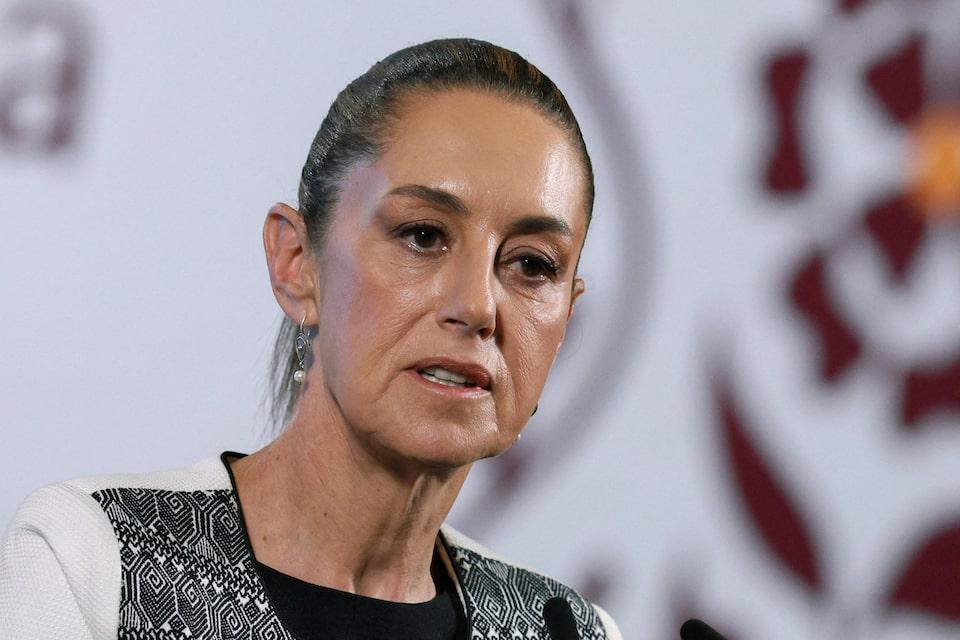
MEXICO CITY, April 3 (Reuters) - Mexican President Claudia Sheinbaum on Thursday celebrated the preferential tariff treatment Mexico receives under the US-Mexico-Canada Agreement (USMCA) after her country was excluded from U.S. President Donald Trump'ssweeping new tariffs. "This is good for the country," Sheinbaum said during her regular morning press conference. "It has to do with the good relationship that we've built between the Mexican and U.S. governments." Sign up here. Trump announced on Wednesday a minimum tariff of 10% on nearly all imports into the United States, with much higher levies imposed on key trading partners, including China and the European Union. Amid the euphoria from local officials, the Mexican peso appreciated nearly 1.3% in afternoon trading, after touching its best levels since November 2024, while the main stock index (.MXX) , opens new tab climbed 0.65%, the best performance among a basket of global equity markets. Economy Minister Marcelo Ebrard also hailed the news that Mexico would be excluded from the new tariffs as a "great achievement." "The USMCA treaty has outlived this new trade regime," he said, adding that Mexico's goal in the next 40 days is to achieve the best trade conditions possible. Sheinbaum said later on Thursday that the Mexican government will publish decrees in May aimed at strengthening the local auto, steel and aluminum industries. The president talked during an event where she presented 18 actions from the so-called Plan Mexico, aimed at strengthening the country's national economy, but did not detail any retaliatory measures to U.S. tariffs. Mexico, which sends 80% of its exports to the United States, is one of the countries most vulnerable to Trump’s tariff threats. https://www.reuters.com/world/americas/mexico-continues-dialogue-with-us-after-new-tariffs-announcement-2025-04-03/
2025-04-03 19:23
NEW YORK, April 3 (Reuters) - The Markit CDX North American Investment Grade Index , a basket of credit default swaps that serves as a gauge of credit risk, widened to its highest since November 2023 on Thursday amid market turmoil fueled by U.S. sweeping tariffs. The index widened to 64.9 basis points, LSEG data showed. It rose to its highest intra-day level since November 2023, as investors hedged bets on a deterioration in credit quality. Sign up here. https://www.reuters.com/markets/us/global-markets-tariffs-credit-urgent-2025-04-03/

2025-04-03 19:04
EBA releases report on EU banks foreign funding Non-EU banks have a 10% share of total assets EBA warns of currency mismatch at certain lenders LONDON, April 3 (Reuters) - Non-EU banks have carved out "dominant" roles in some of Europe's key financial markets, including derivatives where U.S. banks prevail, the European Banking Authority said on Thursday as concerns about the strategic autonomy of the European financial sector grow. Reviewing the dependence of the EU banking sector on foreign banks and foreign currencies, the EBA - which has a mandate to protect and support the EU financial system - said that U.S. banks had a nearly 28% share of the EU derivatives market at December 2023, a rising trend first seen in mid-2021. Sign up here. Overall, non-EU banks' market share was 33.73%, including an 8.17% share in loans and 6.06% in debt securities, according to the data. The study was published less than a day after the United States imposed a slew of tariffs on imports, rattling markets and stoking fears of a deep global recession. It also comes as strategic allies and trading partners of the United States are evaluating their reliance on the superpower. Some European central banking and supervisory officials are questioning whether they can still rely on the U.S. central bank, Reuters reported last month. The overall market share of non-EU banks across all assets stands at around 10%, down from around 12% in the previous report, the EBA said. By currency, 67% of EU/EEA banks' exposures is denominated in euros, 19% is in U.S. dollars, a level which has remained stable since mid-2021, according to the EBA. "The market shares in certain areas, such as interest rate derivatives, fee income reaped from commodity trading and from providing collective investment services, are substantially higher and are in some cases indicative of dominant roles played by non-EU institutions in the EU banking market," it said. Olli Carsten, Head of Economic Analysis and Impact Assessment at the EBA said Brussels originally commissioned the analysis in the aftermath of Brexit and finding U.S. banks were strong in derivatives and repo markets was neither surprising nor worrying at this point. "But (the data) could now also contribute to the strategic autonomy discussion," he said. "The Commission wants to understand what this market looks like, how it is structured, and whether there are some areas that could raise potential concerns in situations like what we are witnessing now," he said. The EBA said it also found "a meaningful currency mismatch" at some lenders and recommended supervisors "pay attention to any gaps in stable funding requirements", ensuring currency breakdowns between assets and liabilities are adequately hedged. https://www.reuters.com/business/finance/us-banks-are-dominant-european-derivatives-eba-says-2025-04-03/