2026-01-14 05:26
MUMBAI, Jan 14 (Reuters) - The Indian rupee ended a choppy trading session modestly weaker on Wednesday, with corporate dollar appetite and likely intervention by the Reserve Bank of India tugging the currency in one direction and another. The rupee closed at 90.2950 per dollar, down slightly from its close of 90.19 in the previous session. Sign up here. The local currency touched a peak of 90.03 in early trading as central bank intervention dovetailed with foreign banks' dollar sales, but its gains were eroded by a pick up in corporate hedging demand thereafter. Meanwhile, dollar-rupee far forward premiums rose, with the 1-year implied yield touching a peak of 2.78%, its highest since late-December, before cooling slightly. Corporate hedging interest alongside positional adjustments following the results of the RBI's $10 billion buy/sell FX swap contributed to the rise in far premiums, a trader at a bank said. Indian benchmarks lagged regional peers, with Nifty 50 <.NSEI> dipping 0.3% while MSCI's gauge of Asian shares outside of Japan <.MIAPJ0000PUS> rose 0.5%. Asian currencies, meanwhile, were flat-to-modestly stronger. The Japanese yen fell to its weakest level in a year-and-a-half against the dollar, prompting traders to consider the possibility that Japanese officials may step in to prop up the currency. The dollar index was a tad lower at 99.1, with markets awaiting remarks from a slate of U.S. Federal Reserve officials scheduled to speak later in the day. Focus will also be in on developments surrounding the Trump administration's threat of indictment against Fed Chair Jerome Powell, which Powell has called out as intimidation aimed at pressuring the Fed to lower rates. "This is a 'slow-burn' negative for the U.S. dollar that isn’t going away. It will surely be an incentive for global reserve managers to continue reducing their holdings of US dollars in reserves," MUFG said in a note. https://www.reuters.com/world/india/rupee-risks-slipping-past-support-after-us-inflation-lifts-dollar-2026-01-14/

2026-01-14 05:06
China December and 2025 annual crude oil daily import volumes hit all-time highs Higher crude throughput, firmer restocking demand and low oil prices supported imports, analysts say December natural gas imports rose 16.3% from a year earlier BEIJING, Jan 14 (Reuters) - China's crude oil imports rose 17% from a year earlier in December, while total imports in 2025 rose 4.4%, government data showed on Wednesday. In addition, daily crude oil import volumes hit all-time highs in both December and for all of 2025. Sign up here. The world's largest crude importer brought in 55.97 million metric tons of oil in December, equivalent to 13.18 million barrels per day (bpd), up 10% from 50.89 million tons in November, according to the General Administration of Customs. China imported 557.73 million tons of crude oil in 2025, or 11.55 million bpd, up 4.4% from a year earlier, the data showed. The growth in crude oil imports was attributable to stronger crude throughput and firmer restocking demand, according to Kpler, a consultancy. It added that China’s oil throughput is expected to reach 15.38 million bpd in 2025, up 0.7% from a year earlier. The average stock build in 2025 was 430,000 bpd, up from 84,000 bpd in 2024, with half of the growth driven by new storage capacity from both state-owned and independent companies, according to consultancy Rystad Energy. “Energy security is the primary driver of China’s stockpiling amid rising geopolitical tensions," said Ye Lin, vice president at Rystad Energy. "Low oil prices also matter, as the average crude cost in China was $10 per barrel lower than in 2024 amid sanctions." Kpler and ship-tracking firm Vortexa both estimated record-high seaborne crude imports in December of more than 12 million bpd. Lower oil prices encouraged refiners to increase purchases, while strategic-petroleum-reserve restocking may also have played a role, said Muyu Xu, an analyst at Kpler. Independent refiners were able to buy more spot cargoes after receiving import quota allocations in November, Xu added. Kpler and Vortexa said onshore crude inventories rose by 35 million barrels in December and Kpler added that China’s onshore crude oil inventories reached a record high of 1.206 billion barrels in late December and early January. More than 12 million barrels of stock builds during December occurred in Guangdong province, primarily at state-owned storage facilities linked to Sinopec’s (600028.SS) , opens new tab Maoming and PetroChina’s (601857.SS) , opens new tab Jieyang refineries, Vortexa said. Nearly 15 million barrels were accumulated in Shandong. This was in line with record-high sanctioned crude imports into Shandong during November and December, Vortexa added. “By contrast, imports from Iran fell below 1.3 million bpd in December from more than 1.5 million bpd in November, as increased Russian supplies displaced some Iranian barrels,” said Emma Li, an analyst at Vortexa. China’s natural gas imports, including pipeline gas and liquefied natural gas (LNG), surged 16.3% from a year earlier in December to 13.45 million tons. For 2025, gas imports totalled 127.87 million tons, down 2.8% from a year earlier, customs data showed. (1 metric ton of crude oil = 7.3 barrels) https://www.reuters.com/business/energy/chinas-2025-oil-imports-december-inflows-both-hit-record-highs-2026-01-14/

2026-01-14 02:25
LONDON, Jan 14 (Reuters) - British businesses turned their most pessimistic in three years at the end of 2025 and their mood worsened after finance minister Rachel Reeves' budget at the end of November, a survey published on Wednesday showed. The Institute of Chartered Accountants in England and Wales (ICAEW) said its gauge of business confidence fell to -11.1 in the fourth quarter, its lowest since the end of 2022 and down from -7.3 in third quarter. Sign up here. Confidence slid across the September-to-December period and fell from -10.7 before Reeves' budget on November 26 to its final reading 0.4 points lower. Last week another closely watched survey, the S&P Purchasing Managers' Index, showed only a marginal rise in business sentiment in December, in contrast to initial estimates of more of a pick-up after budget uncertainty lifted. Reeves announced 26 billion pounds ($35 billion) of tax increases but delayed most of them and spared employers the kind of hit included in her first budget in 2024 when she raised a payroll tax. Reeves and Prime Minister Keir Starmer are trying to speed up Britain's slow pace of economic growth and have said they will create the conditions to boost business investment. The ICAEW survey also showed: ($1 = 0.7426 pounds) https://www.reuters.com/world/uk/uk-business-confidence-drops-3-year-low-survey-shows-2026-01-14/
2026-01-14 00:48
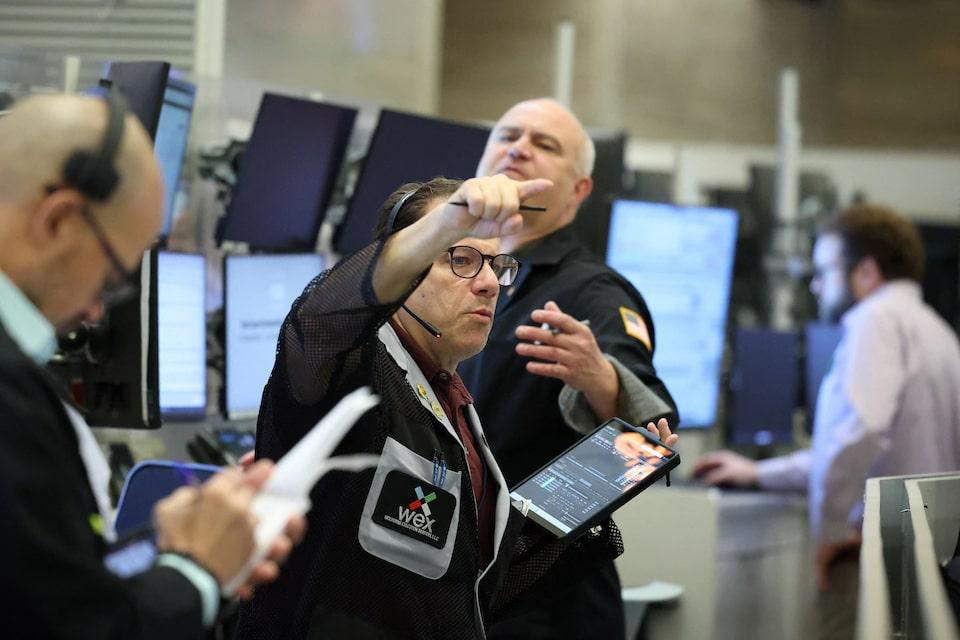
JPMorgan Chase beats estimates for Q4 profit Delta Air profit forecast disappoints December CPI rises 2.7% YoY Indexes: Dow down 0.8%, S&P 500 down 0.2%, Nasdaq down 0.1% NEW YORK, Jan 13 (Reuters) - U.S. stocks ended lower on Tuesday, led by a drop in financial shares as comments from JPMorgan executives added to worries about U.S. President Donald Trump's recent proposal for a cap on credit‑card rates. Helping to limit the day's decline, a report early in the day showed that a reading on U.S. inflation for December came in as expected, leaving intact market expectations for interest rate cuts from the Federal Reserve this year. Sign up here. Trump's proposed 10% cap on credit-card interest rates would directly hurt financial companies' profits, and top JPMorgan (JPM.N) , opens new tab executives including CEO Jamie Dimon warned that Trump's plan would also severely hurt consumers. That extended this week's selloff in financials over the proposal, which Trump made last Friday. Shares of Visa (V.N) , opens new tab fell 4.5%, Mastercard (MA.N) , opens new tab dropped 3.8% and the financial sector (.SPSY) , opens new tab fell 1.8%, leading declines in the S&P 500. Shares of JPMorgan ended down 4.2%. The bank reported a better-than-expected quarterly profit but also a drop in investment banking fees. "Financials are getting hit by Trump's credit-card proposal," said Tim Ghriskey, senior portfolio strategist at Ingalls & Snyder in New York. "It seems to be sinking in," he said. "I think it's going to be extremely difficult to have that become a reality, but it's still out there." The Dow Jones Industrial Average (.DJI) , opens new tab fell 398.21 points, or 0.80%, to 49,191.99, the S&P 500 (.SPX) , opens new tab lost 13.53 points, or 0.19%, to 6,963.74 and the Nasdaq Composite (.IXIC) , opens new tab lost 24.03 points, or 0.10%, to 23,709.87. Results from JPMorgan and other companies on Tuesday also unofficially kicked off the fourth-quarter U.S. earnings season. Other big banks, due to report their quarterly numbers later this week, were also lower even as analysts expected most banks to post stronger results for the last quarter of 2025. Delta Air Lines (DAL.N) , opens new tab shares eased 2.4% as the midpoint of its 2026 profit forecast fell short of analysts' expectations. Earnings news overall for the reporting period will most likely be positive, said Oliver Pursche, senior vice president, adviser for Wealthspire Advisors in Westport, Connecticut, adding, "I suspect there are going to be some upward revisions" for 2026. The day's declines, he said, most likely reflect "a little bit of letting the air out of the balloon," after recent record highs. The Dow and S&P 500 both registered record closing highs on Monday. Advancing issues outnumbered decliners by a 1.15-to-1 ratio on the NYSE. There were 577 new highs and 77 new lows on the NYSE. On the Nasdaq, 2,068 stocks rose and 2,701 fell as declining issues outnumbered advancers by a 1.31-to-1 ratio. Volume on U.S. exchanges was 18.68 billion shares, compared with the roughly 16.4 billion average for the full session over the last 20 trading days. https://www.reuters.com/business/wall-street-futures-dip-ahead-jpmorgan-earnings-inflation-data-2026-01-13/
2026-01-14 00:38
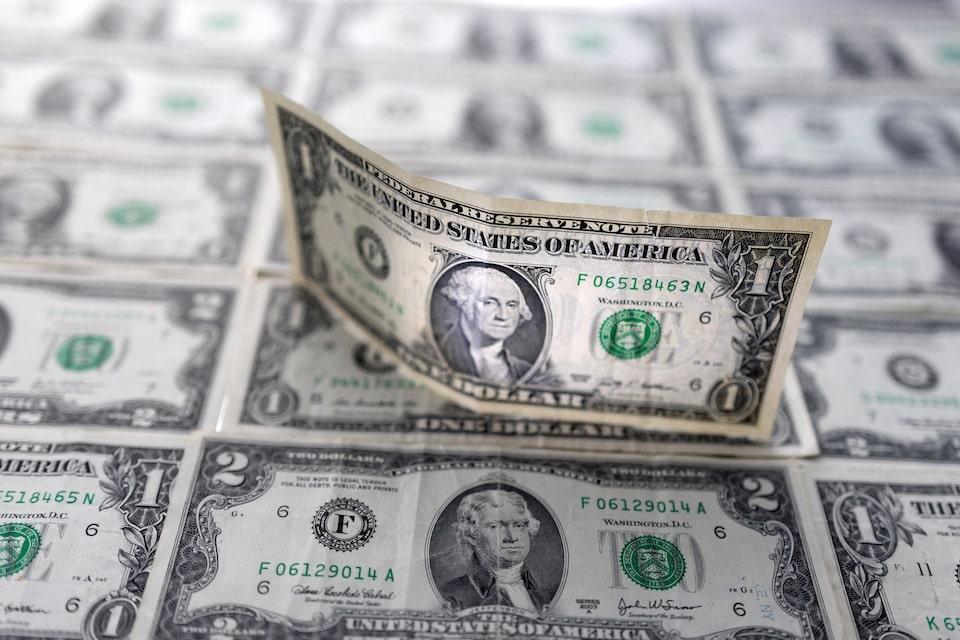
Yen rebounds amid speculation of snap election in Japan Japan officials see possible intervention to shore up yen Expectations Fed will keep rates on hold benefits dollar NEW YORK, Jan 14 (Reuters) - The Japanese yen rebounded from an 18-month low against the dollar on Wednesday as Japanese officials warned of potential intervention to shore up the currency, while the U.S. currency was modestly stronger against the euro as traders continued to evaluate likely Federal Reserve policy. The yen has tumbled on concerns about looser fiscal and monetary policy as speculation rises that Prime Minister Sanae Takaichi will call an early snap election, a move that could delay parliamentary approval of a bill that grants the government the right to issue deficit-covering bonds. Sign up here. "Takaichi's plan to leverage her astonishingly high personal ratings in calling a snap election is translating into a rise in bets on reflation in the Japanese economy, more government spending and higher yields," said Karl Schamotta, chief market strategist at Corpay in Toronto. "All of that is translating into downward pressure on the yen, which of course is being offset by intervention threats from authorities." YEN WEAKNESS OVERDONE? Japanese Finance Minister Satsuki Katayama issued another verbal warning on Wednesday, saying officials would take "appropriate action against excessive FX moves without excluding any options." So far, however, officials have not indicated that an intervention is likely in the very near term. “It would come as a little bit of a surprise to markets since recent commentary hasn’t conveyed much urgency,” said James Lord, global head of FX & EM strategy at Morgan Stanley. Some also see weakness in the yen as having moved too far. Analysts at LMAX Group note that from a technical perspective, “there are signs of a meaningful top in place after the market put in a multi-year high in 2024.” From a fundamental perspective, “speculative yen longs have been largely unwound, leaving room for fresh short positioning if USDJPY breaks higher through 160, though rising intervention warnings from Japanese officials add two-way risk,” they said in a report. The yen strengthened 0.43% against the greenback to 158.46 per dollar. It earlier reached 159.45, the weakest since July 2024. The dollar index , which measures the greenback against a basket of currencies including the yen and the euro, fell 0.06% to 99.13, with the euro down 0.03% at $1.1637. FEDERAL RESERVE EXPECTED TO HOLD RATES The dollar has benefited in recent weeks from rising expectations that the Fed will keep rates on hold for the next several months. That was further boosted after data on Friday showed that the unemployment rate dipped to 4.4% in December. Morgan Stanley pushed back its expectations for rate cuts to June and September, from January and April, after Friday’s jobs data. “Up until now we have been quite focused on the labor market, but with the reduction in the unemployment rate we think it's going to be difficult for that to be the driver of any near-term cuts,” Lord said. “That arguably reduces the case for the dollar to weaken in the way that we've been expecting so far this year. But at the same time, I do think a lot of the uncertainty that's been injected into the Fed debate given recent events is pushing in the other direction,” Lord added. Concerns about Fed independence have increased as the Justice Department undertakes a criminal investigation into Fed Chair Jerome Powell in relation to a building renovation. Powell called the investigation a "pretext" for the White House to gain more influence over interest rates, which U.S. President Donald Trump wants cut dramatically. The dollar was little changed on data on Wednesday showing that U.S. producer prices picked up slightly in November amid a surge in the cost of gasoline, while U.S. retail sales increased more than expected in November. The Fed's "Beige Book" also showed that economic activity increased in most parts of the United States and employment was mostly unchanged in recent weeks. Traders remain focused on rising geopolitical tensions. Iran has warned neighbors hosting U.S. troops that it would hit American bases if the United States strikes, a senior Iranian official told Reuters on Wednesday, as Iran seeks to deter Trump's threats to intervene on behalf of protesters. In cryptocurrencies, bitcoin gained 3.58% to $97,428. https://www.reuters.com/world/asia-pacific/dollar-rebounds-with-cpi-data-line-bankers-back-powell-2026-01-14/
2026-01-14 00:30
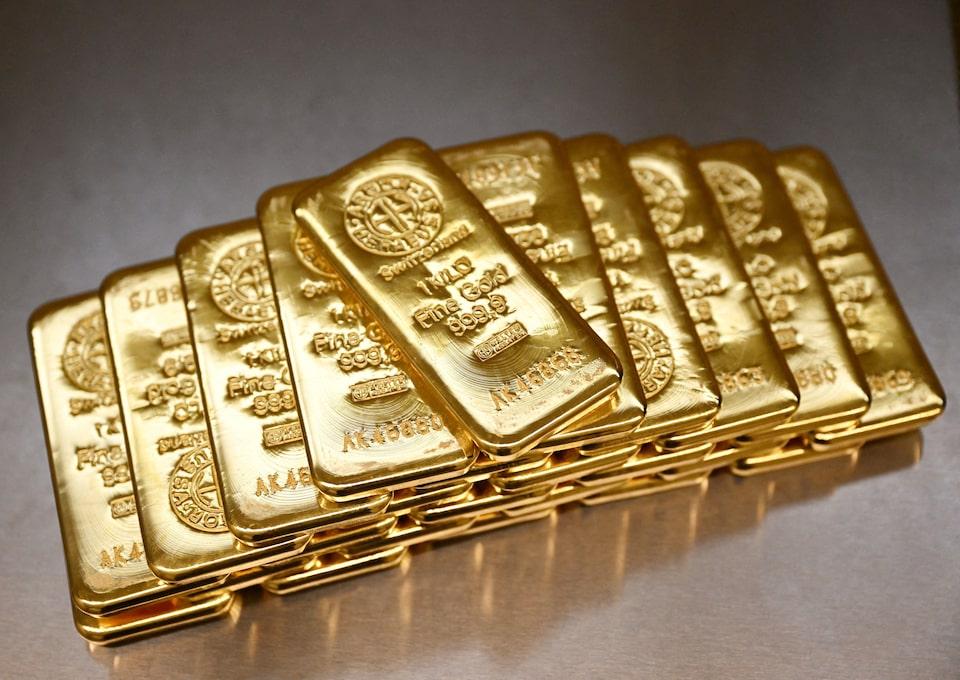
ORLANDO, Florida, Jan 13 (Reuters) - Gold and other precious metals recorded eye-watering price spikes in 2025, so it's difficult to imagine them delivering similar returns in 2026. But solid central bank appetite and safe-haven demand could keep their relentless rise on track. With the first month of the year barely at the halfway point, gold and silver have already jumped to new records, up 7% and 20%, respectively, so far in 2026. Platinum is up 15% year to date, and is also close to hitting a fresh high. Sign up here. These moves are all the more remarkable given that gold, platinum, and silver clocked annual gains of 65%, 125% and 145%, respectively, last year. Any notion of investors taking profits - and a breather – evaporated with a blizzard of political, economic, and geopolitical news out of Washington. It brings to mind Vladimir Lenin's apocryphal quote "There are decades where nothing happens; and there are weeks where decades happen." Just last week alone, U.S. President Donald Trump ordered the purchase of $200 billion of mortgage-backed securities, directed U.S. oil giants' activities in Venezuela, attempted to ban defense firms' share buybacks and dividend payments, and put a one-year cap on credit card interest rates, while his Department of Justice threatened to indict Fed Chair Jerome Powell. This is all fuel for gold. The "dollar debasement trade" may be overstated - the greenback has been remarkably stable for months - but the strength of gold and other precious metals suggests there may be some substance to it. This "flight to quality" and inflation-hedging among private investors is complementing central banks' highly inelastic demand for bullion. Reserve managers continue to buy for strategic reasons and diversification, regardless of price. PEDAL TO THE YELLOW METAL To track the phenomenon, look at China. People's Bank of China data last week showed that the central bank bought gold for a 14th consecutive month in December, increasing its holdings over the year by some 28.5 metric tons. That's less than the 44 tons purchased the year before, but still substantial, especially coming amid spot gold's biggest annual price rise since 1979. It helped raise the value of China's gold reserves to $319.45 billion from $191.34 billion the year before. Other central banks are buying too. International Monetary Fund data shows Brazil, Finland, and Turkey were among the biggest buyers late last year, lifting official sector buying above the long-run average. "Clearly, elevated gold prices are not yet detracting from reserve managers' inclination to accumulate gold," Deutsche Bank analysts wrote on Monday. Analysts at State Street agree. Official sector buying is providing a "sticky" source of demand, underscoring a "durable shift" in official sector reserve management away from U.S. Treasuries and toward the yellow metal. This is effectively raising gold's price floor, which State Street suggests is $4,000 an ounce, some way off the record $4,630 per ounce struck on Monday. The ceiling is also climbing, and a test of $5,000 now seems likely. DIRECTION OF TRAVEL NOT IN DOUBT Gold is not included in the IMF's Currency Composition of Official Foreign Exchange Reserves, or COFER data, the global benchmark for FX reserves. Instead, it is found in wider measures of central banks' assets. For that reason, and others such as data reporting transparency, estimating gold's place in official reserves relative to currencies, or other assets like Treasuries, should be done with a fair degree of caution. According to the World Gold Council, gold's share of global FX reserves in October was 25.9%. That compares with the euro's 20% share of reported IMF COFER reserves data, and some analysts also believe that gold's share of reserves overtook Treasuries' portion last year for the first time since 1996. Whatever the accuracy of these claims, there's little doubt about central banks' direction of travel. And in an increasingly volatile world, they won't be reversing course any time soon. (The opinions expressed here are those of the author, a columnist for Reuters) Enjoying this column? Check out Reuters Open Interest (ROI), your essential source for global financial commentary. ROI delivers thought-provoking, data-driven analysis of everything from swap rates to soybeans. Markets are moving faster than ever. ROI can help you keep up. Follow ROI on LinkedIn , opens new tab and X , opens new tab. https://www.reuters.com/markets/commodities/metals/ready-steady-gold-safety-bid-adds-fuel-cenbank-fire-2026-01-13/