2025-04-03 11:51
KYIV, April 3 (Reuters) - Ukrainian corn, a key element in the country's grain sector, could benefit from the tariffs imposed by the U.S., as it is able to partially substitute for U.S. corn if retaliatory sanctions are imposed, analysts said on Thursday. U.S. President Donald Trump announced a 10% minimum tariff on most imports, with significantly higher duties on goods from dozens of countries including China, which is likely to prompt countermeasures potentially driving up prices and reducing demand for U.S. goods. Sign up here. Ukraine is a major global corn grower and exporter. "If key importers do end up imposing tariffs on U.S. corn, it will open a huge window of opportunity for alternative suppliers," ASAP Agri consultancy said in a statement. "Ukrainian corn is in a strong position here: competitive pricing, stable logistics, and close ties with the European Union and Asian markets," it added. The consultancy said Brazil is first in line, but its harvest cannot cover all the demand and that is where Ukraine can step in and claim its share. Another consultancy, Barva Invest, said Ukraine perceives the U.S. as an export competitor in the grains and oilseeds market, not a trading partner, and potential counter-restrictions by other countries on U.S. exports will have the greatest impact. It added that the EU, Australia and China are most likely to impose such measures which opens up strategic opportunities for Ukraine where it competes directly with the U.S. "First of all, this is the market for corn, soybeans and wheat, more indirectly for rapeseed, sunflower oil and barley," Barva Invest said on Telegram messenger. Ukraine produced 32 million metric tons of corn in 2023 and 26 million tons in 2024. The country exported almost 30 million tons in the 2023/24 season and is likely to ship abroad 22 million tons in 2024/25, according to the UCAB business association. Farmers are likely to increase areas sown for corn this year as corn export prices are lucrative. Ukraine also harvested a record 6.2 million tons of soybean in 2024 and around half of the volume could be exported this season. Ukraine's 2025 soybean crop could be between 5.8 and 6.2 million tons and the final volume will depend on the presence or absence of rain in May and June. https://www.reuters.com/markets/commodities/ukraines-corn-could-benefit-us-tariffs-analyst-says-2025-04-03/

2025-04-03 11:46
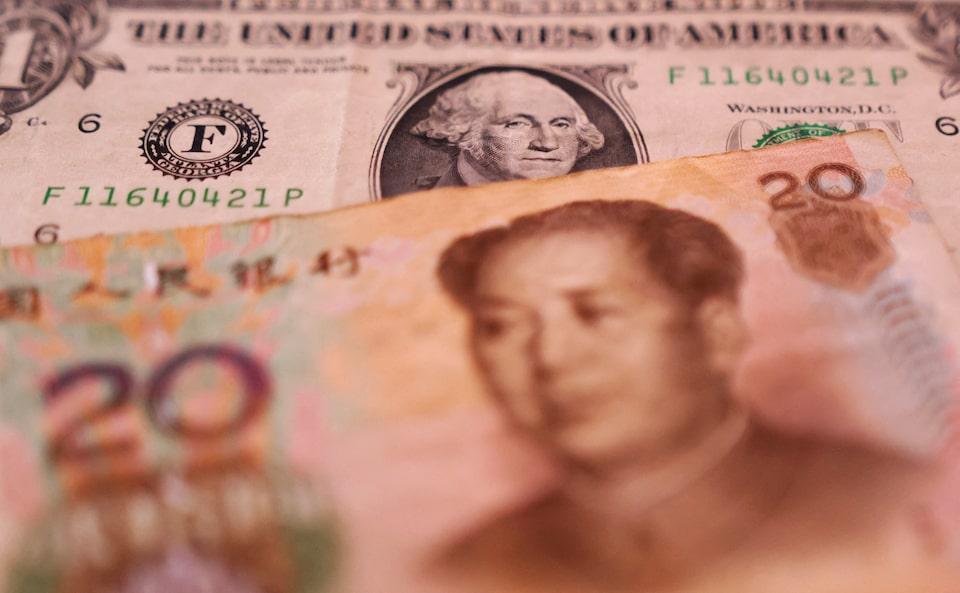
China is among the hardest hit by new tariffs Risk-off mood triggers declines in Chinese assets Investors eye PBOC moves amid trade tension HONG KONG, April 3 (Reuters) - China's yuan dropped to its lowest level in seven weeks and stock markets slumped on Thursday after U.S. President Donald Trump unveiled a sweeping set of reciprocal tariffs that were particularly heavy on China and its main trading partners. While investors had been bracing for these tariffs over the past week, Washington's latest punitive measures turned out to be more aggressive than expected. Sign up here. Tariffs on Chinese imports will increase to 54% from 20% previously imposed. Countries in China's supply chain were hardest hit, with Vietnam, Cambodia and Laos facing tariffs between 46% and 49% respectively. "The tariff hike was larger than most market participants were expecting, so the initial market reaction is likely going to be a continuation of risk-off sentiment," said Lynn Song, chief economist for Greater China at ING. China's blue-chip CSI 300 Index (.CSI300) , opens new tab fell 0.6% to a two-month low, while Hong Kong's Hang Seng Index (.HIS) , opens new tab fell 1.5%. Escalating trade tensions could also complicate Beijing's plan to spur economic growth, targeted at roughly 5% in 2025. Trump has also signed an order to close a trade loophole used to ship low-value packages duty-free from China, known as "de minimis", which will take effect on May 2. YUAN SUPPORT Analysts said they were scrutinising China's intent to defend the yuan, to indicate how keen it is to both limit contagion in emerging markets and negotiate with Trump. China's onshore yuan ended the domestic session at 7.3043 per dollar on Thursday, the weakest close since February 12. The offshore yuan hit a fresh one-month low overnight. The currency has already given up most of its year-to-date gains over the past month, despite efforts by the People's Bank of China (PBOC) to keep it steady through changes to its daily benchmarks. China's major state-owned banks bought yuan, and the PBOC set the midpoint rate, around which it allows the yuan to trade, above market estimates, in a sign it aims to contain depreciation. Expectations that monetary easing will follow drove down Chinese bond yields . But mainland Chinese investors snapped up HK$28.8 billion ($3.70 billion) worth of Hong Kong shares on Thursday through the Stock Connect scheme, just shy of the HK$29.6 billion record set last month. Stock Connect is an investment channel that connects the Hong Kong, Shanghai, and Shenzhen stock exchanges, and allows mainland investors to trade Hong Kong stocks. "At least for value investing, Hong Kong stocks are still much cheaper than A-shares amid an asset shortage," said Zeng Wenkai, fund manager at Shengqi Asset Management Co. Investors purchased a record HK$435 billion in Hong Kong shares during the first quarter to capitalise on the rally spurred by Chinese AI startup DeepSeek, and diversify portfolios. But a recent pullback in Hong Kong markets may have attracted potential dip-buyers as well, according to Kenny Ng, strategist at China Everbright Securities International. ($1 = 7.7779 Hong Kong dollars) (This story has been corrected to fix the description of Stock Connect scheme in paragraph 14) https://www.reuters.com/markets/asia/china-stocks-yuan-tumble-after-bigger-than-expected-trump-tariffs-2025-04-03/
2025-04-03 11:44
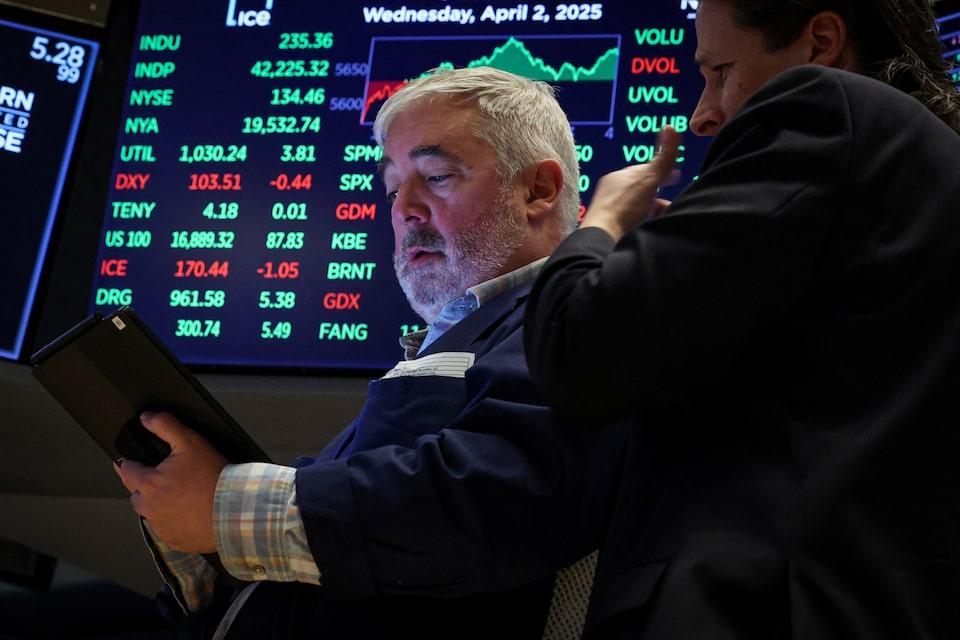
All three benchmarks slump after Trump tariffs announcement Apple leads declines among Big Tech Retail stocks sink on Asia tariff worries Wall Street fear gauge hits 3-week high April 3 (Reuters) - Wall Street benchmarks slumped on Thursday, ending with the largest one-day percentage losses in years, as U.S. President Donald Trump's sweeping tariffs ignited fears of an all-out trade war and a global economic recession. Investors fled from risky assets, seeking the safety of government bonds, after Trump slapped a 10% tariff on most U.S. imports and much higher levies on dozens of other countries. Sign up here. The tariffs, poised to disrupt the global trade order, highlight a stark shift from just a few months ago when the promise of business-friendly policies under the Trump administration propelled U.S. stocks to record highs. Investors sold positions to reflect the new economic reality, with concerns about how other countries would react to Trump's Rose Garden proclamations. China vowed retaliation, as did the European Union, which faces a 20% duty. South Korea, Mexico, India and several other trading partners said they would hold off for now as they seek concessions before the targeted tariffs take effect on April 9. The coming days are expected to be volatile, as events unfold and the full effect of Trump's economic actions start to feed through into the wider economy. The CBOE Volatility index (.VIX) , opens new tab, known as Wall Street's fear gauge, touched a three-week high. "There are still a lot more questions than answers out here," said Steven DeSanctis, small and mid-cap strategist at Jefferies Financial Group. According to preliminary data, the S&P 500 (.SPX) , opens new tab lost 275.05 points, or 4.85%, to end at 5,395.92 points, while the Nasdaq Composite (.IXIC) , opens new tab dropped 1,053.60 points, or 5.99%, to 16,547.45. The Dow Jones Industrial Average (.DJI) , opens new tab fell 1,682.61 points, or 3.98%, to 40,542.71. High-flying technology stocks suffered big declines after pushing Wall Street to record highs in recent years. Apple (AAPL.O) , opens new tab sank, reeling from an aggregate 54% tariff on China, the base for much of the iPhone maker's manufacturing. Nvidia (NVDA.O) , opens new tab slumped, as did Amazon.com (AMZN.O) , opens new tab. U.S. stocks have lost ground since Trump took office in January, with the S&P 500 and the Nasdaq (.IXIC) , opens new tab dropping 10% from record highs last month, marking a correction, as investors priced in the economic damage from the tariffs. Traders are ramping up expectations for the Federal Reserve to cut interest rates four times this year, starting with a quarter-point cut in June. "The Fed does have considerable firepower to help the market," said George Bory, chief investment strategist for the fixed income team at Allspring Global Investments. "The market is now pricing in more rate cuts, and perhaps sooner," adding an easing in June now seemed guaranteed, with the chance of a cut in May as well. That heightens the significance of Friday's payrolls data and Fed Chair Jerome Powell's speech the same day, which could offer crucial insights into the U.S. economy's health and the future path of interest rates. Retailers were hit hard, with Nike (NKE.N) , opens new tab and Ralph Lauren (RL.N) , opens new tab falling on a raft of new tariffs on major production hubs including Vietnam, Indonesia and China. Big banks such as Citigroup (C.N) , opens new tab and Bank of America (BAC.N) , opens new tab, which are sensitive to economic risks, fell, as did JPMorgan Chase & Co (JPM.N) , opens new tab. The U.S. small-cap Russell 2000 index (.RUT) , opens new tab tumbled, underscoring concerns about the health of the domestic economy. "Small-cap companies tend to be suppliers to the large-cap companies, so as things go bad for the large-cap names because of tariffs, they are going to put a lot of pressure on their small-cap suppliers," said Jefferies' DeSanctis. Exxon Mobil (XOM.N) , opens new tab and Chevron (CVX.N) , opens new tab fell, as crude prices , slumped 6.8% on the tariffs and OPEC+ speeding up output hikes. Consumer staples (.SPLRCS) , opens new tab was one of the few bright spots. The sector is traditionally considered a defensive play, but it was also buoyed on Thursday by Lamb Weston (LW.N) , opens new tab, which gained after reporting earnings. https://www.reuters.com/markets/us/wall-street-futures-tailspin-tariffs-fuel-recession-fears-2025-04-03/
2025-04-03 11:43
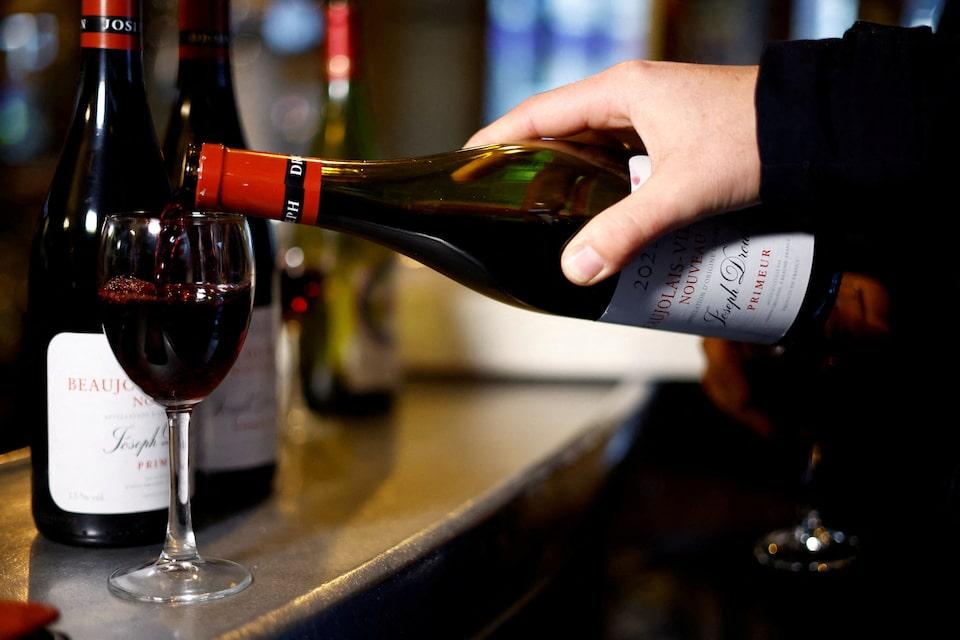
Tariffs add to drinks industry pain Some shares flat or even higher as worst-case levies avoided Many drinks must be made in specific areas, cannot move output to US LONDON/MILAN/PARIS, April 3 (Reuters) - U.S. drinkers will pay more for cocktails, champagne and foreign beers, brands will disappear from bar menus and jobs will be lost on both sides of the Atlantic as a result of U.S. President Donald Trump's reciprocal tariffs, drinks industry bodies and analysts said on Thursday. Trump's latest round of global and country-specific tariffs was set to hit everything from the popular negroni cocktail, based on Italy's Campari (CPRI.MI) , opens new tab liqueur, to Guinness stout, made by the world's top spirits producer Diageo (DGE.L) , opens new tab. Sign up here. He also introduced a 25% levy on all beer imports and added beer cans to existing aluminium tariffs, hitting labels such as Mexican-made Corona (STZ.N) , opens new tab and Dutch Heineken (HEIN.AS) , opens new tab. Shares of some spirits companies such as Diageo and Campari however gained as threats of 25% tariffs affecting Mexican tequila and Canadian whisky did not materialise. A threatened 200% tariff on European alcohol also remained outstanding for now. However, industry bodies said the levies laid out on Wednesday were already high enough to hurt sectors that rely heavily on U.S. drinkers for sales. European spirits exports alone to the U.S. stood at 2.9 billion euros ($3.18 billion) in 2024, according to trade body spiritsEurope, which said many U.S.-based jobs also relied on this trade. French groups and officials warned of a 20% slide in sales and mass layoffs in regions like Cognac, where French brandy is produced for export, largely to the U.S. and China. The Spanish Wine Association warned no market could offset lost sales in the United States. WINNERS AND LOSERS "Many labels, which cannot be replaced by local production, will disappear from the tables of U.S. consumers, while a serious production and employment crisis is looming in Italy and Europe," Micaela Pallini, president of Italian trade association Federvini, said in a statement. Japanese drinks maker Suntory said it will focus on selling spirits in countries where they are made as a result of tariffs. Other major spirits and beer producers either declined to comment, did not immediately respond to requests for comment or said they were assessing the impact. Analysts at UBS estimated that large listed spirits makers would have to hike prices by between 2% and 5% to cover the tariffs, or absorb the cost themselves and take a similar hit to operating profit. Serious discussions about prices were underway now that tariff rates are known, said Tammy Curtis, senior vice president of commercial finance at Republic National Distributing Company, a top U.S. spirits distributor. "There will be winners and losers," she said, adding products where more of the tariff can be absorbed throughout the supply chain will fare better. Sales of products like wine and cognac are already falling in the United States. French and Spanish wine producers told Reuters U.S. drinkers would have to pay some of the cost of tariffs. This would hurt U.S. wine businesses more than foreign counterparts, the U.S. Wine Trade Alliance added. NOWHERE TO GO Strategies used to mitigate tariffs during Trump's first term, such as shipping wine in bulk, would not help with these blanket levies, Allan Sichel, chairman of Bordeaux wine lobby CIVB, said. Some producers may be able to shift manufacturing or parts of it, such as bottling. Other products like French champagne or Scotch whisky have to be made in specific countries or designated regions and cannot move production. The Irish whiskey sector exports 40% of its production to the U.S., which drives growth and helps fund expansion in other markets, said Eoin O Cathain, head of the Irish Whiskey Association. Companies may now shift their focus elsewhere, he continued, especially given ongoing uncertainty. While Europe was spared the 200% tariff Trump has threatened to impose, it could still come if Europe's retaliation hits U.S. spirits, such as bourbon whiskey. "If it goes up to 200%, that'll be game over. The U.S. market will be finished," said Frederic Zeimett, CEO of Champagne Leclerc Briant which exports to the United States. ($1 = 0.9116 euros) https://www.reuters.com/business/retail-consumer/trumps-tariffs-set-drive-up-bar-bills-cut-jobs-2025-04-03/
2025-04-03 11:40
LONDON, April 3 (Reuters) - Britain's Office for National Statistics said on Thursday it will focus increasingly on its core economic and population figures to maintain quality and pause or slow down some other area areas of work. "We will increase our focus on our core economic and population statistics so that we can continue to respond to the most important needs of the nation," National Statistician Ian Diamond said. Sign up here. "This will mean prioritising our efforts in areas that have the greatest impact such as Gross Domestic Product, prices, labour market and population changes." https://www.reuters.com/world/uk/uk-ons-says-will-focus-core-economic-population-data-pause-some-areas-work-2025-04-03/
2025-04-03 11:36
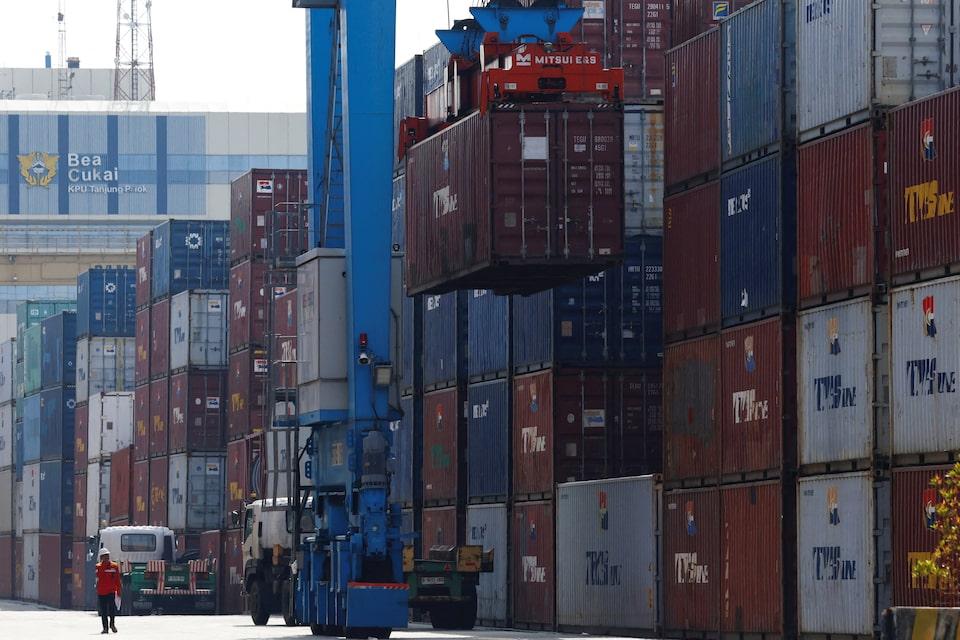
Tariffs could disrupt trade and increase costs for firms Shipping firms flag disruption to global economy Companies may raise prices or cut investments Sportswear brands hit by Asian manufacturing exposure FRANKFURT/SHANGHAI/NEW YORK, April 3 (Reuters) - Businesses around the globe on Thursday faced up to a future of higher prices, trade turmoil and reduced access to the world's largest market after U.S. President Donald Trump confirmed their worst fears by instituting broad tariffs worldwide. Trump ramped up his trade war with tariff rates from 10% to nearly 50%. He says the levies will bring jobs back to the United States - but company executives were focused on possibly raising prices, reducing shipments, or cutting back investment activity outright. Sign up here. "The reality is stark: these tariffs will push prices higher on thousands of everyday goods - from phones to food - and that will fuel inflation at a time when it is already uncomfortably persistent," said Nigel Green, CEO of global financial advisory deVere Group. Shipping companies, one of the main conduits of global trade, were among the first to sound the alarm on Thursday while many other business leaders kept a low profile as they pondered the new reality. "The tariff plan announced by the U.S. administration was significant, and in its current form, it clearly isn't good news for (the) global economy, stability and trade," Maersk, the world's second-largest container shipping firm, said. "It is still too early to say with any confidence how this will ultimately unfold," the Danish company added. German container shipping firm Hapag-Lloyd (HLAG.DE) , opens new tab also said that tariffs could affect demand, cargo flows and costs. The world's fifth biggest container liner said it could be forced to adjust its service network in response. Those fears were echoed by Dirk Jandura, president of Germany's BGA association, representing importers and exporters. "We will have to translate the tariffs into price increases, and in many cases that means a drop in sales," he said. ASIAN PRODUCERS HIT Trump sees tariffs as a way of protecting the U.S. economy from unfair global competition and a bargaining chip for better terms of trade. The most common method of dealing with tariffs is to raise prices, passing along the cost to customers as far as possible. Other companies may try to diversify supply chains, but Trump's additional 34% tariff on China was accompanied by 46% and 49% tariffs on Vietnam and Cambodia, respectively - all Asian countries where companies had been shifting output. Shares in Western sportswear brands Nike (NKE.N) , opens new tab, Adidas (ADSGn.DE) , opens new tab and Puma (PUMG.DE) , opens new tab all dropped sharply on Thursday as Vietnam, Indonesia, and China are leading markets for them to source products. Shares in Apple (AAPL.O) , opens new tab fell 7% in Frankfurt, reflecting concerns over the iPhone maker's big manufacturing base in China. In the U.S., retailers Target (TGT.N) , opens new tab and Best Buy (BBY.N) , opens new tab have said they will have to raise prices, but their margins are more likely to be squeezed, and Target and Walmart have been trying to negotiate with Chinese suppliers already dealing with a slowed economy. U.S. drinkers will pay more for cocktails, champagne and foreign beers, brands will disappear from bar menus and jobs will be lost on both sides of the Atlantic, drinks industry bodies said. Some European companies that primarily serve higher-income consumers were planning to raise prices even before confirmation of the 20% tariffs on European Union imports. Italy's Illy Caffe and Ferrari (RACE.MI) , opens new tab have both said they will lift prices, calculating premium coffee drinkers and sports car buyers will be able to absorb the extra cost. Lavazza, another Italian coffee maker, said it could accelerate plans to expand its plant in the U.S., but the company must first assess the impact of potential tariffs on green beans from Brazil. Giovanna Ceolini, head of Confindustria Accessori Moda, which represents Italian companies in the footwear, leather, fur and tannery industry, said that U.S. tariffs come when companies are already struggling with increased costs. "We are afraid that for our companies there will be a slowdown (in demand). It will depend on whether Americans are willing to pay a little more (for our goods)," she said. Jefferies analysts anticipate a 6% increase in U.S. luxury prices as companies seek to protect margins. INVESTMENT CALL The White House says tariffs will encourage more onshoring, similar to the revamped USMCA trade deal Trump signed during his first term that encouraged manufacturing activity to shift from China to Mexico or Canada. German fan and motor maker ebm-papst, for example, is deliberating whether to build a third production plant or expand its existing site in Tennessee. CEO Klaus Geissdoerfer said he had initially thought of a new plant in Mexico, but "some are saying, 'maybe it's better to go to the USA after all because we'll have to pay customs duty in Mexico'." The most severe risk, according to executives interviewed by Reuters, is that businesses simply stop investing. https://www.reuters.com/markets/companies-face-new-reality-trump-tariff-chaos-2025-04-02/