2025-04-03 10:52
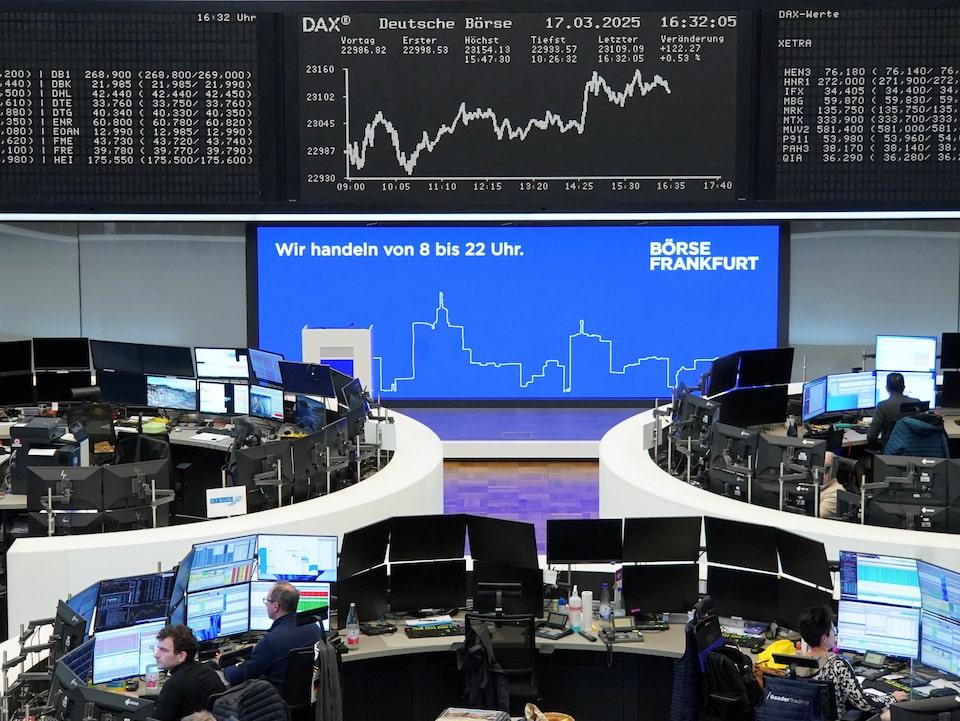
S&P 500, Dow register biggest daily pct declines since June 2020 Dollar down against euro, yen Safe-haven bonds rally; oil down more than 6% NEW YORK, April 3 (Reuters) - Major U.S. stock indexes registered their biggest daily percentage drops since 2020 on Thursday and the dollar weakened as U.S. President Donald Trump's drastic trade tariffs stoked fears of a global recession and led investors to seek safe-haven assets like bonds and the yen. S&P 500 companies lost a combined $2.4 trillion in stock market value, their biggest one-day loss since the coronavirus pandemic hit global markets on March 16, 2020. Sign up here. The Nasdaq Composite Index led declines on Wall Street, ending the day down 5.97% in its biggest daily fall since March 2020, while the S&P 500 and Dow Jones Industrial Average posted their biggest daily percentage declines since June 2020. Traders were rattled by the severity of a new baseline 10% tariff on imported goods and some eye-watering reciprocal tariffs on dozens of countries that Trump said had unfair trade barriers. Investors fear a full-blown trade dispute could trigger a sharp global economic slowdown and drive up inflation, with the latest round of U.S. trade tariffs hitting a world economy barely recovered from the post-pandemic inflation surge and dealing with geopolitical strife. "Markets plummeted today, and I kind of view it as a near-complete reset of what investors are thinking going forward," said Peter Tuz, president of Chase Investment Counsel in Charlottesville, Virginia. "Any expectation for revenues and earnings for most companies in the U.S. - and globally for that matter - are going to be lowered. The market is reflecting reduced growth, reduced earnings, reduced revenue." Shares of Apple (AAPL.O) , opens new tab fell 9.2%, hit by the tariffs on China, the base for much of its manufacturing. Amazon.com (AMZN.O) , opens new tab dropped 9%, Microsoft (MSFT.O) , opens new tab fell 2.4%, and Nvidia (NVDA.O) , opens new tab declined 7.8%. The S&P 500 technology index (.SPLRCT) , opens new tab fell 6.9%. The S&P 500 energy sector (.SPNY) , opens new tab sank 7.5%, with oil prices falling more than 6% on the day. The CBOE Volatility index (.VIX) , opens new tab, known as Wall Street's fear gauge, rose to 30.02, its highest closing level since August 5, 2024. The Dow (.DJI) , opens new tab fell 1,679.39 points, or 3.98%, to 40,545.93, the S&P 500 (.SPX) , opens new tab dropped 274.45 points, or 4.84%, to 5,396.52 and the Nasdaq Composite (.IXIC) , opens new tab sank 1,050.44 points, or 5.97%, to 16,550.61. MSCI's gauge of stocks across the globe (.MIWD00000PUS) , opens new tab fell 28.47 points, or 3.41%, to 807.64, set for its biggest daily percentage fall since June 2022. The U.S. dollar also weakened sharply. The euro hit a six-month high against the dollar and was last up 1.74% at $1.1037 , while the dollar fell 1.95% against the Japanese yen to 146.445 yen , and sank 2.35% on the Swiss franc to 0.8608 franc . RECIPROCAL LEVY In Europe, the 27-country EU bloc now faces a 20% reciprocal levy. The pan-European STOXX 600 (.STOXX) , opens new tab index fell 2.57%. Trump's levies impacted Asia particularly hard. China was hit with a 34% reciprocal tariff, Japan 24%, South Korea 25% and Vietnam 46%. "This is how you sabotage the world's economic engine while claiming to supercharge it," said Nigel Green, CEO of global financial advisory deVere Group. The scramble for ultra-safe government bonds that provide a guaranteed income drove down U.S. Treasury yields. The benchmark U.S. 10-year Treasury note yield tumbled 14.6 basis points to 4.049% after falling to a 4.004%, its lowest since November 25. The yield on the note was on track for its biggest daily drop since August 2. Euro area government bond yields dropped, with Germany's 10-year yield , the euro area's benchmark, hitting its lowest since March 4. If the tariffs trigger recessions, central banks around the world are likely to slash interest rates, which benefit bonds. Credit rating agency Fitch warned they were a "game-changer" for the U.S. and global economy, while Deutsche Bank called them a "once in a lifetime" moment that could knock 1%-1.5% off U.S. growth this year. Oil prices dropped after OPEC+ agreed to a surprise increase in output, the day after Trump announced his new tariffs. Brent futures settled at $70.14 a barrel, down $4.81, or 6.42%. U.S. West Texas Intermediate crude futures finished at $66.95 a barrel, down $4.76, or 6.64%. Gold hit a record high above $3,160 an ounce before running out of steam. Spot gold was last down 0.85% at $3,106.99 an ounce. https://www.reuters.com/markets/global-markets-pix-2025-04-03/
2025-04-03 10:50
NAIROBI, April 3 (Reuters) - The Kenyan, Nigerian, Ghanaian and Zambian currencies are forecast to remain broadly steady against the dollar in the next week to Thursday, while Uganda's shilling is expected to strengthen, traders said. KENYA Kenya's shilling is expected to be stable, with importer dollar demand low, traders said. Sign up here. Commercial banks quoted the shilling at 129.00/50 per dollar, compared with last Thursday's close of 129.10/129/60. NIGERIA Nigeria's naira is seen holding steady against the dollar in the coming week, buoyed by central bank dollar sales and investor confidence. The naira was quoted around 1,530 to the dollar in intraday trading on Thursday, compared with a closing quote of 1,540 naira a week earlier. The unit was sold at 1,550 naira to the dollar in street trading on Thursday. "We see the naira's relative stability continuing, especially after the central bank reported a positive net reserve position, which has significantly boosted market confidence," one trader said. GHANA Ghana's cedi is expected to hold largely steady at current levels next week on matched demand and supply of dollars on the interbank market. LSEG data showed the cedi trading at 15.45 per dollar on Thursday, the same as last Thursday's close. "Cedi remained stable against the US dollar this week, showing no significant movement as demand and supply remained well-balanced. This stability reflects the effectiveness of current market dynamics and interventions," Chris Nettey, head of trading at Stanbic Bank Ghana, said. Sedem Dornoo, a senior trader at Absa Bank Ghana, said given the current strong liquidity to meet corporate demands, the cedi could gain as some traders increase their shorts. UGANDA The Ugandan shilling is expected to strengthen, helped by dollar inflows from coffee exports and weak importer demand. Commercial banks quoted the shilling at 3,639/3,649 Thursday, compared with last Thursday's close of 3,660/3,670. "Coffee is bringing in quite a large amount of inflows because of the high international prices," said an independent foreign exchange trader. Uganda's earnings from coffee exports have been soaring on high international prices. ZAMBIA Zambia's kwacha is expected to hold steady against the dollar next week supported by companies preparing to pay taxes. On Thursday, the currency of Africa’s second largest copper producer was quoted at 27.98 per dollar from 28.75 a week ago. "We have Pay As You Earn due next week and this is a huge tax," one financial analyst said. https://www.reuters.com/markets/currencies/africa-fx-most-african-currencies-seen-stable-ugandas-shilling-firm-2025-04-03/
2025-04-03 10:27
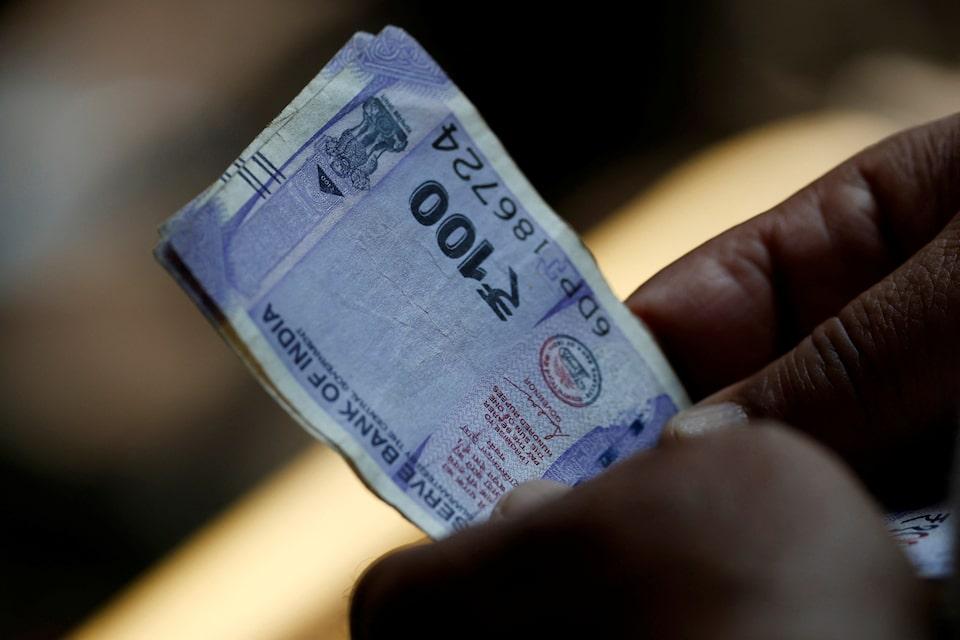
MUMBAI, April 3 (Reuters) - The rupee closed modestly stronger on Thursday, aided by a broadly weaker dollar and inflows as markets grappled with the impact of sweeping U.S. reciprocal tariffs and their impact on global trade and growth dynamics. India is facing a relatively softer levy of 27% than regional peers such as China, Vietnam and Thailand, which also was a sentimental positive for the currency. Sign up here. The local unit closed at 85.43 against the U.S. dollar, compared to the close of 85.4975 in the previous session. It had declined to a low of 86.75 in early trading, but broad-based interbank offers, including those spurred by likely custodial inflows, helped it trim losses, an FX trader at a bank said. Additionally, a more than 1% plunge in the dollar index - the greenback's safe-haven appeal dulling due to concerns about how trade policy may impact U.S. growth - helped out the rupee. Asian currencies kicked off the day on a weaker note, but most trimmed or reversed losses. The offshore Chinese yuan was last quoted at 7.30, retreating from a peak of 7.34. Despite the initial reaction, analysts reckon that Asian currencies are not out of the woods yet. "Asian currencies may face increased depreciation pressure as markets turn risk-averse, affecting foreign institutional investor (FII) inflows," ING Bank said in a note. On the day, Indian equities fared better than their regional peers with the benchmark Nifty 50 index (.NSEI) , opens new tab closing 0.3% lower while Hang Seng fell 1.5% and Vietnamese stocks were down over 6%. Futures indicated that U.S. equities were primed to open in the red, and the dollar index hit a six-month low. Other safe-havens such as the Japanese yen and Swiss franc soared. "(I) think it is more of a USD-losing-reserve-currency-status story at the moment," a Singapore-based trader at a bank said, referring to how FX markets reacted to the announcement of reciprocal tariffs. For its part, India on Tuesday said was studying the impact of U.S. tariffs and vowed to push for a trade deal this year. https://www.reuters.com/markets/currencies/relatively-lower-tariff-hit-slumping-dollar-helps-rupee-hold-ground-2025-04-03/
2025-04-03 10:13
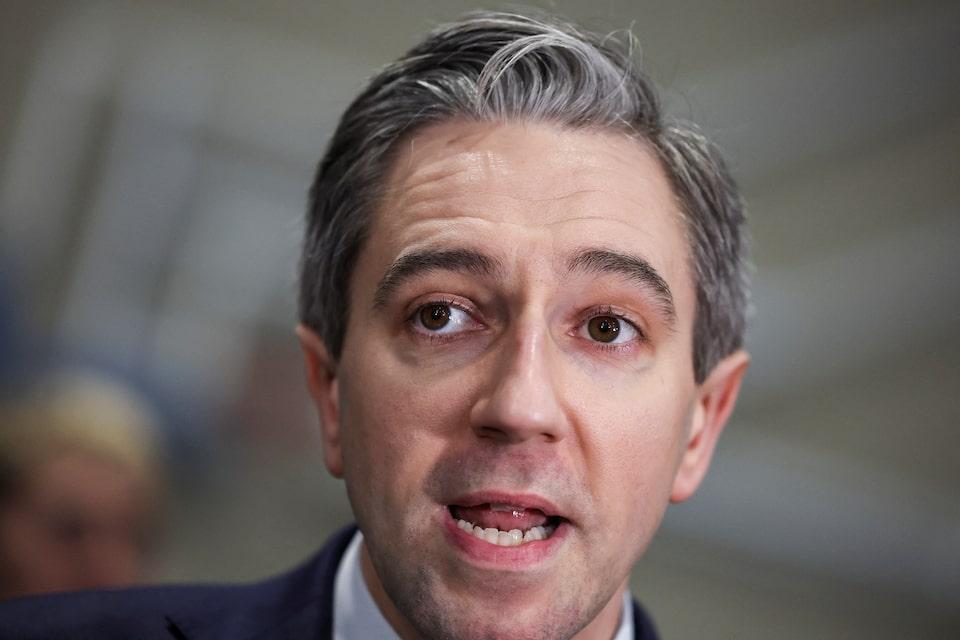
DUBLIN, April 3 (Reuters) - Targeting U.S. digital services in potential reciprocal trade measures is not the European Union's position and would be very damaging for Ireland, trade minister Simon Harris said on Thursday, urging negotiations. Harris was responding to comments from a French government spokesperson that services, notably digital services, were likely to be a focus of EU measures considered in response to new U.S. tariffs. Many U.S. tech giants have their EU headquarters in Ireland. Sign up here. "That's not the position of the European Union. Different countries may have different perspectives, but the position of the European Union is outlined by the Commission president this morning," Harris told national broadcaster RTE. "I can understand why countries reference the instruments that are at our disposal, should they be required, but we should really work to avoid ever getting to that point... The position has to be negotiate to a better level and I am confident that that's where the very significant majority perspective is," Harris said. https://www.reuters.com/markets/europe/retaliating-against-us-digital-services-not-eu-position-ireland-says-2025-04-03/
2025-04-03 09:03
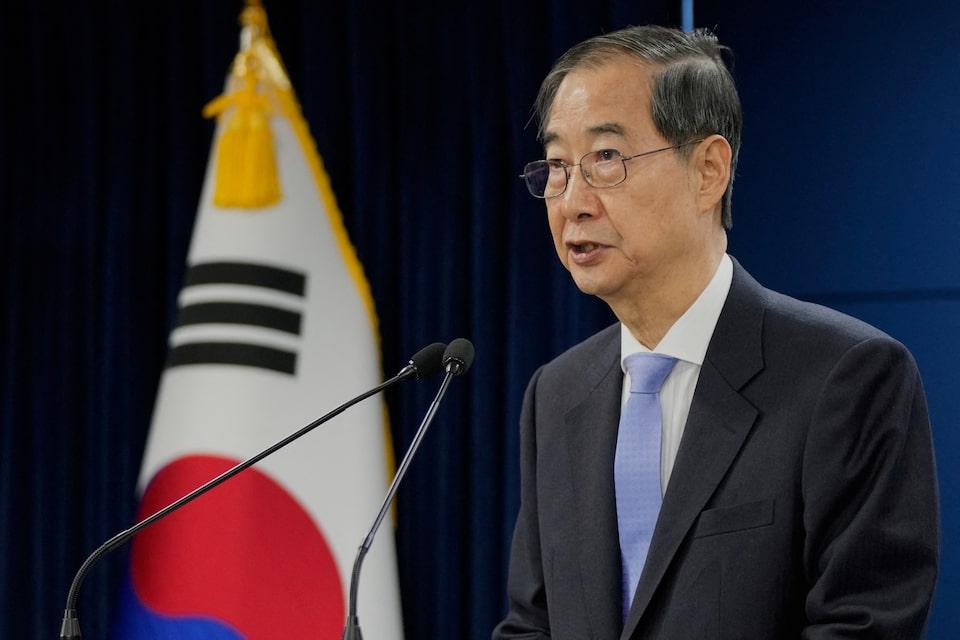
South Korea orders emergency support for businesses affected by U.S. tariffs Asia's No.4 economy seeks to negotiate, not retaliate KOSPI index closed down 0.77%, recouping losses SEOUL, April 3 (Reuters) - South Korea's acting President Han Duck-soo called on Thursday for talks with U.S. officials to shield the export-reliant economy from the impact of U.S. tariffs and ordered emergency support measures for businesses. U.S. President Donald Trump when unveiling global reciprocal tariffs displayed a chart showing a 25% rate for South Korea, though a White House document pegged the rate at 26%. Sign up here. After the tariff announcement, South Korean officials signalled they were seeking to negotiate, rather than retaliate. Han asked the industry minister to analyse the content of the tariffs and actively negotiate with Washington to minimise the impact, an industry ministry statement said. "As the global trade war has become a reality, the government must pour all its capabilities to overcome the trade crisis," Han said at a meeting with top officials. Industry Minister Ahn Duk-geun called the new tariffs "regrettable" but said Seoul will keep consulting with both senior and working-level U.S. officials on tariffs. Trump in his speech singled out Washington's Asian security allies South Korea and Japan, accusing them of being among the worst offenders for conducting unfair trade practices against the United States. Analysts in Seoul said Trump's extensive rollout of tariffs would inflict a significant blow on Asia's fourth-largest economy. "It is clear that major export products such as automobiles will be hit hard, and exports to the U.S. through production bases in Vietnam will also be hit hard," Park Sang-hyun, an economist at iM Securities, said in a note. Trump also announced a 46% duty on imports from Vietnam. South Korea's major corporations such as Samsung Electronics and LG Electronics have manufacturing bases in the Southeast Asian country. Citi estimated the new tariffs could shave 0.16% from South Korea's GDP this year, putting its 1.0% economic growth forecast at risk. 'NO CAPTAIN ON A BOAT IN TYPHOON' Top government officials met South Korean business executives on Thursday to discuss the tariffs. Lee Yong-ho, chief executive of AIT, a company exporting aluminium automobile parts to the U.S., said AIT was already being squeezed by additional costs since a 25% tariff on aluminium products took effect in March. "We're like let's hold out for now, but if it continues... we're looking at a hopeless situation," said Lee, who feared losing his American clients to local rivals if he tried to raise product prices. The benchmark KOSPI stock index (.KS11) , opens new tab closed down 0.77%, narrowing earlier losses on hopes officials will be able to lower the rate in negotiations. Acting President Han said the government would prepare support plans for the auto industry by next week. South Korea is likely to make concessions to the Trump administration by importing more U.S. products, ING said in a report, adding they might include gas and oil, or increased military spending. Together with Trump, Hyundai Motor Group recently announced a $21 billion U.S. investment. The efforts to tackle the tariffs come as South Korea deals with a leadership vacuum. The Constitutional Court is due to rule on Friday whether to permanently remove or reinstate President Yoon Suk Yeol after he was impeached over his short-lived move to impose martial law. Lee, the auto parts supplier, likened South Korea's situation with tariffs to a ship trying to navigate a typhoon without a skipper. "Our ship has no captain," he said, in reference to the political uncertainty. Before Trump's announcement on reciprocal tariffs, South Korean officials had sought exemptions, arguing the country had almost zero tariffs in place under a free trade pact with the United States. "It is assessed to have practically nullified the Korea-U.S. Free Trade Agreement," said Paik Seok-hyun, an economist at Shinhan Bank, referring to Trump's new tariffs. A finance ministry official told Reuters that information available so far suggested the 25% tariff rate took precedence over the free trade pact and the government was actively seeking negotiations with the United States to lower it. Another government official, who requested anonymity, said South Korea was not in a position to counter U.S. tariffs aggressively under the current security environment and must try to negotiate with Washington. https://www.reuters.com/world/asia-pacific/south-koreas-acting-president-orders-emergency-measures-over-us-tariffs-2025-04-02/
2025-04-03 07:20
LONDON, April 3 (Reuters) - Investment bank JPMorgan downgraded its recommendation for emerging currencies to "underweight" on Thursday after U.S. tariffs exceeded its worst-case scenario. U.S. President Donald Trump late on Wednesday announced "reciprocal" tariffs ranging from 10% to above 40%. Sign up here. "While there remains scope for negotiation and de-escalation, we think this round of tariffs is a pivotal turning point for EM fixed income outlook in coming months, as the shock to sentiment and capital flows is likely to endure and requires higher risk premia," the bank said in a note. JPMorgan kept its underweight stance on emerging market sovereign and corporate credit, but upgraded emerging market local bonds to marketweight. The bank said that emerging Asia and Europe were harder hit on a relative basis than Latin America and frontier markets, and said that emerging markets in Asia face further foreign exchange weakness and lower policy rates. It also warned that potential tit-for-tat retaliation should dampen risk and business sentiment, which would require riskier high-yield assets to trade at a bigger premium to investment grade peers. https://www.reuters.com/markets/currencies/jpmorgan-downgrades-emerging-fx-after-trump-tariffs-exceed-worst-case-scenario-2025-04-03/