2025-04-03 07:19
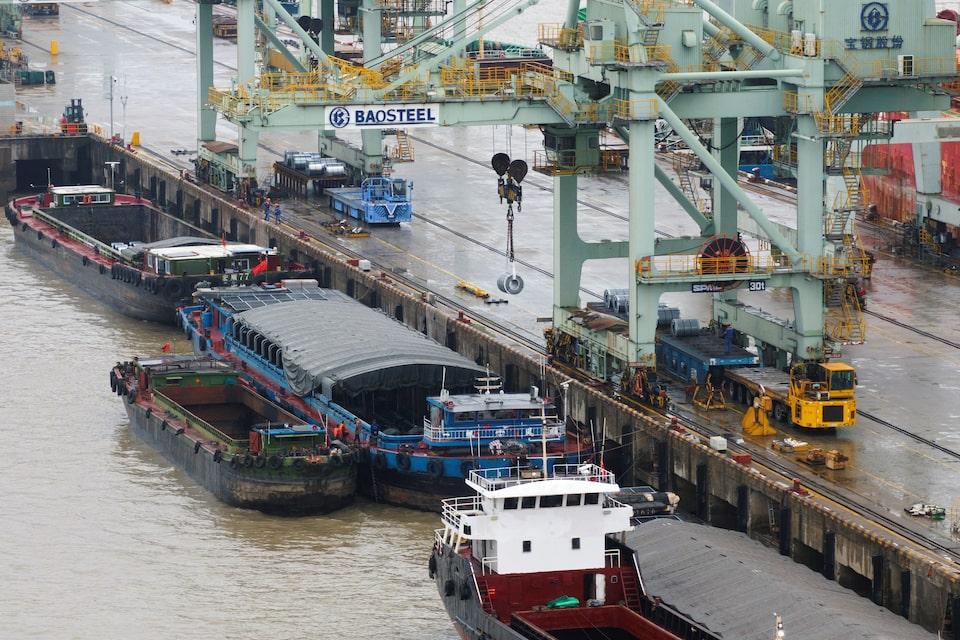
China is the economy most exposed to global demand shocks No place to hide for Chinese exporters offshoring production Growth, deflation risks mount in China Beijing faces pressure to unleash more stimulus DONGGUAN, China, April 3 (Reuters) - Chinese outdoor furniture maker Jin Chaofeng set up a factory in Vietnam last July to escape higher U.S. tariffs. Now he is looking to close it, as Washington imposes steep levies on Hanoi and the rest of the world. "I've done all this work for nothing," Jin said, adding that foreign trade would become a "very thin-margin" business, just like the demand-starved Chinese market. Sign up here. No other country comes close to matching China's annual sales of more than $400 billion in goods to the United States each year. President Donald Trump just hiked tariffs by an extra 34 percentage points on those goods. His world-wide tariffs strike at the core of Chinese exporters' two main strategies to blunt the impact of trade war: moving some production abroad and increasing sales to non-U.S. markets. The sweeping tariffs could deal a lasting blow to global demand. China is more exposed to the risk of shrinking world commerce than any other nation, with economic growth last year relying heavily on running a trillion-dollar trade surplus. Kaiyuan Securities expects the new tariffs could slash Chinese exports to the United States by 30%, cut overall exports by more than 4.5%, and drag economic growth by 1.3 percentage points. "It's an all-round blockade against China," said Yuan Yuwei, hedge fund manager at Water Wisdom Asset Management, who said he was bullish on gold and shorting China and Hong Kong stocks as a result. Ahead of Trump's re-election in November, many Chinese manufacturers were already relocating some production facilities to Southeast Asia and other regions. Now their new factories face tariffs of 46% in Vietnam, 36% in Thailand and at least 10% anywhere else. As Trump raised tariffs on China by 20 percentage points in February and March, the global salesforce of its manufacturers was in a rat race for new export markets in Asia, Latin America and elsewhere. Now these economies are taking their own tariff hit, probably reducing their purchasing power, and their demand for Chinese goods. Analysts say Washington's new measures are the type of punch and clinch on Beijing that could derail China's economic growth and its efforts to fight deflation. "This will make it impossible for the 5% growth target to be achieved," said Zhiwu Chen, a finance professor at HKU Business School. "China cannot get out of this deflationary situation anytime soon. This new tariff increase is definitely making things worse." The external demand shock is feeding back internally, as producers are under pressure to cut costs. Jerry Jiao, whose factory in China makes cast-iron bathtubs, said he had already "laid off some employees, reduced management costs, and cut down on various expenses" this year. Li Zhaolong, the manager of a clothing factory in the southern city of Guangzhou, said he needed to rely more on domestic orders, but worried about subdued demand. "You had one cake for one person before, but now five people want to eat it," said Li. RISING BARRIERS? In 2023, about 145 countries traded more with China than with the United States, an increase of nearly 50% from 2008, according to research by investment bank Jefferies. That is a measure of China's success over decades in developing competitive industries under a world trade order the United States created, but which it now considers unfair and a threat to its own security. "We still need to diversify our export markets, support exports and encourage businesses to focus more on domestic sales," said a Chinese trade policy adviser who spoke on condition of anonymity. "The risk of a global recession is real," however, he warned, adding: "If everyone submits, the United States will indeed profit, as if others are paying tribute. But if they resist and retaliate continuously, the U.S. economy won’t be able to handle it." For China, the other risk is that more of its trade partners will see its exporters competing ever more heavily on price in their markets and throw up trade barriers of their own to protect domestic industries. "That is true both in Europe and many emerging market economies," said Louis Kuijs, S&P Global's chief Asia economist. Domestic factors also add challenges to any Chinese plan to double down on foreign trade. Many analysts say China's exporting prowess is also the result of government policies that disadvantaged households, leading to imbalances such as manufacturing overcapacity, slow domestic consumption and roads and bridges built to nowhere. China's "mercantilism has led to financial repression, offering households low returns on savings to create cheap finance for favoured industries," said Shamik Dhar, senior adviser at Fathom Consulting. "This has fuelled rapid economic growth but also capital misallocation, property speculation, and financial sector fragility." MORE STIMULUS? Analysts expect Beijing to announce more stimulus soon. The measures could range from central bank interest rate cuts and liquidity injections to exporter tax rebates, property market support and perhaps even higher budget deficit and debt issuance than flagged at an annual parliament meet in March. Last month's "restrained" stimulus measures "were a calculation, not an oversight," said Ruby Osman, China expert at the Tony Blair Institute for Global Change. "Beijing has purposefully kept more in reserve." A second policy adviser said cutting the funds banks are required to hold as reserves and reducing lending rates should be a priority for the second quarter, while more fiscal stimulus might come in the third. "Without this Plan B, it is unlikely for China to reach the roughly 5% growth target this year," the adviser said. "What’s more, the finance ministry should prepare Plan C if Trump further hikes tariffs against China." But key to mitigating growth and deflationary risks is what policies Beijing has in store to boost consumption, analysts said. China has been pledging for more than a decade to shift its economic model away from investments and towards consumption-led growth. In parliament, its leaders made those promises even more loudly, without unveiling significant structural measures. Global trade disruption makes those even more urgent, analysts said, although hopes for major structural reform remain low, in view of how painful that transition is likely to be. Subsidies for consumer goods purchases and more support for childcare are possible, but broader welfare reform and radical changes to the tax system, land liberalisation and other policies to redirect resources to households from the state sector remain unlikely. "We'll likely see a doubling down on efforts to encourage domestic demand as a way to offset this expected shock to external demand," said Nick Marro, principal economist for Asia and lead for global trade at the Economist Intelligence Unit. "But there's only so much the Chinese government can do." https://www.reuters.com/world/china/trumps-global-tariffs-hurt-china-with-all-round-blockade-2025-04-03/
2025-04-03 07:06
Oil, gas exempt from Trump's import tariffs US remains dominant in global energy markets Countries may increase US energy purchases to offset tariffs LONDON, April 3 - President Donald Trump's reveal of sweeping import tariffs further darkened the outlook for the global economy and left many questions unanswered. But amid all the policy fog, oil and gas traders can point to a few bright spots. At an event in the White House Rose Garden, Trump announced tariffs on imports from many major trading partners, including a 20% fee on the European Union, 24% on Japan, 27% on India, 10% on Britain and 34% on China. He also set a baseline 10% tariff on all imports. Sign up here. The move intensified a trade war and drew condemnations from world leaders. The obvious conclusion is that this is all highly bearish for energy markets, as the expected retaliation from governments around the world should weigh on global economic prospects, putting more downward pressure on oil and gas prices. Indeed, financial markets and benchmark crude oil prices were sharply lower on Thursday, with Brent losing around 2.5% to $73 a barrel. However, that is still higher than prices were a month ago, before the ratcheting up of Middle Eastern tensions, U.S. tariffs on Venezuela and threats of secondary tariffs on Russia and Iran. Energy markets may remain volatile in the short term as traders absorb the tariff sticker shock, but once the dust settles, the oil and gas industry may find that the outlook isn't so grim. SILVER LININGS First, these announcements provide the industry with some clarity. True, the proposed tariffs are likely to shift around in the coming months as Trump tries to wring concessions out of trading partners. But at least now everyone knows the baseline they're working with. And the fact that all U.S. imports of oil, gas and refined products were exempted from the tariff plans should let the industry breathe a partial sigh of relief. It is good to remember that despite the huge growth in U.S. energy production and exports over the last decade, it continues to import a large amount of oil due to its large domestic refining capacity of 18.4 million barrels per day. The U.S. imported 6.6 million bpd in 2024, including 4 million bpd from neighbouring Canada and 464,000 bpd from Mexico. If Trump had slapped onerous tariffs on Canadian crude, refiners may have struggled to source the heavy grade they need. They are already paying up for Canadian crude due to the previously announced measures against Venezuela. Second, traders can assume that, despite all the changes these lofty and oddly designed tariffs might bring, they probably won't dislodge the United States from its dominant position in global energy markets. The United States was the world's top exporter of liquefied natural gas (LNG) in 2024, ahead of Qatar and Australia, with the majority of U.S. volumes going to the European Union. Additionally, it exported 4.1 million bpd of crude last year, according to the Energy Information Administration, more than 10 times the total one decade prior. Europe imported 48% of the volumes in 2024, followed by South Korea at 12%, and India and Taiwan at 6% each. In theory, the concentration of oil and gas in the U.S.'s export basket could be considered a vulnerability. But in reality, governments will likely think twice before hitting U.S. energy imports with tariffs. Why? Because these countries have very few alternative sources of supply, and higher energy costs would make it very challenging for them to boost their economies to offset the tariff pain. If anything, countries under fire from Trump's trade war will seek to purchase more U.S. energy to placate the administration. Indeed, European Commission President Ursula von der Leyen has in recent months already suggested the EU could increase its purchases of U.S. LNG at the expense of Russian fuel in order to reduce the bloc’s trade deficit with the United States. BRAVE NEW WORLD Finally, following Wednesday's announcements, the world now knows that Trump isn't bluffing about this trade war. This may ultimately push more countries to reduce their reliance on the U.S. by making long-needed investments, spurring growth domestically and ultimately increasing demand for oil and gas. Germany's rapid U-turn on defence and infrastructure spending and China's accelerated push to boost domestic consumption and catch up in the artificial intelligence race may just be the beginning. Of course, any fragmentation of the global economy will likely create manufacturing and trade inefficiencies and increase consumer prices. But this could simply lead to duplications of industries and new transportation routes. So as governments around the world weigh their responses to Trump's tariff barrage, energy traders may continue to fret about the potential impact on oil and gas consumption. But, at least for now, it looks like the industry may have made it through "Liberation Day" relatively unscathed. ** The opinions expressed here are those of the author, a columnist for Reuters. ** Want to receive my column in your inbox every Thursday, along with additional energy insights and trending stories? Sign up for my Power Up newsletter here. https://www.reuters.com/markets/commodities/oil-gas-got-off-easy-trumps-liberation-day-bousso-2025-04-03/
2025-04-03 07:03
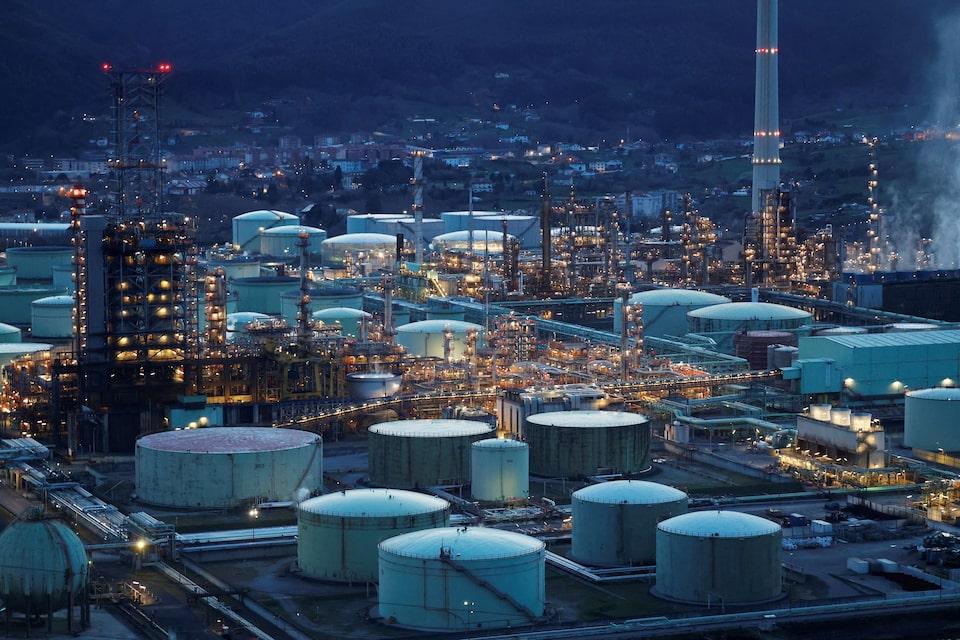
TOKYO, April 3 (Reuters) - Japanese trading house Mitsubishi Corp (8058.T) , opens new tab may consider investing in the Alaska LNG project in the United States, Chief Executive Katsuya Nakanishi said on Thursday, adding that careful due diligence would be needed before any decision. An Alaskan delegation visited Japan last week to brief policymakers and meet possible backers of the $44 billion natural gas project, which is part of U.S. President Donald Trump's push for more gas exports from the United States. Sign up here. https://www.reuters.com/business/energy/japans-mitsubishi-may-consider-investing-alaska-lng-project-ceo-says-2025-04-03/

2025-04-03 07:01
Rioja wine stockpiles surge post-pandemic amid global demand dip Trump has floated 200% tariffs on European wine Rioja kept US market share under past tariffs but margins shrank FUENMAYOR, Spain, April 2 (Reuters) - Stockpiles of wine in Spain's Rioja region have swelled since the pandemic, but producers' hopes of offloading tannic reds into the U.S. market were dimming ahead of what President Donald Trump is calling his "liberation day" tariffs announcement. Adding to their worries, Trump's threat of slapping 200% tariffs on wine and champagne imports from Europe comes at a time that global demand for the alcoholic beverage is dipping. Sign up here. "There's wine accumulated since COVID-19, there's quite a bit piled up, and in the end, that's a burden on the price ... It's bad for the farmer," winegrower Enrique Lopez de Alda, 39, told Reuters. Sales of Rioja, one of the most prized Spanish wines both domestically and abroad, increased 0.6% in 2024 from the previous year. Given that worldwide consumption of wine has fallen, that was a "rather significant" performance, said Amanda De La Santisima Trinidad, spokesperson for the Rioja regulator council. The U.S. is the second export market for Rioja wines after Britain, with sales there representing 4% of overall production. 'NOT GOOD' FOR ANYONE "The U.S. is also a wine producer, but it can't supply its entire market," said Jorge Rodriguez, co-owner of Petralanda winery and bodega. Tariffs are "not good for them, nor for us, of course. But globally, in the end, everyone depends on everyone." European wine makers have already been caught in the crosshairs of prior transatlantic trade tensions: Washington and Brussels hiked tariffs on each other's agro-food exports in October 2019, during Trump's first term. Rioja wines managed to keep their market share in the U.S. - although some operators saw thinner margins, De La Santisima Trinidad said. The 25% tariffs were lifted in 2021 by the new Biden administration. Spain is the world's third-largest wine producer after Italy and France, but it leads in terms of exports and the total surface area covered by lush vineyards. The northern region of La Rioja, with its diversity of terroir, microclimates and grape varieties, accounts for just 0.7% of Spain's population but makes 21% of its wine, including some lesser-known whites. The area's nearly 600 wineries produce 362 million bottles annually, with some vintages valued at as much as 5,000 euros ($5,400) per bottle. The industry is worth around 1.5 billion euros a year, accounting for 20% of the region's economy. ($1 = 0.9258 euros) https://www.reuters.com/markets/with-cellars-overflowing-wine-makers-spains-rioja-fret-over-us-tariffs-2025-04-02/

2025-04-03 06:50
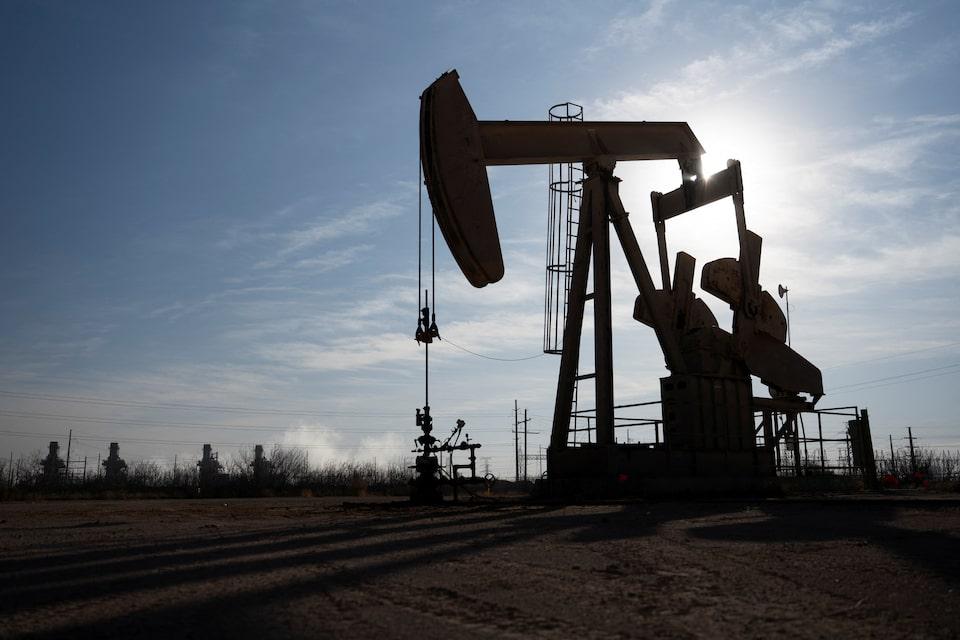
Brent, WTI sink by 6% Trump to impose 10% minimum tariff on most import goods Imports of oil, gas, refined products exempted from new tariffs OPEC+ to bring back more oil to market in May than previously planned LONDON, April 3 (Reuters) - Oil prices fell 6% on Thursday as OPEC+ speeding up its unwinding of oil output cuts in May compounded already-heavy losses following U.S. President Donald Trump's announcement of sweeping new tariffs on Wednesday. Brent futures were down $4.51, or 6.02%, at $70.44 a barrel by 1221 GMT. U.S. West Texas Intermediate crude futures were down $4.63, or 6.46%, at $67.08. Sign up here. Eight OPEC+ countries agreed to advance their plan for oil output hikes, now aiming to return 411,000 barrels per day to the market in May from 135,000 bpd initially planned, the group agreed in a ministers' meeting on Thursday. "I guess there is some confidence within the group that the market can absorb additional barrels in a period where demand seasonally rises, but also that the supply increase would be smaller due to compensation cuts as well other supply disruptions," said UBS analyst Giovanni Staunovo. Oil prices were already trading some 4% lower prior to the meeting, as investors reacted to Trump's tariffs with concerns that the move would enflame a global trade war that will curtail economic growth and limit fuel demand. Trump on Wednesday unveiled a 10% minimum tariff on most goods imported to the United States, the world's biggest oil consumer, with much higher duties on products from dozens of countries. The U.S. tariff announcement is "likely to cause chaos across global supply chains, while in the short term raising the risk of an economic fallout, hurting demand for key commodities", said Saxo Bank analyst Ole Hansen. Imports of oil, gas and refined products were exempted from the new tariffs, the White House said on Wednesday. UBS analysts on Wednesday cut their oil forecasts by $3 per barrel over 2025-26 to $72 per barrel, citing weaker fundamentals. Traders and analysts now expect more price volatility in the near term, given the tariffs may change as countries try to negotiate lower rates or impose retaliatory levies. "Countermeasures are imminent and judging by the initial market reaction, recession and stagflation have become terrifying possibilities," said PVM analyst Tamas Varga. "As tariffs are ultimately paid for by domestic consumers and businesses, their cost will inevitably increase, impeding the rise in economic wealth." Further weighing on market sentiment, U.S. Energy Information Administration data on Wednesday showed U.S. crude inventories rose by a surprisingly large 6.2 million barrels last week, against analysts' forecasts for a decline of 2.1 million barrels. https://www.reuters.com/business/energy/oil-sinks-nearly-3-after-trump-announces-sweeping-new-tariffs-2025-04-03/
2025-04-03 06:47
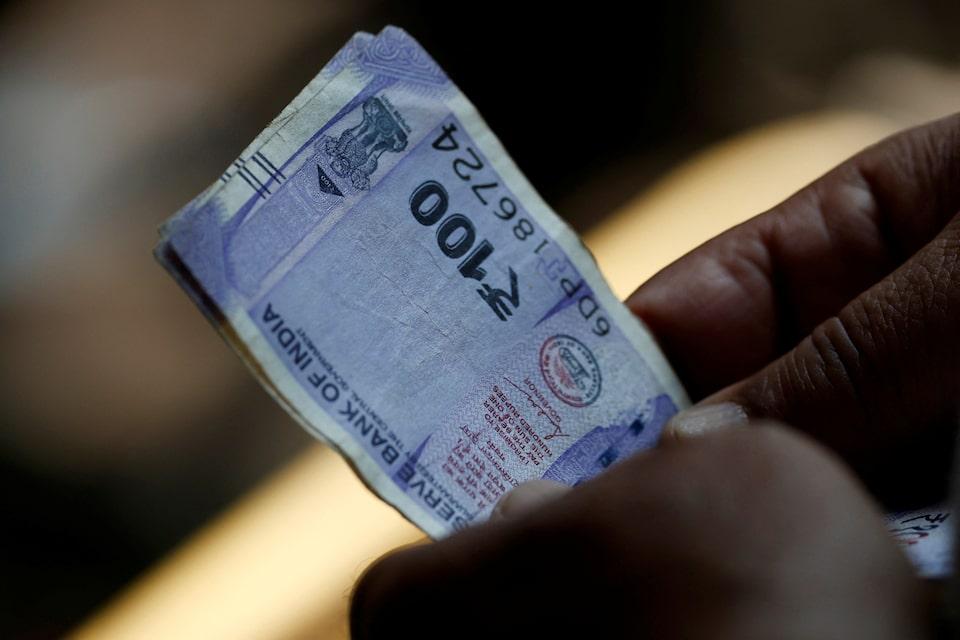
MUMBAI, April 3 (Reuters) - The Indian rupee on Thursday held up reasonably well to the dip in most Asian currencies and equities, triggered by U.S. President Donald Trump's sweeping reciprocal tariffs. The rupee was down 0.16% to the U.S. dollar at 85.6375. Sign up here. On Wednesday, Trump imposed a 10% baseline tariff on all imports from April 5 and higher duties on certain countries including 34% on China and 20% on the European Union. U.S. equity futures plunged and Treasury yields rose on worries that the tariffs will lead to higher inflation and impede growth in the United States. The rupee "is holding up remarkably well given the magnitude of the negative surprise on the U.S. tariff front," said a currency trader at a Mumbai-based bank. "Most, myself included, would have expected a more significant move, especially considering the current levels." The rupee is not too far from its year-to-date high hit last week. WORD OF CAUTION Despite the stability in the rupee post the tariff announcement, analysts caution against anticipating a further uptick from here. "We believe are at the lower side of the dollar-rupee range," Abhishek Goenka, CEO at FX advisory firm IFA Global, said, adding that he his clients have been hedging dollar payments between the 85.50-86 level. Kunal Kurani, associate vice president at Mecklai Financial, concurred, saying the dollar/rupee pair "has largely bottomed out" and he has been advising his clients to hedge more "and most of them are listening". The recommendations to increase dollar payment hedging follows the rupee's over 2% rally last month on the back of a turnaround in foreign portfolio inflows and unwinding of bearish wagers on the currency. However, Barclays Bank, in a note last week, said the rally in the rupee was likely to fade. The rally "to a large extent, has been a late catch-up trade to the rest of EM, and we do not expect INR appreciation to be sustained." "Our forecasts look for gradual depreciation in the months ahead." It expects the rupee to fall to 87.50 through the third quarter of 2025 and to 88.20 in the fourth quarter. https://www.reuters.com/markets/currencies/rupee-shows-resilience-us-tariffs-strategists-advise-caution-2025-04-03/