2025-04-03 02:14
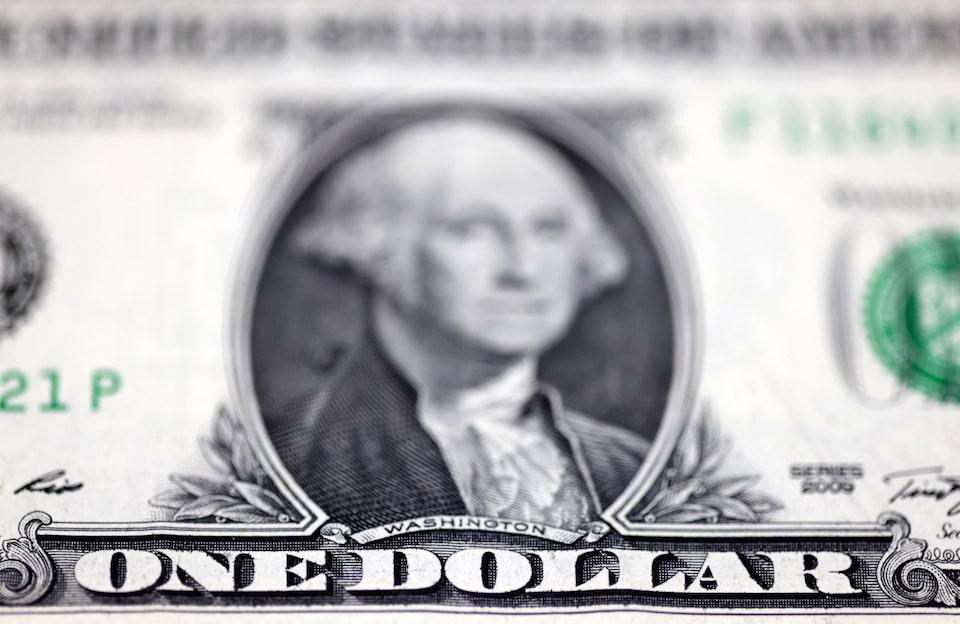
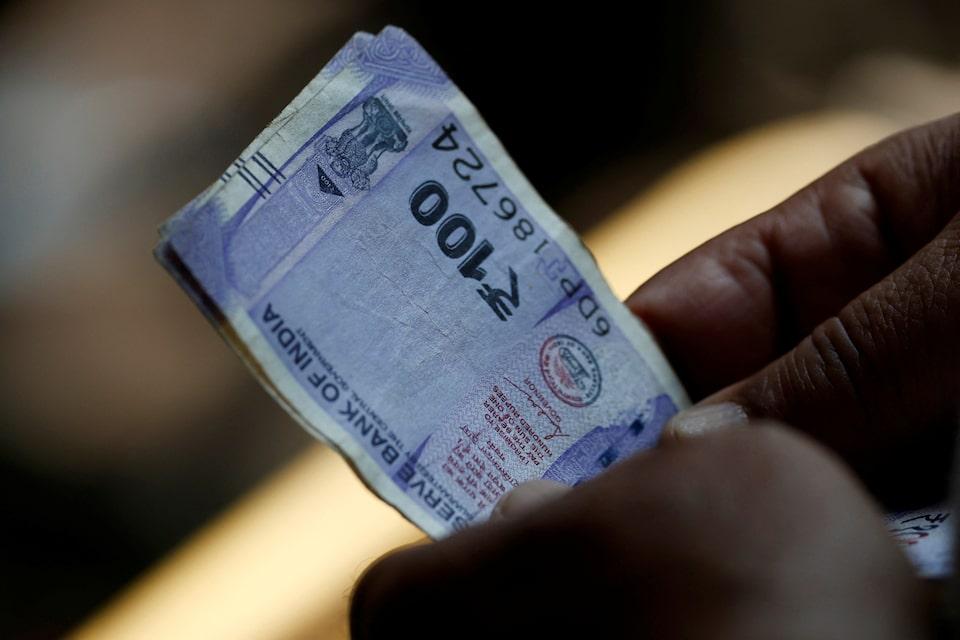
MUMBAI, April 3 (Reuters) - The Indian rupee is poised to fall at open on Thursday, driven by the decline in Asian equity and currency markets after U.S. President Donald Trump's imposition of broad-based tariffs. Trump slapped 26% tariffs on imports from India effective from April 9, a component of his comprehensive plan to place duties on all U.S. imports. Sign up here. The non-deliverable forward market indicated that the rupee will open at 85.70-85.75 to the U.S. dollar compared with 85.4975 in the previous session. If the "extent of the damage" on the rupee is "only" this much then it "will happily take it", a currency trader at a Mumbai-based bank said. "I would have expected a bigger up move (on dollar/rupee), past the 86 level," the trader said. Trump imposed a 10% baseline tariff on all imports from April 5 and higher duties on certain other countries including 34% on China and 20% on the European Union. "The average tariff rate appears higher than expected," ING Bank said in a note. "The worst-hit region by this tariff announcement is undoubtedly Asian EM," ING said, adding that Vietnam, Korea, India, Indonesia and Thailand will be subject to extra tariffs in the area of 25% to 45%. The offshore Chinese yuan dropped to a one-month low of 7.3482 versus the U.S. dollar, before recovering marginally to a current rate of 7.32. U.S. equity futures experienced a near 3% decline and Japanese equities registered similar losses. Indian equities were also set for a weak open. U.S. Treasury yields dropped amid worries over how the tariffs will impact growth for the world's biggest economy. KEY INDICATORS: ** One-month non-deliverable rupee forward at 85.99; onshore one-month forward premium at 21.50 paise ** Dollar index down at 103.06 ** Brent crude futures down 2.2% at $73.3 per barrel ** Ten-year U.S. note yield drops to 4.08% ** As per NSDL data, foreign investors sold a net $740.3mln worth of Indian shares on Apr. 1 https://www.reuters.com/markets/currencies/rupee-weaken-risk-aversion-asia-fx-fall-stoked-by-us-tariffs-2025-04-03/
2025-04-03 01:48
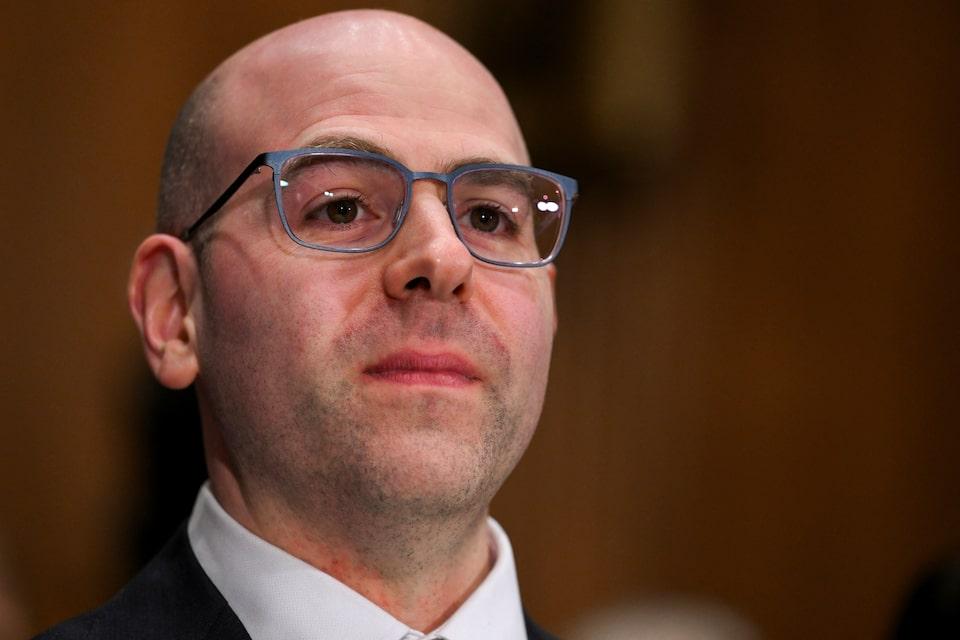
WASHINGTON, April 2 (Reuters) - U.S. Council of Economic Advisers Chair Stephen Miran told Fox Business on Wednesday that there will be short-term bumps caused by tariffs announced by Washington, while Treasury Secretary Scott Bessent urged other countries not to retaliate. WHY IT'S IMPORTANT President Donald Trump said on Wednesday that he would impose a 10% baseline tariff on all imports to the U.S. and higher duties on dozens of other countries, including some of the United States' biggest trading partners, deepening a trade war that has rattled global markets and bewildered U.S. allies. Sign up here. Some trading partners are expected to respond with countermeasures of their own that could lead to dramatically higher prices for products in the U.S. and in other parts of the world. KEY QUOTES Miran was asked how concerned he was about short-term price increases. "Are there going to be short-term bumps as a result? Absolutely," Miran told Fox Business Network's "Kudlow" program. "But what the president is focused on is a long-term transformation and improvement in the durability, sustainability and fairness of the American economy with respect to the rest of the world," Miran added. Bessent urged other countries to not retaliate against U.S. measures. "Let's see where this goes, because if you retaliate, that's how we get escalation," he told CNN in an interview on Wednesday night. "Doing anything rash would be unwise," he said. Bessent was asked how he expected stock markets to react to the tariffs to which he replied: "I don't know." CONTEXT Outside economists have warned that tariffs could slow the global economy, raise the risk of recession, and increase living costs for the average U.S. family by thousands of dollars. Trump says they were a response to duties and other non-tariff barriers put on U.S. goods, arguing that the new levies will boost manufacturing jobs at home. https://www.reuters.com/markets/tariffs-cause-short-term-bumps-trump-economic-adviser-tells-fox-business-2025-04-03/
2025-04-03 01:24
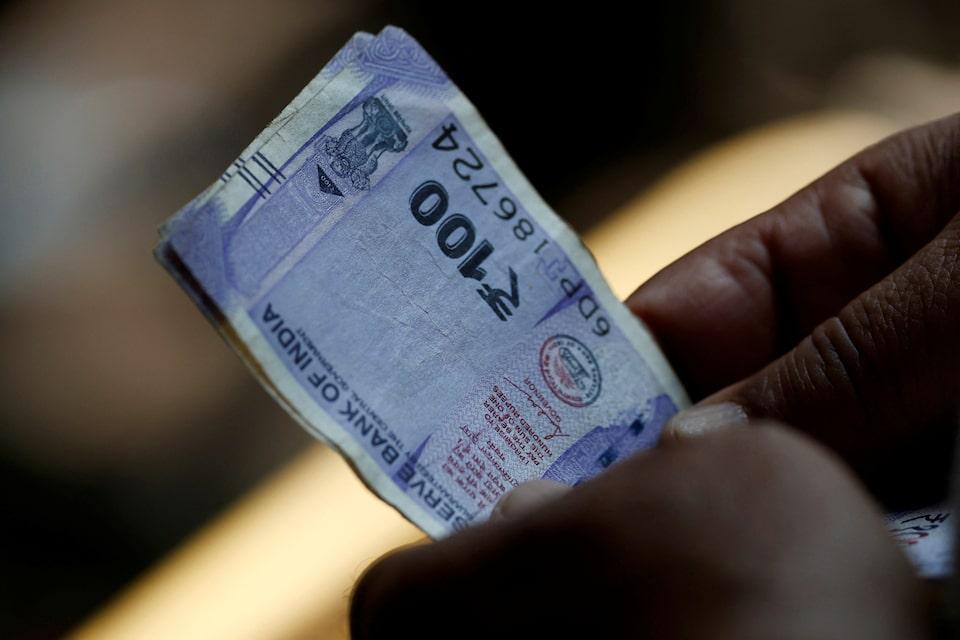
MUMBAI, April 3 (Reuters) - The Indian rupee declined in the non-deliverable forward market on Thursday after the U.S. President Donald Trump slapped a 26% tariff on imports from the Asian nation. Trump's Wednesday announcement on India was part of his wider plan to impose a 10% baseline tariff on all imports from April 5 and higher duties on certain other countries including 34% on China. Sign up here. The 1-month dollar/rupee non-deliverable forward was quoting at 85.86-85.90, implying that the Indian currency is likely to open 10-15 paisa weaker when the onshore spot market opens at 9:00 a.m. IST. The offshore Chinese yuan dropped to a one-month low of 7.3482 versus the U.S. dollar, before recovering marginally to a current rate of 7.32. The U.S. equity futures experienced a sizeable drop, and Japan led the broader Asian equity market lower. "From the way markets have reacted, it is obvious that they had expected a way less severe outcome (on U.S. tariffs)," a currency trader at a Singapore-based bank said. "There will be many reasons to pile on to (dollar/rupee) longs, the biggest being the (Chinese) yuan." The 26% duty on India was based on tariff and non-tariff barriers including currency manipulation, the Trump administration said. "They (India) are charging us 52% and we charge almost nothing for years and years and decades," Trump said at the White House while announcing the reciprocal tax. https://www.reuters.com/markets/currencies/rupee-drops-ndf-market-after-us-levies-26-tariffs-india-2025-04-03/
2025-04-03 00:33
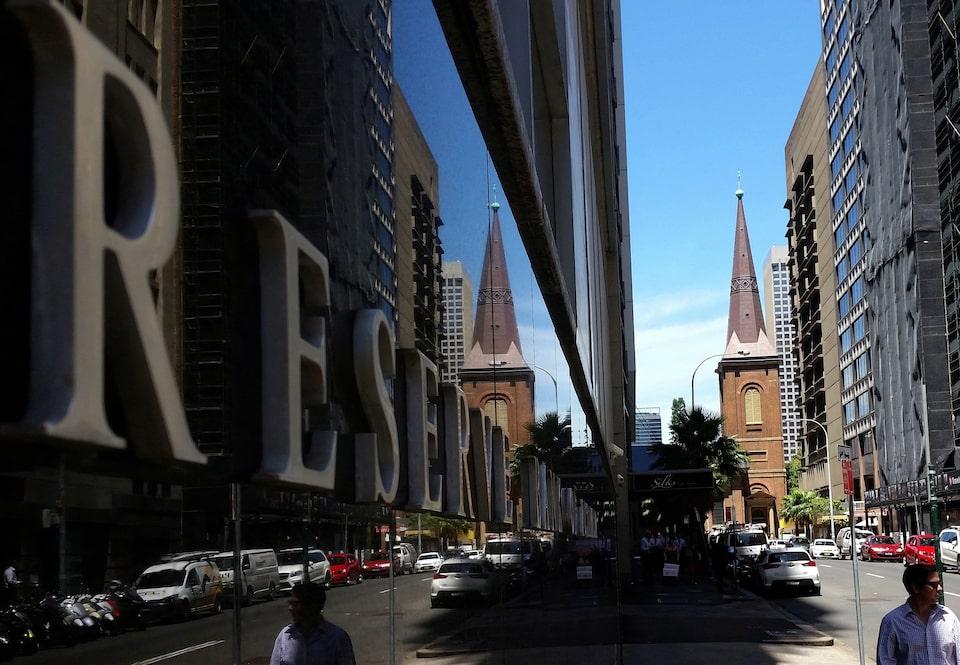
SYDNEY, April 3 (Reuters) - Australia's central bank warned on Thursday that U.S. trade policies could pose significant headwinds for the global economy, causing a sharp rise in risk aversion in markets and lifting financing costs for firms. The warning came as global share prices sank in the wake of U.S. President Donald Trump's announcement of new tariffs, prompting threats of retaliation from many trading partners. Sign up here. In its semi-annual Financial Stability Review, the Reserve Bank of Australia (RBA) cautioned that ongoing uncertainties with U.S. trade policies, and the reprisals they may trigger, could have a chilling effect on business and household spending. "Vulnerabilities in key international financial markets could be crystalised and lead to disorderly price adjustments," said the RBA in a 63-page document. "A sharp repricing of risk, from the current low levels, could abruptly increase borrowing costs for corporations and exacerbate financial challenges," it added, noting that the non-bank lending sector could be more at risk. The report was finalised before Trump's announcement that he will impose a 10% baseline tariffs on all imports to the United States, and much higher levies on some major trading partners. Australia will be subject to the minimum levy of 10%, but tariffs on its biggest export market China could be as high as 54%. A slowdown in China would exacerbate long-standing vulnerabilities in its financial system from weakness in the real estate sector, which has yet to show a solid recovery. That, in turn, could necessitate a further policy response from Beijing to support economic growth, although that could also increase the debt overhang in some sectors of the economy. Domestically, the RBA reiterated that banks were well-capitalised, businesses remained resilient and financial pressures facing households seemed to have eased a little as inflation slows and interest rates fall. The RBA held interest rates steady at 4.1% on Tuesday, having cut in February for the first time in over four years. It was now waiting for more data to be sure inflation is heading in the right direction, wary that strength in the labour market could stoke price pressures. Swaps imply a 70% chance for an easing in May, while the total easing expected this year has jumped to 80 basis points given the latest news on U.S. tariffs. The RBA estimated that about 3% of the borrowers are currently at risk of falling behind their loan repayments, compared with the peak of 5% a few quarters ago. It did note that vulnerabilities could build if an easing in financial conditions encourages households to take on excessive debt. Home prices rose to record highs in March following the February rate cut. "Regulators will closely monitor potential housing-related vulnerabilities that could emerge over time from any actual or anticipated easing of financial conditions," it said. Keywords: AUSTRALIA ECONOMY/RBA https://www.reuters.com/markets/australia-central-bank-warns-us-tariff-policies-could-threaten-global-growth-2025-04-03/
2025-04-03 00:33
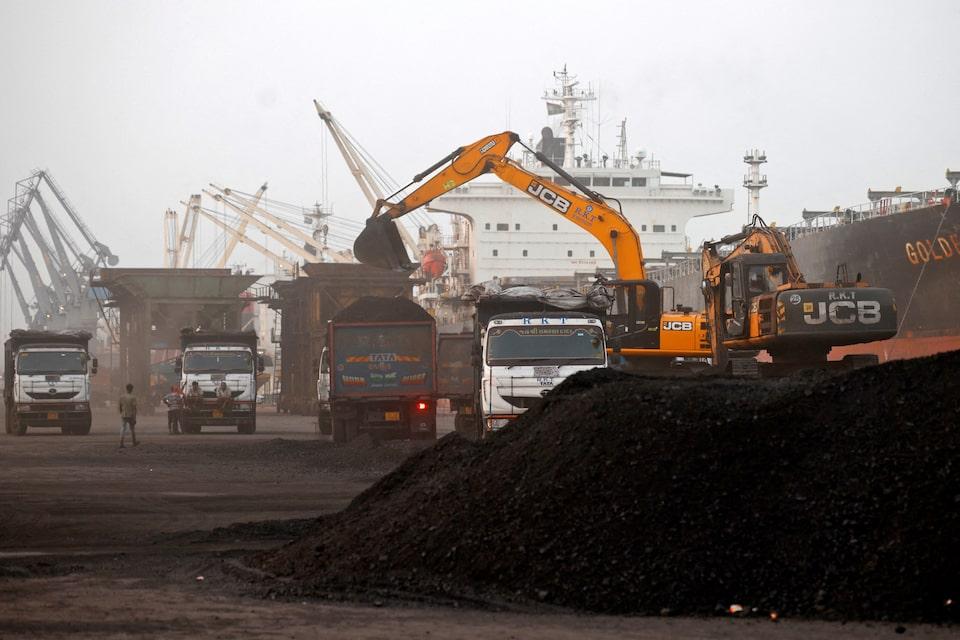
SINGAPORE, April 3 (Reuters) - The world's coal-fired power fleet inched up by 18.8 gigawatts in 2024, its lowest rise in two decades, but new additions in China and India continued to offset closures elsewhere, data from U.S. think tank Global Energy Monitor showed on Thursday. Despite a record surge in renewables, 44 GW of new coal power was commissioned by 12 countries last year, higher than the 25.2 GW of retirements, GEM's annual coal plant tracker report said. Sign up here. At 2,143 GW, global coal generation capacity is now 13% higher than it was when the Paris climate agreement was signed nearly a decade ago. Though it has vowed to "strictly control" new coal capacity, China - the world's biggest energy consumer - put an additional 30.5 GW into operation last year, more than 70% of the world's total. But that was less than the 47.4 GW China added in 2023. China's new builds in 2024 were at the highest in a decade, researchers said earlier this year. "Arguably what we are primarily seeing are Chinese coal interests continuing to pursue and build new coal plants, enabled by lax government enforcement of its own guidelines and pledges," said Christine Shearer, who runs GEM's Coal Plant Tracker programme. While China says it is building coal power to back up its wind and solar plants, most of the new projects are in regions that already have more than enough coal-fired capacity, Shearer added. India saw coal power increase by 5.6 GW in 2024, versus 5.5 GW in 2023, according to data from GEM. Other countries that launched new plants in 2024 included Indonesia, Bangladesh, Pakistan, South Korea and the Philippines. GEM warned that some countries, including the U.S., were delaying plans to phase out old plants. "Retirement delays are happening predominantly in countries that are not building sufficient clean energy to cover the retirements," Shearer said. Renewables grew 585 GW last year, up 15% since 2023 and amounting to 92.5% of all global capacity additions, the International Renewable Energy Agency said last week. However, it needs to grow 16.6% a year for the rest of the decade in order to meet a 2030 target to triple capacity. The energy transition is not moving fast enough to cope with rising electricity use, said Rana Adib, executive director of the Paris-based renewable energy policy alliance REN21. "Renewable energy has not yet been allowed to replace fossil fuels, and is basically meeting the increase in energy demand," she said. https://www.reuters.com/business/energy/global-coal-power-capacity-inches-up-2024-data-shows-2025-04-03/
2025-04-03 00:08
Dollar follows Treasury yields lower on US growth worries Investors flee to safe havens yen and Swiss franc Asian currencies struggle in the face of US tariffs April 3 (Reuters) - The U.S. dollar sank against major peers on Thursday, dropping to six-month lows against the euro, and the safe haven yen and Swiss franc, as investors grappled with how U.S. President Donald Trump's far-reaching tariffs will impact global trade and economic growth. The harsher-than-expected tariffs announcement sent shockwaves through markets, sinking global stocks and sending investors into the safety of less risky currencies, bonds and gold, fearing that a full-blown trade dispute could trigger a sharp global economic slowdown and fuel inflation. Sign up here. Trump said he would impose a 10% baseline tariff on all imports to the United States and higher duties on some of the country's biggest trading partners. "What the FX market is telling you, (is) that U.S. growth is going to suffer, and that U.S.-built systems are falling apart in global trade," said Adam Button, chief currency analyst, ForexLive. "The U.S. dollar was the most crowded trade in the world coming into the year. And today, the knee-jerk reaction to tariffs is to sell everything. Any trade that was crowded is thinning out, and that includes the dollar." The dollar, meanwhile, showed little reaction to weaker-than-expected data from the Institute for Supply Management (ISM) on Thursday, showing the U.S. services sector slowed to a nine-month low in March, amid uncertainty caused by import tariffs. That report adds to downbeat consumer and business surveys, as well as consumer spending and inflation reports that raised stagflation concerns. Meanwhile, the number of Americans filing new applications for unemployment benefits fell last week, showing continued stability in the labor market. As markets digest the tariff fallout, they are looking to Friday's non-farm payrolls report for further signals about how the labor market is holding up and the possible path of the Federal Reserve interest-rate policy. They are also eyeing Fed Chairman Jerome Powell's speech on Friday, as a big risk if he is more hawkish than expected. "They have all been saying, 'we have less confidence that inflation is coming down'. Now you take away the rate cuts that are in the market, (it) can really get ugly fast," said Button. The euro, hitting a six-month high, was last up 1.74% at $1.1037, and saw its biggest intraday advance since November 2022 . The dollar fell 1.95% against the Japanese yen to 146.445 yen, and sank 2.35% on the Swiss franc to 0.8608 franc . Both safe havens were at their strongest on the greenback in six months. Britain's pound was up 0.66% at $1.3093. CRISIS OF CONFIDENCE Deutsche Bank warned on Thursday of the risk of a crisis of confidence in the U.S. dollar, saying major shifts in capital flow allocations could take over from currency fundamentals and currency moves become disorderly. Trump has already imposed tariffs on aluminum, steel and autos, and increased duties on all goods from China. Investors are worried that some U.S. trading partners could retaliate with measures of their own, leading to higher prices. EU chief Ursula von der Leyen described the tariffs as a major blow to the world economy and said the 27-member bloc was prepared to respond with countermeasures if talks with Washington failed. "I don't think we're seeing any threats of a trade war, but are we going to see some of these U.S. trade partners, that historically had good relations, start to diversify away from the U.S., and maybe look at some other trading counterparts," said David Song, senior strategist, Forex.com. "I think this is where are seeing the sort of diversification away from U.S. dollar, at least over the near term, because of the uncertainty." China's onshore yuan slid to its weakest level against the dollar since mid-February. China's offshore yuan also hit a two-month low against the dollar, but later steadied. The dollar was last down 0.2% versus the yuan at 7.2791. The Mexican peso and Canadian dollar strengthened, with the U.S. dollar more than 1% weaker against both. Canada and Mexico, the two largest U.S. trading partners, already face 25% tariffs on many goods and will not face additional levies from Wednesday's announcement. https://www.reuters.com/markets/currencies/dollar-slides-traders-rush-into-safe-havens-after-us-tariffs-2025-04-03/