2025-04-03 00:06
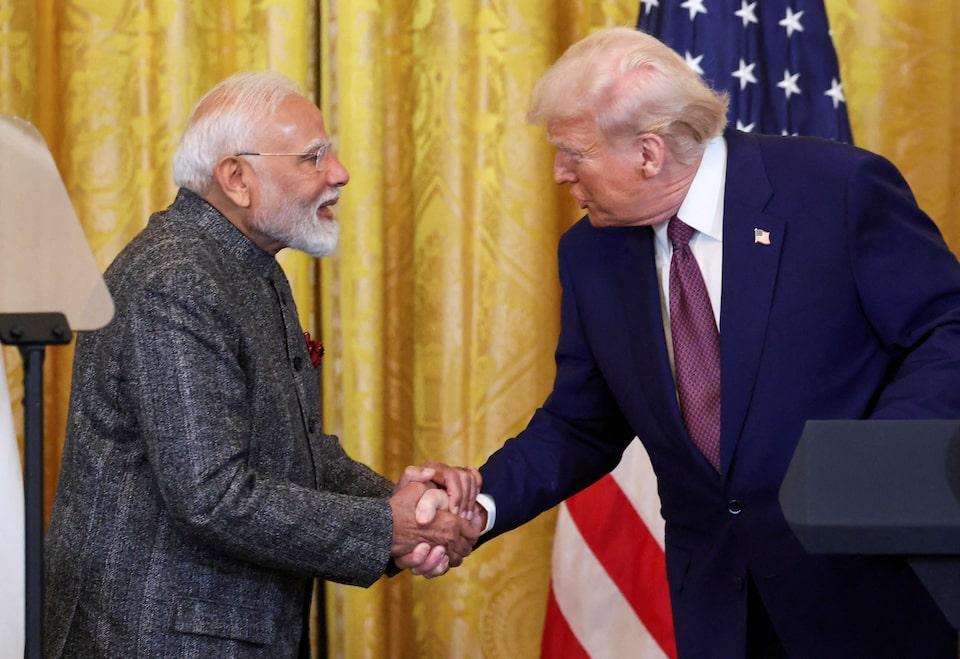
US reciprocal tariff effective from April 9 India's non-tariff barriers hurt US exports, White House says US move will add pressure on India to speed up trade talks US move could push India towards other trade blocs, expert says NEW DELHI, April 3 (Reuters) - The U.S. slapped a 26% reciprocal tariff on India in a setback to the South Asian country's expectation of getting relief from President Donald Trump's global trade policy that has unnerved world markets for weeks. The reciprocal tariff will be effective from April 9, according to a statement from the White House. Sign up here. Trump's Wednesday announcement on India was part of his wider plan to impose a 10% baseline tariff on all imports from April 5 and higher duties on certain other countries including 34% on China and 46% on Vietnam. "They (India) are charging us 52% and we charge almost nothing for years and years and decades," Trump said at the White House while announcing the reciprocal tax. The duty of 26% was based on tariff and non-tariff barriers including currency manipulation, the Trump administration said. India imposed "uniquely burdensome" non-tariff barriers, the removal of which will increase U.S. exports by at least $5.3 billion annually, the White House said in a statement. The tariffs would remain in effect until Trump determined that the "threat posed by the trade deficit and underlying non-reciprocal treatment is satisfied, resolved, or mitigated," the statement added. The U.S. has a trade deficit of $46 billion with India. The reciprocal tariff will add pressure on Indian Prime Minister Narendra Modi, who counts himself among Trump's friends, to find ways to get India off the hook. Last week Reuters reported that New Delhi is open to cutting tariffs on U.S. imports worth $23 billion to mitigate the impact on its exports in sectors like gems and jewellery, pharmaceuticals and auto parts. Modi's administration has taken a number of steps to win over Trump by lowering tariffs on high-end bikes, bourbon and dropping a tax on digital services that affected U.S. tech giants. Before the reciprocal announcement, the U.S. tariff rates were among the lowest, with simple average tariffs at 3.3%, compared with India's 17%, the White House said. Nigel Green, CEO of global financial advisory deVere Group, said the U.S. duties risked pushing India closer to alternative trade blocs and strategic partners. "(This) makes Indian exports immediately less competitive ... it dents investor confidence just as India is trying to attract global capital fleeing China," he said. Ajay Sahai, director general at the Federation of India Export Organisations, said the reciprocal tariff on India was lower than key competitors like Vietnam and Bangladesh, which could help Indian apparel and footwear sectors. https://www.reuters.com/world/us-slaps-26-tariff-india-amid-ongoing-bilateral-trade-talks-2025-04-03/
2025-04-02 23:54
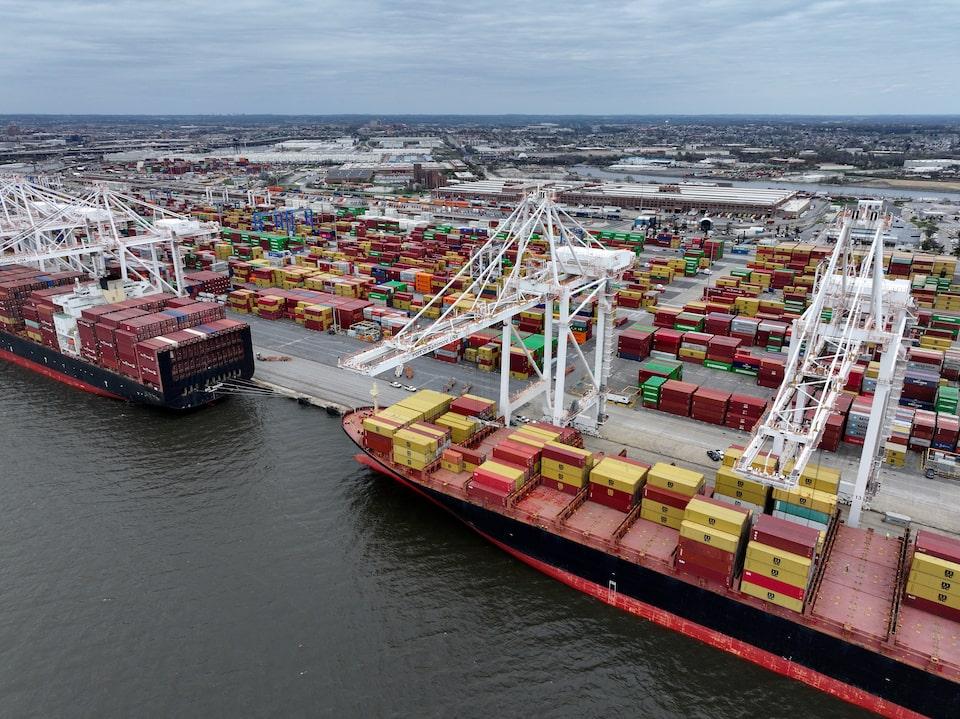
Order targets packages under $800 from China and Hong Kong Order effective May 2 Carriers must report shipment details to U.S. Customs and Border Protection WASHINGTON, April 2 (Reuters) - U.S. President Donald Trump signed an executive order on Wednesday that closes a trade loophole known as "de minimis" that has allowed low-value packages from China and Hong Kong to enter the United States free of duties. Trump signed the order, which takes effect at 12:01 a.m. Eastern Time (0401 GMT) May 2, in the Rose Garden of the White House after announcing sweeping new tariffs on global trading partners. Sign up here. The White House said the move, first reported by Reuters earlier on Wednesday, came after Commerce Secretary Howard Lutnick certified "adequate systems are in place to collect tariff revenue" on the shipments. It said imported goods from China and Hong Kong sent outside the international postal network and valued at or under $800 would now be subject to all applicable duties. Imported goods sent through the postal network and valued at or under $800 would now be subject to a duty rate of either 30% of their value or $25 per item, with that rate increasing to $50 per item after June 1. Trump had signed an initial order on February 1 ending duty-free entry for the cheap Chinese goods, but later paused the order because of logistical issues complicating the inspection of millions of the low-value shipments. "They figured it out," a source familiar with the decision said. "De minimis is being stripped from China." The number of shipments entering the U.S. through the duty-free route has exploded in recent years, reaching nearly 1.4 billion packages last year. More than 90% of all packages coming into the U.S. now enter via de minimis, and of those, about 60% come from China, led by direct-to-consumer retailers such as Temu and Shein. Temu is owned by PDD Holdings (PDD.O) , opens new tab, while Shein is aiming to list in London this year. With changes to the U.S. de minimis threshold anticipated, Temu has rapidly expanded its semi-managed model, an Amazon-like strategy that sees goods shipped in bulk to overseas warehouses instead of directly to customers. PDD Holdings' co-CEO Chen Lei last month told analysts to expect "challenges" for its global business, adding that PDD's response includes exploring new business models and experimenting with "innovative localised supply chain solutions". For its part, while the vast majority of Shein's products are still made in China, it has also started to diversify its supply chain, adding suppliers in Vietnam, Brazil and Turkey, a move that might also accelerate in the wake of new tariffs and regulations. Trump campaigned on a promise to punish China for the role it has played in the synthetic opioid crisis that has killed more than 450,000 Americans in the last decade. Chinese chemical makers are the top suppliers of raw materials purchased by Mexico's cartels to produce the deadly drug, U.S. anti-narcotics officials say. A Reuters investigation last year showed how traffickers often route these chemicals through the United States by exploiting the de minimis rule. China has repeatedly denied culpability. Trump's order affecting de minimis parcels was paused on February 7 because there had not been sufficient time to prepare, with packages stacking up at ports of entry. The White House said carriers transporting the Chinese and Hong Kong postal items must "report shipment details to U.S. Customs and Border Protection, maintain an international carrier bond to ensure duty payment, and remit duties to CBP on a set schedule." It said CBP may require formal entry for any postal package instead of the specified duties. The White House said the Commerce Secretary Lutnick would submit a report within 90 days assessing the Order’s impact and considering whether to extend these rules to packages from Macau. https://www.reuters.com/markets/trump-considering-revoking-tariff-exemptions-cheap-shipments-china-source-says-2025-04-02/
2025-04-02 23:40
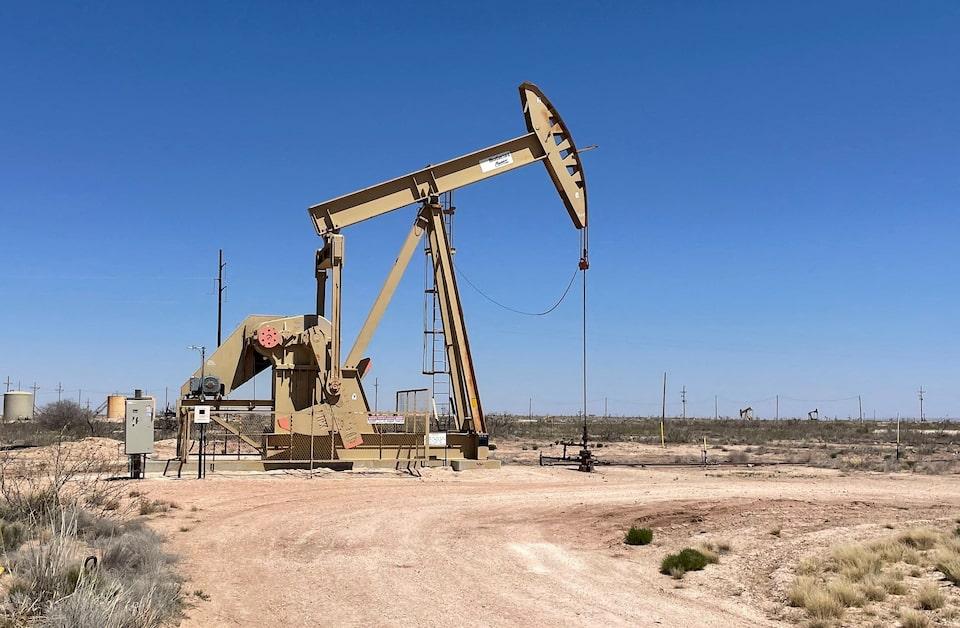
SYDNEY, April 3 (Reuters) - Almost unnoticed in the sweeping new import tariffs announced by U.S. President Donald Trump is that energy commodities have been excluded. The baseline of 10% on all imports to the United States, and higher for many major trading partners, won't apply to crude oil, natural gas and refined products, the White House said on Wednesday. Sign up here. Exempting energy imports is a clear tactic to limit the extent of the price pain that Americans are going to feel from the tariffs, and fits with Trump's broader aim to keep energy prices low. But the move also adds to the dilemma facing the rest of the world in how they respond to Trump's upending of the global trading system. One of the best bargaining chips many countries will have in responding to the U.S. tariffs is the energy they buy, or could potentially buy, from the United States. The United States is the world's top exporter of liquefied natural gas (LNG) and of refined oil products, and ranks fourth in shipments of crude oil and coal. One of the ways some countries have been trying to stave off tariffs is to commit to buying more energy from the United States. It's now questionable that any of these efforts have worked, given the blanket 10% tariffs and the higher rates of 20% on the European Union, 34% on China, 24% on Japan and 26% on India. These are all countries or regions that currently are major buyers of U.S. energy, or have been, or have the potential to ramp up imports. Will these countries now put U.S. energy imports on the table in their response to Trump's tariffs? It may be worthwhile to view Trump's tariff actions as similar to those of a schoolyard bully. To deal with a bully, you have effectively three choices. You can stand up and fight, in which case you may take several body blows, get hurt and even be defeated. But you will earn respect and may benefit down the line. Or you can duck and weave, try to negotiate and plead and hope not to get hurt. This usually results in you losing both your lunch money and your respect. The third choice is to run and hide and hope the bully leaves you alone. This may work for a while but only delays the inevitable. FACING CHOICES As far as buying energy from the United States, China has so far chosen to stand and fight, imposing tariffs on imports of U.S. crude, LNG and coal. This has effectively ended the trade in these products between the world's two biggest economies. But it also hasn't really made much difference to the prices on global markets, largely because China was a relatively small buyer of U.S. energy, and is able to source alternatives without disrupting global flows. It's not the same for Europe, which gets more than half of its LNG from the United States, and couldn't easily replace that from other suppliers. Europe is also a major buyer of U.S. crude and refined products, and, similar to LNG, would find it hard to source alternatives without causing widespread disruption to global flows and prices. Europe could conceivably drop U.S. coal without too much negative impact, but the continent is a small buyer. Japan and India are more likely to try and use energy purchases from the United States as bargaining chips in talks with the Trump administration to secure exemptions or carve outs from the tariffs. Given the inconsistent nature of Trump and his administration, this may be a tactic that bears fruit, but for now the best that can be said about trying this path is that it is highly uncertain. While different countries or regional groups like the European Union work through their responses, the common thread that is likely to emerge is that they will seek to lower their reliance on the United States and build trade relations with other nations. The ultimate result of the tariffs is that the United States will likely become the trading partner of last resort, with countries only buying what they cannot get elsewhere. The views expressed here are those of the author, a columnist for Reuters. https://www.reuters.com/business/energy/trumps-tariffs-already-have-major-carve-out-oil-gas-russell-2025-04-02/
2025-04-02 23:02
MEXICO CITY/OTTAWA, April 2 (Reuters) - Mexico and Canada avoided fresh tariffs on Wednesday with President Donald Trump exempting the United States' top trading partners from his new 10% global tariff baseline, although previous duties remain in place. Goods from Mexico and Canada that comply with the USMCA trade agreement between the three countries will largely remain exempt from tariffs, except for auto exports and steel and aluminum which fall under separate tariff policies. Sign up here. Trump previously imposed 25% tariffs on Mexico and Canada for not doing enough to curb migration and fentanyl trafficking, but later issued a carve out for USMCA compliant goods. "For Canada and Mexico, the existing fentanyl/migration ... orders remain in effect, and are unaffected by this order," the White House fact sheet said. "In the event the existing fentanyl/migration ... orders are terminated, USMCA compliant goods would continue to receive preferential treatment, while non-USMCA compliant goods would be subject to a 12% reciprocal tariff." Some analysts said Canada and Mexico appeared to have avoided the worst-case scenario. “Mexico and Canada are almost certainly sighing relief after today’s announced tariffs," said Michael Camunez, chief executive of Monarch Global Strategies, which advises firms doing business in Mexico. "The North American partners were shielded from what clearly could have been a very bad day.” Candace Laing, president and CEO of the Canadian Chamber of Commerce, said in a statement: "We hope that today's positioning regarding Canada by the U.S. is part of a path to real negotiation, ultimately leading to long-term partnership." Speaking after Trump's announcement, Canada's Prime Minister Mark Carney said he still planned to respond with countermeasures. "We are going to fight these tariffs with countermeasures, we are going to protect our workers, and we are going to build the strongest economy in the G7 (group of nations)," he said. https://www.reuters.com/world/americas/canada-mexico-not-subject-new-global-rates-while-fentanyl-border-order-place-2025-04-02/
2025-04-02 22:55
April 2 (Reuters) - The U.S. tariff rate on all imports has rocketed to 22% from just 2.5% in 2024 under the new global levies imposed by President Donald Trump, Fitch Ratings' U.S. economic research chief said on Wednesday. "That rate was last seen around 1910," Olu Sonola, Fitch's head of U.S. economic research, said in a statement after Trump's announcement for a global baseline import tax of 10%, but much higher rates for many trading partners. Sign up here. "This is a game changer, not only for the US economy but for the global economy," Sonola said. "Many countries will likely end up in a recession. You can throw most forecasts out the door, if this tariff rate stays on for an extended period of time." https://www.reuters.com/markets/us/us-tariff-rate-rockets-22-highest-since-1910-fitch-economist-says-2025-04-02/
2025-04-02 22:52
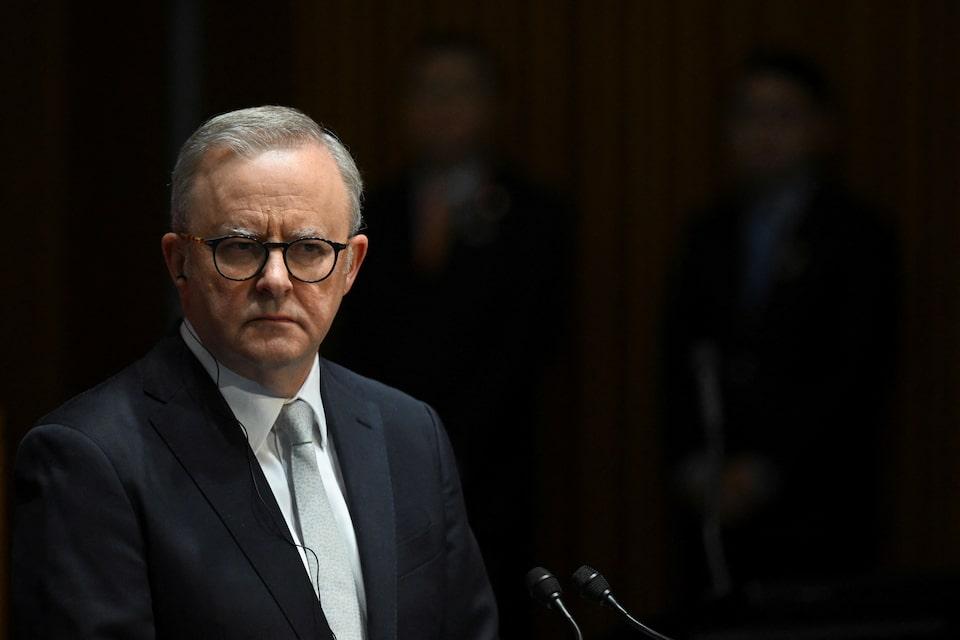
Trump to impose 10% baseline tariff on Australian exports Trump singles out Australian beef in White House comments Albanese says Australia will not join a race to the bottom SYDNEY, April 3 (Reuters) - Australian Prime Minister Anthony Albanese said on Thursday the decision by U.S. President Donald Trump to impose a 10% tariff on its ally was "not the act of a friend," but ruled out reciprocal tariffs against the United States. In comments outside the White House, Trump singled out Australian beef, which saw a surge in exports to the United States last year, reaching A$4 billion amid a slump in U.S. beef production. Sign up here. "They won't take any of our beef. They don't want it because they don't want it to affect their farmers and you know, I don't blame them but we're doing the same thing right now," Trump said in an event in the White House Rose Garden announcing tariffs on a wide range of U.S. trading partners. Australia banned U.S. fresh beef products in 2003 due to the detection of bovine spongiform encephalopathy, otherwise known as mad cow disease, in U.S. cattle. BSE poses a risk to human health and has never been detected in cattle in Australia. Albanese said Trump had not banned Australia beef, but had imposed a 10% duty on all Australian goods entering the United States, equivalent to the U.S. baseline tariff on all imports, despite U.S. goods entering Australia tariff free. "The (Trump) administration's tariffs have no basis in logic and they go against the basis of our two nations' partnership. This is not the act of a friend," Albanese told reporters. Australia would not impose reciprocal tariffs as this would increase prices for Australian households, he added. "We will not join a race to the bottom that leads to higher prices and slower growth," Albanese said. Australian shares (.AXJO) , opens new tab dropped 0.9% and the local dollar , a proxy for global risk sentiment, fell 0.5% to $0.6269. Australian officials said countries in the Indo-Pacific region were among the hardest hit by the U.S. tariffs, with Albanese suggesting this could advantage China. "There's no doubt that the response on a range of issues, be it action on climate change as well as trade issues will affect the strategic competition that's here in the region," he said. Australia would seek to negotiate with the U.S. to remove the tariffs without resorting to a dispute resolution mechanism in the two countries' Free Trade Agreement, he said. Amid the campaign for parliamentary elections set for May 3, opposition Liberal Party leader Peter Dutton criticised Albanese for not winning a tariff exemption, and said Australia should leverage its critical minerals deposits and defence alliance to quickly strike a deal with Trump. "This is a bad day for our country," Dutton said. Australia had used all elements of its diplomacy, Albanese said, including seeking advice last night over dinner from sport star Greg Norman, who plays golf with Trump. BEEF OVER BIOSECURITY Negotiations to avoid a tariff stalled over beef as Australia insisted on U.S. meat imports meeting its biosecurity standards, Albanese said. Biosecurity is one of three areas, alongside subsidised pharmaceuticals that lower health costs to Australians, and rules on U.S. social media platforms, raised by the U.S. as trade barriers that Australia would not compromise on, he told reporters. Australia will offer financial support to affected exporters to help them find new markets, with a fund offering A$1 billion ($627 million) in zero interest loans, and direct government departments to 'buy Australian'. National Farmers Federation President David Jochinke said the tariffs were a "disappointing step backward for our nations and for the global economy", but the industry would prevail because its farmers are "among the least subsidised farmers in the world". Exports to the United States are less than 5% of Australia's total goods exports, compared to one in four export dollars coming from trade with China. Australian steel and aluminium exports are also subject to U.S. tariffs on the metals announced in March, though its shipments to the U.S. are a fraction of the value of country's total annual exports. Less clear is the impact from those levies on Australia's mining sector, which supplies much of the world's iron ore and other metal-making raw materials. Trade Minister Don Farrell said Australia was opening new exports markets in India and the Middle East, and would seek to revive free trade negotiations with the European Union that had stalled last year over access for Australian beef. "The world has changed," he said. New Zealand's Trade Minister Todd McClay said a 10% tariff on the country, a large exporter of lean beef used in U.S. hamburgers, meant its exports remain competitive in the U.S. market, compared to nations hit by higher tariffs. ($1 = 1.5949 Australian dollars) https://www.reuters.com/world/australia-says-us-tariffs-not-act-friend-rules-out-reciprocal-move-2025-04-02/