2025-04-02 22:48
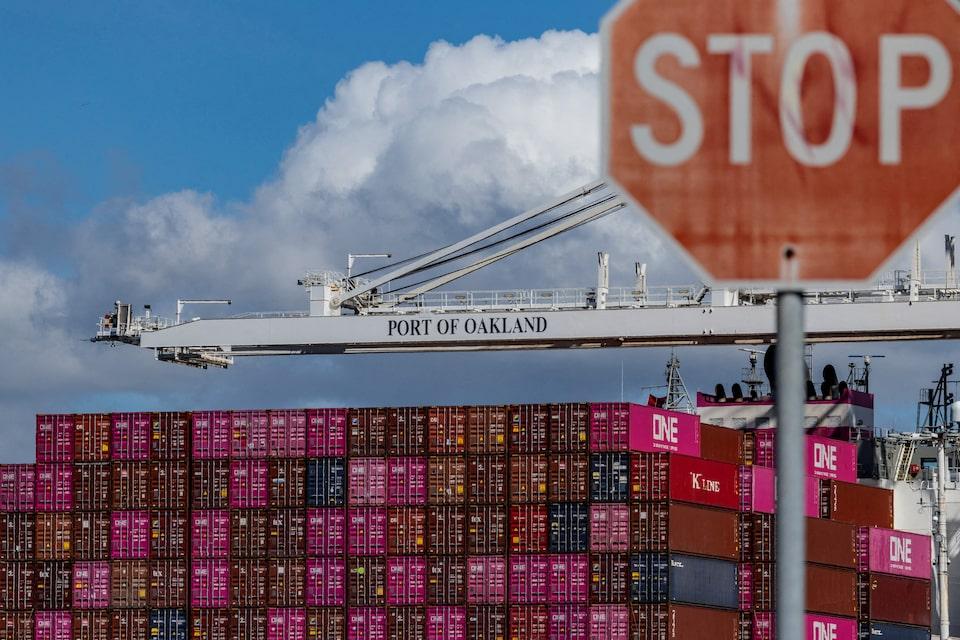
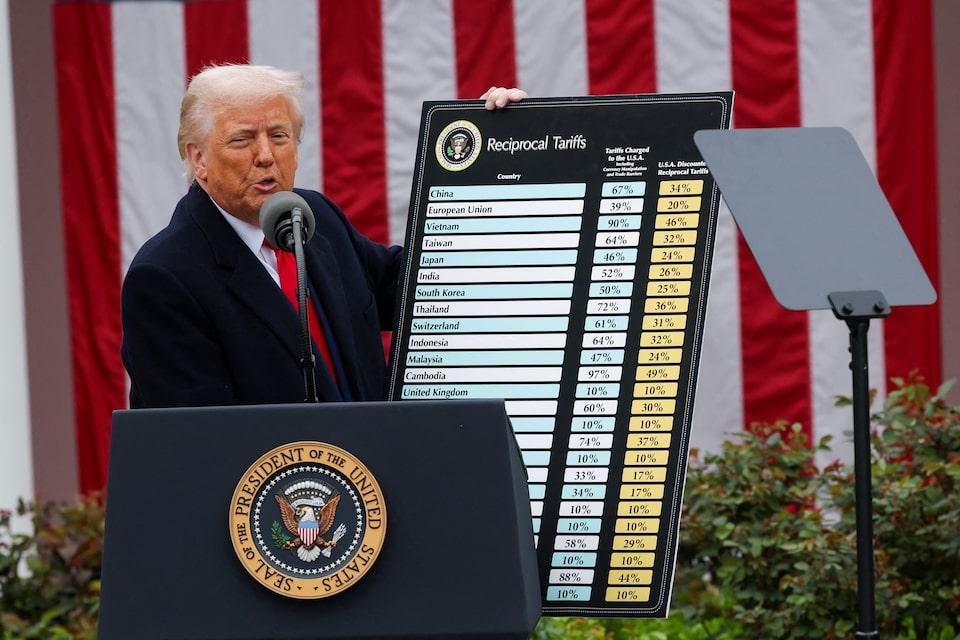
NAPERVILLE, Illinois, April 2 (Reuters) - The United States was once the world’s breadbasket, commanding global grain and oilseed trade by a wide margin. The country still leads in corn exports. That title, however, has recently been threatened by Brazil, the same party that demoted U.S. soybean exporters to the No. 2 spot. Sign up here. But the United States’ grip on global corn, soybean and wheat exports is as loose as it’s ever been. U.S. President Donald Trump on Wednesday announced sweeping reciprocal tariffs on all trade partners, a risk U.S. farmers accepted when largely backing him in last year’s election. Trade barriers, whether real or perceived, could certainly chip away at U.S. export relevance in a space it once overwhelmingly controlled. Rival grain suppliers have padded both their crops and export capabilities over the decades, sometimes capitalizing on U.S. misfortunes along the way. EXPORT SHARE SQUEEZE On average over the last five years, the United States accounted for a record-low 31% of annual global corn exports. Twenty years ago, the U.S. portion was 61%, though it had topped out at 80% in the late 1970s. The biggest drop-off was seen between the late 2000s and early 2010s, when the share went from 59% to 35%. This period included the global financial crisis and a prominent string of U.S. crop failures. No. 2 corn supplier Brazil accounted for only 5% of exports some 20 years ago, though its share is now up to 22%. The U.S. portion of world soybean exports has plunged significantly, recently averaging a record-low 27%. That was above 80% through the 1970s, falling to 50% by the turn of the century. Brazil became the leading soy supplier in 2012-13, and its share has climbed. Brazil now accounts for 55% of global soybean exports versus 39% a decade ago, a period including the first U.S. trade war with China, when Beijing reduced reliance on U.S. beans. The United States was the top wheat exporter until about 10 years ago, and today it is the No. 4 supplier. But U.S. wheat export dominance was at its peak in January 1980 when then-President Jimmy Carter on live television cancelled 17 million metric tons of U.S. grain export contracts with the Soviet Union due to the Soviet invasion of Afghanistan. This became known as the U.S. grain embargo. At that time, the United States accounted for 44% of global wheat exports. That share now sits at a record-low 11%, down from 26% some twenty years ago. Carter’s speech echoed sentiments recently shared by Trump, including the desire to minimize harm to the American farmer and massively increase the volume of agricultural products used domestically. U.S. intelligence concluded in 1981 that the U.S. embargo was substantially less harmful to Moscow’s grain stocks than intended because the Soviets were able to source more grain from other suppliers than the Americans had anticipated. That should sound familiar to the soybean market, as Brazil in recent years has shipped more soybeans than traders and analysts previously thought possible. In the early 1980s, the Soviet Union was the top wheat importer, accounting for more than 20% of annual imports. Today, Russia is the top wheat exporter, supplying more than 20% of annual shipments. PRODUCTION TRENDS The United States is the leading producer of corn, No. 2 in soybeans and No. 4 in wheat. Similar to exports, the recent U.S. production shares are also all-time lows. The United States accounts for 31% of global corn production, down from about 41% some 20 years ago. The country accounted for more than half of global soybean production until about 1990, though the share now sits at 28%. U.S. wheat accounted for about 15% of global production in 1980, though today it accounts for 6%. Unlike corn and soybeans, the U.S. wheat crop is now generally smaller than it was decades ago. But Russia has expanded its wheat crop by more than 70% over the last decade, accounting for 11% of world output. That compares with 7% a decade ago. Brazil has increased its soybean production by about 85% over the last decade and corn by around 55%, taking advantage of market opportunities and upbeat profitability. Brazil grows 39% and 10% of global soy and corn output, respectively, up from 30% and 8% a decade ago. Not all global crops can infinitely expand from here, but the lesson should be clear. Significantly more grain is produced outside the United States versus decades ago, and those suppliers may be ready to act if Washington’s latest move backfires. Karen Braun is a market analyst for Reuters. Views expressed above are her own. https://www.reuters.com/markets/commodities/by-numbers-erosion-us-grain-export-dominance-braun-2025-04-02/
2025-04-02 22:19
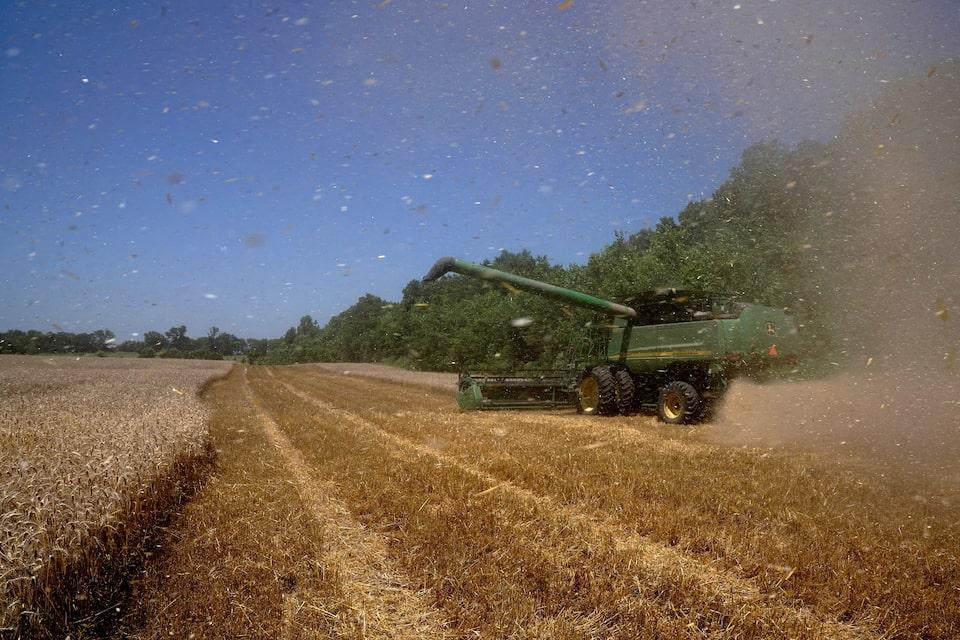
April 2 (Reuters) - President Donald Trump on Wednesday unveiled sweeping global tariffs of at least 10% on goods imported from most U.S. trading partners. For details of the announcement see: https://www.whitehouse.gov/fact-sheets/2025/04/fact-sheet-president-donald-j-trump-declares-national-emergency-to-increase-our-competitive-edge-protect-our-sovereignty-and-strengthen-our-national-and-economic-security/ , opens new tab Sign up here. For details of his order ending de minimis exemptions for China see: https://www.whitehouse.gov/fact-sheets/2025/04/fact-sheet-president-donald-j-trump-closes-de-minimis-exemptions-to-combat-chinas-role-in-americas-synthetic-opioid-crisis/ , opens new tab (This story has been refiled with the correct URL for the order fact sheets) https://www.reuters.com/world/us/white-house-fact-sheet-accompanying-trumps-new-tariff-orders-2025-04-02/
2025-04-02 22:01
SAO PAULO, April 2 (Reuters) - Brazilian planemaker Embraer (EMBR3.SA) , opens new tab said on Wednesday it delivered 30 aircraft in the first quarter of 2025, a 20% increase from a year earlier. The deliveries in the quarter include seven commercial jets, in line with the first quarter of 2024, and 23 executive jets, up 28% from a year earlier, Embraer said in a securities filing. Sign up here. This year, the Brazilian company expects to deliver between 77 and 85 commercial planes and between 145 and 155 executive jets. https://www.reuters.com/business/aerospace-defense/brazils-embraer-delivers-30-aircraft-1st-quarter-2025-04-02/

2025-04-02 21:54
April 3 (Reuters) - President Donald Trump said on Wednesday he would impose a 10% baseline tariff on all imports to the United States and higher duties on some of the country's biggest trading partners, a move that could escalate a trade war and upend the global economy. Trading partners are expected to respond with countermeasures that could lead to dramatically higher prices for everything from bicycles to wine. Sign up here. Trump has already imposed 25% levies on autos and car parts. Here are latest reactions from company executives, trade and labour associations: COMPANIES STELLANTIS (STLAM.MI) , opens new tab The carmaker said it would temporarily pause production at some of its Canadian and Mexican assembly plants, such as its Windsor assembly plant in Canada. ANTONIO BARAVALLE, CEO, LAVAZZA "We had already planned to increase (local production in the U.S.) to 100%." "We are ready to go ... but now there is this other element that is to be investigated, the duties for Brasil ... If they put a 10% duty on Brazil, the duty (of 20%) is somehow already halved." The coffee maker currently produces around 50% of what it sells in the U.S. locally. FERRARI (RACE.MI) , opens new tab "Purchase contracts for Ferraris have clear and standard clauses allowing the company to adjust prices in case trade conditions change before the vehicle's delivery." New tariffs will also apply to Ferrari cars ordered months ago but not yet delivered to the U.S., a company spokesperson said. MOTOFUMI SHITARA, CEO, YAMAHA MOTOR (7272.T) , opens new tab "Our exports would certainly be impacted. If these tariffs continue long-term, including for vehicles, we will need to respond by raising prices or reducing costs." SHIPPING GROUP MAERSK (MAERSKb.CO) , opens new tab "We generally expect customers to be a bit more cautious about their inventory levels. In the very short term, we're likely to see some rush air freight orders in the U.S. ahead of the announced tariffs going into effect. It is also likely we will see an increase in demand for bonded storage as customers will want to hold off clearing goods while they get more certainty." PACKAGING AND MEDICAL EQUIPMENT MAKE GERRESHEIMER (GXIG.DE) , opens new tab "The tariffs primarily affect our exports from our plant in Mexico to the U.S. These include injection vials, for example ... We will pass these customs duties on to our clients as additional costs. If necessary and if the customs duties are to remain in place in the longer term, we will also be able to relocate capacities." "With our production network in the U.S., there are also business opportunities for us from pharmaceutical companies that increasingly want to produce and source locally in the U.S." MASSIMO BATTAINI, CEO, CABLE MAKER PRYSMIAN (PRY.MI) , opens new tab "On first reaction, the announcement appears to have a positive impact on local production. The tariffs will be applied to finished products, and therefore removes the risk that U.S. production could have been undercut from abroad. With 30 factories across the U.S. and as the market leader we are best placed to strengthen our leadership position." ANDERS VINDEGG, HEAD OF MEDIA RELATIONS, ALUMINIUM PRODUCER HYDRO (NHY.OL) , opens new tab "We are working actively both from Norway and in the EU in Brussels to inform and to work actively with the organisations and other measures that we're a part of to leverage the importance of Norwegian aluminium to Europe." "We're also using our network and have our people on the ground in the U.S. working hard in dialogue with the U.S. administration to understand the effects of the tariffs." ASSOCIATIONS INTERNATIONAL APPAREL FEDERATION, REPRESENTING GARMENT MANUFACTURERS IN 40 COUNTRIES "The US government's announcement of heavy taxes on its trade with the rest of the world is a major shock to our global apparel industry. It unnecessarily creates a new and often irrational reality affecting billions of dollars of investments and the lives of tens of millions of people working in our industry globally. Ultimately, someone will have to pay the price." CANADIAN STEEL ASSOCIATION "To reduce our dependency, the Canadian steel industry urgently requires the adoption of strict border measures that address unfair steel trade in Canada and helps to recapture the Canadian market for our industry, our workers and our communities." SPANISH ASSOCIATION OF OLIVE OIL EXPORTERS "The Spanish olive oil sector is seriously disadvantaged by this 20%, compared to 10% for other producing countries not belonging to the European Union." "98% of olive oil consumed in the United States comes from imports, so these tariffs will result in a higher purchase price that will have to be borne by U.S. consumers." KEVIN CRAVEN, CEO, BRITISH AEROSPACE AND DEFENCE INDUSTRY GROUP ADS, ON AEROSPACE COMPONENTS "We are absolutely not clear whether that exemption (from all tariffs on items that are classified as air worthy by regulators) continues and whether these tariffs apply or not. So potentially that might make it more painful." EU FARMING GROUP COPA-COGECA "The introduction of additional tariffs threatens to disrupt global supply chains, drive up prices, and limit market access for farmers and agri-cooperatives on both sides of the Atlantic, with significant economic consequences for the agricultural sector." "Copa and Cogeca strongly urge EU and US policymakers to fully exhaust diplomatic efforts in the coming days. Both sides must work constructively to address grievances without jeopardizing existing trade benefits." ANTHONY BRUN, HEAD OF FRENCH COGNAC GROWERS ASSOCIATION UGVC "One could have feared much higher tariffs, but this risk is not off the table and remains with a potential conflict over bourbon whiskey. We already face tariffs in China, now there are the U.S., and the consequences will be very very brutal to wine growers." ETHAN LANE, SENIOR VP OF GOVERNMENT AFFAIRS, NATIONAL CATTLEMEN'S BEEF ASSOCIATION (NCBA) "President Trump is taking action to address numerous trade barriers that prevent consumers overseas from enjoying high-quality, wholesome American beef. NCBA will continue engaging with the White House to ensure fair treatment for America's cattle producers around the world and optimize opportunities for exports abroad." SIGRID DE VRIES, DIRECTOR GENERAL, EUROPEAN AUTOMOBILE MANUFACTURERS' ASSOCIATION (ACEA) "We urge our leaders to meet urgently so that they can find a solution to any issues preventing free and fair trade between historic allies and allow the EU-US relationship to flourish once again." SWISS BUSINESS GROUP ECONOMIESUISSE "A further escalation of the trade conflict must be prevented. The Federal Council and Swiss economic diplomacy are called upon to quickly find solutions at the negotiating table with the U.S. government. From an economic perspective, there are no comprehensible reasons for U.S. tariffs against Switzerland – quite the opposite." DIRK JANDURA, HEAD OF GERMANY'S EXPORTERS' ASSOCIATION BGA "We will have to pass these tariffs on as price increases, and that will hit turnover in many cases ... This is an economic blind alley at whose end lie welfare losses for both sides of the Atlantic." https://www.reuters.com/markets/us/wall-street-reacts-trumps-reciprocal-tariffs-2025-04-02/
2025-04-02 21:49
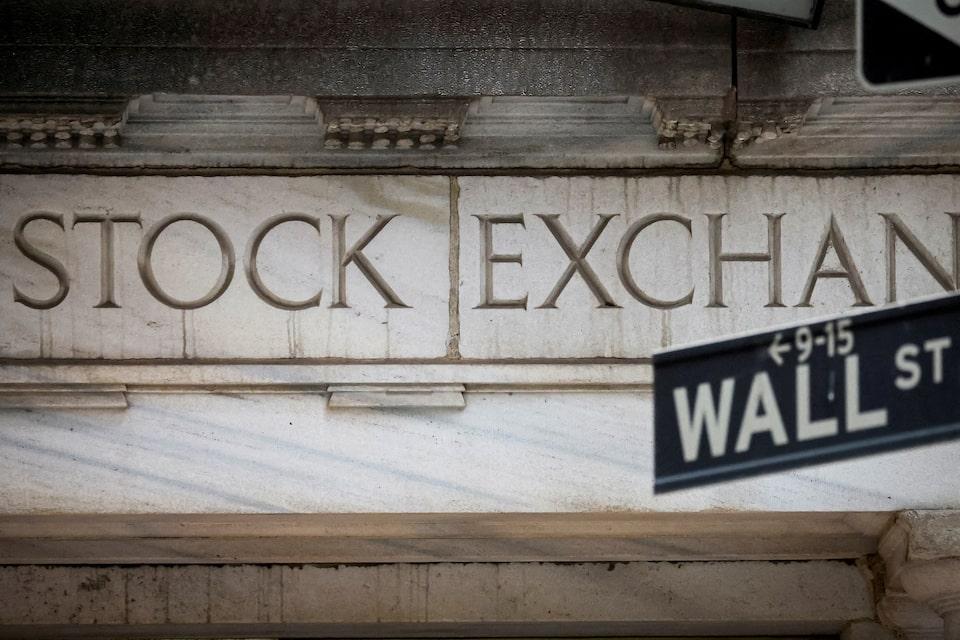
April 3 (Reuters) - World markets were slammed on Thursday by U.S. President Donald Trump's unveiling of reciprocal tariffs to match duties put on U.S. goods by other countries. Stock markets tumbled and investors dashed to the relative safety of bonds, gold and the yen. The S&P 500 .SPX nosedived almost 5%, while the tech-heavy Nasdaq (.IXIC) , opens new tab ended down about 6%. Sign up here. U.S. Treasury yields slid, China's yuan dropped to a seven-week low, crude oil slumped and the dollar came under heavy selling pressure . Click here for a factbox on reciprocal tariffs. COMMENTS: GEORGE BORY, CHIEF INVESTMENT STRATEGIST FOR THE FIXED INCOME TEAM, ALLSPRING GLOBAL INVESTMENTS, NEW YORK: "In the world of fixed income, the tariffs have triggered concerns about materially-slower growth and the potential for an uptick in inflation over the next three to 12 months. "On the interest rate side of things, yields have dropped dramatically. Around the 4% level on the 10-year is a very important resistance level, and we have not breached it. We've bounced off it a few times, and so we're watching that very closely to determine whether the bond market is truly starting to worry and expect recession-like outcomes. "The bond market is not fully pricing in a recession yet - emphasize yet, as the bigger variable here, which is harder to calibrate, is inflation. And while we're expecting slower growth, perhaps meaningfully slower growth, the outlook for inflation is still unclear." HANS MIKKELSEN, MANAGING DIRECTOR, CREDIT STRATEGY, TD SECURITIES, NEW YORK, NY: "We think these events create an environment of lower trade deficits, and thus lower capital account surpluses to be invested in US assets, including corporate bonds. They may also lead to efforts to diversify away from US assets for other reasons. "We prefer to remain defensively positioned in this period of high tariffs and still very elevated economic policy uncertainty. ROGER YANG, AUDIT PARTNER, BUILDING, CONSTRUCTION & REAL ESTATE, KPMG, LOS ANGELES: "Tariffs are casting an expansive shadow of price uncertainty in commercial real estate and raising the possibilities of a domino effect of exasperating costs on already expensive projects. "The lending landscape is also feeling the pinch. Banks were loosening the reigns on lending standards, but the uncertainty introduced by tariffs and other factors like labor shortages can lead to tighter credit conditions. Both traditional financial institutions and private capital providers will have a more discerning eye as they scrutinize deals more closely, focusing on whether they pencil out financially." PHIL BLANCATO, CHIEF MARKET STRATEGIST, OSAIC, NEW YORK: "It's a bit of an over-reaction. We've somehow forgotten the strength of the U.S. Economy coming into this. The selloff in oil is a tailwind to the U.S. consumer. With interest rates going down, that's a tailwind to the U.S. consumer," "This has a much bigger impact on the rest of the world than it does to the U.S. economy," he said. "The consumer can absorb a bit of a shock here. Certainly (we'll see) a bit of a slowdown, but nothing nearly to the degree that the markets making it out to be." "If we do get into a global trade war, then it's a very different discussion. Then we have a potential recession, significantly higher prices. We've got a stagflationary environment. Those are all very dangerous moments. I don't believe that's the case simply because the U.S. economy was strong going into this. We still have full employment. Other countries need us more than we need them." "Doesn't mean we get a free lunch here. There are going to be one time price hikes on certain goods, not all goods." BRUCE ZARO, MANAGING DIRECTOR, GRANITE WEALTH MANAGEMENT, PLYMOUTH, MASSACHUSETTS: “This is just another chapter of the market in a bottoming process… What we have already seen and are going to continue to see are drastic reductions in earnings estimates. That's going to play out and drag on for some time." KEITH MOONEY, CO-FOUNDER, VESTGEN WEALTH PARTNERS, SOUTH BARRINGTON, ILLINOIS: “Currently, everyone seems to be focused on tariffs and how they affect the market. However, there are concerns with the growth of our economy, inflation, trade wars, and real wars around the world. Not to mention, over the last 24 months, market performance has been overly concentrated in just a few stocks. All of these things should be cause for concern. So what can you do about it? Being diversified in quality stocks is very important right now. Also, having fixed income assets in your portfolio that tend to have an inverse relationship with stocks are a great strategy to weather the storms of volatile markets. And finally, make sure you have enough money in liquid cash reserves.” HUGH GIMBER, GLOBAL MARKET STRATEGIST, J.P. MORGAN ASSET MANAGEMENT, LONDON: "The market reaction makes it very clear that last night's announcement was worse than expected." "They key question we're focused on is how and when policy volatility showing up in economic data might prompt a shift to a more moderate approach. (U.S.) labour market data tomorrow becomes even more important than normal, investors will be looking to understand how businesses are reflecting this uncertainty in their hiring plans." "Geographical diversification is crucial. Coming into this year, there was this assumption that this administration would be brilliant for the U.S. economy and difficult for the rest of the world. It's increasingly evident this policy mix in the U.S. is more difficult for the U.S. itself...there is now ample opportunity to diversify globally and make sure that investors are not too exposed to this theme of U.S. exceptionalism which appears to have peaked." KATHY JONES, CHIEF FIXED INCOME STRATEGIST, SCHWAB CENTER FOR FINANCIAL RESEARCH, NEW YORK: "The problem is you do get some price pressures, but that being said, the Fed's going to respond to unemployment more than anything, so if we see a decline in the employment outlook, and/or a tightening in financial conditions, I really don't think they have much choice but to go ahead and cut rates. It doesn't solve everybody's problems. A couple of Fed rate cuts will not solve the problem inflicted by tariffs. It can mitigate it, but it can't solve it." "The bottom line is none of this really makes sense so why are we in a trade war with Canada when we have a trade surplus with Canada outside of energy and we need their energy to keep the East Coast lit up, the lights on in New York? So this is not like a well thought out, sensible policy, in my view." "You can count on a fair amount of volatility. My guess is there will be somebody who comes off of the administration and tries to paint a different, a softer picture of this, and we probably get a snap back, but until there's actually a change in the policy or evidence of real negotiations going on, the market's going to be under pressure." OLIVER PURSCHE, SENIOR VICE PRESIDENT, WEALTHSPIRE ADVISORS, NEW YORK: “I think it's somewhat of an overreaction. Investors are clearly concerned about retaliation by other governments that could lead to a global recession.” “I think we need to wait and see how corporations and governments react. The risk is very much there, there's no doubt. But we've also learned just over the last couple of months by Donald Trump, on and off again tariffs are not unusual for him. So we'll have to see how long the tariffs stay in place.” “It’s kind of portfolio management 101 not to react to news when markets are being volatile, which is what we're seeing today.” “Bottom line is this none of this is good, but it doesn't mean that it's horrible.” SAM STOVALL, CHIEF INVESTMENT STRATEGIST, CFRA RESEARCH, PENNSYLVANIA: "The tariff announcement was much more dire than expected and as a result stocks are in a free fall which is due to the expected inflationary impact of these tariffs, as well as the pressure that would likely be pushed company profits, and we're also seeing that sector leadership is squarely in safe haven mode, with consumer staples, health care and utilities holding up the desk while consumer discretionary and tech in full retreat." "I think that investors are opportunists and will look for such a decline as a potential reason to buy, because how frequently do you end up with a 4% decline in the S&P 500 and a 5.5% decline in the NASDAQ? So there's an old saying that stocks tend to pop after a drop, and I think that in the next couple of days, we could end up with a pop mainly because the President is a negotiator and we believe that in the end, the Trump administration will try to work with our trading partners and come down to the base case of a 10% tariff across." MICHAEL REYNOLDS, VICE PRESIDENT OF INVESTMENT STRATEGY, GLENMEDE, PHILADELPHIA: "We're not at all surprised by the market reaction today. It's risk off. It's pretty indiscriminate. It's cross borders." "The announcement yesterday I think was a little more aggressive than even some of the largest trade hawks would have expected." "We're talking about a pretty significant regime change in how the U.S. approaches global trade. And when you have a regime change like this that happens suddenly, at the flip of a switch, it's going to happen in a couple days... it doesn't surprise us to see a relatively violent market reaction." KEN MAHONEY, CEO, MAHONEY ASSET MANAGEMENT, MONTVALE, NEW JERSEY: "It really makes no sense. The amount of ‘savings’ we are going to get as a percentage of GDP, or a percentage of the national debt, while losing trillions in market cap and possibly pushing us into a recession within a few months might be the worst trade-off in economic history. Without even looking, we know that this selloff and its velocity pushing us close to bear market territory from the highs, at least for the Nasdaq(-17.2% currently), must be just second to the velocity of the Covid selloff." "If you are keeping score of where capital is flowing around the world it is certainly out of US markets, as we are down double digits from highs, meanwhile in China and Germany for example, they are up double digits. So someone has wrong here and someone has it right, and markets are never wrong." "We can expect some pre-announcements this earnings season, as what guidance can a company really give in this scenario when things are looking so dire. Even before tariffs were actually set in stone, we heard from companies like Walmart and Delta for example that we remember, that they were already seeing a slowdown as the tariff talk just started so we can only imagine what they are going to say now." "Trump, and maybe it is intentional as some believe, is boxing in the Fed. We have tariffs now, and even before that, as Powell hinted at during the last Fed day, signs of stagflation. We have seen people going crazy on Twitter/X calling for an emergency rate cut today which we think is way out of line." DHAVAL JOSHI, CHIEF STRATEGIST, BCA RESEARCH, LONDON: "The sell-off has been concentrated in AI stocks. The connection between the stock market sell-off and tariffs is not direct. Because if it was a direct connection, then you know, for example, retailers should be doing really badly. So what this is telling me is that this is like a sort of excuse or a catalyst for selling stocks which are really expensive. It was an expensive part of the market and it just needed a catalyst for the sell-off to start and that's what's happened. Even though there's no direct connection." LEE HARDMAN, SENIOR CURRENCY ANALYST, MUFG, LONDON: "From the dollar perspective, more broadly, initially we did see the dollar weaken across the board. The market initially is focusing on the negative implications for the U.S. economy more from these tariffs. It increases the risk of the U.S. slowing more and the Fed having to be more active in terms of cutting rates, despite higher inflation because of the tariffs. We would question how sustainable that sell-off in the dollar will be. If global growth is hit harder by these tariffs, then at some point we would expect the dollar to bounce back and to strengthen in that scenario." SANDRA EBNER, SENIOR ECONOMIST, UNION INVESTMENT, FRANKFURT: "We assume that the tariffs will not remain in place in the announced range, but will instead be a starting point for further negotiations. Trump has set a maximum demand from which the level of tariffs should decrease. However, it is already clear that the White House is targeting the EU and China in particular, while Mexico and Canada tend to be excluded from the trade barriers. In the past, many companies have emphasized that it is not so much the tariffs themselves that are a burden, but rather the uncertainty regarding U.S. trade policy." "At least that is now off the table. Since the measures would not affect all regions and sectors equally, there will be winners and losers as in 2018 – although the losers are more likely to be in the EU than in North America. To protect companies in Europe from the effects of tariffs, the EU should not respond with high counter-tariffs. In any case, their impact in the U.S. is not likely to be significant. It would be more efficient to provide targeted support to EU companies in the form of investment and stimulus." NICHOLAS REES, HEAD OF MACRO RESEARCH, MONEX EUROPE, LONDON: "Today for us, it's all going to be about watching the fallout from last night's announcement." "Specifically, I'm looking at China and the eurozone. If there's a significant retaliation from China, that will be interesting. And it'll be interesting to see whether this involves dumping, because then you'll likely see ...tariffs on China go up. And at that point, we're looking at a rise in tariff barriers, not just from the U.S. and the rest of the world, but a rise in tariff barriers across the board." JESSICA HENRY, INVESTMENT DIRECTOR FOR EQUITIES, FEDERATED HERMES LIMITED, LONDON: "While Trump’s tariff announcements provided European markets with some degree of clarity, a key concern is that tariff uncertainty continues with retaliatory tariffs from the EU, UK and other regions expected to unfold in the coming days, and further announcements likely to be made from the U.S.." "Prolonged uncertainty will likely cause ripple effects through global markets, further eroding investor confidence which has dwindled of late, particularly in relation to the Magnificent Seven." DOMINIC BUNNING, HEAD OF G10 FX STRATEGY, NOMURA, LONDON: "I think that the negative growth shock this seems to be implying for the U.S. is going to keep weighing on the dollar as investors think about whether to continue with the U.S. exceptionalism theme." "There have been sizable flows from Europe to the U.S. (of around 500 billion euros in the last 12 months, according to the US TIC data) which could reverse to some extent." "Obviously we need to see whether there are more tit-for-tat tariffs and retaliation, but the overarching theme to me is that European growth expectations have been basing, while U.S. expectations have rolled over and have further to run which can weigh on the USD against G10 FX in general." JUSTIN ONUEKWUSI, CIO, ST JAMES'S PLACE, LONDON: "Whilst still uncertain, we will likely see retaliation from Europe but it's clear countries will think about how to retaliate in a politically astute way." "Significant retaliation could lead to a tariff 'spiral of doom' that could be the growth shock that drags us into recession." "Germany has its biggest fiscal expansion since reunification but exporters and industrials in particular will be challenged buy U.S. tariffs." "Still European equities are cheap and there is more significantly more upside." "We have raised global recession risks to 35% from 15%." "The volatility in markets, is likely to create opportunities for investors that are willing to be patient." FREDERIQUE CARRIER, HEAD OF INVESTMENT STRATEGY, RBC WEALTH MANAGEMENT, LONDON: "The U.S. tariffs on the UK are less severe than those imposed on Europe, at 10%, a welcome relief to the UK government. However, the UK was not spared the 25% tariff imposed on all foreign autos, which will disappoint. The strategy to hold quiet negotiations ahead of the announcement doesn’t seem to have paid off so far." "The tariffs serve as a stark reminder that the highly sought after free trade agreement with the US – once a key goal of the Brexit agenda – remains out of reach." KASPER ELMGREEN, CIO OF FIXED INCOME AND EQUITIES, NORDEA ASSET MANAGEMENT, COPENHAGEN: "These tariffs are worse than expected, as shown by equities trading significantly down and gold and bonds trading up. Clearly, the reading here is that the recession risk is on the rise. This is a very clear signal, if anyone should be uncertain that globalisation has reversed, this is the signifier. We were in a period of high policy uncertainty, this is also why the initial excitement after the election abated so much. This announcement does not reduce uncertainty, but it is just step one in a process. We should expect now to see countermeasures and retaliations." "One potential positive outcome is this is a shock to the system and it stabilises, this is a negotiation, a tactic to reset what is seen as an unfair system. That could create some kind of certainty. The negative view is that this does not create any certainty and there is a prolonged period of negotiations, hitting growth." MAARTJE WIJFFELAARS, SENIOR ECONOMIST AT RABOBANK, EINDHOVEN: "The tariffs on EU goods soften EU growth and raises EU inflation somewhat, but won’t to push the EU in a recession. What is important for the EU outlook is what will happen due to the broadscale tariffs with overall US demand, global demand and supply chains, how the EU will respond, and obviously investment decisions. The latter are likely to be delayed due to the uncertainty, but the extent to which is impossible to predict. We know from previous crises episodes that investments can shrink quickly – and the same goes for recovery by the way." LYNN SONG, CHIEF ECONOMIST FOR GREATER CHINA, ING, HONG KONG: "The tariff hike was larger than what most market participants were expecting, so the initial market is likely going to be a continuation of risk off sentiment, reflecting weaker growth expectations on a macro level as well as the individually impacted companies on a micro level. "However, lost in the initial panic are several key things to consider. First, the U.S. has signalled that these reciprocal tariffs will mark a cap unless countries choose to retaliate, and they appear to be encouraging countries to come and negotiate to lower the rates. Second, a broad based global tariff means that substitution products are less available. "It feels like this time around US importers could end up bearing more of the burden from tariffs rather than expecting exporters to make up for the gap by cutting margins." RODRIGO CATRIL, SENIOR CURRENCY STRATEGIST, NATIONAL AUSTRALIA BANK, SYDNEY: "When you look at the tariff announcement, it's certainly bigger and larger than the base case for many, or most, so it's not surprising to see how the kiwi and the Aussie are the ones underperforming today, reflecting their pro-growth sensitivity, and of course an increase in tariffs does mean lower trade and lower global growth. "For the euro, it's an interesting one in the sense that it's showing some resilience, and that's probably related to the fact that Europe appears to be more focused on supporting its economy from the impact from U.S. tariffs, rather than looking to retaliate as a first initiative. So I think the market has liked that approach of calmness and measuredness from Europe." WANG ZHUO, PARTNER, ZHOUZHU INVESTMENT, SHANGHAI: "Trump's new tariff measures are undoubtedly unwise, as fair trade is not realized through so-called reciprocal taxes, but is determined by comparative advantage. "The higher tariffs will dent U.S. efforts to reduce inflation, so it's possible the U.S. will witness stagflation. The slump in U.S. stocks is a sign that investors are voting with their feet. "The Chinese market is fully prepared psychologically, so is resilient. What's more important for China now, is to pay attention to domestic macro policies and data, and see when our CPI data can improve and whether it's sustainable." https://www.reuters.com/markets/view-investors-react-trump-tariff-announcement-2025-04-02/
2025-04-02 21:04
ORLANDO, Florida, April 2 (Reuters) - TRADING DAY Making sense of the forces driving global markets Sign up here. By Jamie McGeever, Markets Columnist New reality about to dawn U.S. markets on Wednesday were determined to put on a brave face ahead of U.S. President Donald Trump's announcement of sweeping tariffs that will escalate a global trade war and threaten to upend the entire international trading system. Stocks rose sharply and Treasuries and the dollar ended notably weaker. Buoyed by hope or expectation that the tariffs wouldn't be as draconian as feared, U.S. indices closed in the green. The deeper analysis of the tariff fallout - lower growth and higher inflation - will be for tomorrow and beyond. Fed policymakers and other central bankers are in a bind - do they respond to the weaker growth impulse, or higher inflation? More on that below, but first, a round up of today's main market moves. I'd love to hear from you, so please reach out to me with comments at [email protected]. You can also follow me at @ReutersJamie , opens new tab and @reutersjamie.bsky.social , opens new tab. Today's Key Market Moves T-Day arrives, markets rise So, 'Tariff Man' has shown his hand, and now markets nervously await the response from the rest of the world. Most countries will probably play their cards cautiously and carefully, which is what Britain's finance minister Rachel Reeves and Mexican President Claudia Sheinbaum on Wednesday indicated they will do. Trump's tariff salvo adds to the long list of protectionist shots fired since his inauguration in January. The extent of the pain and damage remains to be seen, and earlier on Wednesday European Central Bank President Christine Lagarde said it will be "negative the world over" while Bank of Japan Governor Kazuo Ueda said the hit to global trade could be huge. Few would argue, although the latest global readout points to a mixed picture in the first quarter as economies grappled with historically high levels of uncertainty and braced for impact - factory activity in India expanded at the fastest pace in eight months, while industrial production in Brazil unexpectedly fell; Mexico's government on Tuesday lowered its 2025 GDP growth forecast, but to a still rosy 1.5%-2.3%. The most recent U.S. economic indicators suggest activity and the labor market have held up pretty well ahead of "T-Day" - durable goods orders rose solidly in February and ADP private sector payrolls growth in March beat expectations. Although the economist consensus is still for GDP expansion in the first quarter and beyond, forecasts are being cut across the board - JP Morgan's Michael Feroli, for example, slashed his Q1 forecast to 0.0% from 1.0% and his 2025 call to 1.3% from 1.6%. Still, these and most forecasts are significantly brighter than the Atlanta Fed GDPNow model's gloomy estimate of 1.4% GDP contraction in the first quarter when adjusted for outsized gold imports. Thursday is the first day in the new world of Trump's tariffs, and there's huge uncertainty and risk for investors to navigate. Let's see if their optimism from the previous day spills over. Optimal Fed response to tariffs? Ease policy Focus on the "stag". Ride out the "flation". That may be the Federal Reserve's optimal plan for handling the new wave of tariffs coming from the Trump administration. With details of U.S. President Donald Trump's sweeping tariffs now emerging, all eyes will soon turn to the Fed's and other central banks' response to the president's "liberation day" duties that could leave them in quite a bind. It's generally agreed that tariffs are damaging to growth and inflationary, initially at least. So how should central bankers react? Do they cut interest rates to prop up a stagnating economy or raise them to cool fiery price pressures? According to a Minneapolis Fed working paper , opens new tab published last month, the answer is clearly the former. The authors find that the "optimal" policy response to tariffs is not just to look through the inflationary impact and keep rates steady, but to go even further and ease policy. "The optimal monetary response is to stimulate the economy, raising aggregate income and boosting demand for imported goods," wrote Minneapolis Fed economist Javier Bianchi and University of Wisconsin-Madison assistant professor Louphou Coulibaly. The optimal response, they argue, "is expansionary, letting inflation rise above and beyond the direct effects of tariffs. This result holds regardless of whether tariffs apply to consumption goods or intermediate inputs, whether the shock is temporary or permanent." ADVERSE EFFECTS This all runs counter to the commonly held belief that pouring fuel on an inflationary fire is essentially the most dangerous thing a central banker can do, as it risks "unanchoring" inflation expectations. But the authors argue that history simply doesn't show this to be the case. Instead, the data suggests that to mitigate the slump in imports as tariffs bite, the central bank must stimulate economic activity, lift employment and boost income. Policymakers must be prepared to "tolerate some overheating," the authors contend. This conclusion reflects another important lesson from economic history: tariffs are pretty bad for growth. A 2020 study using aggregated data for 151 countries , opens new tab from 1963 through 2014 found that tariffs have "economically- and statistically-significant adverse effects" on growth. The impact is "persistent" and increases over time, the researchers found. Their baseline model suggests that a 3.6 percentage points increase in tariffs results in a 0.4% decline in economic output five years later. They actually found that the projected longer-term effect of tariffs on GDP was higher than the estimated medium-term impacts, but they limited their study to a five-year time horizon "in an effort to be conservative." PROCEED WITH CAUTION Right now, Fed officials are also erring on the side of caution. In their revised economic projections released last month, they maintained their forecast for two quarter-point rate cuts this year, although a hawkish underlying shift in the "dot plot" of officials' individual projections moved the median closer to one cut. And Fed Chair Jerome Powell has been at pains to be neutral and non-committal on the question of tariffs, insisting that, before acting, he and his colleagues must wait and see what the actual impact is on activity, prices and employment. Fed Governor Chris Waller, however, was a bit bolder in a speech to the OECD in Paris in January, stating: "If, as I expect, tariffs do not have a significant or persistent effect on inflation, they are unlikely to affect my view of appropriate monetary policy." The market is certainly focusing on the "stag" more than the "flation". U.S. businesses are reporting the highest factory gate prices in years and consumer inflation expectations are the highest in decades, according to some measures, yet bond yields are falling and interest rate futures are pricing in multiple cuts this year and into 2026. Investors appear to be betting that, if the tariff push comes to the recession shove, the Fed will focus on stimulating growth. History suggests they're right. What could move markets tomorrow? If you have more time to read today, here are a few articles I recommend to help you make sense of what happened in markets today. Opinions expressed are those of the author. They do not reflect the views of Reuters News, which, under the Trust Principles , opens new tab, is committed to integrity, independence, and freedom from bias. Trading Day is also sent by email every weekday morning. Think your friend or colleague should know about us? Forward this newsletter to them. They can also sign up here. https://www.reuters.com/markets/global-markets-trading-day-2025-04-02/