2026-01-14 00:26
WASHINGTON, Jan 13 (Reuters) - The U.S. Justice Department on Tuesday asked a federal appeals court to dismiss its appeal of a lower court order blocking President Donald Trump's administration from forcing 20 Democratic-led states to cooperate with immigration enforcement to receive billions of dollars in transportation grant funding. In July, a U.S. judge in Rhode Island ruled , opens new tab the U.S. Department of Transportation lacked authority to require the states to cooperate with U.S. Immigration and Customs Enforcement to obtain transportation funding and that the condition violated the U.S. Constitution. Sign up here. https://www.reuters.com/legal/government/us-drops-appeal-order-blocking-trump-plan-tie-state-transportation-funds-2026-01-14/
2026-01-13 22:05
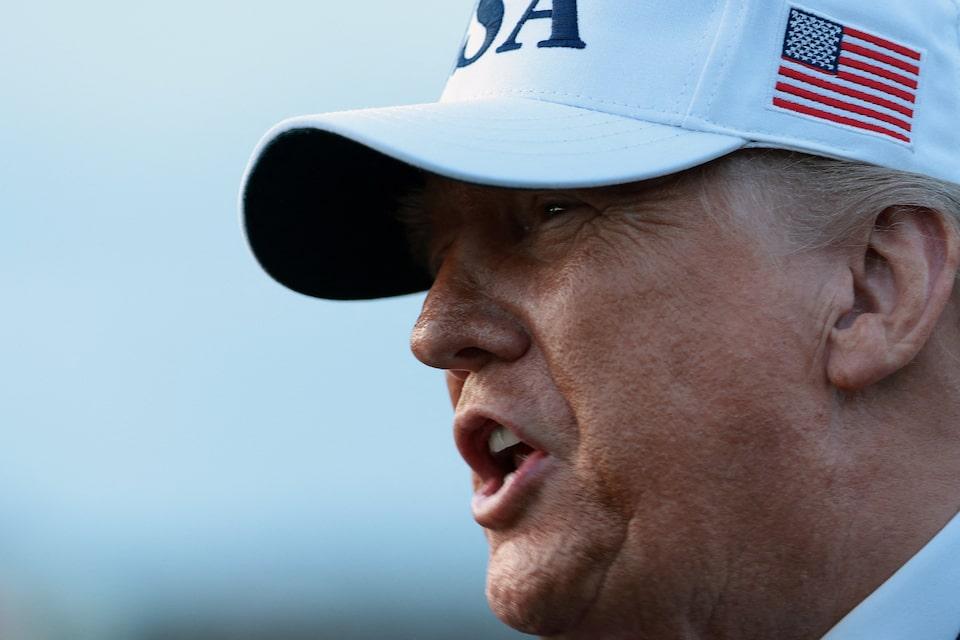
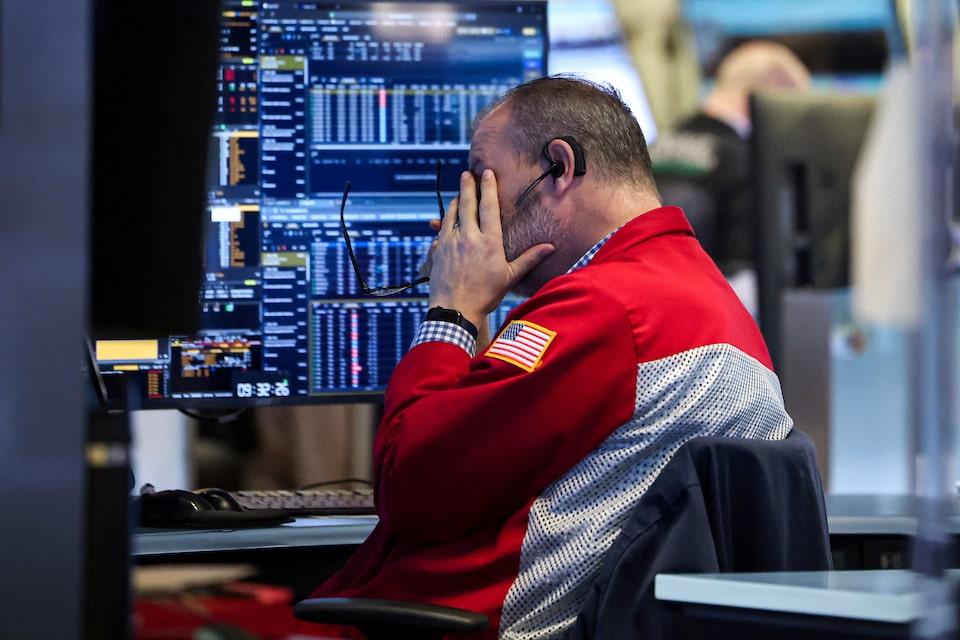
ORLANDO, Florida, Jan 13 (Reuters) - U.S. stocks fell on Tuesday, dragged lower by financials after JPMorgan warned that President Donald Trump's proposed cap on credit rates would harm the economy, while geopolitical tensions triggered a sharp rise in oil and lifted gold to new highs. More of that below. In my column today I look at gold, and why solid central bank demand, coupled with safe-haven buying from investors worried about rising geopolitical tensions, means the only way for the yellow metal right now looks to be up. Sign up here. If you have more time to read, here are a few articles I recommend to help you make sense of what happened in markets today. Today's Key Market Moves Today's Talking Points * Japan FX, bonds crumbling again Japanese government bonds and the yen are back under heavy selling pressure after it emerged that Prime Minister Sanae Takaichi could call a snap election next month to capitalize on her strong public approval ratings since taking office in October. Long-dated JGB yields hit all-time highs, and the yen fell to its lowest against the dollar since July 2024, bringing the 160.00 mark into view. Markets are on high intervention alert. Stocks rose strongly on Tuesday, but a simultaneous bond and FX market selloff is a dangerous mix. * Iran's global ripple Protest and political turmoil in Iran are beginning to ripple strongly across world markets, reflected most notably in the price of oil, energy, and safe-haven gold and precious metals. But with the U.S. mulling strikes on Iran and threatening 25% tariffs on countries doing business with Tehran, all markets are feeling nervy. Oil jumped 3% on Tuesday, lifting Brent and WTI futures to their highest in nearly three months. Brent crude is up nearly 8% so far this month, on track for its best month since September 2023. Gold is up 7% to new highs, and $5,000 doesn't seem that far away now. * U.S. bank report amid Trump controversies The U.S. fourth-quarter earnings season kicked off on Tuesday with Wall Street heavyweights JPMorgan and BNY reporting above-forecast income, but their shares going in opposite directions: JPM -4%, BNY +2%. Banks' earnings calls are likely to be dominated by Trump's controversial proposal to cap credit card rates at 10% for a year, and his administration's threat to indict Fed Chair Jerome Powell. Ready, steady gold! Safety bid adds fuel to cenbank fire Gold and other precious metals recorded eye-watering price spikes in 2025, so it's difficult to imagine them delivering similar returns in 2026. But solid central bank appetite and safe-haven demand could keep their relentless rise on track. With the first month of the year barely at the halfway point, gold and silver have already jumped to new records, up 7% and 20%, respectively, so far in 2026. Platinum is up 15% year to date, and is also close to hitting a fresh high. These moves are all the more remarkable given that gold, platinum, and silver clocked annual gains of 65%, 125% and 145%, respectively, last year. Any notion of investors taking profits - and a breather – evaporated with a blizzard of political, economic, and geopolitical news out of Washington. It brings to mind Vladimir Lenin's apocryphal quote "There are decades where nothing happens; and there are weeks where decades happen." Just last week alone, U.S. President Donald Trump ordered the purchase of $200 billion of mortgage-backed securities, directed U.S. oil giants' activities in Venezuela, attempted to ban defense firms' share buybacks and dividend payments, and put a one-year cap on credit card interest rates, while his Department of Justice threatened to indict Fed Chair Jerome Powell. This is all fuel for gold. The "dollar debasement trade" may be overstated - the greenback has been remarkably stable for months - but the strength of gold and other precious metals suggests there may be some substance to it. This "flight to quality" and inflation-hedging among private investors is complementing central banks' highly inelastic demand for bullion. Reserve managers continue to buy for strategic reasons and diversification, regardless of price. PEDAL TO THE YELLOW METAL To track the phenomenon, look at China. People's Bank of China data last week showed that the central bank bought gold for a 14th consecutive month in December, increasing its holdings over the year by some 28.5 metric tons. That's less than the 44 tons purchased the year before, but still substantial, especially coming amid spot gold's biggest annual price rise since 1979. It helped raise the value of China's gold reserves to $319.45 billion from $191.34 billion the year before. Other central banks are buying too. International Monetary Fund data shows Brazil, Finland, and Turkey were among the biggest buyers late last year, lifting official sector buying above the long-run average. "Clearly, elevated gold prices are not yet detracting from reserve managers' inclination to accumulate gold," Deutsche Bank analysts wrote on Monday. Analysts at State Street agree. Official sector buying is providing a "sticky" source of demand, underscoring a "durable shift" in official sector reserve management away from U.S. Treasuries and toward the yellow metal. This is effectively raising gold's price floor, which State Street suggests is $4,000 an ounce, some way off the record $4,630 per ounce struck on Monday. The ceiling is also climbing, and a test of $5,000 now seems likely. DIRECTION OF TRAVEL NOT IN DOUBT Gold is not included in the IMF's Currency Composition of Official Foreign Exchange Reserves, or COFER data, the global benchmark for FX reserves. Instead, it is found in wider measures of central banks' assets. For that reason, and others such as data reporting transparency, estimating gold's place in official reserves relative to currencies, or other assets like Treasuries, should be done with a fair degree of caution. According to the World Gold Council, gold's share of global FX reserves in October was 25.9%. That compares with the euro's 20% share of reported IMF COFER reserves data, and some analysts also believe that gold's share of reserves overtook Treasuries' portion last year for the first time since 1996. Whatever the accuracy of these claims, there's little doubt about central banks' direction of travel. And in an increasingly volatile world, they won't be reversing course any time soon. What could move markets tomorrow? Want to receive Trading Day in your inbox every weekday morning? Sign up for my newsletter here. Opinions expressed are those of the author. They do not reflect the views of Reuters News, which, under the Trust Principles , opens new tab, is committed to integrity, independence, and freedom from bias. https://www.reuters.com/sustainability/sustainable-finance-reporting/global-markets-trading-day-graphic-2026-01-13/
2026-01-13 21:52
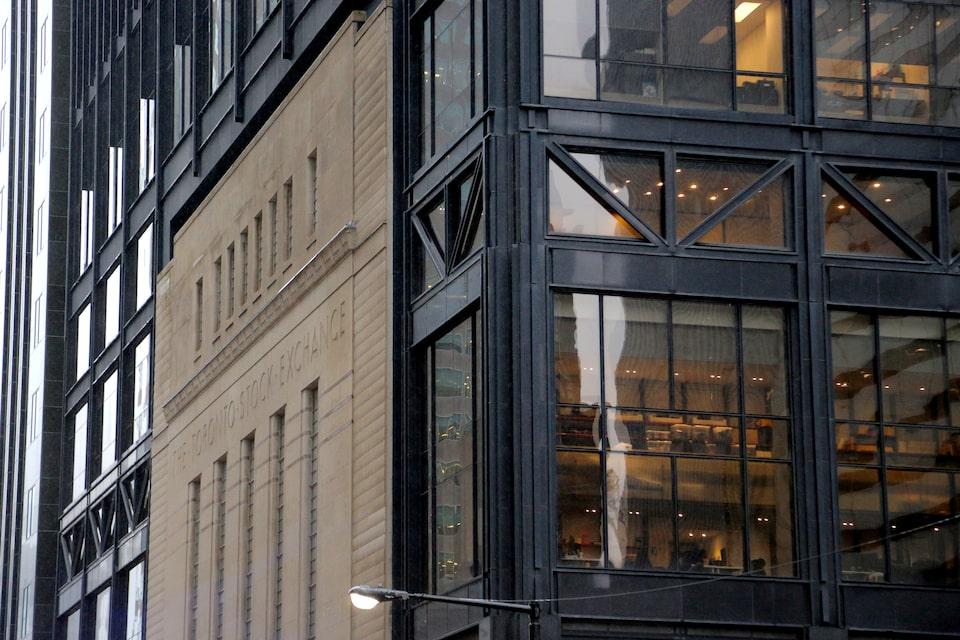
TSX ends down 0.01% at 32,870.36 Financials fall 0.7%, industrials end 0.9% lower Materials group adds 0.9% as gold hits a record high Energy jumps 2.6% as oil settles 2.8% higher Jan 13 (Reuters) - Canada's main stock index inched lower on Tuesday as declines for financial and industrial shares offset safe-haven demand for resource stocks, with the index pulling back from an intraday record high. The S&P/TSX Composite Index (.GSPTSE) , opens new tab ended down 4.34 points, or 0.01%, at 32,870.36, after posting a record closing high on Monday. Sign up here. U.S. stocks posted steeper declines as JPMorgan cautioned that a planned cap on credit‑card rates could hurt the economy. Gold touched a record high as U.S. inflation data cemented bets on Federal Reserve rate cuts this year and geopolitical uncertainties persisted. "The more geopolitical uncertainty you have, in many ways Canada is a decent hedge for that considering a lot of investors hedge geopolitical risk by buying gold and Canada has a lot of exposure to gold stocks," said Ashish Dewan, senior investment strategist at Vanguard. "We could see that narrative continue but we like to focus in on some of the longer-term drivers of returns." Those drivers could include productivity increases for companies that adopt artificial intelligence, including companies in the financial, energy and materials sectors, Dewan said. The materials sector (.GSPTTMT) , opens new tab, which includes metal-mining shares, added 0.9% and the energy sector (.SPTTEN) , opens new tab was up 2.6%. U.S. crude oil futures settled 2.8% higher at $61.15 a barrel as the prospect of disruptions to Iranian crude exports overshadowed possible increased supply from Venezuela. A Canadian tycoon who heads Strathcona Resources Ltd (SCR.TO) , opens new tab, one of North America's fastest-growing oil companies, is advocating for his country to lend its heavy-oil expertise to the United States as it seeks to rebuild Venezuela's oil industry. Industrials (.GSPTTIN) , opens new tab fell 0.9% and heavily weighted financials (.SPTTFS) , opens new tab ended 0.7% lower. https://www.reuters.com/business/tsx-futures-steady-gold-slips-record-high-2026-01-13/
2026-01-13 21:24
NEW YORK, Jan 13 (Reuters) - Workers at BP's (BP.L) , opens new tab refinery in Whiting, Indiana are in contract negotiations with the British oil major, which has proposed changes including job cuts at the 440,000-barrel-per-day facility, the United Steelworkers union said on Tuesday. The local USW union represents around 800 workers at Whiting, the largest refinery in the U.S. Midwest. Sign up here. The union said BP had proposed a series of workplace changes, including cutting more than 200 union jobs in operations, maintenance and environmental safety as well as stripping away some workplace protections. “We want BP to be successful and can show them ways to operate more efficiently. But it cannot come at the expense of the men and women who’ve dedicated their careers to BP’s success,” said Eric Schultz, president of local USW 7-1. The current three-year collective bargaining agreement expires on January 31. A spokesperson at BP declined to comment on ongoing negotiations but said the company is committed to bargaining in good faith. https://www.reuters.com/sustainability/sustainable-finance-reporting/whiting-refinery-workers-begin-contract-negotiations-with-bp-2026-01-13/
2026-01-13 21:18
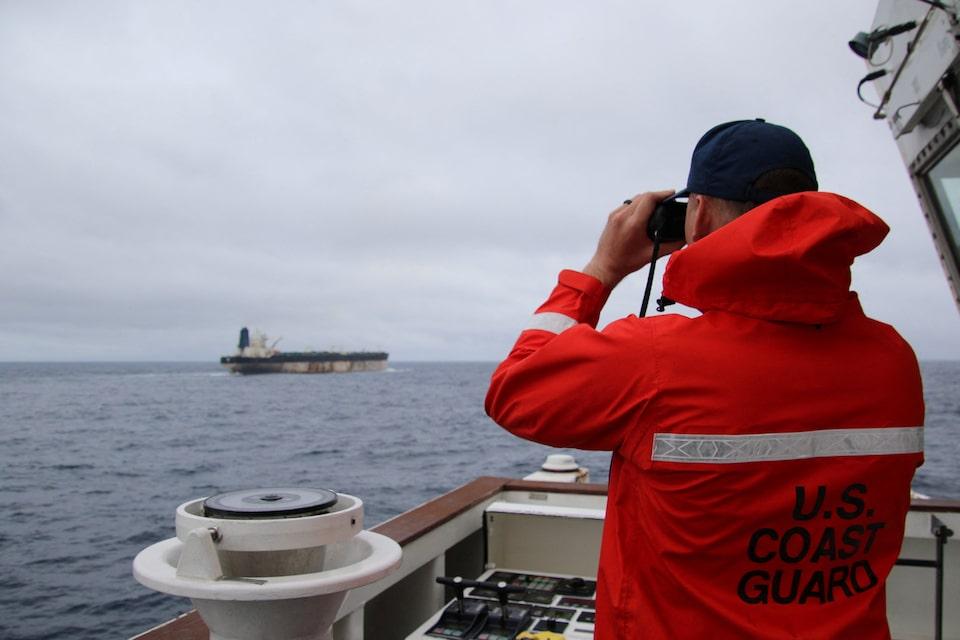
US has seized five sanctioned vessels as it keeps grip on Venezuelan exports More seizures could come, but action paused since Friday Russia, which relies on shadow fleet, has said seizures were illegal LONDON, Jan 13 (Reuters) - The U.S. government has filed for court warrants to seize dozens more tankers linked to the Venezuelan oil trade, four sources familiar with the matter said, as Washington consolidates control of oil shipments in and out of the South American country. The U.S. military and Coast Guard have seized five vessels in recent weeks in international waters that were either carrying Venezuelan oil or have done so in the past. The seizures were part of Washington's campaign to force Venezuelan President Nicolas Maduro out of power that culminated in U.S. forces capturing him on January 3. Sign up here. Since then, the administration of President Donald Trump has said it plans to control Venezuela's oil resources indefinitely as it seeks to rebuild the country's dilapidated oil industry. Trump imposed a blockade to prevent sanctioned tankers from shipping Venezuelan oil in December that brought exports close to a standstill. Shipments have resumed this week under U.S. supervision. ACTIONS ENABLE CONFISCATIONS The U.S. government has filed multiple civil forfeiture actions in district courts, primarily in Washington, D.C., enabling the seizure and confiscation of oil cargoes and ships that have been involved in the trade, the sources told Reuters. They declined to be identified due to the sensitivity of the matter. The exact number of seizure warrants the U.S. has filed for, and how many it has already received, is unclear, the sources said, because the filings and legal orders are not public. Dozens have been filed, they added. The Department of Justice did not immediately respond to a request for comment. The vessels already intercepted were either under U.S. sanctions or part of a "shadow fleet" of unregulated ships that disguise their origins to move oil from key sanctioned producers Iran, Russia or Venezuela. There are still many tankers at sea carrying Venezuelan crude to top buyer China, or that have previously done so. The U.S. has imposed sanctions on many of those vessels for facilitating oil trade with Venezuela or Iran. SEIZURES PAUSED SINCE FRIDAY: SOURCES There has been a pause in U.S. action to seize vessels since Friday, the sources said. Action could resume against vessels and cargoes not authorized by the U.S., they said. The Department of Defense, together with other U.S. agencies, would "hunt down and interdict ALL dark fleet vessels transporting Venezuelan oil at the time and place of our choosing", Pentagon spokesperson Sean Parnell said on Friday on X , opens new tab. The United States has targeted both the vessels and the cargoes on them in recent seizures. That is an escalation from previous seizures of Iranian cargoes between 2020 and 2023, shipping industry sources said. In those earlier cases, U.S. law enforcers confiscated the oil cargo but not the vessel itself. The Department of Justice was "monitoring several other vessels for similar enforcement action", U.S. Attorney General Pam Bondi said on social media on January 7, after the seizure of the Bella-1 tanker, which was empty of any cargo and the first time in recent memory that the U.S. military has seized a Russian-flagged vessel. Russia, like Venezuela, relies on the shadow fleet to carry oil that is under sanctions. Russia's Foreign Ministry described the action as "the illegal use of force" , opens new tab by the U.S. military, adding that the application of U.S. sanctions was "without legal foundation." https://www.reuters.com/business/energy/us-files-warrants-seize-dozens-more-venezuela-linked-oil-tankers-sources-say-2026-01-13/
2026-01-13 21:01
Adam Waterous says Canada's heavy oil expertise could be useful in Venezuela Strathcona willing to send technical team Venezuelan oil revival could affect Canadian crude exports in the long term CALGARY, Jan 13 (Reuters) - A Canadian tycoon who heads one of North America's fastest-growing oil companies is advocating for his country to lend its heavy-oil expertise to the United States as it seeks to rebuild Venezuela's oil industry. The comments by Adam Waterous, one of Canada's most aggressive oil industry dealmakers and the executive chair of Strathcona Resources (SCR.TO) , opens new tab, show a surprising willingness to support U.S. President Donald Trump despite his trade war with Canada and the potential for Venezuelan crude to displace some Canadian oil in the U.S. market. Sign up here. Canada is the world's fourth-largest oil producer. It is the top global producer of heavy crude oil, similar in quality to Venezuelan oil, which it pumps from its oil sands. Waterous said Canada's decades of experience extracting oil sands crude make it uniquely qualified to assist in Venezuela, and gives Canada something to offer Trump ahead of expected trilateral trade talks later this year. "We are better positioned than any country in the world, by far, to help rebuild," Waterous said in an interview. "I would expect, but I don't know, that an offer of assistance would probably be welcome." Strathcona is not looking to invest in Venezuela, Waterous said. But helping to rebuild Venezuela's oil industry is an opportunity for Canada to help the United States at a time when Trump's trade policy has strained relations between the two countries, he said. STRATHCONA WILLING TO SEND TECHNICAL TEAM Trump summoned U.S. oil executives last week to the White House to discuss Venezuela. No Canadian companies attended. "I didn't get invited, and it's not the Canadian industry's role to call Donald Trump and say, 'do you want some help?' But I do think there's an opportunity," Waterous said. Waterous — who attended Harvard University and has U.S. links through former President George W. Bush's son-in-law Henry Hager, who serves as Strathcona's managing director — said he would quickly assemble a technical team from his company to go to Venezuela if asked. "I'm sure there's not a heavy oil company in Canada that would say no," he said. Strathcona is Canada's fifth-largest oil producer, which Waterous — a former banker as well as the founder and managing partner of private equity firm Waterous Energy Fund — built from scratch. The company uses steam-assisted technology to extract heavy oil from its assets in the Cold Lake region of Alberta as well as Lloydminster, Saskatchewan. Known for his aggressive deal-making and outspoken style, the billionaire Waterous shook up Canada's oil patch last year by launching a heated takeover fight for MEG Energy with larger oil sands competitor Cenovus (CVE.TO) , opens new tab. While he was ultimately unsuccessful in purchasing MEG, Waterous later announced he aims to more than double Strathcona's production to 300,000 bpd by 2035 — a rate of growth that would far exceed any of the company's peers. TRADE REVIEW PENDING The Canada-United States-Mexico Agreement, which has shielded much of Canada's exports from U.S. tariffs, is up for joint review this year, and some investors have suggested a potential increase in Venezuelan oil flows to the United States could weaken Canada's leverage. Canadian Prime Minister Mark Carney raised the prospect of reviving the Keystone XL oil pipeline from Alberta to the United States during a meeting with Trump earlier this year as he sought a way to address painful U.S. tariffs on steel, autos and other goods. Waterous said Canada should now try to use its heavy crude expertise. The long-term risk of the U.S. buying Venezuelan crude also increases the need for Canada to diversify its markets and build another pipeline to the Pacific, he said. Canada exports about 90% of its crude to the U.S., but market analysts have suggested a significant increase in Venezuelan heavy crude production would directly compete over time with Canadian barrels refined on the U.S. Gulf Coast. A spokesperson for Canada's natural resources ministry said the ministry had not offered Trump help with Venezuela's oil sector. The discount on heavy Canadian crude to U.S. oil widened by 14% last week, while shares of Strathcona and other Canadian heavy oil producers fell on investor worries about a revival of Venezuela's oil sector. https://www.reuters.com/business/energy/canadian-oil-tycoon-proposes-aiding-us-venezuelas-oil-revival-2026-01-13/