2025-04-02 10:21
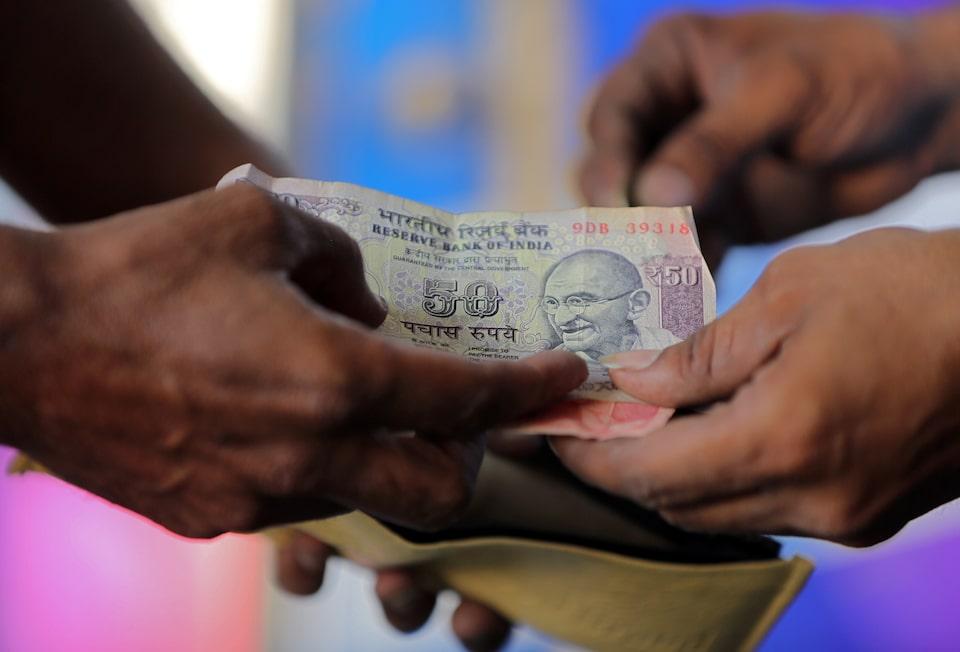
MUMBAI, April 2 (Reuters) - The Indian rupee closed weaker on Wednesday, although dollar sales by foreign banks capped its losses as markets await the announcement of U.S. reciprocal levies that could stoke global trade tensions further and weigh on economic growth. The rupee ended at 85.4975 against the U.S. dollar, down slightly from 85.47 in the previous session. Sign up here. The White House will announce fresh duties on U.S. imports at 2000 GMT, with the tariffs expected to take effect immediately. However, market indicators are signalling that rupee traders are not too bothered by tariff risks. Overnight options are pricing in a 25-30 paisa swing following the announcement, only a tad higher than the rupee's average intraday range of 21 paisa this year so far. The "market expects a lot of bargaining once tariffs are announced," a trader at a Singapore-based hedge fund said. On the rupee, traders are mostly holding small positions heading into the event risk, they added. On Wednesday, the rupee's decline was likely cushioned by foreign portfolio inflows, a salesperson at a large foreign bank said. Asian currencies were mostly rangebound, while the dollar index treaded water around the 104.2 mark. Meanwhile, India's benchmark bond yield declined over 8 basis points to 6.4964% on optimism over rate cuts by the central bank. "All told, we believe the financial markets are under-estimating the scale of action," MUFG Bank said in a note. "A swathe of levies capturing all the major trading partners with a 20%-25% tariff would be seen as most aggressive and likely elicit the biggest risk-off reaction," the note added. In its latest report, the office of the United States Trade Representative highlighted concerns that some of India's import requirements are not internationally aligned, and that some are burdensome or lack clear timelines. (This story has been refiled to correct bond market levels in paragraph 7) https://www.reuters.com/markets/currencies/rupee-closes-modestly-lower-all-eyes-reciprocal-us-tariffs-2025-04-02/
2025-04-02 09:58
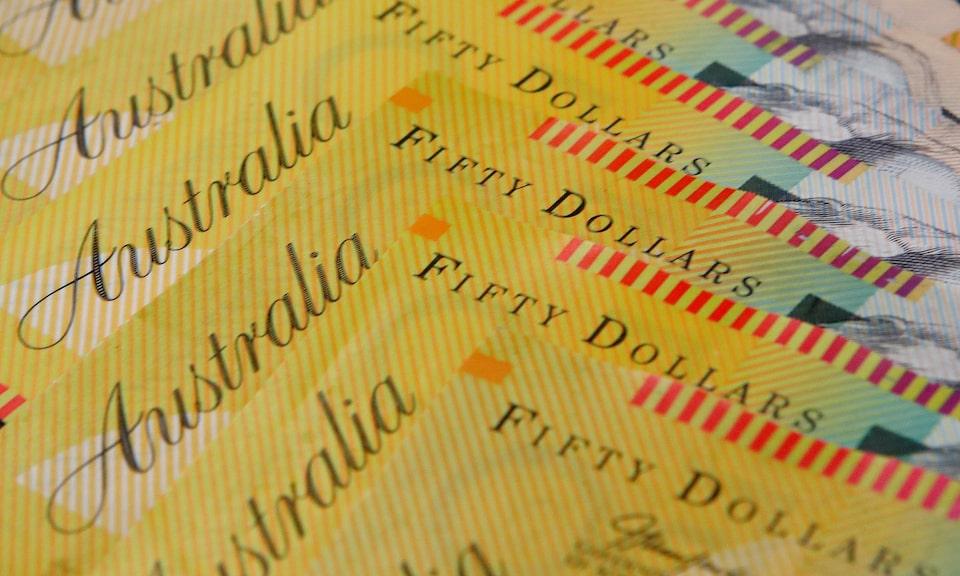
Aussie shrugs off drop in US stocks AUD correlation with risk has slowly declined, according to Westpac AUD/USD volume flatlines as global FX trade increases SINGAPORE/SYDNEY, April 2 (Reuters) - The Australian dollar's surprising resilience in the face of the hit to market sentiment from U.S. tariffs is raising questions whether its long-standing role as a proxy for risk is ending. The Antipodean currency just notched its steadiest quarter for two years, rising almost 2% this year to around 63 cents, even as U.S. shares (.SPX) , opens new tab have dropped more than 4%. Sign up here. The breakdown in that correlation is slowing trade in the Aussie, hurting Australian investors in the U.S., and highlighting how U.S. President Donald Trump is rocking the pillars of financial markets. It is a consequence of an unusual turn in the U.S. dollar, which, says Bank of America currency strategist Oliver Levingston, has shot lower together with stocks for only the third time in 25 years. "It's just not playing its game," said Nick Twidale, chief analyst at online broker ATFX, referring to the Aussie, adding that his firm is seeing a drop in trading volumes of the currency. "It feels like the Aussie has lost its correlation." The Aussie earned its reputation as markets' "risk" proxy from Australia's export profile, since Australia sells the raw ingredients of economic growth: iron ore, coal and gas. Over the four decades the currency has been freely convertible, the expectation that those bellwether exports justify it tracking the global mood has been self-reinforcing and earned it an outsized role in foreign exchange trade. Australia is the 13th-largest economy in the world and its currency is the world's sixth-most traded. Now, according to analysts at Westpac, its relationship with U.S. stocks is weaker than at any time since the pandemic as Trump's trade war accelerates what had been a slow but decade-long decline in the Aussie's relationship with global risk. "Our conjecture is that Trump's presidency has fundamentally rewired the relationship between currencies and equity risk metrics," Westpac's head of foreign exchange, Richard Franulovich, said in a note published on Monday. The other big changes analysts point to in the past decade are the steady growth of Australia's offshore investment portfolio, and a shift in reliance on commodities, with the result that Australia's net international assets have surged. "The country is literally less leveraged to global growth compared to what it used to be, just from the balance of payments perspective," said Lachlan Dynan, foreign exchange strategist at Deutsche Bank in Sydney. CORRELATION SLIPS A risk proxy is a valuable tool, when it works. The Aussie has been an avenue to bet in either direction on the global economy and especially China, since China is Australia's top export market, in a reliably liquid asset widely traded by companies, speculators and investors. Its utility declines, however, as it becomes less a faithful stand-in for risk, sending traders either to seek a substitute or change their expectation for the Aussie's sensitivity. Data from CLS, the largest currency settlement system, shows there may be some move away. AUD/USD trading volume has been flat for four years while volume in nearly every other major pair has been trending higher. "We get interest from clients on cross-market type trades, when they would prefer to invest in Australia as opposed to taking risk in China," said Mark Elworthy, head of fixed income, currencies and commodities trading at Bank of America in Australia. "People are probably not looking for as big a move as they used to, so they're well aware of the change in correlation...so some of the positions are larger than we would normally expect." According to Westpac's research, the correlation between U.S. stocks and the Aussie dollar has fallen from above 0.6 in 2022 to below 0.4. The Aussie's relationship with global risk across equities, commodities, credit and currency markets has been slowly falling since about 2013, Westpac found, which coincided with the beginning of a vast expansion in Australia's offshore assets. Australia's net foreign equity position hit a record A$656 billion ($412.76 billion) at the end of last year, up from around zero a decade earlier and tripling since 2022, Westpac said. The behaviour of a position of that scale in a major crisis is untested, but a possibility is that money flows back to Australia and puts upward pressure on the currency. At the same time, commodity exporters' currencies are also decoupling from commodity markets, according to Huw McKay, former chief economist at BHP and now visiting fellow at the Crawford School of Public Policy at the Australian National University in Canberra. He modelled the Australian dollar against the country's terms of trade - the ratio of export to import prices - adjusted for inflation and interest rates, and found between 1996 and 2019 the Aussie had a correlation of above 0.8, under the model, and that it fell below 0.6 in the period between 2016 and 2023. He is not sure if it is a permanent shift, an aberration, or something in between. But in dealing rooms, traders are not waiting to find out. "You used to see a headline: 'Tariffs come out' and you hit Aussie, or: 'Trump's pulled back on his tariffs,' and you buy," said ATFX's Twidale. "Now (traders) are saying it's just not worth doing." ($1 = 1.5893 Australian dollars) https://www.reuters.com/markets/currencies/aussie-is-losing-its-way-markets-risk-compass-2025-04-02/
2025-04-02 09:53
KAMPALA, April 2 (Reuters) - The Ugandan shilling firmed slightly on Wednesday on the back of slowing dollar demand from merchandise importers and commercial banks, traders said. At 0937 GMT, commercial banks quoted the shilling at 3,642/3,652, compared with Tuesday's closing rate of 3,650/3,660. Sign up here. https://www.reuters.com/markets/currencies/ugandan-shilling-firms-slowing-importer-dollar-demand-helps-2025-04-02/

2025-04-02 07:52
Renewables output grows 17% helped by capacity growth Expects annual adjusted earnings of 155-160 pence per share April 2 (Reuters) - British power generator and network operator SSE (SSE.L) , opens new tab on Wednesday trimmed its guidance for annual adjusted earnings per share, but maintained its long-term profit expectations as it pushes ahead with its renewable energy goals. It said it now expects earnings to be in a range of 155 pence to 160 pence for the 2025 fiscal year, against previous guidance of 154 pence to 163 pence. Sign up here. SSE is poised to profit from Britain's goal to decarbonise its electricity sector by 2030 with rapid expansion in renewable energy generation, such as wind and solar, and major investments in grid connections. The company said it plans to invest around 3 billion pounds ($3.87 billion) in the current year, under its Net Zero Acceleration Programme (NZAP) Plus plan. In fiscal year 2024, SSE said its renewables output grew 9.8% from the previous year. SSE expects renewables output to have grown 17% in the year ended March 31 boosted by an increase in capacity. That is despite of cold spells and stormy weather in Britain that have disrupted its distribution network in recent months. SSE, which last week promoted its chief commercial officer to the chief executive role, reaffirmed its adjusted earnings target of 175 pence to 200 pence per share for the fiscal year ending March 31, 2027. ($1 = 0.7748 pounds) https://www.reuters.com/business/energy/sse-trims-annual-earnings-outlook-expects-renewables-growth-uk-2025-04-02/

2025-04-02 07:47
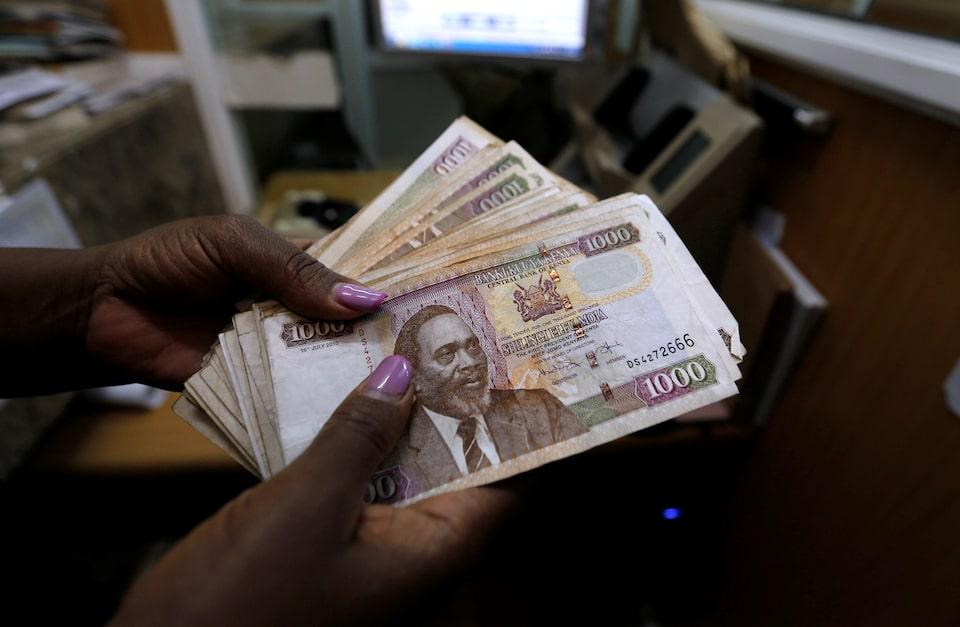
NAIROBI, April 2 (Reuters) - The Kenyan shilling was stable on Wednesday with importer demand for dollars matched by supply, traders said. At 0728 GMT, commercial banks quoted the shilling at 129.00/129.50 per dollar, the same as Tuesday's closing level. Sign up here. https://www.reuters.com/markets/currencies/kenyan-shilling-steady-importer-demand-matches-dollar-supply-2025-04-02/
2025-04-02 07:20
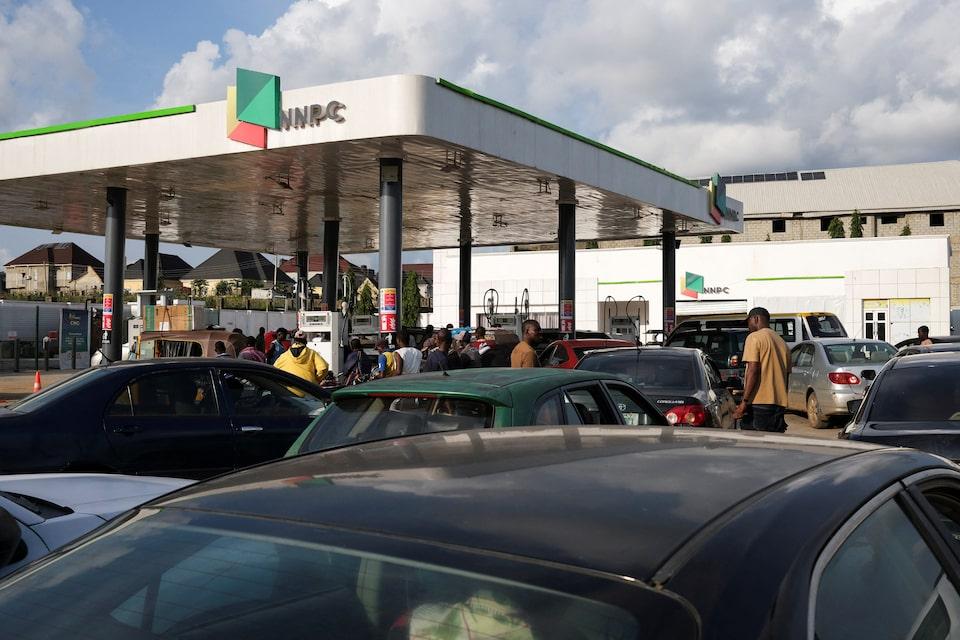
ABUJA, April 2 (Reuters) - Nigerian President Bola Ahmed Tinubu has appointed Bayo Ojulari, a former Shell executive, to head the state-owned oil firm NNPC Ltd as the country seeks to raise oil production and revitalise its refining capacity, the presidency said on Wednesday. Ojulari replaces Mele Kyari, with the appointment effective immediately, presidential spokesman Bayo Onanuga said in a statement. Sign up here. Ojulari was most recently chief operating officer at Nigeria consortium Renaissance Africa Energy Co., which now owns Shell's former onshore subsidiary in the country. Prior to that, he was head of Shell Nigeria's exploration unit. Tinubu also replaced the board of NNPC, appointing a new 11-member team to drive reforms and boost efficiency in the oil sector. https://www.reuters.com/business/energy/nigeria-names-ex-shell-executive-lead-state-oil-firm-nnpc-2025-04-02/