2025-04-02 07:17
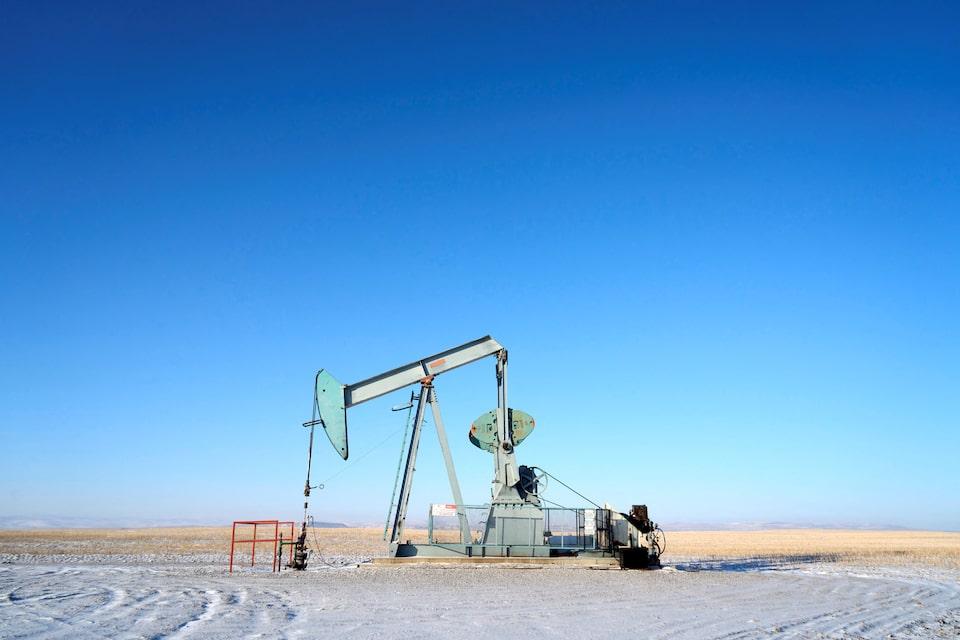
Transneft says loading berth 8 at Novorossiisk is suspended Russia closed two of three berths at CPC terminal Trump has threatened to impose new tariffs on Russian oil Kremlin blames Ukraine for attacks on CPC infrastructure MOSCOW, April 2 (Reuters) - Russia, the world's second-largest oil exporter, on Wednesday imposed restrictions on another major oil export route, suspending a mooring at the Black Sea port of Novorossiisk only a day after restricting loadings from a key Caspian pipeline. Russia produces about 9 million barrels of oil a day, or just under a 10th of global production. Its ports also ship oil from neighbouring Kazakhstan. Sign up here. The restrictions were imposed as U.S. President Donald Trump has said he is unhappy with Russia and the rate of progress in peace talks with Ukraine, and threatened to impose secondary tariffs on buyers of Russian oil. Russia's oil pipeline monopoly Transneft (TRNF_p.MM) , opens new tab said it had suspended a mooring at Novorossiisk for 90 days after a snap inspection by a transport watchdog. The Novorossiisk Commercial Sea Port (NCSP) is one of Russia's largest export outlets and the closure of one mooring is unlikely to affect its operations significantly. "A temporary ban on operations has been imposed on oil loading berth 8. NCSP has been ordered to eliminate all identified violations by June 30, 2025," Transneft said. Industry sources said that Berth 8 at the Sheskharis terminal handles low-sulphur diesel tankers with a deadweight of around 7,000 metric tons, mainly carrying exports to Turkey and Georgia. An industry source also said that the berth is used to deal with small-scale vessels of up to 10,000 tons of oil products. LSEG and industry sources' data showed that the berth handled around 100,000 tons of diesel in January-March. Two of three moorings at a nearby terminal of the Caspian Pipeline Consortium, in which U.S. oil majors Chevron (CVX.N) , opens new tab and Exxon Mobil (XOM.N) , opens new tab hold stakes, were closed on Monday following the regulator's checks. Kremlin spokesman Dmitry Peskov told reporters on a conference call that the restrictions on CPC are related to Ukrainian drone attacks on the infrastructure. Ukraine accused Russia of launching new attacks against its energy facilities. Ukrainian President Volodymyr Zelenskiy said a Russian drone hit an energy substation in Sumy region and artillery fire damaged a power line in Dnipropetrovsk, cutting off electricity to nearly 4,000 consumers. Oil exports via the CPC pipeline have been set at 1.7 million barrels per day, or around 6.5 million metric tons, for April. CPC buyers have said they are waiting for the revised loading programme. Both Kazakhstan and Chevron said on Tuesday that the flows via the pipeline were not interrupted. https://www.reuters.com/business/energy/russias-transneft-suspends-one-oil-loading-berth-novorossiisk-90-days-2025-04-02/

2025-04-02 07:15
April 2 (Reuters) - Indian metals-to-oil conglomerate Vedanta (VDAN.NS) , opens new tab is looking for a global company to partner with on expansion projects worth $20 billion across zinc, aluminium, copper, iron, steel, oil, gas and power, as per a tender document. The billionaire Anil Agarwal-led conglomerate -- set to split into four entities, Vedanta Aluminium, Oil and Gas, Power, Iron and Steel -- had earmarked the funds to invest in metals and mining and hydrocarbons in the next three years. Sign up here. Vedanta did not give specifics for the current tender, which was issued last week. Its current plans include a $2 billion to $2.5 billion investment to expand subsidiary Hindustan Zinc's (HZNC.NS) , opens new tab production. Another unit, Cairn India, has a $5 billion plan to grow its oil output by five-fold, while Vedanta's power business is aiming to double its 5-gigawatt (GW) portfolio and expand into nuclear and power distribution. Vedanta said in February it was looking for partners to build and operate 5 GW of nuclear power for captive use in India. https://www.reuters.com/markets/commodities/indian-conglomerate-vedanta-seeks-global-partner-20-billion-expansion-plan-2025-04-02/

2025-04-02 06:51
MUMBAI, April 2 (Reuters) - The Indian rupee weakened on Wednesday, retreating from a year-to-date peak hit last week, with traders expecting the currency to maintain a downward bias in the run up to sweeping U.S. tariff announcements later in the day. The rupee was at 85.6025 against the U.S. dollar, down nearly 0.2% on day, kicking off a week truncated by local holidays on Monday and Tuesday. Sign up here. While the rupee had rallied to a peak of 85.40 on Friday and outperformed its Asian peers last month, analysts reckon that looming tariffs could turn up the heat on the currency. "We think markets are underpricing the risk of reciprocal tariffs on India ... think the risk-reward for USD/INR skews higher from current levels," MUFG Bank said in a note. The bank expects the rupee to weaken to 86.80 in the April-June quarter. Trump has flagged April 2 as "Liberation Day" for his most ambitious actions on trade yet, which could upend more than half a century of global trade norms. Reciprocal tariffs on countries that impose duties on U.S. goods would take effect immediately after Trump announces them, while a 25% tariff on auto imports will take effect on April 3, according to a White House official. The rupee could also face headwinds in the latter half of Wednesday on account of anticipated dollar outflows, a senior trader at a Mumbai-based bank said. The trader reckons that the could weaken to 85.75 and a negative surprise on U.S. tariffs could open up room to a fall towards 86.50. The dollar index was steady 104.2 while Asian currencies were mostly rangebound on Wednesday. While tariffs remain the focus for markets this week, U.S. labour market data, due on Friday, will also be key to gauge how trade policy changes impact the world's largest economy. https://www.reuters.com/markets/currencies/rupee-retreats-year-to-date-peak-us-reciprocal-tariffs-looms-2025-04-02/
2025-04-02 06:50
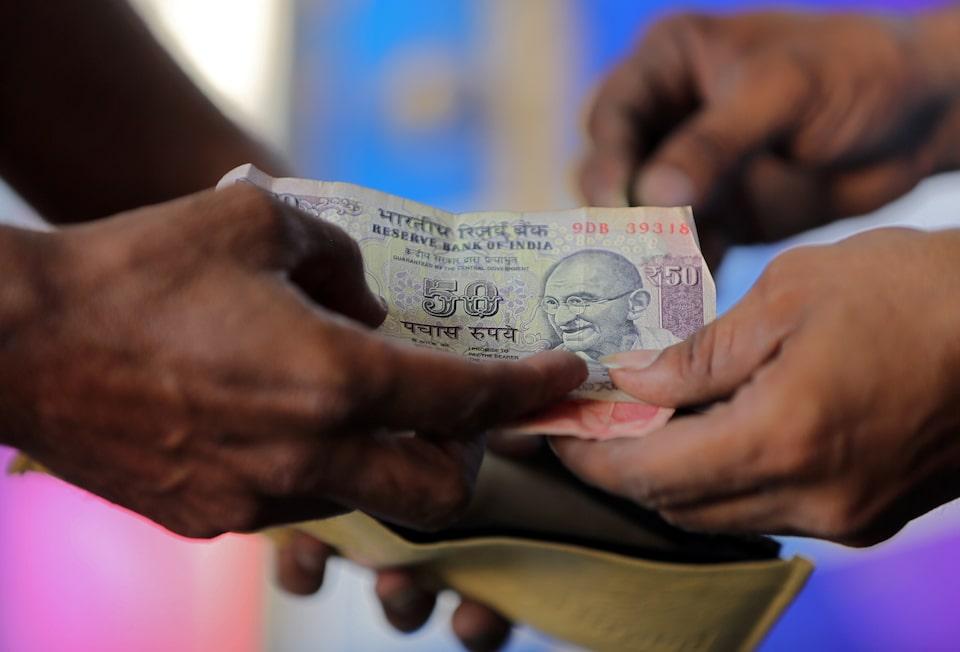
MUMBAI, April 2 (Reuters) - The Indian rupee is not expected to see sharp swings following U.S. President Donald Trump's expected reciprocal tariff announcement on countries including India, multiple market indicators showed. The dollar/rupee spot rate, hedging costs, and option volatility suggest that rupee traders are relatively sanguine about the risks from the upcoming tariff announcement, which investors fear could intensify a global trade war. Sign up here. While the rupee would be vulnerable to the headline risk around the tariffs, BofA Global Research expects limited impact over the medium-term. India will be more resilient to Trump's tariffs than other emerging markets, driven by constructive domestic factors, according to J.P. Morgan Private Bank. "We see a bottoming of economic momentum in sight," said Alex Wolf, head of Asia investment strategy at J.P. Morgan Private Bank. A sharp slowdown in economic growth had weighed on Indian stocks and prompted foreign investors to pull out, hurting the rupee. RUPEE NEAR YEAR-TO-DATE HIGH The rupee has rallied about 2% against the U.S. dollar over the last two weeks, wiping off its year-to-date accumulated losses and significantly outperforming to its Asian peers. The Indian currency hit a year-to-date high of 85.40 last Friday and was quoting at 85.6050 at 11:00 a.m. IST on Wednesday. HEDGING COST AT MULTI-MONTH LOW The cost of hedging the rupee - reflected in one-month forward points in both the non-deliverable forward and onshore markets - has been subdued in the lead up to Trump's announcements. If rupee traders were concerned about the impact of the tariff plans, increased hedging activity would have driven forward points higher. OPTIONS MARKET Options market data indicates that the cost of placing bearish bets against the Indian rupee, relative to bullish wagers, has decreased to a multi-month low, while short-term volatility expectations are relatively low. The notional value of over-the-counter dollar-rupee (USD/INR) options traded in the U.S. was also muted heading into Trump's announcement. https://www.reuters.com/markets/currencies/indian-rupee-traders-unfazed-by-looming-us-tariff-risks-market-data-shows-2025-04-02/
2025-04-02 06:40
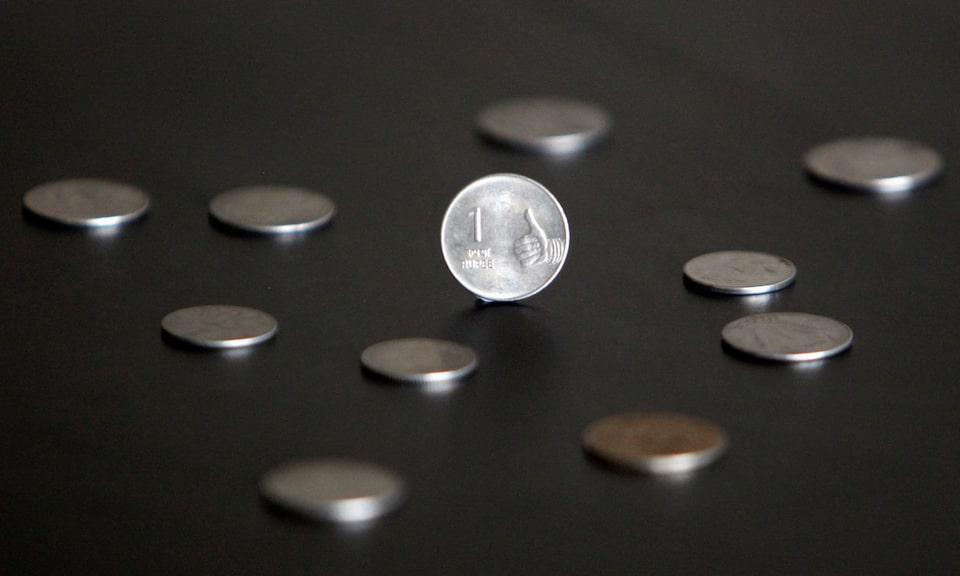
China shows footage it says is of live-fire rocket drills China gives war games which started on Tuesday a code name Taiwan detects more than 10 warships in its 'response zone' China says aircraft carrier also involved in drills U.S. condemns China's actions BEIJING/TAIPEI, April 2 (Reuters) - China's military held long-range live-fire drills in the East China Sea on Wednesday in an escalation of ongoing drills around Taiwan, saying it was practicing precision strikes on port and energy facilities but with no details on the exact location. The exercises follow a rise in Chinese rhetoric against Taiwan President Lai Ching-te, who China called a "parasite" on Tuesday, and come on the heels of U.S. Defense Secretary Pete Hegseth's Asia visit, during which he repeatedly criticised Beijing. Sign up here. China, which views democratically governed Taiwan as its own territory, has repeatedly denounced Lai as a "separatist". Lai, who won election and took office last year, rejects Beijing's sovereignty claims and says only Taiwan's people can decide their future. China's Eastern Theatre Command said that on Wednesday as part of the Strait Thunder-2025A exercise its ground forces had conducted long-range live-fire drills into the waters of the East China Sea, though it did not give an exact location. "The drills involve precision strikes on simulated targets of key ports and energy facilities, and have achieved desired effects," it said, without elaborating. Taiwan's benchmark stock index (.TWII) , opens new tab briefly slipped into the red after the announcement, but closed up 0.1%. China's Maritime Safety Administration announced late Tuesday a closed zone for shipping due to military drills until Thursday night in an area off the north part of the eastern province of Zhejiang, more than 500 km (310 miles) from Taiwan. A senior Taiwan defence official told Reuters that was outside Taiwan's "response zone". China's military published a video it said was of the live fire drills that showed rockets, rather than ballistic missiles, being launched and hitting targets on land, and an animation of explosions over Taiwanese cities including Tainan, Hualien and Taichung, all home to military bases and ports. The words "Control energy corridors, disrupt supply routes, block clandestine routes to docks" then appear on the screen. The aircraft carrier Shandong also took part in drills, to the east of Taiwan, focused on integrated operations between naval and air forces and "multi-dimensional blockade and control", China's military said. Taiwan has denounced China for holding the drills. A senior Taiwan security official told Reuters there were more than 10 Chinese warships in Taiwan's "response zone" on Wednesday morning, and that China's coast guard was participating with "harassment" drills. Taiwan's defence ministry, detailing China's movements over the past 24 hours on Wednesday morning, said 76 aircraft and 15 warships were involved. China's recent pressure against Taiwan also included a call last week for people to email reports about separatist activity. Chiu Chui-cheng, head of Taiwan's China-policy making Mainland Affairs Council minister, said that given the rising risk of visiting China, people should carefully consider whether they need to go, including to Hong Kong and Macau. WAR GAMES China had not formally named Tuesday's drills. China called two rounds of major war games last year around the island Joint Sword-2024A and Joint Sword-2024B. Chinese state television said Tuesday's activities were not part of Strait Thunder-2025A, hence they did not have that name, and cited a military expert as saying this demonstrated the armed forces' ability to adapt to rapidly evolving combat situations. China's widely read Global Times, published by the ruling Communist Party's official People's Daily, said advanced equipment had been used, pointing to pictures from the military showing YJ-21 air-launched ballistic missiles slung under H-6K bombers. The H-6K is an extended-range strike aircraft, while the YJ-21 is an advanced anti-ship weapon. H-6 aircraft, some of which are capable of carrying nuclear weapons, have been involved in past drills around Taiwan, and also spotted over the disputed South China Sea. Previous Chinese war games have also practiced precision strikes and blockading the island. Taiwan has not reported any travel disruptions because of the drills. Taiwan's state refiner, CPC Corp, told Reuters that liquefied natural gas imports had been unaffected. The United States, Taiwan's most important international backer and main arms supplier despite the lack of formal diplomatic ties, condemned the exercises. "Once again, China's aggressive military activities and rhetoric toward Taiwan only serve to exacerbate tensions and put the region's security and the world's prosperity at risk," the U.S. State Department said in a statement. Japan and the European Union also expressed concern. "The EU has a direct interest in the preservation of the status quo in the Taiwan Strait. We oppose any unilateral actions that change the status quo by force or coercion," an EU spokesperson said. Taiwan has lived under the threat of Chinese invasion since 1949 when the defeated Republic of China government fled to the island after losing a civil war with Mao Zedong's communists, though the two sides have not exchanged fire in anger for decades. https://www.reuters.com/world/asia-pacific/china-drills-around-taiwan-continue-gives-them-code-name-strait-thunder-2025-04-02/
2025-04-02 06:31
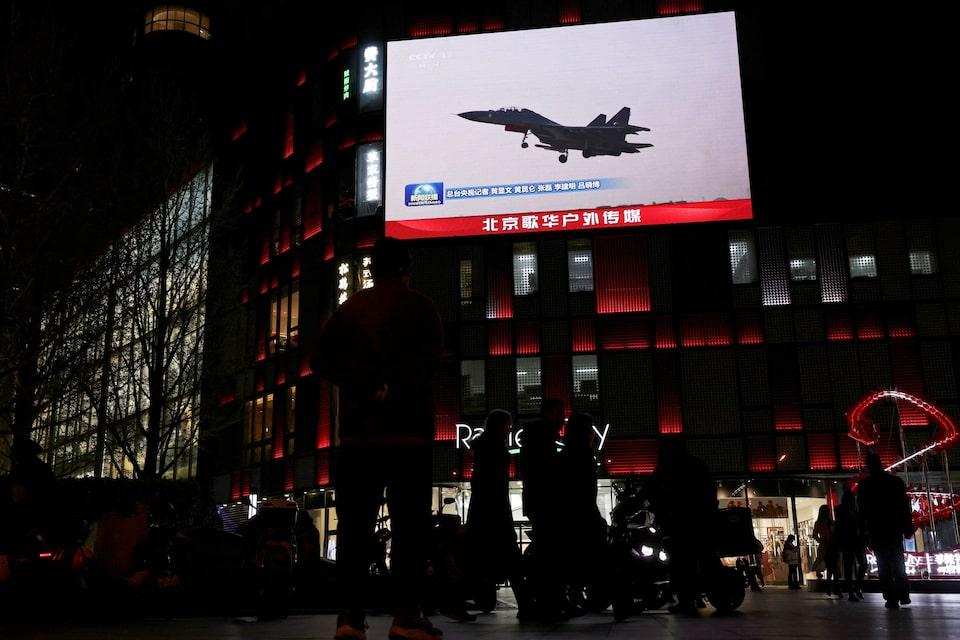
Concerns remain over how tariffs will be implemented US crude inventories post large build, EIA data shows Some analysts warn of bearish impact on oil prices Markets await word on any secondary Russian oil tariffs NEW YORK, April 2 (Reuters) - Oil prices fell to negative territory after rising by a dollar in post-settlement trade on Wednesday as U.S. President Donald Trump announced reciprocal tariffs on trading partners, stoking concerns that a global trade war may dampen demand for crude. Brent futures settled 46 cents higher, or 0.6%, at $74.95 a barrel, while U.S. West Texas Intermediate crude futures gained 51 cents, or 0.7%, to settle at $71.71. Sign up here. U.S. futures rose by a dollar and then turned negative, along with the Brent contract, over the course of Trump's press conference on Wednesday afternoon in which he announced tariffs on trading partners including the European Union, China and South Korea. For weeks Trump has touted April 2 as "Liberation Day," bringing new duties that could rattle the global trade system. A chart listing countries and tariffs that Trump showed during his announcement did not detail tariffs on Canada and Mexico. However, USMCA-compliant goods from Mexico and Canada, including oil, would remain exempt from the tariffs, a senior official told Reuters. Canada supplies some 4 million barrels per day of its crude oil to the United States. Trump's tariff policies could stoke inflation, slow economic growth and escalate trade disputes, possibilities that have limited oil price gains. "Crude prices have paused last month's rally, with Brent finding some resistance above $75, with the focus for now turning from a sanctions-led reduction in supply to Trump's tariff announcement and its potential negative impact on growth and demand," said Ole Hansen, head of commodity strategy at Saxo Bank. Comments from Mexico eased some worries about a trade war between the two countries after Mexican President Claudia Sheinbaum said on Wednesday that Mexico does not plan to impose tit-for-tat tariffs on the United States. "Oil is selling off a little on the news, and it could introduce some additional trade and economic uncertainties, but I think people were worried it would be more extreme," said Josh Young, chief investment officer at Bison Interests following Trump's tariff announcement. Trump has also threatened to impose secondary tariffs on Russian oil, and on Monday he toughened sanctions on Iran as part of his administration's "maximum pressure" campaign to cut its exports. Adding to the complex global supply picture, Russia, the world's second-largest oil exporter, on Wednesday imposed restrictions on another major oil export route, suspending a mooring at the Black Sea port of Novorossiisk a day after restricting loadings from a key Caspian pipeline. Russia produces about 9 million barrels of oil a day, or just under a tenth of global production. Its ports also ship oil from neighbouring Kazakhstan. Meanwhile, investors on Wednesday shrugged off mostly bearish U.S. government crude inventory data. U.S. crude inventories posted a surprisingly large build of about 6.2 million barrels last week, Energy Information Administration data showed. "The report was bearish in my view, with larger crude inventories and total petroleum inventories rising," UBS analyst Giovanni Staunovo said. "But the market took it as neutral, as the crude build is driven by a sharp increase in Canadian crude imports, likely ahead of the fear of the introduction of new tariffs." https://www.reuters.com/business/energy/oil-prices-steady-market-awaits-fresh-us-tariffs-2025-04-02/