2025-04-01 21:32
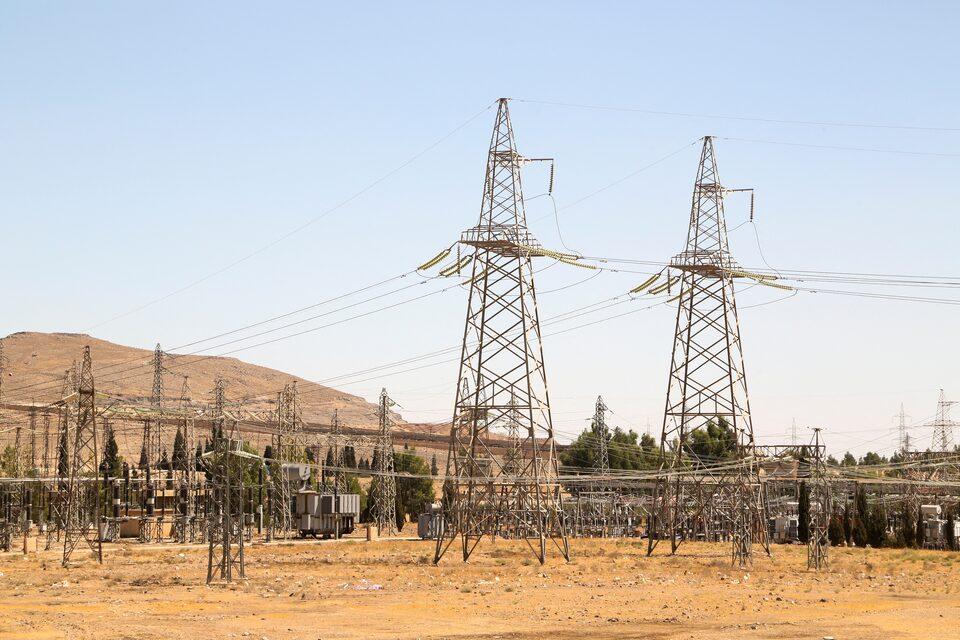
Some 500,000 cubic meters were exported on Tuesday Tripartite agreement includes TotalEnergies, YPFB and Matrix Energia Supply can be interrupted during winter when demand in Argentina is higher RIO DE JANEIRO/BUENOS AIRES, April 1 (Reuters) - Argentina has for the first time exported gas from its Vaca Muerta shale formation to Brazil using a set of Bolivian pipelines, in a deal between TotalEnergies (TTEF.PA) , opens new tab, Bolivia's YPFB and Matrix Energia, the Brazilian company said on Tuesday. Companies from Bolivia, Argentina and Brazil have negotiated deals for over a year, trying to secure a long-term route for Argentina's gas to reach one of Latin America's most important gas markets, Brazil. Sign up here. Some 500,000 cubic meters were exported through the Bolivian pipeline on Tuesday, sources familiar with the matter said. "The objective of the unprecedented operation is to ensure the technical viability of the logistics network," Matrix said in a statement. Contracts were signed between Total's Argentina unit and Matrix, and between Bolivia's state-run YPFB and Matrix for a tripartite operational agreement. A major hurdle was Bolivia's initial reluctance to charge a tolling fee for the use of its infrastructure, preferring a solution that would see it buy gas from Argentina and then resell to Brazil. But negotiations improved in recent months, with several possible supply contracts identified, sources told Reuters. The pipeline has for years carried key supplies of Bolivian gas to both Brazil and Argentina, but as Bolivia's own gas output dwindles, volumes exported have declined, creating the need for new suppliers and transportation solutions. The arrival of Vaca Muerta gas in Brazil is a win for Brazil's President Luiz Inacio Lula da Silva, who has put providing cheaper gas to the country's industry as a priority. If exports are sustained, they would also represent a triumph for Argentina, whose gas output is growing under President Javier Milei's market-friendly policies, opening a new source of revenue for the country, which until recently had a deficit in its energy trade balance. The agreement includes a spot contract, so supply to Brazil can be interrupted during winter when demand in Argentina is higher, one of the sources told Reuters. Bolivia's YPFB did not immediately respond to a Reuters request for comment. Brazil's oil giant Petrobras (PETR4.SA) , opens new tab, another possible buyer of the gas from Vaca Muerta, is seeking contracts to import liquefied natural gas (LNG) in coming years while negotiating supplies via pipeline from Argentina, a company executive said last month. "I think that there is a real possibility to make some deal," said Mauricio Tolmasquim, Petrobras' former chief of energy transition, referring to talks to receive Argentine gas through Bolivia. "We are talking about what price we need that can be accepted by most parties," he added. https://www.reuters.com/business/energy/argentina-starts-gas-exports-through-bolivia-brazil-firm-says-2025-04-01/
2025-04-01 21:06
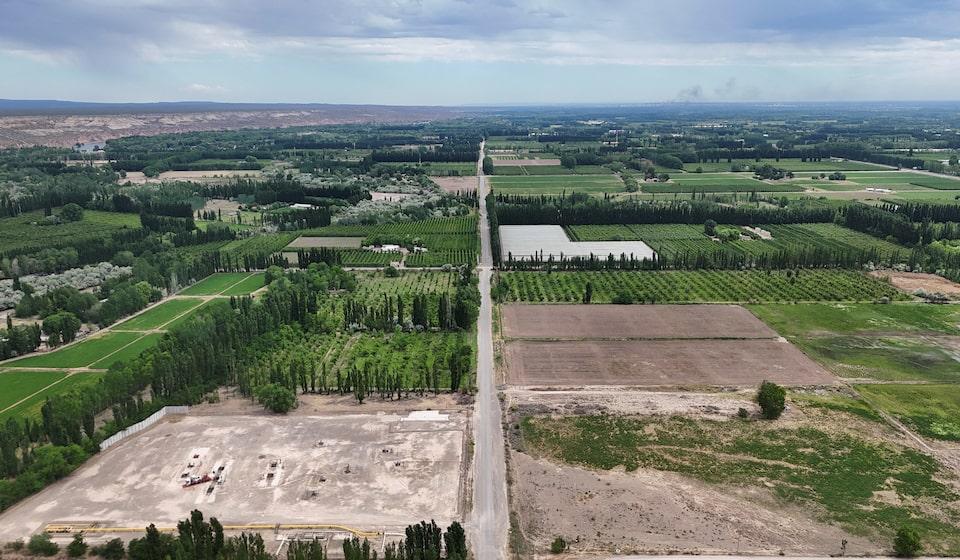
ORLANDO, Florida, April 2 (Reuters) - Only 24 hours until Trump unveils new tariffs The first trading day of the quarter on Tuesday was a nervy affair ahead of U.S. President Donald Trump's "Liberation Day" on Wednesday, with markets struggling for clear direction as Trump's new trade barriers loomed into view. Sign up here. Stocks mostly rose but U.S. Treasury yields tumbled, while gold and the dollar broadly held steady. Talking of the greenback, I will dig deeper into the IMF's latest FX reserves data below, but first, here are the scores on the doors from Tuesday's trading around the world. Today's Key Market Moves. The specter of Trump's new tariffs on Wednesday has sucked the oxygen out of world markets in recent weeks, and despite the generally positive performance on Tuesday, anyone hoping life will be injected back into them once the announcement is made is setting themselves up for disappointment. There's simply too much uncertainty and too little visibility around how the new tariffs will work, how long they will be in place, what exemptions or concessions there may be, how other countries will react, and what the implications will be for specific sectors, markets and asset classes. To paraphrase former U.S. Defense Secretary Donald Rumsfeld, that's a lot of known unknowns, and a fair sprinkling of unknown unknowns too. That fog of uncertainty won't lift on Wednesday, and indeed, is more likely to thicken - hardly the conducive environment for investors, consumers and businesses to get spending. An announcement has been scheduled for 4 p.m. Eastern Time (2000 GMT) on Wednesday, and it wouldn't be surprising if investors try to maintain a holding pattern across markets until then as best they can. The longer term dilemma they and policymakers face was encapsulated in a couple of U.S. economic indicators on Tuesday that showed manufacturing slipping back into contraction, and a measure of factory gate inflation jumping to the highest in nearly three years. Stagflation risks are rising, markets are skittish, and the common denominator is Trump's tariff agenda. Japanese stock futures point to the benchmark Nikkei 225 index rising around 0.4% at the open on Wednesday, a pretty small bounce considering the index had plunged 4% on Monday. Dollar's record low FX reserves share not all bad news for Trump In January, U.S. President Donald Trump warned the so-called BRICS nations against replacing, or backing any currency to take the place of, the "mighty U.S. dollar." While the International Monetary Fund's latest foreign exchange reserves data for the fourth quarter of last year suggests central banks around the world continue to pull away from the greenback, there may be a silver lining for the president. The IMF's Currency Composition of Official Foreign Exchange Reserves (Cofer) data, the gold standard for FX reserves information, show that countries have been gradually chipping away at their dollar holdings and diversifying for years. Indeed, the greenback's nominal share of official FX reserve holdings in the third quarter of last year fell to a record low 57.3% from over 72.0% in 2001. That crept up slightly to 57.8% in the fourth quarter, a rare rise, but the dollar surged 7.6% against a basket of major currencies in the period, its biggest quarterly appreciation in nearly a decade. All else equal, this reduces the dollar value of reserves held in non-dollar currencies such as the euro, sterling, or Japanese yen. When adjusting for these FX changes, the dollar's share of reserves slid to a record low of 54.1% from 55.3%, according to Goldman Sachs. At the start of the millennium, that share was over 71%. Importantly, the Cofer figures only go up to December 31, so do not take into account any reserve shifts made amid the historically high policy uncertainty and market ructions of recent months. With military, diplomatic and trade ties going back decades now fraying at an alarming rate, reserve managers are bound to be rethinking their FX allocations. And that is unlikely to involve a sudden re-discovered love for the dollar. STILL NUMBER ONE Reserve managers do not typically make knee-jerk reactions to market gyrations or the headlines du jour. They're a cautious breed, prioritizing liquidity, stability and long-termism over yield, opportunity and a fast buck. But further diversification of their FX reserves can hardly be considered an impulsive reaction, as the trend is pretty well entrenched. The emergence of any new world order in the coming years would likely only strengthen it. No matter how you slice it, the dollar's overwhelming dominance in global FX reserves is weakening. But that doesn't mean the greenback's place as the world's preeminent reserve currency is under threat. Its share is not being eaten up by its nearest rival, the euro, but by a bunch of smaller, "nontraditional" reserve currencies such as the Korean won, Australian and Canadian dollars, and China's renminbi. "It's not just diversification out of the dollar. Euro reserve holdings have fallen in nominal and valuation-adjusted terms as well," notes Goldman's Michael Cahill. This is a trend that has been underway for years, taking hold just after the Global Financial Crisis and accelerating again after the pandemic. The Cofer data shows the aggregate share of "nontraditional" currencies in central banks' FX reserves was 12.6% in December, just off September's record high of 12.7%. Before 2009, that share had never exceeded 3%. The euro's share since its launch more than 25 years ago has never fallen below 19% and only once, in late 2020, has it exceeded 21%. Any reduction in the difference between the dollar and euro shares has been caused by reserve managers shunning the greenback rather than taking a shine to the euro. Their preference to build up holdings of several smaller currencies has created a somewhat curious equilibrium. The dollar is seeing its dominance gradually diminish, but it's in little danger of losing its role as the world's sole reserve currency. Trump, who seems to want the dollar to remain dominant while no longer sucking in so much of the world's savings, may be happy with that. What could move markets tomorrow? If you have more time to read today, here are a few articles I recommend to help you make sense of what happened in markets today. I'd love to hear from you, so please reach out to me with comments at [email protected]. You can also follow me at [@ReutersJamie and @reutersjamie.bsky.social.] Opinions expressed are those of the author. They do not reflect the views of Reuters News, which, under the Trust Principles , opens new tab, is committed to integrity, independence, and freedom from bias. Trading Day is also sent by email every weekday morning. Think your friend or colleague should know about us? Forward this newsletter to them. They can also sign up here. https://www.reuters.com/markets/global-markets-trading-day-2025-04-01/

2025-04-01 21:05
April 1 (Reuters) - Energy services provider EnerSys (ENS.N) , opens new tab said on Tuesday it would close its flooded lead-acid battery manufacturing facility in Mexico and shift production to an existing plant in the United States. The announcement comes as U.S. President Donald Trump prepares to impose reciprocal tariffs on countries that impose duties on U.S. goods, starting on April 2, which he has dubbed as a "Liberation Day". Sign up here. The closure of its Monterrey facility in Mexico and the subsequent transition of production to its plant in Richmond, Kentucky would result in a pre-tax charge of about $20 million, which would be recorded in the first half of 2025. The restructuring is expected to deliver an estimated pre-tax benefit of $19 million annually, beginning fiscal year 2027, EnerSys added. "(The transition) will enable us to optimize our cost structure, maximize near-term IRC 45X tax benefits, and mitigate future risks associated with potential tariffs while reinforcing our commitment to strengthen domestic industrial security," said Shawn O'Connell, chief operating officer. O'Connell is set to assume the role of chief executive officer in May. https://www.reuters.com/business/energy/enersys-closes-mexico-facility-moves-production-us-2025-04-01/

2025-04-01 20:58
Leaders, staff fired at FDA veterinary medicine center Lab employees test pet food for bird flu Cutbacks also threaten testing of raw milk cheese April 1 (Reuters) - The Trump administration has fired staff who were working on the U.S. Food and Drug Administration's bird flu response as part of its mass layoffs at the Department of Health and Human Services, according to the American Veterinary Medical Association and a source familiar with the situation. The Tuesday firings, which many employees learned of as they attempted to enter office buildings and were denied access, are part of the administration's effort to shrink the federal government. Sign up here. Health Secretary Robert F. Kennedy Jr. has said he will fire 10,000 people across the agencies under the health department. Among those fired were leadership and administrative staff at the FDA's Center for Veterinary Medicine, according to the source. The FDA did not respond to a request for comment. An employee at the Center for Veterinary Medicine said almost all the administrative staff were terminated, along with staff on the policy, legal and external communications teams. Managers were also eliminated in the office of the center's director, said the employee, who recently took part in a deferred resignation program that reduced the government's headcount. The American Veterinary Medical Association wants to work with the U.S. Congress and the administration to restore key positions eliminated within the health department, President Sandra Faeh said. Department cutbacks affected offices dealing with bird flu, animal and human food safety, and other issues, she said. The FDA center's Veterinary Laboratory Investigation and Response Network tests pet food for bird flu. The FDA has issued raw pet food recalls after detecting bird flu contamination that was linked to the deaths of house cats. The laboratory program office told staff in an email sent on Tuesday that job cuts at the center "may cause significant challenges and delays," according to a copy of the email seen by Reuters. While staff of the laboratory network were not cut, the axing of leadership and administrative staff will bring its operations to a halt, a source said. Kristy Pabilonia, executive director of clinical diagnostics for Colorado State University's Veterinary Health System, said she has relied on the center to take reports of cat infections that could be linked to pet food. "It keeps me up at night thinking that there would be a chance that I wouldn't have someone to report to," she said. The cuts are also likely to significantly disrupt efforts under way to develop bird flu testing infrastructure for aged artisan raw milk cheese, said Keith Poulsen, a veterinarian and director of the Wisconsin Veterinary Diagnostic Laboratory who has been involved in the effort. Federal health officials have warned against the consumption of raw milk, which can carry a host of pathogens, because of the bird flu outbreak. Nearly one thousand U.S. dairy cattle herds have been infected with the virus over the past year. Kennedy has been a proponent of raw milk. Coordinating bird flu testing through the national lab network is critical to tracking and managing the virus' spread, Poulsen said. "You chop off the head of the leadership, and now we have to reinvent that wheel. That's not in our best interest," he said. Bird flu has killed nearly 170 million chickens, turkeys and other birds in an ongoing outbreak that began in 2022 and has driven egg prices to all-time highs. Prices have dipped somewhat in recent weeks amid a lull in new infections and increased imports. https://www.reuters.com/business/healthcare-pharmaceuticals/trump-health-layoffs-include-staff-overseeing-bird-flu-response-source-says-2025-04-01/
2025-04-01 20:39
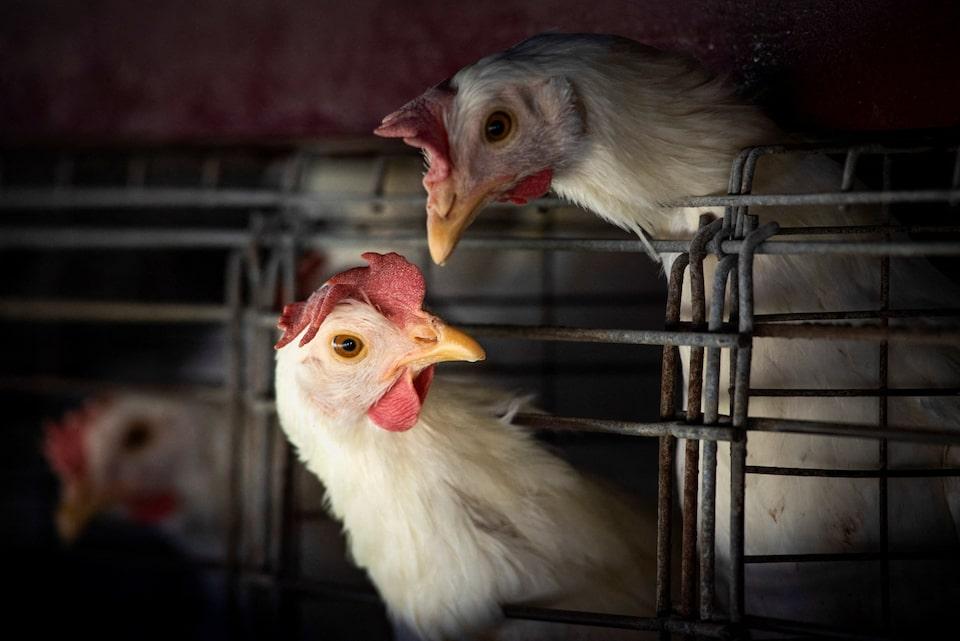
SAO PAULO, April 1 (Reuters) - Brazil's Petrobras (PETR4.SA) , opens new tab is looking at an auction that will contract energy from batteries for the country's electric sector "as a possibility" for the company to develop business in the area, an executive at the state-run oil firm said on Tuesday. According to Battery and New Technologies manager Clarissa Palu, Petrobras has started to look at research and projects in the stationary energy storage and electric mobility segments, and could post a bid during the upcoming auction. Sign up here. Brazil is planning an auction for energy storage solutions that could happen in the second half of this year, but there is still no set date for it to take place. https://www.reuters.com/business/energy/brazils-petrobras-looks-power-auction-batteries-possible-opportunity-2025-04-01/
2025-04-01 20:36
DAMASCUS, April 1 (Reuters) - Syria suffered a nationwide power outage on Tuesday night due to malfunctions at several points in the national grid, a spokesperson from the energy ministry told Reuters. The spokesperson said technical teams were addressing the issues. Sign up here. The power returned to the provinces of Homs, Hama and Tartous and will gradually return to the rest of the governorates, the state news agency SANA quoted the director general of the public establishment for transmitting and distributing electricity as saying later in the day. Syria suffers from severe power shortages, with state-supplied electricity available for only two or three hours a day in most areas. Damage to the grid means that generating or supplying more power is only part of the problem. Damascus used to receive the bulk of its oil for power generation from Iran, but supplies have been cut off since Islamist Hayat Tahrir al-Sham led the ouster of Tehran-allied former president Bashar al-Assad in December. The former interim government under President Ahmed al-Sharaa has pledged to quickly ramp up power supply, partly by importing electricity from Jordan and using floating power barges. Damascus also said it will receive two electricity-generating ships from Turkey and Qatar to boost energy supplies. https://www.reuters.com/world/middle-east/nationwide-power-outage-syria-due-malfunctions-energy-ministers-spokesperson-2025-04-01/