2026-01-13 21:01
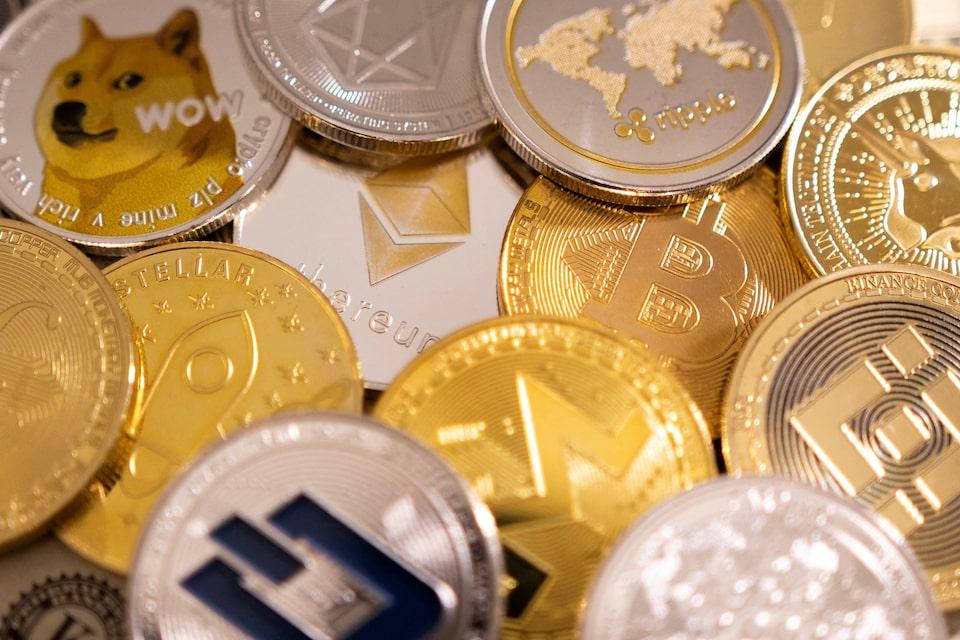
Bill aims to clarify crypto tokens as securities or commodities Banking industry opposes bill, citing financial stability concerns Crypto firms fear reliance on regulatory guidance without new law Jan 13 (Reuters) - U.S. senators late on Monday unveiled draft legislation that would create a regulatory framework for cryptocurrency which, if signed into law, would clarify financial regulators' jurisdiction over the burgeoning sector, potentially boosting digital asset adoption. The crypto industry has long pushed for such legislation, often arguing it is existential to the future of digital assets in the U.S. and necessary to fix core, longstanding problems for crypto companies. Sign up here. Among other things, the legislation would define when crypto tokens are securities, commodities or otherwise, giving the industry long-hoped-for legal clarity. It would also give the U.S. Commodity Futures Trading Commission - the industry's preferred regulator, as opposed to the U.S. Securities and Exchange Commission - authority to police spot crypto markets. The bill also gives the banking industry a fix it had sought stemming from legislation signed into law last year to create a federal regulatory framework for dollar-pegged crypto tokens called stablecoins. Bank lobbyists had urged Congress to close what they deemed a loophole in the bill that allowed intermediaries to pay interest on stablecoins. Banks have argued this would lead to a flight of deposits from the insured banking system, potentially threatening financial stability. Crypto companies have fought back against that assertion, contending that prohibiting third parties, such as crypto exchanges, from paying interest on stablecoins would be anti-competitive. "What is threatening progress is not a lack of policymaker engagement, but the relentless pressure campaign by the Big Banks to rewrite this bill to protect their own incumbency," said Summer Mersinger, CEO of the Blockchain Association, a crypto industry trade group. "Their demands to eliminate stablecoin rewards are designed to choke off consumer choice and kill innovative financial products before they can compete." Monday's bill, which could change as senators consider amendments, prohibits crypto companies from paying interest to consumers solely for holding a stablecoin. However, it allows crypto companies to pay rewards or incentives to customers for certain activities, such as sending a payment or participating in a loyalty program. The SEC and the CFTC would also be required to issue a joint rule requiring clear disclosures from crypto companies about rewards paid in connection with using stablecoins. 'CRYPTO PRESIDENT' The Senate Banking Committee is scheduled to debate the bill and consider possible amendments on Thursday. The Senate Agriculture Committee, which is writing its own version of the bill, will meet later this month to discuss its version. In a statement, Cody Carbone, CEO of crypto industry trade group The Digital Chamber, said it was "encouraging to see the process continue to move forward." "We will remain actively engaged to improve the text as the bill continues to evolve and are encouraged by the continued momentum to advance a market structure bill this year," he said. Trump courted industry cash pledging to be a "crypto president," and his family's own crypto ventures have helped to propel the sector into the mainstream. The industry spent heavily in the 2024 elections to promote pro-crypto candidates in the hopes of getting this landmark market structure bill across the line. The House of Representatives passed its version of the bill in July, but talks stalled in the Senate last year, with lawmakers divided over provisions on anti-money-laundering and requirements for decentralized finance platforms, which allow crypto users to buy and sell tokens without an intermediary, according to three sources familiar with discussions. With Congress already pivoting to focus on the 2026 midterm elections, in which the Democrats could take the House, some lobbyists are skeptical that the crypto market structure bill could make it into law. That would leave crypto firms to rely on regulatory guidance that could be overturned under a future administration, industry executives have said. https://www.reuters.com/legal/transactional/us-senators-introduce-long-awaited-bill-define-crypto-market-rules-2026-01-13/
2026-01-13 20:53
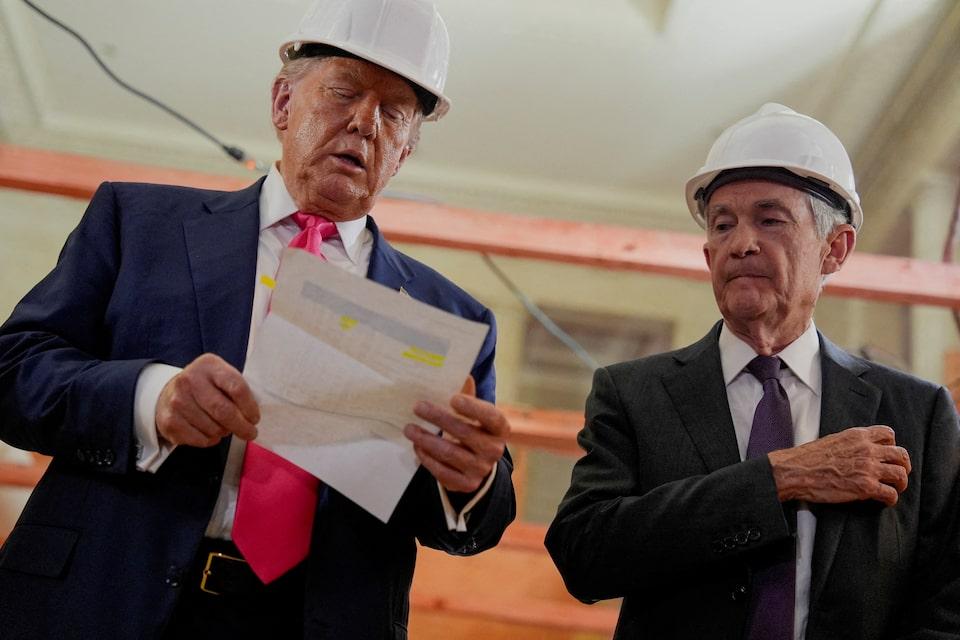
Concerns over Fed independence and U.S. institutional stability persist Investors consider diversifying beyond U.S. due to Fed probe Fed's autonomy questioned as investors seek higher risk premium for U.S. assets NEW YORK, Jan 13 (Reuters) - The criminal investigation into the Fed chair has reinforced the case for diversifying holdings beyond the United States for some investors as they worry about the ongoing independence of the central bank, even though many saw the move against Jerome Powell as an opening shot that could end up being more bark than bite. News of the Department of Justice's criminal probe raised the specter of the Sell USA trade for investors — a strategy of reducing exposure to U.S. assets amid concerns about American economic, political, or institutional stability that was much discussed in the wake of last year's tariffs, although it failed to gain traction. Sign up here. Still, market reaction so far has been muted, as the action drew a sharp rebuke from Powell, who called it a "pretext" to influence interest rates, along with condemnation from former Fed chairs and lawmakers threatening to block Trump's Fed nominees. Global central bank chiefs and top Wall Street CEOs have also lined up in support. "We maintain a favorable view on international diversification, and this event reinforces that stance," said Seth Meyer, global head of client portfolio management and portfolio manager at Janus Henderson. Tom Graff, chief investment officer at Facet in Phoenix, Maryland, said that a weaker Fed would be worse for long-term bonds and the dollar. "We added to non-U.S. equities in December and have been underweight longer-term bonds for the last year, so I feel we are well positioned here," said Graff, although he did not see weight gathering behind a "Sell USA" type trade. The move marked the latest escalation in President Donald Trump's campaign against Powell, whom he has repeatedly criticized for failing to cut interest rates more quickly. While global financial markets may have taken the latest developments in its stride - the dollar slipped modestly while U.S. Treasury yields were little changed since the announcement - some strategists said there could be a longer-term impact. "It could be one of these things that happens very slowly, glacially for years and then suddenly very quickly," said Colin Graham, head of multi-asset strategies at Robeco in London. "At the moment they might not be changing, but as the cumulative risk grows, then you will see people deciding they want to go elsewhere," Graham said. THE SELL AMERICA WORRY Investors saw a glimpse of how sharply markets could react to reduced appetite for U.S. assets during last year's tariff-induced volatility, following years of robust inflows into American securities. While the so-called 'sell-America' trade did not pan out to the extent some market participants had feared, some investors worry that the perceived attack on the Fed could revive that kind of a move. "U.S. equities, and the dollar could come under pressure, as global investors demand a higher risk premium for U.S. assets," Janus Henderson's Meyer said. While several factors continue to underpin the case for U.S. asset allocation, including resilient economic growth, declining inflation pressures, and the momentum of AI-related capital investments, questions about Federal Reserve autonomy persist as a source of investor unease. Concerns about Fed independence "is going to give investors another excuse to diversify out of dollars," said Thierry Wizman, global FX and rates strategist at Macquarie. The concerns over Fed independence come as investors are already grappling with questions about U.S. fiscal credibility, with the episode adding to broader anxieties about American institutional stability that have periodically surfaced in credit markets. Fitch Ratings said on Monday it views the Federal Reserve's independence as a key supporting factor for its AA+ U.S. sovereign rating. NUMB TO SHOCK Market reaction was muted in part because investors have grown accustomed to sweeping and sharp changes in policy by the Trump administration, investors said. In July last year, markets briefly tumbled amid reports that Trump would fire Powell, then rebounded after he said he was "highly unlikely" to do so. Over time, the market appears to have adapted to a higher degree of policy uncertainty, investors said. "The shock factor that comes with the geopolitical and policy uncertainty is reducing," Olumide Owolabi, senior portfolio manager at Neuberger Berman, said. Still, that does not rule out markets reacting negatively in the future. "The risk is that Trump could push too far on this," said Charles Myers, chairman of advisory firm Signum Global Advisors. https://www.reuters.com/business/trump-probe-fed-chair-stresses-need-global-diversification-2026-01-13/
2026-01-13 19:33
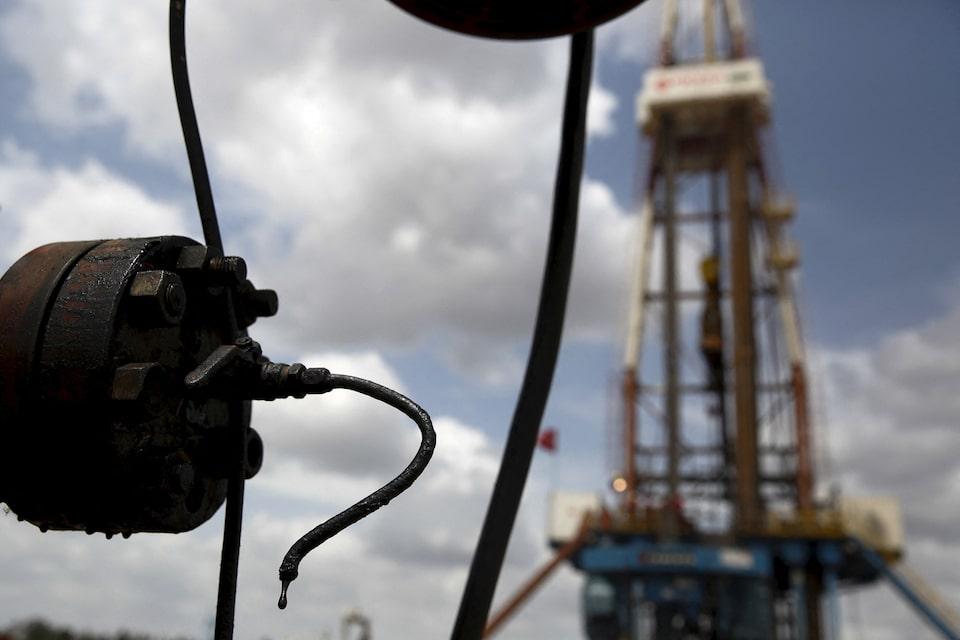
Third tanker departed on Tuesday signaling a Bahamas terminal as destination Oil output fell to some 880,000 bpd last week, from 1.16 million bpd in late Nov PDVSA execs organizing meetings, engaged in audit Jan 13 (Reuters) - Venezuela's state energy company PDVSA has begun reversing oil production cuts made under a strict U.S. oil embargo as crude exports resume under U.S. supervision, three sources close to operations said on Tuesday. The OPEC member's oil exports fell close to zero in the weeks after the United States imposed a blockade on oil shipments in December, with only U.S. oil major Chevron (CVX.N) , opens new tab exporting crude from its joint ventures with PDVSA under U.S. license. Sign up here. The embargo left millions of barrels stuck in onshore tanks and vessels. As storage filled, PDVSA was forced to shut wells and order oil production cuts at joint ventures in the country. The state company is now instructing the joint ventures to resume output from well clusters that were shut as a third oil tanker set sail from Venezuela's coast on Tuesday. The mood at many of PDVSA's offices and operational sites has rapidly changed since the company said it was progressing in negotiations with the U.S. that are expected to bring much-needed investment into oilfields and facilities, the sources said. Some company executives are rushing to arrange meetings with foreign oil executives about production, exports, power supply and business opportunities, while others are engaged in an internal audit ordered by the company's board following a cyberattack last month that knocked down PDVSA's central system. Venezuela's overall crude output fell to some 880,000 barrels per day (bpd) last week, from 1.16 million bpd in late November, according to production figures from consultancies that independently track Venezuelan oil output. The country's main oil region, the Orinoco Belt, saw a reduction to some 410,000 bpd compared with 675,000 bpd in late November, according to the figures. SUPERTANKERS DEPART Two supertankers had departed Venezuelan waters late on Monday carrying about 1.8 million barrels each of crude in what may be the first shipments of a 50-million-barrel supply deal between Caracas and Washington to get exports moving again in the wake of the U.S. capture of Venezuelan President Nicolas Maduro. PDVSA has yet to confirm that the supply deal for the 50 million barrels has been finalized. The state company had worked to prevent deeper output reductions that might be difficult to reverse, given that production facilities at some oilfields are dilapidated due to lack of maintenance. PDVSA and the White House did not immediately reply to requests for comment. LSEG ship-tracking data showed that the vessels on Tuesday were heading north from Venezuela's coast to the Caribbean, where many oil companies including traders, producers and refiners lease storage tanks. One of the ships was signaling the South Riding Point terminal in the Bahamas as its destination. PDVSA AUDIT The PDVSA audit is expected to lay the groundwork for further assessments on short-term plans and required investment to reanimate oil output, refining, storage and commercialization. The study could lead to proposals from PDVSA as part of Trump's ambitious $100 billion reconstruction plan for Venezuela's oil industry, the sources said. PDVSA has not fully recovered its systems from the cyberattack that temporarily paralyzed some of the company's activities and forced it to slow down oil shipments and domestic fuel distribution, the sources said. Global trading houses Trafigura and Vitol last week obtained U.S. licenses to negotiate and trade Venezuelan oil cargoes, an early win in the fierce competition between energy companies to secure Venezuelan barrels. The trading companies have not disclosed the volume of exports they are entitled to, but refiners in the U.S. and in countries including India and China have begun negotiations to buy cargoes from the traders or through tenders that have yet to be organized. https://www.reuters.com/business/energy/venezuela-begins-reopening-wells-recover-crude-output-sources-say-2026-01-13/
2026-01-13 19:22
HOUSTON, Jan 13 (Reuters) - Parties representing Venezuela in a court-ordered auction of the parent of Venezuela-owned Citgo Petroleum have requested a U.S. court of appeals to vacate a ruling by a judge that ordered the sale of the shares to an affiliate of Elliott Investment Management, the board that supervises the refiner said on Tuesday. Between late November and early December, Delaware Judge Leonard Stark approved a $5.9 billion bid from Elliott's affiliate Amber Energy for Citgo's parent, PDV Holding, following two years of bidding rounds in a sale organized to pay up to $19 billion to creditors for debt defaults and expropriations in Venezuela. Sign up here. The sale order has triggered opposition from rival bidders and parties representing Venezuela, its state-owned oil company PDVSA and subsidiaries PDV Holding and Citgo Petroleum, which resorted to the U.S. Court of Appeals of the Third Circuit. The court has not made a decision. The sale is pending execution until the U.S. Treasury Department greenlights the transaction. The Treasury's Office of Foreign Assets Control was expected to submit an opinion on the case last week before the court of appeals, but it has not. A Treasury spokesman declined to comment on specific action, and said the department was "fully committed to supporting President Trump's efforts on behalf of the people of Venezuela." As U.S. President Donald Trump moves quickly to put together a $100 billion effort to revive Venezuela's oil industry after capturing President Nicolas Maduro, Washington has yet to finalize the fate of Citgo, the crown jewel of the country's foreign assets, as conflicting parties increase lobbying efforts to influence the U.S. course of action. The Venezuelan parties had introduced a motion to disqualify Amber's bid over alleged conflict of interest, which was dismissed in Delaware. The board supervising Citgo said in a release on Tuesday that the auction was tainted by conflicts of interest and legal errors, which undermined the neutrality required in the process and reduced Citgo's value. The board will continue to exercise defenses to protect the company, it added in the release. https://www.reuters.com/legal/litigation/venezuela-asks-us-court-appeals-vacate-sale-order-citgos-parent-2026-01-13/
2026-01-13 19:15
Proposal undercuts states power to review projects EPA: rule would speed energy, AI projects Environmentalist: bad for health and safety WASHINGTON, Jan 13 (Reuters) - The Trump administration on Tuesday proposed a rule revising Biden-era pollution protections for waterways, a move the Environmental Protection Agency said would speed permitting of energy and artificial intelligence infrastructure. The proposed rule would revise a 2023 rule by former President Joe Biden's administration on Section 401 of the Clean Water Act that gave states and tribes authority to protect waterways in their reviews of projects like pipelines and power plants requiring federal permits. Sign up here. Biden's rule replaced a rule from President Donald Trump's first administration that limited the ability of states and tribes to block or force changes in the projects. Jess Kramer, the EPA assistant administrator for water, told reporters the 2023 revision was "fundamentally flawed and it's inefficient and ineffective." Kramer said Biden's revision led to lengthy certification timelines. The proposed rule, Kramer said, will lead to predictable permitting that would "unleash American energy dominance" and support emerging artificial intelligence infrastructure. The 2023 rule had been praised by conservationists and environmental justice groups concerned about pollution effects on waterways and communities depending on them. "Trump wants to allow fossil fuel companies to pollute our air and water with impunity, regardless of the consequences for our health or safety," Cathy Collentine, a Sierra Club official, said in a release about the proposal. Kramer said the proposed rule will ensure that Section 401 is "not weaponized by states to shut down projects for political purposes." It would set timelines and standardize approaches that states and tribes use in water quality certifications that are required before the federal government issues project permits, the EPA said. It was the latest move by Trump's environmental agency to roll back Biden-era environmental rules while supporting development of energy including fossil fuels. The Biden administration had already narrowed the rule in August 2023 after the U.S. Supreme Court ruled 9-0 to limit the regulatory reach of the EPA on the rule, after many farmers and landowners had slammed the agency for what they called regulatory overreach. The proposed rule will undergo a 30-day comment period and the EPA hopes to finalize the rule in the spring, Kramer said. https://www.reuters.com/legal/litigation/trump-proposes-revision-biden-tweak-clean-water-rule-2026-01-13/
2026-01-13 19:08
SANDEFJORD, Norway, Jan 13 (Reuters) - Norway's Equinor (EQNR.OL) , opens new tab aims to settle the technical plans this year for developing the Wisting undersea oil discovery in the Arctic after significantly reducing its costs, a senior company executive told Reuters on Tuesday. Equinor and its partners put development of Wisting, which is in the Barents Sea about 300 km (190 miles) off Norway's northern coast, on hold in 2022. The world's northernmost oilfield is estimated to hold 500 million barrels of crude, but costs ballooned to more than 100 billion Norwegian crowns ($10 billion). Sign up here. Since then, the partnership has worked to reduce the costs and make the development profitable. "The current plan is to have a concept selection this year and then to sanction it next year," Kjetil Hove, Equinor's head of Norwegian operations, told Reuters on a sidelines of an energy conference. "We have improved the project significantly, but there is still work to be done," he said. Equinor was able to reduce the costs by changing the project's concept, including the floating production, storage and offloading (FPSO) vessel. Originally, the field was to be developed with a circular shaped FPSO, similar to one used at Vaar Energi's (VAR.OL) , opens new tab Goliat field, but Equinor has now instead opted for a traditional ship design expected to cost less. Equinor has also reduced the number of wells and subsea installations needed to produce the field, Hove said. Equinor and Aker BP (AKRBP.OL) , opens new tab each have a 35% stake each in the Wisting licence, while Norway's state-owned Petoro has 20% and Japanese INPEX Idemitsu (1605.T) , opens new tab the remaining 10%. ($1 = 10.0824 Norwegian crowns) https://www.reuters.com/business/energy/equinor-hopes-finalize-technical-plan-worlds-northernmost-oilfield-after-cutting-2026-01-13/