2025-04-01 20:28
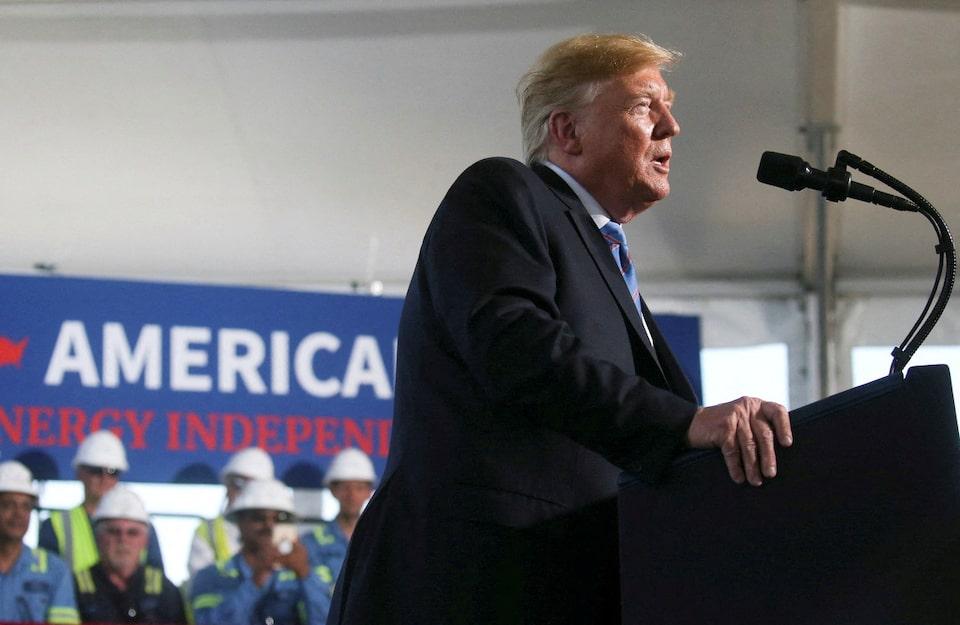
April 1 (Reuters) - The Trump administration on Tuesday took a key step toward leasing new areas to a North Dakota coal mine that is proposing to operate through 2045. WHY IT MATTERS The publication of a draft environmental analysis of new lease areas for North Dakota's Freedom Mine is aligned with President Donald Trump's goal to increase U.S. fossil fuel production and revive the use of coal to produce electricity. Sign up here. But the country's electricity supply from coal, which was once the primary source of U.S. electricity, has dropped to about 16%, giving way to the rise of cheaper natural gas operations and renewable energy. BY THE NUMBERS Freedom Mine, owned by a division of NACCO Industries (NC.N) , opens new tab, produces between 11.5 million and 13.5 million tons of lignite coal annually in Mercer County, North Dakota. The company requested to lease tracts that cover 1,350 acres and contain about 24 million tons of mineable coal. The mine's owner was not immediately available for comment. KEY CONTEXT Freedom Mine supplies coal to power plants owned by the Basin Electric Power Cooperative and first applied to lease the new areas in 2019. The company filed an emergency application, which would require that a portion of the coal in the new lease areas be mined within three years. The leases are made up of private surface lands and a mixture of federal and privately owned subsurface coal. WHAT'S NEXT The Bureau of Land Management will seek public input on the leasing proposal through May 2. The agency, a division of the Interior Department, is considering a range of options, including leasing less acreage. The company's mining plan modification must be approved by Interior's assistant secretary for land and minerals. https://www.reuters.com/markets/commodities/trump-administration-weighs-new-coal-leases-north-dakota-mine-2025-04-01/
2025-04-01 20:26
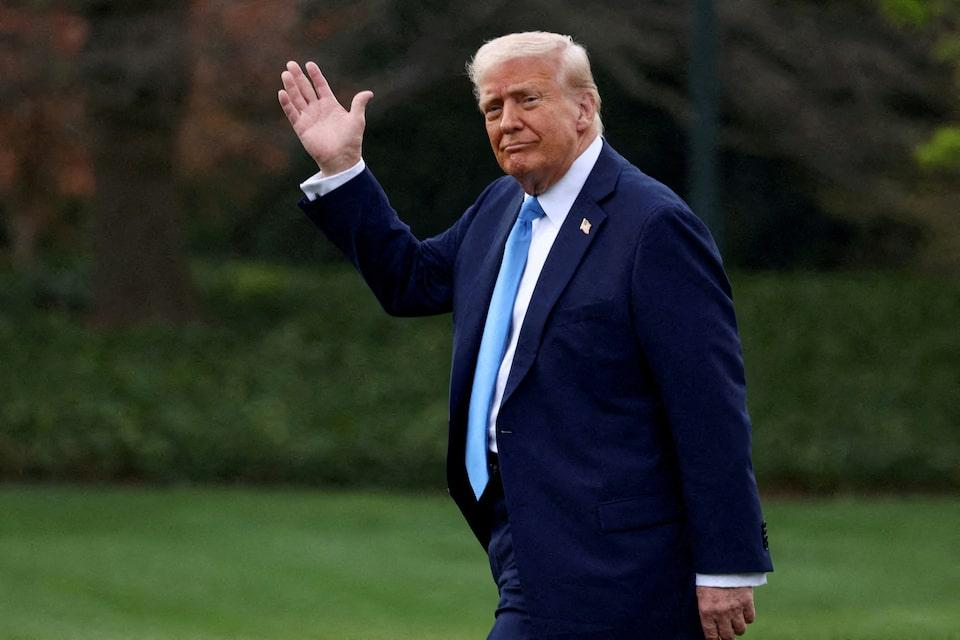
WASHINGTON/Houston, April 1 (Reuters) - The U.S. is slated on Wednesday to rescind a policy issued by the administration of former President Joe Biden that requires liquefied natural gas, or LNG, projects to export within seven years of receiving regulatory approval. The LNG industry had pushed the administration of President Donald Trump to rescind the policy statement issued in April 2023 on Department of Energy approvals for exports to big markets in Europe and Asia because several projects require more than seven years to complete. Sign up here. "Henceforth, DOE will consider applications to extend an authorization holder’s export commencement deadline and grant such extensions for good cause shown on a case-by-case basis, an approach consistent with DOE’s practice prior to the issuance of the Policy Statement," said a document slated to be published in the Federal Register on Wednesday. Tala Goudarzi, principal deputy assistant secretary of the Office of Fossil Energy and Carbon Management, said the Biden administration had made it unnecessarily difficult for projects to obtain and maintain an authorization to export LNG to non-free-trade-agreement countries. Pipeline operator Energy Transfer (ET.N) , opens new tab in 2023 filed for a new export license for its proposed 16.45 million metric tons per annum Lake Charles LNG facility in Louisiana, after the DOE denied its request for a three-year extension to its old one, saying it did not meet the criteria. Energy Transfer was not immediately available for comment. Fred Hutchison, president and CEO of LNG Allies, a trade group, called the previous deadline policy inflexible and said the new policy marked a return to regular order. "We are grateful that a commonsense approach has returned to the U.S. LNG export process," Hutchison said. https://www.reuters.com/business/energy/us-axe-biden-era-7-year-deadline-exports-lng-projects-2025-04-01/
2025-04-01 20:22
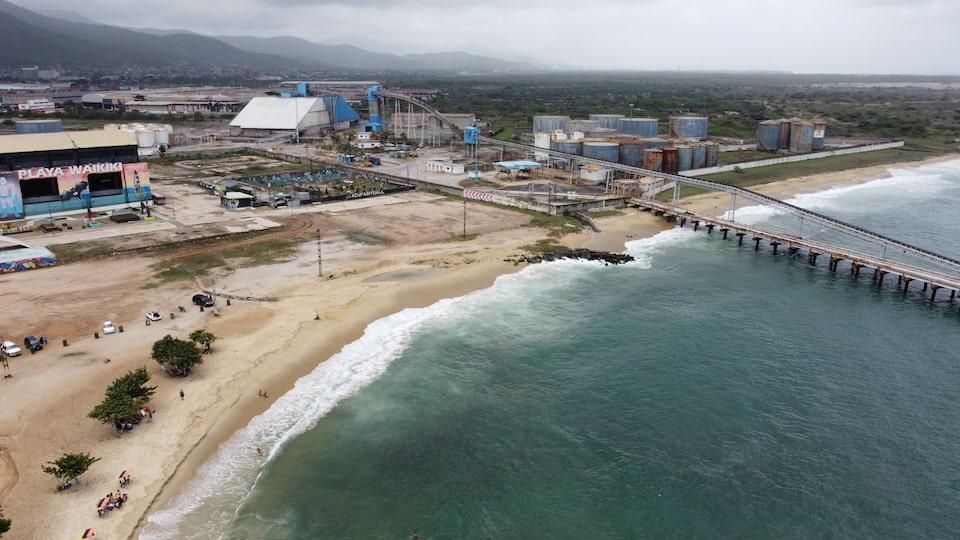
42 tankers departed Venezuela carrying 804,677 bpd of oil, fuel China was the largest receiver with 483,700 bpd Some 80 vessels remain in Venezuelan waters, of which 35 laden European firms scheduling what could be last cargoes before wind-down deadline April 1 (Reuters) - Venezuela's exports of crude oil and fuel fell 11.5% in March month-on-month as Washington's imposition of secondary tariffs and the cancellation of key licenses to operate in the U.S.-sanctioned energy sector led to delays and cargo suspensions, according to ship tracking data and documents. U.S. President Donald Trump's administration announced last week a 25% tariff on nations buying Venezuelan crude and gas, which will begin this week, and notified foreign partners of state-run oil company PDVSA it would revoke the authorizations it had granted to them to operate and export from the OPEC country. Sign up here. The measures followed the suspension of a key license for U.S. Chevron (CVX.N) , opens new tab to produce oil in Venezuela and export it to the United States, which last year was the second largest market for Venezuela's crude. The Treasury Department set May 27 as the deadline for the companies to wind down operations and exports. Regular buyers of Venezuelan crude in China and India have suspended some cargoes for late March and April loading following the announcements. In total, 42 vessels departed Venezuelan waters in March carrying 804,677 barrels per day of crude and fuel, and 341,000 metric tons of oil byproducts and petrochemicals, according to the data and internal PDVSA documents. The March average was 7.8% below exports in the same month of 2024 and the lowest since December. China was again the largest receiver of Venezuelan crude in March with 483,700 bpd, followed by the U.S. with 210,700 bpd, India with 60,160 bpd and Cuba with 50,130 bpd. There were no crude exports to Europe last month. However, some European partners of PDVSA are scheduling and loading what could be their last cargoes before the end of the wind-down period, the documents showed. Venezuelan Vice President Delcy Rodriguez said late on Tuesday in a post on Telegram that the figures published by Reuters were wrong and that oil exports had risen 8.78% in March. She provided no evidence for the figure nor any details. The government of President Nicolas Maduro has always rejected sanctions by the United States and others, saying they are illegitimate measures that amount to an "economic war" designed to cripple Venezuela. Two vessels have left Venezuelan waters without loading since February as Trump's pressure over the South American country has increased and Washington accused Maduro's administration of not doing enough to curb illegal migration to the U.S. Other tankers spent weeks near Venezuelan ports even after receiving PDVSA's authorization to load, as many customers and ship owners wait to see how Trump's administration will apply the secondary tariffs. More than 80 vessels were in or near Venezuelan waters this week, of which 35 were laden but have not left, according to satellite images analyzed by monitoring service Tankertrackers.com. If sustained, the U.S. measures are expected to hit Venezuela's main source of revenue in the coming months as happened in 2020 when the U.S. imposed secondary energy sanctions on the country, experts have said. But the nation could also find new ways to allocate its crude in Asia through third countries and trans-shipments at sea, a work-around solution other sanctioned oil producers and Venezuela have resorted to in recent years. https://www.reuters.com/business/energy/venezuelas-oil-exports-fall-115-over-us-tariffs-sanctions-shipping-data-say-2025-04-01/
2025-04-01 20:03
ORLANDO, Florida, April 2 (Reuters) - In January, U.S. President Donald Trump warned the so-called BRICS nations against replacing, or backing any currency to take the place of, the "mighty U.S. dollar." While the International Monetary Fund's latest foreign exchange reserves data for the fourth quarter of last year suggests central banks around the world continue to pull away from the greenback, there may be a silver lining for the president. Sign up here. The IMF's Currency Composition of Official Foreign Exchange Reserves (Cofer) data, the gold standard for FX reserves information, show that countries have been gradually chipping away at their dollar holdings and diversifying for years. Indeed, the greenback's nominal share of official FX reserve holdings in the third quarter of last year fell to a record low 57.3% from over 72.0% in 2001. That crept up slightly to 57.8% in the fourth quarter, a rare rise, but the dollar surged 7.6% against a basket of major currencies in the period, its biggest quarterly appreciation in nearly a decade. All else equal, this reduces the dollar-value of reserves held in non-dollar currencies such as the euro, sterling, or Japanese yen. When adjusting for these FX changes, the dollar's share of reserves slid to a record low of 54.1% from 55.3%, according to Goldman Sachs. At the start of the millennium, that share was over 71%. Importantly, the Cofer figures only go up to December 31, so do not take into account any reserve shifts made amid the historically high policy uncertainty and market ructions of recent months. With military, diplomatic and trade ties going back decades now fraying at an alarming rate, reserve managers are bound to be rethinking their FX allocations. And that is unlikely to involve a sudden re-discovered love for the dollar. STILL NUMBER ONE Reserve managers do not typically make knee-jerk reactions to market gyrations or the headlines du jour. They're a cautious breed, prioritizing liquidity, stability and long-termism over yield, opportunity and a fast buck. But further diversification of their FX reserves can hardly be considered an impulsive reaction, as the trend is pretty well entrenched. The emergence of any new world order in the coming years would likely only strengthen it. No matter how you slice it, the dollar's overwhelming dominance in global FX reserves is weakening. But that doesn't mean the greenback's place as the world's preeminent reserve currency is under threat. Its share is not being eaten up by its nearest rival, the euro, but by a bunch of smaller, "nontraditional" reserve currencies such as the Korean won, Australian and Canadian dollars, and China's renminbi. "It's not just diversification out of the dollar. Euro reserve holdings have fallen in nominal and valuation-adjusted terms as well," notes Goldman's Michael Cahill. This is a trend that has been underway for years, taking hold just after the Global Financial Crisis and accelerating again after the pandemic. The Cofer data shows the aggregate share of "nontraditional" currencies in central banks' FX reserves was 12.6% in December, just off September's record high of 12.7%. Before 2009, that share had never exceeded 3%. The euro's share since its launch more than 25 years ago has never fallen below 19% and only once, in late 2020, has it exceeded 21%. Any reduction in the difference between the dollar and euro shares has been caused by reserve managers shunning the greenback rather than taking a shine to the euro. Their preference to build up holdings of several smaller currencies has created a somewhat curious equilibrium. The dollar is seeing its dominance gradually diminish, but it's in little danger of losing its role as the world's sole reserve currency. Trump, who seems to want the dollar to remain dominant while no longer sucking in so much of the world's savings, may be happy with that. (The opinions expressed here are those of the author, a columnist for Reuters.) https://www.reuters.com/markets/currencies/dollars-record-low-fx-reserves-share-not-all-bad-news-trump-mcgeever-2025-04-01/
2025-04-01 18:15
LONDON, April 1 (Reuters) - Billionaire investor Cliff Asness's AQR Capital Management finished the first quarter with positive returns in several of its funds, said a source familiar with the matter on Tuesday. The $128 billion hedge fund returned a positive 3.4% performance in March its multi-strategy fund, Apex Strategy, finishing with a 9% first quarter return. Sign up here. The fund posted a 9.7% return for the quarter in its AQR Delphi Long-Short Equity Strategy, with a positive 2.3% for March. AQR's Managed Futures Full Strategy posted an 8.2% return for the quarter with a 2.5% return for March. The hedge fund's Helix Strategy which uses trend following in a diverse set of harder to access markets had a positive 3% performance for the quarter and a 4.4% in March. https://www.reuters.com/business/finance/aqr-capital-management-posts-q1-returns-near-10-several-funds-source-says-2025-04-01/

2025-04-01 17:27
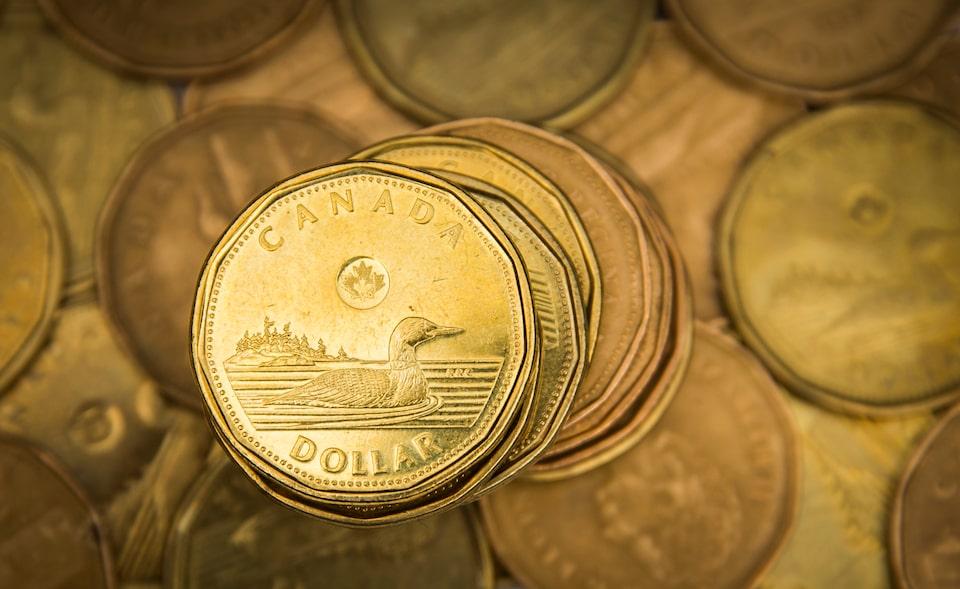
Canadian dollar gains 0.4% against the greenback Touches its weakest intraday since March 14 Canadian factory activity contracts at steeper rate 10-year yield hits a near four-week low at 2.901% TORONTO, April 1 (Reuters) - The Canadian dollar rebounded from a near three-week low against its U.S. counterpart on Tuesday as investors weighed downbeat U.S. economic data and potential efforts by U.S. lawmakers to block tariffs on Canadian goods. The loonie was trading 0.4% higher at 1.4325 per U.S. dollar, or 69.81 U.S. cents, after earlier touching its weakest intraday level since March 14 at 1.4415. Sign up here. U.S. President Donald Trump is expected to announce on Wednesday a sweeping agenda of reciprocal tariffs. Previously, Trump has threatened, but delayed, 25% duties on most imports from Canada as part of a demand the nation helps staunch the flow of fentanyl into the United States. Trump on Tuesday urged his fellow Republicans in the U.S. Senate to vote against a measure rebuking his tariff policy that is tied to the fentanyl emergency the president declared involving Canada. A story in the Globe and Mail saying that some Republican senators are expected to vote for the measure attracted the market's attention and helped lift the Canadian dollar, said Shaun Osborne, chief currency strategist at Scotiabank. "It is one of the better performers on the day now in the G10 space," Osborne added. U.S. manufacturing contracted in March after growing for two straight months, while a measure of inflation at the factory gate jumped to the highest level in nearly three years amid rising anxiety over tariffs on imported goods. Canadian manufacturing data was also downbeat. It showed activity contracting at a steeper rate in March as a widening global trade war triggered the sharpest decline in new orders since shortly after the start of the COVID-19 crisis. Canadian bond yields eased across the curve. The 10-year was down 2.4 basis points at 2.945%, after earlier touching its lowest since March 5 at 2.901%. https://www.reuters.com/markets/currencies/canadian-dollar-rallies-amid-us-vote-tariffs-2025-04-01/