2025-04-01 11:18
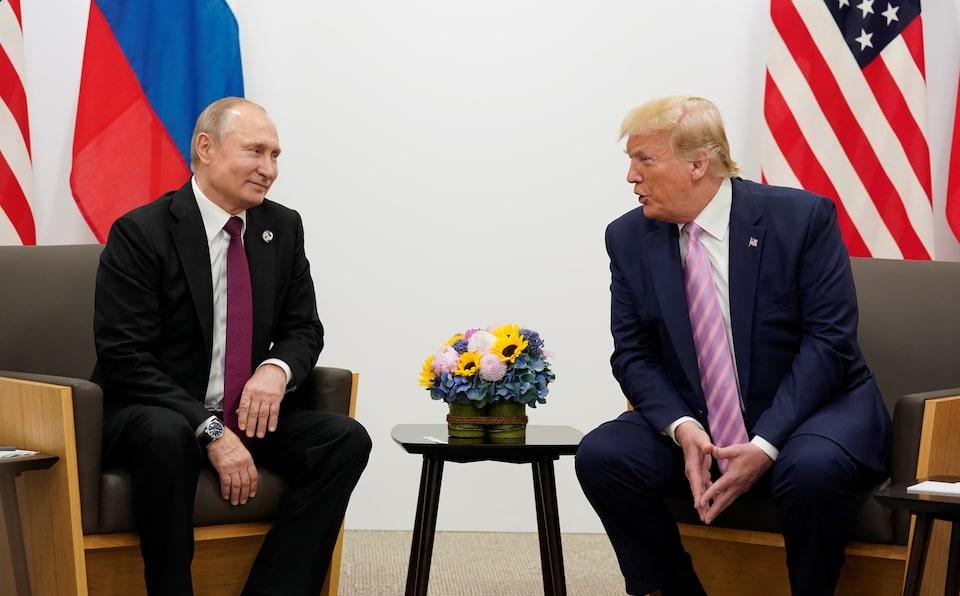
MOSCOW, April 1 (Reuters) - The Kremlin said on Tuesday that Russia was continuing its dialogue with the United States amid threats by President Donald Trump to levy secondary sanctions on Russian oil if Moscow does not work to end the war in Ukraine. Trump, who said this week he was "pissed off" with Russian President Vladimir Putin, told reporters on Monday he wanted to see the Kremlin leader make a deal to stop the full-scale conflict, now in its fourth year. Sign up here. "I want to see him make a deal so that we stop Russian soldiers and Ukrainian soldiers and other people from being killed," Trump said in the Oval Office. "I want to make sure that he follows through, and I think he will." A day earlier, Trump had told NBC News he was very angry after Putin last week criticised the credibility of Ukrainian President Volodymyr Zelenskiy's leadership and would consider putting secondary sanctions on Russian oil if he felt Moscow was blocking a peace deal with Ukraine. Asked about Trump's latest remarks about wanting Putin to do a deal on Ukraine, Kremlin spokesman Dmitry Peskov told reporters on Tuesday: "We are continuing our contacts with the American side. The subject is very complex. The substance that we are discussing, related to the Ukrainian settlement, is very complex. This requires a lot of extra effort." Before the weekend, Trump had adopted a more conciliatory stance towards Russia that had left Western allies wary as he tried to broker an end to the conflict in Ukraine. Publicly, Russia has so far responded cautiously to Trump's overtures, agreeing to pause its attacks on Ukrainian energy infrastructure if Kyiv does the same. Both sides accuse each other of violating the moratorium. Citing a number of conditions it feels need to be met first, Moscow has so far refused to sign up to a wider ceasefire of the kind that Trump wants. https://www.reuters.com/world/europe/trump-threatens-secondary-sanctions-russia-kremlin-says-it-is-continuing-talk-us-2025-04-01/
2025-04-01 11:17
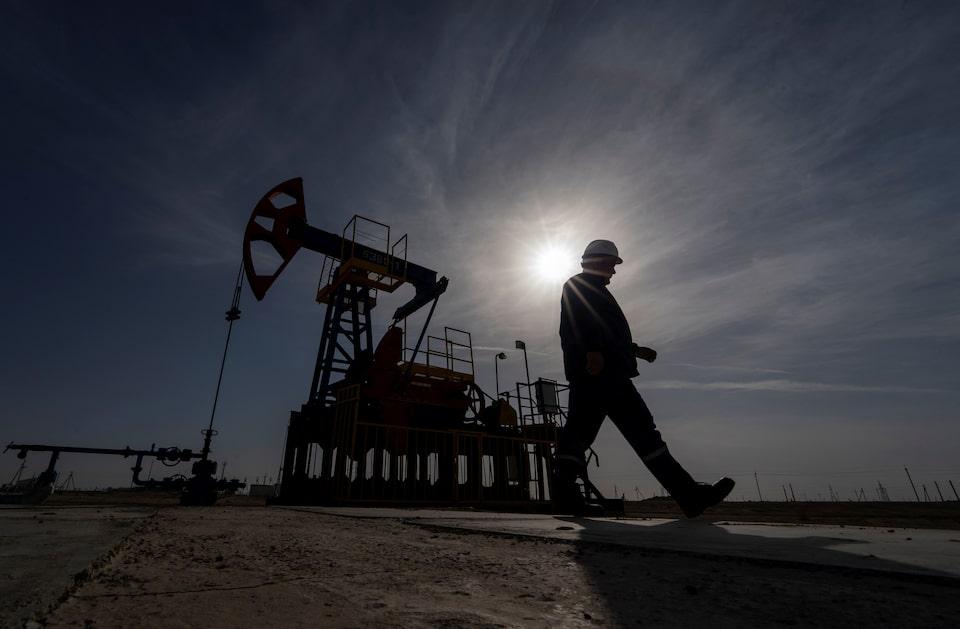
MOSCOW, April 1 (Reuters) - Kazakhstan's oil and condensate output reached a record high in March, with higher output from the giant Tengiz oilfield and stable exports via the Caspian pipeline, further exceeding OPEC+ production quotas, two industry sources said and Reuters calculations showed on Tuesday. The country has repeatedly exceeded its OPEC+ quotas in recent months and has promised to reduce output under pressure from OPEC+ leaders Saudi Arabia and Russia. Sign up here. Oil and gas condensate production in Kazakhstan reached 8.95 million metric tons in March, or 2.17 million barrels per day (bpd), the sources said. That compared with 2.15 million bpd on average in February, according to the state's Energy Ministry. Kazakhstan's OPEC+ quota does not limit condensate production, but crude oil output is meant to be set at 1.468 million bpd. Excluding gas condensate, a type of light oil, crude oil production increased last month to 1.88 million bpd from 1.83 million bpd in February, according to the source familiar with the official statistics, and Reuters calculations, which take into account Kazakhstan's tons per barrel ratio of 7.5. Kazakhstan's March oil exports remained high, with flows via its Caspian Pipeline Consortium (CPC) export route continuing unabated last month, despite expectations after drone attacks on its infrastructure in February and March. Exports via the CPC pipeline have been initially set at 1.7 million bpd for both March and April. However the CPC operator, which exports around 1% of global oil supply via the Russian terminal, said late on Monday that the two single mooring points (SPM) were halted following snap inspections by Russia's transport watchdog. That means April CPC Blend oil loadings might decline. https://www.reuters.com/business/energy/kazakhstans-oil-condensate-production-hits-record-march-sources-say-2025-04-01/
2025-04-01 11:15
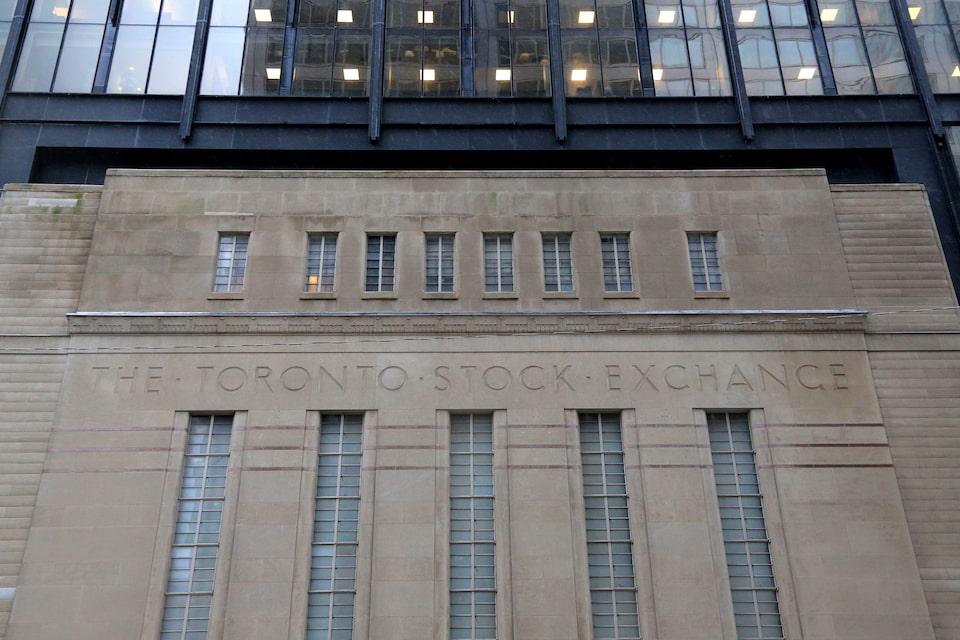
TSX ends up 0.5% at 25,033.28 points Tech claws back some recent declines First Quantum Minerals jumps 4.9% Rogers Communications hits near 13-year low April 1 (Reuters) - Canada's main stock index rose on Tuesday, helped by gains for energy and technology shares, but the move was limited ahead of U.S. President Donald Trump's planned unveiling of sweeping new trade tariffs. Toronto Stock Exchange's S&P/TSX composite index (.GSPTSE) , opens new tab ended up 115.78 points, or 0.5%, at 25,033.28 points, adding to Monday's advance. Sign up here. The White House confirmed that Trump will impose on Wednesday reciprocal tariffs on countries that impose duties on U.S. goods. It provided no details about the size and scope of trade barriers that have businesses, consumers and investors fretting about an intensifying global trade war. "People are just sitting on the fence at the moment," said Sadiq Adatia, chief investment officer at BMO Asset Management. "Most of that damage leading into tomorrow has occurred over the last couple of weeks." Canadian Prime Minister Mark Carney spoke with Mexican President Claudia Sheinbaum about Canada's plan to "fight unjustified trade actions" by the United States. The ruling Liberal Party and the opposition Conservative Party, led by Pierre Poilievre, are participating in a closely fought general election campaign. "Whether it's Poilievre or Carney, they are both trying to make sure they are going to spur Canada's economy no matter what happens," Adatia said. The technology sector rose 0.8%, clawing back some of its recent declines. Energy was up 0.7%, while utilities added 0.8% as long-term borrowing costs fell. Bond yields declined after data showed that Canadian manufacturing activity contracted at a steeper rate in March. Shares of First Quantum Minerals Ltd (FM.TO) , opens new tab ended 4.9% higher after the company said it had discontinued arbitration proceedings against the Panama government. Rogers Communications Inc (RCIb.TO) , opens new tab shares dropped 5.9% to the lowest level since June 2012 after UBS and Scotiabank cut their target prices on the stock. https://www.reuters.com/markets/tsx-futures-flat-investors-assess-risks-ahead-us-tariffs-2025-04-01/
2025-04-01 11:10
Gunvor's net profit falls 42% y/y in 2024 Gunvor's revenue and traded volumes both rose y/y in 2024 The results are Gunvor's 4th strongest despite y/y drop Results reflect a normalisation of energy markets April 1 (Reuters) - Global commodity trading house Gunvor said on Tuesday its earnings fell in 2024 as energy markets normalised from the extreme conditions that enabled trading houses to make record earnings in previous years. Gunvor's net profits after tax reached $729 million in 2024, down from $1.25 billion the previous year. Sign up here. That marks the second year of decreases in a row, and is just above the $726 million net profit the company made in 2021. "The result reflects a return to more normalized energy markets compared with the previous two years, which featured significant volatility related to the global pandemic, the energy crisis, and international conflicts that had roiled energy markets," Gunvor said. Profit fell despite a rise in revenue and traded volumes. Gunvor's traded volumes leapt to 232 million metric tons in 2024, up from 177 million last year. And the firm's revenue rose by around 7% on the year to $136 billion. Despite two years of lower net profit, Gunvor's 2024 result is its forth highest and above pre-pandemic levels. The world's major commodity trading houses, including Gunvor and its peers Trafigura and Vitol saw weaker 2024 results after bumper earnings in 2022-2023, when they took advantage of market dislocations across commodity markets created by the COVID pandemic, Russia's war in Ukraine and Europe's energy crisis. "We are experts in tackling disruptive things. It's no coincidence that when things are really disruptive, we do well," Chief Executive Torbjorn Tornqvist said at an industry event in Switzerland last week. Gunvor said its energy transition and shipping businesses had helped to balance the performance of its sectors operating in the "stabilized" crude oil and refined products markets." It added that its profit was impaired last year by the mothballing of its Rotterdam refinery, which it announced in December. Gunvor's equity value following its 2024 results stood at $6.5 billion, it said. Tornqvist owned a 84.79% share by year end, with the remainder allocated to the firm's employee shareplan. https://www.reuters.com/markets/commodities/commodity-trader-gunvor-reports-2024-revenue-136-billion-2025-04-01/

2025-04-01 11:09
TOKYO, April 1 (Reuters) - Japan's Maruzen Petrochemical, a unit of Cosmo Energy Holdings (5021.T) , opens new tab, will shut its ethylene unit in Chiba in the 2026/27 financial year and consolidate production at Keiyo Ethylene, its joint venture with Sumitomo Chemical (4005.T) , opens new tab, the companies said on Tuesday. The move aims to enhance the utilization rate and competitiveness of Keiyo Ethylene, which is 55% owned by Maruzen Petrochemical and 45% by Sumitomo Chemical, the three companies said in a statement. Sign up here. Japanese ethylene plants have been struggling with low operating rates due to global oversupply driven by large-scale capacity expansions in China, as well as declining domestic demand. The industry also faces increasing pressure to achieve net-zero carbon emissions through energy transportation. Against this backdrop, Maruzen Petrochemical and Sumitomo Chemical decided to optimize their ethylene production in the Chiba area, near Tokyo, to cut costs and maintain competitiveness, they said. Maruzen's Chiba ethylene unit, which started operations in 1969, has an annual production capacity of 525,000 metric tons. Keiyo Ethylene, launched in 1994, has a capacity of 768,000 tons per year. Japanese oil refiner Idemitsu Kosan and Mitsui Chemicals plan to consolidate their ethylene complexes in Chiba, they said last year. Ethylene is a petrochemical that is used to produce plastics such as polyethylene for items such as plastic bags and containers. https://www.reuters.com/markets/asia/japans-maruzen-petrochemical-shut-ethylene-unit-chiba-2025-04-01/

2025-04-01 11:04
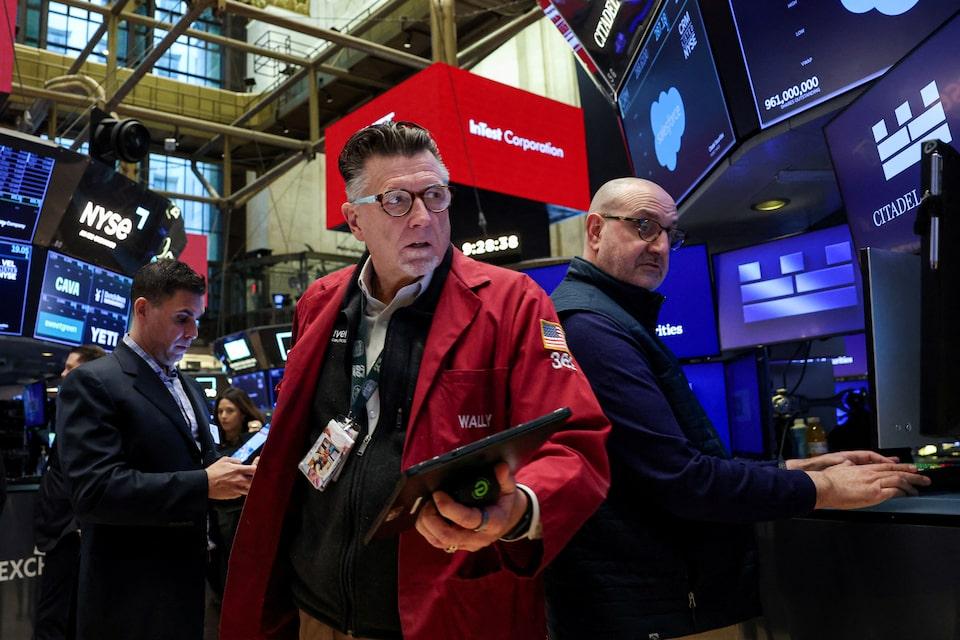
LONDON, April 1 (Reuters) - What matters in U.S. and global markets today By Mike Dolan , opens new tab, Editor-At-Large, Financial Industry and Financial Markets Sign up here. Monday's small gain in the S&P 500 did little to flatter the worst quarter since 2022 and even less to deflect investors' main concern: the still undefined tariff sweep coming from Washington this week. I'll explain what else is moving markets this morning and then discuss how Germany's debt reforms may require reshaping some of the rules governing the euro. TODAY'S MARKET MINUTE * The "Buy Canadian" movement is gathering pace, and more U.S. companies are saying retailers from supermarkets to convenience stores are shunning their products, as patriotic consumerism grows. * China and Russia are "friends forever, never enemies," Chinese Foreign Minister Wang Yi said in remarks published on Tuesday during a visit to Moscow in which he also welcomed signs of normalising ties between Washington and Moscow. * Shares in the major drug companies have come under pressure after reports that the Food and Drug Administration's top vaccine official has been forced to resign as part of the Trump administration's overhaul of federal government. * Japan will keep up a strong push for the U.S. to exempt it from auto tariffs, according to Prime Minister Shigeru Ishiba. * The Office of the U.S. Trade Representative has released its annual report on foreign trade barriers and, at 397 pages, lists any foreign policies and regulations that it regards as an issue. NEW QUARTER, SAME PROBLEMS U.S. President Donald Trump's administration released on Monday an encyclopedic list of foreign countries' policies and regulations it regards as trade barriers. The expectation is that the full tariff announcement, including "reciprocal tariffs", will come at 3:00 PM Eastern Time tomorrow. Countries around the world appear to have given up on last-minute negotiations, with many preparing retaliatory measures instead. In what appeared like an extraordinary development, Chinese state media yesterday said China, Japan and South Korea are coordinating a response, though Tokyo and Seoul played that statement down. Wall Street investors, having just clocked their worst first quarter since the pandemic, have little certainty to cling to apart from the rising probability of a recession. Goldman Sachs joined JPMorgan in arguing that the chance of recession in the U.S. over the next 12 months has jumped. They give it slightly more than a one-in-three chance, a tick below the 40% chance JPM now sees. U.S. stock futures were basically flat ahead of Tuesday's bell, but U.S. equities are once again underperforming more buoyant world markets, especially in Europe. Negative technical signals are mounting for the main S&P 500 index, which hit seven-month lows intraday on Monday before the late bounce. U.S. Treasuries also appear to be increasingly worried about a recession, with three interest rate cuts in 2025 now priced into futures markets. Ten-year Treasury yields slipped to their lowest since March 11 early on Tuesday. Gold fed off the whole smorgasbord of concerns, hitting another record at $3,148 per ounce after its best quarter since 1986. The dollar appears less sure about which way to lean. Its DXY (.DXY) , opens new tab index slipped a touch on Tuesday, as the yen and the euro held firm. China's yuan , Mexican peso and Canada's dollar , by contrast, all slipped lower against the greenback. In Europe, softer-than-forecast core euro zone inflation readings for March encouraged bets on further easing from the European Central Bank and lifted regional stocks (.STOXXE) , opens new tab there by more than 1%. The political theatre surrounding Monday's graft conviction for French far-right leader Marine Le Pen, which bars her from standing in 2027's Presidential election, played out with little disturbance in financial markets. Chinese stocks were less positive earlier though slightly in the green. Decent readings from a service sector survey were offset by news that the U.S. had sanctioned six senior Chinese and Hong Kong officials, citing "transnational repression" and further erosion of Hong Kong's autonomy. Tensions also appeared to rise in regional geopolitics, as China staged military drills off Taiwan's north, south and east coasts and called Taiwanese President Lai Ching-te a "parasite". Taiwan sent warships to respond to China's navy approaching its shores. Let's now turn back to Europe, where Germany's push for more spending may force some long-held EU guidelines to be revised. MAASTRICT GOALPOSTS NEED SHIFTING TO ALLOW GERMANY BOOST Germany's need to expand its budget could fundamentally alter EU debt guidelines for the first time since the single currency was born 26 years ago. Germany's dramatic decision this year to rush through historic fiscal reforms to make way for massive spending on defence and infrastructure has raised questions about just how much of the stimulus it can deliver without running afoul of EU monitors. Some economists think the euro zone's long-standing debt/GDP "reference rate" of 60% could and should be lifted to 90% to ensure nothing will preclude more German spending, as this splurge is now seen as necessary to support an entire region scrambling to defend itself and navigate a rapidly escalating trade war with the United States. These economists also argue that boosting long-term growth prospects is apt to do as much to make higher public debts sustainable as would adhering to arguably outdated public debt targets. Even credit rating agencies agreed on that when assessing the potential impact of Germany's removal of its self-imposed "debt brake". Jeromin Zettelmeyer , opens new tab, director at the Brussels-based think tank Bruegel, last week made the point that Berlin's move should be sustainable over the coming decade if the increase in debt is accompanied by an increase in growth potential. But, even so, German debt/GDP would very likely have to rise to 100%. And, as it stands, that breaches EU rules. Germany should be able to boost defence spending and still stay within bounds, given the exemptions , opens new tab worth 1.5 percentage points of GDP. But current EU rules would likely prevent it from spending the 500 billion euros ($540.80 billion) earmarked for infrastructure - more than half of the near 1 trillion euro plan. "To allow higher German spending, the rules may have to change - for example by setting the 'reference value' for debt from 60% to 90% of GDP," Zettelmeyer wrote. "The fact that this would be triggered by a policy change in Germany is unfortunate. But it would be good for all of Europe." HOUND TURNED FOX There is indeed a great irony that a shift of EU budget goalposts comes at the behest of Germany, the main instigator of such strict rules back in the late 1990s and the chief enforcer in the years since. The euro's founding Maastricht Treaty was signed in 1992, after which member states set about agreeing on accompanying budget rules, which eventually made up the so-called Stability and Growth Pact (SGP) signed in 1997. The SGP stipulated that member states keep their annual budget deficits within 3% of annual output, with a view to keeping overall debt/GDP piles sustainable and targeted towards a 60% "reference rate". When the euro launched in 1999, all but two of the 11 nations involved had debt/GDP levels at or under 60%. Italy and Belgium both had debt/GDP ratios in excess of 100% but were still allowed to join. But today, fewer than half of the current 27 euro members pass this test, with Italy, France, Belgium, Spain, Portugal and Greece now clocking debt ratios above 100% of national output. The overall euro debt/GDP share came in at 88% last year, just below the 90% reference rate now being bandied about. Annual monitoring of budgets has been relatively strict over the years, involving formal warnings on primary and structural balances leading up to actual fines. Exceptions and exemptions have been proposed and made over the years, and the entire pact was suspended temporarily in the wake of the pandemic. But the rules were given extra heft during the post-pandemic period. The European Central Bank made compliance with them necessary for access to its newly-designed Transmission Protection Instrument , opens new tab, essentially a bond-buying ECB backstop for countries caught up in market contagion. If the debt/GDP ratio target were loosened, then it may make it somewhat easier for more heavily indebted countries to access ECB supports over time, potentially allowing for some reduction of borrowing premia as German core rates push higher with its debt/GDP ratio. Higher sovereign debt may seem an odd way to make the bloc more credit-worthy, but it could if it spurs meaningfully higher growth. And, relatively speaking, the EU still looks less profligate overall than many of its global peers. The United States' debt/GDP is running in excess of 120%, Japan's is above 260% and Britain is on course to eclipse 100% as well. Ultimately, pressing an EU debt brake just when the German one has been lifted would be self-defeating. Hoisting the already nebulous debt target to 90%, on the other hand, would seem to make more sense. CHART OF THE DAY Even though the S&P 500 managed to eke out a small gain on the final session of its worst quarter in three years, the gradual widening of corporate borrowing premia continued. Spreads on high-yield U.S. 'junk' bonds hit their widest in almost eight months on Monday at 355 basis points, with related high-yield volatility gauges at their highest since early August. While these spread levels are still far from alarming, they bear watching in the event of any escalation of U.S. recession jitters. TODAY'S EVENTS TO WATCH * U.S. March manufacturing survey from ISM and S&P Global, February JOLTS job openings data, February construction spending, Dallas Federal Reserve March service sector survey * Richmond Federal Reserve Bank President Thomas Barkin speaks; European Central Bank President Christine Lagarde and ECB chief economist Philip Lane both speak; Bank of England policymaker Megan Greene speaks Opinions expressed are those of the author. They do not reflect the views of Reuters News, which, under the Trust Principles , opens new tab, is committed to integrity, independence, and freedom from bias. https://www.reuters.com/markets/us/global-markets-view-usa-2025-04-01/