2025-04-01 10:07
Argentina, IMF in advanced talks over $20 bln deal Country has strict capital controls in place since 2019 Traders betting on a devaluation amid deal uncertainty Doubts have led to reserves drain since mid-March BUENOS AIRES, April 1 (Reuters) - Argentina and the International Monetary Fund may be on the home stretch over a $20 billion new program, but the deal has so far failed to dispel traders' anxiety and a haze of uncertainty around the outlook for the country's peso currency. The South American nation, under libertarian President Javier Milei, is trying to rebuild investor confidence and bolster depleted foreign currency reserves after years of overspending that left the grains producer locked out of global markets and battling to stabilize its finances. Sign up here. The government is in advanced talks with the IMF over a new deal that could give the central bank a much-needed hard currency buffer, but uncertainty over FX policy has spooked traders and led to a drain in already depleted reserves, underscoring a challenge for Milei's pro-market reforms. Market bets of a peso weakening since mid-March caused a $1.6 billion reserves drain as the central bank battled to stabilize the local tender. Peso futures have spiked, while government officials have refuted rumors of a devaluation. Analysts and investors said that the market was wary given there was little concrete detail about the IMF program or what might happen with the exchange rate and strict capital controls that have been in place since 2019. "Overall, the attempt to mitigate uncertainty by revealing the program amount failed to significantly impact credit spreads, likely due to the absence of detailed information," investment bank JP Morgan said in a note late last week. On Monday, Argentina's country risk index jumped 62 points to 863 basis points, near highs seen in November, reflecting diminishing investor confidence in the country's sovereign debt. It had dropped to 550 points in January. Local bonds, parallel peso markets - used to skirt capital controls - and equities also fell. 'PURE DOUBT' Milei has made rebuilding reserves a key focus since taking office in December 2023 and ushering in a tough zero deficit program of spending cuts that helped stabilize the state's finances. Net foreign currency reserves improved from negative $11 billion to negative $4 billion by early March this year, but since have gone into reverse. Economist Camilo Tiscornia at Buenos Aires consultancy C&T cited "pure doubt" around what could happen with FX policy and said the market needed more details about the IMF deal. "The agreement with the IMF is still up in the air," he said. "There's speculation that the agreement will bring some modification to the (FX) system, but no one knows what." That doubt has put pressure on the local currency, sparking a streak of central bank sales of dollars since mid-March in a bid to bolster the peso. Gross reserves, including less liquid assets like gold, have fallen to $26 billion from $33 billion in January. "Sentiment has worsened considerably in the last month or so," said U.S.-based Mariva Research Market in a note, adding that both inflation and devaluation expectations had risen. "The most worrisome consequence has been the reversal of currency flows in the official FX market, which had been vital to sustaining the disinflation process." Analysts are mixed on what is likely to happen around FX policy and when under an eventual IMF deal. Investment banking group BancTrust & Co predicts the government won't allow a significant overhaul of FX policy until after mid-term elections at year end. Citi said in a note the IMF funds raised the chances Argentina could remove capital controls before the midterms, but added that it was unclear if the currency would be allowed to float freely or there would be a new currency peg. Roberto Geretto of Argentina financial firm Adcap said reserves would keep sliding until there was more clarity around the FX rate outlook. "If there are no further definitions regarding the future exchange rate structure, it will be very difficult to reverse this trend," he said. "The underlying problem, and the problem facing the Fund, is the lack of reserves." https://www.reuters.com/world/americas/argentina-imf-deal-advances-fail-clear-fx-haze-2025-04-01/
2025-04-01 10:07
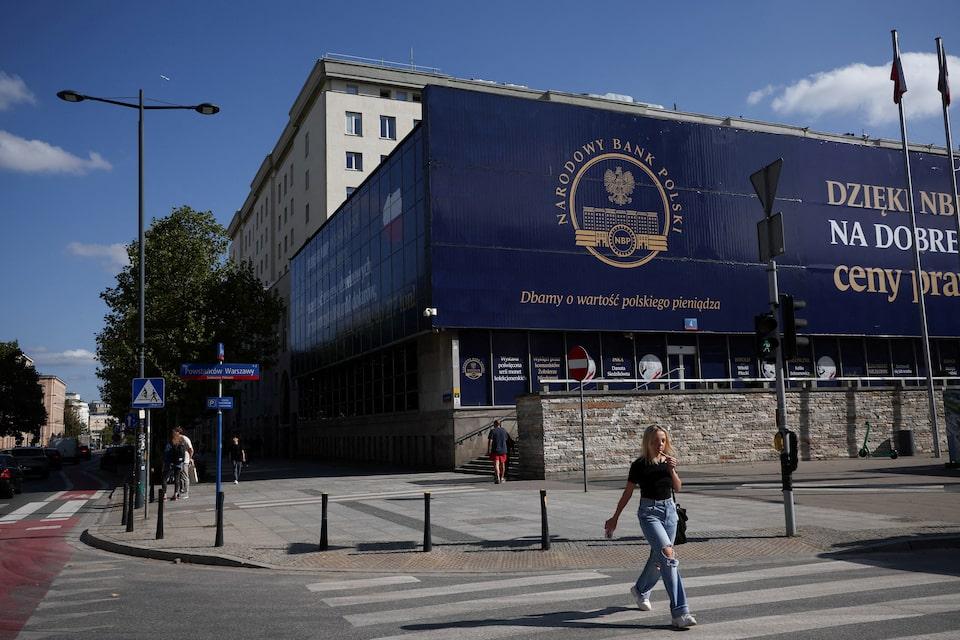
WARSAW, April 1 (Reuters) - The presidential candidate supported by Poland's largest opposition party, Law and Justice (PiS), has joined other election hopefuls in urging the central bank to cut interest rates, partly to bring down borrowing costs for consumers. "Poles must finally get lower loan instalments. That is why I am calling on the Monetary Policy Council to lower interest rates. Thanks to this decision, millions of borrowers will breathe a sigh of relief," Karol Nawrocki, who is backed by the nationalist PiS, said in a video on X on Tuesday, which was verified by Reuters. Sign up here. The cost of credit, which has remained unchanged since October 2023, has become a prominent topic in the campaign for the presidential election, the first round of which is scheduled for May 18, with a run-off vote likely on June 1. The frontrunner in the race, Rafal Trzaskowski, who represents Prime Minister Donald Tusk's Civic Coalition (KO), has said repeatedly that borrowing costs should fall. Szymon Holownia, speaker of the lower house of parliament and the centre-right Third Way candidate, has also called for interest rate cuts. The governor of the National Bank of Poland (NBP) Adam Glapinski, who was appointed by PiS when they were in power, reiterated last week that Poland's elevated rate of inflation left no space for policy easing. NBP Vice President Marta Kightley told the Interia.pl news portal last week that politicians' appeals for interest rate cuts, while inflation is rising, would expose Poles to a risk of lasting high inflation. She also said the central bank was independent. Annual inflation in March was 4.9%, according to a flash estimate from the statistics office, unchanged from February and well above the upper limit of the central bank's inflation target of 1.5-3.5%. Still, some members of the monetary policy committee said easing of policy may begin in the second half, after publication of the central bank's inflation projection in July. The committee will announce its decision on Wednesday, but none of the analysts surveyed by Reuters expects an interest rate cut in April. The National Bank of Poland has held its main interest rate at 5.75% since October 2023. (This story has been corrected to fix the spelling of Nawrocki in the headline and in paragraph 2) https://www.reuters.com/world/europe/polish-opposition-presidential-candidate-nawrock-calls-rate-cut-2025-04-01/
2025-04-01 09:23
LONDON, April 1 (Reuters) - The chair of Britain's Office for Budget Responsibility, Richard Hughes, said on Tuesday that he had asked to serve a second five-year term heading the body that produces independent growth and borrowing forecasts for the government. "I've written to the chancellor, to the effect that I'd be interested to serve a second and final term, earlier this year," Hughes told the House of Commons' Treasury Committee. Sign up here. Finance minister Rachel Reeves had not yet replied to his request, Hughes added. Hughes' term expires in October. https://www.reuters.com/world/uk/head-uk-budget-watchdog-says-he-wants-serve-second-term-2025-04-01/

2025-04-01 09:20
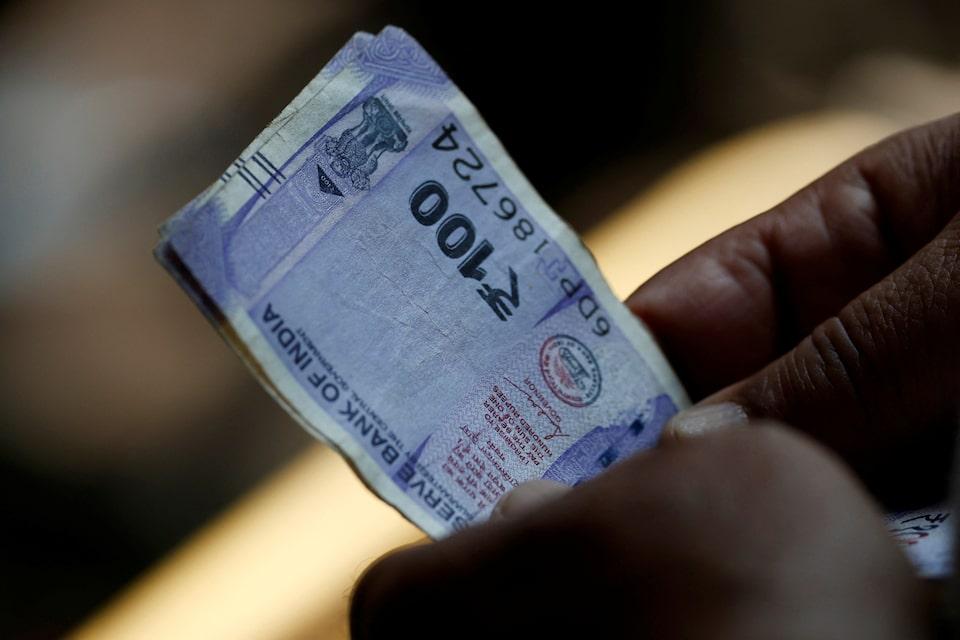
BENGALURU, April 1 (Reuters) - The Indian rupee will erase nearly all of the gains it has made against the U.S. dollar in the last two months and tumble back toward an historic low over the next 12 months, according to a Reuters poll of 36 foreign exchange analysts. The partially-convertible rupee has gained around 3% over the past two months, ending a five-month losing streak and marking its largest monthly gain since November 2018, supported by a weaker dollar and renewed foreign capital inflows into equities. Sign up here. However, most analysts in a latest Reuters poll expect the rupee's recovery against the dollar to be short-lived based on slowing economic growth and expectations the dollar will not weaken much further in the coming months. The analysts also said expectations for the shortest easing cycle on record, with the Reserve Bank of India cutting interest rates by a total of 75 basis points, are likely to exert further mild downward pressure on the rupee. The rupee was forecast to drop 1.9% to 87.18 per dollar in three months, then trade at 87.50 in six months and decline 2.6% to 87.80 by the end of March 2026, the poll found. "The rupee has appreciated due to an unexpected slide in the broad dollar index and year-end inflows. The fundamental view is still of weakness, especially on account of potentially higher U.S. tariffs that can hurt exports and warrant a weaker currency," wrote Dhiraj Nim, FX strategist at ANZ. "Beyond the tariff-related adjustment, the path for the USD/INR could gradually trend higher. There is no merit in letting the currency appreciate meaningfully, especially given the need to recoup lost foreign exchange reserves," he added. Analysts in the poll said the rupee's near-term outlook depends on U.S. President Donald Trump's expected reciprocal tariff on major trading partners, set for April 2 and their impact on India's exports and economic growth, which is already slowing. Trump has singled out India as the country with the highest average tariff rates among the United States' leading trading partners. According to Michael Wan, senior currency analyst at MUFG, the key factor driving expectations for a weaker rupee is the likelihood that growth will underperform consensus forecasts. "We think markets are underpricing the risks of reciprocal tariffs on India right now. While India is generally more domestically-oriented to begin with, reciprocal tariffs, if raised to a meaningful level, will still have a negative impact on India's growth prospect in 2025." (For other stories from the April Reuters foreign exchange poll) https://www.reuters.com/world/india/indian-rupee-slide-again-after-brief-recovery-erasing-nearly-all-gains-2025-04-01/
2025-04-01 09:16
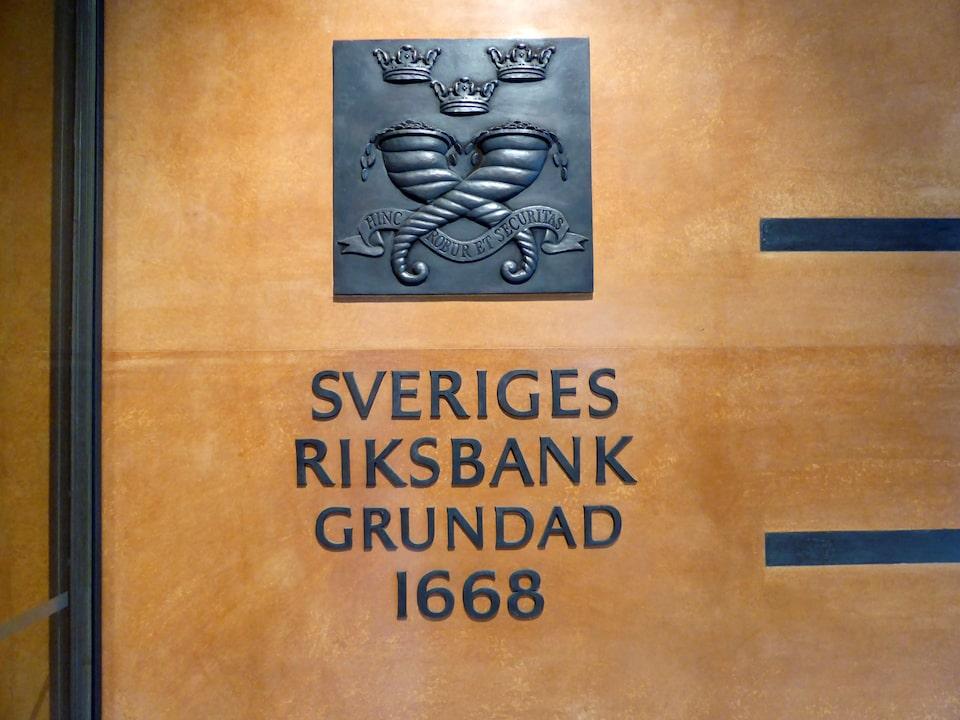
STOCKHOLM, April 1 (Reuters) - Sweden's central bank has decided on a new strategic allocation of the gold and foreign exchange reserves, which includes a few new eurozone countries being introduced into the foreign exchange reserves, it said on Tuesday. "In addition, the current currency hedging will be maintained," it said in a statement. "In this way, the Riksbank achieves a good balance between contingency preparedness, risk and return." Sign up here. The foreign exchange reserves consist mainly of liquid assets such as government bonds in U.S. dollars and euros. The Riksbank said it was increasing the share of assets in U.S. dollars in its reserve to 70% from 62% previously, and that it was lowering the share of assets in euros to 17.5% from 22%. The purpose of the reserve is to provide liquidity support to banks in Sweden, and to be able to intervene in the foreign exchange market, if needed. https://www.reuters.com/markets/europe/swedens-riksbank-tweaks-strategic-allocation-gold-forex-reserves-2025-04-01/
2025-04-01 09:09
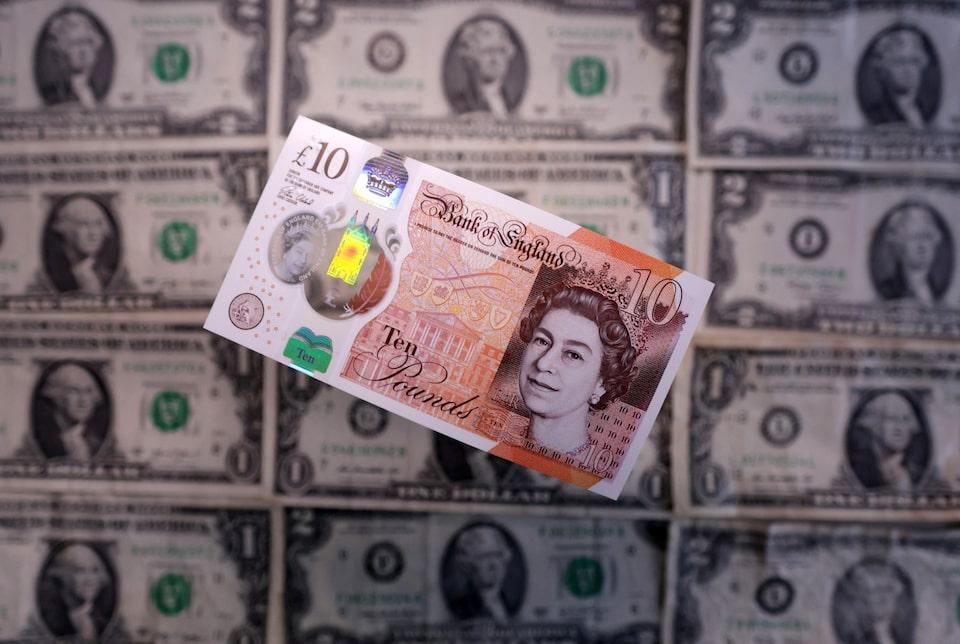
April 1 (Reuters) - Sterling edged up against the dollar on Tuesday as investors hoped a deal between Britain and the U.S. would prevent significant negative economic impact from the U.S. tariffs President Donald Trump is scheduled to announce on April 2. British Prime Minister Keir Starmer said that talks with the U.S. on a trade agreement that would help Britain avoid being hit by Trump's import tariffs were "well advanced." Sign up here. The dollar rose slightly with analysts also monitoring the U.S. Job Openings and Labor Turnover Survey (JOLTS) and the ISM manufacturing index later in the session, both of which could provide further insights into how uncertainty in U.S. trade policy is hurting the economy. The pound was up 0.05% versus the greenback at $1.2924. It hit $1.3014 on March 20, its highest level since November 6. It dropped against the yen, which investors view as a safer asset than the dollar in the current environment, as potential U.S. tariffs would likely hurt the U.S. economy as well. It was down 0.15% at 193.40 versus the Japanese currency . Among major developed market currencies (G10), sterling tends to be more volatile and sensitive to risk sentiment than traditional safe havens like the Japanese yen, Swiss franc, or the U.S. dollar. "Our sense is that the UK escapes the worst excesses of tariffs, largely due to a relatively benign trade position with the U.S.," said Kamal Sharma, forex strategist at BofA. "That should be pound supportive, but the global context matters - a risk-off fallout in markets will weigh on all currencies versus the U.S. dollar," he added. Money markets slightly increased their bets on future Bank of England rate cuts, fully pricing in a 25 bps move by June and 54 bps by year-end, from 51 bps the day before. IRPR The euro dropped 0.05% to 83.66 pence as the European Union gets ready for a trade war. The EU will be ready to retaliate against U.S. trade tariffs with strong countermeasures if needed, European Commission President Ursula von der Leyen said on Tuesday. https://www.reuters.com/markets/currencies/sterling-inches-higher-starmer-says-us-trade-talks-well-advanced-2025-04-01/