2025-04-01 07:32
NEW DELHI, April 1 (Reuters) - India's finished steel imports during the first 11 months of the financial year, which began in April, stood at 8.98 million metric tons, marking a 15.8% year-on-year increase, according to provisional government data reviewed by Reuters on Tuesday. India, the world's second-biggest crude steel producer, became a net importer in 2023/24, a trend that has continued with rising shipments from China, South Korea and Japan. Sign up here. Last month, India recommended a 12% temporary tax on certain steel products for 200 days, known as a safeguard duty, in an attempt to curb imports. South Korea was the biggest exporter of the alloy to India during April-February, with shipments reaching 2.6 million metric tons, up 7.1% year-on-year, the data showed. Finished steel imports from China totalled 2.4 million metric tons, down 5.3% year-on-year, while imports from Japan reached 1.9 million metric tons, marking a nearly 70% year-on-year increase, the data showed. Flat steel products accounted for 95% in overall finished steel imports, the government report said, adding that hot-rolled coils or strips were the most imported product by volume. India's finished steel exports during April-February stood at 4.4 million metric tons, down 33.7% year-on-year, the data showed. Italy was the biggest exports destination during the period but shipments slumped 56.2%, while exports to Belgium and Spain also dropped, according to the data. Shipments to Europe were likely to be further affected by the European Union's tightened import restrictions, but the Indian government was confident that strong domestic demand would offset the impact, Reuters reported last week. The country's finished steel consumption was at 137.8 million metric tons, up 11.3% year-on-year. Crude steel production was at 138.2 million metric tons during the period, up 5.2% year-on-year, the data showed. https://www.reuters.com/markets/commodities/indias-april-february-finished-steel-imports-up-nearly-16-yy-data-shows-2025-04-01/

2025-04-01 06:56
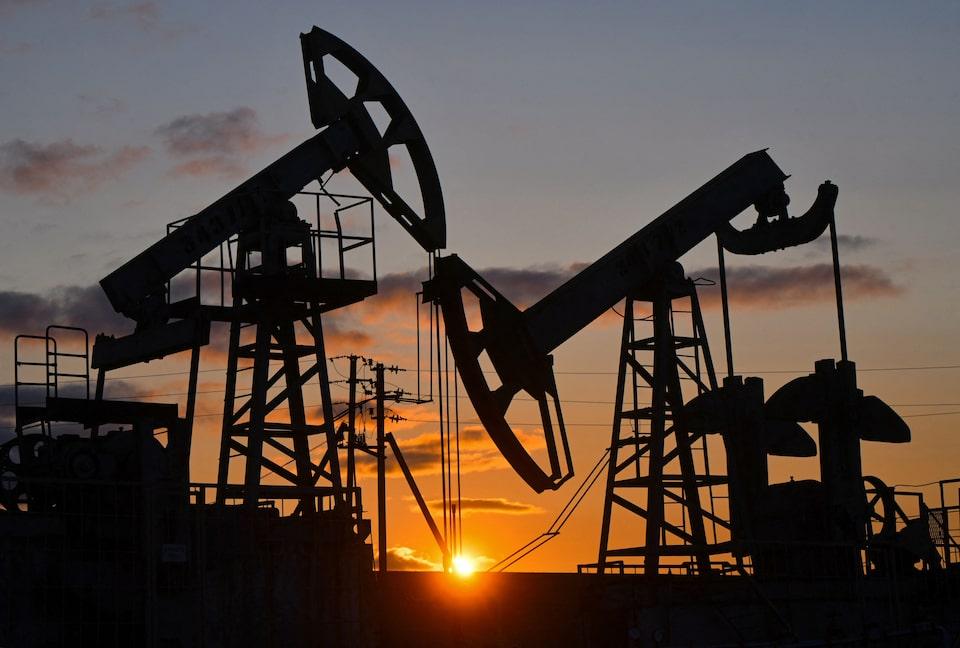
Market weighs near-term supply risks, tariff concerns Reuters poll indicates lower U.S. crude inventories LONDON, April 1 (Reuters) - Oil prices steadied near five-week highs on Tuesday as threats by U.S. President Donald Trump to impose secondary tariffs on Russian crude and attack Iran countered worries about the impact of a trade war on global growth. Brent futures were up 3 cents, or 0.04%, at $74.80 a barrel at 1352 GMT, after rising to above $75 a barrel earlier in the session. U.S. West Texas Intermediate crude futures rose 4 cents, or 0.06%, to $71.52. Sign up here. The contracts settled at five-week highs a day earlier. "While stricter sanctions on Iran, Venezuela, and Russia could constrain global supply, the U.S. tariffs are likely to dampen global energy demand and slow economic growth, which in turn will affect oil demand further out on the curve," SEB analyst Ole Hvalbye said. "As a result, betting on a clear direction for the market has been – and remains – challenging," he added. Trump on Sunday told NBC News that he was very angry with Russian President Vladimir Putin and would impose secondary tariffs of 25% to 50% on Russian oil buyers if Moscow tried to block efforts to end the war in Ukraine. Tariffs on buyers of oil from Russia, the world's second largest oil exporter, would disrupt global supply and hurt Moscow's biggest customers, China and India. Trump also threatened Iran with similar tariffs and bombings if Tehran did not reach an agreement with the White House over its nuclear program. A Reuters poll of 49 economists and analysts in March projected that oil prices would remain under pressure this year from U.S. tariffs and economic slowdowns in India and China, while OPEC+ increases supply. Slower global growth would dent fuel demand, which might offset any reduction in supply due to Trump's threats. Prices found some support after Russia ordered Kazakhstan's main oil export terminal to close two of its three moorings amid a standoff between Kazakhstan and OPEC+ - the Organization of the Petroleum Exporting Countries, plus allies led by Russia - over excess production. Kazakhstan will have to start cutting oil output as a result, two industry sources told Reuters. Another source said that repair work at the Caspian Pipeline Consortium terminal will take more than a month. The market will be watching an April 5 OPEC+ ministerial committee meeting to review policy. Sources told Reuters OPEC+ was on track to proceed with a production hike of 135,000 barrels per day in May. OPEC+ had already agreed a similar hike in production for April. Meanwhile, five analysts surveyed by Reuters estimated on average that U.S. crude inventories fell by about 2.1 million barrels in the week to March 28. https://www.reuters.com/business/energy/oil-prices-ease-trade-war-concerns-despite-threats-russian-supply-2025-04-01/
2025-04-01 06:37
April 1 (Reuters) - Boeing (BA.N) , opens new tab on Tuesday denied fluctuations in the production of its 737 MAX jetliner after an industry publication said it had hit a key target only to fall back due to industrial delays. Boeing's progress in reaching a production ceiling of 38 of the jets a month, imposed by the Federal Aviation Administration in the wake of an in-flight blowout just over a year ago, is crucial to the planemaker's recovery from a string of crises. Sign up here. Aviation news service The Air Current reported that output of Boeing's best-selling jet had reached 38 planes in February and then fallen to a rate of 31 per month due to delays in fitting wing systems. A Boeing spokesperson, in a statement responding to the report, said the 737 program had not reached a rate of 38 a month so far this year, and production had not been reduced. The spokesperson did not give a current production rate or comment on the reported details surrounding wing production. "Our team continues to focus on production stability and quality as we methodically increase 737 production,” the spokesperson said. The Air Current reported that unfinished assembly tasks in wing systems installation had spiked sharply, with the issue persisting through March. Boeing slowed some earlier parts of its wing production to catch up with the delays, it added. Citing people familiar with its progress, the publication reported that Boeing was pulling in help from across the factory and was slowing parts of its process to allow machinists to deal with the bottleneck, which one called "a significant backlog". Boeing's production of its major cash cow was capped at 38 a month by federal regulators following the mid-air blowout of a door plug on an Alaska Airlines jet early last year. The company has been reviewing its quality systems as it restores output. Boeing has said it hopes to return to a speed of 38 a month and then push on to 42 some time this year, subject to approval. Ryanair (RYA.I) , opens new tab CEO Michael O'Leary, who as one of Boeing's largest customers is briefed regularly on the progress of jets on order, said last week that Boeing had produced 32 MAX jets in March and aimed to reach 38 a month by the end of April. Boeing also aims to reach 42 a month by September or October and 48 within 12-18 months, he told Reuters in an interview. https://www.reuters.com/business/aerospace-defense/boeing-slowed-production-737-max-31-planes-per-month-air-current-reports-2025-04-01/

2025-04-01 06:29
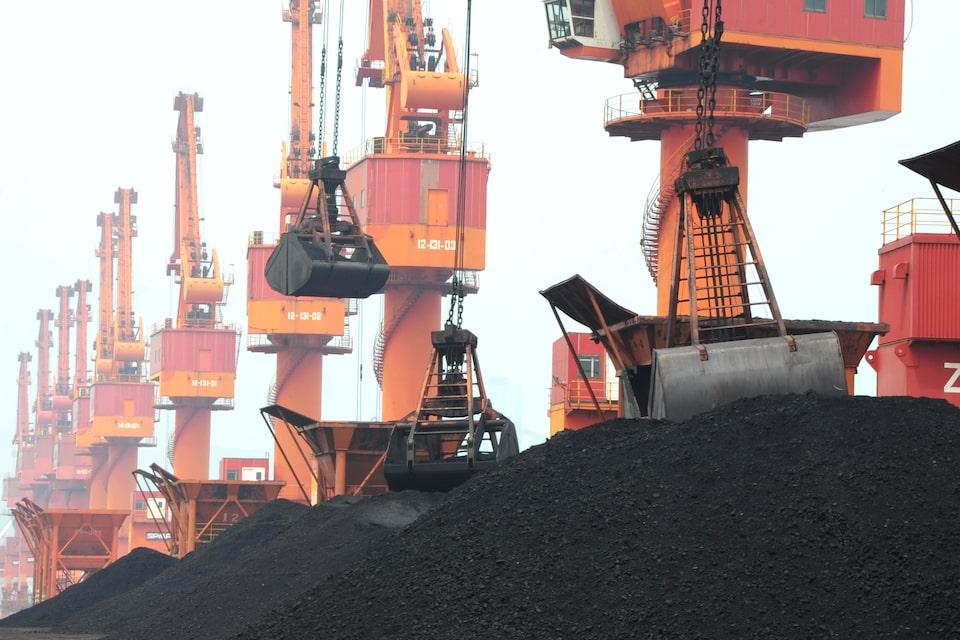
LITTLETON, Colorado, April 1 (Reuters) - The world's largest thermal coal buyers tapped the brakes on imports during the first quarter of 2025, driving purchases to the lowest quarterly total in three years, data from ship tracking firm Kpler shows. Global coal imports for the first quarter were just over 240 million metric tons, roughly 10 million tons less than was shipped during the same quarter a year ago. Sign up here. China, India, Japan and South Korea - the top global coal importers in 2024 - all reduced first-quarter purchases by more than 10% from the same period in 2024, as sharply higher clean power generation allowed for their utilities to cut coal use. Continued growth in clean power output may allow for further cuts to coal imports in the top coal markets over the coming months and could trigger their first collective contraction in thermal imports since 2020. However, several smaller fast-growing economies have expanded coal purchases so far this year, which has somewhat offset the cuts seen into the largest markets and prevented total coal imports from registering a steeper decline. KEY CUTS The top four coal importers, which accounted for 69% of all coal imports in 2024, have been the most aggressive import cutters so far in 2025. China, the world's largest coal consumer, led the import reductions by lowering first-quarter purchases to 67 million tons from nearly 85 million tons in the first quarter of 2024. That was China's lowest quarterly import tally since the third quarter of 2022. Sluggish industrial activity and record domestic coal production last year have curbed China's coal import appetite. India's first-quarter import total was just under 39 million tons, down 5.6 million tons from the same quarter last year. Indian authorities have prioritized boosting domestic coal production over imports, which has resulted in India's average import pace falling from around 45 million tons a month in late 2023 to around 37 million tons a month since mid-2024. South Korea registered the next-largest cut to first-quarter imports, which totaled 15.3 million tons compared to 18.6 million tons in 2024. Record nuclear power output has spurred utilities there to pare coal and gas-fired generation. Japan's first-quarter import tally was just over 25 million tons, down from 27.8 million tons during the first quarter of 2024 and the lowest first-quarter reading since 2018. All told, the four largest coal importers reduced their collective imports by nearly 30 million tons in the first quarter of 2025 from the same months in 2024. GROWTH MARKETS While the largest traditional coal importers have made cuts to coal purchases so far this year, other nations have expanded their coal import volumes. Indeed, total imports outside of China, India, Japan and South Korea accounted for the largest share of total coal imports in three years during the first quarter of 2025. Turkey, Vietnam and Bangladesh all registered record first-quarter import tallies in 2025, while the Philippines and Malaysia both recorded their second-highest first-quarter import totals. Thailand, Pakistan, Hong Kong, Morocco and the Netherlands - the main seaborne entry point into continental Europe - also recorded robust first-quarter import totals. The volume increases seen into these second-tier markets are small compared to the nearly 18 million ton drop recorded into China so far this year. But the nearly 2 million ton climb in imports by Turkey, the 1.5 million ton rise in imports into the Netherlands, and the roughly 1 million ton climbs seen into Bangladesh, Hong Kong and Vietnam can add up to significant tonnage if sustained all year. What's more, there were roughly 43 million tons of coal cargoes dispatched during March that have yet to be rectified by Kpler's trade-matching system. Once cleared, those volumes will likely elevate the delivery volumes into all major coal importing nations during the second quarter of 2025, and prop up coal trade flows even during what is traditionally the low point for global coal use. That said, the steep import drops seen already into China and India in particular bode well for climate trackers who are hoping for signs of a long-term downturn in global coal imports. And even if import volumes continue to climb into the likes of Turkey and Vietnam, a sustained drop in the collective coal imports by the four largest importers should trigger an overall contraction in global coal shipments by year-end. The opinions expressed here are those of the author, a market analyst for Reuters. https://www.reuters.com/business/energy/top-coal-importers-slow-purchases-so-far-2025-maguire-2025-04-01/
2025-04-01 06:28
U.S. President Trump to announce tariff details on Wednesday U.S. manufacturing contracted in March Euro drops with markets betting on ECB rate cut in April NEW YORK, April 1 (Reuters) - The yen rose against the dollar on Tuesday, after U.S. economic data showed softness in the manufacturing sector and labor market ahead of tariff announcements from the Trump administration due Wednesday. U.S. manufacturing contracted in March after two consecutive months of expansion, while a measure of inflation at the factory gate was the highest in nearly three years. This comes as concerns mount about how much tariffs will hike prices for consumers and businesses. Sign up here. A Labor Department report also showed job openings fell to 7.568 million in February. "It is clear that the manufacturing sector is already bearing the brunt of President Trump's protectionist policy changes - and that the rest of the economy could suffer the downstream consequences in the months ahead," said Karl Schamotta, chief market strategist, at Corpay. "Market nerves are badly frayed ahead of Trump's 'Liberation Day' tariff announcement. With deeply-contradictory narratives emerging around the scope, scale, and duration of the administration's proposed trade measures, investors are trimming risk across the currency markets and waiting for the details to emerge," he added. Investors see the Japanese currency as a safer asset than the dollar in the current environment, as U.S. tariffs would likely hurt the U.S. economy as well. Though markets have mostly consolidated to the previous day's ranges, the greenback fell 0.37% to 149.41 versus the yen , while the euro fell 0.65% to 161.14 yen. Readings for weekly jobless claims and monthly non-farm payrolls later in the week could give markets further insights into how uncertainty in U.S. trade policy is hurting its economy. The dollar index , which measures the U.S. currency against six rivals, was flat at 104.25. "It's really the stock market sell off that is dragging down bond yields, which is also serving as a drag on the dollar," said Marc Chandler, chief market strategist, Bannockburn Global Forex. "It's hard to see a sustained dollar gain when interest rates are falling." Trump announced late on Sunday that all countries would face new tariffs this week, though he provided no specific details. He had previously talked about 25% tariffs against European goods. White House aides have drafted a proposal to impose tariffs of around 20% on most imports to the United States, the Washington Post reported on Tuesday. European Commission President Ursula von der Leyen said the EU was open to negotiations with the U.S. on trade, but would retaliate strongly if necessary. The euro fell 0.29% to $1.0786 after gaining 4.5% in the first quarter of the year, its strongest quarterly performance since October-December 2022, thanks mainly to Germany's commitment to sharply increase fiscal spending. Meanwhile, investors have boosted their bets on future European Central Bank rate cuts due to tariff fears and weak economic data, driving bond yields and the single currency lower. In other currencies, the Australian dollar was up 0.4% at US$0.6271 after the central bank left rates unchanged as expected. It hit 0.6217 on Monday, its lowest since March 4. https://www.reuters.com/markets/currencies/dollar-steady-ahead-trumps-reciprocal-tariffs-aussie-soft-before-rba-2025-04-01/
2025-04-01 06:23
Trims 2025 production forecast due to Triton FPSO delays Shares fell as much as 7.5% to 124.2 pence Company optimistic about H2 2025 April 1 (Reuters) - British oil and gas group Serica Energy (SQZ.L) , opens new tab lowered its 2025 production forecast on Tuesday, pressured by delays in output at its Triton floating production storage and offloading (FPSO) unit in the North Sea. Shares of the London-listed firm fell as much as 7.5% to 124.2 pence. Sign up here. Serica has increased production through acquisitions and investments in recent years but faced challenges in 2024 due to an outage at its Triton FPSO operation. "It has been a frustrating start to the year due to issues at Triton. While the first half is pretty disappointing, the second half of this year should be great," CEO Chris Cox told Reuters in an interview. Critical repairs at Triton due to damage from Storm Eowyn in January were originally expected to be completed by mid- to late-March, and production was meant to resume in May. Serica said on Tuesday it now expects production at Triton to resume in June as its joint venture partners had moved up the timeline for summer maintenance. No further shutdowns were planned for 2025, it added. The company revised its annual production forecast to between 33,000 and 37,000 barrels of oil equivalent (boepd) per day, down from 40,000 boepd earlier. Its production for 2024 fell to 34,600 boepd from 40,100 boepd in 2023. The results come against the backdrop of Britain's windfall tax, which pushed some companies to sell assets and others to merge operations and seek to diversify to other regions. Serica, which is discussing a possible deal with North Sea-focused oil producer EnQuest (ENQ.L) , opens new tab, declined to give an update on the talks ahead of an April 4 deadline for EnQuest to make an offer. https://www.reuters.com/business/energy/uks-serica-energy-lowers-full-year-2025-outlook-2025-04-01/