2025-03-31 21:09
NEW YORK, March 31 (Reuters) - The amount in U.S. dollars held as reserve currency globally slipped in the last quarter of 2024 while the percentage of actual dollars held as reserve ticked up, IMF data showed on Monday. Dollar-equivalent amounts dropped also among holdings in euro, pound sterling, yuan, yen, Swiss franc and Australian and Canadian dollars, with only the latter showing a tick up in the percentage of holdings, the IMF's Currency Composition of Official Foreign Exchange Reserves (COFER) data showed. Sign up here. Reported global holdings of reserves of foreign exchange fell to $12.36 trillion at the end of 2024 from $12.75 trillion at the end of the third quarter of last year. Broken-down reserves, those which identify the single currencies, fell to $11.47 trillion from $11.84 trillion. The value of the greenback rose 7.7% in the last quarter of 2024 against a basket of peers (.DXY) , opens new tab, lowering the dollar value of reserves kept in other currencies. The dollar index has fallen nearly 4% in the first quarter of this year. "I don't expect drastic changes from one COFER report to the other because, why would you? The U.S. remains the most liquid and deep market in the world," said Brad Bechtel, global head of FX at Jefferies in New York. "The only category that has changed significantly is the allocation to gold, especially in places like China, India, Russia... but the COFER data doesn't really pick that up." The percentage of dollar-amount holdings reported in dollars edged up to 57.8% of the disaggregated total from 57.3%, and that in loonies ticked up to 2.77% from 2.74%. Euro holdings dropped to 19.8% from 20.0%, while the share of holdings in sterling fell to 4.73% from 4.98%. The share of holdings in yuan was unchanged at 2.18% and yen was little changed at 5.82% from 5.83%. https://www.reuters.com/markets/currencies/percent-global-fx-reserves-dollars-ticks-up-amounts-fall-imf-data-shows-2025-03-31/
2025-03-31 21:08
Williams sees monetary policy as moderately restrictive Barkin favors wait-and-see policy approach at this time Trump administration's tariffs cloud monetary policy outlook NEW YORK, March 31 (Reuters) - New York Federal Reserve President John Williams said on Monday that monetary policy is "well positioned" for what the economy might do this year, as he acknowledged there are risks that inflation could once again heat up. "Monetary policy is moderately restrictive," Williams said in an interview with Yahoo Finance, with the current setting of interest rates "putting some downward pressure on inflation." Sign up here. Williams added that while he cannot predict when the U.S. central bank might change the current level of interest rates, keeping it in place "for some time" will allow officials to study incoming data and decide what they need to do next. Richmond Fed President Thomas Barkin, speaking separately in an interview with CNBC, said the timing of any rate cuts will depend on what happens with inflation. He noted that while he is nervous that the Trump administration's tariffs will push up prices, he is also worried the levies could hurt the job market. "Call me nervous on both," Barkin said, adding that "there's a lot of uncertainty right now, and I think that makes the case for wait and see how this plays out." The two central bankers weighed in at a time of high economic uncertainty as President Donald Trump continues to press forward with disruptive shifts in trade policy while at the same time downsizing the federal government, complicating any effort to gain clarity about the outlook for the economy. That uncertainty proved to be a defining characteristic of the Fed's rate-setting meeting earlier this month, where policymakers held the central bank's benchmark overnight interest rate steady in the 4.25%-4.50% range, while maintaining hopes they'll be able to cut rates later this year. RECESSION RISKS The Fed's outlook has been complicated by the fact that Trump's tariffs, which could be significantly expanded on Wednesday, are almost certain to drive up inflation in the near term, with big questions about how long those gains might last. At the same time, uncertainty is complicating businesses' efforts to plan and invest and is rapidly and dramatically souring consumers' attitudes. All of this is leading to rising worries about an economic downturn. On Sunday, Goldman Sachs forecasters said they will raise their recession probability to 35% from 20%, noting “the sharp recent deterioration in household and business confidence, and statements from White House officials indicating greater willingness to tolerate near-term economic weakness in pursuit of their policies.” The shift in the outlook has been driving financial markets to price in more Fed interest rate cuts as traders and investors reckon the central bank will have to take action to buoy the economy. Williams said that while he was not going to try to put odds on the prospect of a recession, where the economy now stands is "very solid" with "good growth up to this point," with a still healthy labor market. Williams also said "I can assure Americans that we will not allow high inflation to take root like we saw in the 70s and 80s" and that current economic conditions do not merit being called stagflationary, which is a time of weak growth and high inflation. The New York Fed leader also said he needs to have more information before he can say definitely what tariffs will do to price pressures. He said his forecast is "that inflation will be relatively stable" this year, while adding there are "upside risks" for price pressures. Williams also said that as he sees it, longer-run inflation expectations have remained stable and the Fed will make sure it stays that way. Speaking at a Reuters NEXT Newsmaker event, International Monetary Fund Managing Director Kristalina Georgieva backed up Williams' outlook and said the process of slowing inflation will continue, albeit at a reduced pace this year. She also said that "when we look at inflation expectations, they're a little higher, but not dramatically changing the disinflation trajectory between now and 2026." https://www.reuters.com/markets/rates-bonds/fed-officials-cautious-rates-amid-tariff-related-inflation-risks-2025-03-31/
2025-03-31 20:56
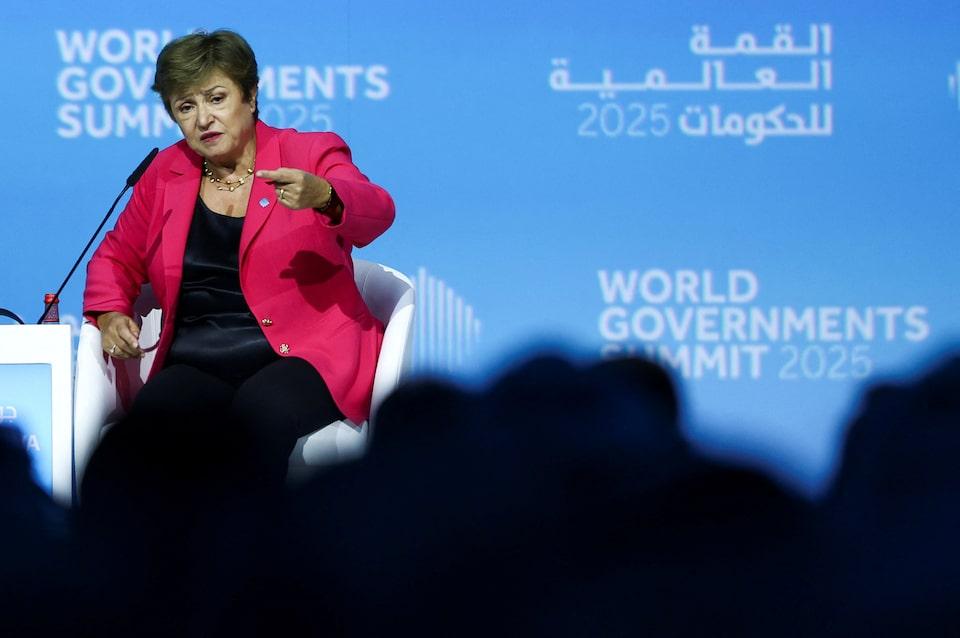
High-frequency indicators show confidence weakening 'somewhat' Coming update to global outlook to include downward 'correction' to growth estimates The longer uncertainty continues, the greater the risk to the outlook WASHINGTON, March 31 (Reuters) - U.S. President Donald Trump's push for sweeping tariffs is creating great uncertainty and denting confidence but is not likely to trigger a near-term recession, International Monetary Fund Managing Director Kristalina Georgieva said on Monday. Georgieva, in her first major interview since Trump took office, underscored the challenges facing a global economy that is still posting underwhelming growth after scarring from the COVID pandemic, but cautioned against being overly alarmed. Sign up here. The IMF will likely lower the economic outlook slightly in its next World Economic Outlook update in about three weeks, but "we don't see recession on the horizon," Georgieva said in a Reuters NEXT Newsmaker interview. "What we see in the high-frequency indicators is indeed indicating that consumer confidence, investor confidence are weakening somewhat, and we know that that then translates into an impact on growth prospects," she said. However, the IMF was not yet seeing "a dramatic impact" from the tariffs implemented and threatened so far by Trump since his return to the White House, she said. The IMF in January nudged up its global economic growth estimate for 2025 to 3.3% from 3.2% in its previous estimate in October, with a half percentage-point upgrade to the U.S. outlook to 2.7% accounting for most of that uptick. Now, though, Georgieva expects the WEO update due in April when the IMF holds its spring meetings in Washington to reflect a small downward "correction" to those estimates, she said. While the current impact was moderate, Georgieva warned that many countries had used up their fiscal and monetary space during COVID and now had high debt levels, limiting their ability to respond to future shocks. Any slowdown or reversal in the process of disinflation could slow the decline of interest rates and make it more difficult for countries to refinance their debt. Trade developments could dampen growth in the U.S. "a little bit," but its overall outlook remained "OK," Georgieva said. Europe's planned increase in defense spending and Germany's decision to repeal its debt brake, which she called a "self-inflicted injury," meant the region's growth projection could be lifted slightly. China needed to use its policy space and focus on increasing domestic consumption, she said. SHIFTING TRADE Since returning to the White House in January, Trump has imposed 20% tariffs on all goods from China; threatened and then delayed 25% tariffs on most goods from Canada and Mexico; launched steep levies on steel and aluminum imports; announced 25% tariffs on imported automobiles; and has declared that April 2 will be "Liberation Day," when he plans to unveil global reciprocal tariffs. The unpredictable pace of the announcements and implementation of the levies has soured investors' attitudes, and major U.S. stock indexes have been down by nearly 10% since mid-February on concern the tariffs will slow growth or even trigger a recession. The longer the uncertainty persists about Trump's approach to tariff policy, the greater the risk to the outlook, Georgieva said. "The sooner there is more clarity, the better, because uncertainty, our research shows, the longer it goes, the more it may negatively impact growth," she said. Georgieva said global trade continued to grow, despite a surge in protectionist measures across the globe that had rewired trading patterns and challenged globalization, and that trade in services was outpacing growth in trade of goods. Small and medium-sized countries were increasing collaboration among themselves, and focusing on structural reforms at home as they worked to increase their own resilience, a silver lining from upheaval in global trade, she said. BESSENT MEETING Asked about her understanding of how committed the U.S. remains to the IMF in the wake of Trump's recent pullback from other multilateral organizations like the World Health Organization, Georgieva said she had a "very constructive" initial meeting with U.S. Treasury Secretary Scott Bessent, saying that he understands the need for the IMF as the global lender of last resort. "Secretary Bessent has a good appreciation for why it is in the interests of the U.S. economy that the Fund exists. We are the only institution that has the capacity to rescue countries when they are in trouble," she said. Georgieva also said that the U.S. has earned some $3.2 billion on its IMF resources over the past two years, with the holdings acting "like a savings account." Georgieva said the IMF, in turn, values the U.S. because it is the world's largest economy and is by far the largest IMF shareholder, at 17.4%. "And the United States is our home. This is where we live. This is where the kids of my staff go to school," she said. https://www.reuters.com/markets/newsmaker-imfs-georgieva-recession-not-horizon-despite-tariff-worries-2025-03-31/
2025-03-31 20:54
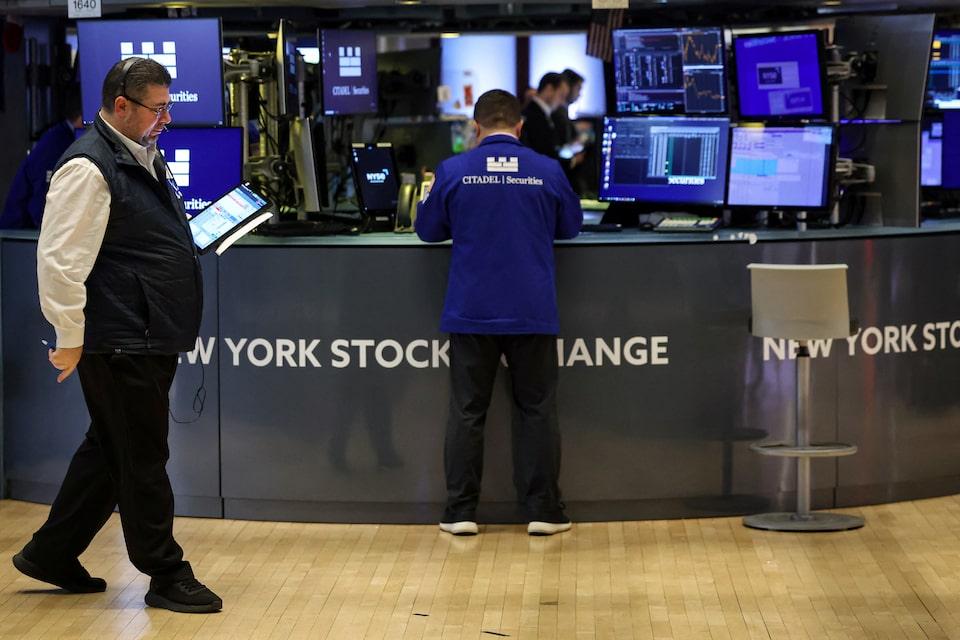
S&P, Nasdaq post worst month since December 2022 Biggest quarterly pct falls: S&P since Q3 2022, Nasdaq Q2 2022 Uncertainty over Trump tariffs weigh on markets in first quarter Trump to announce extensive tariffs on Wednesday On Monday: Dow up 1%, S&P 500 up 0.55%, Nasdaq down 0.14% March 31 (Reuters) - The S&P 500 and the Nasdaq Composite posted on Monday their worst quarterly performances since 2022, as uncertainty around the Trump administration's economic agenda roiled U.S. equity markets in the first quarter of 2025. The two benchmarks also suffered heavily in March, recording their biggest monthly percentage drops since December 2022, as President Donald Trump rolled out a swathe of new tariffs which raised fears of a global trade war that would hurt economic growth and spur inflation. Sign up here. For the quarter, the S&P 500 (.SPX) , opens new tab slumped 4.6%, while the Nasdaq Composite (.IXIC) , opens new tab plummeted 10.5%. The Dow Jones Industrial Average (.DJI) , opens new tab was not immune to the unease, slipping 1.3% in the opening three months. "Investors, more or less in this first quarter, threw their hands in the air, as you really cannot trade around this," said Adam Turnquist, chief technical strategist for LPL Financial. The Magnificent Seven technology names, which drove markets higher over a bull market which stretched through 2023 and 2024, weighed heavily on U.S. equity markets as investors sold off growth names. Tesla was down almost 36% in the first quarter, and Nvidia dropped nearly 20%. "Our big lesson from the first quarter is diversification is not dead," said Michael Reynolds, vice president of investment strategy at Glenmede. "Whether you're looking between, or within, asset classes, if you avoided the perils of market concentration, you actually held up quite a bit better versus some of the headline indexes." While information technology (.SPLRCT) , opens new tab and consumer discretionary (.SPLRCD) , opens new tab - both sectors with heavy influence from big-tech names - posted double-digit percentage declines for the quarter, a majority of the 11 S&P sectors were higher in the same period, led by energy's (.SPNY) , opens new tab 9.3% increase. On Monday, both the S&P 500 and the Dow temporarily shook off the uncertainty around the Trump administration's upcoming tariff plans, which are expected to be outlined in greater detail on Wednesday. Trump said on Sunday that expected tariffs he is set to announce will include all nations. He has already imposed tariffs on aluminum, steel and autos, along with increased tariffs on goods from China. The S&P 500 (.SPX) , opens new tab gained 30.91 points, or 0.55%, to 5,611.85 points, and the Dow Jones Industrial Average (.DJI) , opens new tab rose 417.86 points, or 1%, to 42,001.76. The Nasdaq Composite (.IXIC) , opens new tab lost 23.70 points, or 0.14%, to 17,299.29. The Financial stocks helped boost the S&P 500 on Monday. Both Discover Financial Services (DFS.N) , opens new tab and Capital One Financial (COF.N) , opens new tab advanced, up 7.5% and 3.3% respectively, as investors bet their merger would ultimately be approved by regulators. The S&P 500 consumer staples index (.SPLRCS) , opens new tab, often considered a safe haven within stock markets, was the leading sector though with its 1.6% increase. Energy also rose, tracking a jump in crude prices. The CBOE Volatility Index (.VIX) , opens new tab, Wall Street's so-called fear gauge, jumped to a two-week high at 22.28 points. As a result of tariff uncertainties, Goldman Sachs raised the probability of a U.S. recession to 35% from 20%, cut its year-end target for the S&P 500 to 5,700, and forecast more interest rate cuts by the Federal Reserve. Focus this week will also be on economic data, including ISM business activity surveys and the crucial non-farm payrolls report. Also due this week are speeches from several U.S. central bank officials, including Fed Chair Jerome Powell. Drugmakers' shares slid after reports the U.S. Food and Drug Administration's top vaccine official had been forced to resign. Moderna (MRNA.O) , opens new tab dropped 8.9%. Gene therapy companies Taysha Gene Therapies (TSHA.O) , opens new tab and Solid Biosciences (SLDB.O) , opens new tab fell 28% and 14.4%, respectively. In deals news, Rocket Companies (RKT.N) , opens new tab was down 7.4% after the mortgage lender said it agreed to a $9.4 billion acquisition of Mr. Cooper Group (COOP.O) , opens new tab. The announcement, though, sent the mortgage servicer's stock up 14.5%. https://www.reuters.com/markets/us/futures-tumble-tariffs-fuel-recession-worries-2025-03-31/
2025-03-31 20:47
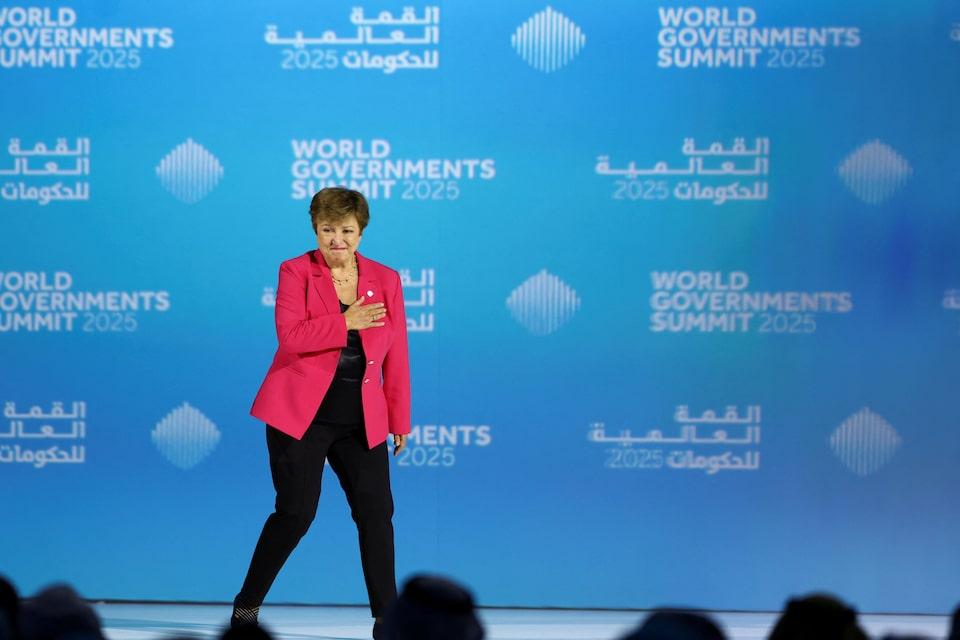
WASHINGTON, March 31 (Reuters) - The International Monetary Fund views Argentina's request for an initial 40% disbursement from the $20 billion new loan program it is negotiating with the global lender as "reasonable," IMF Managing Director Kristalina Georgieva told Reuters on Monday. "It's a reasonable request. They've earned it, given their performance," Georgieva said in a Reuters NEXT Newsmaker interview, citing Argentina's efforts to finally tackle long-overdue economic reforms. Sign up here. Georgieva said she expected the negotiations with Argentina to be completed before the upcoming IMF and World Bank spring meetings in Washington on April 21-26. Markets were watching the negotiations closely, she said. Argentine Economy Minister Luis Caputo disclosed the request for a large first disbursement from the IMF program on Sunday. Caputo said the South American country had eliminated the fiscal deficit and cut public spending, and the government was working to increase central bank reserves and begin unwinding foreign exchange restrictions that hinder business and investment. "We've requested more because, traditionally, these are made in exchange for monetary and fiscal targets," Caputo said in remarks on television, adding that first disbursements were usually between 20% and 30%. "We've already done everything." Georgieva said staff-level negotiations were still under way with Buenos Aires, but expressed confidence that a deal could be reached for a four-year program to follow the previous $44 billion lending arrangement signed in 2018. Once a staff-level agreement is reached, it must still be approved by the IMF's executive board. https://www.reuters.com/world/americas/imf-says-argentinas-request-40-disbursement-new-loan-is-reasonable-2025-03-31/
2025-03-31 20:28
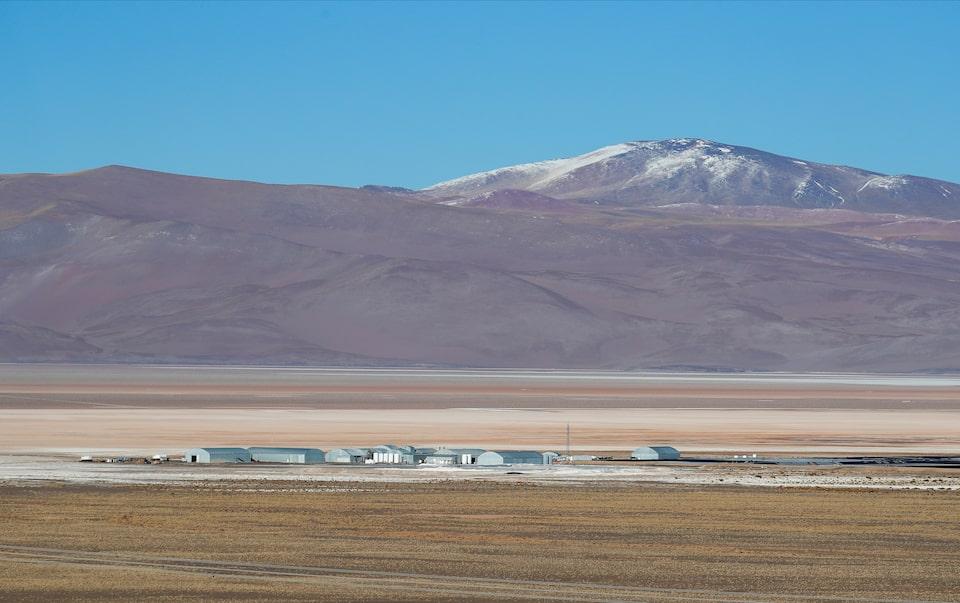
BUENOS AIRES, March 31 (Reuters) - Argentina's mining exports reached a historic high in January and February this year, outdoing the prior record from the same period a decade ago by 13%, the mining ministry reported on Monday. The first two months of the year generated $782 million in exports, compared with the prior record of $692 million in January and February of 2015. Sign up here. Argentina's mining exports are primarily gold, along with silver and lithium. Year-on-year, January and February gold exports rose 54% and silver increased 46%. Lithium ticked up 23%, but was still lower than the amount exported in the first two months of 2023. Switzerland, China, the United States and Canada were the main destinations for all mining exports together, while China took the lead for lithium. https://www.reuters.com/markets/commodities/argentinas-january-february-mining-exports-hit-10-year-record-2025-03-31/