2025-03-31 20:23
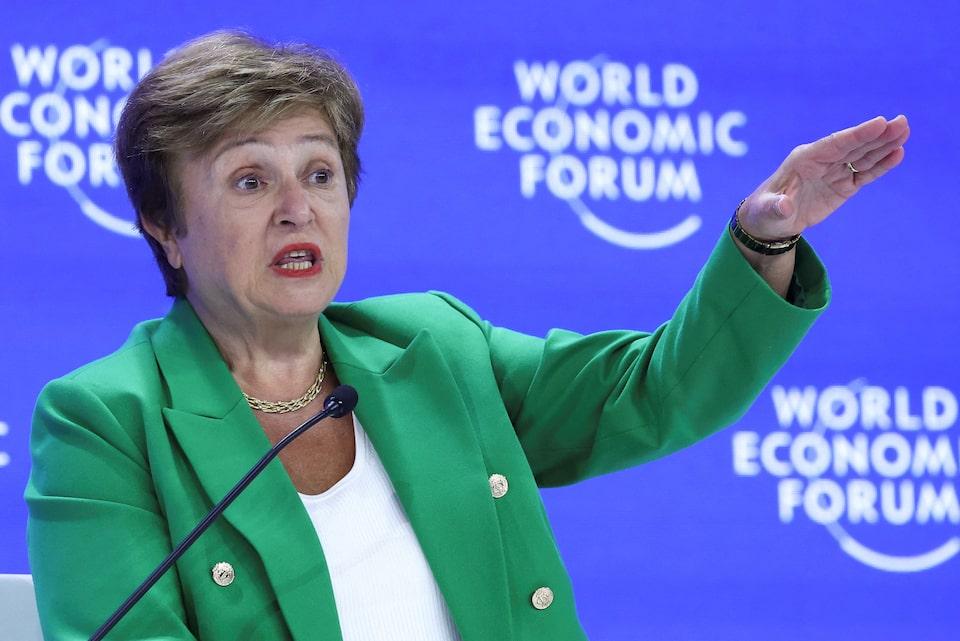
WASHINGTON, March 31 (Reuters) - Initial signs from the Trump administration on its plans to deregulate digital assets are "quite encouraging," International Monetary Fund Managing Director Kristalina Georgieva said in a Reuters NEXT Newsmaker interview on Monday. "There has been some overdose regulation in some cases," Georgieva said, citing what she called underwhelming economic growth in the last years. "So removing barriers for entrepreneurship and growth is a good thing." Sign up here. Georgieva said moves to deregulate should be done carefully without creating financial and macroeconomic risks, but that initial signs from the White House indicated that the Trump administration was focused on striking the right balance between over- and under-regulation. "What we heard so far from the administration, from the summit that took place in the White House, is actually quite encouraging because it is a conversation about smart regulation, how to make sure that the economy can rely on the advancement of technology in that area, but do that safely," she said. Georgieva said she hoped the United States would take a leadership role in charting a course for regulation of digital assets. The IMF also plans to host a public discussion of the issue during the April 21-26 spring meetings of the IMF and World Bank, she said. "We feel that over-regulating technology-driven areas is a problem. Under-regulating is a risk, so finding the right balance is something that I also hope that the Fund can contribute to," she said. President Donald Trump, who pledged during his presidential campaign to be a "crypto president," has promised to reverse an industry crackdown under former President Joe Biden's Securities and Exchange Commission, which sued multiple crypto companies, alleging they had flouted its rules. The SEC's new leadership has agreed to withdraw or pause many of those cases. Trump hosted a first-of-its-kind summit focused on his plans for a government-owned stockpile of digital assets at the White House earlier this month, with many of the industry's elite. A major focus of the event was Trump's goal to build a strategic reserve containing bitcoin, which he has formalized in an executive order, which also called for a stockpile of other digital assets. Industry executives said it was good to see the administration collaborating with companies after years in which some felt they were under attack over security and consumer protection issues. https://www.reuters.com/technology/newsmaker-imfs-georgieva-says-initial-signs-us-digital-deregulation-are-2025-03-31/
2025-03-31 20:22
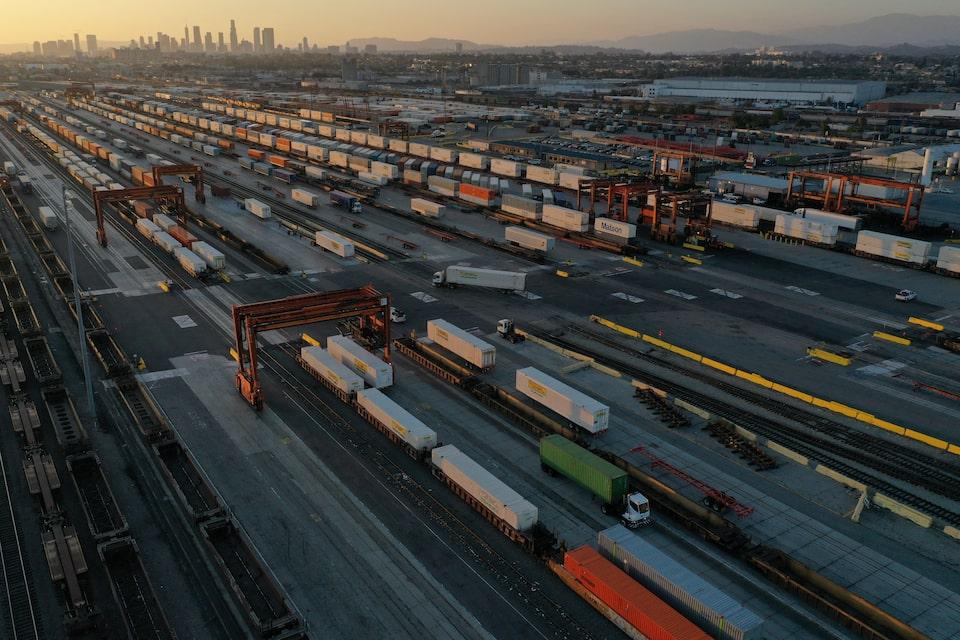
March 31 (Reuters) - The International Association of Machinists and Aerospace Workers (IAM) said on Monday it had secured a tentative deal that covers about 4,900 freight rail workers with the National Carriers' Conference Committee (NCCC), which represents U.S. freight railroads. The agreement follows a recent wave of agreements and ratifications in the U.S. railroad industry after the Joe Biden administration had called for better benefits for freight railroad workers. Sign up here. An electronic ratification vote will take place between April 25 and April 30, IAM said. The tentative agreement covers IAM District 19 members at BNSF, Norfolk Southern (NSC.N) , opens new tab, Canadian National (CNR.TO) , opens new tab, Belt Railway, Terminal Rail, Consolidated Rail, Indiana Harbor Belt, New Orleans Public Belt, and Palmetto Railways. https://www.reuters.com/business/autos-transportation/iam-secures-tentative-deal-4900-freight-rail-workers-2025-03-31/
2025-03-31 20:10
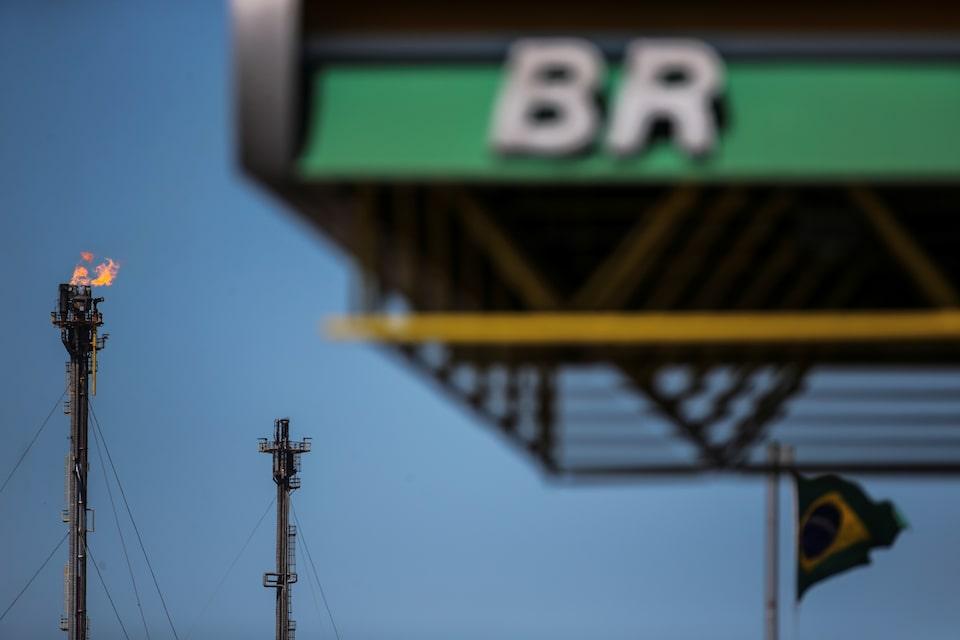
RIO DE JANEIRO, March 31 (Reuters) - Brazilian state-run oil company Petrobras (PETR4.SA) , opens new tab said on Monday it will lower refinery gate diesel prices for the first time in more than a year, as local prices currently stand above import parity. The company said in a statement it would cut the price of diesel sold to distributors by 4.6% to 3.55 reais ($0.6197) per liter starting April 1, while gasoline prices are set to remain unchanged. Sign up here. Petrobras will also cut jet fuel prices to distributors by an average of 7.9% starting April 1, said the firm in a statement later on Monday. The move marks the first diesel price tweak by Brazil's largest oil refiner since early February, when it delivered a nearly 7% hike, and the first cut since December 2023. It should be good news for leftist President Luiz Inacio Lula da Silva, whose approval ratings have declined sharply in recent months amid high inflation. Under Lula, Petrobras has adopted a new pricing strategy that is intended to protect fuel prices in Brazil from international volatility, while still keeping sales profitable for the firm. Petrobras' move follows the appreciation of Brazil's currency, which has strengthened nearly 8% against the U.S. dollar this year, and occurred as global oil prices have traded below their levels at the time of the company's last price hike. For most of this month, Petrobras' diesel prices have stood above import parity and were 2% above it on Monday, according to Abicom, a fuel imports association. ($1 = 5.7289 reais) https://www.reuters.com/business/energy/petrobras-lower-diesel-prices-by-46-ceo-says-2025-03-31/
2025-03-31 20:04
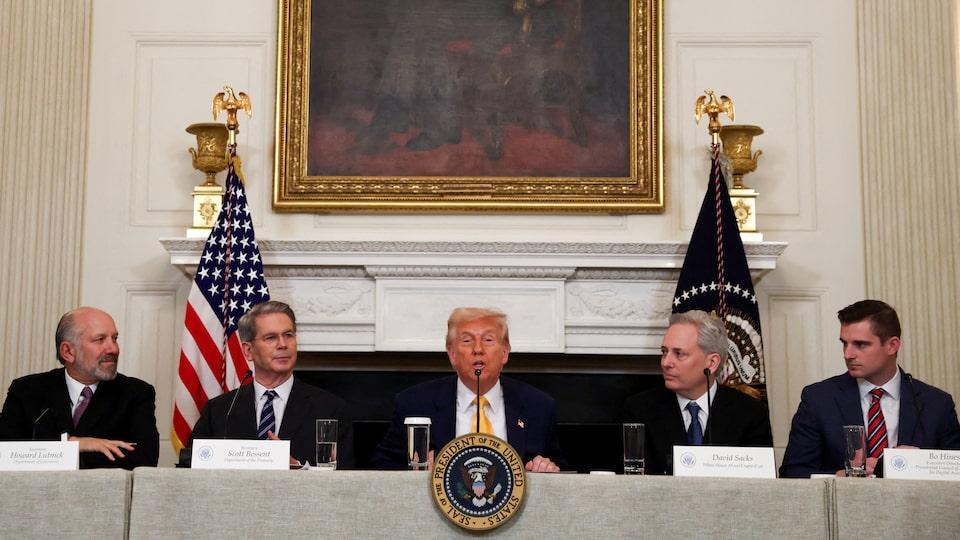
Trump family has a claim on 75% of net revenues from World Liberty's token sales World Liberty's tokens are non-tradeable; holders cannot vote for a share in profits Critics warn of potential conflicts of interest with president's involvement in crypto Over $280 million raised from buyers purchasing $1 million or more in $WLFI tokens LONDON/NEW YORK, March 31 (Reuters) - As World Liberty Financial raised more than half a billion dollars, President Donald Trump’s family took control of the crypto venture and grabbed the lion’s share of those funds, aided by governance terms that industry experts say favor insiders. Launched last fall, World Liberty’s goal is to allow people to access financial services using cryptocurrencies and without intermediaries like banks in what is called decentralized finance, or DeFi. But it has yet to launch a public platform and has reported only a small staff, a review of the project shows. Sign up here. Even so, World Liberty said in mid-March it had raised $550 million selling so-called governance tokens. Most of those sales took place after Trump’s election win in November, Reuters calculations show. The tokens, which go by the symbol $WLFI, give holders the right to vote on changes to the project’s underlying code and to signal their opinion on its direction and plans. They cannot be traded. As its fundraising got traction, World Liberty disclosed in January that the Trump family had taken control of the business, a review of changes in the fine print on World Liberty’s website shows. Two of its co-founders, crypto entrepreneurs Zak Folkman and Chase Herro, were replaced as the controlling parties of World Liberty by an entity in which the Trump family holds a 60% stake. The changes have not been previously reported. Overall, the Trump family now has a claim on 75% of net revenues from token sales and 60% from World Liberty operations once the core business gets going. The arrangement means the Trump family is currently entitled to about $400 million in fees. After World Liberty's co-founders take their cut, the crypto venture will be left with 5% of the $550 million raised to date to build the platform, according to Reuters calculations. The arrangements, including the Trump family’s large share of the project’s revenues and the non-tradeable nature of the governance tokens, make World Liberty unusually centralized for the industry, according to a survey of the practices of the five largest DeFi lending platforms and interviews with four U.S. academics who study the crypto industry. "It's hard for me to see any economic benefit to the owner of these tokens," said Jim Angel, an associate professor at Georgetown University who has written about DeFi regulation. David Krause, a longtime finance professor at Marquette University in Milwaukee who recently published a study of World Liberty, said that the structure of the project “pretty much excludes public investors or token holders from any meaningful financial participation.” A White House spokesperson referred questions about World Liberty to the Trump Organization. The Trump Organization's chief legal officer and the president's two older sons, who are executives at the company, did not respond to requests for comment. The Trump Organization announced in January that the president's investments, assets and business interests would be held in a trust managed by his children and he would play no role in day-to-day operations or decision-making. The family's business also retained an attorney to serve as an ethics adviser to "avoid any perceived conflicts of interest." Folkman and Herro did not reply to Reuters questions in person and in writing. In a post on social media platform X on March 14, World Liberty said it “is a DeFi project with a tremendous mission to build and democratize a new financial system for the benefit of millions.” At a conference in February, Herro said the plan was to open crypto investing to everyday Americans such as teachers, dentists and firemen. His business partner, Donald Trump Jr, the president's son, has complained about the family being excluded from traditional banking in the aftermath of his father's first term. CRYPTO PRESIDENT The Trump family’s investment in World Liberty ties the personal fortunes of a sitting U.S. president to an asset class that sits at the outer edges of both risk and regulation. Trump has promised to be the “crypto president,” who will popularize its mainstream use in America. He has said he backs crypto because it can improve the banking system and increase the dominance of the U.S. dollar. At the same time, the Trump family, long rooted in skyscrapers and country clubs, has opened beachheads in crypto, quickly gaining hundreds of millions of dollars. A so-called meme coin promoted by Trump has generated at least $349 million in fees for entities connected to the president, according to crypto data firm Chainalysis. On Monday, the Trump family deepened its crypto interests, as a company formed with the president's elder sons, Eric and Donald Trump Jr., took a minority stake in a newly-formed bitcoin producer called American Bitcoin. Eric Trump will become the chief strategy officer of the new firm, which will focus on mining bitcoin and aims to become publicly listed, the statement said. The prospect of Trump and his family benefiting from deregulation has drawn criticism from his political opponents and some government ethics experts who say it creates the potential for conflicts of interest and influence peddling. "You've got the guy in charge who is responsible for his own regulation," said Ross Delston, a former U.S. banking regulator who has acted as an expert witness on anti-money laundering issues for the government. Delston also pointed to the potential for people buying $WLFI tokens to earn political favor. It would be “the perfect vehicle,” he said, for governments or oligarchs overseas “to funnel money to the president." World Liberty has attracted well-heeled buyers: Almost 70% of the money raised came from wallets that spent at least $100,000, and more than 50% was buys of $1 million or more, according to a Reuters analysis of publicly available information on transactions. While buyers of $WLFI gave their names to the venture, the identity of nearly all of those big spenders is hidden from public view by anonymous crypto wallets. Among a handful of buyers that Reuters was able to identify, several said they bought into the token because they believed Trump’s involvement would help it succeed as a business. ‘LET’S GO PURSUE IT’ World Liberty’s beginnings lie in the convergence of two obscure figures on the crypto scene and some of the most powerful people in American politics. Folkman and Herro entered Trump circles via the family of New York real estate mogul Steve Witkoff, a longtime Trump friend who is now also his envoy to the Mideast. The two crypto entrepreneurs had already collaborated on several companies together focused on making money from online ventures. Their business background includes past instances of dissolution, litigation and unpaid debts, according to corporate records, state filings and U.S. court documents. Early in his career, Folkman offered seminars on how to “date hotter girls.” Steve Witkoff said he was introduced to the pair by one of his sons, when speaking about how the deal came together on a crypto podcast hosted in September by the Trump family. After meeting the two crypto businessmen and hearing them speak about the difficulties of getting credit in traditional finance, Witkoff said he thought of the Trumps. He set up a meeting with Donald Trump and his two oldest sons for Herro and Folkman to describe the opportunities of DeFi. The Trumps, Witkoff said, were smitten: “We said, ‘Let’s go pursue it.’” Witkoff did not respond to requests for comment. Despite Trump’s backing, token sales were slow at first. According to a U.S. regulatory filing by the company dated October 30 - around two weeks after World Liberty sales had begun - the venture’s total amount sold was only $2.7 million. Then, on November 25, less than three weeks after Trump won the U.S. election, Justin Sun, a Hong Kong-based crypto entrepreneur who was fighting a U.S. securities fraud lawsuit, announced that he’d sunk $30 million into $WLFI - the amount the company said it needed to jumpstart operations. “His amount was pretty meaningful at that point,” said “Ogle”, a World Liberty security adviser who only goes by that pseudonym and has appeared in video interviews with his face obscured by a bandana and sunglasses. Sun has said his investment has since risen to $75 million. As well as its single-largest known investor, he has become an advisor to the project. Meanwhile, the U.S. Securities and Exchange Commission in February paused its case against him, citing public interest. Sun didn’t respond to a request for comment. The SEC declined to comment. TAKING CHARGE Initially, Herro and Folkman were listed as the “sole directors and members” of World Liberty Financial Inc, the main entity developing the platform, according to World Liberty’s terms and conditions, last updated in October. On January 19 and 20 - the day of Trump’s inauguration - World Liberty raised almost $300 million in a frenzy of token sales, according to a Reuters analysis of blockchain data. Around that time, its website was updated to say WLF Holdco LLC now controlled World Liberty Financial Inc. And DT Marks DeFi LLC – Trump’s company – now held about 60% of WLF Holdco. It did not disclose who owns the rest. The president’s son, Eric, also gained a seat on WLF Holdco’s board of managers. Reuters could not ascertain the terms of any deals between Trump and his partners that led to the changes. Angel, the Georgetown professor, said the corporate structure had put several layers of entities between Trump and World Liberty, protecting the president from any potential legal action should something go wrong. “He can say: ‘You can't sue me because I'm not involved’,” Angel said. AN OUTLIER The five largest DeFi lending platforms, as ranked by data site DefiLlama, all have governance tokens that give holders voting rights. But unlike World Liberty, those five platforms either allocated the majority of their governance tokens to be given away for free to users, sold them to venture capitalists in return for money to build the platform, or paid them to partners in return for building the project. World Liberty governance tokens lack another critical feature of those issued by other DeFi platforms – the ability of token holders to vote for the platform to pay them a share of its profits. World Liberty has told token holders any vote to breach its existing deals with Trump and other backers would have no force, according to a 13-page description of the business released in October. Folkman told a New York audience on March 18 that the company is working on three main products, including a “lend and borrow” market that would be announced soon and a personal finance application. World Liberty also said in March that it is planning to launch a stablecoin, known as USD1, that will be backed by assets such as U.S. Treasuries and redeemable for a dollar. One company that World Liberty has collaborated with is Ondo Finance. The startup, founded in 2021 by former Goldman Sachs employees, lets users buy blockchain-based tokens backed by U.S. Treasuries and other assets such as money market funds, thereby earning interest. The two companies said in a statement that they would collaborate to “advance the adoption of tokenized real-world assets.” “They're all in early stages, but we're exploring what they're doing at a very high level,” Nathan Allman, Ondo’s CEO, told Reuters. While World Liberty has also used some of the money it raised to invest in other cryptocurrencies, it has yet to launch a DeFi platform. Two software developers listed on World Liberty's website are based in Romania, according to their social media profiles. Octavian Lojnita was previously a developer at Dough Finance, a Herro and Folkman project that collapsed last year after being hacked, according to Lojnita's online profile and the publicly available source code of Dough. The online handle for a second developer at Dough matches that of Bogdan Purnavel, also at World Liberty. Lojnita declined to discuss his involvement in World Liberty. Purnavel referred questions to World Liberty. The coding for contracts posted to the project’s blockchain – a public-facing database – shows that World Liberty “appears to still be in development, with several functionalities not yet implemented or fully operational,” according to a review in late March by CertiK, a cybersecurity company that audits projects for security flaws. https://www.reuters.com/business/finance/how-trump-family-took-over-crypto-firm-it-raised-hundreds-millions-2025-03-31/
2025-03-31 20:02
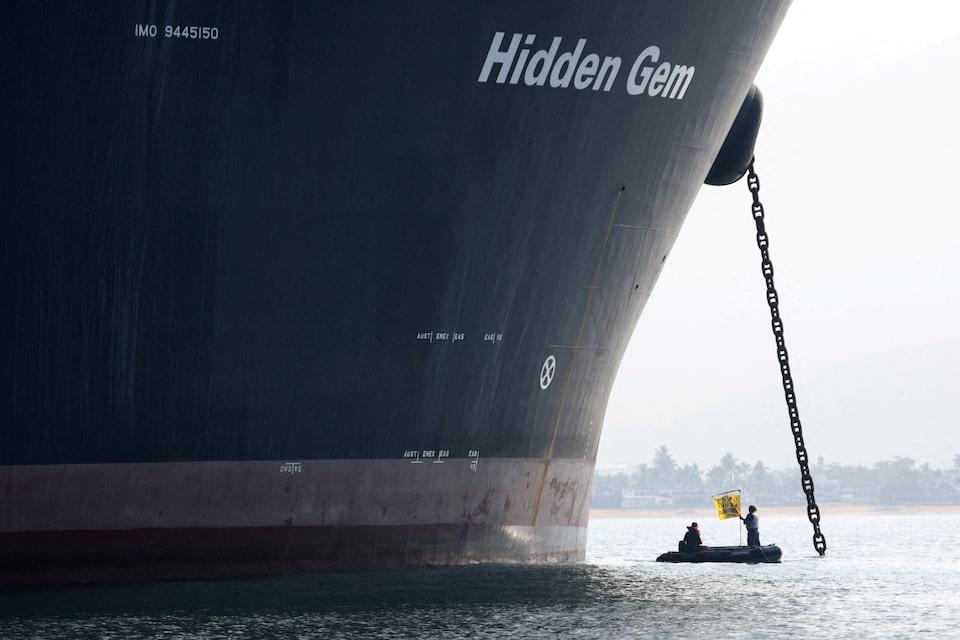
Executive order under review would bypass UN-backed body International Seabed Authority has yet to set rules NOAA would oversee permitting for deep-sea mining March 31 (Reuters) - The White House is weighing an executive order that would fast-track permitting for deep-sea mining in international waters and let mining companies bypass a United Nations-backed review process, according to two sources with direct knowledge of the deliberations. If signed, the order would mark U.S. President Donald Trump's latest attempt to tap international deposits of nickel, copper and other critical minerals used widely across the economy after recent efforts in Greenland and Ukraine. Trump earlier this month also invoked emergency powers to boost domestic minerals production. Sign up here. The International Seabed Authority - created by the United Nations Convention on the Law of the Sea, which the U.S. has not ratified - has for years been considering standards for deep-sea mining in international waters, although it has yet to formalize them due to unresolved differences over acceptable levels of dust, noise and other factors from the practice. Trump's deep-sea mining order is likely to stipulate that the U.S. aims to exercise its rights to extract critical minerals on the ocean's floor and let miners bypass the ISA and seek permitting through the U.S. Department of Commerce's National Oceanic and Atmospheric Administration's mining code, according to the sources. Such a step could give mining companies a formal permitting process to complete and avoid the potential perception that they aim to mine the ocean's floors without any oversight. The plans are under discussion and could change before Trump signs the order, the sources said. The White House did not respond to requests for comment. Companies that aim to mine the seabed say they consider the practice's environmental impacts to be significantly smaller than mining on land, although multiple environmental groups say the practice should not be allowed to begin given the potential risks to marine life. Any country can allow deep-sea mining in its own territorial waters, roughly 200 nautical miles from shore. Governments most interested in developing deep-sea mining industries in their waters include the Cook Islands, Norway and Japan. The 36-member ISA council met again in Kingston, Jamaica, earlier this month to review hundreds of proposed amendments to a 256-page draft mining code for international waters, although the meeting ended without resolution. The ISA's lack of progress led Vancouver-based The Metals Co (TMC.O) , opens new tab - which is backed by metals giant Glencore (GLEN.L) , opens new tab - to formally ask Washington for deep-sea mining permits last Thursday. The Metals Co said "commercial industry is not welcome at the ISA" and that the U.S. is "a regulator willing to engage with the applicants and give applications a fair hearing." AMERICA FIRST POLICIES The move would mark the latest step back by Trump's White House from global institutions it sees as at odds with his "America First" economic policies. Trump last week paused contributions to the World Trade Organization, sources told Reuters. The move could also raise tensions with other nations competing for resources in international waters, and who believe permitting should be in the hands of a global body that oversees access and resolves disputes. Part of Trump's hunt for fresh sources of critical minerals has to do with efforts to reduce China's broad control over their production and processing, with Beijing beginning to block exports of key minerals used in defense applications. It was not immediately clear what kind of staffing NOAA would require to review deep-sea mining permits. Like many U.S. federal government agencies, NOAA has seen job cuts as part of Trump's efficiency push with Elon Musk. Deep-sea mining is also more technically complex than mining on land given the distance from shore, among other factors. In a visit last week with Jamaican Prime Minister Andrew Holness, U.S. Secretary of State Marco Rubio said that Washington aimed to partner with Kingston on energy-related projects, including "mining opportunities off the seabed." Beyond The Metals Co, other companies eyeing deep-sea mining include California-based Impossible Metals, Russia's JSC Yuzhmorgeologiya, Blue Minerals Jamaica, China Minmetals, and Kiribati's Marawa Research and Exploration. https://www.reuters.com/markets/commodities/white-house-weighs-executive-order-fast-track-deep-sea-mining-sources-say-2025-03-31/
2025-03-31 19:55
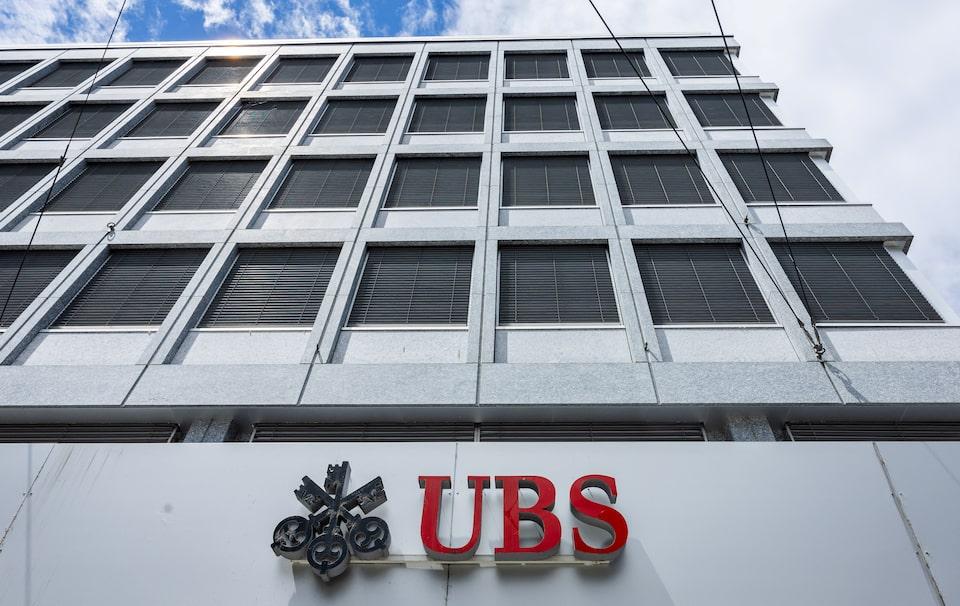
March 31 (Reuters) - UBS (UBSG.S) , opens new tab has appointed its Americas chief investment officer, Solita Marcelli, to succeed Bruno Marxer as head of global investment management, according to an internal memo seen by Reuters on Monday. Marcelli will take on the role, which will be expanded to now cover the Americas, APAC, Switzerland and EMEA, effective July 1. Sign up here. Marxer, who has decided to retire at the end of the first quarter of 2026, will continue in his role until June 30 for seamless transition, the memo said. UBS said last year it was planning to overhaul its wealth management business in the United States, splitting the operation into six divisions and focusing more on clients that are not super wealthy. Ulrike Hoffmann-Burchardi will assume the role of chief investment officer Americas effective July 1, in addition to her current role as chief investment officer for global equities, according to a different memo seen by Reuters. https://www.reuters.com/business/finance/ubs-names-new-head-global-investment-management-memo-says-2025-03-31/