2025-03-31 06:03
Toyota's hybrid demand outpaces supply, causing global delivery delays Tight supply of components affecting Toyota suppliers Aisin, Denso Toyota says making efforts to boost production to respond to demand NEW DELHI/AUSTIN, March 31 (Reuters) - Soaring demand for Toyota's (7203.T) , opens new tab gasoline-electric hybrids has left suppliers struggling to keep pace, leading to shortages of parts and months-long waits for car buyers, according to four people familiar with the situation. Stocks of hybrids are low at Toyota dealers across major markets, including the U.S., Japan, China and Europe, two of the people told Reuters. Sign up here. The surge in demand presents a challenge for Toyota, the dominant player in hybrids. But it also vindicates the Japanese automaker's bet on the technology against predictions by some rivals that battery-only electric vehicles would wipe out hybrid demand. Global sales of hybrids, including plug-in models, have almost tripled to 16.1 million from 5.7 million over the past five years, according to data provided by LMC Automotive. Toyota's European customers are waiting on average 60 to 70 days for new hybrids, about double the duration in 2020, one of the people said. Vehicles with the heaviest demand and shortest supply in Europe include the Yaris Cross hybrid and RAV4 plug-in hybrid, according to Toyota. In Japan, buyers are waiting two to five months for many models, a Toyota website shows. At one U.S. West Coast dealership, Prius hybrids were sold out in mid-February and just a handful of Camry hybrids were available, another person said. And in India, an important growth market for Toyota, delivery times have improved since last year but are still two to nine months depending on the model, another person said. Reuters interviewed 10 industry figures, including people at Toyota and its suppliers, who described bottlenecks affecting the hybrid supply chain. Details of the parts and suppliers involved, and some measures Toyota is considering to ease the strain in one market, have not been previously reported. Toyota said in a statement that demand for hybrids had increased "significantly in the past year in all regions" and it was doing its best to boost production in response. The automaker said it had improved vehicle delivery lead-times over the past year. "Currently, the production capacity for hybrid parts and components from our suppliers and our in-house parts manufacturing is line with our annual production plans and our vehicle assembly capacity," it said. SUPPLY SNARLS The delivery times are causing headaches for some customers. Saugata Dasgupta, an Asia Development Bank executive in New Delhi, told Reuters he ordered a hybrid Toyota Innova Hycross SUV in January 2023. But he learned from the dealer in August 2024 that he faced a further wait of 25 to 30 weeks. This month, another email arrived: He would need to wait another 15 to 25 weeks. By that point, Dasgupta said, he had already given up waiting and bought a gasoline-powered model from local automaker Mahindra & Mahindra. The delays stem from tight supply of components used in hybrid powertrains, which are largely made in Japan and shipped abroad to where cars are assembled, said two of the people, who like others were granted anonymity because they weren't authorized to disclose the information. A shortage of magnets used in parts supplied to Aisin Corp has emerged as one pain point, one of the people said. As a result, Aisin, one of the Toyota group's largest component makers, wasn't able to get rotors and stators from its suppliers, delaying delivery of hybrid motors to Toyota, this person said. While the magnets were sourced from Japan and China, the resulting supply issue for Aisin was global, the person said. Similarly, the Toyota group's top components maker, Denso, has been affected by bottlenecks at second- and third-tier suppliers that caused delays with deliveries of its inverters, another person said. Inverters convert the battery's current and are used to control the motor. Faced with component shortages, Toyota may look to other suppliers besides Denso in India, and is considering making inverters in the country, two of the people told Reuters. Toyota didn't address Reuters questions about specific suppliers. Aisin and Denso declined to comment. Reuters reported last year that Toyota is moving to convert most or all of its lineup to hybrid-only vehicles, which could put more pressure on suppliers. ADDING CAPACITY Varinder Wadhwa, a vice president at Toyota Kirloskar Motor, the automaker's India unit, said in a statement that removal of supply-chain bottlenecks had already resulted in "significant rationalization" of wait times. The company recently added capacity to produce an additional 32,000 vehicles annually and was investing to add another 100,000 vehicles, Wadhwa said. Elsewhere, Toyota has invested $14 billion for a battery plant in North Carolina to meet hybrid demand, and has said it is due to start shipping batteries for North American electrified vehicles in April. Nearly half of the vehicles Toyota assembled in the U.S. last year were hybrids. Hybrids are a rare bright spot for Toyota in China, where it faces fierce competition from the likes of BYD. While Toyota's overall sales in China in 2024 fell 7% from a year earlier, sales of its electrified vehicles - mostly hybrids - grew 27%. Competitors such as Hyundai (005380.KS) , opens new tab and its Kia affiliate are also struggling to ramp up production of hybrids, mainly due to a lack of capacity, according to a person familiar with the matter. One Hyundai dealer in Seoul said this month that the wait time was a year for the hybrid version of the Palisade SUV. The wait for Kia's Carnival hybrid was 10 months and for the Sorento hybrid, seven months, company documents showed. Hyundai didn't respond to questions about the situation. In August, Hyundai said it would double its hybrid lineup to 14 models by 2030 to counter slowing EV take-up. Honda, another player in hybrids, said it was seeing strong demand, especially in North America and Japan, but declined to give specifics on delivery times. For some customers, fuel savings make hybrids worth the wait. Rakesh Kumar, a businessman in India's Uttar Pradesh state, finally got his Toyota Hyryder SUV in March, almost five months after he ordered it. "We have one hybrid car in the family already," he said, "and I know its mileage is way better than any other car." https://www.reuters.com/business/autos-transportation/dude-wheres-my-car-toyota-buyers-face-long-waits-amid-hybrid-boom-2025-03-31/

2025-03-31 06:00
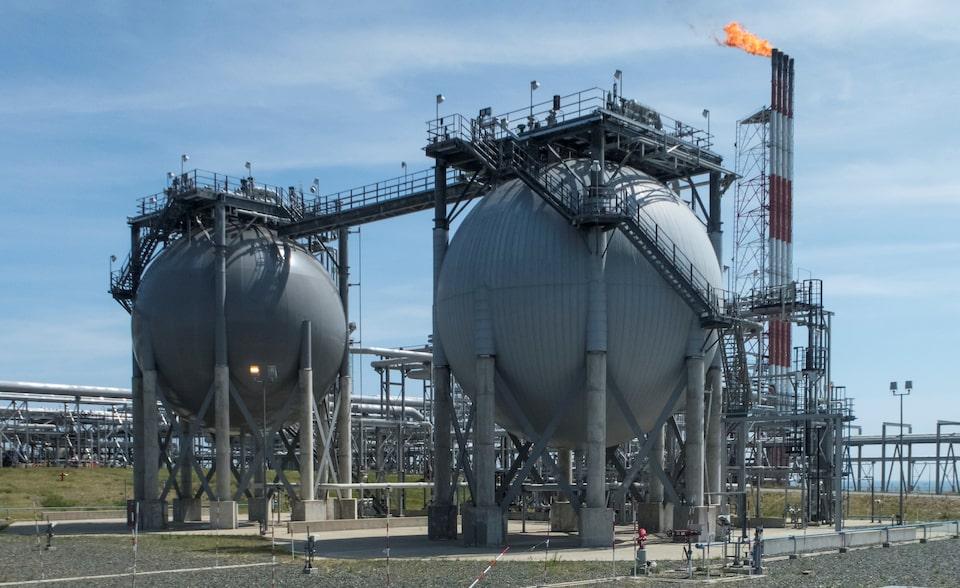
March 28 (Reuters) - The European Union's ban on re-exporting Russian liquefied natural gas (LNG) via EU ports, which aims to reduce Moscow's revenues after its invasion of Ukraine, came into effect this week. The ban, which prohibits the reloading of Russian cargoes at EU ports for export to third countries, was imposed in June 2024, with a moratorium until March 26, 2025 for contracts signed before June 25 last year. Sign up here. Gas market experts say the measure would have little impact as trans-shipments via EU ports to Asia represent less than 10% of total Russian LNG exports, but suppliers would direct this volume to Europe. Below are facts about Russian LNG exports: RUSSIAN LNG EXPORTS Russia is the world's fourth-largest LNG producer with annual exports of 34.7 million metric tons in 2024, up 4% in 2023. Analysts estimate that around 2.7 million tons were re-loaded at EU ports for exports to Asia in 2024. The EU has no imminent plans to stop buying Russian LNG. It has said it will try to wean itself off Russian gas by 2027, thanks to rising exports from Norway, the United States and Qatar. According to a study by global energy think tank Ember, Russian natural gas imports into the EU increased by 18% in 2024. "This trend continues in 2025, with the EU averaging 74.3 million cubic meters per day of Russian LNG imports in February, a 11% monthly increase," the study said. TRANS-SHIPMENTS Russian LNG exports become reliant on EU ports from November to June because thick ice prevents traditional LNG vessels from accessing Yamal LNG's Arctic terminals of gas producer Novatek. Cargoes are transported via special ice-breaking vessels to EU hubs, where they are re-loaded, via ship-to-ship transfer (STS), into regular gas carriers and exported to countries including China, Taiwan, India and Turkey. Novatek (NVTK.MM) , opens new tab , Russia's largest LNG producer and Yamal LNG's main shareholder, has long-term contracts to sell over 17 million tons per year of LNG to Europe to firms such as state-owned China National Petroleum Corp (CNPC), oil majors Shell (SHEL.L) , opens new tab and TotalEnergies (TTEF.PA) , opens new tab, German company Securing Energy For Europe (SEFE) and global commodity trader Gunvor. TWO TERMINALS Russian trans-shipments mainly take place at Belgium's Zeebrugge and France's Montoir LNG terminals. Belgian gas transport operator Fluxys has a 20-year contract with Yamal LNG for gas trans-shipment at Zeebrugge. French energy company Engie (ENGIE.PA) , opens new tab has a 23-year contract to handle the STS operations. The contract now resides with TotalEnergies after it acquired Engie's LNG portfolio. Around 47 vessels have performed STSs at Zeebrugge and Montoir in 2024, said Robert Songer, analyst at data intelligence company ICIS. Based on an average LNG cargo size of about 70,000 tons, that represents around 9.2% of total Russian LNG exports in 2024. IMPACT ON MOSCOW A ban on LNG trans-shipment would have limited impact due to small volumes but would increase costs for Russian companies and disturb logistics. "Russian LNG can still be easily trans-shipped within Russian waters at Murmansk or Kaliningrad or in other potential locations in the Mediterranean, much like Russia already does for its crude and refined products," said Charles Costerousse, senior LNG analyst at Kpler. https://www.reuters.com/business/energy/russias-lng-industry-possible-eu-ban-re-exports-2024-06-14/
2025-03-31 05:34
A look at the day ahead in European and global markets from Wayne Cole It's been a rocky start to the week in Asia as a rush from risk left stocks down across the board, while bonds extended their rally and gold rose to another record. Sign up here. Sentiment was fragile enough ahead of the announcement of U.S. tariffs on Wednesday but President Trump made it more so by telling reporters on Air Force One that the levies would cover all countries and not just a select few. He has a habit of dropping these comments early in the Asia trading day when liquidity is lacking, and sets off big waves as a result. The Nikkei led the rout with a fall of 3.8%, the largest daily drop in six months, and pretty much all of Asia was in the red. Nasdaq futures shed 1.3% and the major European stock futures followed. Trump's new-found indifference to rising car prices seemed to convince analysts he was serious about going all in. Goldman Sachs now expects reciprocal tariffs will average 15% across all U.S. trading partners. In the same note, it lifted the chance of a U.S. recession to 35%, from 20%, and the "R" word seems to be on everyone's lips. Investors are counting on this coming slowdown to outweigh the inflationary impact of tariffs and prod the Fed into cutting rates by 75 basis points this year, though it would likely take a sharp rise in unemployment to warrant such action. Markets have around 60 bps of ECB easing priced in for this year and 50 bps for the Bank of England. The thought of all this easing, combined with the flight to safety, offered comfort to bond investors. Ten-year Treasury yields fell to 4.21% from a top of 4.40% last Thursday. It's an open question whether this rally will continue once the actual inflation data start showing the impact of tariffs on prices. For now, lower yields have dragged the dollar down on the yen, and even the euro and pound have edged higher. Yields aside, though, it may become harder for the dollar to get its usual boost as a safe harbour when the source of all this turbulence is the White House itself. Key developments that could influence markets on Monday: - Data on German retail sales, CPI and import prices - Speakers from the Riksbank and Norges Bank - Dallas Fed manufacturing survey for March https://www.reuters.com/markets/europe/global-markets-view-europe-2025-03-31/
2025-03-31 05:24
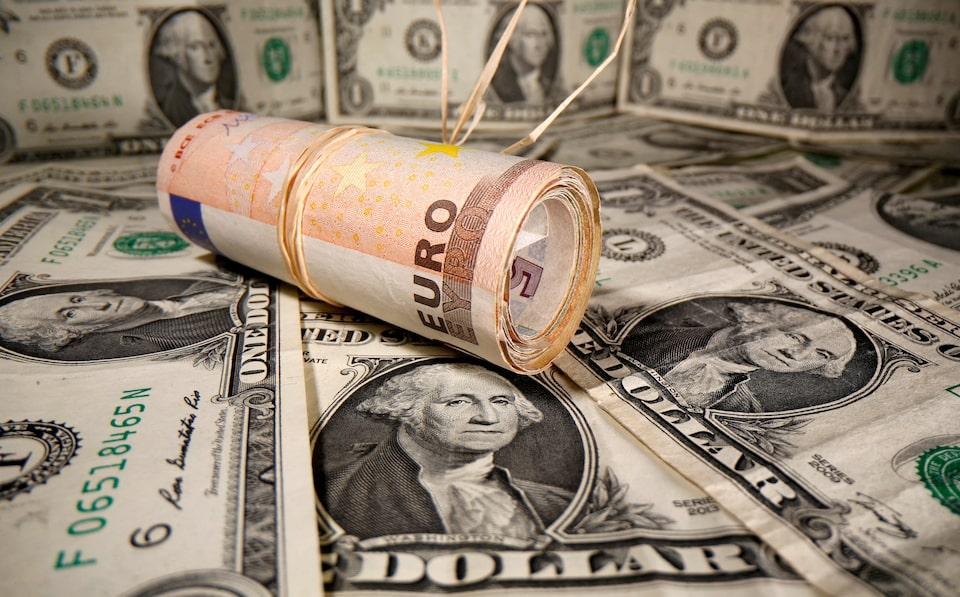
March 31 (Reuters) - The premium investors enjoy from holding U.S. government debt over that of Germany is set for its biggest quarterly drop in years, with tectonic fiscal policy shifts on both sides of the Atlantic expected to shrink this gap further, luring more cash to Europe. The spread between U.S. and German 10-year bond yields reflects the difference in how much it costs each government to borrow over the long term. Sign up here. It has fallen by 62 basis points (bps) since the start of the year to 158 bps, and is set for its biggest quarterly fall since the global financial crisis in 2008, excluding moves during the pandemic. The gap reflects the divergence in interest rates and economic outlooks and is crucial for both investment flows and the euro/dollar exchange rate, which in turn affects trade balances, inflation levels, and corporate profits. Germany in March approved plans for a massive spending splurge, jettisoning decades of fiscal conservatism, which sent bond yields soaring. Since taking office on January 20, U.S. President Donald Trump, who promised to enact huge tax cuts, has been rolling out tariffs on major trade partners, as well as slashing the federal government workforce and starting the deportations of migrants he promised on the campaign trail. U.S. economic data is starting to falter and investors are worried about a slowdown in growth, prompting a fall in Treasury yields. "Fiscal policy outlook is now the main reason behind the current divergence between the euro area and the U.S.," said Athanasios Vamvakidis, global head of forex strategy at BofA. Some analysts and investors believe the U.S./German spread, which is narrowing as German yields rise, could fall below 100 bps - a level not seen with any regularity since 2013. "A recession should be a scenario when the Treasury yields collapse, and the spread goes to levels seen between 2000 and 2009 when it averaged 30 bps," said Padhraic Garvey, regional head of research Americas at ING, who sees the spread at below 100 bps, possibly at 75 bps. Garvey said a recession is not ING's base-case for the U.S. economy. He sees Bund yields at 3.00-3.50% and said U.S. 10-year yields are close to neutrality at 4.3%. U.S. Treasury Secretary Scott Bessent didn’t rule out such a scenario in a recent interview. "Consumers feel threatened by possible layoffs not just in the government but also in the private sector," said Thierry Wizman, global forex and rates strategist at Macquarie. "Companies suffer from the uncertainty about U.S. tariffs. This backdrop is consistent with lower U.S. yields," Wizman added, arguing that “it is not inconceivable” to see a spread below 100 bps. BID FOR BUNDS? Barclays thinks Bund yields could test 3% , up from 2.8% now, if tariff risks do not materialise or are less intense than feared. U.S. 10-year yields are around 4.37%. Higher yields tend to attract more capital from investors seeking better returns for their cash. The shift in the U.S./Bunds spread has supported the euro , which has gained 4% in the three months to March, its best quarterly performance since the fourth quarter of 2023. European stocks are set for their best first-quarter relative to U.S. stocks in a decade. “Interest in Europe was amazing among U.S. investors,” said Reinout De Bock, strategist at UBS after a trip to the U.S. last week to meet clients. “Since the euro crisis, I have not seen so much interest in Europe on a New York visit, but clients are struggling to gauge to what extent it is a growth-positive story for Germany versus other (euro area) countries,” he added. Vasileios Gkionakis, senior economist at Aviva, meanwhile, says the link between nominal GDP growth and long-term yields could lead Bunds to 3.5%, with a potential overshoot to 4%. However, higher government investment will stimulate growth and productivity given the boost in the public capital stock. That could strengthen the safe-haven appeal of German Bunds, which might in turn help limit a larger increase in yields and even push them lower. https://www.reuters.com/markets/rates-bonds/shrinking-us-risk-premium-divert-more-cash-into-europe-2025-03-31/
2025-03-31 05:23
Gold hits record high at $3,128.06 Trump expected to announce reciprocal tariffs on April 2 Silver, platinum, palladium set for monthly gains March 31 (Reuters) - Gold prices extended their stellar run on Monday, topping $3,100 per ounce to hit another record high, as uncertainty around tariffs that would stoke inflation and hinder economic growth lifted safe-haven demand and kept bullion on course for its strongest quarter since 1986. Spot gold rose 1% to $3,116.94 per ounce by 01:44 p.m. ET (1744 GMT), having hit a record of $3,128.06 earlier. U.S. gold futures rose 1.2% to settle at $3,150.30. Sign up here. "The ongoing uncertainty regarding tariffs has affected equity markets and brought another round of safe-haven buying into the gold market," said David Meger, director of metals trading at High Ridge Futures. "There are certain technical areas of resistance along the way that could cause a little profit-taking or pullback. But the ongoing bullish trend remains in place. The fundamental underpinnings remain in place." U.S. President Donald Trump is expected to announce reciprocal tariffs on April 2, while automobile tariffs will take effect on April 3. Trump said on Sunday he would impose secondary tariffs of 25%-50% on buyers of Russian oil if he feels Moscow is blocking his efforts to end the war in Ukraine. Bullion has gained around 18% so far this year, after rising more than 27% in 2024, supported by a favourable monetary policy backdrop, robust central bank buying and demand for exchange-traded funds, among other factors. On the technical front, gold's Relative Strength Index stands above 77, indicating the market is overbought, but analysts said the momentum has defied any standard logic of where prices are positioned. Wall Street big banks have raised their outlook on gold prices, citing trade-war tensions and strong central bank demand, with Goldman Sachs expecting gold to surpass $4,500 within the next 12 months under extreme market conditions. "There are signs of strong Chinese buying activity that are flowing through ... We expect the continued uncertainty with respect to Trump's trade policy to fuel macro funds to purchase more gold," said Daniel Ghali, commodity strategist at TD Securities. Spot silver slipped 0.6% to $33.90 an ounce, platinum rose 0.5% to $996.20 and palladium gained 1.2% to $982.94. All three metals were headed for monthly gains. "Silver hasn't been able to benefit from the rise in gold, it really reflects idiosyncratic strength in the gold price as opposed to weakness in the silver price," Ghali said. https://www.reuters.com/markets/commodities/trade-war-woes-propel-gold-record-highs-2025-03-31/

2025-03-31 05:07
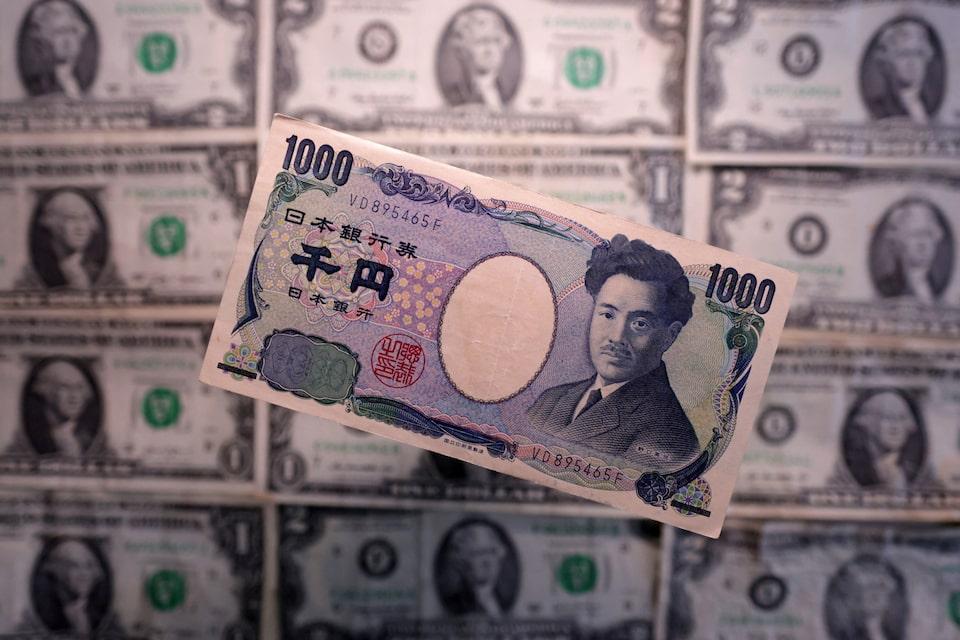
White House to announce suite of reciprocal levies on Wednesday Dollar under pressure from sliding Treasury yields Hotter-than-expected US inflation spurs stagflation worries NEW YORK, March 31 (Reuters) - The dollar strengthened against the Japanese yen and the euro on Monday, but was set for its largest quarterly decline since July 2024, as uncertainty around U.S. tariffs kept traders mostly on the sidelines waiting for clarity on President Donald Trump's trade policies. The safe-haven yen gained traction in early trading before paring those gains, and gold pushed to a fresh peak as investors shunned risk assets ahead of looming tariffs that have clouded the outlook for U.S. inflation and economic growth. Sign up here. "Markets are worried about the U.S. economy. They're more particularly worried about Trump's tariffs and the effect that they're going to have going forward, because that entire project is undefined," said Joseph Trevisani, senior analyst at FX Street. "Nobody knows exactly what Trump's going to do. Nobody knows exactly what the response is going to be from the other countries. And more importantly, nobody knows what the economic response is going to be." Markets are nervous ahead of a new round of reciprocal levies that the White House is due to announce on Wednesday. Details are scarce, but Trump said late on Sunday that essentially all countries will be slapped with duties this week. The yen, which strengthened to 148.7 per U.S. dollar at one point on Monday, was last down 0.1% at 149.95 per dollar. The Japanese currency rallied 0.82% against the dollar on Friday, when U.S. data showed core inflation rose more than expected last month, fuelling fears of stagflation. The dollar fell 4.7% this quarter against the yen, its the largest drop since July 2024. Gold pushed to an unprecedented $3,128.06 per ounce, marking three consecutive sessions in which it has registered record highs. "I think we all need some certainty around tariffs and trade and taxes, and maybe we'll get much of that come April 2," said Tim Holland, chief investment officer at Orion. Along with tariffs, investors are in for a busy week with a string of economic reports, including jobs and payrolls data, that could shed much-needed light on how the U.S. economy is holding up under a second Trump presidency. Federal Reserve Chair Jerome Powell and other central bank officials' speeches this week also could offer clues on the path for U.S. interest rates. The euro was down 0.17% at $1.0816, though it is set for a roughly 4.5% rise this quarter, its biggest jump since the third quarter of 2022, thanks to Germany's fiscal overhaul. The likely implementation of U.S. tariffs means Europe will have to take better control of its future, European Central Bank President Christine Lagarde said on Monday, reiterating the impact of tariffs and tit-for-tat measures on the bloc's growth. Trump on Friday said he was open to carving out deals with countries seeking to avoid tariffs, but the Washington Post reported over the weekend he was urging his advisers to take a more aggressive stance. The U.S. dollar index , which measures the currency against six major peers, rose 0.2% to 104.2 on the day, but was down 3.1% on the month, its largest fall since November 2022. "Anticipation of April 2nd tariff announcement has driven the risk tone, but currencies seem to be more in a holding pattern," said John Velis, head of Americas macro strategy at BNY Markets. As tariffs roil the global economy, Goldman Sachs raised the probability of a U.S. recession to 35% from 20%. It also projected three interest rate cuts each from the Fed and ECB from, up from its previous expectation of two each. Elsewhere, the pound fell 0.15% to $1.2910 and is set for a nearly 3% monthly climb - its best showing since November 2023. Britain still expects to be hit by global tariffs this week, although a British government spokesperson said Prime Minister Keir Starmer and Trump had "productive negotiations" towards a trade deal in a phone call on Sunday. The Canadian dollar eased to C$1.4375 per U.S. dollar. Mexico's peso slid 0.5% to 20.4566 per dollar. The Australian dollar was last down 0.7% at US$0.6249 on Monday, ahead of the Reserve Bank of Australia's (RBA) policy meeting on Tuesday. https://www.reuters.com/markets/currencies/yen-gains-gold-record-high-tariff-angst-ignites-haven-demand-2025-03-31/