2025-03-30 23:44
NAPERVILLE, Illinois, March 30 (Reuters) - Global grain stocks are not exactly abundant, but speculators are quickly losing confidence in their bullish Chicago corn bets as trade tariffs and massive U.S. corn plantings loom. In the week ended March 25, money managers cut their net long position in CBOT corn futures and options to 74,607 contracts from 107,270 a week earlier, establishing their least bullish view since early November. Sign up here. Over the latest five weeks, money managers slashed their corn net long by nearly 280,000 contracts. Prior to this year, the largest five-week selloff from a similarly bullish position was 170,000 between September and October 2011. While the recent reduction owed largely to exiting longs, new short positions were more prominent in the latest two weeks, particularly in the latest one. This suggests increasing comfortability in a short speculative corn stance. However, corn futures have already weakened significantly. Most-active CBOT corn on Friday bottomed at $4.42 per bushel, its lowest since December, before finishing at $4.53-1/4. That is well off February’s high of $5.13-3/4. CBOT wheat has also made a sharp downturn, on Friday reaching the lowest levels since July 31 before settling at $5.28-1/4 per bushel. Money managers extended their net short in CBOT wheat futures and options through March 25 to an eight-week high of 92,587 contracts, up from 80,668 in the prior week. Funds have not been bullish Chicago wheat since June 2022. SOYBEANS AND BEYOND In CBOT soybeans, money managers established their most bearish position in three months, lifting their net short to 42,959 futures and options contracts through March 25 from 22,005 a week earlier. They were also considerable sellers in the soybean products, increasing their net short in CBOT soybean meal to 84,050 contracts from 61,013 in the prior week. Funds boosted their net short in CBOT soybean oil to a six-month high of 44,618 contracts from 27,609 a week earlier. The latter move may have stung late last week, as CBOT soybean oil futures jumped nearly 6% on Thursday and Friday, reaching a one-month high. This came amid potential movement on U.S. biofuel policy, which has been stalled out in the last couple years. Soybeans also rose late last week in sympathy, reaching two-week highs on Friday. Brazil is in the late harvest stages of a record soybean crop, but the market’s attention will turn to U.S. planting intentions and grain stocks from the U.S. Department of Agriculture on Monday. Analysts expect a significant drop in U.S. soy acres from last year and a comparable gain in corn acres. However, some folks are bracing for an even bigger corn area than the average trade guess of 94.361 million acres, which could produce a relatively small soy number. U.S. corn and soy ending stock estimates for 2024-25 have drifted lower in recent months on strong demand and smaller crops. These will be put to the test in Monday’s stock survey, which will mark inventory levels at the marketing year’s midway point. Although these USDA reports are known to jolt markets, the April 2 deadline for reciprocal tariffs on U.S. trade partners could steal the week’s spotlight. U.S. President Donald Trump has dubbed Wednesday as “liberation day” for the U.S. economy. However, it might not feel too freeing for U.S. agricultural markets, since escalating trade conflicts were the primary catalyst for the steep price dive a month ago. Karen Braun is a market analyst for Reuters. Views expressed above are her own. https://www.reuters.com/markets/us/funds-lose-further-hope-cbot-corn-ahead-pivotal-week-braun-2025-03-30/

2025-03-30 23:42
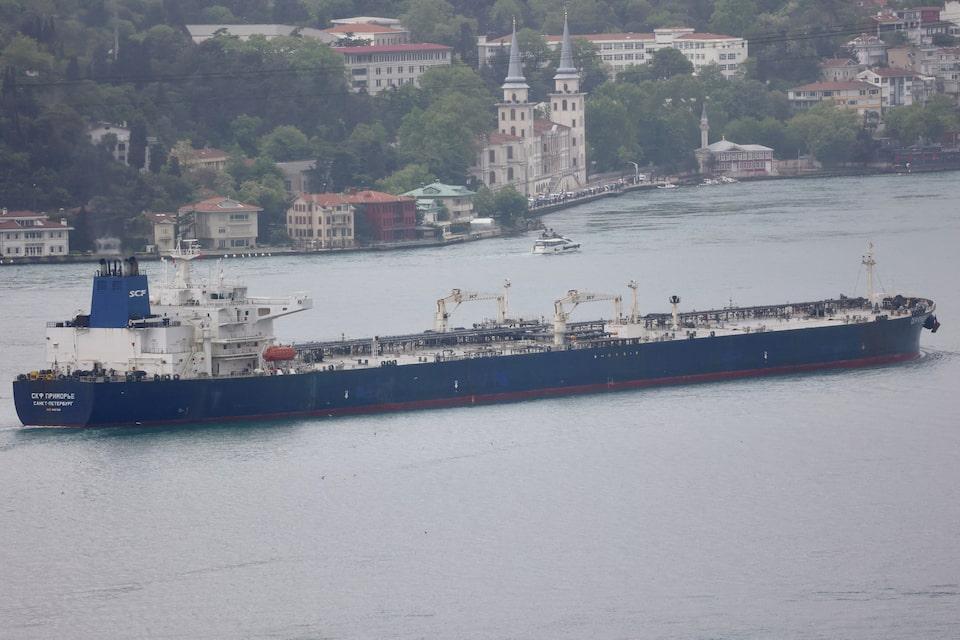
LAUNCESTON, Australia, March 31 (Reuters) - U.S. President Donald Trump's threat to impose secondary tariffs of 25% to 50% on buyers of Russian crude oil is just crazy and bold enough to perhaps achieve his stated aim of a ceasefire in Ukraine. What matters now is the reaction of the other three key players to this latest move by the mercurial and inconsistent U.S. leader. Sign up here. Do Russian President Vladimir Putin, Indian Prime Minister Narendra Modi and Chinese President Xi Jinping believe that Trump will actually follow through, and if he does what will it mean for their energy situation? India and China are effectively the only major buyers of Russian oil, so their reaction becomes as important as Putin's response to Trump's latest shift. Trump told NBC News he is "pissed off" at Putin and will impose the tariffs of up to 50% on buyers of Russian crude if he feels Moscow is blocking efforts to bring about peace in Ukraine. "If Russia and I are unable to make a deal on stopping the bloodshed in Ukraine, and if I think it was Russia's fault ... I am going to put secondary tariffs on oil, on all oil coming out of Russia," Trump said. This is an apparent reversal of his previous friendly stance toward Putin, which had drawn widespread criticism for effectively abandoning Ukraine to its invader and surrendering to Russia's aggression. The question is whether Trump's threat is credible and likely to come to fruition, which is the assessment Russia, China and India must make. If Putin believes Trump will go ahead and massively boost what are effectively sanctions on Russia's main export, he may be inclined to back down at least far enough to allow Trump to appear to have "won" in negotiations. India is in an uncomfortable position as Modi has so far adopted a stance of trying to appease Trump, with a proposal to scrap the import duty on U.S. liquefied natural gas in order to boost purchases an example. But India has also been a significant beneficiary of much of the rest of the world shunning Russian crude, allowing the South Asian nation to snap up discounted cargoes so much so that Russia is now its largest supplier. India is expected to import 1.52 million barrels per day (bpd) of Russian oil in March, representing just under 30% of its total arrivals, according to data compiled by LSEG Oil Research. With India already not buying crude from Iran because of U.S. sanctions, replacing Russian barrels as well would likely lead to a significant boost to India's oil import costs and a scramble to find alternative suppliers. CHINA RISK China is less likely to bow to U.S. pressure as it remains the only major buyer of Iranian crude, and is still a top importer of Russian oil, buying up to 1 million bpd from the seaborne market, as well as just under that level via pipeline. The risk for Beijing is that an additional tariff of up to 50% on U.S. imports from China, on top of the 20% already imposed by Trump, would bring about real levels of pain in its economy, which is already struggling to build momentum. If Trump's threat of secondary tariffs on buyers of Russian crude is credible, it also alters the dynamics of the OPEC+ group of exporters, which consists of the Organization of the Petroleum Exporting Countries and allies including Russia. For OPEC+ members other than Russia, any reduction in Russian barrels on global markets will likely serve to boost prices, which will allow them to increase their own production and exports. In some ways it becomes a battle of self-interest versus group solidarity, and with the fiscal positions of many OPEC+ members weakening, the lure of more money from higher exports may be hard to resist. For now, the various players are likely to respond cautiously, at least in public, while they try to work out whether Trump is serious or whether his new tariff threat is a thought bubble easily discarded with the next shift in sentiment. Certainly, the initial market reaction was subdued, with global benchmark Brent futures rising a modest 0.3% to $73.84 a barrel in early Asian trade on Monday. The views expressed here are those of the author, a columnist for Reuters. https://www.reuters.com/markets/commodities/trumps-russia-oil-tariff-threat-depends-china-india-reaction-russell-2025-03-30/
2025-03-30 22:17
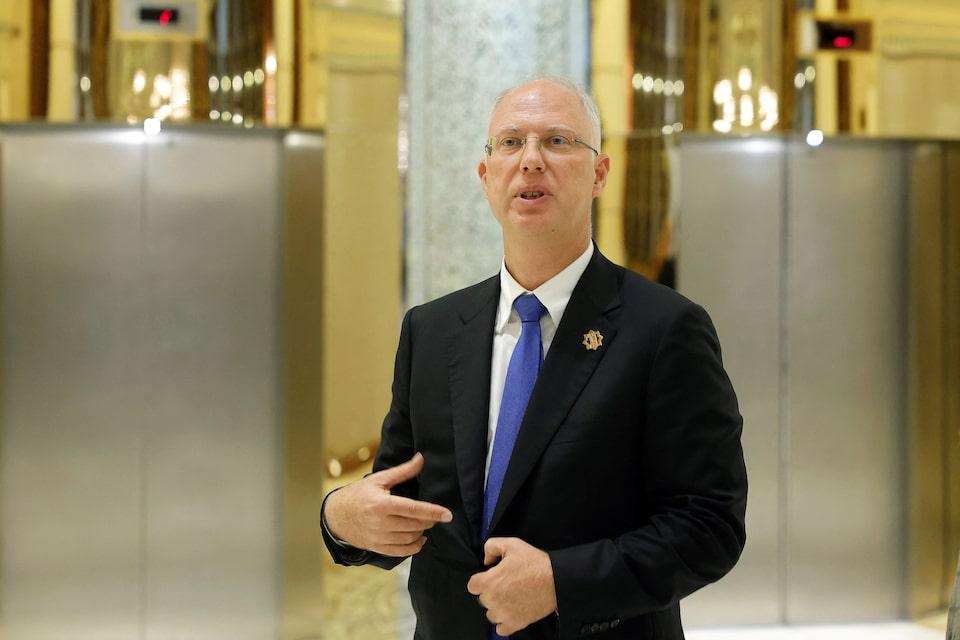
Russia and US discussing rare earths, Putin envoy Some companies have expressed an interest, envoy says Putin offered to work with the United States on rare earths Trump: Zelenskiy wants to back out of minerals deal MOSCOW, March 31 (Reuters) - Russia and the United States have started talks on joint rare earth metals and other projects in Russia, and some companies have already expressed an interest in them, President Vladimir Putin's investment envoy said in remarks published on Monday. Amid efforts by U.S. President Donald Trump to end the war in Ukraine, minerals cooperation has been floated by both Kyiv and Moscow, though Trump said on Sunday that Ukrainian President Volodymyr Zelenskiy wants to back out of a proposed deal. Sign up here. Putin in February suggested that the United States might be interested in exploring joint exploration for rare earth metals deposits in Russia, which has the world's fifth-largest reserves of the metals used in lasers and military equipment. Kirill Dmitriev, Kremlin special envoy on international economic and investment cooperation, told the Izvestia newspaper in remarks published on Monday that talks had already begun. "Rare earth metals are an important area for cooperation, and, of course, we have begun discussions on various rare earth metals and (other) projects in Russia," said Kirill Dmitriev, who is also the CEO of the Russian Direct Investment Fund. Dmitriev, who was part of Russia's negotiating team at talks with U.S. officials in Saudi Arabia in February, said some companies have already shown interest in the projects. He did not name any companies and did not reveal further details. Trump said on Sunday he was "pissed off" at Putin and will impose secondary tariffs of 25% to 50% on buyers of Russian oil if he feels Moscow is blocking his efforts to end the war in Ukraine. Trump told NBC News he was very angry after Putin last week criticised the credibility of Zelenskiy's leadership, the television network reported. Trump later reiterated to reporters he was disappointed with Putin but added: "I think we are making progress, step by step." China's control of 95% of global production and supplies of rare earth metals, crucial for industries such as defence and consumer electronics, has focused the rest of the world on trying to develop their own supplies. The U.S. Geological Survey estimates Russia's reserves of rare earth metals at 3.8 million metric tons but Moscow has far higher estimates. According to the Natural Resources Ministry, Russia has reserves of 15 rare earth metals totalling 28.7 million tons as of January 1, 2023 and that 3.8 million tons is the amount of reserves under development or ready for development. Izvestia reported the cooperation may be further discussed at the next round of Russia-U.S. talks that may take place in mid-April in Saudi Arabia. https://www.reuters.com/world/russia-us-start-talks-rare-earth-metals-projects-russia-putin-envoy-says-2025-03-30/
2025-03-30 21:31
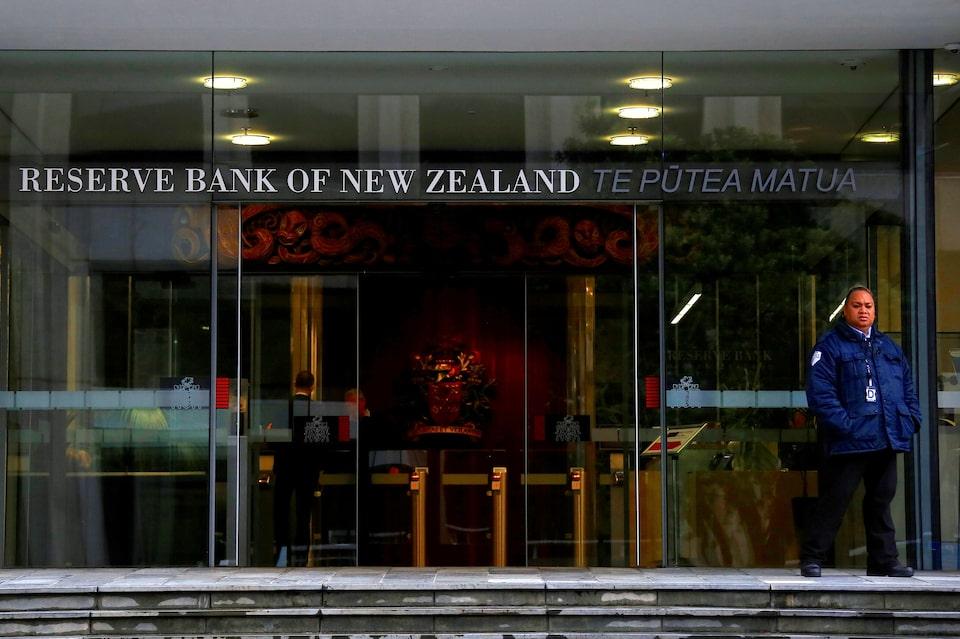
Finance Minister Willis welcomes RBNZ's decision RBNZ to compare settings in comparable countries Governor search process could take up to 9 months, RBNZ says WELLINGTON, March 31 (Reuters) - New Zealand's central bank said on Monday it would review bank capital requirements this year following criticism of the regime for being too stringent and reducing competition in the sector. "We have heard the claims that our bank capital regime is unreasonably conservative, and that it is undermining competition and growth in the New Zealand economy," Reserve Bank of New Zealand acting Governor Christian Hawkesby told a parliamentary committee. Sign up here. "We think that some of those claims are incorrect, but most of the claims can be tested empirically." Hawkesby said the New Zealand banking system is not capital constrained as it had the ability to raise capital if it saw opportunities. In 2019, the central bank announced it would increase capital requirements. These have been brought in slowly and will not be fully implemented before 2028. The requirements have been criticized by some politicians and submitters to a parliamentary inquiry into the banking sector. They argue the requirements have reduced capital in the economy and borrowers have to bear extra costs. The big banks are currently required to maintain a minimum capital of 13.5% and the smaller ones 11.5%. Finance Minister Nicola Willis welcomed the RBNZ's decision, and said the review would help objectively assess New Zealand's settings and consider whether the RBNZ's intention to keep increasing capital requirements still made sense. "Submitters have argued that other countries have less onerous bank capital requirements and that New Zealand is becoming an outlier internationally," Willis said. Globally there has been a softening on capital requirements. The Federal Reserve last year watered down plans to raise big banks' capital requirements. "I want to see settings that preserve financial stability while encouraging investment, job creation and income growth," Willis said in a statement. New Zealand's economy emerged from recession in the fourth quarter of 2024 but remains weak and unemployment is expected to increase in the first half of this year. RBNZ Chair Neil Quigley said the bank needed to go through a process that demonstrated both intellectual and practical integrity to change its position on any regulatory matter. "The bank cannot act arbitrarily," Quigley said. He said the RBNZ, which is currently searching for a replacement for the governor after the surprise exit of Adrian Orr this month, will "relatively soon" start its search process. But it could take up to nine months to name the new governor, Quigley added. https://www.reuters.com/markets/new-zealand-central-bank-review-capital-settings-boost-competition-among-banks-2025-03-30/
2025-03-30 19:10
TORONTO, March 30 (Reuters) - Over 300,000 Canadians faced power outages in parts of Ontario on Sunday as an ice storm pummeled the region over the weekend, according to electricity provider Hydro One. Environment Canada issued winter storm warnings for freezing rain in Ottawa, parts of Quebec and Ontario, with the risk of snow mixed with or transitioning to ice pellets expected to continue until Monday morning in some regions. Sign up here. "Outages are largely being caused by tree limbs and branches being weighed down from the accumulation of freezing rain," Hydro One said on its website, noting there is also the risk of flooding for central Ontario. More than 350,000 customers were affected as of Sunday afternoon, according to the website, with power expected to be restored on April 1. Utilities provider Alectra said there were about 35,000 customers without power, primarily in Barrie, a town north of Toronto. "Progress has been slow due to the ice on the lines, but all available resources have been deployed," it said on Sunday. The city of Orillia in Ontario declared a state of emergency due to the storm as prolonged freezing rain continues to cause widespread power outages, hazardous road conditions, downed trees and hydro lines, and damage to public and private infrastructure. "This is a very serious situation with hazardous road conditions, downed trees and hydro lines, and damage to public and private infrastructure," the city said on its website. Several residents across Ontario said on social media that roads were closed due to uprooted trees and they had heard crashing tress since the storm began. https://www.reuters.com/business/environment/hundreds-thousands-eastern-canadians-face-power-outages-due-ice-storm-2025-03-30/

2025-03-30 18:53
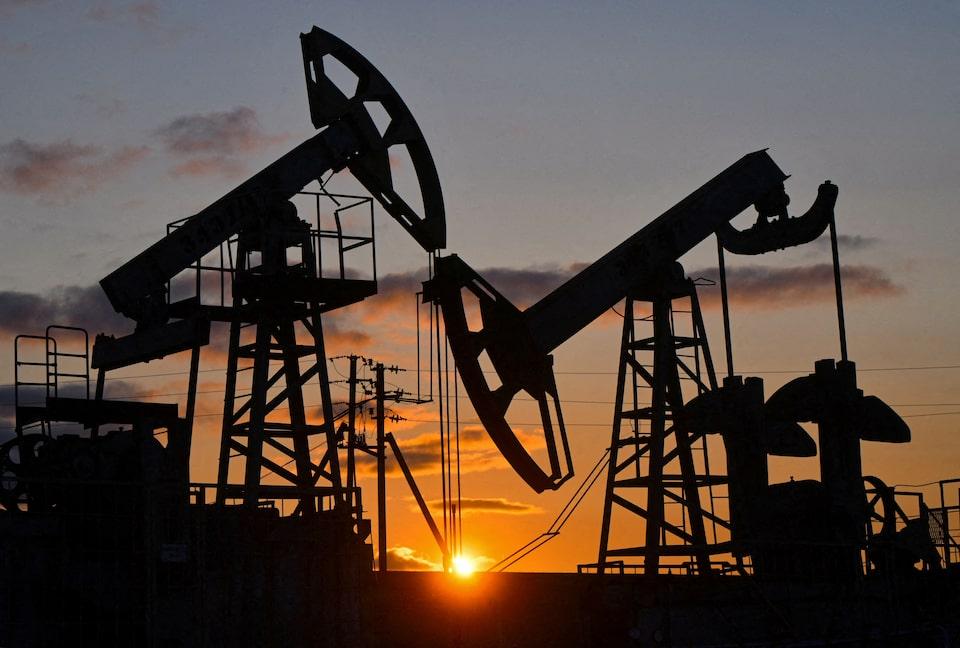
Trump threatens tariffs on Russian oil if no Ukraine ceasefire, according to NBC News interview Trump reported to criticize Putin's comments on Zelenskiy's leadership Trump plans to speak with Putin this week, NBC News says WEST PALM BEACH, March 30 (Reuters) - U.S. President Donald Trump said on Sunday he was "pissed off" at Russian President Vladimir Putin and will impose secondary tariffs of 25% to 50% on buyers of Russian oil if he feels Moscow is blocking his efforts to end the war in Ukraine. Trump told NBC News he was very angry after Putin last week criticized the credibility of Ukrainian President Volodymyr Zelenskiy's leadership, the television network reported, citing a telephone interview early on Sunday. Sign up here. Since taking office in January, Trump has adopted a more conciliatory stance towards Russia that has left Western allies wary as he tries to broker an end to Moscow's three-year-old war in Ukraine. His sharp comments about Putin on Sunday reflect his growing frustration about the lack of movement on a ceasefire. "If Russia and I are unable to make a deal on stopping the bloodshed in Ukraine, and if I think it was Russia’s fault ... I am going to put secondary tariffs on oil, on all oil coming out of Russia,” Trump said. “That would be, that if you buy oil from Russia, you can’t do business in the United States,” Trump said. “There will be a 25% tariff on all oil, a 25- to 50-point tariff on all oil.” Trump said he could impose the new trade measures within a month. There was no immediate reaction from Moscow. Russia has called numerous Western sanctions and restrictions “illegal” and designed for the West to take economic advantage in its rivalry with Russia. Trump, who spent the weekend at his estate in Palm Beach, Florida, told NBC News he planned to speak with Putin this week. The two leaders have had two publicly announced telephone calls in recent months but may have had more contacts, the Kremlin said in video footage last week. The White House had no immediate comment on when the call would take place, or if Trump would also speak with Zelenskiy. Trump has focused heavily on ending what he calls a "ridiculous" war, which began when Russia invaded Ukraine in February 2022, but has made little progress. Putin on Friday suggested Ukraine could be placed under a form of temporary administration to allow for new elections that could push out Zelenskiy. Trump, who himself has called for new elections in Ukraine and denounced Zelenskiy as a dictator, said Putin knows he is angry with him. But Trump added he had “a very good relationship with him” and “the anger dissipates quickly ... if he does the right thing.” GROWING PRESSURE TO END WAR Trump's comments followed a day of meetings and golf with Finnish President Alexander Stubb on Saturday, during Stubb's surprise visit to Florida. Stubb's office on Sunday said he told Trump a deadline needs to be set for establishing a Russia-Ukraine ceasefire to make it happen and suggested April 20 since Trump would have been in office then for three months. U.S. officials have been separately pushing Kyiv to accept a critical minerals agreement, a summary of which suggested the U.S. was demanding all Ukraine's natural resources income for years. Zelenskiy has said Kyiv's lawyers need to review the draft before he can say more about the U.S. offer. Trump's latest tariff threats would add to the pain already facing China, India and other countries through trade measures imposed during his first two months in office, including duties on steel, aluminum and cars. More duties on imports from the countries with the largest trade surpluses are slated to be announced on Wednesday. William Reinsch, a former senior Commerce Department official now at the Center for Strategic and International Studies, said the haphazard way Trump was announcing and threatening tariffs leaves many questions unanswered, including how U.S. officials could trace and prove which countries were buying Russian oil. Trump set the stage for Sunday's news with a 25% secondary tariff imposed last week on U.S. imports from any country buying oil or gas from Venezuela. His remarks to NBC suggest he could take similar action against U.S. imports from countries that buy oil from Russia, a move that could hit China and India particularly hard. The U.S. has not imported any Russian barrels of crude oil since April 2022, according to U.S. government data. Before that, U.S. refiners bought inconsistent volumes of Russian oil, with a high of 98.1 million barrels in 2010 and low of 6.6 million in 2014, according to a review of EIA data since 2000. India has surpassed China to become the biggest buyer of seaborne Russian crude, which comprised about 35% of India's total crude imports in 2024. Trump on Sunday also said he could hit buyers of Iranian oil with secondary sanctions if Tehran did not reach an agreement to end their nuclear weapons program. https://www.reuters.com/world/trump-threatens-secondary-tariffs-russian-oil-if-unable-make-deal-ukraine-2025-03-30/