2025-03-30 13:05
BEIJING, March 30 (Reuters) - PetroChina (601857.SS) , opens new tab, , Asia's largest oil and gas producer, on Sunday said annual net profit rose 2% to a record high, as moderately higher production helped to offset lower oil prices. Its net profit totalled 164.7 billion yuan ($22.68 billion) in 2024, versus 161.1 billion yuan in 2023, while revenue dipped 2.5% to 2,938.0 billion yuan, PetroChina said in a filing to the Shanghai Stock Exchange. Sign up here. Domestic peer CNOOC Ltd on Thursday reported a 11.4% surge in net earnings to 137.9 billion yuan, while earnings at refining giant Sinopec fell 16.8% to 50.3 billion yuan. State-controlled PetroChina produced 941.8 million barrels of crude oil last year, or 2.57 million barrels per day, up 0.5% from 2023. Natural gas output was up 4.1% at 5,133.8 billion cubic feet (bcf). The average realised price for crude oil was 3.8% lower compared to 2023 levels. Refinery output fell 1.5% to 1.38 billion barrels, or 3.77 million barrels per day, down sharply from the previous year's 15.3% growth as flagging economic growth and rapid vehicle electrification curbed fuel use. PetroChina in late 2023 shut permanently half of its largest subsidiary refinery in northeast China, a move that aligns with Beijing's policy to cap the country's overall oil processing capacity to manage industry overcapacity, Reuters reported. The company's gasoline sales were down 4.5%, diesel was down 6.9%, and jet kerosene sales rose 9% thanks to an extended recovery in air travel. In the meantime, output of chemical products increased 49.3% last year. In 2024, "natural gas prices in the international market fell further. Competition in the domestic refined oil market has intensified, and the market consumption of natural gas has maintained rapid growth," PetroChina's Chairman Dai Houliang said in the filing. For 2025, the natural gas market demand will maintain rapid growth, but the domestic refined oil market competition will further intensify, he said. PetroChina forecasts crude oil output at 936.2 million barrels in 2025 and natural gas at 5,341 bcf. It also aimed for refinery output this year to be 1.3 billion barrels, or 3.65 million barrels per day. Capital spending is planned at 262.2 billion yuan for this year, compared with 275.8 billion spent in 2024. The company also proposed a final dividend of 0.25 yuan per share, according to a separate filing. ($1 = 7.2628 Chinese yuan renminbi) https://www.reuters.com/business/energy/petrochina-reports-record-2024-net-income-higher-production-2025-03-30/
2025-03-30 09:14
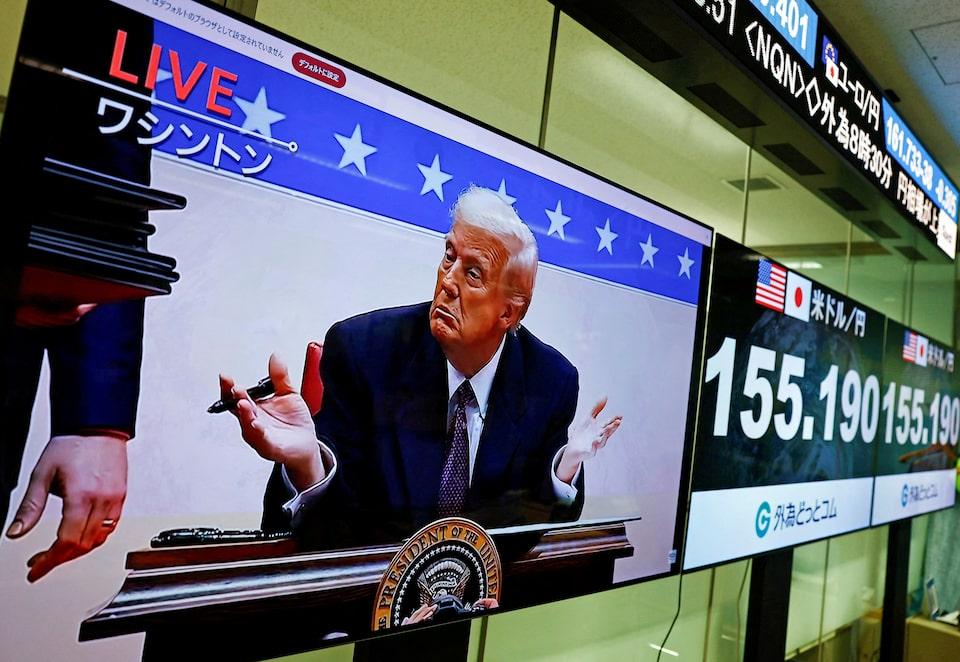
Trade war and U.S. geopolitical shifts dominated Q1 World stocks flat overall but U.S. tech giants whacked Gold has had best quarter since 1986 Dollar on course for worst Q1 since GFC LONDON, March 30 (Reuters) - Most investors knew things could turn turbulent this year given U.S. President Donald Trump's return to power in the world's biggest economy and financial market, but few predicted the kind of a rodeo ride it has been so far. Scan the surface and world stocks (.MIWD00000PUS) , opens new tab are almost where they started the year, while volatility gauges like the VIX (.VIX) , opens new tab are nowhere near the peaks they scaled during the pandemic or financial crash. Sign up here. But look closer and the scale of what has been happening jumps out. Gold , the ultimate safe port in a storm, has had its best quarter since 1986 due to Trump's trade war and the dollar is flirting with its worst start to a year since the 2008 global bust. Just as jarring, the 'Magnificent Seven' U.S. tech giants have been hit for six. They have been a cash cow for portfolios for years but have shed nearly $2 trillion and been left for dust by Chinese rivals (.HSTECH) , opens new tab and Europe's defence firms. (.SXPARO) , opens new tab Chief Investment Officer of multi-asset fund manager Candriam, Nicolas Forest, said the way that markets had changed tack had been remarkable. "The Trump trade has completely reversed," he said. Whereas the major risk back in January was that Trump's 'America first' policies would push inflation back up and prevent U.S. interest rate cuts, "now the most important risk is recession risk," Forest said. That has spun the $140 trillion global bond market 180 degrees. Benchmark U.S. Treasuries look set to end Q1 with a respectable 2.7% return, with their yields, which are a proxy of borrowing costs, down more than 20 basis points . At the same time, Berlin's historic plan to release its self-imposed debt brake to allow higher defence spending - prompted by Washington scaling back its military support - has propelled German Bund yields up over 40 basis points. It is the biggest quarterly move in yields since 2023 and the first time they have moved in the opposite direction to Treasuries since 2021. Japan's 10-year JGB yields, meanwhile, have surged to their highest since 2008 on expectations for further Bank of Japan rate hikes. At almost 1.6%, JGB yields are up almost 50 bps, set for their biggest quarterly jump since 2003 . DOLLAR DRAMAS The dollar's (.DXY) , opens new tab 4% drop has given emerging market currencies a rare chance to shine. Trump's re-engagement with Russian President Vladimir Putin has helped the rouble surge a whopping 35%, although it remains heavily restricted in most major economies by sanctions. Poland's zloty and the Czech crown that also stand to benefit if the Ukraine conflict ends are near the top of the list, too, with gains of over 5%, while even Mexico's peso and Canada's dollar are in positive territory despite all their tariff traumas. "The dollar view has unravelled very quickly this year," said State Street Global Markets' Michael Metcalfe. "I think there has been an element of take what was said at the start of the year and just flip it." At the bottom of the FX pile are Turkey's lira and the Indonesian rupiah. The former is down nearly 7%, much of it after Turkish President Tayyip Erdogan's main political rival was detained last week. The rupiah, meanwhile, has hit its lowest since the 1998 Asian financial crisis amid worries about Jakarta's finances and that it is sliding back towards military domination. Bitcoin has been volatile as usual. It raced up almost 20% when Trump took office, only to dive nearly 30% when his plans for a U.S. cryptocurrency reserve failed to impress. And if you think that's bad just look at Tesla's (TSLA.O) , opens new tab share price versus its main rival BYD (002594.SZ) , opens new tab since inauguration day. Ouch, Elon! GOLD STARS AND COFFEE KICKS Oil has yo-yoed both on supply-and-demand issues but also the Middle East ceasefires between Israel and Hamas and Hezbollah that already look under threat. Gold has surged 17% . Copper has defied the global economy worries for once to jump 11%. Coffee lovers beware, though, raw arabica prices are up 18% and nearly double where they were this time last year after some severe droughts. Q2 doesn't look like it is going to get any easier on the whole. Trump will be detailing his grand global tariff plan he has dubbed 'liberation day' on Wednesday. For investors, the big question is whether it will end up triggering recessions. Neil Robson, Head of Global Equities at Columbia Threadneedle, points to forecasts that it could lift effective trade-weighted tariffs on goods globally from 2.5% to 10% or even more. Given that could lead to a bruising world downturn, what is his prediction for Q2? "We are either in for a significant risk off (period), or we are in for a rebound." https://www.reuters.com/markets/us/global-markets-q1-analysis-pix-2025-03-30/
2025-03-30 08:42
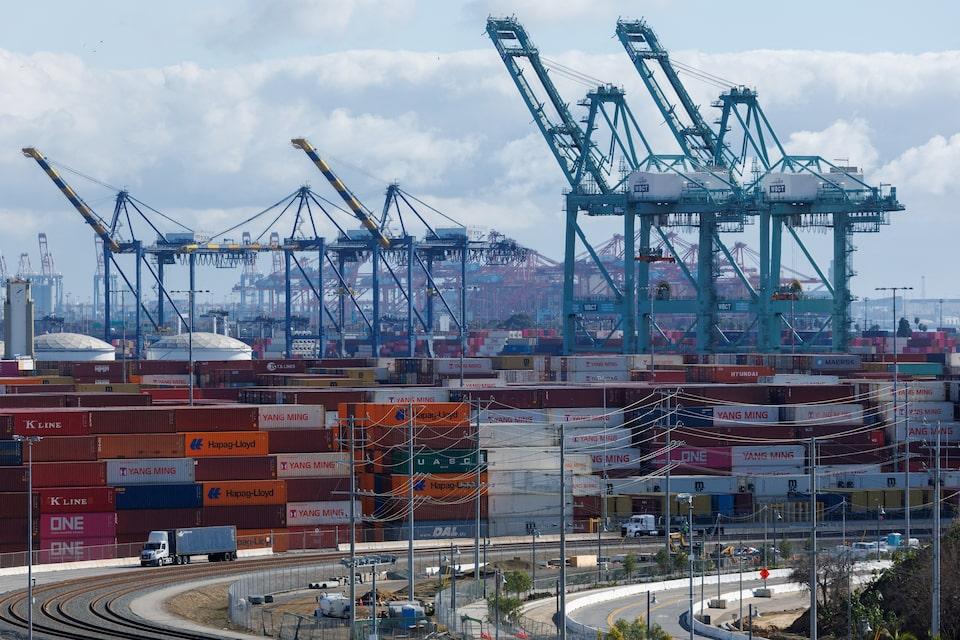
March 31 (Reuters) - This week will be dominated by U.S. President Donald Trump's plans for reciprocal tariffs, while the latest U.S. jobs data, an Australian central bank meeting and a key euro zone inflation report means there is plenty for markets to consider. Here's your one-stop shop for the week ahead in world markets from Kevin Buckland in Tokyo, Lewis Krauskopf in New York, Amanda Cooper in Gdansk and Marc Jones and Yoruk Bahceli in London. Sign up here. 1/ TARIFFS FOR ALL Trump has said April 2, the deadline by which he will unveil a full suite of trade policies, including tariffs, will be known as "Liberation Day." His sneak peek of what to expect in the form of a 25% duty on imported vehicles to the United States is another example of the unpredictable way he has communicated trade policy. That has made for a turbulent trading environment, in which planning for anything from a new factory, to a holiday to managing an investment portfolio has become more complex. The fear of an across-the-board approach to duties had been mitigated somewhat in recent days by hints from the White House that Trump might take a more targeted approach, giving the dollar and Wall Street stocks a modest lift. But the reality is investors are still very much in the dark. On Sunday, Trump threatened tariffs on Russian oil if Moscow blocks a Ukraine deal, while global stocks were tumbling on Monday on tariff worries. 2/ JOBS TEST Concerns about the health of the U.S. economy will be tested by the latest monthly jobs data. The April 4 non-farm payrolls report is expected to show employment growth slowed in March to 128,000 from 151,000 in February, according to a Reuters poll. But such growth may still reassure investors that the economy is not sliding toward a recession. As it stands, Fed funds futures suggest traders bake in at least two interest rate cuts by year-end to shore up the economy. Investors are also watching to see how far the effort led by Trump ally Elon Musk to slash the federal workforce will show up in the data. Under Musk's government efficiency drive, tens of thousands in the 2.3-million-strong federal workforce have been fired or agreed to take a buyout. 3/ AS YOU WERE The first quarter wraps up on Monday and it hasn't been dull, or gone the way that even the most experienced investors had anticipated. To put it bluntly, everything has been Trumped. Trillions have been wiped off the super-sized tech firms that have dominated world markets for years. Gold has soared to a record high and the dollar is set for a quarterly fall of almost 4%. European defence stocks have surged as the United States has signalled its military support is no longer guaranteed and even China's tech stocks have roared. Q2 doesn't look like it is going to get any easier either. Just a couple of days in and Trump will be detailing his grand global tariff plan. For investors, the big question is whether it will end up triggering recession. 4/ ECB'S DILEMMA Euro zone inflation data on Tuesday is the next hurdle for traders trying to gauge whether the European Central Bank cuts rates in April. Markets have grown more confident in recent days, now pricing in a roughly 90% chance of another cut on April 17 bringing the ECB's key rate to 2.25%, though policymakers look more split than markets. But further rate cuts this year seem more a matter of timing and further risks to the bloc's growth loom with all eyes on April 2. What's more, fresh tariffs on autos just announced have blurred the European outlook further. The bigger debate is what happens further out. Markets are already thinking about what Germany's spending bonanza and Europe's broader push to bolster its defences mean for growth and inflation. BNP Paribas, for example, already expects the ECB to hike rates next year. 5/ CUT, BUT NOT YET The Reserve Bank of Australia is moving closer to what would be only its second interest rate cut since 2020. A benign inflation reading and a surprise cooling in the job market have seen to that. Even so, traders and analysts expect the RBA will forgo any April Fool's surprises when it wraps up a meeting on Tuesday and keep interest rates on hold. After all, the central bank just cut at its last meeting in February, and struck a markedly hawkish tone, warning markets away from assuming more was to come. The official, quarterly consumer price numbers could still prove crucial on April 30, but investors have grown more confident of a May rate cut, putting the odds at around 70%. https://www.reuters.com/business/take-five/global-markets-themes-graphic-2025-03-28/
2025-03-30 07:48
BEIJING, March 30 (Reuters) - China will aim to develop 90 million hectares (200 million acres) of high-standard farmland by 2030, according to plans released by the government on Sunday in its latest effort to ensure food security. The country will also strive to transform all "eligible permanent basic farmland" into high-standard farmland by 2035, said the plans published by the State Council, or cabinet. Sign up here. "Permanent basic farmland" refers to farmland in China that is safeguarded against non-agricultural uses to ensure stable grain production. https://www.reuters.com/world/china/china-unveils-plan-ramp-up-high-standard-farmland-development-ensure-food-2025-03-30/

2025-03-30 06:33
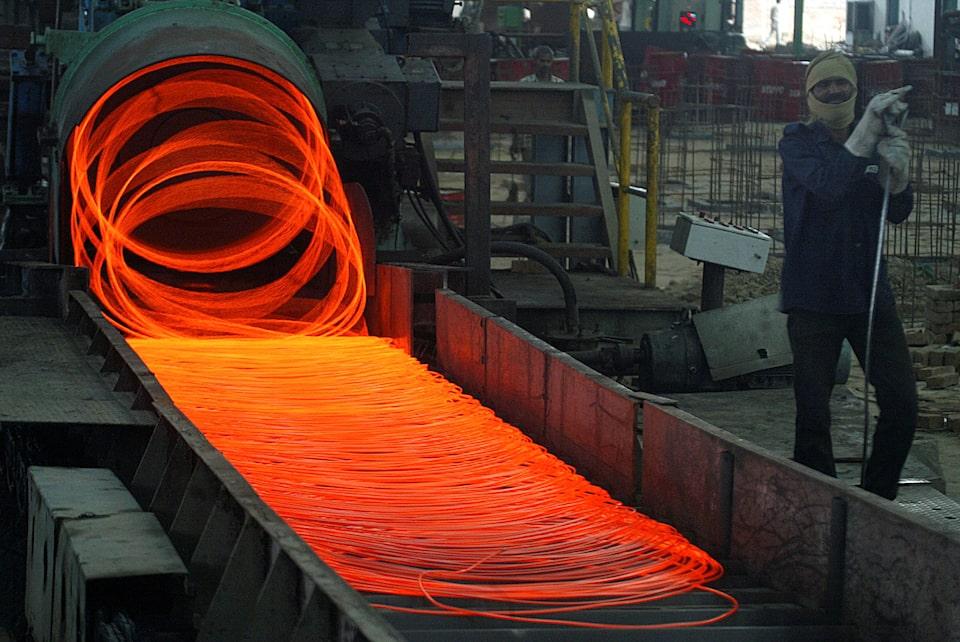
NEW DELHI, March 30 (Reuters) - An Indian court has declined requests from JSW Steel (JSTL.NS) , opens new tab and Trafigura to allow certain shipments of a steelmaking raw material, a court order showed, the latest setback after New Delhi's new policy curbing imports rattled the sector. India from January imposed curbs on imports of low-ash metallurgical coke, or met coke, with country-specific quotas to help domestic suppliers. The move unsettled steel majors, like ArcelorMittal Nippon India, who are concerned about the business impact and quality issues with locally produced met coke. Sign up here. JSW Steel had challenged New Delhi's decision to reject $90 million worth of imports which had been ordered even before the January restrictions kicked in, while Trafigura's India unit filed a lawsuit to get one of its rejected shipments cleared. Late on Saturday night, the Delhi High Court issued an order dismissing those pleas, agreeing with the Indian government's position that such imports will defeat the purpose of the new import curbs policy. The Indian government argued the companies were aware of the impending restrictions when they placed the import order and the quantity of met coke they were seeking will be in excess of quota restrictions, Judge Sachin Datta noted in his order. JSW declined to comment on the ruling, while Trafigura did not immediately respond. Imports of low-ash met coke have more than doubled over four years and New Delhi has restricted total overseas purchases to 1.4 million metric tons between January and June. The policy has major ramifications for India, the world's second-biggest producer of crude steel. ArcelorMittal Nippon India has privately warned India's government it may have to severely curtail steelmaking in the country and delay its expansion plans due to New Delhi's import restrictions, Reuters has previously reported. The company also approached the Delhi court to get some of its met coke imports from Indonesia and Poland cleared, but the case is yet to be decided. https://www.reuters.com/world/india/india-court-rejects-jsw-steel-trafigura-request-clear-certain-met-coke-imports-2025-03-30/
2025-03-30 06:15
SEOUL, March 30 (Reuters) - South Korea will soon submit a 10 trillion won ($6.8 billion) supplementary budget bill to parliament to respond to the fallout from the country's worst-ever forest fires and counter slumping growth, the finance minister said on Sunday. Choi Sang-mok told an urgently scheduled policy meeting that the fires have destroyed 48,000 hectares (120,000 acres) and caused 75 casualties. Sign up here. "We plan to draw up an emergency supplementary budget worth 10 trillion won we can swiftly execute," Choi said, urging parliament to approve the measure before the end of April. Asia's fourth-largest economy is grappling with the fires, which killed at least 30 people and prompted calls for national reforms to better tackle such disasters. South Korea also faces additional U.S. tariffs from President Donald Trump in coming days, potentially damaging sectors across chips, pharmaceuticals and autos in a major challenge for the export-reliant nation. South Korea's central bank cut interest rates by 25 basis points (KROCRT=ECI) , opens new tab to 2.75% and significantly lowered its economic growth forecasts last month, taking the economy from a restrictive monetary policy stance towards a neutral one to support growth. The economy grew a meagre 0.1% in the fourth quarter. The Bank of Korea has cut its forecast for 2025 growth to 1.5% from 1.9%. ($1 = 1,469.8700 won) https://www.reuters.com/world/asia-pacific/south-korea-draft-68-bln-extra-budget-wildfire-tariff-threats-2025-03-30/