2025-03-29 11:07
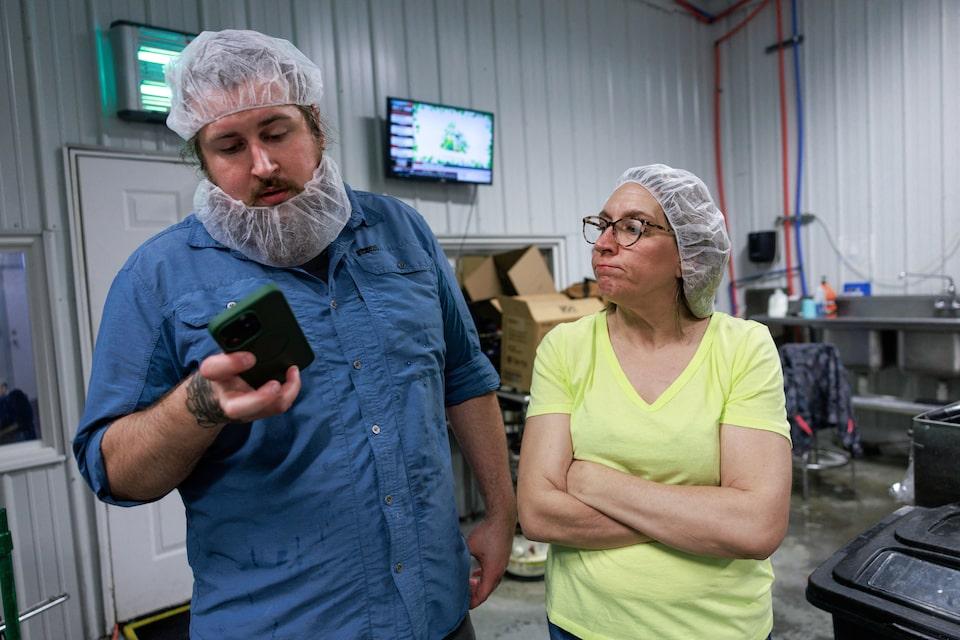
Cuts impact small farmers in West Virginia where Trump won 70% of votes Trump cut $500 million program for food banks to buy local produce Federal funds on average comprise about one-third of states' annual spending RAINELLE, W.V., March 29 (Reuters) - The phone rang over the whine of Trey Yates' butter churn. The person calling was polite, but the message was devastating: Mountaineer Food Bank was ending Yates' butter contract, due to the federal government's funding cuts. The next day, President Donald Trump signed a declaration celebrating National Agriculture Day, praising farmers and food makers like Yates. But the canceled contract with the federally funded food bank, one of only two in West Virginia, had been a lifeline for Yates' business. Sign up here. In that moment, Yates, 27, wasn't sure how much longer he could hold on. Heart pounding, he called his father, John Yates, shocked that Trump's administration would take such action. "Dad, they're trying to bankrupt me," he said. Yates, a registered independent, said he did not vote for Trump. Along the winding back roads and Appalachian hollers of West Virginia, in a state where Trump won 70% of the votes cast in November, his administration's vow to cut back on government spending is being keenly felt. Yates' lost sales stem from the U.S. Department of Agriculture's cancellation of the Local Food Purchase Assistance Cooperative Agreement Program, which was due to provide about $500 million this year to food banks. Trump's administration also rolled out cuts to other federal funding that has kept small agriculture businesses like Yates' Greenbrier Dairy churning. Orchard owner Natasha Zoe, a retired Marine, is waiting on grant funds to reimburse her for building a small cannery near the town of Alderson that will allow fruit farmers to make and sell syrups and juices. And money that helped food banks and schools buy farmer Johnny Spangler's blueberries and popcorn in Lindside has been cut – after he scaled up plantings and bought a bigger truck to meet demand. From grants from the USDA and the Department of Commerce, to funds from the Small Business Administration, an intricate web of economic support from Washington has for decades pumped money into rural America. Much of it has now been frozen, cut back or eliminated – including at least $1.5 billion in USDA funds for schools and food banks. "The federal government is the engine of money, while the states are the distributors of money," said James L. Perry, professor emeritus at Indiana University, who studies federal grant administration. "This has become more pronounced as the federal budget has grown." The cuts now force states to come up with funding from their own budgets – or shutter programs altogether, Perry said. States like West Virginia – where more than half the $19.2 billion annual budget for fiscal 2025 relies on federal funds – are particularly hard-hit. PASS-THROUGH IN THE PAST The practice of the U.S. government granting either land or money to state and local governments dates back more than 200 years, as a way to promote action deemed to be in the national interest. These pass-through grants boomed in the 1960s under President Lyndon B. Johnson, whose domestic agenda aimed to remake America by ending poverty - which led to significantly expanded funding into education, housing and food access. Today, pass-through funding allows federal agencies to tap into local expertise and knowledge as well as help the federal government keep its own staffing levels down, said Colleen Heflin, a professor of public administration and international affairs at Syracuse University. In fiscal 2024, the U.S. spent about $1.1 trillion on pass-through grants to state and local governments - or about 16% of the federal government's total spending, according to an analysis by USAFacts of data from the Office of Management and Budget and the Treasury Department. During his presidential campaign, Trump repeatedly vowed to cut government waste and spending and said he supported American farmers. "He will ensure farmers have the support they need to feed the world," Anna Kelly, White House deputy press secretary, said in a statement to Reuters. USDA is reviewing all programs for which payments have been placed on hold, and Agriculture Secretary Brooke Rollins is working to make determinations as quickly as possible, an agency spokesperson said in a statement. Pass-throughs are a particularly effective approach when it comes to agriculture, Heflin said. The Patrick Leahy Farm to School Grant Program and the Local Food Purchase Assistance Cooperative Agreement Program (LFPA), which were both cut, required that money be spent on purchases either within the state or a certain radius of the delivery destination. The White House said the LFPA, which began in 2021, was a Covid-era program that was being sunsetted. Overall, federal funds on average comprise about one-third of states' annual spending, according to the most recently available U.S. Census Bureau data. In addition to the cuts, a massive government spending bill enacted on March 15 has resulted in West Virginia organizations not getting nearly $109 million in funds that were sought by the state's congressional delegation, said Kelly Allen, executive director of the West Virginia Center on Budget and Policy. That included $500,000 for youth nutrition in the state capitol of Charleston. The cuts are poised to hit the southern part of the state, where Yates lives and works, harder because of its higher concentration of low-income people, Allen said. BRIDGING THE GENERATIONS Trey Yates is four generations deep in the dirt of agriculture. His butter and cheese feed hungry school children and the hard-pressed, in a place where a decent paycheck is as rare as rain in a summer drought. His great-grandfather, grandfather and father all worked at or ran dairies. His father also worked in a local food plant, bottling vinegar and apple butter. Sometimes, John would bring Trey, who watched as the jars rolled off the line and headed out to grocery stores. Yates bridged the generations. The butter-making came first, in fits and starts. Tapping into schools and food banks just made sense, as those are two of the biggest food markets in the state. Feeding kids also came from a place of memory. His mom, Stephanie, packed him extra lunch for friends without a parent or food at home. Church ladies delivered boxes of peanut butter and jelly sandwiches to the school for the football team. "Everyone got a sandwich," Yates said. "Some needed more." On a recent spring morning, Yates' delivery route took him back to that same lunchroom. Swinging the cafeteria door open at Meadow Bridge Regional School, the scent of freshly baked rolls – the dough made with Yates' butter – warmed the air. Though Yates lost the contract with Mountaineer Food Bank, his sales to Fayette County Schools are secure for now: The director of school nutrition, Andrew Pense, said he had other funding to buy Yates' butter. But steady orders from one school district are not enough to keep Yates afloat. Some of his other school customers have told him they can stretch budgets through this school year, but purchases for summer food programs and beyond could be at risk. BILLS STACKING UP Even before Trump took office, Yates' bills were stacking up. His parents had pledged their home to the bank in 2016, to help him buy the two-story building that became a small creamery, the butter churn and milk pasteurizer. He owes money to dairy farmer Mike Fogus, 68. Fogus agreed in 2014 when Yates was just 17 to sell every drop of his cows' milk to the young man, if he achieved his dream of opening a creamery. He liked the idea of helping his friend's son, who cut his teeth in the 4-H youth development program showing Maybelle the Jersey cow at summer fairs. Fogus allowed Yates' cows to graze on his pastures and be milked along with his own herd. It was supposed to be a win for the older dairyman, too, whose business was too small to make a profit selling his milk to the bigger processors. But as Yates struggled, a chill has crept in between the two men. "You gonna get me that check?" Fogus asked Yates, when the butter-maker drove onto the farm recently for a milk pick-up. Yates nodded. As the truck bounced back up the muddy road, Fogus eyed Yates' cows, collateral-on-the-hoof. Yates said he has $10,000 in delinquent invoices from schools, who have yet to pay for butter delivered. About one-third of his school customers have reduced their regular orders. "I'm going to pay him back," Yates said. "The bank, Mike, everyone's going to be paid. If I have to liquidate everything, everyone is going to get paid." 'THEY AIN'T COMIN' Yates is not the only one who's angry. He strode through the Beckley-Raleigh County Convention Center in Beckley on March 15, as afternoon sunlight cast shadows across the polished floor. Volunteers at this town hall - hosted by local Democrat county officials - handed out booklets of the U.S. Constitution and cookies. Organizers said they sent certified letters to invite U.S. Senators Shelley Moore Capito and Jim Justice, as well as U.S. Rep. Carol Miller and Riley Moore to the event, but none had appeared. Sen. Capito, who is monitoring federal funding for schools and food banks, did not receive a formal invitation to the event, a spokeswoman told Reuters. Her office said staff are communicating directly with several constituents. Rep. Moore declined to comment. Rep. Miller and Sen. Justice did not respond to requests for comment. There were Republican voters there, along with independents and Democrats. As a sound man fidgeted with the microphone at the front of the room, someone in the back called out, "They ain't comin', are they?" A volunteer shook his head no. Instead, for two hours, people addressed pictures of their government representatives. Some cried. Others yelled. Hunger came up, time and again. Yates hunched over his knees, frowning and cracking his knuckles. He stood up and walked to the microphone. He had no notes, he said later. "They are taking fresh, local foods out of our kids' mouths and those facing hunger," Yates said. "I've never been political, until now. If they need a new face of agriculture in this state, they dug me out of the woodwork." A cheer went up, loud and deep, filled with something close to desperation and hope, all stirred together. https://www.reuters.com/world/us/federal-funding-cuts-ripple-through-heart-trump-country-2025-03-29/
2025-03-29 05:24
March 28 (Reuters) - At least four people were killed in severe storms in the near Texas' border with Mexico amid heavy rain and flooding, officials said on Friday. Hidalgo, Willacy and Cameron counties in Texas faced among the heaviest storms, which lasted for about 48 hours, local officials said. Sign up here. Hidalgo County said at least three deaths were reported and "involved law enforcement efforts." Other information was not immediately available. An 83-year-old man drowned in Reynosa, Mexico, the Associated Press reported, citing authorities in the Mexican state of Tamaulipas. Thunderstorms began Wednesday, with another round of heavy rainfall on Thursday afternoon and evening, according to ABC News. The rain continued through Friday afternoon. The U.S. National Weather Service issued several flash flooding emergency warnings for some areas. "This is a particularly dangerous situation," it said in one statement. ABC News reported that the South Texas Health System hospital in McAllen experienced minor flooding on its first floor. Several school districts in the region canceled classes. The region received between 6 inches and a foot (15cm to 31cm) of rain or more in some areas, ABC News reported. https://www.reuters.com/business/environment/least-4-killed-severe-storms-along-texas-mexico-border-2025-03-29/

2025-03-28 23:40
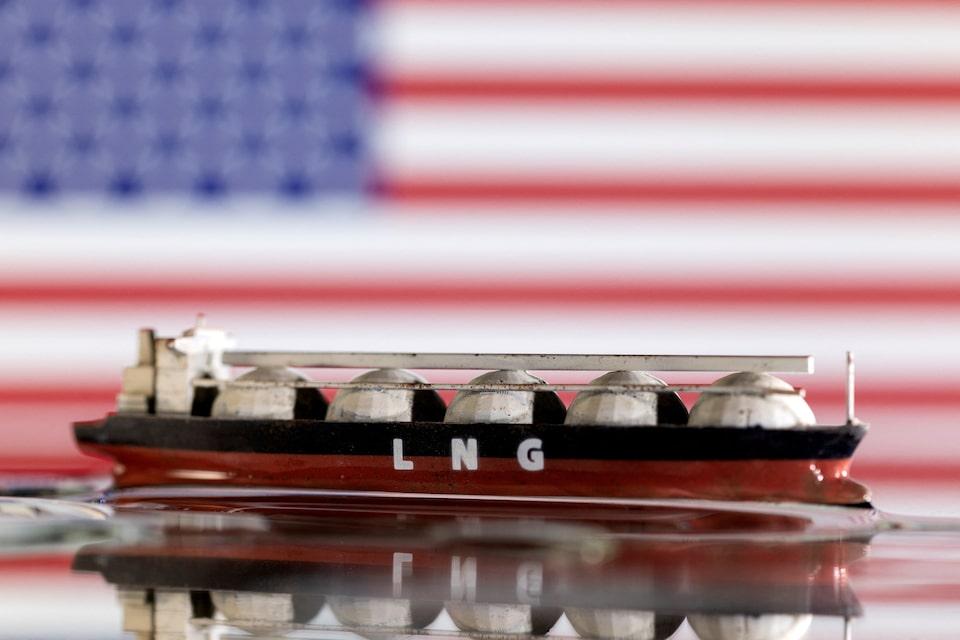
HOUSTON, March 28 (Reuters) - The Federal Energy Regulatory Commission issued a preliminary decision on Friday supporting environmental approval for NextDecade's (NEXT.O) , opens new tab Rio Grande LNG project in southern Texas. In August, a Washington, D.C. Circuit court quashed the regulator's approval for the plant at the Port of Brownsville, Texas, saying it failed to issue a supplemental Environmental Impact Statement on how communities will be affected and ordered it to publish one for public comment. Sign up here. The comment period for the draft statement ends on May 19, FERC said. NextDecade has continued constructing the plant and in 2027 is expected to expand LNG capacity that will help the U.S. remain the world's leading exporter of the superchilled gas. U.S. President Donald Trump has declared an energy emergency and laid out a sweeping plan to maximize oil and gas production. https://www.reuters.com/business/energy/us-regulators-issue-preliminary-environmental-support-rio-grande-lng-2025-03-28/
2025-03-28 21:31
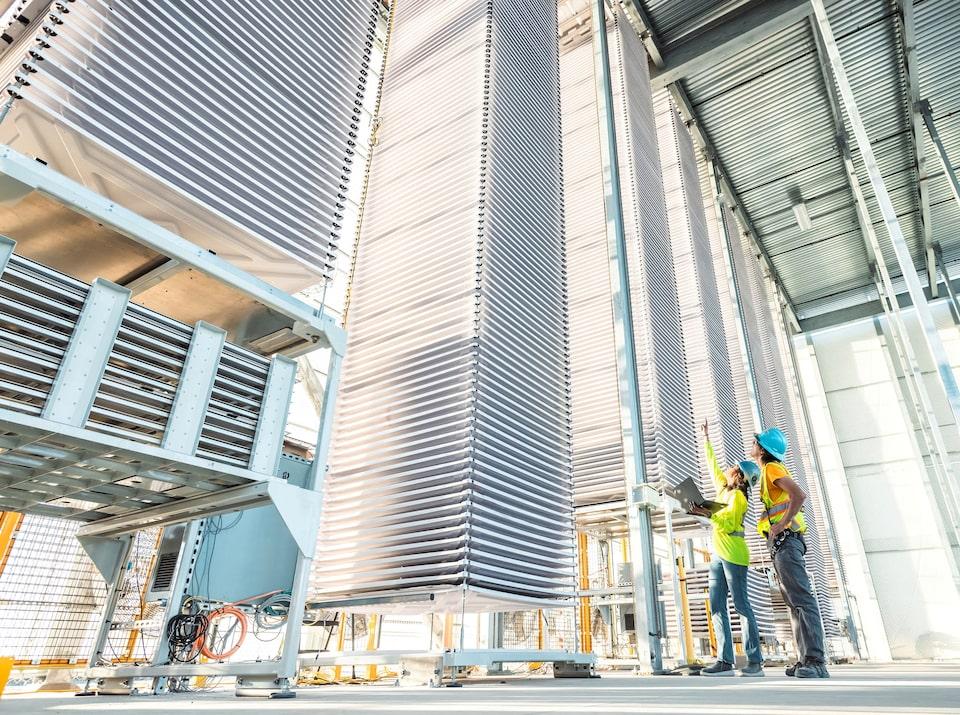
DOE reviews Biden-era carbon removal projects for potential funding cuts Louisiana and Texas projects face uncertainty over funding decisions Louisiana officials lobby to secure DAC hub funding WASHINGTON, March 28 (Reuters) - The U.S. Department of Energy is weighing cuts of hundreds of millions of dollars in grants to two projects in Texas and Louisiana aimed at demonstrating technology to capture carbon from the atmosphere at commercial scale, three sources familiar with the matter said. The Direct Air Capture hubs, part of former President Joe Biden's effort to slash U.S. greenhouse gas emissions, were launched by the DOE's Office of Clean Energy Demonstrations to help commercialize the expensive and nascent carbon removal technology. At full operation, the two hubs could remove more than 2 million metric tons of carbon emissions per year, far more than the world's biggest operating DAC plant in Iceland. Sign up here. The two largest U.S. hubs are Louisiana's Project Cypress, run by research and development firm Battelle, Climeworks Corporation and Heirloom Carbon Technologies, and the South Texas DAC Hub, proposed by Occidental Petroleum (OXY.N) , opens new tab subsidiary 1PointFive, Carbon Engineering and engineering firm Worley. The projects are on a list of Biden-era programs targeted to be eliminated to fund tax cuts in Congress's budget reconciliation bill, which is being reviewed by Energy Secretary Chris Wright, the sources said. They requested anonymity because they are not authorized to speak publicly. The two hubs were awarded $550 million and $500 million respectively under Biden, but have so far only received their first tranche of $50 million each. An Energy Department spokesperson said it was conducting a department-wide review to ensure programs align with the Trump administration's priorities. “This review is ongoing, and speculation by anonymous sources about the results of the review are just that – speculation," the spokesperson said. The roughly 20 smaller DAC research projects identified by Biden's administration for grants were not on the list, and their status was unclear, the sources said. The capital-intensive demonstration projects cannot continue without receiving the rest of their grants and cannot survive even two more months of uncertainty as Wright makes his final funding decisions, said a source involved in one of the projects. Louisiana state officials turned up the pressure on Wright and the state's congressional delegation this week to save funding for its DAC hub. "I urge you to contact DOE Secretary Chris Wright and ask him to take every necessary step to advance this critically needed federal grant," Louisiana's Secretary for Economic Development Susan Bonnett Bourgeois wrote in a letter on Thursday to the state's U.S. senators and representatives, which was seen by Reuters. Occidental did not respond to a request for comment on the potential DAC hub cuts but said on the company's February investor call that it has had several conversations with President Donald Trump about the need for DAC technology and for subsidies. https://www.reuters.com/sustainability/climate-energy/us-carbon-removal-hub-funding-may-face-energy-department-cuts-sources-say-2025-03-28/
2025-03-28 21:05
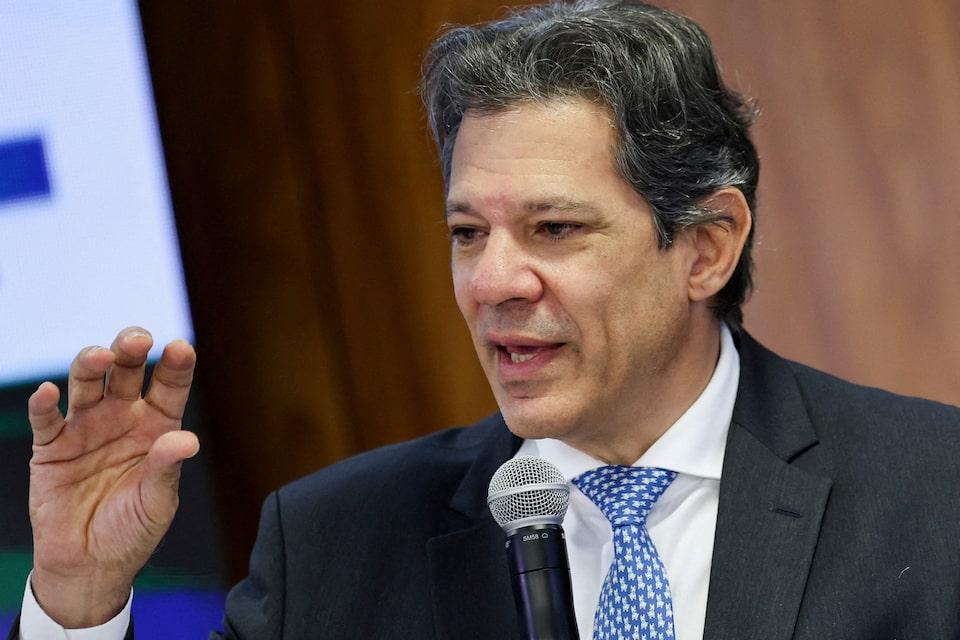
March 28 (Reuters) - Brazilian Finance Minister Fernando Haddad said on Friday that President Luiz Inacio Lula da Silva will not adopt unorthodox policies with next year's presidential election in mind, where he is seen as the leading left-wing candidate. "We will stay the course, meeting our targets and pursuing our goals because this is the right path," he said. "We won't make anything up, Lula is not one to take exotic measures for electoral reasons." Sign up here. Speaking at an event hosted by Arko Advice in Sao Paulo, Haddad said this year could see a global depreciation of the dollar, even if U.S. interest rates do not fall as much as expected. Such a scenario would aid Brazil's central bank in its efforts to control inflation, he added. After policymakers raised interest rates by 100 basis points last week to 14.25% and signaled a smaller hike in May, Haddad said that rates are at an "ultra-restrictive level" that will play their role in cooling economic activity. Recent economic indicators have cast doubt on the pace of the slowdown, including formal job creation, which came in well above expectations in February, according to data released earlier on Friday. Haddad said formal employment is set to remain strong, as Latin America's largest economy is expected to see a robust agricultural crop, boosting hiring this year. https://www.reuters.com/world/americas/brazils-lula-will-not-take-unorthodox-measures-ahead-election-minister-says-2025-03-28/
2025-03-28 20:53
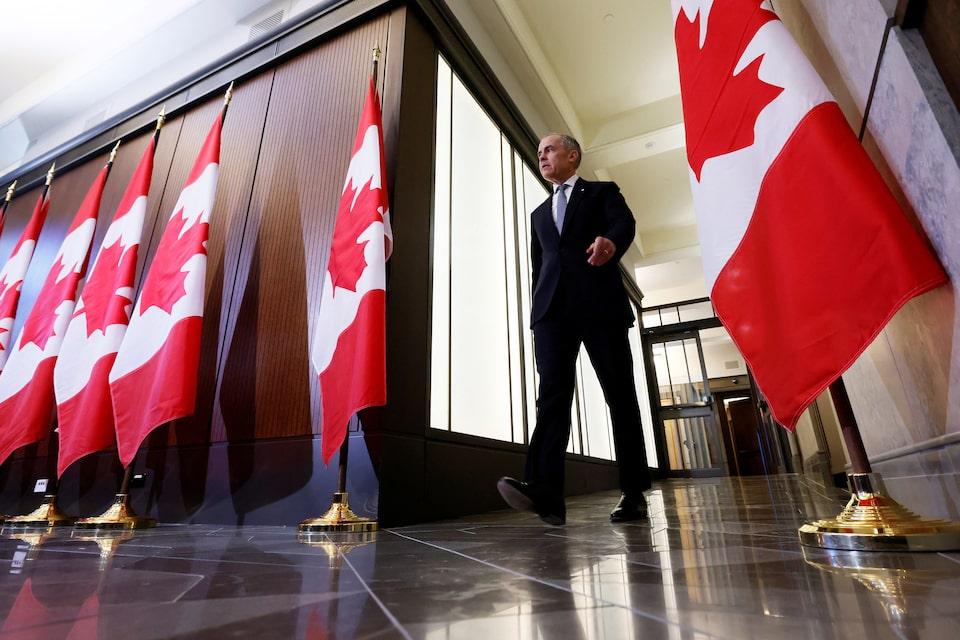
Trump and Carney both said the talk was constructive Carney reiterated that Canada will impose counter tariffs Carney says US, Canada will start talks on new relationship WASHINGTON/OTTAWA, March 28 (Reuters) - U.S. President Donald Trump and Prime Minister Mark Carney on Friday had a conversation that both men described as productive, although the Canadian leader said Ottawa would be imposing retaliatory tariffs next week as promised. The call was their first contact since Carney won the leadership of Canada's ruling Liberals on March 9. Carney says Trump's threat of tariffs is a betrayal of a once close economic and security relationship. Sign up here. "It was an extremely productive call, we agree on many things, and will be meeting immediately after Canada's upcoming Election to work on elements of Politics, Business, and all other factors," Trump wrote on his social media platform Truth Social. That work "will end up being great for both the United States of America and Canada," he added. Trump - who often muses about annexing Canada - referred to Carney as the Canadian prime minister rather than as the governor of the 51st U.S. state, the term he often used to describe former Prime Minister Justin Trudeau. "The president respected Canada's sovereignty today, both in his private and public comments," Carney told a press conference in Montreal, saying the phone call had been very cordial. Carney on Thursday vowed to transform Canada's economy to be less dependent on the United States. Trump's tariff announcement is expected on April 2. Ottawa has made clear for months that it will impose countermeasures. "I informed President Trump that my government will be implementing counter tariffs to protect Canadian workers and our economy following the announcement of new trade actions by the United States on April 2," Carney told the press conference. The United States and its northern neighbor have long been close allies and trading partners. But relations quickly deteriorated after Trump took office in January. Carney said the two leaders had agreed to begin comprehensive negotiations about a new economic and security relationship immediately after an election on April 28. Canada, along with Mexico, is part of the United States-Mexico-Canada free trade deal that is scheduled to be reviewed next year. Carney said he did not know whether Mexico would take part in the talks on a new economic security relationship, adding it was Canada's preference that it be present. Carney reiterated that Canada needed to find new trading partners and said that if he won the election, he would set up a C$5 billion trade diversification fund to help the construction of ports, railroads, inland terminals, airports, and highways. https://www.reuters.com/world/americas/trump-says-he-had-productive-call-with-canadian-pm-carney-2025-03-28/