2025-03-28 11:26
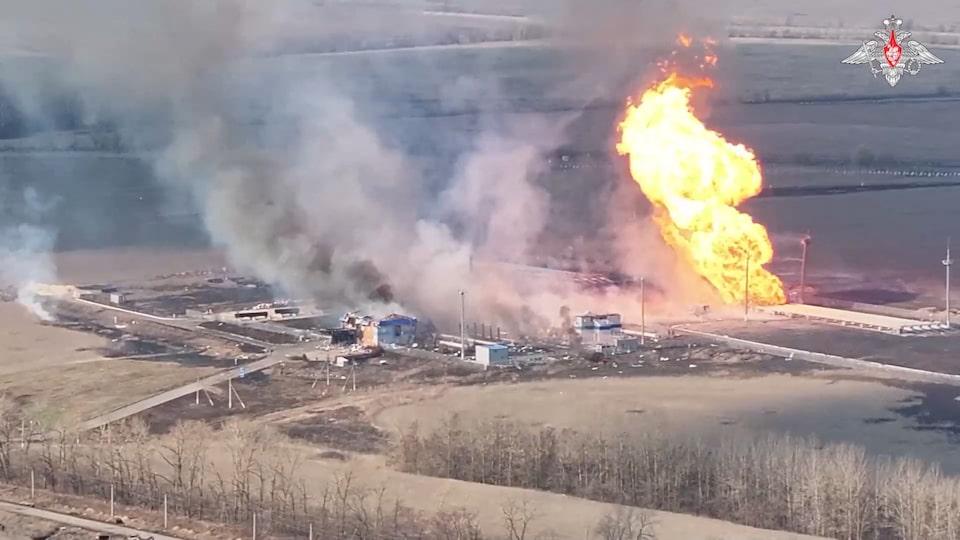
Russia says Ukraine attacked gas unit, tried to hit refinery Kyiv denies responsibility, blames Russia Accusations highlight fragility of US-brokered truce Gas prices in Europe edge up MOSCOW, March 28 (Reuters) - Russia accused Ukraine on Friday of attacking its energy facilities despite a moratorium on such strikes, saying a key piece of gas infrastructure in the town of Sudzha had been practically destroyed. A Ukrainian official said it was Russia that attacked the gas transit point in Sudzha. Reuters could not independently establish which side was responsible. Sign up here. The United States announced separate agreements with Ukraine and Russia on Tuesday to pause their strikes in the Black Sea and against each other's energy targets - potential stepping stones that Washington hopes will lead to a full ceasefire and peace talks to bring a definitive end to the three-year war. But each side has accused the other of breaking the energy truce, underscoring the fragility of the U.S.-brokered agreements. Sudzha, in Russia's western region of Kursk, is the site of a gas metering station at the transit point where Russia pumped gas by pipeline across Ukraine and into Europe until the end of last year. Flows stopped on January 1 after Ukraine declined to renew the deal because of the war. Pipeline infrastructure for possible Russian gas exports via Ukraine to Europe remains in place, but the Sudzha facility would need to be rebuilt in order for gas to be pumped again there at any point in the future. There is another route for the Russian gas, through Sokhranovka in Ukraine's Luhansk region, part of which has been under the control of Russia-backed separatists since 2014. In May 2022, Ukraine declared "force majeure" for gas flows via Sokhranovka, saying it was "occupied". "On March 28, at about 10:20, the Kyiv regime launched a double attack, using, according to preliminary information, HIMARS missiles at the Sudzha gas metering station, which resulted in a major fire, and the energy facility was virtually destroyed," the Russian defence ministry said. It published a video showing a fierce fire at the site, with flames shooting high into the sky. Reuters was able to verify the location by matching it to satellite imagery. A Ukrainian national security official wrote on Telegram: "Russia has again attacked the 'Sudzha' gas transmission system (gas metering station) in Kursk region, which it does not control." Russia had previously accused Ukraine of attacking the same facility on March 21, which Kyiv also denied. Sudzha was the largest settlement in a piece of Russian territory which Ukraine seized last August in a shock incursion. Since then, Russia has regained most of that area. The extent of any damage to gas pipelines at the location was not immediately clear. Russia has said some of its soldiers crept through a portion of the pipeline earlier this month in s surprise operation to ambush the enemy. The European benchmark front-month contract on the Dutch Title Transfer Facility (TTF) hub edged up by 0.5%to 41.20 euros per megawatt hours (MWh) by 1112 GMT. The Russian defence ministry said Ukraine also attacked power facilities in Belgorod, causing outages there, and tried to hit an oil refinery in the Saratov region. Reuters could not immediately confirm its account. The Rosneft-owned Saratov refinery has been hit previously by Ukrainian drone attacks. https://www.reuters.com/world/europe/russia-says-ukraine-virtually-destroys-key-sudzha-gas-station-2025-03-28/
2025-03-28 11:21
Biggest short position in Shell since 2016, FCA data shows Elliott pushes for more change at BP Elliott also has a short position in TotalEnergies LONDON, March 28 (Reuters) - U.S. activist hedge fund Elliott Management, currently campaigning for more change at BP (BP.L) , opens new tab in its capacity as a BP shareholder, has taken a big short position in Shell (SHEL.L) , opens new tab, according to financial filings. Elliott's short position, which is designed to make money if Shell's share price falls, amounts to about 0.5% of Shell, according to data published on the website of the Financial Conduct Authority (FCA) on Thursday. That is the biggest short position in the company since 2016, the data showed. Sign up here. Elliott took the position on Tuesday, when Shell gave an investor update revealing further cost cuts, according to the FCA data. Shell has a market capitalisation of 169 billion pounds ($218.72 billion) as of Friday. Elliott and other hedge funds typically hedge their long positions in companies with short positions in others. Elliott has also taken a 0.6% short position in BP's rival TotalEnergies (TTEF.PA) , opens new tab this month, according to filings to France's financial regulator AMF. TotalEnergies' market capitalisation is 136.74 billion euros ($147.69 billion). Elliott Management has met several large shareholders in BP to try to forge a consensus for more changes at the oil major that could include cost cuts, more disposals and a potential leadership reshuffle, shareholders have told Reuters. BP's share price has underperformed rivals like Shell and Exxon in the last five years, which investors have blamed in part on the company's 2020 plan to focus on growing its renewable business while cutting oil and gas production. ($1 = 0.7727 pounds) https://www.reuters.com/business/energy/elliott-takes-big-short-position-shell-amid-bp-campaign-2025-03-28/
2025-03-28 11:20
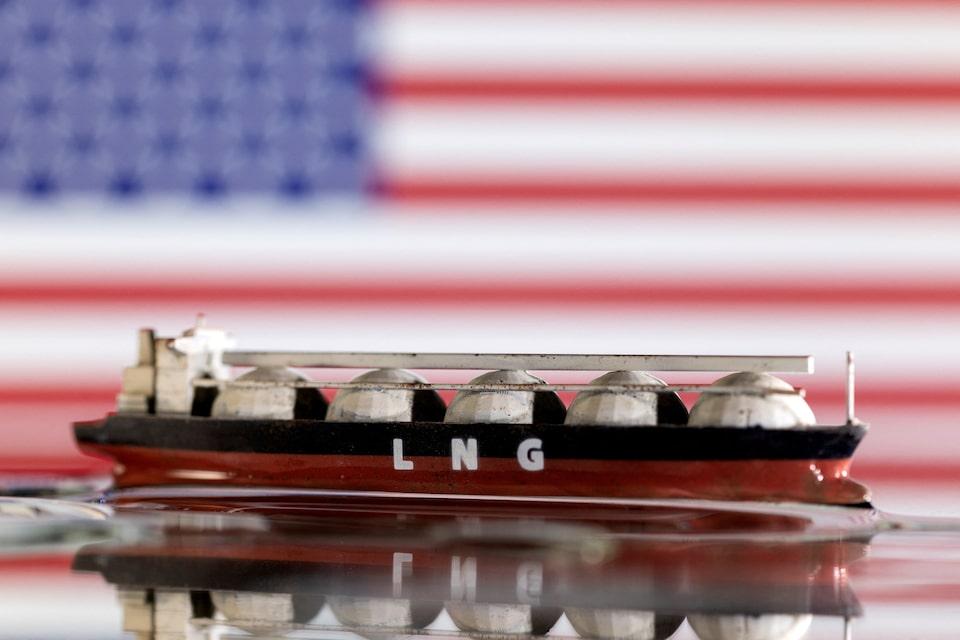
March 28 - The Trump administration’s broad policy goal of achieving “energy dominance” , opens new tab may run into headwinds in the country’s largest export market, the European Union, due to new methane regulations. While European Commission President Ursula von der Leyen has indicated that the EU may be willing to import more U.S. liquefied natural gas (LNG), in part to reduce the bloc’s trade deficit with the U.S., making this happen could get complicated. Sign up here. First, many utilities in the EU are hesitant about signing long-term LNG contracts , opens new tab given the uncertainty , opens new tab about the region’s future gas demand and the price impact of the product’s expected supply growth , opens new tab in the coming years. Rapidly deteriorating political relations with Washington are also not helping. Another complicating factor is the EU Methane Regulation , opens new tab that was adopted in August 2024. This framework established rules and obligations for companies operating in the EU related to monitoring, reporting, and verifying methane emissions as well as deterring and addressing methane leaks. This framework did not emerge in a vacuum. A major effort has been underway globally to better measure and monitor methane emissions associated with fossil fuel production and transport, as illustrated by forums such as the Global Methane Pledge , opens new tab, the Oil and Gas Methane Partnership , opens new tab, and the Oil and Gas Decarbonization Charter , opens new tab. The U.S. was previously part of this movement. The Biden Administration adopted a set of measures, including a methane fee, to curtail so-called ‘fugitive’ methane emissions from oil and gas systems through the Inflation Reduction Act (IRA). , opens new tab But the efforts in the U.S. are now facing headwinds in the early days of the Trump administration. PESSIMISTIC SCENARIO Going into 2025, the optimistic view was that the framework installed by the previous administration could be amended to make sure that U.S. LNG exporters could benefit from looser rules in the U.S. while still being able to compete in the global marketplace with a supposedly superior product. Unfortunately, early indications are that a more pessimistic scenario is playing out. In February, the U.S. Senate repealed the aforementioned fee on excess fugitive methane emissions, though the outright elimination of these fees is proving more difficult , opens new tab due to other stipulations in the IRA. More fundamentally, President Trump, in one of his executive orders , opens new tab, urged the Environmental Protection Agency (EPA) to challenge and possibly rescind the Agency’s 2009 endangerment finding, which concluded that six types of greenhouse gas emissions pose a threat to public health and welfare. The EPA may face legal and scientific barriers , opens new tab if it tries to rescind this finding, as the EPA’s authority and obligations to regulate GHG emissions have been cemented in the Clean Air Act through the IRA. But even talk about a change of this magnitude is generating significant uncertainty among U.S. energy producers, especially LNG exporters who still need to comply with stricter environmental rules in Europe. PATH FORWARD So what is next for U.S. LNG? Global demand for natural gas is robust and likely to remain so for decades. And U.S. LNG companies, which tend to have a long-term focus given the lengthy lead time of their projects, are apt to look beyond the Trump administration and seek to abide by European environmental standards to further cement their growing market share there. It is notable that American companies have been among the few to constructively engage with Brussels to find a pragmatic path to implement the current methane rules. However, U.S. natural gas supply chains are incredibly complex, and technologies to help detect and mitigate GHG emissions are by no means perfect. Consequently, improving the environmental footprint of U.S. LNG will be a long-term process. And that process may now be severely disrupted, so it will likely come down to the industry itself to make progress, possibly in close collaboration with lawmakers and regulators in jurisdictions like the EU. On the U.S. side, the LNG industry could push the Trump Administration to preserve the IRA’s tax credits for carbon capture and storage (CCUS) technology, which Secretary of Energy Chris Wright seems to support , opens new tab, as do many oil and gas companies , opens new tab. And natural gas producers and shippers could make it clear how disruptive, and thus counterproductive, it would be for the endangerment finding to be rescinded. In a less constructive scenario, U.S. policymakers could mirror their counterparts in Qatar, who in December indicated to the European Commission that LNG exports would be halted if the country’s state-owned company were to be fined under the bloc’s corporate sustainability directive. The White House could also push back against the EU Methane Regulation or make it part of larger tariff negotiations , opens new tab. U.S. gas producers, LNG exporters, and EU lawmakers have an interest in preventing a zero-sum showdown, but it remains unclear how they will navigate this unfamiliar energy landscape where, at least politically, the U.S. and EU are moving further apart. (The views expressed here are those of Dr. Gautam Jain, a Senior Research Scholar at the Center on Global Energy Policy (CGEP) of Columbia University, and Dr. Tim Boersma, a consultant and a Fellow at CGEP.) https://www.reuters.com/markets/commodities/us-lng-exporters-could-hit-methane-snag-europe-jain-boersma-2025-03-28/
2025-03-28 10:42
GDANSK, March 28 (Reuters) - Two out of three companies around the world are planning to change their currency hedges by adding to them, or keeping them for longer in response to growing geopolitical tensions, a survey on Friday from software provider MillTechFX showed. Companies and investors alike use combinations of derivatives to protect themselves against high volatility in the currency markets that has the potential to juice up their returns or their bottom lines, but can also wreak havoc. Sign up here. In its first global 2025 survey on FX hedging, MillTechFX surveyed 750 senior corporate finance officers in Europe, the United States and the United Kingdom. U.S. President Donald Trump's return to the White House this year has whipped up market volatility, as investors and companies struggle to respond to his erratic roll-out of tariffs and trade policy, as well as his unconventional approach to foreign relations, specifically towards Europe. 62% of respondents to MillTechFX's survey said they planned to adjust their strategies this year, with increasing the length of their hedges or the proportion of currency exposure that they hedge this year. The most popular move has been to increase hedge length, with 62% saying they would do so. A majority currently hedge out to between four and six months, according to the survey. "Currency volatility remains a defining theme in 2025, driven by tariffs, geopolitical tensions, and shifting economic policies," Nick Wood, head of execution at MillTechFX said. "The strengthening dollar reflects inflationary expectations and U.S. political divergence, while trade disputes and global conflicts continue to reshape capital flows," he said. MillTechFX said 81% of companies hedge their currency exposure, but three quarters of those that don't said they had experienced losses. U.S. corporates experienced the most losses from unhedged currency risk, with 77% affected, followed by the UK at 75% and Europe at 72%, the survey showed. Part of the problem is the rising cost of hedging currency exposure, with 50% of respondents that do not hedge choose not to do so because it is too expensive, the survey said. That said, the survey showed 52% of those companies that have not hedged previously are now considering doing so. Last year, sterling held up the against the dollar compared with other major currencies, losing just 1.7% in value . Japan's yen lost over 10%, while the euro lost 6%. According to the survey, 42% of UK corporates were hit negatively by the stronger pound, while only 28% of European corporates were negatively affected by euro volatility. 91% of North American corporates said the stronger dollar had positively impacted their competitive position in international markets. https://www.reuters.com/markets/currencies/geopolitical-angst-prompts-over-60-companies-hedge-fx-longer-survey-shows-2025-03-28/

2025-03-28 10:21
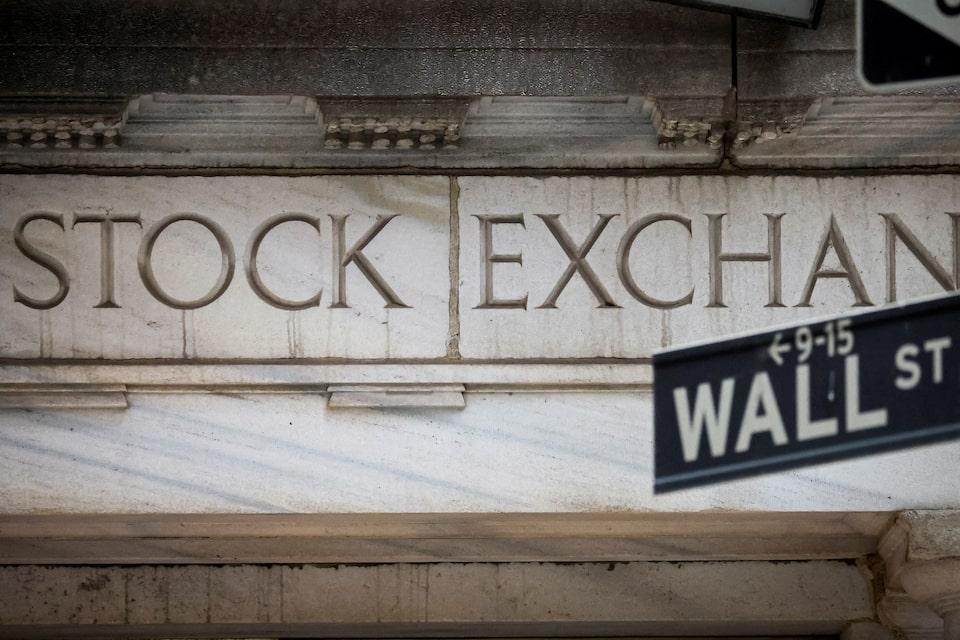
S&P 500 set for biggest first-quarter decline since 2020 Investors expect heavy volatility after April 2 tariff reveal Retaliatory tariffs could make Wall Street's ride even rockier NEW YORK, March 28 (Reuters) - U.S. President Donald Trump's scheduled April 2 tariff policy announcement could clear a fog of uncertainty that has clouded financial markets this year, yet few investors expect to get the definitive guidance they seek. Investors entered 2025 bullish about pro-growth government policies under Trump, but instead the stock market has swooned since his inauguration. Headlines on tariffs whipsawed Wall Street, knocking the S&P 500 as much as 10% earlier this month. Sign up here. The benchmark index is on pace to finish the first quarter down about 5%, its biggest decline for the first three months since 2020. "I'm an eternal bull, but I would tell you that I think that between now and next week, and certainly the beginning of earnings season, I think there's more potential downside than upside right now," Mark Malek, Chief Investment Officer at Siebert Financial said. The benchmark index tumbled about 2% on Friday after data showed U.S. consumer spending rebounded in February amid rising prices for goods and services. The market slide highlights investors' sensitivity to any sign Trump's protectionist trade agenda could reignite inflation. The April 2 tariff announcement should reveal which countries and sectors the Trump administration will target as it tries to reduce a $1.2 trillion global goods trade deficit. Heavy volatility is expected, with stock prices swinging wildly on factors such as how steep the tariffs will be, their duration, which countries and sectors they will target and any retaliatory measures from trading partners. "Uncertainty has continued to plague the market with volatility," said Michael Arone, chief investment strategist for State Street Global Advisors. "There is potential for more volatility on April 2 and post that deadline," Arone said. On Thursday, governments from Ottawa to Paris threatened retaliation after Trump unveiled a 25% tariff on imported vehicles, hammering auto stocks and testing already strained ties with allies. The April 2 announcement is likely "not a one-and-done event," said Angelo Kourkafas, senior investment strategist at Edward Jones. "It is an important milestone, but at the end of the day, it doesn't completely really clear out all the uncertainties that potentially still remain," Kourkafas said. ALL SPINACH AND NO CANDY The market reaction on April 2 “will depend heavily” on timing for future tariffs, especially sectoral tariffs, and how fast other countries could retaliate to reciprocal tariffs, said Matthew Aks, senior strategist at Evercore ISI. "If other countries retaliate, that will create the risk of an escalatory cycle that could dampen any feeling of relief," he said. On Wednesday, strategists at Barclays slashed their 2025 target price for the S&P 500 to 5,900 from 6,600, based on an expectation that earnings take a hit as tariffs feed a material slowdown in U.S. activity that stops short of recession. The bank trimmed its 2025 S&P 500 EPS estimate to $262 from $271, implying moderately below-trend growth, due to a hit from tariffs, with discretionary stocks among the most vulnerable. On Friday, UBS Global Wealth Management cut the S&P 500's 2025 target to 6,400 from 6,600 and trimmed 2025 S&P 500 EPS forecast by $5 to $265. The risks are not all to the downside. The recent stock selloff could tempt buyers should the administration's tariff moves fall short of the market's worst fears. "I don't think there's anything that would happen that would surprise the market to the downside," said Harris Financial Group Managing Partner Jamie Cox, who would view any fresh bout of weakness as a buying opportunity. Some said the tariff deadline could allow Trump to pivot to more market-friendly policies, including tax cuts. "I think they're going to start shifting gears and move from tariffs," Robert Pavlik, senior portfolio manager at Dakota Wealth, said. "That won't go away completely, but there will be more emphasis on the tax talk. That's what I'm hoping for." That could drive a rebound in investors' appetite for risky assets. "It's been all spinach and no candy so far, but I think the candy is likely coming later in the year," State Street's Arone said. During Trump's first term, stocks took a tumble as a U.S.-China trade war heated up with the S&P 500 shedding about 18% between January and December 2018. The index went on to recover all the lost ground within about three months as trade war concerns eased. Still, investors worry that an extended back-and-forth on tariffs boosts chances for lasting damage to the U.S. economy. U.S. consumer confidence plunged to the lowest level in more than four years in March, as investors worried more about a recession and higher inflation due to tariffs. "I have not seen movement in confidence like this that has not had some negative impact somewhere," Siebert's Malek said. The stock market's recent bout of nerves is largely driven by concern that tariffs would significantly weaken the economy, said John Canavan, lead analyst at Oxford Economics. Some recent weakness could spill into the second quarter, Canavan said. Uncertainty on tariffs has so far discouraged investors from buying shares at a discount following Wall Street's quarterly decline. "Getting greater clarity will allow markets to move higher," State Street's Arone said. "I am still skeptical that will get that clarity ... we are hoping for it, but we will see," he said. https://www.reuters.com/markets/us/wall-street-straps-trumps-tariff-reveal-sees-no-end-fog-uncertainty-2025-03-28/
2025-03-28 10:01
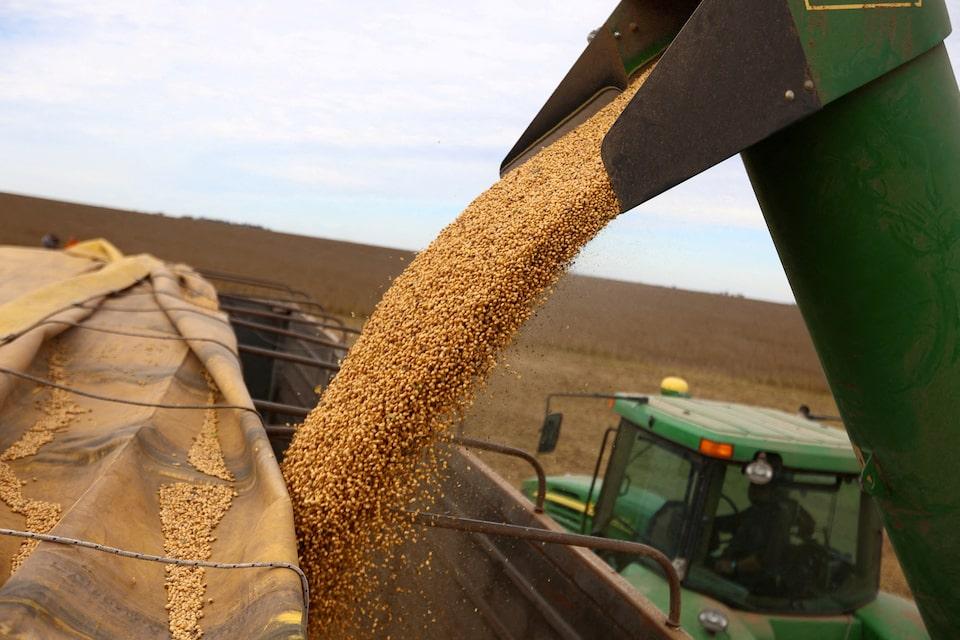
Argentine farmers slow soy sales, betting on peso devaluation Farmers await potential tax relief from President Milei Adverse weather impacts soy sales, boosts early corn harvest BUENOS AIRES, March 28 (Reuters) - Argentine farmers are selling their soy crop at the slowest pace in 10 years as producers in the South American country bet on a likely weakening of the peso currency and potential tax relief from the government of libertarian President Javier Milei. The latest government data show that farmers in Argentina, the world's largest exporter of soybean oil and meal, had sold 8.4 million tons , opens new tab of 2024/25 soybeans as of March 19, equivalent to between 17.3%-18.1% of the expected harvest. Sign up here. That marked the slowest pace since the 2014/15 season when 15.7% of the soy harvest was sold at the same time of the year. The sales are a quarter below where they were last year. "Producers are selling only what they need to cover their expenses. It's another year when they are waiting to see what happens later, especially with the exchange rate," said Pedro Jaquelin, a farmer from the grains hub town of Pergamino. Argentine traders have been placing bets on a faster devaluation of the peso currency ahead of an expected $20 billion loan deal with the International Monetary Fund. Peso futures have spiked since the middle of the month. Local farmers' crops are priced in dollars, but they receive the peso equivalent, meaning a weaker peso would give them more local currency, an incentive to hold onto their crops. "The uncertainty and the numbers don't add up. Producers are waiting to see a change," said Jaquelin, who is also president of the rural society of Pergamino in Buenos Aires province. The slower soybean sales are a worry for Milei, whose government needs dollars to help stabilize the local peso. Soy is the country's main source of foreign currency, mainly through exports of processed soy oil and meal. Argentina's peso is currently at 1,070 per dollar, though a June futures contract spiked to near 1,200 per dollar in recent weeks. The government has moved to play down talk of a potential devaluation. Farmers also said that they were watching tax rates on soy exports, currently at 26% and 24.5% for soybeans and their derived oil and meal respectively. Some producers hope that Milei will follow through on pledges to cut these further after a temporary reduction until June. "The idea in producers' heads is that if they already lowered them once, why wouldn't they lower them again?" said Ricardo Bergmann, vice president of soy chamber AcSoja. The farmer from Monte Buey in central Córdoba province, added there are several bills in the committee phase in Congress that aimed to reduce these taxes, in a year in which Milei will try to consolidate his power in the October midterm elections. WEATHER AND CORN The delay in soybean sales is also linked to adverse weather that hit Argentine farmers at different spells of the 2024/25 campaign, earlier during planting last year and a tough drought in January-February that made producers more cautious. Heavy rains that fell in the second half of February, however, allayed fears about the drought impact and have helped spur a strong early corn crop. Farmers said they have been focused more on corn sales, taking advantage of stronger prices. "More early corn is being harvested, and it's arriving now. Producers are choosing to sell more corn," said Rosario-based agricultural analyst Lorena D'Angelo. Meanwhile, the chamber of grain exporters and processors CIARA-CEC noted that due to the slower pace of sales, local crushers have increased trade with Paraguayan farmers, who send their goods to Rosario factories by barge on the Paraná River. https://www.reuters.com/markets/commodities/argentine-farmers-stall-soy-sales-over-murky-fx-outlook-2025-03-28/