2025-03-28 09:53
BERLIN, March 28 (Reuters) - A German government spokesperson said on Friday that "nothing is off the table" with regards to punitive measures in response to the threat of U.S. tariffs, after an EU lawmaker suggested they target U.S. tech giants. Asked whether this approach would be possible, the spokesperson said that "at the moment, nothing is off the table... everything is being looked at". Sign up here. "Decisions must be made jointly and in consideration of the costs and benefits within the European Union and under the leadership of the European Commission - this process is underway," he added. U.S. President Donald Trump on Wednesday announced a 25% tariff on vehicles imported into the U.S., a move with far-reaching implications for Germany's car industry, especially Volkswagen (VOWG.DE) , opens new tab, which has a large supply base in Mexico. European Union officials are trying to ease tensions with the U.S. and prevent a trade war, and the German government spokesperson said "we are still hoping, we are still counting on reaching agreements" with Washington. Earlier on Friday, a senior European lawmaker said the EU could charge fees on PayPal (PYPL.O) , opens new tab and Google (GOOGL.O) , opens new tab if negotiations with the U.S. were to fail. "In the case of digital service providers, there is also a huge economic interest on the part of U.S. companies," said Bernd Lange, the head of the European Parliament's international trade committee. "In this respect, you can also look at charging fees on PayPal or Google." "Ultimately, service providers are not excluded from possible countermeasures, depending on what the U.S. does and how far and where the spiral leads," he told journalists in Berlin. https://www.reuters.com/technology/eu-could-charge-fees-paypal-us-tariff-dispute-says-senior-lawmaker-2025-03-28/
2025-03-28 09:49
MUMBAI/NEW DELHI, March 28 (Reuters) - India is asking the Financial Action Task Force (FATF), a global money-laundering watchdog, to reduce compliance requirements for cross-border payments made through its homegrown system, several sources familiar with the discussions said. Launched in 2016, the Unified Payment Interface (UPI) accounted for 83% of India's digital payments volume in 2024, up from 34% in 2019, and dominates the domestic retail payments sector. Sign up here. The government now wants to increase the use of its own payments network by Indians travelling abroad, which could potentially tap into a growing market, and make the global cross-border payments market more competitive. But its expansion for cross-border payments has been hampered by compliance requirements on smaller payments, to which payments made via networks such as Visa (V.N) , opens new tab, Mastercard (MA.N) , opens new tab, and SWIFT are not subject, the sources said. Government officials raised the issue at an FATF conference in Mumbai this week, two of the sources said, declining to be named because they are not authorised to speak to media. The FATF, India's central bank and the federal finance ministry did not immediately respond to emails seeking comment. Visa and Mastercard did not respond to requests for comment. A final decision would depend on achieving a consensus among FATF member countries after the public consultation period, a third source familiar with the discussions said. A public consultation on the FATF's "travel rule", which requires financial institutions to collect, hold, and transmit information about the sender and receiver of cross-border payments, is open until April 18. In their current form, global anti-money laundering rules tend to favour both card networks and payments facilitated by the SWIFT payment system, the three sources said. Central Bank Governor Sanjay Malhotra told the FATF gathering that "it would be desirable to make the (FATF's) travel rule technology-neutral," without specific mention of UPI. India has so far inked deals with seven nations, including France and Singapore, which allow merchants to accept payments via the UPI. ($1 = 85.6175 Indian rupees) https://www.reuters.com/world/india/india-pushes-ease-international-payments-through-homegrown-network-rival-visa-2025-03-28/

2025-03-28 09:49
KAMPALA, March 28 (Reuters) - The Ugandan shilling was stronger on Friday, boosted by a healthy infows of foreign exchange from charities and commodity exporters, traders said. At 0917 GMT commercial banks quoted the shilling at 3,655/3,665, compared to Thursday's close of 3,660/3,670. Sign up here. https://www.reuters.com/markets/currencies/ugandan-shilling-firms-fx-inflows-commodity-exporters-charities-2025-03-28/

2025-03-28 07:52
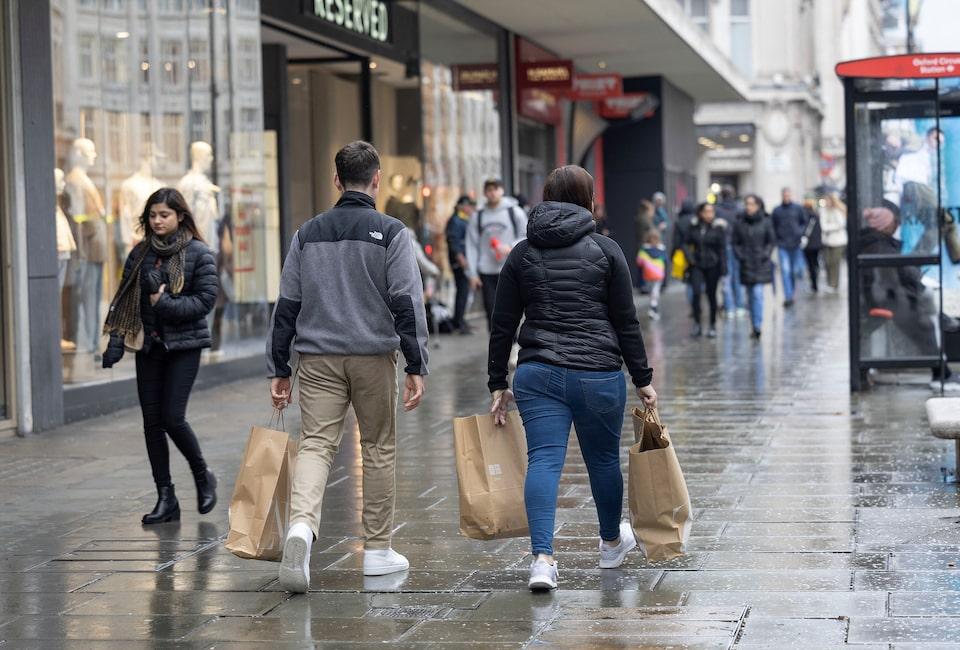
UK February retail sales volumes up 1.0% vs January Economists had expected a 0.4% drop in sales volumes Increase driven by non-food sales, ONS says GDP growth for 2024 revised up to 1.1% from 0.9% LONDON, March 28 (Reuters) - British shoppers unexpectedly loosened their purse-strings last month, official data showed on Friday, defying most forecasts from analysts who had predicted a fall in sales volumes against a backdrop of weak overall growth in the economy. Sales volumes increased by a monthly 1.0%, driven by non-food sales, although supermarkets saw a drop after a surge in business in January, the Office for National Statistics said. Sign up here. A Reuters poll of economists had pointed to a monthly fall of 0.4% in sales volumes. The ONS revised January's month-on-month increase to 1.4% from an initial 1.7%. Compared with a year earlier, sales volumes in February were 2.2% higher versus economists' expectations for a slowdown to 0.5% growth. While retail sales are volatile, the readings are likely to cheer finance minister Rachel Reeves, whose ambitions to kick-start the economy have been dogged by weak growth data since she took office last July. "February's strength was broad-based, with all major categories except food store sales up. All this bodes better than hoped for Q1 GDP growth," Investec economist Sandra Horsfield said. Household goods stores registered their largest rise in sales since April 2021 and the volume of clothing sales also picked up due to widespread discounting, the ONS said. Separate ONS data showed British households saved more money as a proportion of their income at the end of 2024 than at any point in nearly 15 years, apart from during the COVID pandemic. The household savings ratio rose to 12.0% in the fourth quarter of 2024, up from 10.3% in the third quarter. That bank of savings - and the possibility it could be unlocked - is one reason why some economists think tepid economic growth can pick up later in the year. The ONS on Friday confirmed the economy expanded by 0.1% in the fourth quarter, although it revised up output for 2024 as a whole to 1.1% from 0.9% thanks to upward revisions to growth in the first half of the year. Still, gross domestic product per head was flat. Household disposable income adjusted for inflation rose 4.3% in annual terms in the fourth quarter - the biggest such increase in nine years, reflecting rapid wage growth despite a sluggish broader economy. Thomas Pugh, an economist at accountants RSM, said the retail sales data could be a tentative sign that broader measures of household spending would pick up in early 2025. Retail sales volumes for the three months to February rose by 0.3%, the first increase by that measure since the three months to November. "But consumers are clearly still nervous and without a material increase in consumer confidence aren't likely to go on a spending binge," Pugh said. How the economy fares after the imposition of tax hikes on employers, higher regulated energy bills and a raised minimum wage - all taking place next month - is a key question for policymakers. "Food inflation remains high, meaning consumers are buying less, and retailers will be feeling cautious in the build-up to changes to wage costs next week," said Oliver Vernon-Harcourt, head of retail at Deloitte. This week, clothing retailer Next (NXT.L) , opens new tab raised its profit outlook after better than expected trading. But home improvement retailer Kingfisher (KGF.L) , opens new tab said consumer sentiment had been dented by measures in the government's budget last October. The ONS said the total volume of retail sales still remained fractionally below its pre-pandemic level. https://www.reuters.com/world/uk/uk-consumers-unexpectedly-boost-their-shopping-february-2025-03-28/
2025-03-28 07:38
Putin says Trump is serious about Greenland Moscow concerned about NATO intentions in far north Russia will protect its interests but is open to business Russia to expand northern ports, shipping fleet MOSCOW, March 27 (Reuters) - Geopolitical rivalries are intensifying in the Arctic but Russia is willing to cooperate with foreign partners, including from the West, in economic ventures there that will benefit all sides, Russian President Vladimir Putin said on Thursday. In a major speech, Putin said U.S. President Donald Trump's stated intention to acquire Greenland was "serious", and it was clear that the U.S. would continue to promote its interests in the Arctic. The Greenland question had nothing to do with Russia, he said. Sign up here. But Moscow was concerned that "NATO countries in general are increasingly designating the far north as a springboard for possible conflicts, practising the use of troops in these conditions, including by their 'new recruits', Finland and Sweden," he said, referring to the alliance's latest members. Russia was monitoring the situation and building a response, including by boosting its military capabilities in the region. "We will not allow encroachments on the sovereignty of our country and will reliably protect our national interests," Putin said. Focus on the Arctic's strategic importance for mining, shipping and security has increased sharply because of repeated statements by Trump that he wants to acquire Greenland. He has not ruled out doing so by force. The Arctic holds fossil fuels and minerals beneath the land and the seabed that could become more accessible with global warming. It is also an area of military competition, where defence analysts say Russia has built up its presence much faster than the West by reopening Soviet-era bases and modernising its navy. The United States sees the Arctic as crucial for natural security, including for its early warning system against nuclear attacks. The Kremlin says the Arctic is a zone of Russian strategic interest, and suggested in February that Russia and the U.S. could work together to develop natural resources there as the two countries pursue a fast-moving rapprochement that has unnerved Ukraine and its European allies. NORTHERN SEA ROUTE On the economic front, Putin has made it a top priority to ramp up commerce via the Northern Sea Route (NSR) through Arctic waters as Russia shifts trade towards Asia and away from Europe because of Western sanctions. Oil shipments from Russian ports to China via the NSR rose by a quarter last year. Foreign partners prepared to cooperate with Russia on investment projects in the region would be guaranteed a good return, Putin said. He called for an expansion of Russia's northern ports and the building of a merchant fleet in the Arctic, supported by new-generation icebreakers including nuclear-powered ones. But he said Russia's domestic capabilities were insufficient for this at the moment, and that it would also require buying vessels and interacting with foreign shipbuilders. Russia was already successfully shipping oil and liquefied natural gas via the NSR, he said. "Now we need to create conditions for the growth of effective domestic operators that will engage in transporting containers of coal, bulk and other cargo through the Arctic. We are also open here to the creation of joint ventures," he added. International logistics firms could supply capital, technology and merchant ships to support this, he said. Putin delivered his speech to a conference on the Arctic in Murmansk, a port from which the NSR runs eastward across the top of Russia to the Bering Strait near Alaska. He said Murmansk's port capacity should be at least trebled in the coming years, with construction of new terminals and railway links, and "partners" from Belarus, China, the United Arab Emirates and other countries were showing interest in this project. https://www.reuters.com/world/europe/putin-says-geopolitical-rivalries-are-rising-arctic-cooperation-is-possible-2025-03-27/

2025-03-28 07:35
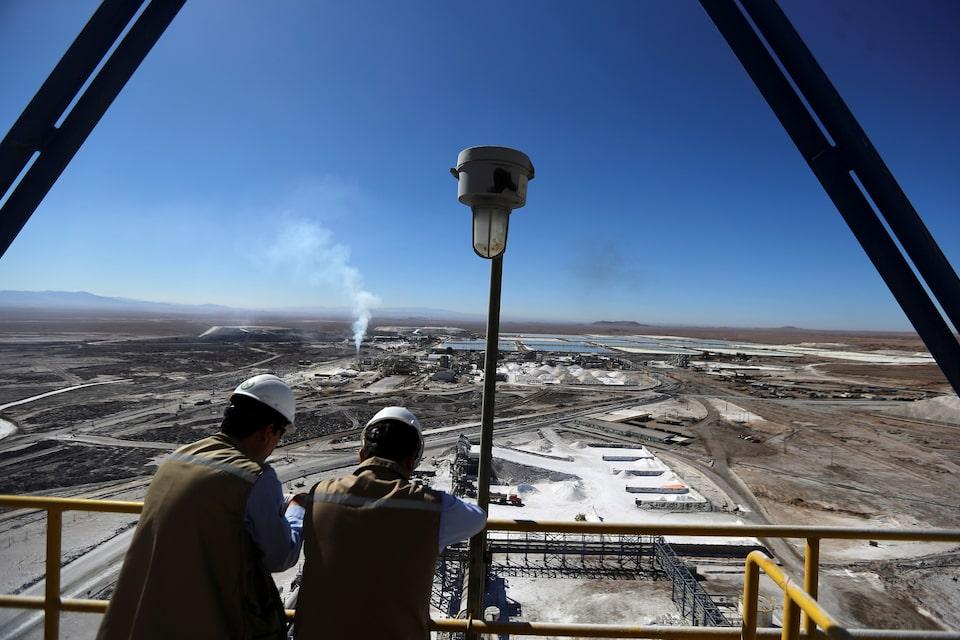
Indian companies seek 20% stake for $600 million, sources say Coal India, Oil India, ONGC Videsh in talks with SQM India's state-run company KABIL leads talks with SQM NEW DELHI, March 28 (Reuters) - Four Indian state firms are in talks with Chilean miner SQM (SQMA.SN) , opens new tab to acquire a 20% stake in its two lithium projects in Australia for $600 million, four sources said, in New Delhi's biggest effort to secure supplies of the key EV battery metal. Government-backed Khanij Bidesh India Ltd (KABIL) has partnered with Coal India (COAL.NS) , opens new tab, Oil India (OILI.NS) , opens new tab, and ONGC Videsh (ONVI.NS) , opens new tab to seek the 20% stake in SQM's Mount Holland and Andover lithium projects in Western Australia, the sources said. Sign up here. The sources did not wish to be named as the deliberations were not public. SQM is the world's second-largest lithium producer. India, the world's fastest-growing major economy, has intensified efforts to secure a steady supply of lithium, anticipating a surge in demand for the EV battery metal, which is critical to reducing carbon emissions from the world's third-largest emitter. "This is so far India's biggest attempt to secure lithium supplies overseas," one of the sources said. "The due diligence is on, and the companies have expressed their interest with an initial offer." KABIL, along with the three state companies, is in the process of appointing a mergers and acquisitions adviser for the deal, the sources said. SQM, KABIL, Coal India, Oil India, and ONGC Videsh did not respond to Reuters' requests for comment. India's plans to acquire stakes in SQM's projects have not been reported previously. New Delhi formed KABIL - a joint venture between the state-owned National Aluminium Company, Hindustan Copper, and Mineral Exploration and Consultancy - a few years ago to acquire, develop, and process strategic minerals overseas for use in India. India has recently stepped up efforts to secure overseas agreements for accessing critical minerals in resource-rich nations like Argentina, Australia, and Chile. New Delhi is also exploring an initial agreement with cobalt-rich Congo. Last year, KABIL signed an exploration and development agreement with a state-owned firm in Argentina for the exploration and mining of five lithium blocks. Amid growing energy needs, India is trying to encourage EV production to reduce its reliance on fossil fuels. EV sales in India accounted for just 2.5% of the 4.3 million cars sold in 2024, but their 20% growth rate outpaced the overall car market's 5% growth. Analysts expect sales to double in 2025 from 100,000 units in the previous year, mainly due to new launches. https://www.reuters.com/markets/commodities/indian-state-firms-seek-stake-sqms-lithium-projects-australia-sources-say-2025-03-28/